 English
  English
 русский
 日本語
日本語 Español
 中文简体
中文简体
The SANTO UFA range of self-regulating heating cables is mainly used for frost protection of pipes and vessels but can also be used to maintain processes up to 65°C. These heating cables are available...
See Details
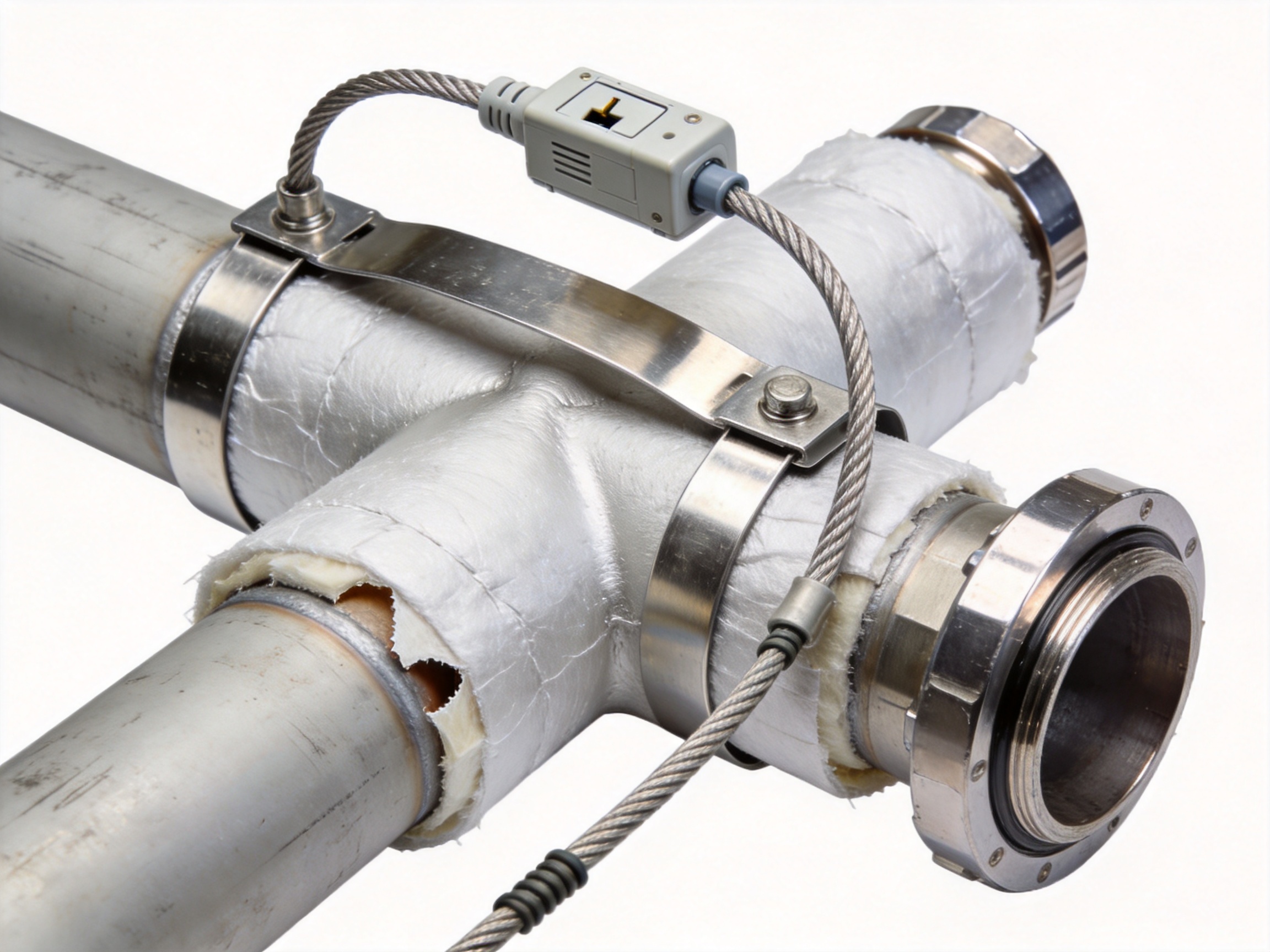
In every electric heat tracing installation, the performance of the cable is only one part of the total system. The long-term stability of the installation also depends on the small accessories that hold power connections, end seals, insulation entries, brackets, and junction-related components in the correct position. A heating cable card is one of these essential accessories. It is a stainless steel strap designed for pipe mounting, helping installers secure integrated power connections above insulation tees and end seals while also supporting brackets and tubular insulation entry points.
Although it may appear simple, a heating cable card plays a critical role in the reliability, safety, and serviceability of a heat tracing system. When electric heating cables are installed on industrial pipelines, mechanical fixing must be strong enough to resist vibration, thermal expansion, weather, maintenance movement, and insulation pressure. At the same time, the fixing method must avoid unnecessary damage to cables, connection kits, or the pipe surface. A well-designed stainless steel pipe strap offers a balanced solution: corrosion resistance, mechanical strength, quick installation, and compatibility with a wide range of pipe diameters.
The heating cable card described in this article is intended for use in electric heat tracing projects across petroleum, chemical, gas, construction, solar energy, electric heating, geothermal cultivation, antifreeze protection, deicing, temperature maintenance, and insulation applications. It is especially suitable where heating cable accessories must be mounted securely before insulation is completed. By offering multiple strap sizes for pipe outside diameters from 20 mm to 540 mm, it supports both small utility lines and large process pipelines.
Content
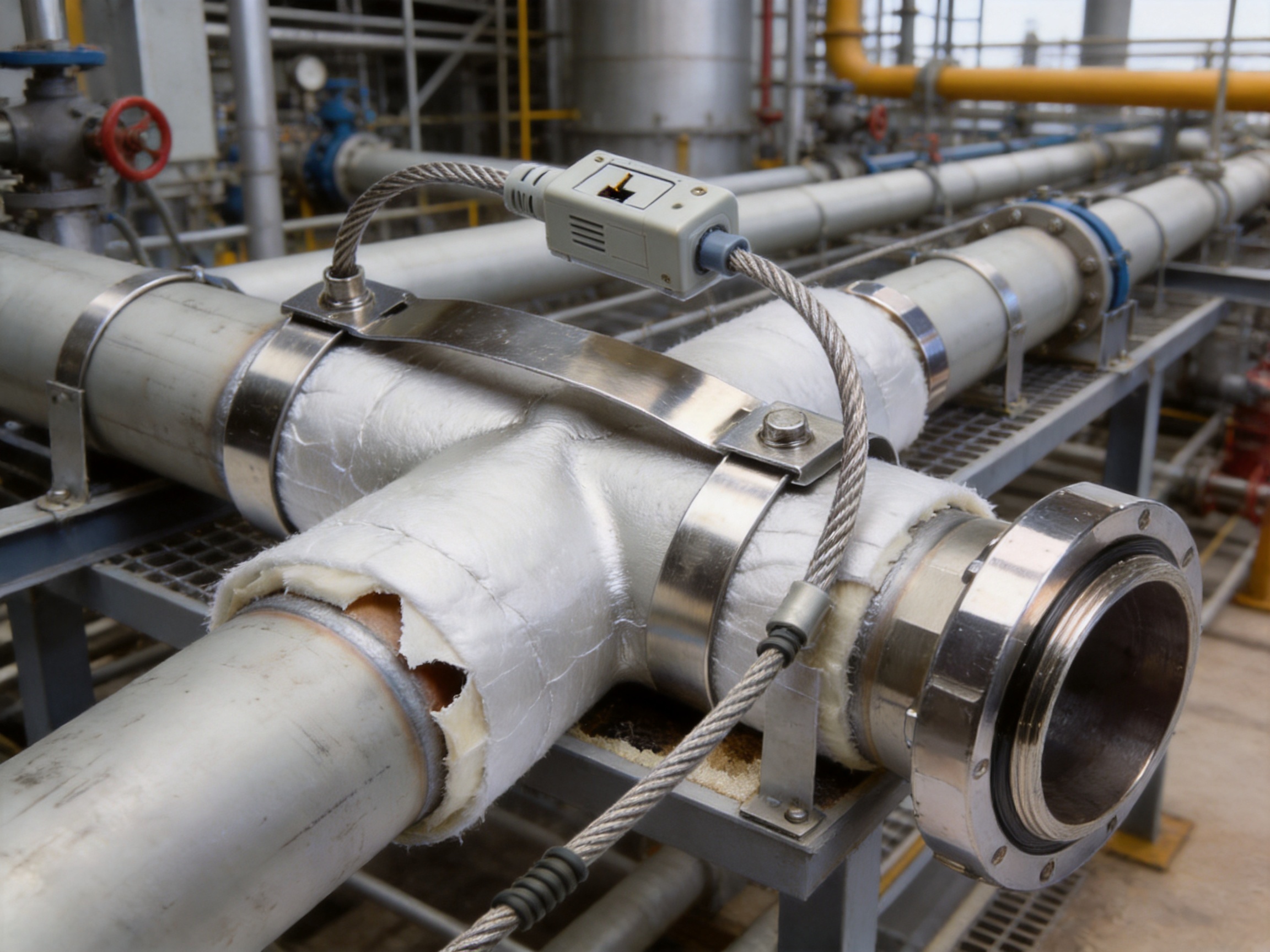
The heating cable card is a metal pipe strap manufactured from stainless steel banding. It is used to mount and secure electric heat tracing accessories on pipes. Typical mounting points include integrated power connections, insulation tees, end seals, support brackets, and tubular insulation entries. These parts often need to remain accessible, aligned, and mechanically stable during installation and operation. The card provides a simple but dependable fixing method that helps keep the heating system orderly and protected.
In heat tracing systems, accessories are frequently installed at locations where the heating cable transitions from one zone to another, connects to power, terminates, or enters insulation. These points are important because they are often more mechanically sensitive than the straight cable run. If a connection kit shifts, bends excessively, or becomes buried in an unstable position under insulation, later inspection and maintenance become more difficult. The heating cable card helps prevent these problems by holding the accessory assembly firmly to the pipe before the insulation layer is applied.
The product is categorized as an accessory, but its importance is comparable to that of many primary electrical components. A heating cable can be high quality, but if its power connection or end seal is not properly mounted, the installation can still suffer from poor mechanical protection, uneven load distribution, or maintenance inconvenience. The heating cable card solves a practical installation problem in a compact and cost-effective way.
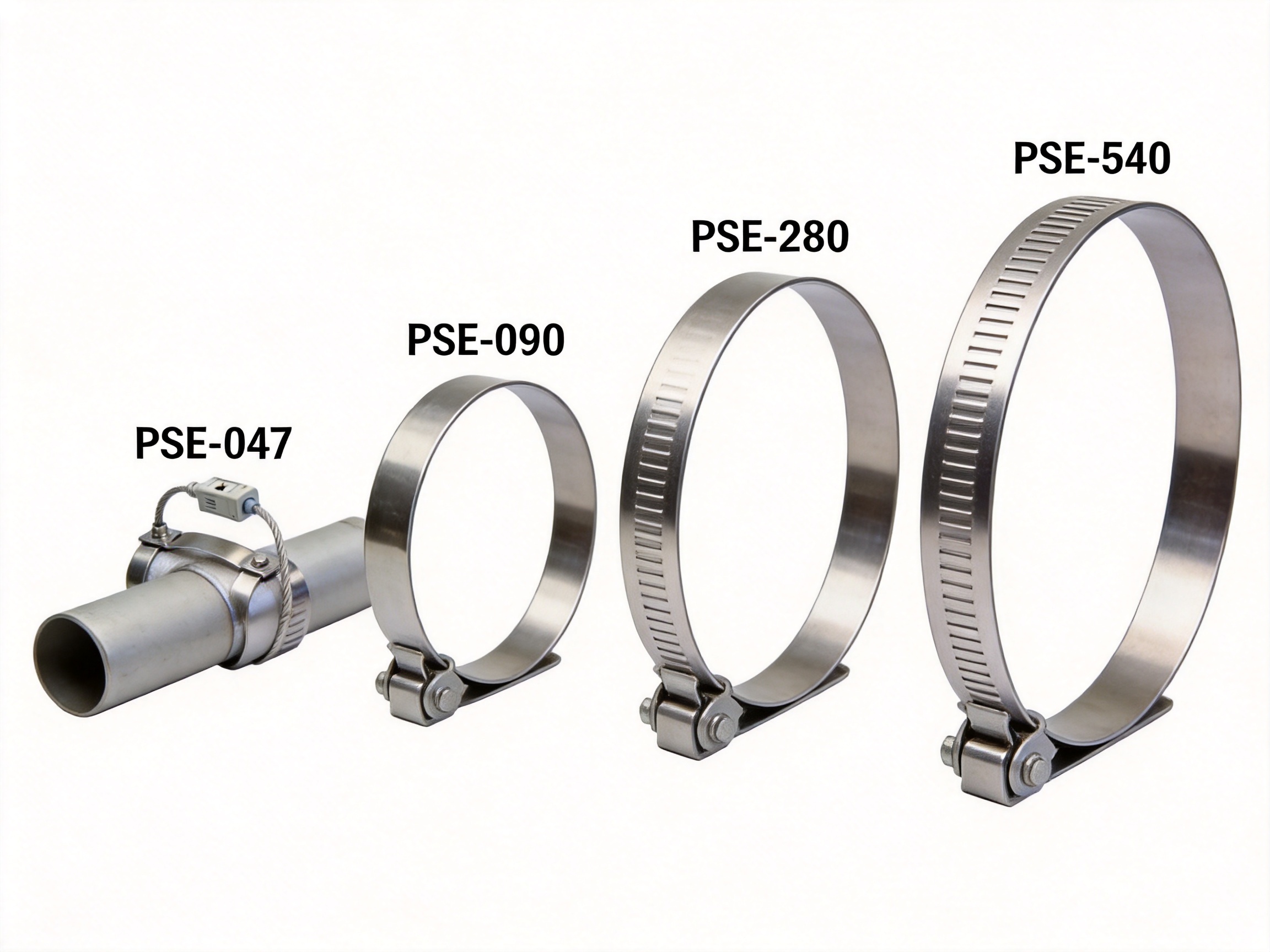
The available size range covers common pipe outside diameters. For smaller pipes from 20 mm to 47 mm, a compact pipe strap is available. For medium pipes from 40 mm to 90 mm, a larger strap supports broader applications. For large pipes from 60 mm to 288 mm and very large pipes from 60 mm to 540 mm, extended strap sizes are available. This wide range allows designers and installers to standardize mounting accessories across different project sections instead of improvising with unsuitable fastening methods.
The primary function of the heating cable card is to provide a stable mounting platform for accessory components. In many industrial and commercial heat tracing projects, installation teams must attach connection kits, insulation entries, and support brackets to pipework before thermal insulation is installed. If those components are not held in place, they may move during insulation work, create uneven pressure on the heating cable, or make the final assembly untidy.
The card positions the accessory above insulation tees and end seals, helping the installer maintain the correct spatial relationship between the pipe, cable, connection part, and insulation layer. This is important because the insulation covering must fit properly around the heating cable system. A controlled mounting arrangement reduces the risk of gaps, compression points, or hidden mechanical stress.
Another function is service support. Heat tracing systems are often installed in environments where future inspection is necessary. Power connections and end seals may need periodic checks, especially in industrial facilities. By securing these points in predictable positions, the heating cable card makes the system easier to identify and maintain. This can reduce downtime during troubleshooting because technicians can locate and access key components more quickly.
The heating cable card also contributes to mechanical protection. Pipes expand and contract as temperatures change. Outdoor lines may experience wind, rain, snow, ice, and maintenance activity. Indoor process lines may be affected by vibration, cleaning, and equipment movement. Stainless steel straps resist many of these conditions better than temporary ties or low-grade fasteners. The result is a more professional installation with improved long-term stability.
One of the most important advantages of this heating cable card is its stainless steel construction. Stainless steel is widely used in industrial fastening because it combines strength with corrosion resistance. In a heat tracing environment, the accessory may be exposed to moisture, temperature variation, chemicals, or outdoor weather before insulation is applied. Even after insulation is installed, condensation or water ingress can occur in some systems. Stainless steel banding helps maintain fastening integrity under these conditions.
Compared with ordinary carbon steel straps, stainless steel offers better resistance to rust and surface deterioration. Rusted fasteners can weaken over time and may contaminate surrounding surfaces. In contrast, stainless steel helps preserve a cleaner and more stable installation. This is particularly valuable in chemical plants, petroleum facilities, gas systems, and outdoor construction applications where harsh environmental conditions are common.
Compared with plastic cable ties, stainless steel straps provide superior heat resistance and mechanical strength. Plastic ties may become brittle with age, ultraviolet exposure, or temperature fluctuation. They may also soften or deform under heat. In heat tracing systems, where the purpose is to maintain temperature or prevent freezing, a metallic fastener is often the more robust choice. Stainless steel banding provides a more permanent mounting method and is better aligned with industrial expectations for durability.
Compared with improvised wire fastening, a properly designed pipe strap is safer and more consistent. Wire can create sharp contact points, uneven pressure, and inconsistent tension. It may also be difficult to install neatly around larger pipes. A heating cable card made for pipe mounting provides a controlled fastening method and helps avoid the risks of field improvisation.
Stainless steel also supports a professional appearance. In large projects, hundreds or thousands of heat tracing accessories may be mounted across complex pipe networks. Standardized stainless steel cards create visual consistency, making inspection easier and improving the overall quality impression of the installation.
The heating cable card is available in several pipe strap models to suit different pipe outside diameters. The following table summarizes the main size information and part numbers.
Pipe Outer Diameter in mm |
Approximate Pipe Size in Inches |
Pipe Strap Model |
Part Number and Weight |
20-47 |
1/2 in.-1 1/4 in. |
PSE-047 |
2000-PS01, 0.017 kg |
40-90 |
1 1/4 in.-3 in. |
PSE-090 |
2000-PS02, 0.024 kg |
60-288 |
2 in.-10 in. |
PSE-280 |
2000-PS03, 0.052 kg |
60-540 |
2 in.-20 in. |
PSE-540 |
2000-PS04, 0.052 kg |
This size structure gives installers flexibility. For small service lines, a compact strap avoids unnecessary bulk. For medium and large process lines, extended strap options allow the same installation concept to be maintained. The overlap between some ranges is also useful because the installer can select the most suitable strap according to accessory weight, pipe insulation arrangement, and site preference.
The heating cable card offers several advantages when compared with common alternatives such as plastic ties, general-purpose clamps, loose wire, or non-standard metal bands. These advantages are especially important in industrial heat tracing systems, where reliability and maintainability have a direct effect on operating cost.
Stainless steel banding provides a durable mounting solution suitable for demanding field conditions. Ordinary fastening products may be designed for light-duty cable management rather than pipe-mounted heat tracing accessories. A heating cable card is more appropriate for systems where the accessory must stay fixed for years while exposed to heat, cold, vibration, insulation pressure, and possible moisture.
Industrial pipelines may run outdoors, in humid areas, near chemicals, or in locations where water can enter insulation. Stainless steel is better suited to these conditions than unprotected steel. Corrosion resistance is not only a matter of appearance; it helps preserve clamping force and reduces the chance that a fastener will fail during service.
A standard pipe strap produces a neat and repeatable installation. This matters in large projects because inspection teams, maintenance staff, and project owners often evaluate workmanship visually as well as technically. A consistent mounting accessory can help demonstrate that the heat tracing system was installed according to a disciplined process.
The available range from 20 mm to 540 mm covers many common applications. This reduces the need for installers to source unrelated fastening products for different pipe sizes. Standardization supports easier procurement, easier training, and reduced inventory complexity.
The product is not merely a strap; it is intended to mount key heat tracing accessories such as integrated power connections, insulation tees, end seals, brackets, and tubular insulation entries. Its function is aligned with the real needs of electric heating cable installation. This gives it an advantage over general-purpose fasteners that do not consider heat tracing accessory placement.
When installers do not have the correct accessory, they may use available materials on site. Improvised fastening can lead to inconsistent tension, sharp edges, poor alignment, and future maintenance difficulty. A purpose-made heating cable card reduces this risk and supports a more controlled installation process.
The heating cable card can be used in many fields where electric heating cables are installed on pipework or related equipment. In petroleum and chemical plants, heat tracing is often used to maintain process fluid temperature, prevent viscosity problems, and protect instruments or lines from freezing. In these applications, accessory mounting must be strong because the surrounding environment can be complex and harsh.
In gas systems, heat tracing may be used for antifreeze protection and temperature control. Reliable accessory mounting helps ensure that electrical connection points remain stable and identifiable. Since gas-related installations often require careful attention to safety and inspection, neat accessory positioning is especially valuable.
In construction and building services, electric heat tracing may protect water pipes, drainage lines, fire protection lines, or roof and gutter systems. Accessories must be mounted efficiently because installation schedules can be tight. Stainless steel cards help contractors complete consistent work without relying on temporary fastening methods.
In solar energy systems, pipes and fluid circuits may need freeze protection during cold conditions. A heat tracing accessory that remains fixed under insulation helps preserve system reliability. Since many solar systems are installed outdoors, corrosion-resistant fastening is useful.
In geothermal cultivation and agricultural heating systems, temperature maintenance supports stable production conditions. Humidity can be high in these environments, so stainless steel mounting components help reduce maintenance concerns.
In snow and ice melting systems, related heating cable components may be exposed to wet and cold conditions. While the heating cable card is primarily described for pipe mounting, the same principle of corrosion-resistant accessory fixation is important for many heating cable systems where water and freezing conditions are present.
Reliability in electric heat tracing is achieved through a combination of cable selection, electrical design, insulation quality, temperature control, and installation workmanship. The heating cable card contributes to the installation workmanship portion of this reliability equation. By holding accessory components in place, it reduces the chance of mechanical displacement after installation.
A common problem in poorly organized heat tracing systems is that accessories are installed loosely or are forced into position by insulation. This can create strain on the cable or connection assembly. Over time, thermal cycling may worsen the strain. A proper pipe strap can reduce movement and provide a defined support point.
Another reliability benefit is improved inspection. When power connections and end seals are mounted in predictable positions, inspectors can confirm that components are installed correctly. If an issue occurs later, maintenance personnel can locate the relevant accessory without removing excessive insulation or searching along the pipe.
The heating cable card also helps support consistent spacing and arrangement. While it does not replace installation design rules, it helps implement those rules in the field. A practical accessory that installers can use quickly and confidently improves the likelihood that the finished system will match the intended design.
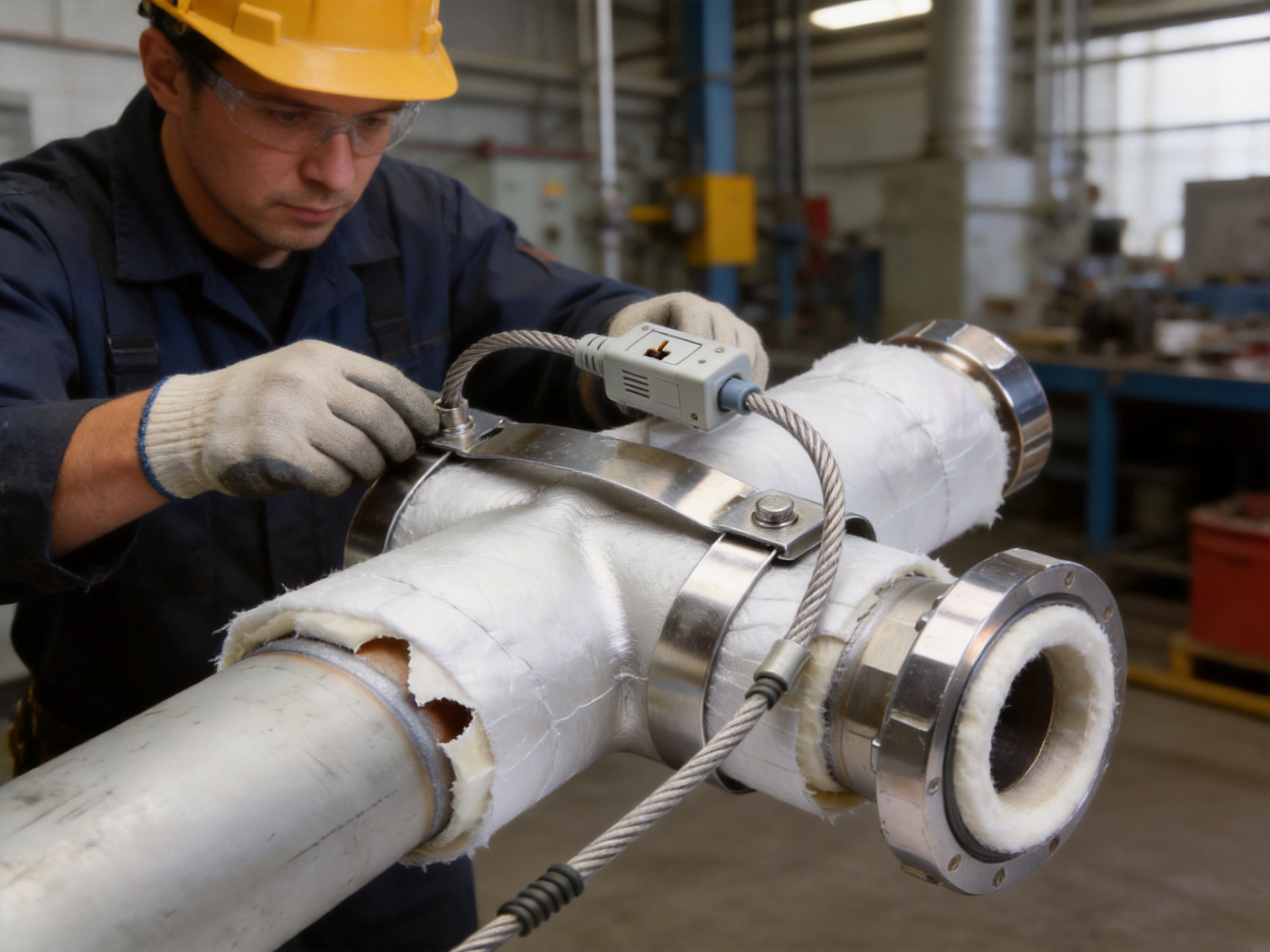
During installation, the heating cable card should be selected according to pipe outside diameter and the accessory being mounted. The pipe surface should be reasonably clean, and the strap should be positioned so that it secures the accessory without crushing, cutting, or overbending the heating cable. Installers should follow the project drawings, cable manufacturer instructions, and relevant electrical safety requirements.
For integrated power connections, the card should help keep the connection body stable and properly oriented. For end seals, the strap should prevent the termination point from hanging loose or moving under insulation. For tubular insulation entries, the strap should support a clean transition through the insulation system. For brackets, the strap should help maintain the bracket position before and after insulation installation.
The installer should avoid using excessive force. Stainless steel straps are strong, but the objective is secure mounting, not deformation of the pipe accessory. Proper tension is important. Too little tension may allow movement, while too much tension may damage accessory housings or create stress points. Professional installation practice requires a balanced approach.
After mounting, the assembly should be inspected visually. The heating cable should remain in the intended position. The accessory should be stable. The strap should not create sharp contact with the cable jacket. If insulation is installed afterward, the insulation contractor should be informed of the accessory positions so that openings, tees, and covers can be arranged correctly.
A reliable heating cable accessory depends not only on material selection but also on the manufacturing system behind it. Santo Thermal Control Technology Co., Ltd. operates in Jiangsu Province, a region known for electric heating belt industry development. The company is engaged in research, design, production, and manufacturing of automatic temperature-control electric heating belts, self-limiting electric heating belts, heat tracing belts, constant-power electric heating belts, glass fiber electric heating belts, mineral insulated cables, and related electric heating products.
This broad product foundation is important for an accessory such as the heating cable card. A company that understands complete heat tracing systems can design accessories around actual installation needs rather than treating them as generic hardware. The heating cable card reflects knowledge of where power connections, end seals, insulation tees, and support brackets must be located in real field installations.
The company has more than 35 years of industry experience, an annual output exceeding 10,000 units, a distributor network of more than 2,000 partners, and business coverage in more than 85 areas. These strengths support consistent supply and practical product refinement. Long experience in heat tracing gives the manufacturer insight into common installation problems and customer requirements across different industries.
The company has also strengthened new product development, technology guidance, scientific management, product quality, and after-sales service. It has passed ISO9001 quality system certification, and its products have obtained national CCC certification. For buyers, this background matters because heat tracing systems are often used in important facilities where accessory quality, documentation, and after-sales support are part of procurement evaluation.
The company’s history also demonstrates continuous development. The business originated from electric heating instrument manufacturing, passed ISO9001 quality system certification early in its development, established an irradiation center, built patented heating technology, obtained explosion-proof and EAC Eurasian Union certification for relevant products, appeared in public media coverage, expanded its factory and testing capacity, and established a Russia factory to broaden its international presence. This development path shows that the manufacturer is not only producing individual parts but building a complete industrial capability in electric heating technology.
For a stainless steel heating cable card, manufacturing quality begins with material selection. Stainless steel banding must be consistent in thickness, surface condition, and mechanical strength. If the band is too weak, it may not provide stable mounting. If it has sharp burrs or inconsistent edges, it may create installation risks. Quality manufacturing therefore requires attention to cutting, forming, finishing, and inspection.
Dimensional accuracy is another essential process factor. Pipe straps must correspond to the intended pipe diameter range. A strap for a small pipe must not be unnecessarily oversized, while a strap for a large pipe must have sufficient length and strength. Clear model identification, such as PSE-047, PSE-090, PSE-280, and PSE-540, helps reduce selection errors during procurement and installation.
Surface finishing is also important. Heating cable systems often include polymer cable jackets, electrical housings, insulation materials, and metal pipe surfaces. A well-finished strap should not introduce unnecessary abrasion risk. The manufacturing process should minimize burrs and maintain a clean surface suitable for industrial handling.
Quality control can include checks for material conformity, dimensions, weight, surface condition, packaging accuracy, and part number consistency. Since the accessory is often purchased in batches for project work, batch consistency matters. A contractor needs the hundredth strap to fit and perform like the first one. This is where systematic management and ISO9001-based quality practices provide value.
The company’s broader manufacturing base in heat tracing also supports product verification. Because it produces heating cables and related accessories, it can evaluate how mounting components interact with power connections, end seals, insulation tees, and cable assemblies. This system-level understanding is a key advantage over manufacturers that only produce generic metal straps.
Some buyers may ask why they should choose a dedicated heating cable card instead of a general-purpose stainless steel band. The answer lies in system compatibility and installation certainty. A generic strap may hold an object to a pipe, but it may not be sized, documented, or supplied with heat tracing accessory requirements in mind.
A specialized heating cable card is identified by pipe diameter range, pipe strap model, part number, and weight. This makes it easier to include in engineering documents, bills of materials, construction packages, and maintenance records. Project managers can specify the accessory clearly, procurement teams can purchase the correct item, and installers can select the correct strap at the job site.
Using a dedicated accessory also supports accountability. When a heat tracing system is assembled from compatible products, it is easier to evaluate performance and installation quality. If generic materials are substituted, later troubleshooting becomes more complicated because each installation may vary. Standardized accessories reduce variation.
Another advantage is professional support. A manufacturer specializing in heat tracing products can advise on related items such as heating cables, tubing bundles, underfloor heating mats, skin-effect heating systems, snow and ice melting systems, silicone rubber heating systems, and accessories. This broader technical context helps customers select complete solutions instead of isolated parts.
The heating cable card is suitable for projects involving multiple types of electric heating products. Self-limiting heating cables require stable accessory installation at power connection and termination points. Constant-power heating cables also need organized mounting because their connection and end seal components are important to electrical safety. Glass fiber heating belts, silicone rubber heating systems, and mineral insulated cables may all involve accessory fixation depending on application design.
In tubing bundle systems, heat tracing and process tubing are often integrated in a compact arrangement. Secure support of connection points helps maintain bundle integrity and simplifies field installation. In skin-effect heating tracing systems, where long-distance heat tracing may be applied to pipelines, accessory positioning and durable hardware are equally important. In snow and ice melting systems, corrosion-resistant support components help address wet environments.
Underfloor heating mats are a different product type, but the same manufacturing philosophy applies: reliable heating requires well-designed accessories, controlled production, and consistent installation details. The heating cable card is one part of this broader ecosystem of electric heating solutions.
From a procurement perspective, the heating cable card offers value through simplicity. It has a clear material, clear function, clear pipe diameter range, and clear part identification. This reduces ambiguity when preparing purchase orders or project material lists. Contractors can order the correct model based on the pipes in the project.
From an installation perspective, the product saves time by providing a ready-made mounting method. Installers do not need to fabricate temporary brackets or search for substitute fasteners. Time savings become significant when a project includes many heat tracing points. Even a small improvement at each connection can produce meaningful labor efficiency across the whole system.
From a maintenance perspective, standardized accessory mounting supports easier future work. When maintenance teams encounter a consistent arrangement across many lines, they can inspect and service the system more efficiently. This is especially valuable in facilities with large pipe networks.
From an engineering perspective, the heating cable card supports standardization. Engineers can specify the correct strap range for different pipe sizes and include it in drawings and installation notes. Standardization reduces the risk of field decisions that may compromise quality.
From an owner’s perspective, the accessory contributes to long-term reliability. A secure, corrosion-resistant mounting component helps protect the investment in the overall heating cable system. Since accessory failures can cause maintenance interruptions, choosing a robust strap is a practical risk-reduction measure.
The heating cable card is designed around practical installation requirements. Its stainless steel banding supports strength and corrosion resistance. Its multiple size ranges support different pipe diameters. Its use for integrated power connections, insulation tees, end seals, support brackets, and tubular insulation entry points reflects real heat tracing construction needs.
The lightweight structure is another benefit. The listed weights range from 0.017 kg to 0.052 kg, depending on model. This makes the product easy to transport, store, and handle on site. For large projects, lightweight accessories reduce logistical burden while still providing strong metal fastening performance.
The product also helps reduce clutter. Instead of using bulky brackets or improvised hardware, the pipe strap provides a compact fixing solution. This is useful when insulation thickness, pipe spacing, or access limitations restrict available installation space.
The broad pipe range also gives project teams flexibility. The PSE-047 model supports small pipe diameters, while the PSE-540 model supports large diameters up to 540 mm. This coverage helps customers use one accessory family across many project conditions.
Heat tracing systems involve electricity, temperature control, insulation materials, and often industrial process environments. Professional workmanship is therefore essential. Although the heating cable card is not an electrical control device, it supports safety by helping hold electrical accessories in proper positions.
A loose power connection may be more vulnerable to mechanical impact or insulation disturbance. A poorly supported end seal may be bent or hidden in a way that makes inspection difficult. A misaligned insulation entry may allow water ingress or create a weak point in the insulation system. By securing these elements, the heating cable card contributes to safer and more maintainable installations.
Professional workmanship also reduces the chance of installation errors. When workers have the correct mounting accessory, they are less likely to use unsuitable alternatives. This helps protect the cable jacket, connection housings, and insulation arrangement.
In industrial projects, safety culture includes attention to small details. The quality of straps, labels, seals, brackets, and entries can influence system performance. The heating cable card is one of these small but important details.
Santo Thermal Control Technology Co., Ltd. integrates research, development, manufacturing, and sales. Its products have entered the international market, and the company has business in more than 85 areas. This international experience is valuable for customers who need reliable export support, consistent product documentation, and manufacturing capacity.
The company’s product range includes constant-power electric heating strips, self-limiting electric heating strips, silicone rubber electric heating strips, glass fiber electric heating strips, electric hot wires, mineral insulated cables, snow melting cables, tracked heaters, and electric heating strip accessories. This range means customers can source both heating cables and accessories from a supplier that understands system integration.
Research and development are also part of the company’s strength. The company has cooperated in product research with Harvard University in the United States and has developed patented heating technologies. Its founder has invented advanced heating products including a self-limiting temperature nano far-infrared heater for ultra-high-temperature pipeline heating and tracing, as well as carbon fiber parallel heating cable technology. These innovations show a strong technical background that supports product development beyond basic manufacturing.
The company’s mission emphasizes creating value and a better life, while its core values include innovation, cooperation, effectiveness, and development. In practical terms, these values are reflected in continuous product development, quality management, and after-sales service. For buyers, this means the heating cable card is supported by a manufacturer with long-term commitment to the electric heating industry.
Competitor products in the accessory market may vary widely. Some suppliers offer low-cost generic straps without heat tracing application knowledge. Others provide accessories but with limited size ranges, inconsistent documentation, or weak after-sales support. The heating cable card discussed here offers advantages through material quality, clear sizing, system relevance, and manufacturing background.
Its stainless steel construction provides stronger long-term value than low-grade metal or plastic alternatives. Its defined size range from 20 mm to 540 mm provides broader practical coverage than many limited accessory offerings. Its use for power connections, insulation tees, end seals, brackets, and tubular insulation entries makes it more application-specific than general-purpose banding. Its supply by an experienced heat tracing manufacturer adds system-level credibility.
Another competitive advantage is the manufacturer’s integrated product ecosystem. Customers can obtain heat tracing cables, tubing bundles, silicone rubber heating systems, skin-effect heating systems, snow and ice melting systems, underfloor heating mats, and accessories from a specialized source. This reduces compatibility concerns and supports more efficient project communication.
Cost should also be evaluated in terms of total installed value, not only unit price. A cheap fastening method may save a small amount at purchase but create higher labor costs, rework, inspection delays, or maintenance problems. A proper heating cable card can reduce these hidden costs by making installation faster, cleaner, and more consistent.
A heating cable card is a stainless steel pipe strap used to mount heat tracing accessories on pipes. It is commonly used for integrated power connections, insulation tees, end seals, support brackets, and tubular insulation entry points.
Stainless steel is used because it provides corrosion resistance, mechanical strength, heat resistance, and long service life. These properties make it suitable for industrial and outdoor heat tracing environments.
The available models support pipe outside diameters from 20 mm to 540 mm. Specific models include PSE-047, PSE-090, PSE-280, and PSE-540.
In many pipe-mounted heat tracing applications, a stainless steel heating cable card is more durable and professional than plastic ties. Plastic ties may be suitable for light-duty temporary organization, but stainless steel is generally better for long-term industrial mounting.
It should be installed at the locations where heat tracing accessories need mechanical support, such as power connection points, end seals, insulation tees, support brackets, and insulation entry areas. The exact position should follow project drawings and installation instructions.
The card itself does not increase cable output or electrical efficiency. Its value is mechanical and practical: it helps keep electrical accessories securely mounted, correctly positioned, and easier to inspect.
A dedicated heat tracing accessory is sized, identified, and supplied for heating cable installation needs. It supports standardization, documentation, correct selection, and professional workmanship better than random generic straps.
Yes. Its stainless steel construction, wide pipe size range, and intended use with heat tracing accessories make it suitable for industrial applications such as petroleum, chemical, gas, and process piping systems.
The manufacturer operates with long experience in electric heating products, ISO9001 quality system certification, research and development capability, product testing investment, and a broad heat tracing product portfolio. These strengths support consistent manufacturing and application knowledge.
Contractors benefit from easier installation, reduced improvisation, consistent accessory positioning, broad pipe compatibility, lightweight handling, and improved project appearance.
To select the correct heating cable card, first identify the pipe outside diameter. Then choose the strap model that covers that diameter. For example, a small pipe in the 20 mm to 47 mm range can use PSE-047. A medium pipe in the 40 mm to 90 mm range can use PSE-090. Larger pipes may require PSE-280 or PSE-540, depending on the diameter and installation preference.
The installer should also consider the accessory being mounted. Some components may need more stable support or more careful positioning. If the pipe size falls within an overlapping range, the installer or engineer can select the model that best suits the accessory size, insulation design, and project standard.
Procurement teams should use the part numbers and weights in the specification table to avoid confusion. Correct identification helps ensure that the delivered material matches the project requirement.
After a heat tracing system is commissioned, maintenance teams may need to inspect power connections, end seals, insulation entries, and brackets. A heating cable card helps maintain consistent accessory placement, making future work more efficient. Instead of searching for loose or hidden components, technicians can follow a predictable installation pattern.
Stainless steel also reduces maintenance caused by fastening deterioration. In humid or corrosive environments, poor-quality fasteners may rust, loosen, or break. Replacing failed fasteners under insulation can be costly. Choosing stainless steel from the beginning is a preventive maintenance strategy.
Good mounting also helps protect insulation. If accessories move after insulation is installed, they may create pressure points or gaps. Stable mounting reduces these risks and supports the overall thermal performance of the insulated system.
The heating cable card is a small accessory with significant value in electric heat tracing systems. Made from stainless steel banding, it provides secure pipe mounting for integrated power connections, insulation tees, end seals, support brackets, and tubular insulation entry points. Its corrosion resistance, mechanical strength, professional appearance, and wide pipe diameter range make it a superior alternative to many ordinary fastening methods.
For contractors, the product supports faster and more consistent installation. For engineers, it supports standardization and clear specification. For maintenance teams, it improves accessibility and long-term organization. For owners, it contributes to system reliability and reduces the risk of accessory movement or fastening deterioration.
The product is further strengthened by the manufacturing background of Santo Thermal Control Technology Co., Ltd., a company with decades of electric heating industry experience, broad product capability, quality system certification, research and development investment, and international market presence. This system-level expertise helps ensure that the heating cable card is not merely a piece of metal hardware, but a practical accessory designed for real heat tracing applications.
In a complete electric heating system, every component matters. Heating cables provide the heat, controls manage operation, insulation preserves energy, and accessories ensure that the installation remains stable and serviceable. The heating cable card performs this supporting role with efficiency, durability, and professional reliability.
1. Electric Heat Tracing Installation Practice and Accessory Mounting Guidelines.
2. Industrial Pipe Heating and Freeze Protection Design Handbook.
3. Stainless Steel Fastening Materials for Process Piping Applications.
4. Quality Management Principles for Electric Heating Cable Manufacturing.
5. Heat Tracing Systems for Petroleum, Chemical, Gas, and Building Service Applications.
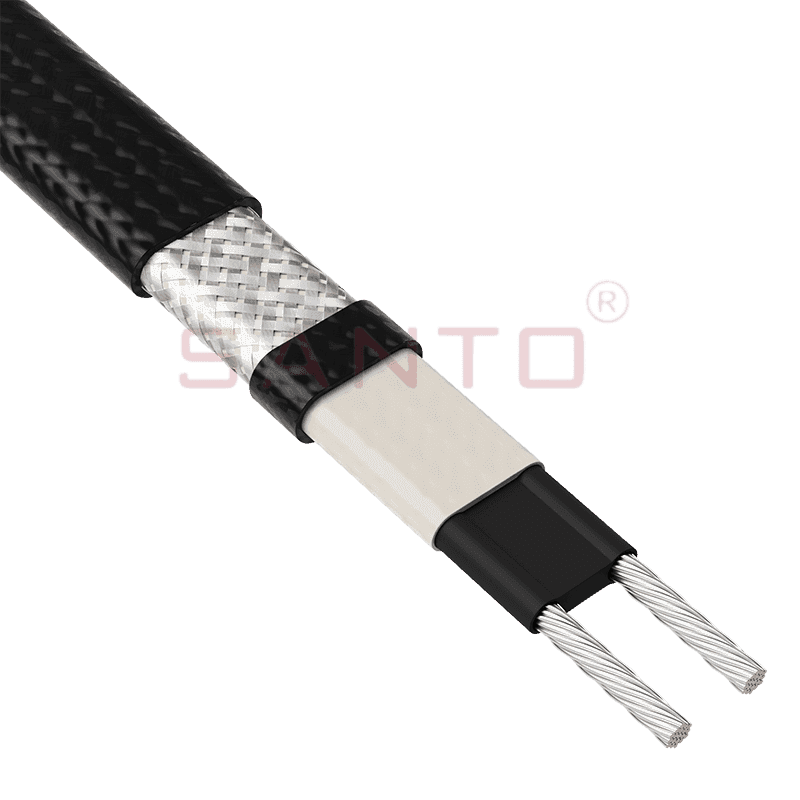
The SANTO UFA range of self-regulating heating cables is mainly used for frost protection of pipes and vessels but can also be used to maintain processes up to 65°C. These heating cables are available...
See Details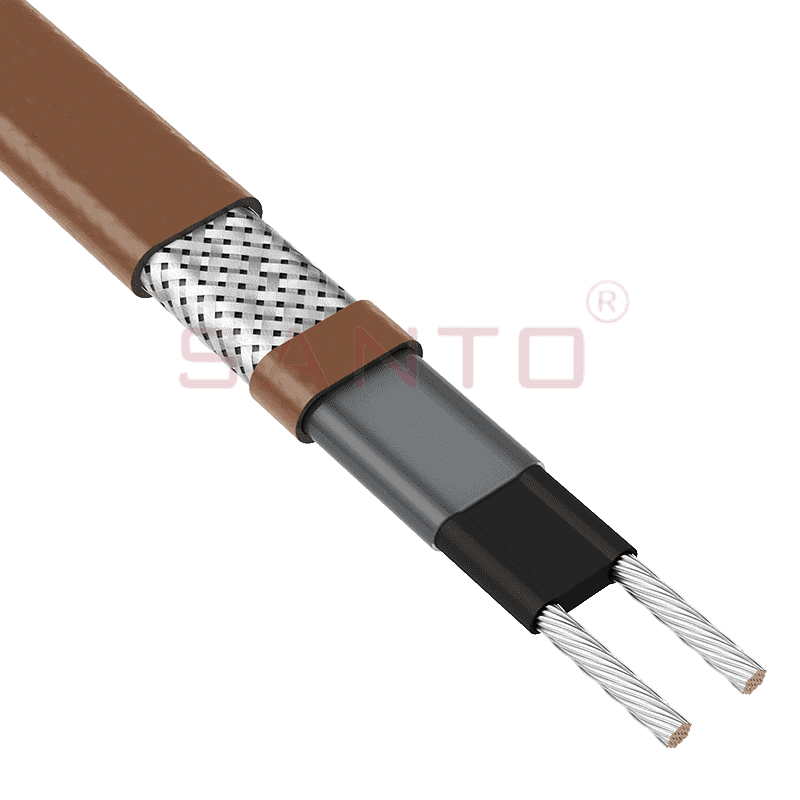
The SANTO UFB range of self-regulating heating cables is mainly used for frost protection of pipes and vessels requiring a higher power output than the UFA heating cables can supply. They can also be ...
See Details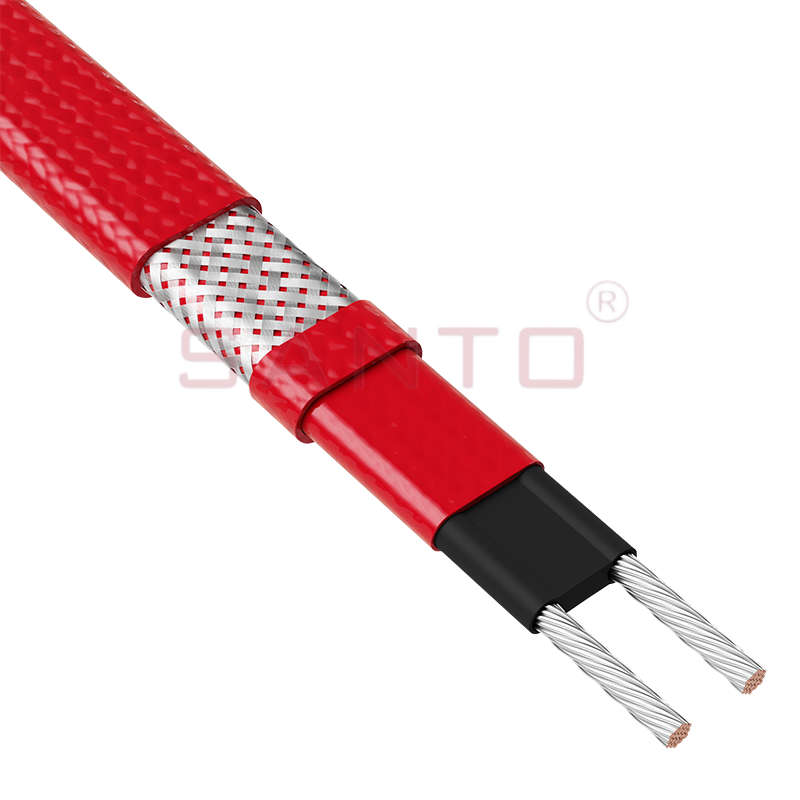
The SANTO UFC range of self-regulating heating cables is used for frost protection of pipes and vessels that require steam cleaning. They can also be used to maintain processes up to 121°C. These heat...
See Details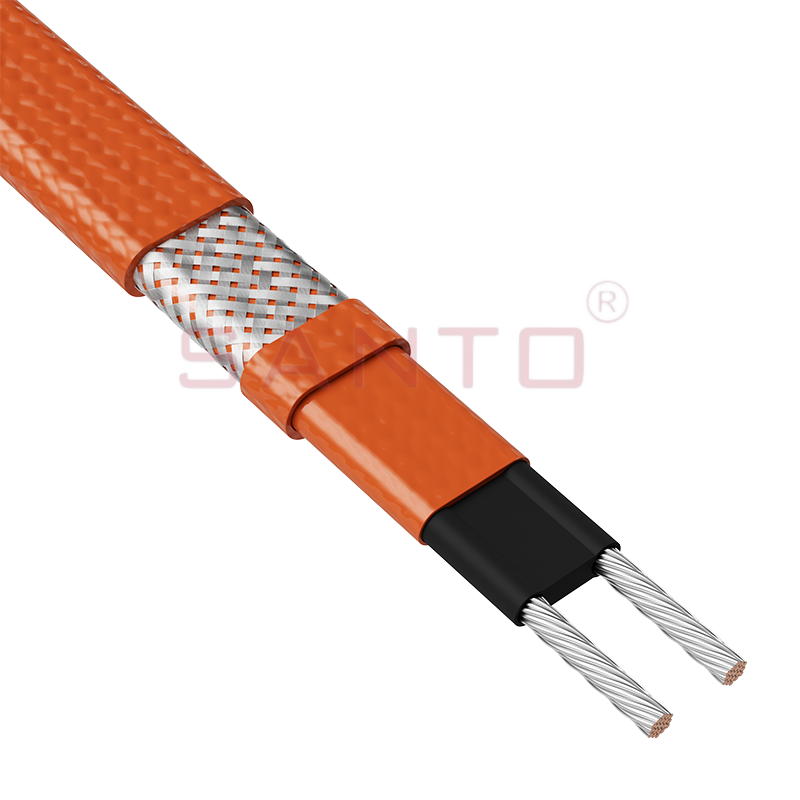
The SANTO UFO range of self-regulating heating cables is mainly used for frost protection of pipes and vessels that require steam cleaning . They can also be used to maintain processes up to 150°C. Th...
See Details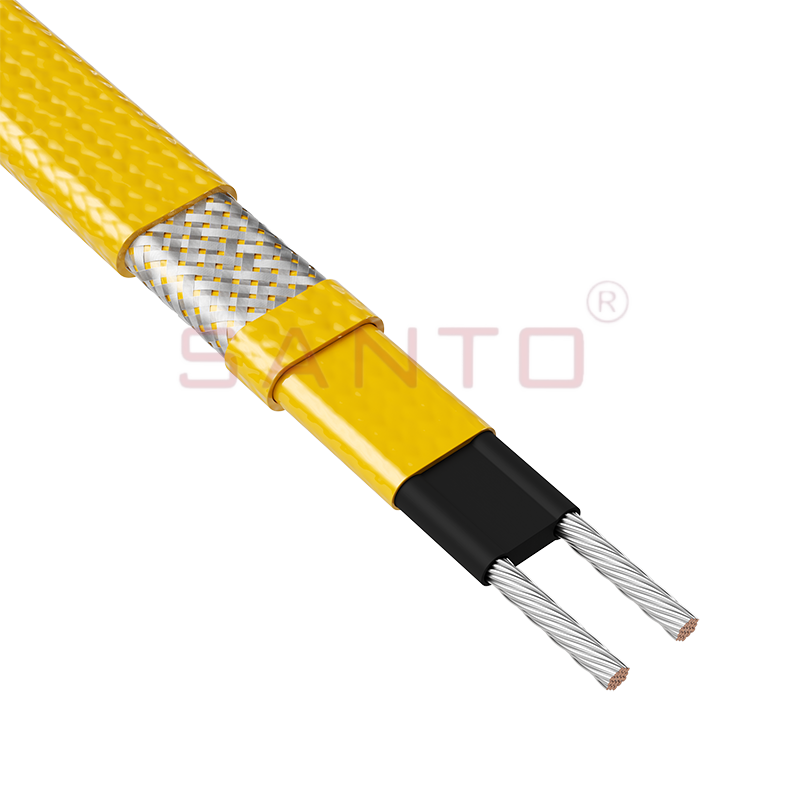
The SANTO UFD series of self-regulating heating cables are mainly used for freeze protection of pipes and vessels, but can also be used to maintain processes up to 200°C. These heating cables are avai...
See Details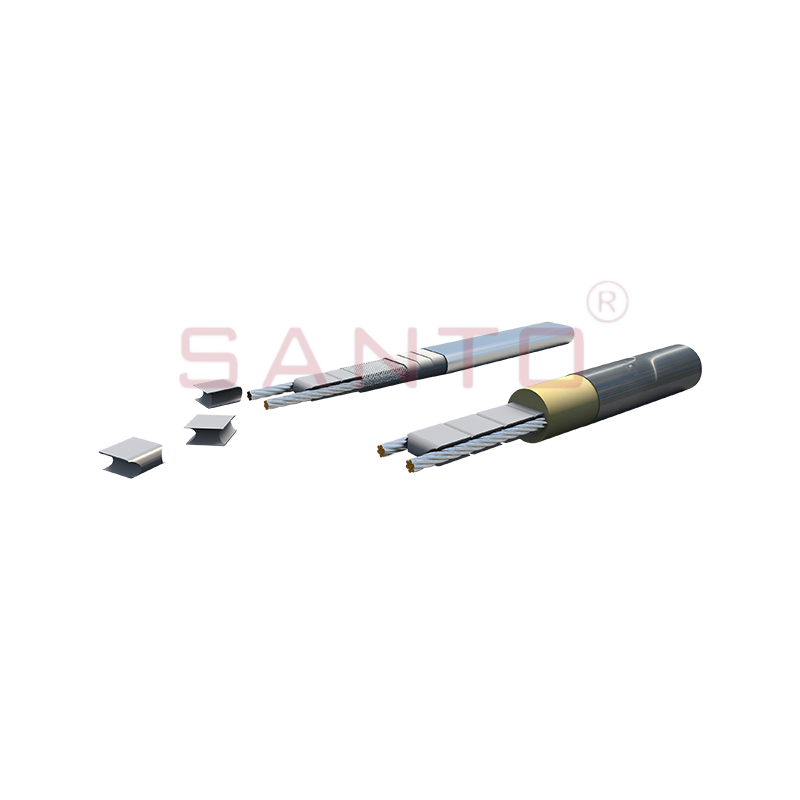
SANTO UFY heating wire is suitable for applications that maintain process temperatures up to 260 ℃ and can be steam blown; The self-regulating and parallel circuit heating wires of the UFY series are ...
See Details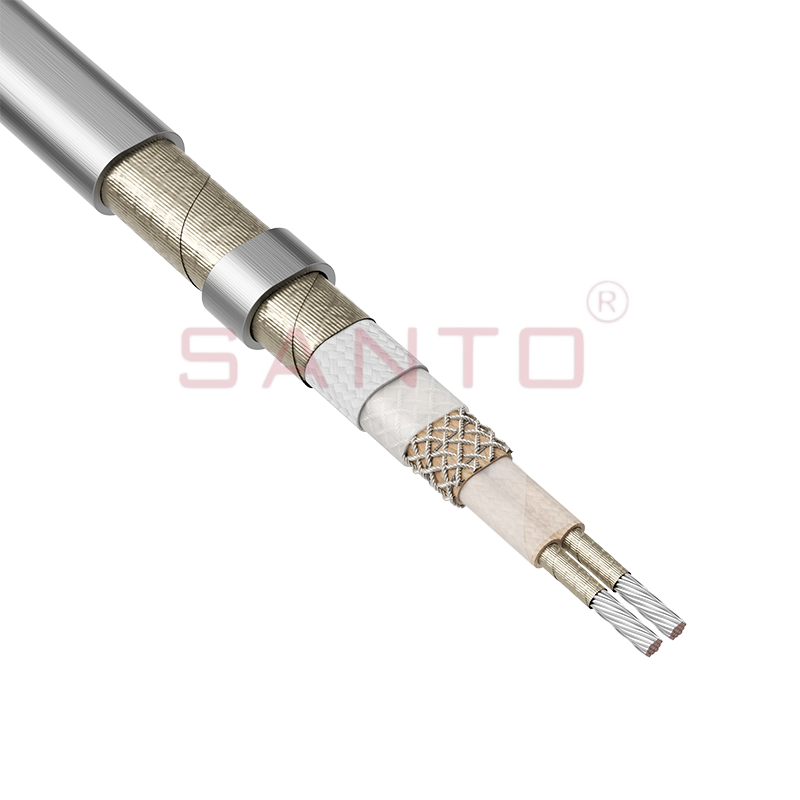
The SANTO UFM series self-regulating heating cables are mainly used for freeze protection of pipes and vessels, but can also be used to maintain processes up to 400°C. These heating cables are availab...
See Details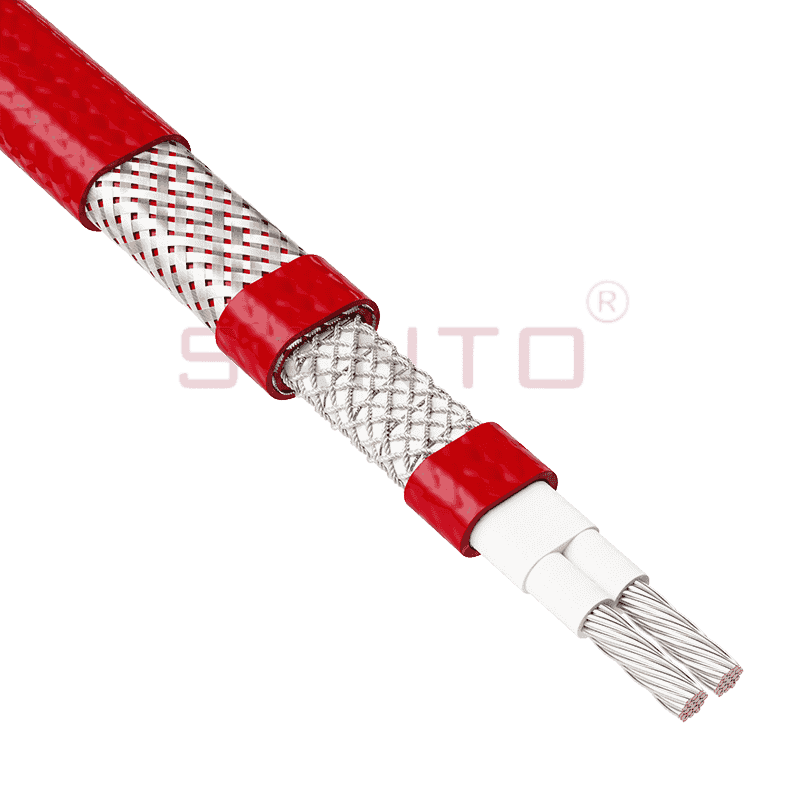
The SANTO ACC range of power-limiting heating cables is mainly used for temperature maintenance of processes and offers the advantage of a high power output at high temperatures which can reduce the n...
See Details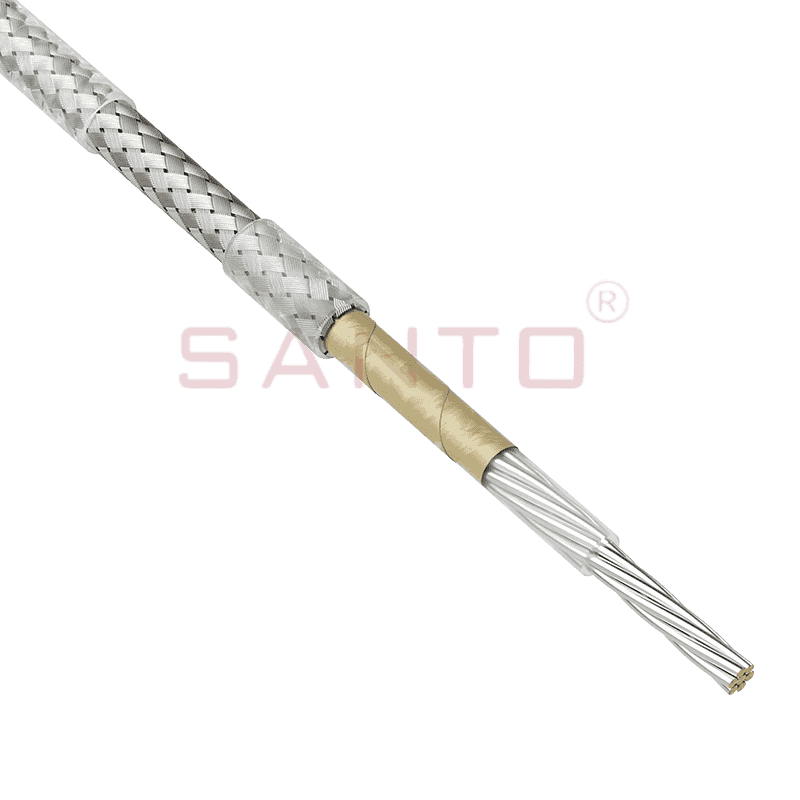
The stranded high temperature conductor is nickel plated to ensure a long life at elevated temperatures in corrosive environments. It is electrically isolated using an innovative sandwich construction...
See Details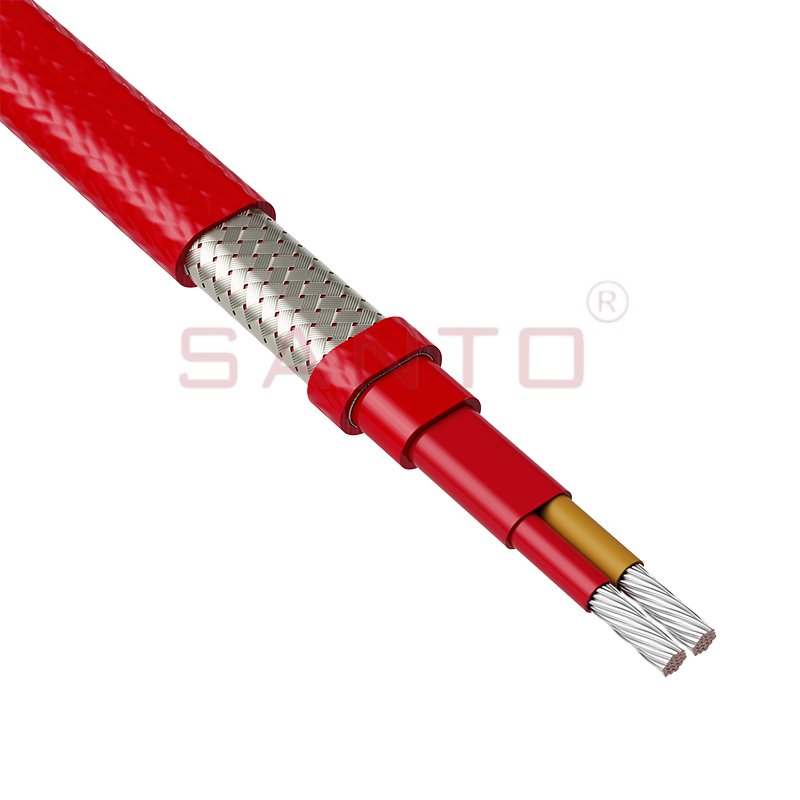
The stranded high temperature conductor is nickel plated to ensure a long life at elevated temperatures in corrosive environments. It is electrically isolated using an innovative sandwich construction...
See Details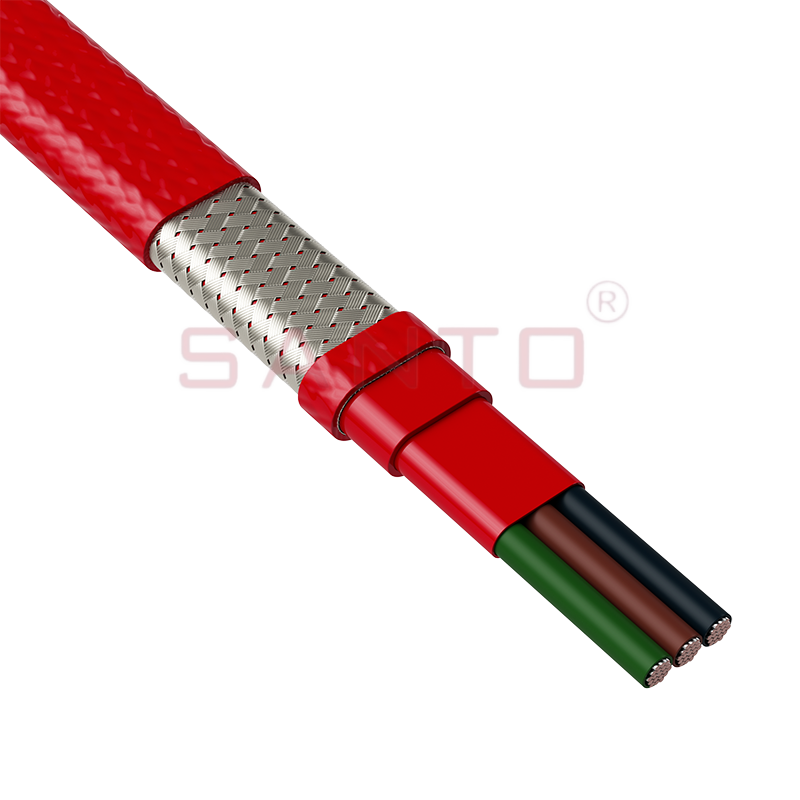
The stranded high temperature conductor is nickel plated to ensure a long life at elevated temperatures in corrosive environments. It is electrically isolated using an innovative sandwich construction...
See Details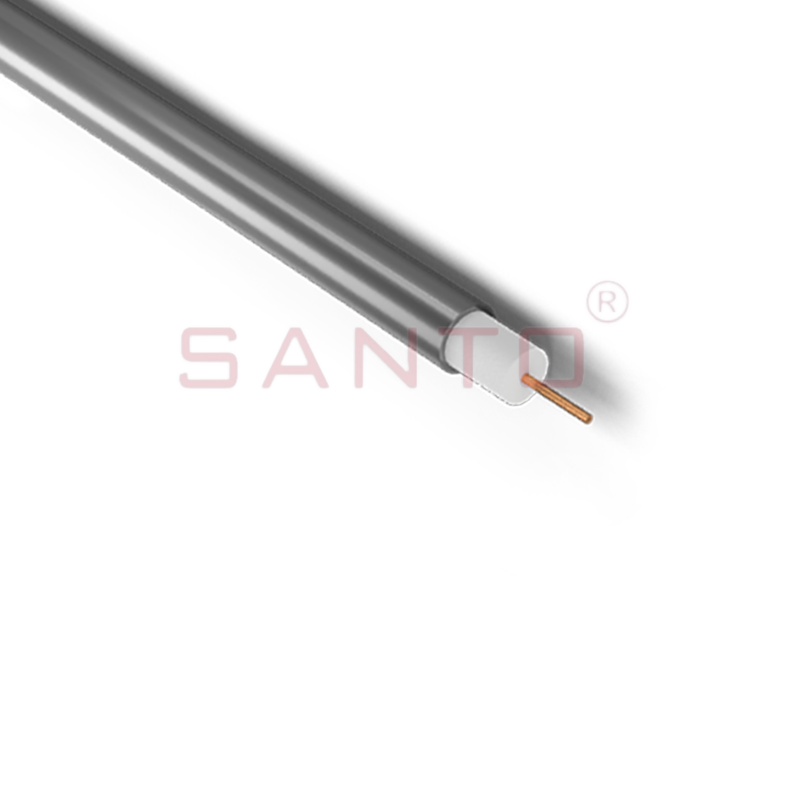
SANTO HAx mineral insulated (MI) Alloy 825 series heating cables are suitable for use in hazardous areas. They have been designed for use in freeze protection and temperature maintenance applications ...
See Details
Santo electric heating strips are widely used in key industries in China.

