 English
  English
 русский
 日本語
日本語 Español
 中文简体
中文简体
The SANTO UFA range of self-regulating heating cables is mainly used for frost protection of pipes and vessels but can also be used to maintain processes up to 65°C. These heating cables are available...
See Details
A dependable mounting accessory is an essential part of any electrically heated tracing, snow-melting, underfloor heating, tubing bundle, or silicone rubber heating installation. Although a bracket may appear to be a small component compared with a heating cable or control unit, it has a direct influence on installation quality, equipment stability, service access, and the long-term appearance of the completed system. The MF-SB-25 thermostat bracket is designed as a power box bracket for applications in which a thermostat, power connection enclosure, or related electrical control box must be mounted securely and positioned correctly.
Manufactured by Santo Thermal Control Technology Co., Ltd., the MF-SB-25 is part of a broader accessory range developed for electric heating and heat-tracing systems. Its purpose is to provide a practical interface between the power box and the supporting installation surface. By helping installers establish a stable mounting position, the bracket supports cleaner cable routing, more organized control equipment placement, and easier access during inspection or maintenance.
The bracket is suitable for consideration in projects involving electrically heated tracing cables, skin-effect heating tracing systems, snow and ice melting systems, underfloor heating mats, tubing bundles, and silicone rubber heating systems. Its final use should always be confirmed against the relevant product specification, environmental conditions, installation method, and applicable electrical regulations.
Content
The MF-SB-25 is identified as a power box bracket and is associated with thermostat-controlled heating installations. In a typical system, the heating element is connected to a power supply and controlled by a thermostat, temperature controller, switch box, or other electrical control device. The power box may need to be installed on a wall, support frame, equipment panel, pipe support, or another prepared structure. The bracket provides the mechanical support required for that arrangement.
In practical terms, the bracket performs several important functions. It helps hold the control enclosure in a defined position, separates the enclosure from the installation surface when required by the design, assists with neat cable entry and exit, and provides a repeatable mounting method across multiple projects. A standardized bracket can reduce installation improvisation, especially when many heating circuits or control points must be installed in a consistent manner.
The product name is sometimes written as “MF-SB-25 Ther at bracket” in product data, while the product alias refers to an “MFSB25 thermostat bracket.” These terms describe the same general accessory category: a bracket used to support a thermostat-related power box. Purchasers and installers should use the model designation MF-SB-25 when requesting drawings, dimensional confirmation, packaging information, or technical support.
Because a mounting accessory is part of a larger electrical system, its suitability should not be judged only by appearance. The bracket must be considered together with the power box, cable glands, conduit, fasteners, installation surface, ambient temperature, moisture exposure, mechanical loading, and maintenance requirements. A professional installation evaluates the complete assembly rather than treating the bracket as an isolated item.
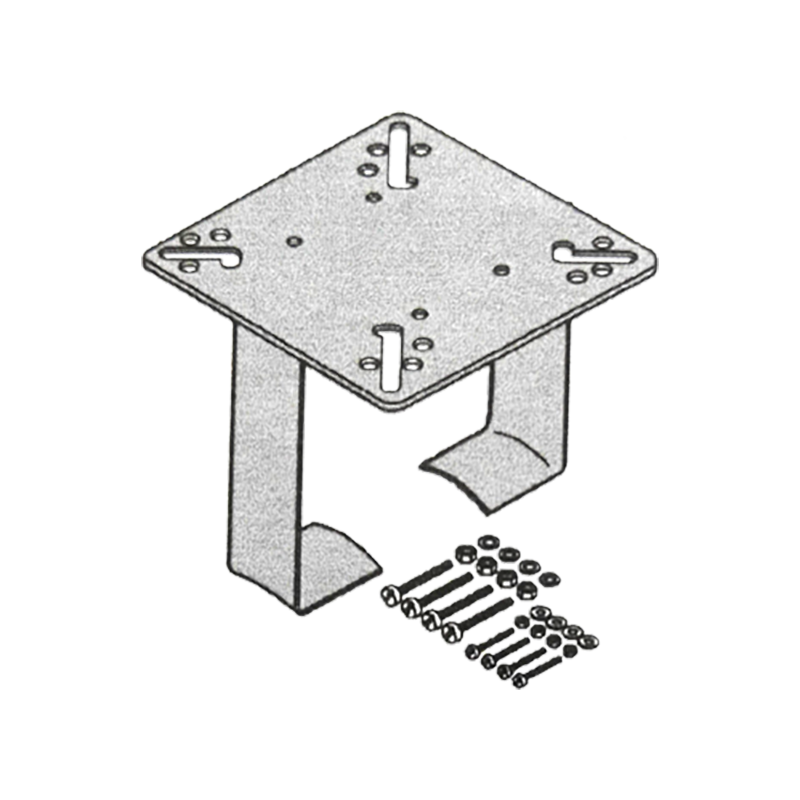
MF-SB-25 Ther at bracket
Heating systems are frequently installed in locations where temperature, moisture, vibration, dust, chemicals, or restricted access can affect equipment performance. A control box placed directly on an unsuitable surface may be exposed to water accumulation, excessive heat transfer, impact, or poorly controlled cable movement. A dedicated bracket creates a more intentional installation arrangement and helps the installer manage these conditions.
One important benefit is positional stability. Thermostats and power boxes must remain firmly mounted so that electrical connections are not subjected to repeated movement. Uncontrolled movement can place stress on cable glands, terminals, conduits, and connection points. A properly fitted bracket helps maintain the equipment’s position and reduces the likelihood of accidental displacement during operation or maintenance.
A second benefit is installation organization. Heating systems commonly include supply conductors, cold leads, sensor wires, heating cables, protective earth connections, and sometimes communication or alarm wiring. When the control enclosure is mounted in a clear and accessible position, these cables can be routed more systematically. Better organization supports faster commissioning and makes future fault tracing less complicated.
A third benefit is serviceability. Thermostats and power boxes may need to be inspected, adjusted, tested, or replaced. A bracket can help provide a defined service location rather than leaving the enclosure attached through improvised means. The installer can plan access around the box, preserve room for tools, and avoid placing the control device behind insulation, structural members, or other obstructions.
A fourth benefit is consistency. In commercial, industrial, and infrastructure projects, many control boxes may be installed across a site. Using a model-specific bracket supports a uniform appearance and repeatable installation process. Consistency reduces variation between work teams and can assist project supervisors when checking mounting positions, clearances, and cable routes.
Electric heat tracing is used to maintain the temperature of pipes, valves, tanks, vessels, drains, and other equipment. The heating cable may be installed beneath insulation or along a surface, while the thermostat or control box is placed at a suitable accessible location. The MF-SB-25 can be considered as a mounting accessory for the control side of this arrangement.
In a pipe-tracing installation, the bracket can support an organized transition between the heating circuit and the control enclosure. Installers should ensure that the power box is not positioned where it can be struck by moving equipment, exposed to direct process heat beyond its rating, or covered by insulation. The mounting location should also allow the sensor and power cables to be routed without sharp bends or unnecessary tension.
Skin-effect heating systems are used for long-distance pipeline heating and other applications requiring controlled heat transfer along a conductive pipe or specially designed heating circuit. Such systems may contain power supply equipment, control devices, junction boxes, and monitoring components distributed along the installation.
In this environment, a stable control-box mounting arrangement is valuable because the system may operate over long distances and in demanding industrial surroundings. The MF-SB-25 can form part of the mechanical installation strategy for a power box, provided that the bracket and enclosure are selected for the site conditions. Project engineers should review vibration, corrosion, temperature, hazardous-area classification, and access requirements before approval.
Snow-melting and ice-melting systems are installed on driveways, ramps, walkways, bridges, loading areas, roofs, gutters, and drainage channels. The heating cables or mats are normally located outdoors, where control equipment may be exposed to rain, snow, road salt, dust, and seasonal temperature changes.
A bracket used in an outdoor snow-melting installation should be combined with a properly rated enclosure and suitable corrosion-resistant fasteners. The mounting position should prevent water from collecting around cable entries and should keep the control box away from areas where vehicles, snowplows, or maintenance equipment could cause impact. The bracket itself is one part of a complete weather-resistant installation and should not be treated as a substitute for enclosure protection.
Underfloor heating mats are often controlled by thermostats installed in rooms, buildings, or local electrical panels. The bracket may be useful where the thermostat-related power box requires a secure mounting solution within a service area. In residential and commercial projects, appearance and access are particularly important. A well-positioned bracket can support an orderly installation while keeping electrical equipment in a planned location.
Installers must distinguish between the visible thermostat interface and the power or connection box behind it. The selected bracket must be compatible with the actual enclosure and installation surface. It should not interfere with wall finishes, insulation, floor structures, or other building services.
Heated tubing bundles may contain process tubes, sample lines, instrument cables, and heating elements. These bundles are used in chemical processing, gas analysis, environmental monitoring, and other industrial applications where line temperature must be maintained or condensation must be prevented.
The control box mounting arrangement for a tubing bundle must account for the bundle route, bend radius, support spacing, and access to instrumentation. A dedicated bracket can help establish a stable point near the beginning or end of the bundle, allowing the electrical transition area to be arranged more professionally. The installer should confirm that the bracket does not compress, abrade, or obstruct the tubing bundle.
Silicone rubber heating systems are used for flexible surface heating, vessel heating, drum heating, tank warming, and other applications requiring a conformable heating element. These systems may operate in locations with repeated temperature cycling, moisture, or equipment movement.
The control box should be mounted separately from areas where a flexible heater is expected to move or expand. The MF-SB-25 can support a fixed control point, while the heating element remains connected through properly selected leads and protective routing. Any application involving high temperature or repeated movement requires a review of the complete electrical and mechanical design.
The primary advantage of the MF-SB-25 is that it provides a purpose-oriented mounting solution rather than requiring installers to fabricate a support from unrelated materials. A purpose-designed accessory is easier to identify, specify, order, and include in a bill of materials. This can reduce uncertainty during installation planning.
Another advantage is improved system neatness. Heating installations often contain many components that must work together: heating cables, termination kits, thermostats, sensors, power boxes, junction points, conduits, and protective devices. A bracket helps establish a defined location for one of the most visible and serviceable components in the system.
The bracket also supports installation repeatability. When the same model is used across multiple projects, installers can follow a familiar mounting process. This is especially valuable for original equipment manufacturers, electrical contractors, heating-system integrators, and distributors serving several markets.
A further advantage is coordination with related products. Santo Thermal Control Technology produces a broad range of electric heating products and accessories. This product ecosystem can make it easier for a buyer to coordinate the control-box mounting accessory with heating cables, tracing products, snow-melting cables, silicone rubber heaters, and other electric heating components from the same manufacturing source.
Compared with an improvised bracket made on site, a standardized accessory may offer better documentation control and purchasing traceability. The project team can reference a model number, request technical information, and maintain a consistent spare-parts record. These benefits become more important when systems are installed in multiple facilities or exported to different regions.
| Evaluation factor | MF-SB-25 dedicated power box bracket | Improvised or general-purpose support |
|---|---|---|
| Application focus | Designed for thermostat-related power box mounting in heating-system installations | May require adaptation to suit the enclosure and heating application |
| Installation consistency | Supports repeatable mounting across multiple projects | Can vary according to the installer or fabrication method |
| Project documentation | Can be specified by a defined model and product document | May rely on local drawings or informal descriptions |
| Cable organization | Provides a planned support point for control-box placement and routing | Routing may be determined only after the support is fabricated |
| Procurement | Can be included in an accessory package with heating products | May require separate material selection and workshop preparation |
| Service planning | Helps establish a consistent equipment position for inspection | Access and position may differ from one installation to another |
| Adaptability | Best suited to compatible power boxes and approved mounting methods | May be more adaptable, but compatibility and strength must be verified |
| Quality control | Can be checked as a manufactured accessory before shipment | Quality depends on site fabrication, materials, and workmanship |
The table does not mean that a dedicated bracket is automatically suitable for every enclosure or environment. Compatibility remains essential. Instead, it illustrates why a model-specific accessory can be advantageous when the dimensions, mounting points, and installation conditions are known.
The MF-SB-25 is supported by the manufacturing capabilities of Santo Thermal Control Technology Co., Ltd., a company focused on electric heating and thermal-control products. The company’s product range includes automatic temperature-control heating belts, self-limiting heating belts, constant-power heating belts, glass-fiber heating belts, silicone rubber heating products, mineral-insulated cables, snow-melting cables, electric heating wires, and related accessories.
This product concentration is relevant to a power box bracket because accessories are most effective when developed with an understanding of the heating systems in which they will be installed. A manufacturer that works with heating cables and temperature-control equipment can better recognize practical installation needs such as sensor placement, cable transitions, enclosure access, environmental exposure, and coordination between electrical and mechanical components.
The company describes an integrated business model covering research, design, production, manufacturing, and sales. This structure can support communication between product development and production teams. It also gives customers a single source for technical consultation when a project involves several heating technologies rather than one isolated component.
According to the supplied company information, the manufacturer has more than 35 years of industry experience, an annual output exceeding 10,000 units or products, more than 2,000 distributors, and business coverage in more than 85 areas. These figures indicate an established operating base and experience serving different application environments. For buyers, manufacturing continuity and supply capability are important considerations when accessories must be delivered together with heating-system equipment.
The company is located in Jiangsu Province, an area associated with China’s electric heating belt industry. Its history began with the founding of Desheng Electric Heating Instrument Factory in 2000. The company later passed ISO9001:2000 quality system certification, established an irradiation center, developed new heating technologies, and expanded its product and certification portfolio.
The company information also states that Santo cooperates in product research with Harvard University in the United States and has invested in research and development for self-limiting temperature heating products, carbon-fiber parallel heating cables, and other thermal-control technologies. These activities demonstrate an emphasis on technical development beyond basic component trading.
For a product such as the MF-SB-25, manufacturing strength is not limited to the bracket’s physical production. It also includes model control, material selection, dimensional consistency, packaging, document management, customer communication, and the ability to coordinate the accessory with the heating system for which it is intended.
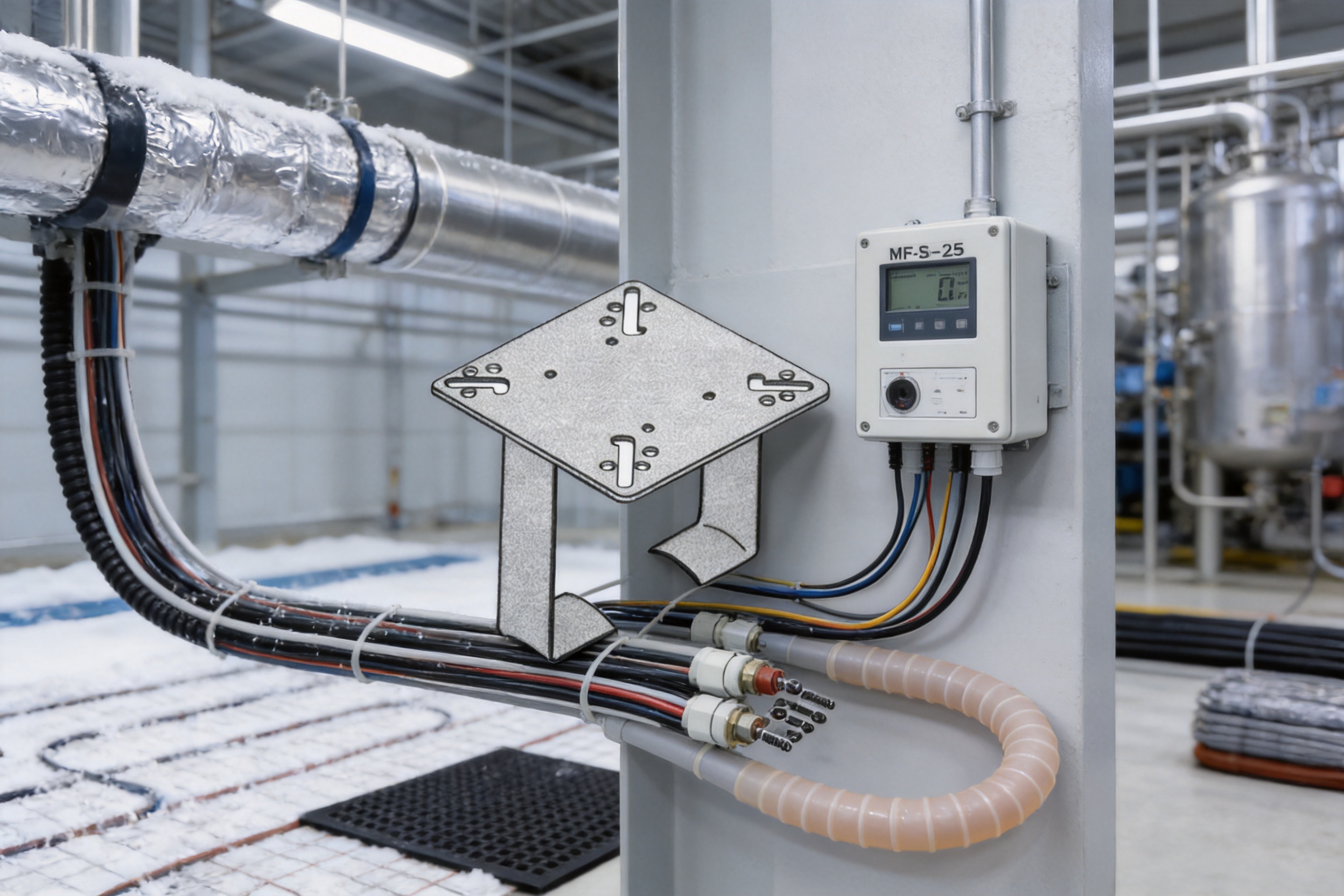
Quality management is particularly important for heating-system accessories because a small mechanical defect can affect the reliability of the complete installation. A bracket that is poorly formed, dimensionally inconsistent, inadequately finished, or difficult to fasten may create delays at the job site. It can also cause the power box to sit incorrectly, leading to cable stress or reduced service access.
The supplied company information states that Santo has passed ISO9001 quality system certification. ISO-based quality management provides a framework for documented processes, responsibility assignment, inspection, corrective action, and continual improvement. Certification itself does not replace product-specific verification, but it indicates that the manufacturer operates within a formal quality-management structure.
A controlled manufacturing process for a bracket generally includes review of approved drawings, material verification, forming or machining control, dimensional inspection, surface-finish checks where applicable, assembly verification, packaging inspection, and final release. The precise process depends on the material and construction of the MF-SB-25 and should be confirmed in the product specification.
Production control also helps prevent mixed components and incorrect shipments. Since heating-system projects may contain many similar accessories, clear model identification is important. Product labels, packing lists, technical documents, and warehouse records should identify the MF-SB-25 accurately so that the bracket is not confused with another support model.
For export customers, packaging quality is another important manufacturing consideration. The bracket should be packed to reduce movement, abrasion, contamination, and damage during transportation. Documentation should be protected and associated with the correct product. Buyers with special packaging or labeling requirements should communicate them before order confirmation.
The materials and finish of a bracket should be selected according to the environment where it will be installed. Indoor dry areas, outdoor exposed locations, chemical plants, coastal regions, cold climates, and high-temperature process areas impose different requirements. The available product specification should be reviewed for material, dimensions, finish, allowable temperature, load considerations, and compatible fasteners.
Where corrosion is possible, the bracket and fasteners should be evaluated together. A corrosion-resistant bracket may still be compromised by unsuitable screws, washers, or support hardware. In chemical or marine environments, the installer should consider atmospheric contaminants, salt, cleaning chemicals, galvanic interaction, and water drainage.
Mechanical loading should also be considered. The bracket must support the power box and any normal forces created by cable movement, vibration, or maintenance activity. It should not be used as a lifting point or as support for equipment beyond its intended purpose. If the enclosure is heavy or exposed to significant vibration, the project engineer may require additional reinforcement.
Temperature is another important factor. Heat-tracing equipment can be installed close to hot pipes, process equipment, boilers, furnaces, or heated surfaces. The bracket’s environment should remain within the approved range, and the power box should not be mounted where heat from the process could exceed the rating of the enclosure, thermostat, wiring, or mounting accessory.
Electrical safety must remain the responsibility of the complete system design. The bracket does not provide electrical protection by itself. The power box, cable glands, conduit, grounding arrangement, overcurrent protection, residual-current protection, thermostat, sensor, and heating cable must be selected and installed according to applicable standards and project requirements.
Before installation, review the MF-SB-25 product specification and any associated power-box documentation. Confirm the bracket dimensions, hole pattern, mounting orientation, compatible enclosure, fastener requirements, and environmental limitations. If the available document does not show a required detail, request clarification from the manufacturer or supplier before drilling or fabricating supports.
Check the model designation, quantity, packaging condition, and visible surface condition. Look for distortion, cracks, burrs, damaged finishes, missing hardware, or other irregularities. Any discrepancy should be recorded before installation. Early inspection is easier and more effective than discovering a problem after the heating system has been wired or insulated.
Choose a location that is accessible, structurally suitable, and compatible with the environmental rating of the power box. Keep the control equipment away from direct mechanical impact, water accumulation, excessive heat, and areas that may be covered by insulation or stored materials.
The location should allow the thermostat or controller to function correctly. If the thermostat uses an ambient-temperature sensor, the sensor should be placed according to its instructions and should not be influenced incorrectly by the heating cable, the power box, sunlight, drafts, or nearby heat sources.
Ensure that the wall, frame, panel, or other support is strong enough for the bracket and enclosure. Mark the mounting points accurately and check that drilling will not damage hidden electrical wiring, pipes, structural reinforcement, or process equipment. For outdoor or industrial installations, provide a mounting arrangement that allows drainage and prevents water from being trapped around the enclosure.
Use the approved fasteners and follow the specified orientation. Tighten the hardware evenly without deforming the bracket or enclosure. The power box should sit securely, and its door, cover, terminals, cable entries, and adjustment controls should remain accessible.
Route cables with suitable bend radii and protect them from abrasion, sharp edges, hot surfaces, moving components, and standing water. Avoid placing unnecessary tension on cable glands or terminals. Where conduit, clips, or additional supports are required, install them in accordance with the system design.
Qualified personnel should verify conductor identification, grounding continuity, insulation resistance, terminal tightness, thermostat operation, sensor response, and protective-device operation. The heating circuit should be tested before final insulation or enclosure closure where practical. Test records should be retained as part of the project documentation.
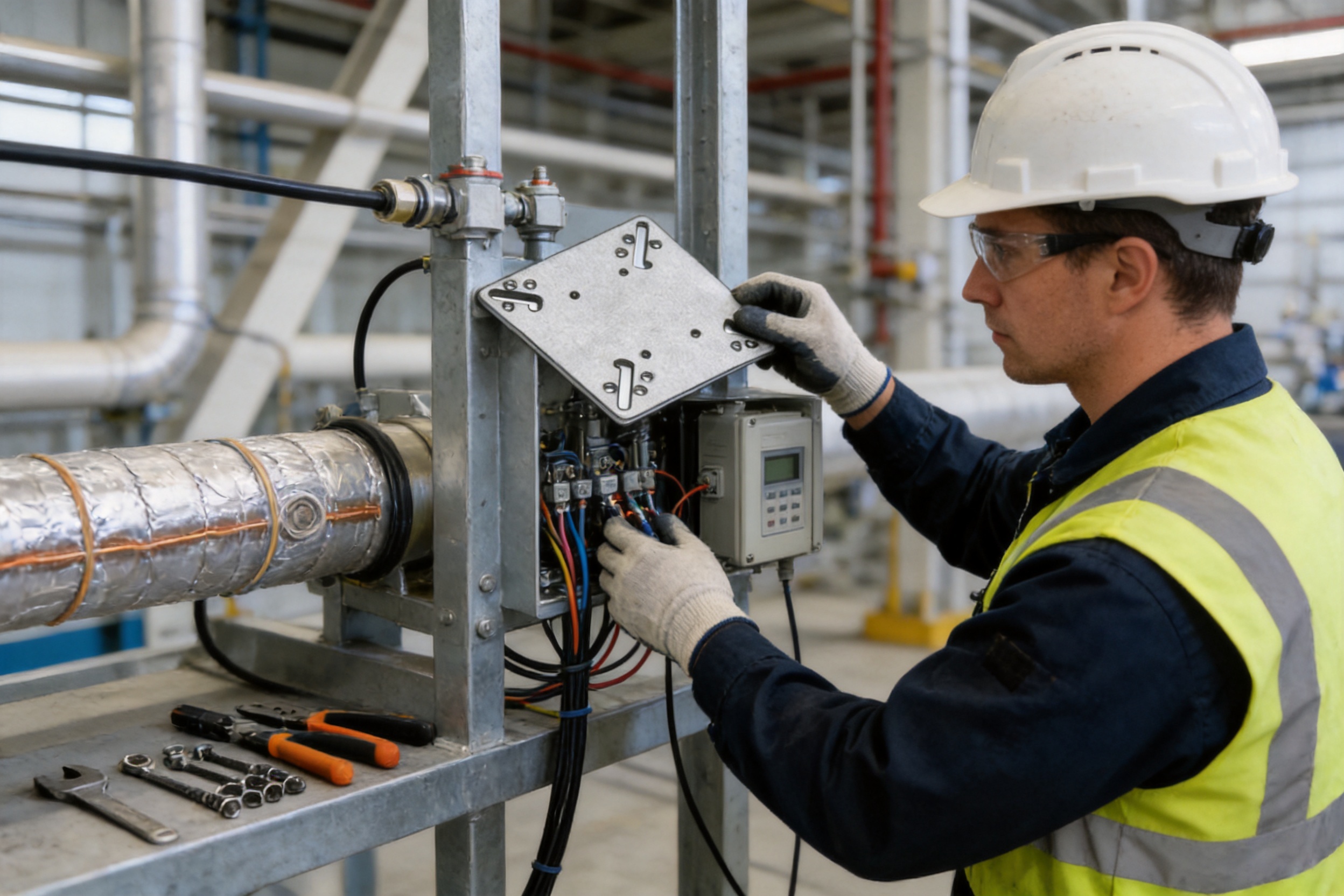
Original equipment manufacturers and heating-system integrators often need more than a single component. They may require a compatible package containing heating elements, power boxes, thermostats, mounting brackets, termination components, labels, and technical documents. A supplier with a broad heating-product portfolio can simplify this process.
The MF-SB-25 can be included in a controlled equipment bill of materials, reducing the risk that installers will substitute an unapproved support. It can also help OEM customers create a repeatable product assembly. When the same bracket is used across a product family, assembly instructions, packaging procedures, and service manuals can be standardized.
For export customers, supplier coordination may reduce communication between multiple vendors. The company’s experience with heating cables, tracing systems, and international markets can support discussions about application selection, product combinations, documentation, and shipment planning. Customers should still provide complete technical information, including the power-box model, installation environment, voltage, temperature range, quantity, and required certifications.
Customization may be possible for selected projects, but it should never be assumed without written confirmation. Potential custom requirements could include a revised hole pattern, alternative finish, special packaging, private labeling, or coordination with a particular control enclosure. Any modified design should be reviewed for mechanical strength, electrical clearance, corrosion resistance, manufacturability, and repeatability before mass production.
In petroleum and chemical facilities, heat tracing is often used to prevent freezing, maintain process viscosity, prevent crystallization, or protect instruments. The bracket and control box must be installed with attention to hazardous-area requirements, chemical exposure, process temperatures, and maintenance procedures. If the location is classified as hazardous, every component and installation method must satisfy the applicable certification and site rules.
In gas systems, a control box may be installed near pipelines, regulators, valves, or sampling equipment. Clear identification and service access are important because a technician may need to isolate power or inspect the heating circuit during operation. The bracket can contribute to an orderly arrangement, but the complete installation must include appropriate separation and protection.
In construction and building services, brackets support predictable installation across roofs, ramps, floors, pipework, and plant rooms. Contractors benefit from products that are easy to identify and include in their material schedules. A defined accessory can help reduce last-minute site fabrication and improve the consistency of completed work.
In solar-energy installations, heating may be used for frost protection, snow management, or temperature control of exposed equipment and piping. Outdoor exposure makes enclosure positioning and water management especially important. The bracket should be installed with suitable weather protection and should not create a low point where water can collect.
In geothermal cultivation and agricultural applications, heating systems may be used to protect pipes, maintain growing conditions, or prevent freezing. Moisture, fertilizer, cleaning agents, and outdoor temperature changes should be assessed when selecting the power-box location and mounting hardware.
A bracket requires little routine maintenance when correctly selected and installed, but it should be included in regular system inspections. Inspectors should check for looseness, deformation, corrosion, damaged coating, cracked supports, missing fasteners, and interference with the power box.
Cable entries should be checked for movement or tension. If cables have become heavy with ice, snow, water, or accumulated material, the additional load should be removed safely rather than transferred to the bracket. Any modification to the enclosure or support should be reviewed by qualified personnel.
In areas with vibration, inspections may need to be more frequent. Vibration can gradually loosen fasteners or create fatigue at mounting points. Locking hardware, suitable washers, thread-locking methods, or other approved measures may be required, depending on the design and local regulations.
Corrosion should be addressed at an early stage. Surface discoloration may be cosmetic in one environment but a warning of structural deterioration in another. If corrosion affects the bracket, enclosure, or fasteners, the system should be assessed before continued operation.
Maintenance records should identify the model, installation date, inspection date, observed condition, corrective action, and responsible technician. Consistent documentation is especially valuable for industrial heating systems distributed over a large facility.
In the heating-component market, competition is not determined only by the price of a single bracket. Customers also evaluate engineering support, product compatibility, manufacturing control, delivery reliability, documentation, and after-sales communication. A dedicated model such as the MF-SB-25 can contribute to a complete value proposition when it is supplied as part of a coordinated heating solution.
One competitive advantage is specialization. A supplier focused on electric heating products understands that accessories must work within a thermal-control system. This differs from a general hardware supplier that may provide a bracket without considering sensor placement, cable transitions, enclosure access, or heat-tracing installation practices.
A second advantage is portfolio coordination. The same manufacturer offers several types of heating cables and heating systems, including self-limiting, constant-power, silicone rubber, glass-fiber, mineral-insulated, snow-melting, and other electric heating products. This makes it possible to discuss the bracket in the context of the complete application rather than as an isolated hardware item.
A third advantage is manufacturing experience. The company’s history extends over decades and includes research, product development, certification activity, production expansion, and international distribution. This background can support a more mature approach to product consistency, supply coordination, and technical communication.
A fourth advantage is suitability for project-based purchasing. Distributors, contractors, and OEMs often need repeat orders with consistent model identification and predictable documentation. A defined accessory model can be incorporated into procurement systems and installation manuals more easily than a locally improvised component.
These advantages should be evaluated with objective evidence, including the product specification, samples, inspection records, certifications where required, and customer references. The most appropriate supplier is the one that can demonstrate both product suitability and reliable support for the intended project.
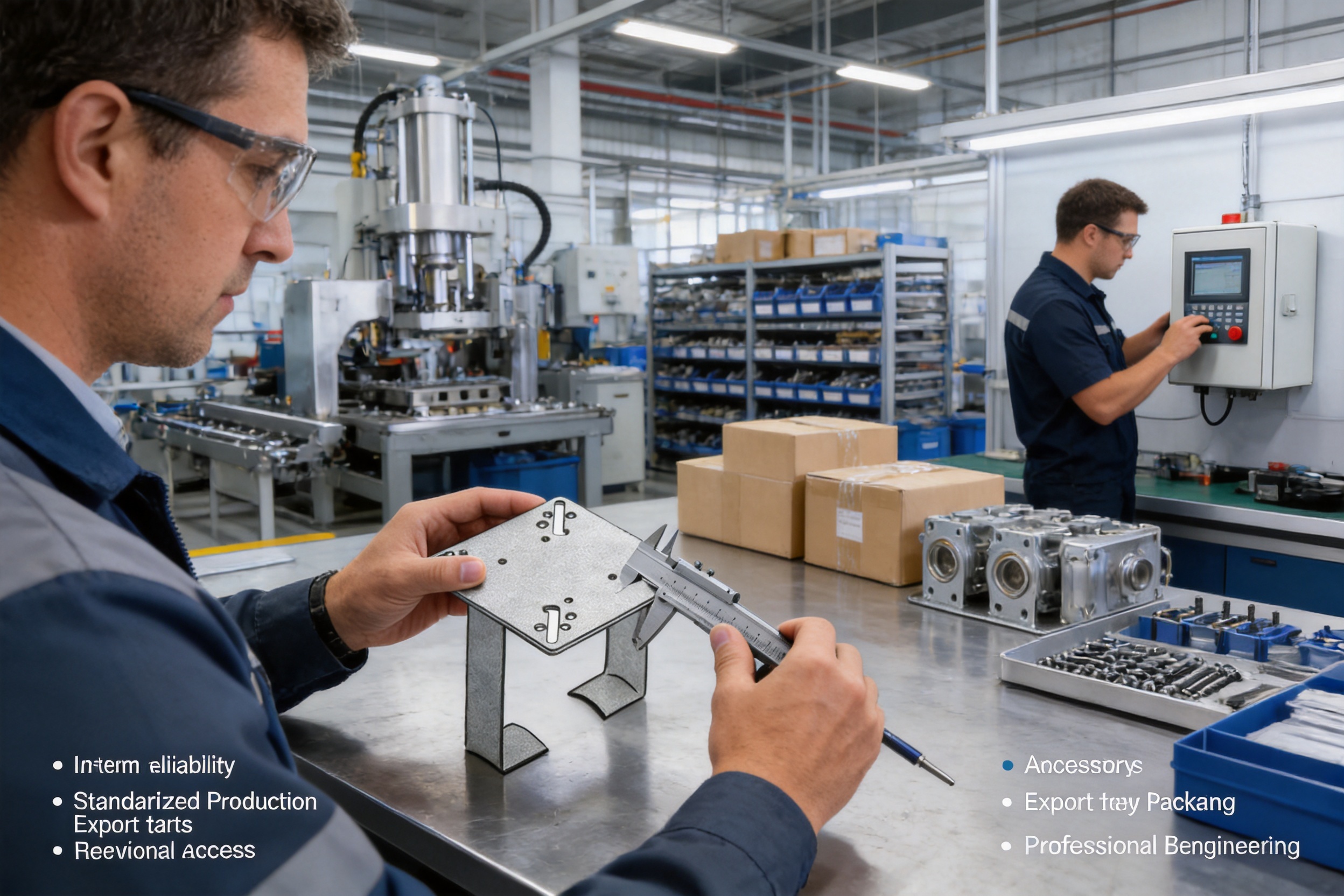
Before ordering the MF-SB-25, buyers should confirm the exact power-box or thermostat enclosure that will be mounted. The bracket should match the enclosure’s dimensions, fixing points, weight, orientation, and cable-entry arrangement. If several enclosure models are being considered, compatibility should be checked for each one.
The installation environment should be described clearly. Important information may include indoor or outdoor use, ambient temperature, process temperature, humidity, exposure to chemicals, vibration, dust, salt, snow, ultraviolet radiation, and hazardous-area classification. This information allows the supplier to identify whether the standard product is suitable or whether an alternative arrangement is needed.
Buyers should also confirm the required quantity, delivery schedule, packaging method, labeling, documentation language, inspection requirements, and destination regulations. For export projects, the purchaser should communicate any customs, certification, or marking requirements before production.
Where a project involves a large number of brackets, it is advisable to request a drawing or sample for approval. A sample can be used to check the mounting position, access to the power box, cable routing, clearance from adjacent equipment, and overall installation appearance.
Customers should not select a bracket solely by model number if the project has unusual loads or environmental conditions. Engineering review is recommended for high-vibration installations, very heavy enclosures, high-temperature locations, corrosive atmospheres, explosive atmospheres, or applications requiring special structural certification.
The supplied product information identifies the item as the MF-SB-25 power box bracket and provides a product specification PDF. The specification document should be treated as the primary source for technical details. Depending on the purchasing requirement, customers may request the following information:
Overall dimensions and mounting-hole locations should be confirmed so that the installation surface can be prepared accurately. The bracket’s orientation and any dimensional tolerances may also be relevant where the power box must align with conduit, cable tray, insulation, or adjacent equipment.
Material and surface finish should be confirmed for the intended environment. If the project has corrosion-resistance requirements, the purchaser should request information about the material grade, coating, treatment, or available alternative construction.
Allowable load and recommended fasteners should be confirmed where the enclosure is heavy or subject to vibration. If the bracket is intended only for a specific power-box model, that limitation should be recorded in the installation documentation.
Temperature limitations and environmental restrictions should be reviewed, especially where the bracket is installed near heat-traced pipes, high-temperature process equipment, outdoor surfaces, or snow-melting systems.
Packaging dimensions, net weight, gross weight, quantity per carton, and labeling information may be required for logistics planning. OEM customers may also request inspection reports, production samples, or special packaging arrangements.
The product is supplied by Santo Thermal Control Technology Co., Ltd., located in Wuxing Industrial Zone, Dainan Town, Xinghua City, Jiangsu Province, China. The company’s stated business covers research, design, manufacturing, and sales of electric heating and thermal-control products.
The company’s product categories include electrically heated tracing cables, skin-effect heating tracing systems, snow and ice melting skin-effect systems, underfloor heating mats, tubing bundles, accessories, and silicone rubber heating systems. The MF-SB-25 is categorized as a power box bracket within this wider product offering.
The company states that its products are used in petroleum, chemical, gas, construction, solar energy, geothermal cultivation, electric heating, deicing, antifreeze, heat tracing, and insulation applications. This range of applications provides context for the environments in which a power-box mounting accessory may be used.
For product inquiries, customers may contact the company through the supplied telephone numbers or email addresses. It is recommended that inquiries include the model number, required quantity, application, power-box model, installation environment, destination country, and any required technical or certification documents.
The MF-SB-25 is a power box bracket used to support a thermostat-related power box or control enclosure in an electric heating installation. It is an accessory rather than a heating element.
No. The MF-SB-25 is identified as a bracket. It provides mechanical support for a compatible power box or thermostat-related enclosure. The thermostat, sensor, power supply, and heating cable are separate components unless a specific package states otherwise.
It can be considered for electrically heated tracing cables, skin-effect heating tracing systems, snow and ice melting systems, underfloor heating mats, tubing bundles, and silicone rubber heating systems. Compatibility must be confirmed against the actual enclosure and project conditions.
No. The bracket does not replace an enclosure and does not provide electrical insulation, grounding, overcurrent protection, or weatherproofing. It is a mechanical mounting accessory only.
Outdoor use depends on the material, finish, enclosure arrangement, fasteners, and environmental rating stated in the product documentation. The complete installation must be protected against water, corrosion, impact, and temperature exposure.
Hazardous-area use cannot be assumed from the bracket model alone. The complete assembly, including the power box, thermostat, cable glands, wiring method, and mounting arrangement, must comply with the applicable hazardous-area certification and site requirements.
Fasteners should be selected according to the support surface, bracket material, enclosure weight, environmental exposure, and applicable engineering requirements. The manufacturer’s product specification or project drawings should be consulted before installation.
The supplied information refers to a Power Box Bracket Product Specification PDF. Customers should request or review that document for dimensions, mounting-hole positions, material information, and other technical details.
Customization may be possible for selected projects, but it must be confirmed with the manufacturer. Customers should provide the enclosure drawing, mounting requirements, quantity, material preference, finish, environment, and delivery expectations.
A dedicated bracket can improve consistency, documentation, procurement traceability, and installation organization. Local fabrication may still be appropriate in special circumstances, but it requires independent checks of material, strength, corrosion resistance, dimensions, and workmanship.
A quotation request should include the MF-SB-25 model, quantity, application, compatible power-box model, installation environment, delivery location, required certifications, packaging requirements, and desired delivery schedule.
Electrical connections and functional testing should be completed by qualified personnel familiar with electric heating, temperature-control equipment, and applicable electrical regulations. Mechanical mounting should follow the approved product documentation and project method statement.
The MF-SB-25 power box bracket is a small but meaningful component in the organization of thermostat-controlled heating systems. By providing a defined mounting point for a power box or related control enclosure, it can support better equipment stability, cable management, service access, and installation consistency.
Its value is strongest when it is selected as part of a complete heating-system design. Whether the application involves pipeline heat tracing, skin-effect heating, snow and ice melting, underfloor heating, tubing bundles, or silicone rubber heaters, the bracket should be reviewed together with the enclosure, cables, sensors, fasteners, environmental conditions, and electrical protection.
The product also benefits from the manufacturing background of Santo Thermal Control Technology Co., Ltd. The company’s focus on electric heating products, research and development, quality management, product certification, international distribution, and accessory coordination provides a suitable foundation for supplying components to OEMs, contractors, distributors, and industrial project customers.
For the best result, purchasers should confirm the product specification, request dimensional and material details, verify compatibility with the selected power box, and communicate the complete installation environment before ordering. With correct selection and professional installation, the MF-SB-25 can contribute to a cleaner, more reliable, and more maintainable electric heating system.
1. Santo Thermal Control Technology Co., Ltd., “Power Box Bracket Product Specification,” product document for model MF-SB-25.
2. Santo Thermal Control Technology Co., Ltd., company profile and electric heating product information supplied for product publication.
3. ISO 9001, Quality Management Systems—Requirements.
4. IEC 62395, Electrical Resistance Trace Heating Systems for Industrial and Commercial Applications.
5. IEC 60529, Degrees of Protection Provided by Enclosures.
6. IEC 60079 series, Explosive Atmospheres—Equipment and Installation Requirements.
7. National and local electrical installation regulations applicable to electric heating, thermostat control, grounding, overcurrent protection, and outdoor equipment mounting.
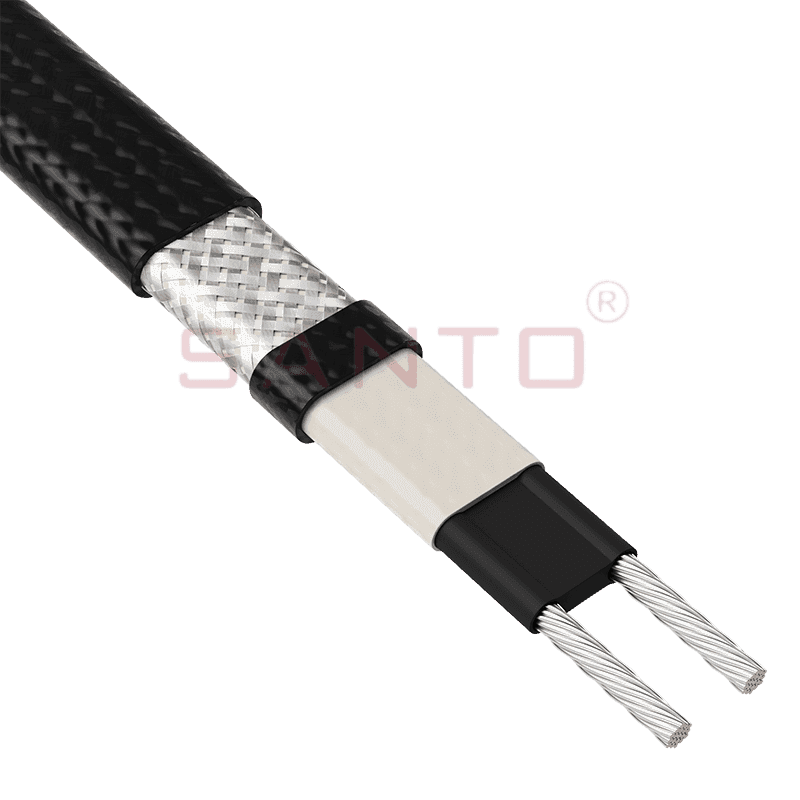
The SANTO UFA range of self-regulating heating cables is mainly used for frost protection of pipes and vessels but can also be used to maintain processes up to 65°C. These heating cables are available...
See Details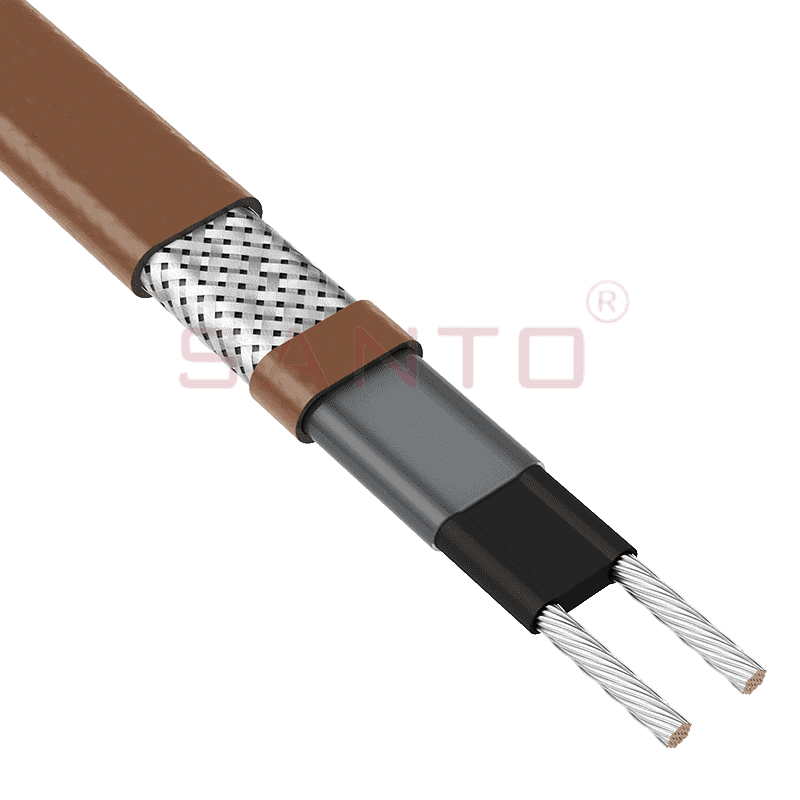
The SANTO UFB range of self-regulating heating cables is mainly used for frost protection of pipes and vessels requiring a higher power output than the UFA heating cables can supply. They can also be ...
See Details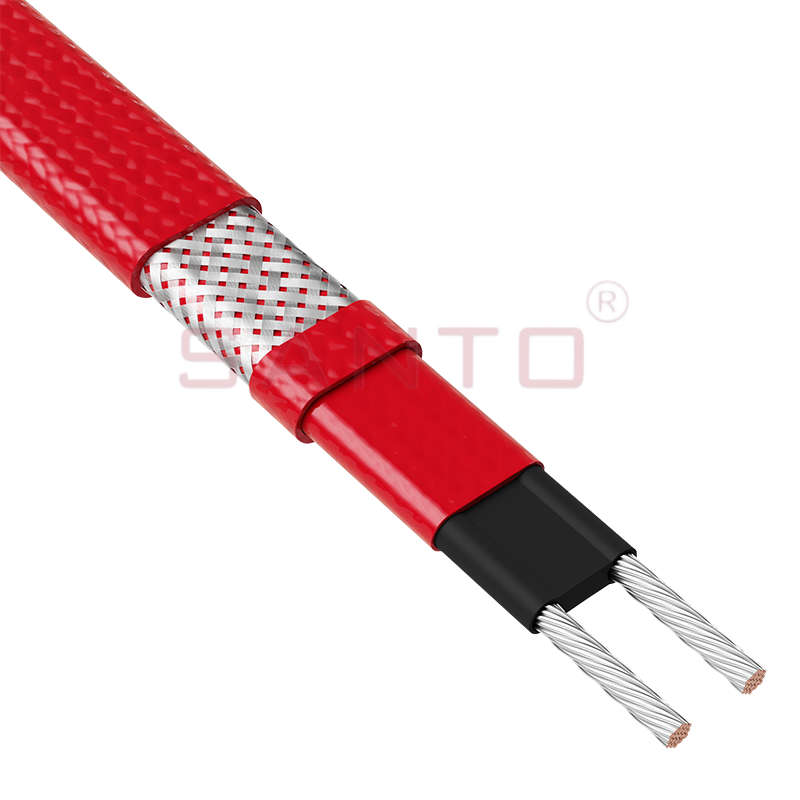
The SANTO UFC range of self-regulating heating cables is used for frost protection of pipes and vessels that require steam cleaning. They can also be used to maintain processes up to 121°C. These heat...
See Details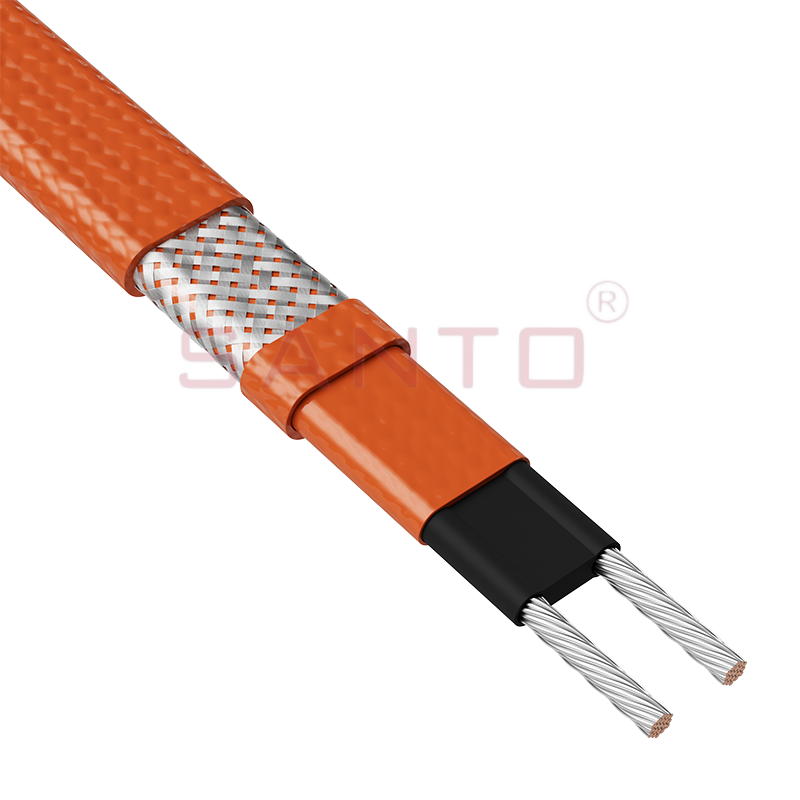
The SANTO UFO range of self-regulating heating cables is mainly used for frost protection of pipes and vessels that require steam cleaning . They can also be used to maintain processes up to 150°C. Th...
See Details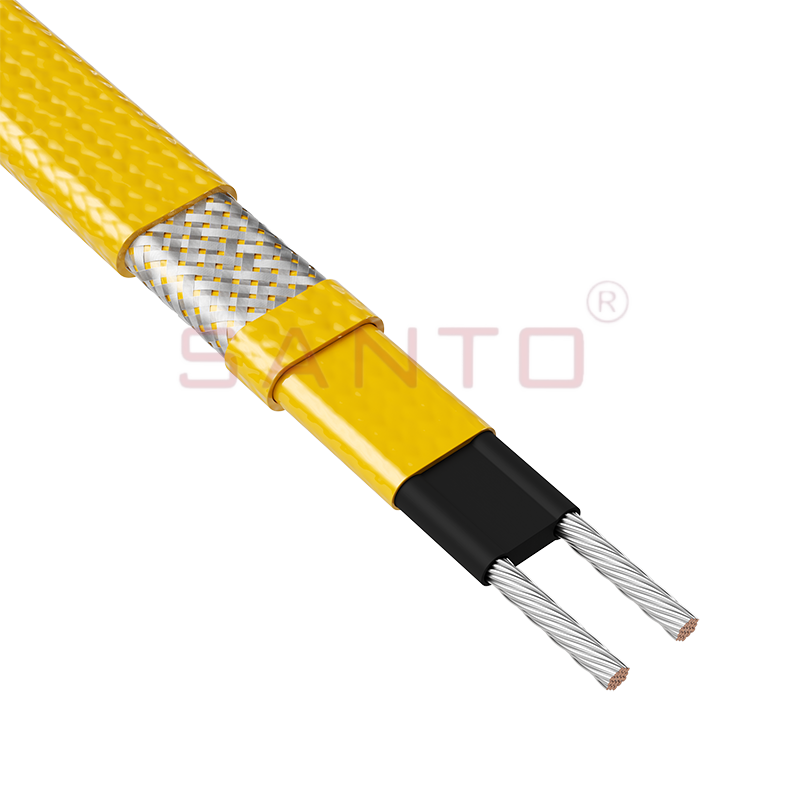
The SANTO UFD series of self-regulating heating cables are mainly used for freeze protection of pipes and vessels, but can also be used to maintain processes up to 200°C. These heating cables are avai...
See Details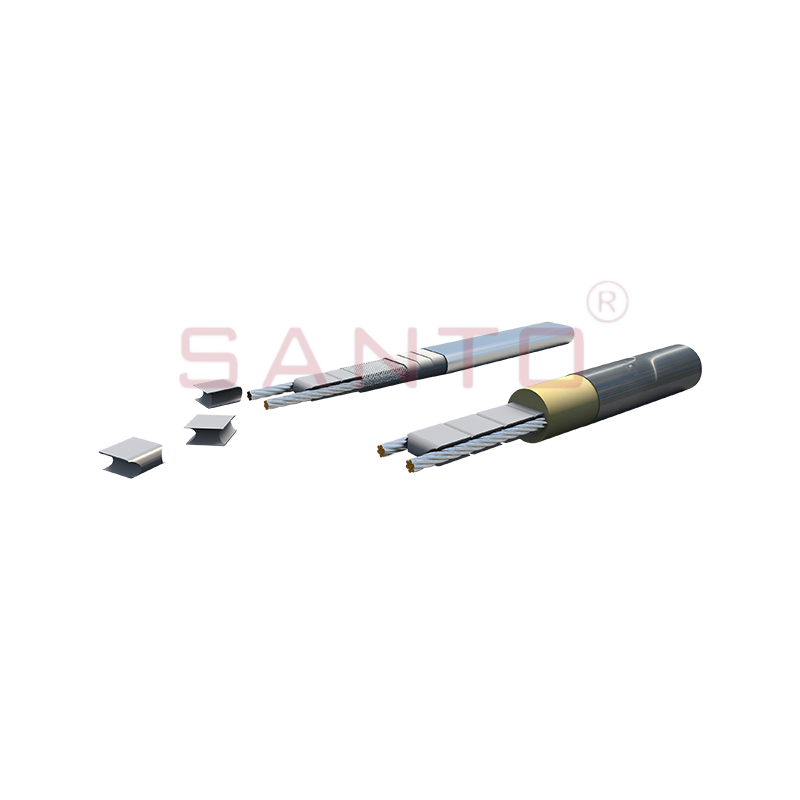
SANTO UFY heating wire is suitable for applications that maintain process temperatures up to 260 ℃ and can be steam blown; The self-regulating and parallel circuit heating wires of the UFY series are ...
See Details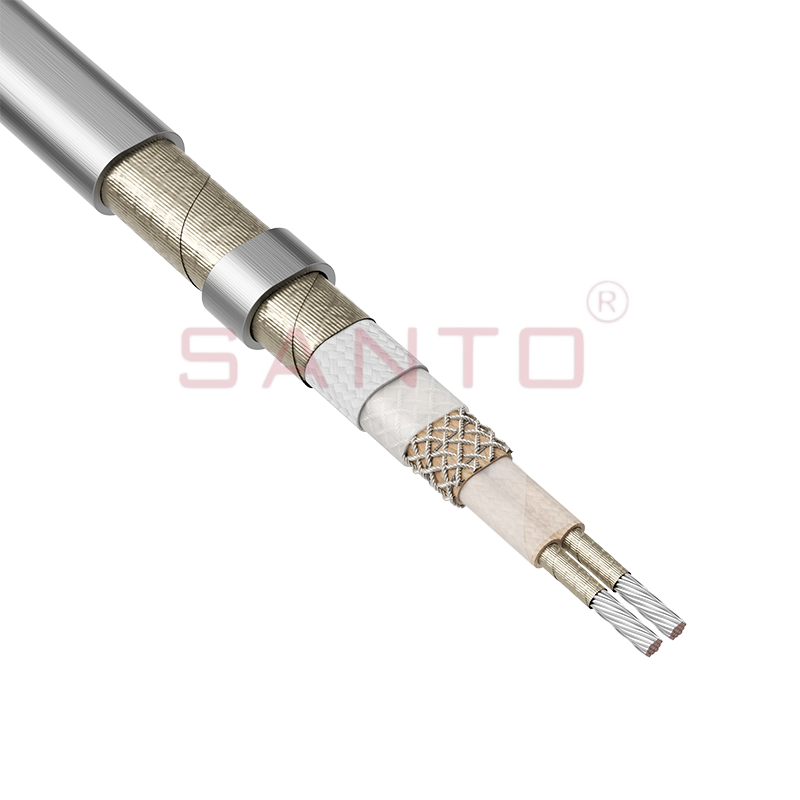
The SANTO UFM series self-regulating heating cables are mainly used for freeze protection of pipes and vessels, but can also be used to maintain processes up to 400°C. These heating cables are availab...
See Details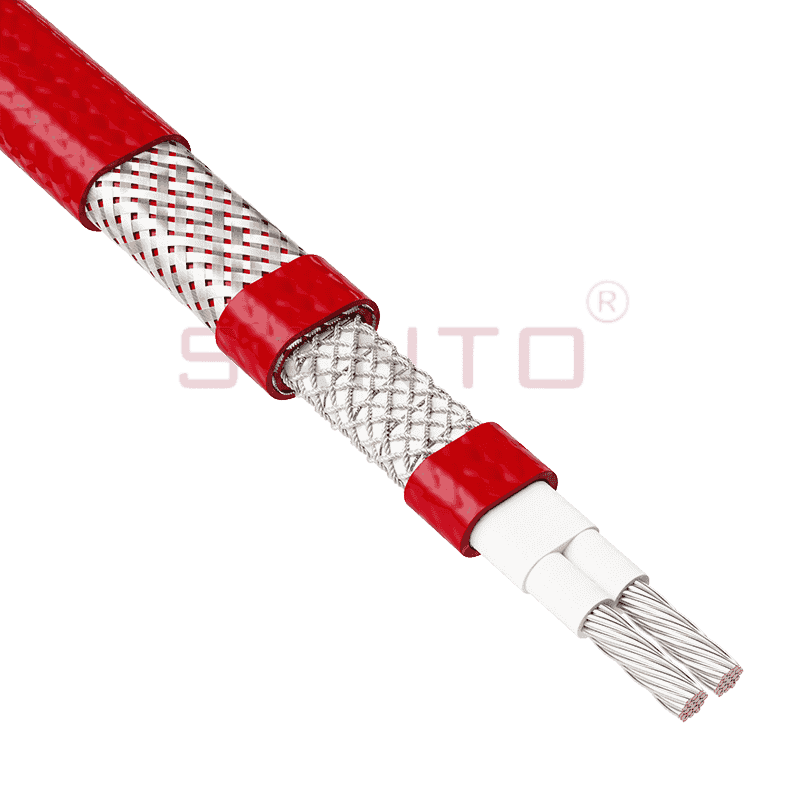
The SANTO ACC range of power-limiting heating cables is mainly used for temperature maintenance of processes and offers the advantage of a high power output at high temperatures which can reduce the n...
See Details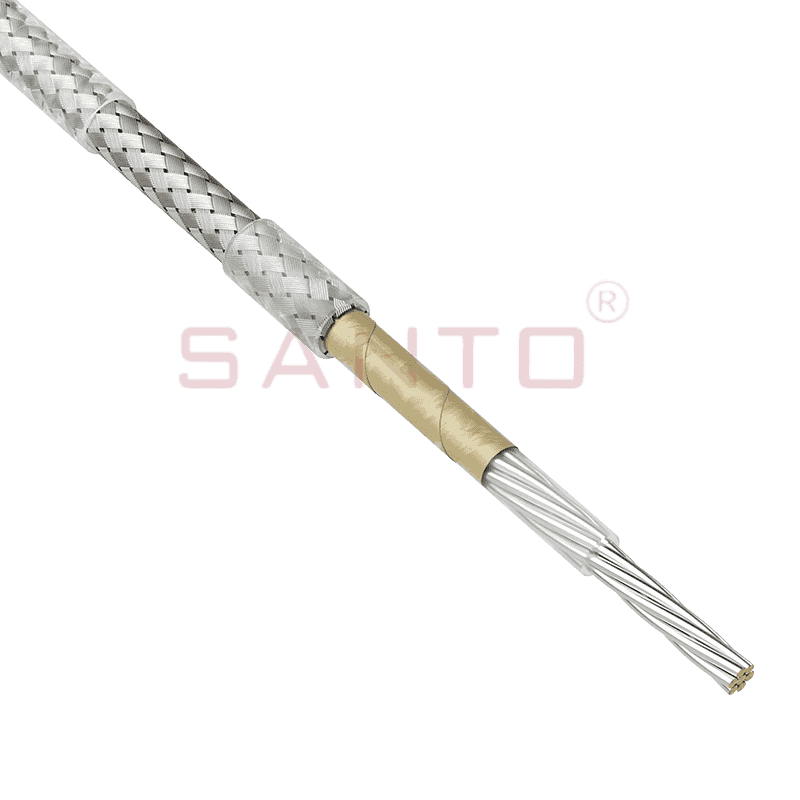
The stranded high temperature conductor is nickel plated to ensure a long life at elevated temperatures in corrosive environments. It is electrically isolated using an innovative sandwich construction...
See Details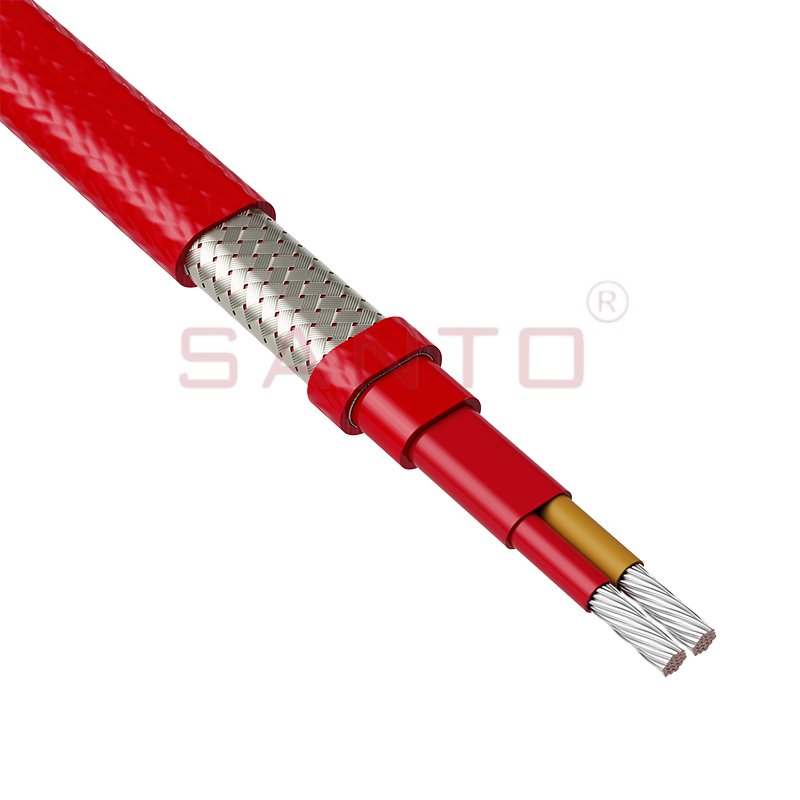
The stranded high temperature conductor is nickel plated to ensure a long life at elevated temperatures in corrosive environments. It is electrically isolated using an innovative sandwich construction...
See Details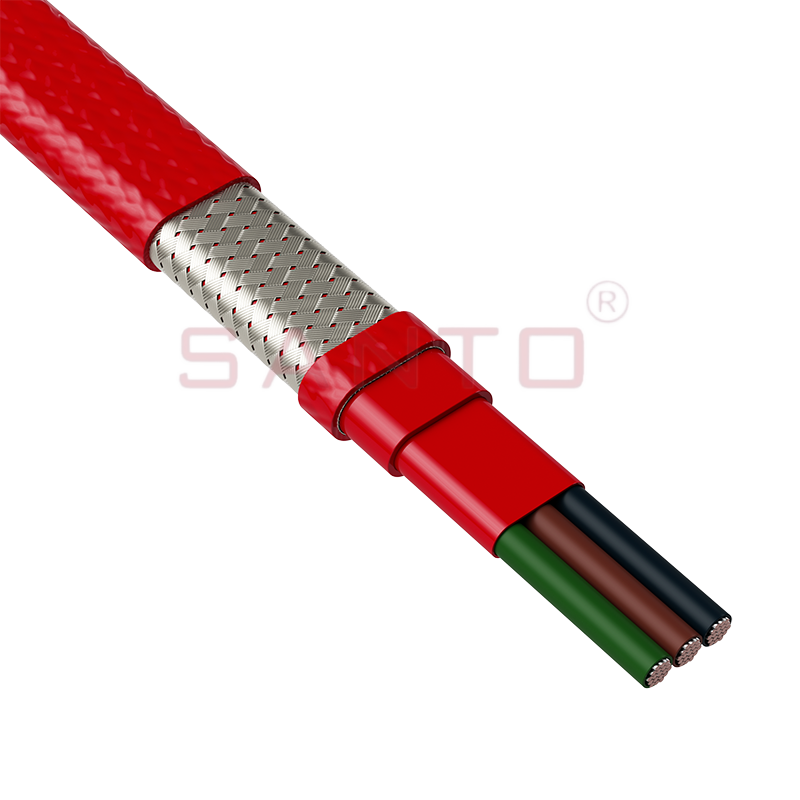
The stranded high temperature conductor is nickel plated to ensure a long life at elevated temperatures in corrosive environments. It is electrically isolated using an innovative sandwich construction...
See Details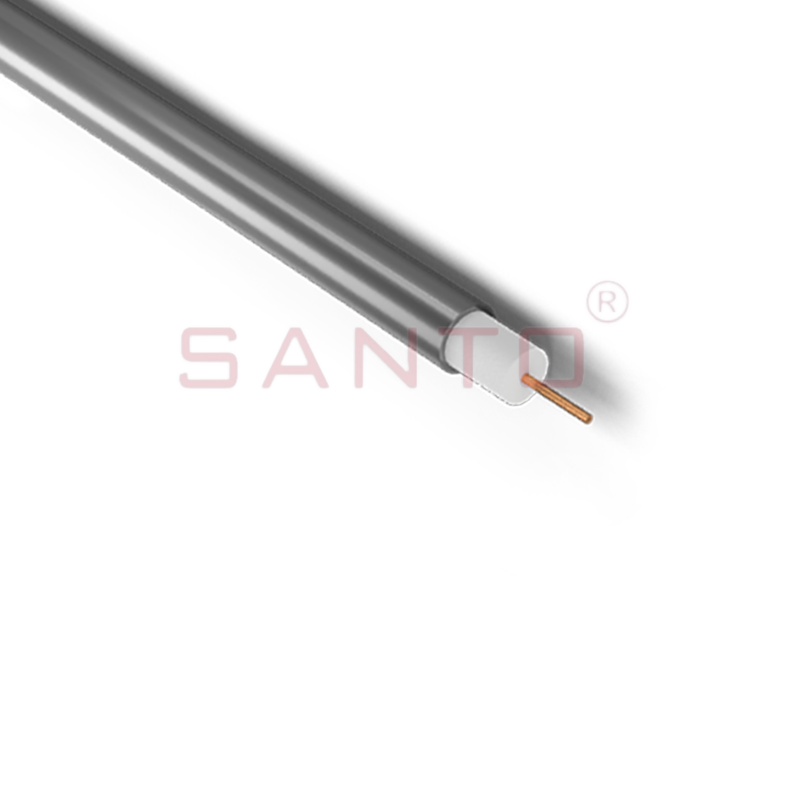
SANTO HAx mineral insulated (MI) Alloy 825 series heating cables are suitable for use in hazardous areas. They have been designed for use in freeze protection and temperature maintenance applications ...
See Details
Santo electric heating strips are widely used in key industries in China.

