 English
  English
 русский
 日本語
日本語 Español
 中文简体
中文简体
The SANTO UFA range of self-regulating heating cables is mainly used for frost protection of pipes and vessels but can also be used to maintain processes up to 65°C. These heating cables are available...
See Details
High-voltage skin-effect tracing wire is a specialized heating solution designed for long-distance pipelines that require reliable temperature maintenance, freeze protection, and process heating under demanding field conditions. Unlike conventional heat tracing methods that often require frequent power injection points, multiple parallel circuits, or extensive electrical distribution infrastructure, a skin-effect tracing system can heat exceptionally long pipeline sections from a single power supply point. This makes it especially valuable for oil and gas pipelines, chemical transport lines, water pipelines, underground networks, underwater pipeline routes, and industrial facilities where long heating runs, electrical safety, and stable thermal performance are critical.
The STS HV Skin-Effect Tracing Wire supplied by Santo Thermal Control Technology Co., Ltd. is built around a proven heating principle that uses a thermally rated insulated conductor installed inside a ferromagnetic heat tube. The insulated wire and heat tube form an electrical loop. Alternating current travels along the internal conductor and returns on the inner surface of the ferromagnetic tube. Because of the combined skin effect and proximity effect, current is concentrated on the inner wall of the tube, while the outer surface remains at virtually zero potential under normal operating principles. This structure allows heat to be generated efficiently within the heat tube and transferred to the process pipe through direct attachment and the surrounding insulation system.
For operators of long-distance pipelines, the most important question is not simply whether a heating system can produce heat. The more important questions are whether it can produce heat consistently over many kilometers, whether it can reduce installation complexity, whether it is suitable for hazardous areas, whether it can be maintained efficiently, and whether it can reduce lifecycle cost. The STS HV Skin-Effect Tracing Wire is engineered to answer these questions by combining long circuit capability, high output capacity, strong mechanical construction, stable electrical behavior, and a manufacturing background supported by decades of heating cable experience.
STS HV Skin-Effect Tracing Wire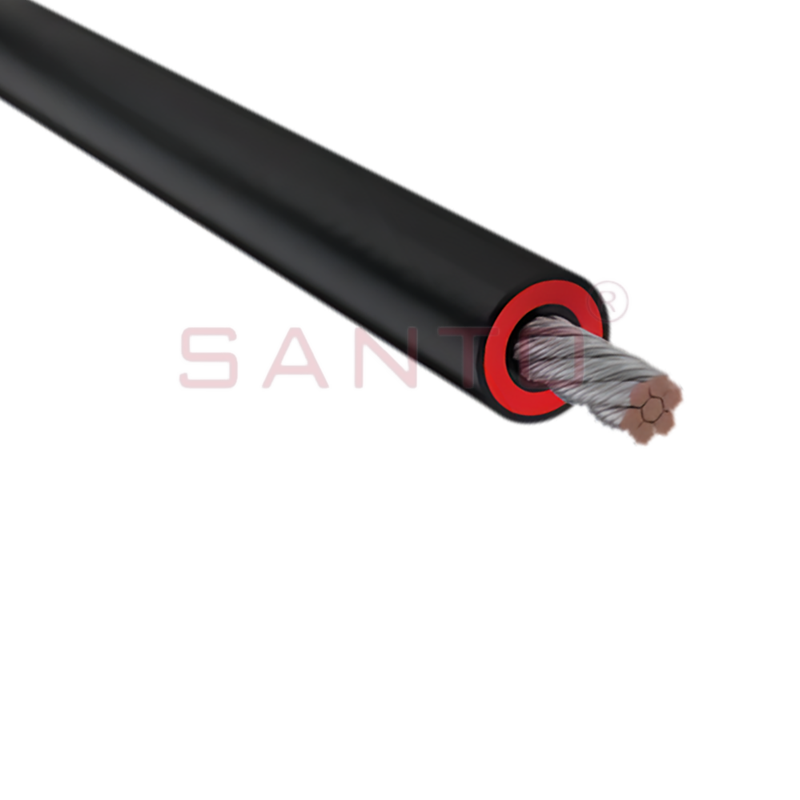
Content
The STS HV Skin-Effect Tracing Wire is a core heating component within a skin-effect heating tracing system. The system typically includes a ferromagnetic heat tube, a thermally rated insulated wire, power connection components, end termination components, control and monitoring devices, and installation accessories. In operation, the insulated conductor is inserted into the heat tube and connected to the tube at the far end. At the power end, an alternating current voltage source is applied between the insulated conductor and the heat tube. Current flows through the conductor and returns along the inner wall of the tube, generating heat through electrical resistance, eddy current effects, hysteresis, skin effect, and proximity effect.
The heat tube is normally attached to the process pipeline and installed beneath the thermal insulation layer. Because the heat source is located directly alongside the process pipe and protected by the insulation system, heat transfer is efficient and thermal losses are controlled. The arrangement is especially suitable for pipelines requiring freeze protection, product viscosity control, temperature maintenance, or controlled heating across long routes.
One of the defining characteristics of this system is its ability to support heating line lengths up to 30 km without requiring parallel power supply arrangements along the pipeline. In many conventional electric tracing systems, voltage drop and circuit length limitations make it necessary to divide a long pipeline into many short electrical circuits. Each circuit may need its own power junction box, distribution panel, controller, and field wiring. A skin-effect tracing system greatly simplifies this architecture by enabling long heating circuits with single-ended power supply, reducing electrical infrastructure and improving installation efficiency.
The product can be used in explosive hazard areas when designed and installed according to applicable standards and project requirements. It is also suitable for underground and underwater pipelines, where access is difficult and reliability is essential. With output power up to 200 W/m and operating temperatures up to 200°C, the system provides a strong solution for demanding industrial heating applications.
The skin effect is a well-known alternating current phenomenon in which current tends to flow near the surface of a conductor rather than uniformly through its full cross-section. The effect becomes more pronounced in ferromagnetic materials because magnetic permeability influences current distribution. In the STS system, the return current is concentrated on the inner surface of the carbon steel heat tube. The proximity effect further reinforces this current concentration because the internal conductor and the surrounding tube interact electromagnetically.
The insulated conductor itself carries current through its full conductive cross-section because it is made of a low-impedance, non-magnetic conductive material. By contrast, the ferromagnetic heat tube concentrates the return current within a thin inner layer. As a result, the main heat generation occurs in the carbon steel tube, where it can be efficiently transferred to the pipeline. The outer wall of the heat tube has virtually no measurable voltage in normal operation because the current is concentrated internally. This contributes to electrical safety and reduces the need for electrical insulation on the outside of the tube.
The heating process involves multiple forms of energy conversion. Resistance heating occurs in both the internal conductor and the ferromagnetic tube. Eddy currents and hysteresis losses also contribute to heat generation in the ferromagnetic material. Together, these effects create a controlled and powerful heating source distributed along the length of the tube.
This physical structure provides an important advantage over conventional heating cables. Standard parallel-resistance or self-regulating heating cables are often placed directly on the pipe surface and must carry current through polymeric or metallic heating elements over limited circuit lengths. Their maximum circuit length is usually much shorter than that of skin-effect systems. For very long pipelines, many circuits must be installed and powered. The skin-effect method, by contrast, treats the heat tube and conductor as a long electrical heating system capable of serving many kilometers from one power connection.
The STS HV Skin-Effect Tracing Wire is designed for projects where long reach, safety, and high reliability are more valuable than simple low-cost short-run heating. Its characteristics include long-distance circuit capability, high heating output, suitability for hazardous areas, strong mechanical protection, and effective thermal transfer.
The heating line can reach up to 30 km depending on engineering design, supply voltage, conductor size, heat tube dimensions, required heat output, insulation conditions, and environmental parameters. This is a major advantage for pipeline routes crossing remote terrain, industrial corridors, mining areas, coastal zones, or regions with severe winter climates.
The system supports single-ended power supply. This means power can be supplied from one location rather than requiring repeated power feeds along the pipeline. In long-distance projects, this reduces trenching for electrical cables, lowers the number of field junction boxes, simplifies power distribution, and improves overall system maintainability.
Heating output can reach up to 200 W/m, allowing the system to serve not only freeze protection but also more demanding heating and temperature maintenance tasks. Operating temperatures can reach up to 200°C, making the system applicable to many industrial process conditions. Actual design values depend on project requirements, pipeline material, insulation thickness, ambient temperature, flow conditions, product properties, and control strategy.
The outer surface of the ferromagnetic heat tube remains at near-zero potential under the system’s skin-effect operating principle. This contributes to electrical safety, especially when the heat tube is attached to a metallic pipeline and installed under thermal insulation. The robust tube structure also provides mechanical protection for the internal insulated conductor, improving durability in harsh field environments.
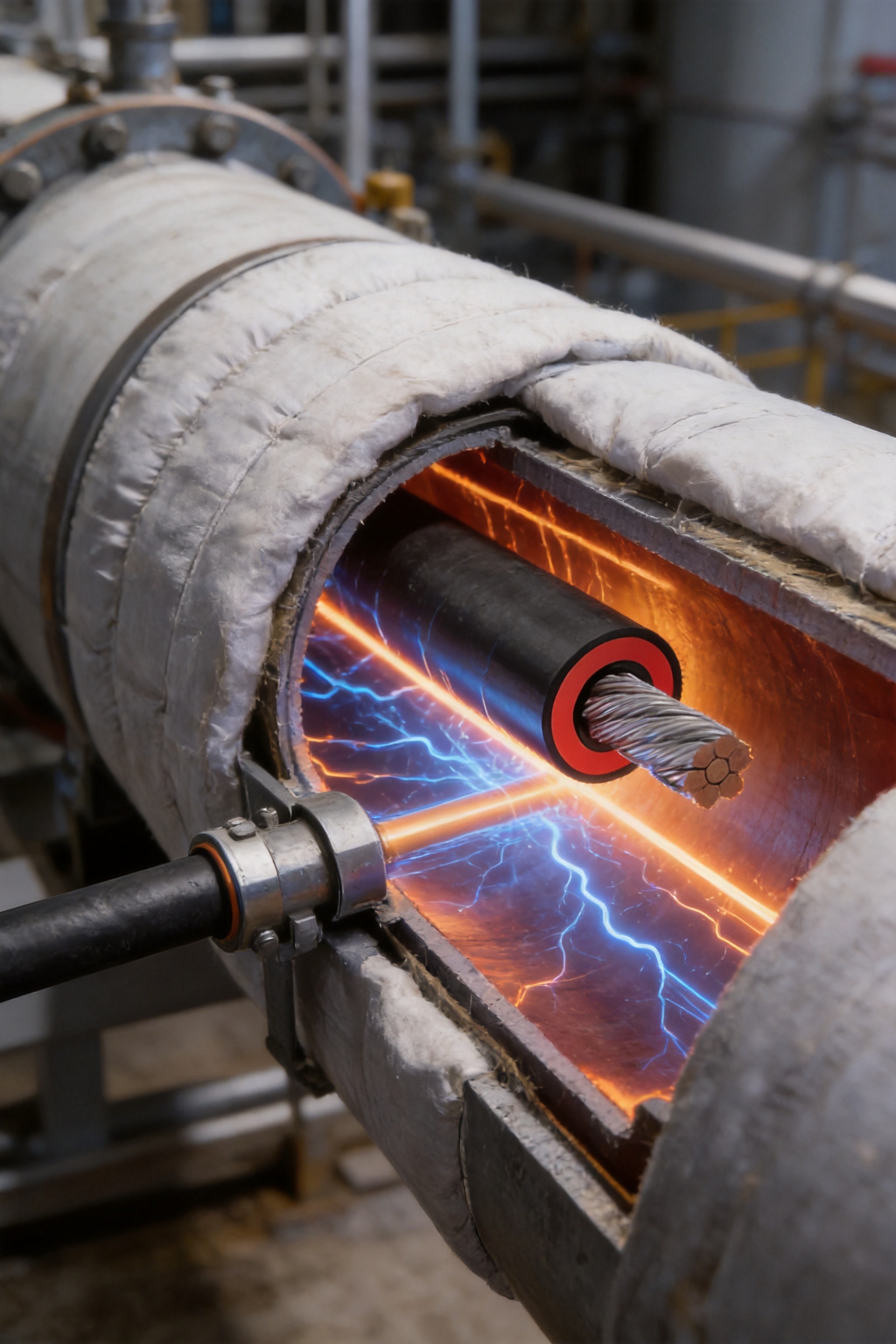
The following table summarizes representative system parameters and product capabilities based on the supplied product information. Final specifications should always be determined by engineering calculation and project design.
| Item | Representative Value or Description |
|---|---|
| Product type | High-voltage skin-effect tracing wire for skin-effect heating systems |
| Heating principle | Skin effect, proximity effect, resistance heating, eddy current losses, and hysteresis losses |
| Heating line length | Up to 30 km depending on design conditions |
| Power supply arrangement | Single-ended power supply; no parallel power supply required for long heating runs |
| Maximum output power | Up to 200 W/m |
| Maximum operating temperature | Up to 200°C |
| Typical heat tube material | Ferromagnetic carbon steel tube |
| Typical heat tube diameter range | 20 mm to 60 mm depending on design |
| Typical heat tube wall thickness | Not less than 3 mm in the described configuration |
| Conductor arrangement | Thermally rated insulated conductor installed inside the heat tube |
| Safety characteristic | Return current concentrated on inner tube surface; outer tube surface has virtually no measurable voltage under normal operating principles |
| Application areas | Long-distance pipelines, hazardous areas, underground pipelines, underwater pipelines, antifreeze, heat maintenance, and process heating |
| Example pipeline length | 15,777 m |
| Example pipe size | 273 x 7 mm |
| Example insulation | Polyurethane foam, 80 mm thickness |
| Example heat tracing purpose | Antifreeze protection |
| Example supply voltage | 2100 V, 50 Hz |
| Example operating current | 115 A |
| Example heating output | 1 x 46 W/m |
| Example heat tube diameter | 32 x 3.0 mm |
| Example conductor cross-sectional area | 30 sq.mm |
| Example climate condition | Average annual temperature -5.6°C; minimum winter condition down to -48°C as referenced in project data |
The most obvious advantage of the STS HV Skin-Effect Tracing Wire is its ability to serve very long pipeline sections. Conventional self-regulating heating cables, constant-wattage heating cables, mineral-insulated heating cables, and other electrical heat tracing products generally have much shorter maximum circuit lengths. When a pipeline extends for several kilometers, conventional systems often require many separate heating circuits. Each circuit adds design work, power distribution equipment, installation labor, commissioning procedures, and potential maintenance points.
A skin-effect tracing system can reduce the number of circuits dramatically. For pipelines up to 30 km, the ability to heat from a single-ended power supply can transform project economics. Fewer power points mean fewer control panels, fewer power cables, fewer junction boxes, fewer field penetrations through insulation, and fewer potential failure locations. For remote pipelines, this advantage is especially significant because every additional power point may require civil work, electrical infrastructure, access roads, and maintenance planning.
Remote pipeline routes often pass through areas where power availability is limited. Installing electrical distribution points at regular intervals may be expensive or impractical. The STS system’s long-distance capability allows operators to centralize power supply and control equipment at more accessible locations. This simplifies field logistics and improves maintainability.
For underground and underwater pipelines, fewer access points are particularly valuable. Once a pipeline is buried or submerged, field intervention becomes difficult and expensive. A heating system with fewer electrical components distributed along the route can reduce risk and long-term service complexity.
In a properly engineered skin-effect tracing system, the return current is concentrated on the inner surface of the heat tube. The outer tube surface remains at virtually zero potential, which improves electrical safety for personnel and nearby equipment. The heat tube is also a robust metallic enclosure surrounding the insulated conductor. This design differs from exposed surface-mounted heating cables, where the heating element itself is closer to the external environment and relies heavily on jacket integrity, grounding systems, and installation protection.
Electrical safety is especially important in explosive hazard areas. The product information identifies the system as suitable for explosive hazard areas when used under proper design and installation requirements. The combination of controlled electrical behavior, metallic heat tube construction, and engineered power/control systems supports safe operation in demanding industrial environments.
Conventional heating cables can be vulnerable to mechanical damage during installation, insulation work, maintenance, or pipeline movement. The STS system places the insulated conductor inside a ferromagnetic heat tube, providing a strong protective path. The tube can withstand harsher mechanical conditions than many polymer-jacketed heating cables. This makes the system attractive for pipelines subject to construction stress, burial, vibration, or difficult maintenance access.
The heat tube itself becomes both the heating element and the protective enclosure. This dual function improves system robustness while supporting effective heat transfer to the process pipe.
The heat tube is attached to the process pipe and installed beneath the thermal insulation. Heat is generated in the tube and transferred directly into the pipe wall. Because the heating element is protected within the insulation system, thermal losses are minimized. Proper insulation design is essential, but when installed correctly, the system provides efficient and uniform heat input over long distances.
Compared with steam tracing, the STS system avoids condensate management, steam trap maintenance, leakage issues, and thermal inefficiencies associated with long steam distribution networks. Compared with hot oil tracing, it avoids circulation pumps, fluid degradation, leak risk, and complex mechanical piping. Compared with multiple electric heating cable circuits, it reduces electrical distribution complexity and can improve long-distance reliability.
With output power up to 200 W/m, the system can satisfy demanding heating loads. Some heat tracing applications only require low-power freeze protection, but others require high heat input to maintain product viscosity, prevent crystallization, or compensate for severe ambient losses. The STS HV Skin-Effect Tracing Wire provides design flexibility for such applications. Output power can be calculated based on pipeline length, insulation thickness, ambient conditions, required maintained temperature, and electrical design.
Initial equipment price is only one part of heat tracing economics. Long pipelines require evaluation of installation labor, power distribution, control systems, commissioning, maintenance, shutdown risk, and repair access. A system that reduces circuit count and field power points can reduce total installed cost and lifecycle cost, even if individual components are more specialized. For long-distance applications, the STS system’s architecture is often more economical than trying to adapt short-circuit heating cable technologies to many kilometers of pipeline.
Self-regulating heating cable is popular for short to medium heat tracing runs because it can adjust output according to local temperature and can often be cut to length in the field. However, it is not ideal for very long pipeline sections. Circuit length is limited by voltage drop, inrush current, cable rating, and power distribution constraints. For a long pipeline, many separate circuits are required.
The STS HV Skin-Effect Tracing Wire is not intended to replace self-regulating cable in every application. Instead, it excels where self-regulating cable becomes impractical: long pipeline routes, high-power requirements, remote areas, and installations where electrical distribution must be minimized. Its long circuit capability gives it a clear advantage for pipeline-scale heating.
Constant-wattage heating cable provides predictable output but also has circuit length limitations and requires careful design to avoid overheating. It is useful in many industrial applications, but long-distance pipeline heating may require numerous circuits and power points. The STS system offers a more integrated long-distance solution with strong mechanical protection and single-ended power supply capability.
Mineral-insulated heating cable has excellent temperature resistance and mechanical strength, but long circuit length remains limited compared with skin-effect systems. It can also be more demanding to terminate and install. For high-temperature localized tracing, mineral-insulated cable can be effective. For very long pipeline heating, the STS system provides a more specialized architecture.
Steam tracing has been used for decades, but it requires boilers, steam distribution lines, condensate return systems, steam traps, valves, and frequent maintenance. Long steam tracing routes can lose energy and suffer from condensate problems. Electric skin-effect tracing avoids many of these mechanical issues. It also allows more precise electrical control and monitoring.
Hot oil and fluid heating systems can provide high heat transfer, but they require pumps, circulation loops, heat exchangers, expansion tanks, seals, and leak management. They can be complex and costly over long pipeline distances. The STS system provides distributed electric heating without circulating heat-transfer fluid, reducing mechanical system complexity.
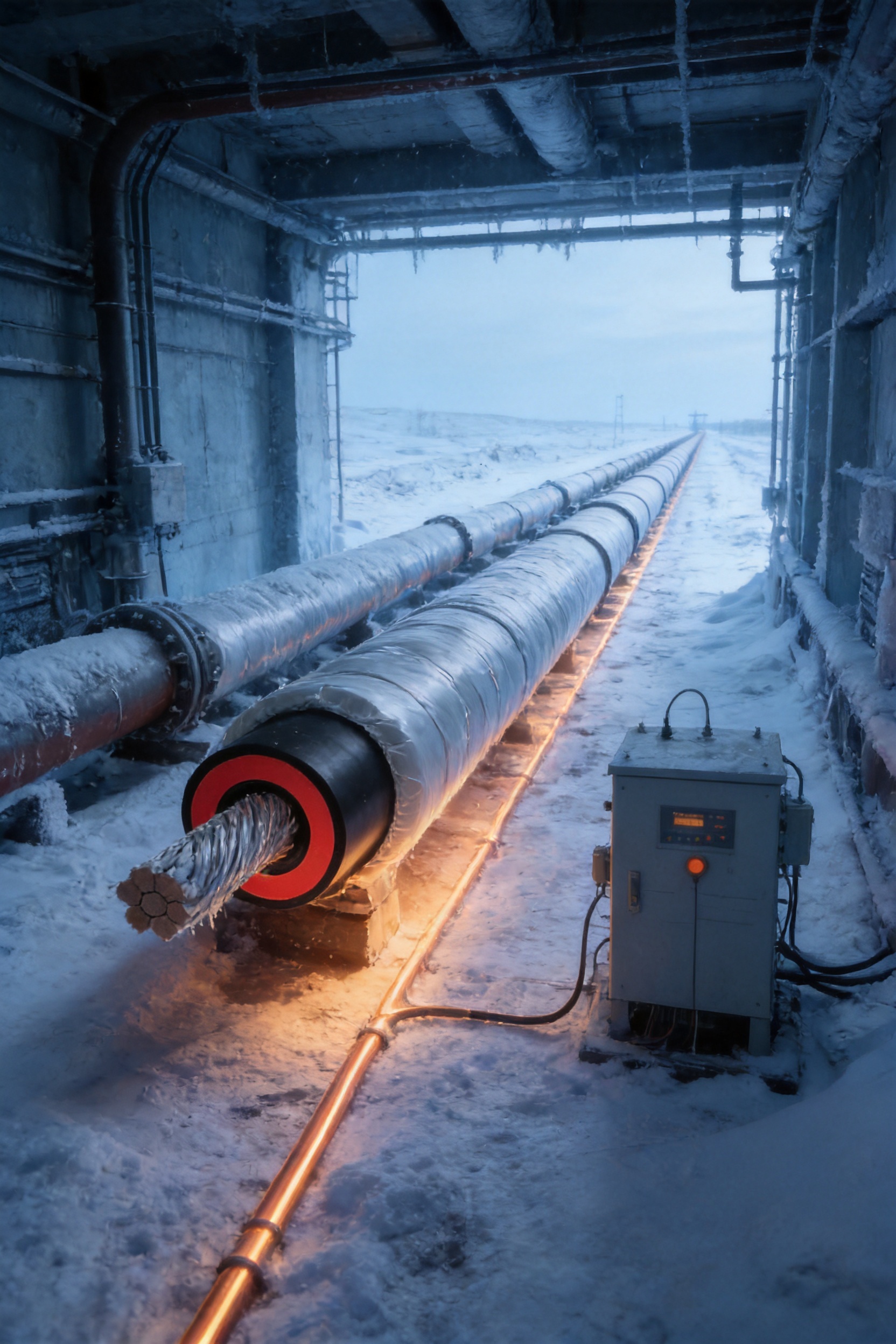
Oil and gas pipelines often require heat tracing to maintain flow properties, prevent wax formation, reduce viscosity, and avoid freezing of associated water content. Long-distance routes can be difficult to heat with conventional cable systems because of power distribution challenges. The STS HV Skin-Effect Tracing Wire is well matched to these applications because it can provide continuous heating over many kilometers with reduced intermediate infrastructure.
Chemical products may crystallize, solidify, or become too viscous if temperature falls below a specified limit. A stable heat tracing system is essential for product quality and process reliability. Skin-effect tracing provides consistent heat input along the pipeline and can be designed for hazardous area operation, which is common in chemical and petrochemical facilities.
Water pipelines operating in regions with winter temperatures far below freezing require dependable antifreeze protection. The product data includes a representative case with average annual temperature of -5.6°C and severe winter conditions down to -48°C. In such climates, pipeline freezing can cause service interruption, pipe rupture, and major repair costs. The STS system offers robust freeze protection for long water lines, especially where access is limited.
Underground pipelines benefit from heating systems with high reliability and low maintenance needs. Once buried, repair access becomes difficult. The heat tube structure protects the internal conductor and reduces the number of power points along the route. This makes the system suitable for buried pipelines requiring long-term temperature maintenance.
Underwater pipelines are among the most challenging heating applications. Electrical components must be minimized and protected, and maintenance access is extremely limited. A skin-effect system’s long-distance capability and robust heat tube construction can support underwater heating designs where conventional distributed circuits would be difficult to implement.
Many industrial plants use transfer lines to move materials between storage tanks, process units, loading areas, and utilities. When line lengths are substantial and thermal control is important, skin-effect tracing can provide a dependable solution with centralized power and control.
A successful skin-effect tracing project begins with accurate engineering. The required heat output must be calculated based on pipe size, pipe material, insulation type, insulation thickness, ambient temperature, wind exposure, burial conditions, product temperature requirements, startup conditions, and safety factors. Electrical parameters must be calculated based on heating tube dimensions, conductor cross-sectional area, supply voltage, frequency, circuit length, and desired wattage per meter.
The heat tube is commonly made from carbon steel with ferromagnetic properties. In the provided system description, tube diameters may range from 20 mm to 60 mm, with wall thickness not less than 3 mm. The conductor is installed inside the tube and connected reliably to the tube at one end. At the power connection end, voltage is applied between the conductor and tube. The voltage value is calculated according to required output power and heating tube length.
Insulation design is equally important. The heating system produces heat, but insulation determines how much of that heat is retained. For example, the representative pipeline data uses polyurethane foam insulation with 80 mm thickness. The right insulation material and thickness can reduce power demand and improve temperature stability.
Control and monitoring should be selected according to process criticality. Simple freeze protection may use temperature sensors and control panels designed to maintain pipe temperature above freezing. More critical process heating may require distributed temperature monitoring, alarm systems, power monitoring, ground-fault protection, and integration with plant control systems.
The system is designed for practical field installation. The heat tube is attached to the process pipeline and then covered by thermal insulation. The internal conductor is installed inside the heat tube, and the power and end terminations are completed according to engineered procedures. Because the system can use single-ended power supply for long routes, installation teams can reduce the number of field electrical stations and cable distribution points.
For contractors, fewer circuits mean less repetitive termination work, fewer panel connections, fewer testing points, and simpler documentation. For owners, fewer electrical locations mean easier inspection and maintenance. The robust heat tube also helps protect the conductor during construction and insulation installation.
Proper installation remains essential. The heat tube must be securely attached to the pipeline to promote heat transfer. Terminations must be completed correctly. Electrical testing, insulation resistance testing, continuity checks, and commissioning procedures must be performed before operation. In hazardous areas, installation must follow applicable explosion-proof standards and project specifications.
Santo Thermal Control Technology Co., Ltd. is located in Jiangsu Province, an important industrial region for electric heating products. The company has built its capabilities around research, design, production, and manufacturing of electric heating belts, self-limiting heating cables, constant-power heating cables, glass fiber heating cables, mineral-insulated cables, silicone rubber heating systems, snow melting cables, heat tracing accessories, and related thermal control products.
The company’s manufacturing background is important because skin-effect tracing is not a simple commodity product. It requires understanding of electrical heating principles, insulation performance, conductor behavior, system design, safety requirements, and field application. The company’s experience across multiple heating technologies supports its ability to develop and supply integrated heat tracing solutions rather than only individual components.
With more than 35 years of industry experience, the company has accumulated practical knowledge in heating cable design, material selection, production process control, and application engineering. Its products are used in petroleum, chemical, gas, construction, solar energy, electric heating, geothermal cultivation, antifreeze, deicing, heat tracing, and insulation applications. This broad application background helps the company understand the real operating conditions that heating systems must withstand.
The company has emphasized new product development, technology guidance, scientific management, product quality, and after-sales service. It has passed ISO9001 quality system certification, and its products have obtained national CCC certification. The company has also obtained explosion-proof certification and EAC Eurasian Union certification for relevant product categories. These certifications demonstrate a structured approach to quality and market compliance.
Advanced manufacturing for heat tracing products begins with material selection. Conductors must have suitable electrical conductivity, mechanical strength, and compatibility with insulation systems. Insulation materials must withstand operating temperature, voltage stress, installation stress, and long-term aging. For a skin-effect tracing system, the ferromagnetic heat tube must provide the required magnetic and mechanical properties while supporting stable current concentration and heat generation.
Production control is necessary at each stage. Insulated wire manufacturing requires conductor preparation, insulation extrusion or application, dimensional control, thermal rating verification, and electrical testing. Heat tube production and preparation require attention to tube diameter, wall thickness, surface condition, and continuity. Termination components must be designed for reliable electrical connection and environmental protection.
Quality testing may include conductor resistance measurement, insulation resistance testing, high-voltage withstand testing, dimensional inspection, thermal performance verification, continuity checks, and mechanical inspection. For project-based skin-effect systems, engineering calculations and factory documentation are also important. Each system must match the project’s voltage, current, power output, pipeline length, and thermal requirements.
The company’s investment in product simulation testing and laboratory capability supports development and verification. Simulation testing helps evaluate heat output, temperature distribution, insulation performance, startup behavior, and response under different ambient conditions. This is particularly important for long-distance pipeline heating, where errors in design can be costly after installation.
Long-distance heat tracing is an engineering system, not merely a cable purchase. It requires cooperation between the product manufacturer, pipeline designer, electrical engineer, installation contractor, and end user. Santo Thermal Control Technology Co., Ltd. has developed a broad product portfolio and application history that supports this type of cooperation.
The company’s development history includes the establishment of an electric heating instrument factory in 2000, ISO9001 certification in 2002, development of irradiation capability in 2013, invention activity in advanced heating products, establishment of the SANTO brand in 2016, explosion-proof and EAC certification, and continued expansion into new production and testing facilities. In 2023, the company established a Russia factory to expand its international service capability.
Its scale includes more than 35 years of industry experience, annual output exceeding 10,000 units or sets according to company data, more than 2,000 distributors, and business presence in more than 85 areas. These indicators show that the company is not limited to small-batch experimental production. It has the commercial and manufacturing base needed to support industrial customers.
For customers, this matters because long-distance pipeline heating projects require reliable supply, technical support, documentation, and after-sales service. A manufacturer with broad experience can assist with product selection, heat loss calculation, circuit design, accessory matching, installation guidance, commissioning support, and troubleshooting.
The product stands out because it solves problems that conventional heat tracing products cannot solve efficiently. Its long-distance heating capability is its central competitive advantage. Heating up to 30 km from a single-ended supply can reduce power infrastructure, simplify installation, and improve system reliability.
Its electrical safety characteristics are another major strength. The concentration of return current on the inner surface of the ferromagnetic tube results in virtually no measurable voltage on the outer tube wall under normal operating principles. This makes the system suitable for industrial environments where safety is a top priority.
The system’s high output capability, up to 200 W/m, provides flexibility for severe climates and demanding process requirements. Its operating temperature capability up to 200°C allows use in a wide range of industrial conditions. The robust heat tube structure protects the internal conductor and supports long-term field durability.
The product is also supported by a manufacturer with broad heating cable expertise. Many competitors may supply standard heating cable products, but long-distance skin-effect tracing requires deeper system knowledge. Santo Thermal Control Technology Co., Ltd. combines product manufacturing, engineering support, quality management, certification experience, and application knowledge.
Reliability is especially important when pipelines operate in severe winter climates, remote terrain, underground routes, or underwater conditions. The representative project data includes a long pipeline of 15,777 m, a pipe diameter of 273 x 7 mm, polyurethane insulation, antifreeze purpose, total system power of 710 KVA, supply voltage of 2100 V at 50 Hz, operating current of 115 A, and heating output of 46 W/m. Such data illustrates the scale of applications for which skin-effect tracing is intended.
In a severe cold environment, pipeline freezing can cause major operational and safety risks. A long-distance skin-effect system can maintain pipeline temperature consistently while reducing the number of power points exposed to harsh weather. This is a practical advantage over systems that require many field panels or junction boxes.
Reliability also comes from stable heat transfer. Because the heat tube is installed directly on the process pipe and protected by insulation, it provides distributed heat input along the route. When combined with appropriate control and monitoring, the system can maintain the required temperature range and alert operators to abnormal conditions.
Pipeline owners evaluate heating systems over decades, not only during procurement. A heating system that appears cheaper at the component level may become more expensive when installation, power distribution, maintenance, and downtime are considered. The STS HV Skin-Effect Tracing Wire offers lifecycle benefits by reducing circuit count, reducing field electrical infrastructure, improving mechanical protection, and supporting long-distance heating from centralized power points.
Maintenance teams benefit from fewer distributed components. Electrical troubleshooting becomes more centralized. Inspection planning is simplified. In buried or underwater applications, the reduction of intermediate electrical equipment can prevent difficult and costly access problems.
Energy efficiency also contributes to lifecycle value. Properly designed electric heat tracing delivers heat directly where needed. Unlike steam or hot oil systems, it does not require continuous circulation or condensate handling. Electrical control can match heating operation to temperature demand, reducing unnecessary energy use.
Each pipeline project is different. Pipe diameter, length, insulation, ambient temperature, installation environment, required maintained temperature, and available power supply all influence system design. The STS HV Skin-Effect Tracing Wire can be engineered according to project requirements. Tube size, conductor cross-sectional area, voltage, output power, heating length, control method, and accessories can be selected based on calculation.
Customization is one of the strengths of an experienced heating cable manufacturer. Santo Thermal Control Technology Co., Ltd. provides OEM and ODM heating cable manufacturing capability and has experience with custom heating cable export sales. This background supports adaptation to different industrial standards, regional electrical systems, climate conditions, and customer specifications.
For a long-distance pipeline, customization may include dividing the route into engineered sections, selecting power transformers, designing control panels, specifying temperature sensors, determining insulation requirements, and planning commissioning tests. The result is a complete heating solution rather than a one-size-fits-all cable.
Safety must be considered from design through operation. High-voltage skin-effect tracing systems require appropriate electrical engineering, grounding, protection devices, insulation coordination, and commissioning procedures. Hazardous area applications require compliance with applicable explosion-proof standards, equipment approvals, and installation practices.
The system’s near-zero outer tube potential is an important safety feature, but it does not eliminate the need for professional design and installation. Correct termination, proper insulation of the internal conductor, secure mechanical attachment, protective devices, and periodic inspection remain essential. Operators should follow project documentation, manufacturer instructions, and relevant codes.
Temperature safety is also important. The system should be controlled to avoid overheating of the pipeline, product, insulation, or nearby materials. Temperature sensors and control logic should be selected based on process criticality. Alarm functions may be required for high temperature, low temperature, power failure, ground fault, or abnormal current.
It is an insulated conductor used inside a ferromagnetic heat tube to create a long-distance electric heating system. Alternating current flows through the conductor and returns on the inner surface of the tube, generating heat through skin effect, proximity effect, resistance, eddy currents, and hysteresis.
The system can support heating lengths up to 30 km depending on design. It can operate with single-ended power supply, which reduces the need for repeated power distribution points along the pipeline.
The main advantages are longer circuit length, reduced field electrical infrastructure, strong mechanical protection, high power capability, suitability for hazardous areas, and improved practicality for underground, underwater, and remote pipelines.
Yes, the product information identifies the system as suitable for explosive hazard areas when designed, certified, and installed according to applicable requirements. Project-specific compliance should always be confirmed.
The system can provide output power up to 200 W/m, depending on engineering design, voltage, circuit length, conductor size, heat tube parameters, and thermal requirements.
The product information indicates operating temperatures up to 200°C. Actual allowable conditions depend on insulation materials, system design, installation environment, and control settings.
Because the return current is concentrated on the inner surface of the ferromagnetic tube due to skin effect and proximity effect. Under normal operating principles, there is virtually no measurable voltage on the outer wall of the tube.
Common industries include oil and gas, petrochemical, chemical processing, water supply, mining, utilities, and infrastructure projects involving long-distance heated pipelines.
No. It can be used for freeze protection, temperature maintenance, viscosity control, process heating, and long-distance pipeline heat tracing.
Skin-effect tracing is an engineered system. Manufacturer experience supports accurate design, material selection, production quality, testing, installation guidance, and after-sales service.
The STS HV Skin-Effect Tracing Wire is a high-performance solution for long-distance pipeline heating. By using the skin effect and proximity effect in a ferromagnetic heat tube, it provides efficient distributed heat generation with strong electrical safety characteristics. Its ability to heat up to 30 km from a single-ended power supply sets it apart from conventional electric heat tracing methods and makes it especially valuable for remote, underground, underwater, and hazardous-area pipeline applications.
Compared with self-regulating cables, constant-wattage cables, mineral-insulated cables, steam tracing, and hot oil systems, the skin-effect tracing approach offers clear advantages in long-distance capability, infrastructure reduction, mechanical protection, and lifecycle practicality. With output power up to 200 W/m and operating temperatures up to 200°C, it can serve demanding antifreeze and process heating requirements.
Behind the product is the manufacturing and engineering experience of Santo Thermal Control Technology Co., Ltd., a company with decades of electric heating product development, quality system certification, broad industrial application experience, and international market activity. For pipeline owners seeking a reliable long-distance heat tracing solution, the STS HV Skin-Effect Tracing Wire offers a combination of advanced heating physics, robust construction, practical installation benefits, and strong manufacturing support.
1. Introduction to STS - Skin-Effect Tracing System, product technical document.
2. STS Technology, technical overview document.
3. STS - Skin-Effect Tracing System Product Datasheets.
4. IEEE Industry Applications Society, publications on electric heat tracing and industrial heating systems.
5. IEC standards for electrical heat tracing systems for industrial and hazardous area applications.
6. ISO9001 quality management system principles for industrial manufacturing.
7. Industrial Electric Heating Handbook, reference material on resistance heating, skin effect, and process temperature maintenance.
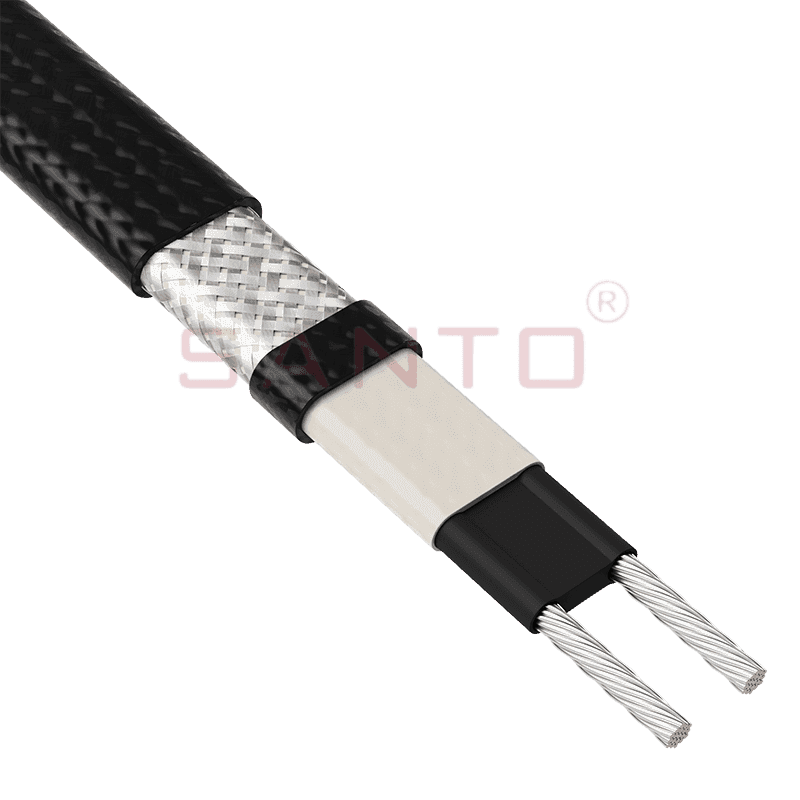
The SANTO UFA range of self-regulating heating cables is mainly used for frost protection of pipes and vessels but can also be used to maintain processes up to 65°C. These heating cables are available...
See Details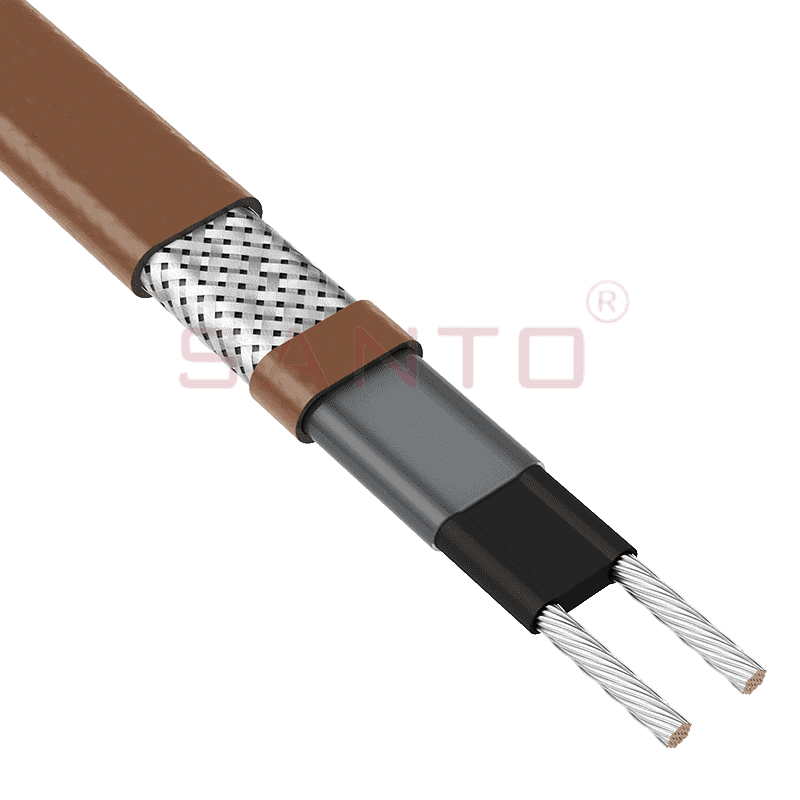
The SANTO UFB range of self-regulating heating cables is mainly used for frost protection of pipes and vessels requiring a higher power output than the UFA heating cables can supply. They can also be ...
See Details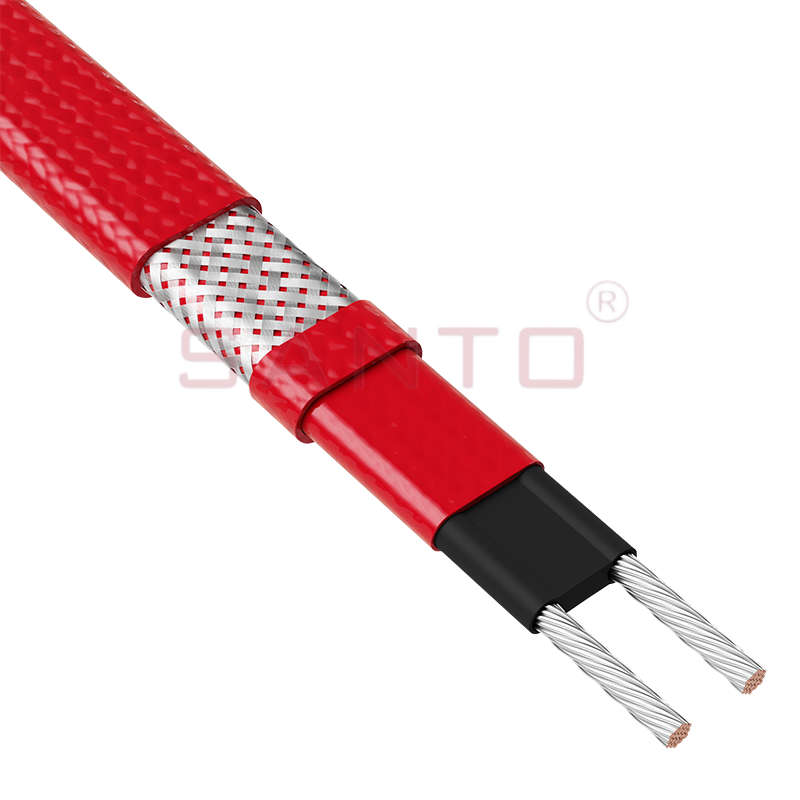
The SANTO UFC range of self-regulating heating cables is used for frost protection of pipes and vessels that require steam cleaning. They can also be used to maintain processes up to 121°C. These heat...
See Details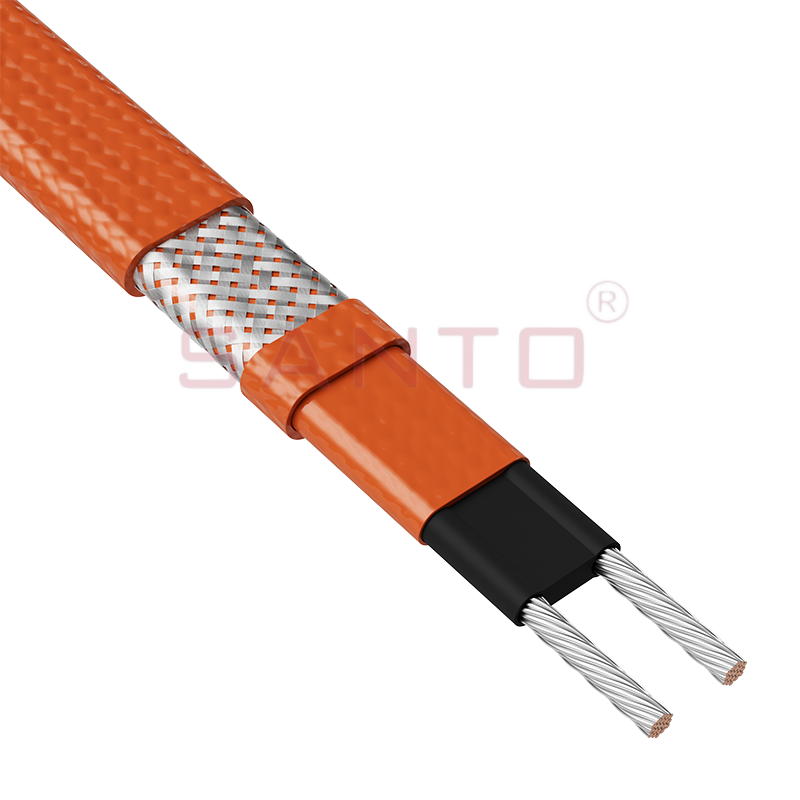
The SANTO UFO range of self-regulating heating cables is mainly used for frost protection of pipes and vessels that require steam cleaning . They can also be used to maintain processes up to 150°C. Th...
See Details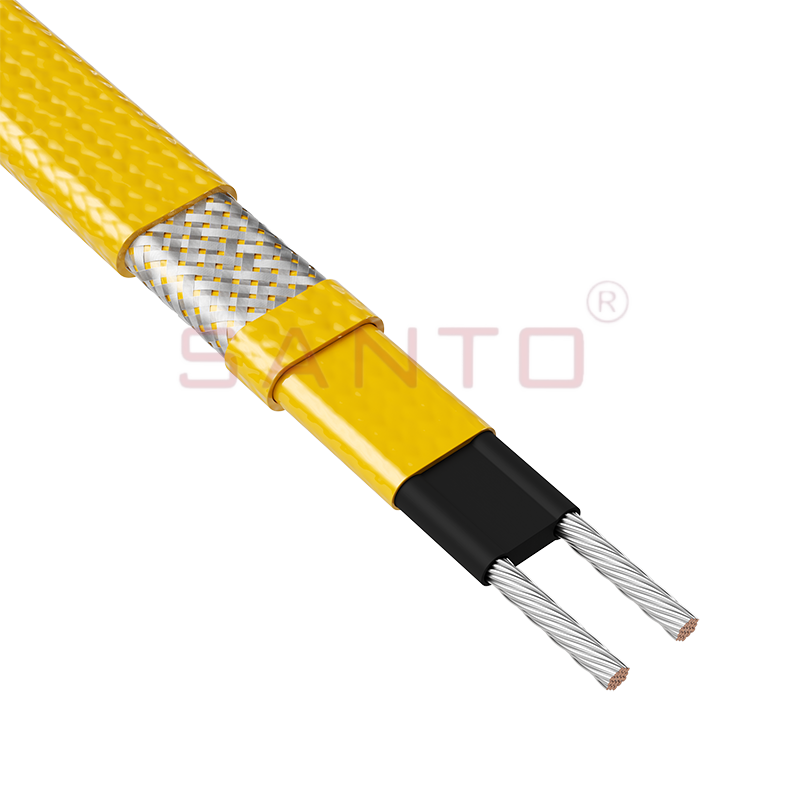
The SANTO UFD series of self-regulating heating cables are mainly used for freeze protection of pipes and vessels, but can also be used to maintain processes up to 200°C. These heating cables are avai...
See Details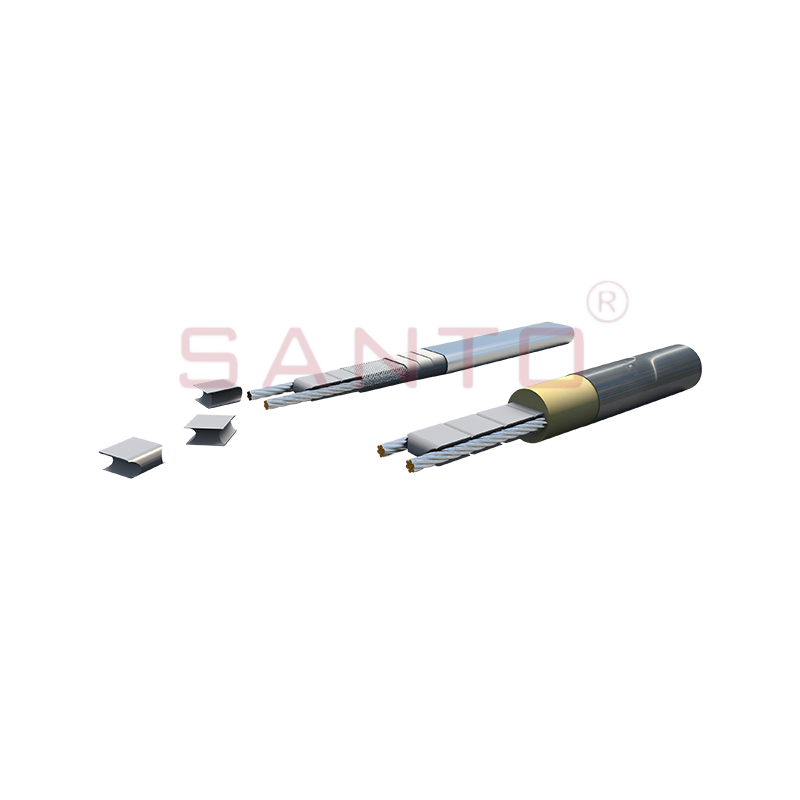
SANTO UFY heating wire is suitable for applications that maintain process temperatures up to 260 ℃ and can be steam blown; The self-regulating and parallel circuit heating wires of the UFY series are ...
See Details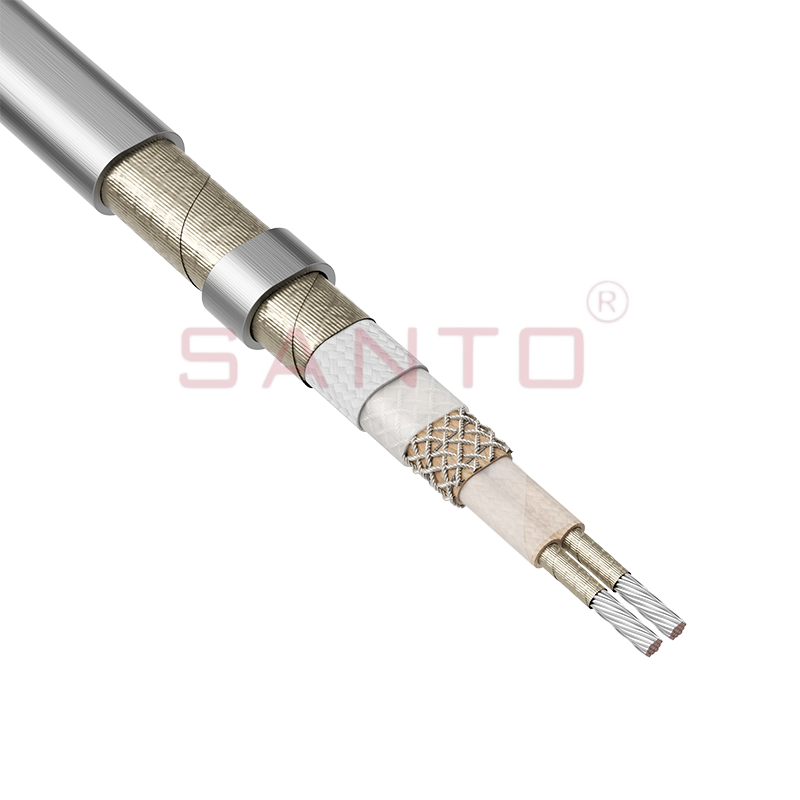
The SANTO UFM series self-regulating heating cables are mainly used for freeze protection of pipes and vessels, but can also be used to maintain processes up to 400°C. These heating cables are availab...
See Details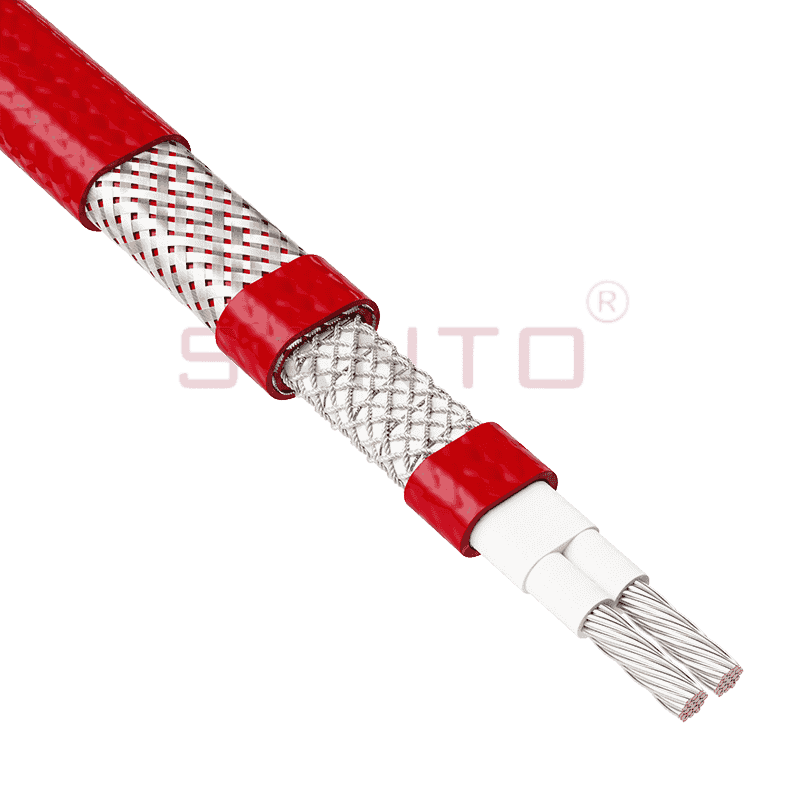
The SANTO ACC range of power-limiting heating cables is mainly used for temperature maintenance of processes and offers the advantage of a high power output at high temperatures which can reduce the n...
See Details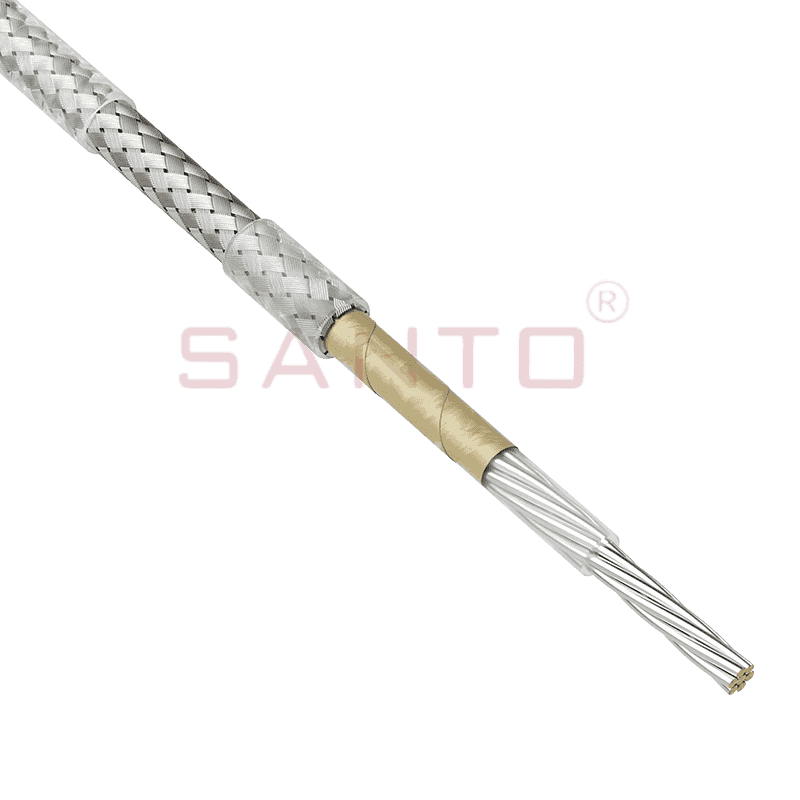
The stranded high temperature conductor is nickel plated to ensure a long life at elevated temperatures in corrosive environments. It is electrically isolated using an innovative sandwich construction...
See Details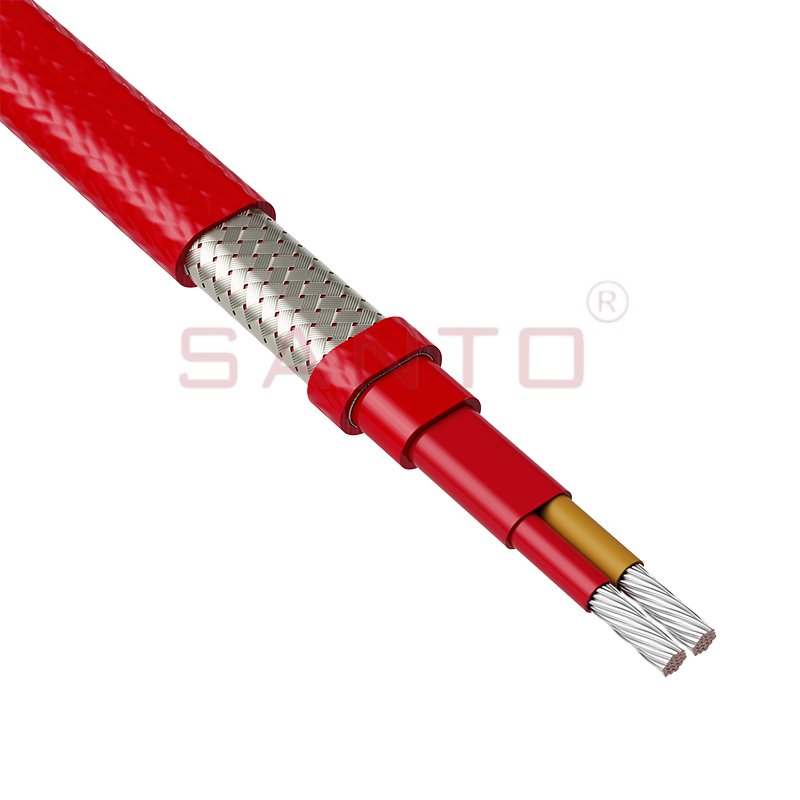
The stranded high temperature conductor is nickel plated to ensure a long life at elevated temperatures in corrosive environments. It is electrically isolated using an innovative sandwich construction...
See Details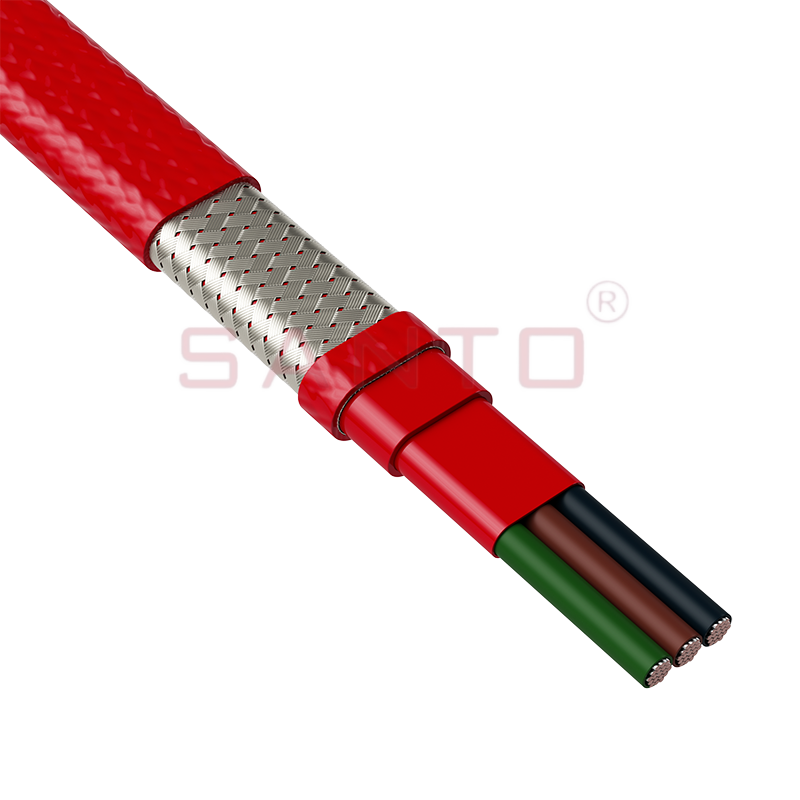
The stranded high temperature conductor is nickel plated to ensure a long life at elevated temperatures in corrosive environments. It is electrically isolated using an innovative sandwich construction...
See Details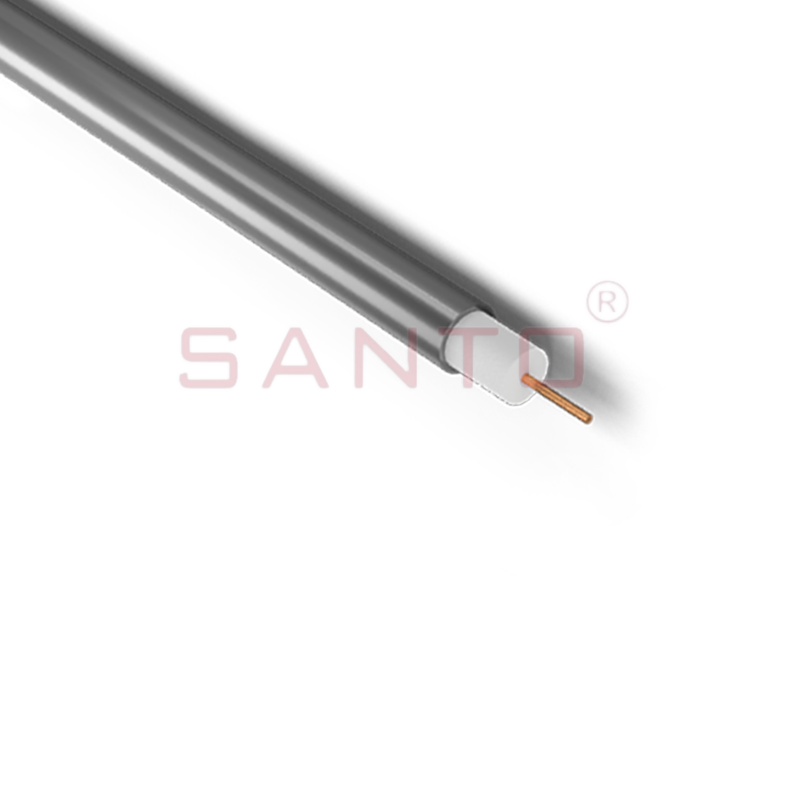
SANTO HAx mineral insulated (MI) Alloy 825 series heating cables are suitable for use in hazardous areas. They have been designed for use in freeze protection and temperature maintenance applications ...
See Details
Santo electric heating strips are widely used in key industries in China.

