 English
  English
 русский
 日本語
日本語 Español
 中文简体
中文简体
The SANTO UFA range of self-regulating heating cables is mainly used for frost protection of pipes and vessels but can also be used to maintain processes up to 65°C. These heating cables are available...
See Details
In modern industrial heat tracing, the reliability of a heating cable system is determined not only by the heating cable itself, but also by the quality of every connection, termination, sealing component, and power entry accessory. A single weak point in the electrical connection can compromise temperature maintenance, freeze protection, personnel safety, hazardous-area compliance, and long-term operating cost. The MFS-100-L-E and MFS-100-L-EP single-circuit power supply junction box is designed for this critical position in the heat tracing system: the point where safe power delivery, environmental sealing, mechanical support, and field serviceability must all work together.
This product is a power junction box kit for connecting power to industrial parallel heating wires, including SANTO UFA, UFB, UFC, UFO series heating cables and compatible ABB industrial parallel heating wire series. It is engineered for use in demanding heat tracing environments, including hazardous areas requiring certified equipment. With certifications including CNEX, IECEx, ATEX, DNV, Baseefa, and EAC, the product provides a strong compliance foundation for projects in oil and gas, chemical processing, utilities, construction, energy, and other industrial applications.
The MFS-100 family combines the function of a power connection kit with insulation-entry protection. The robust bracket protects the heating cable, supports installation through thick insulation, and is suitable for insulation layers up to 100 mm. For contractors, plant maintenance teams, and engineering procurement teams, this integrated approach reduces the number of separate components required on site, improves installation consistency, and helps simplify project planning.
A key feature is the core sealing sleeve that can be installed without a hot air gun or spray lamp. This is highly valuable in plants where hot work is restricted, controlled, or time-consuming to approve. By eliminating the need for high-temperature tools during this step, the kit helps reduce installation risk, shortens preparation time, and improves field efficiency, particularly in hazardous or operational industrial facilities.
The MFS-100-L-E and MFS-100-L-EP versions are especially suitable for Eurasian-region requirements. The MFS-100-L-E configuration includes M25 threaded entries, a power cable gland, and a plug. The MFS-100-L-EP configuration is designed for armored cable applications and includes a grounding plate and external grounding bolt. Both configurations are built around a durable black engineering polymer housing, stainless steel cover screws, silicone rubber gasket, and WAGO 284 series explosion-protection-rated terminal technology.
MFS-100-L-E/MFS-100-L-EP single circuit power supply junction box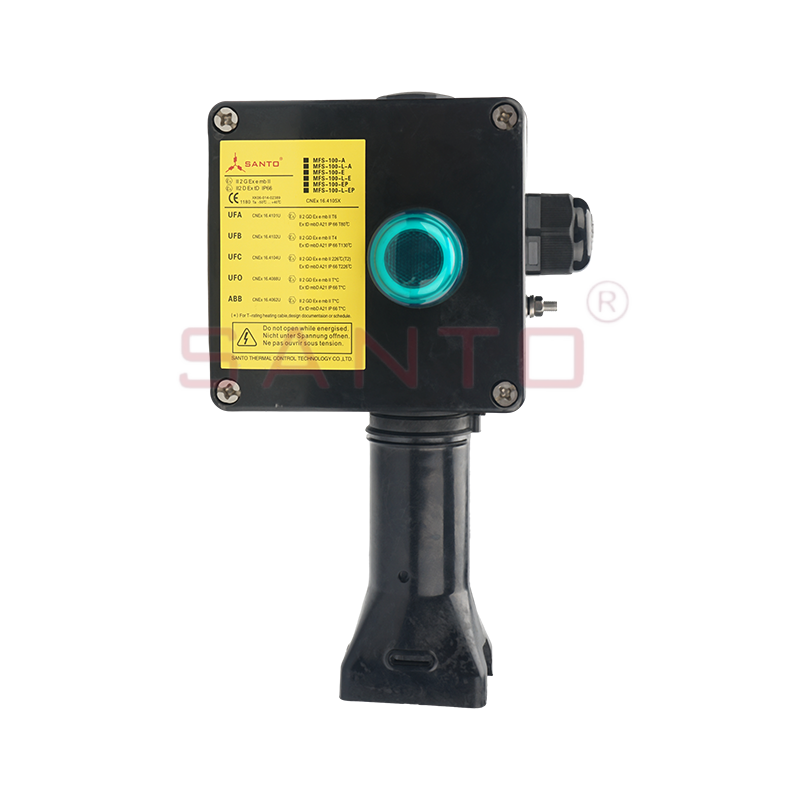
Content
A power junction box in a heat tracing system performs several essential functions. It receives electrical power from the supply cable, distributes that power to the heating cable circuit, protects the electrical connection from moisture and dust, provides a stable mechanical interface, and maintains system integrity at the insulation entry point. In many industrial systems, the junction box must also meet hazardous-area requirements, resist weather exposure, and remain serviceable after years of field operation.
The MFS-100-L-E and MFS-100-L-EP single-circuit power supply junction box is designed for single heating cable circuit applications where safety, traceability, and ease of installation matter. Its structure supports the heating cable as it exits the thermal insulation layer, protecting the cable from excessive bending, mechanical stress, and damage caused by movement or maintenance activity. Because heat tracing systems are often installed on long pipelines, tanks, valves, pumps, and instruments, consistent connection quality across multiple field points is critical.
Compared with basic electrical junction boxes that require additional adapters, custom drilling, separate sealing parts, or improvised supports, this product is a dedicated heat tracing accessory. Its design reflects the practical needs of heat tracing installation: cable sealing, insulation stand-off, terminal connection, cable gland entry, grounding, visual power indication, and environmental protection. This system-level approach gives it advantages over generic boxes that may be electrically acceptable but not optimized for heating cable installation.
The product also helps minimize installation variability. In the field, different installers may otherwise use different sealing practices, cable supports, or grounding arrangements. By providing a complete kit with specific components, the MFS-100 design promotes repeatable installation quality, which is important for plant safety audits, commissioning records, and long-term maintenance.
The design concept of the MFS-100-L-E and MFS-100-L-EP is based on integration. Instead of treating the power connection, insulation entry, cable protection, grounding, and indication as separate problems, the kit combines them into one coordinated assembly. This reduces the number of field decisions and helps ensure that each connection point is built according to the intended engineering standard.
The housing, cover, and bracket are made of black engineering polymer. This material selection supports corrosion resistance, insulation performance, impact resistance, and weather protection. Stainless steel cover screws improve durability in outdoor and corrosive environments, while the silicone rubber cover gasket supports sealing performance over a wide temperature range.
The bracket is especially important because it protects the heating cable and supports installations with insulation layers up to 100 mm. In industrial plants, pipelines often have thick thermal insulation, metal cladding, and varying surface geometry. A well-designed stand-off bracket helps keep the junction box accessible outside the insulation while allowing the heating cable to pass safely from the pipe surface into the box.
The connection terminals are WAGO 284 series terminals rated for explosion-protection applications. They support reliable electrical connection for line, neutral, and grounding conductors. Proper terminal technology helps reduce loose connections, overheating, service interruptions, and maintenance time. In heat tracing systems, where many connection points may be installed across large sites, reliable terminal performance is a practical operational advantage.
The optional LED indicator module is another important design element. It provides a visible signal that the junction box is energized. A perspective window on the cover allows the operator to see the power status without opening the enclosure. This improves safety and reduces unnecessary opening of the box, which can compromise sealing if performed frequently or incorrectly.
The MFS-100-L-E and MFS-100-L-EP versions are designed for power supply connection in industrial heat tracing circuits. They support applicable companion heating cables such as UFA, UFB, UFC, UFO, and compatible ABB ACC, ADD, AFF, and XP series industrial parallel heating cables. The maximum working voltage is 254 Vac for the E and EP versions, and the maximum continuous working current is 40 A for the heating wire circuit.
The protection grade is IP66/IP67 for the Eurasian configurations. This indicates strong resistance to dust ingress, water jets, and temporary immersion conditions according to relevant enclosure protection standards. For heat tracing systems installed outdoors, on process lines, in washdown areas, or in cold and wet environments, this sealing performance is essential.
The operating temperature range differs slightly depending on whether the indicator module is included. For the MFS-100-E and MFS-100-EP versions, the temperature range is -50°C to +40°C. For the illuminated MFS-100-L-E and MFS-100-L-EP versions, the temperature range is -40°C to +40°C. The minimum installation temperature is -50°C, supporting cold-climate projects where installation may occur in winter or in low-temperature industrial locations.
The power cable entry design is based on M25 threaded holes. The MFS-100-L-E configuration includes two M25 threaded holes, one plug, and one plastic gland for power cables with a diameter of 8 to 17 mm. The MFS-100-L-EP configuration includes two M25 threaded holes, one grounding plate, and one external grounding bolt, making it suitable for armored cable use.
| Feature | MFS-100-L-E | MFS-100-L-EP |
| Regional application | Eurasian region | Eurasian region |
| Power cable entry | Two M25 threaded holes, one M25 gland, one M25 plug | Two M25 threaded holes, grounding plate, external grounding bolt |
| Recommended cable type | Standard power cable with suitable gland range | Armored cable applications |
| Protection grade | IP66/IP67 | IP66/IP67 |
| Maximum working voltage | 254 Vac | 254 Vac |
| Maximum continuous circuit current | 40 A heating cable circuit | 40 A heating cable circuit |
| Terminal type | WAGO 284 series, line, neutral, ground | WAGO 284 series, line, neutral, ground |
| Maximum wire size | 10 mm² multi-strand wire or 10 mm² solid conductor | 10 mm² multi-strand wire or 10 mm² solid conductor |
| Housing material | Black engineering polymer | Black engineering polymer |
| Cover gasket | Silicone rubber | Silicone rubber |
| LED indicator color | Green | Green |
| LED voltage rating | 100-254 Vac | 100-254 Vac |
| LED power consumption | Less than 1 W | Less than 1 W |
Many heat tracing failures are not caused by the heating cable itself but by poor accessory selection, improper connection design, moisture ingress, or mechanical damage at the insulation exit point. Conventional junction boxes may provide a basic enclosure but often require additional parts, field modification, or installer-created methods to accommodate heating cables. The MFS-100-L-E and MFS-100-L-EP provide a dedicated alternative.
The product is not simply an empty enclosure. It is a kit designed to connect power to industrial parallel heating wires while also managing the insulation-layer incoming line. This integration reduces procurement complexity. Instead of purchasing a box, gland, terminal, support bracket, sealing parts, grounding components, and indication module separately, the installer receives a coordinated set of components intended to work together.
This reduces the chance of mismatched parts and helps control quality. In competitive products that rely on multiple separately sourced accessories, the installation result may vary depending on component compatibility. The MFS-100 kit approach improves repeatability and reduces the risk of omissions during field assembly.
One of the strongest practical advantages is that the core sealing sleeve can be installed without a hot air gun or spray lamp. In many chemical plants, refineries, gas facilities, and hazardous locations, hot work permits can be difficult to obtain. They may require gas testing, fire watch personnel, safety isolation, and time-consuming approval procedures.
By eliminating the need for high-temperature work during this installation step, the kit can save project time and reduce safety management burden. This advantage is particularly important during plant maintenance shutdowns, where every hour of field work has significant cost implications. It also supports safer installation in confined or complex areas where open flame or high heat tools are undesirable.
The illuminated versions include an ultra-bright LED indicator module that is inserted into the wiring terminal. The cover includes a viewing window so personnel can see whether the junction box is powered. This is a valuable operational feature because it improves troubleshooting efficiency and enhances safety awareness.
In systems without an indicator, technicians may need to open the junction box or test externally to confirm energization. Opening enclosures in harsh environments can expose internal components to moisture, dust, or contamination. A visible indicator reduces unnecessary opening and provides quick confirmation during inspection rounds.
The bracket is designed to protect the heating wire and support a 100 mm insulation layer. This is a meaningful advantage for industrial pipelines where thick insulation is used to conserve heat, prevent freezing, protect personnel, or stabilize process temperature. Generic junction boxes may require improvised mounting methods when insulation is thick, which can create mechanical stress or poor cable routing.
The MFS-100 bracket supports a cleaner installation. The junction box remains accessible outside the insulation, while the heating cable is protected as it passes from the pipe surface through the insulation layer. This improves appearance, serviceability, and cable life.
The product is certified by recognized organizations including CNEX, IECEx, ATEX, DNV, Baseefa, and EAC. For global industrial projects, certification coverage is often a decisive factor. A product that can support multiple regulatory frameworks helps engineering teams standardize equipment across regions and reduces redesign work for export projects.
Compared with non-certified or locally limited alternatives, a junction box with broad certification support provides stronger confidence for hazardous-area installations. This is especially relevant in petroleum, chemical, gas, and energy sectors, where equipment compliance is closely reviewed during design, procurement, commissioning, and inspection.
The black engineering polymer housing, stainless steel screws, and silicone rubber gasket are selected for industrial durability. The IP66/IP67 rating of the E and EP versions reflects strong environmental protection. These features help the junction box withstand outdoor exposure, moisture, dust, and industrial cleaning conditions.
Lower-quality alternatives may rely on weaker plastics, poor gasket design, or unprotected metal hardware. Over time, this can lead to cracking, corrosion, water ingress, or difficult maintenance. The MFS-100 design emphasizes longevity and field reliability, which reduces total ownership cost.
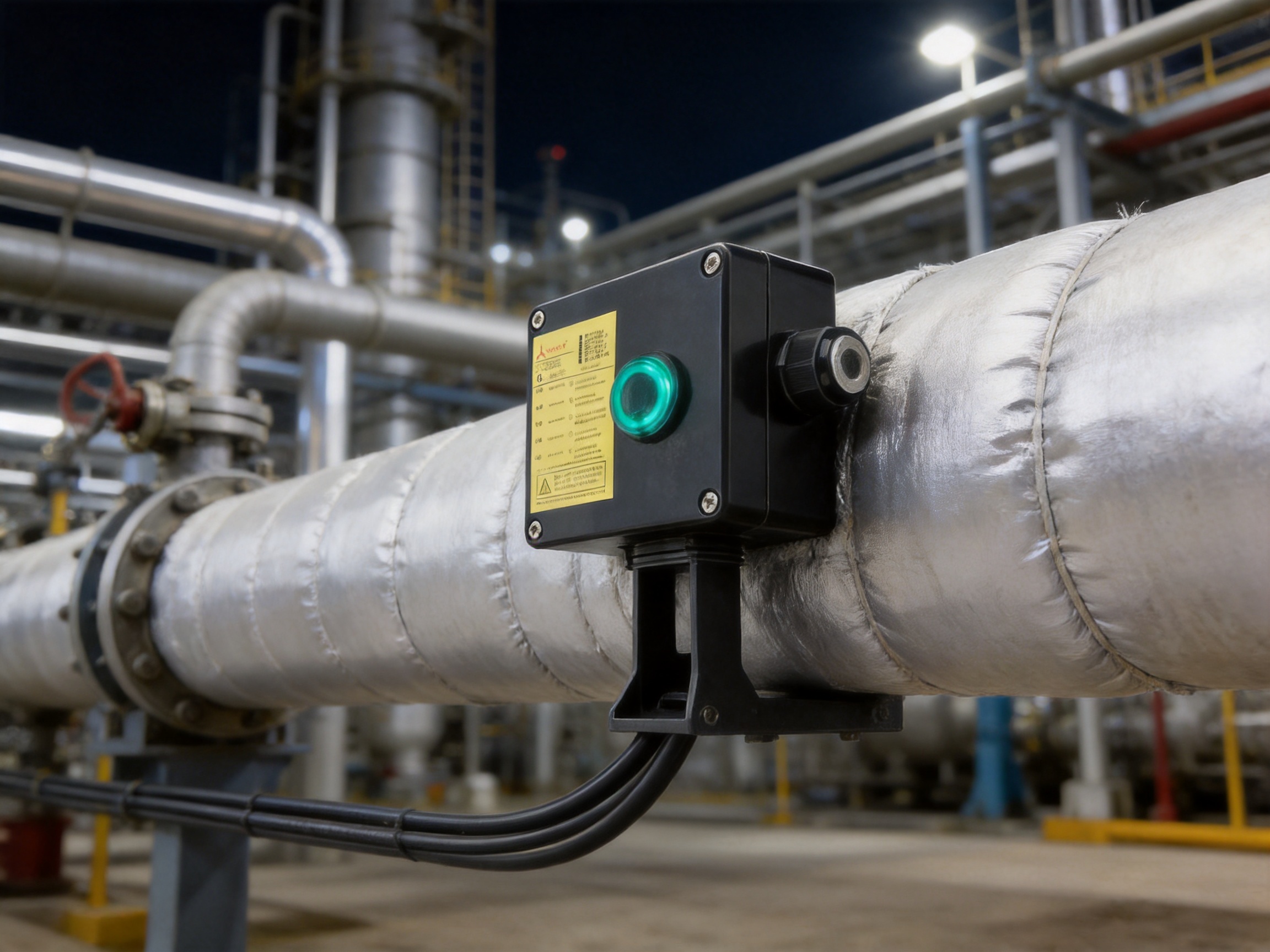
The single-circuit power supply junction box is suitable for many industrial and commercial heat tracing applications. Its primary function is power connection for parallel heating cable circuits, but its value extends into freeze protection, temperature maintenance, deicing, process stabilization, and safety-critical tracing systems.
In oil and gas environments, heat tracing is used to prevent freezing, maintain viscosity, protect instrumentation, and support process reliability. Junction boxes in these facilities may be exposed to hazardous atmospheres, severe weather, salt air, mechanical vibration, and demanding inspection requirements. The certified hazardous-area capability and sealed construction of the MFS-100-L-E and MFS-100-L-EP make them well suited for these conditions.
Chemical plants often require precise temperature maintenance to prevent crystallization, solidification, condensation, or process instability. A failure at a power connection point can interrupt heating to a critical line. The product’s reliable terminals, robust sealing, and visible status indicator help maintenance teams manage these systems more effectively.
Steam lines, water lines, fire-protection lines, wastewater systems, and utility pipelines frequently require freeze protection. The ability to install at very low minimum installation temperatures is valuable in cold regions. The bracket for thick insulation supports winterization projects where insulation thickness may be substantial.
Large buildings, commercial complexes, transport facilities, and infrastructure projects may use heat tracing for roof drainage, ramps, water lines, or mechanical systems. A standardized power junction box improves installation quality and simplifies future maintenance. The visual LED indicator can assist facility teams during routine inspections.
Solar energy, geothermal cultivation, and distributed energy systems may require thermal control for pipes, storage systems, or fluid transfer lines. The product’s integration with heating cable systems supports stable operation in changing outdoor conditions.
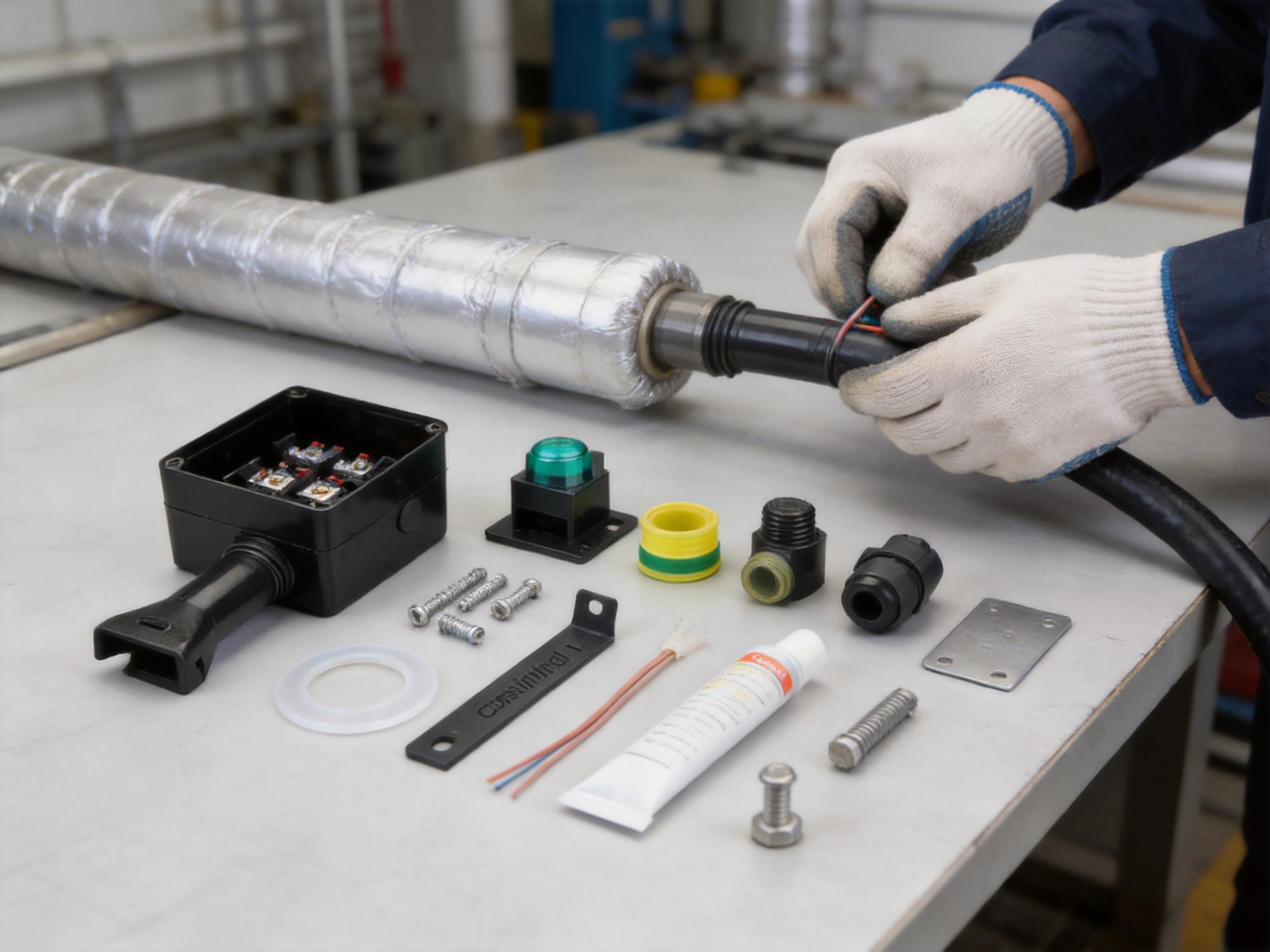
The MFS-100-L-E kit includes a junction box with terminal blocks, an indicator module for illuminated versions, a bracket, a core sealing sleeve, a yellow-green grounding wire sleeve, an M25 gland for power cables with a diameter of 8 to 17 mm, an M25 plug, lubricant, and a cable tie. Each part supports a specific installation step.
The junction box provides the enclosure and wiring space. The terminal blocks ensure structured electrical connection. The indicator module provides visible status. The bracket positions and protects the assembly. The core sealing sleeve supports cable sealing. The grounding sleeve assists conductor identification and grounding arrangement. The M25 gland provides a sealed entry for the supply cable. The plug closes the unused threaded hole. Lubricant assists assembly, and the cable tie supports orderly cable management.
The MFS-100-L-EP kit includes a junction box with terminal blocks, grounding plate, and bolts; an indicator module for illuminated versions; a bracket; a core sealing sleeve; a yellow-green grounding wire sleeve; an M25 plug; lubricant; and a cable tie. The key distinction is the grounding plate and external grounding bolt, which support armored cable applications. Armored cables are common in industrial installations where mechanical protection and grounding continuity are required.
This complete kit philosophy is beneficial for installers because it reduces the need for improvisation. It also helps purchasing teams avoid missing small but essential components. On major projects with hundreds or thousands of heat tracing connection points, kit completeness can have a significant effect on project schedule and quality.
The E and EP configurations are rated for a maximum working voltage of 254 Vac and a maximum continuous heating cable circuit current of 40 A. These ratings suit a wide range of industrial heat tracing circuits. The maximum wire size is 10 mm² for multi-strand wire or 10 mm² for solid electrical building conductor, giving sufficient capacity for typical power supply conductors used in industrial installations.
WAGO 284 series terminals provide a dependable connection method for phase, neutral, and grounding conductors. Good terminal design is vital because heat tracing circuits may operate continuously during cold seasons or process operation. Loose electrical connections generate heat, increase resistance, and may eventually cause failure. A stable terminal system helps reduce these risks.
Grounding is another important safety factor. The MFS-100-L-EP version is specifically designed for armored cables and includes grounding components. In industrial installations, correct grounding supports fault protection, electromagnetic compatibility, and compliance with electrical safety standards. The external grounding bolt and grounding plate make the EP version suitable for applications where armored cable bonding is required.
The LED indicator module consumes less than 1 W, meaning it adds minimal load while providing useful visual feedback. Its voltage rating of 100-254 Vac matches the operating range of the E and EP versions. The green indicator color supports easy identification in the field.
Industrial heat tracing accessories must survive outdoor exposure, thermal cycling, vibration, impact, chemical atmosphere, moisture, and routine maintenance activity. The MFS-100-L-E and MFS-100-L-EP are designed with these realities in mind.
The engineering polymer housing offers corrosion resistance compared with metal boxes in many environments. It also provides electrical insulation benefits and reduces the risk of surface corrosion that may affect appearance and serviceability. The black color is suitable for industrial field use and helps create a professional, uniform installation appearance.
Stainless steel cover screws resist corrosion and maintain fastening reliability. This matters because covers may need to be opened for inspection or service during the life of the heat tracing system. Low-grade screws can seize, rust, or strip, increasing maintenance difficulty.
The silicone rubber gasket supports sealing performance across temperature changes. Gasket quality is critical for maintaining IP66/IP67 protection. If a gasket becomes brittle, deformed, or poorly seated, moisture can enter the junction box and compromise the electrical connection. Silicone rubber is widely valued for flexibility and temperature resistance.
The bracket provides mechanical support and cable protection. Heating cables are often installed beneath insulation and metal cladding, where access after installation can be difficult. Protecting the cable at the junction box entry point reduces the risk of damage during installation, cladding work, or later maintenance.
Installation efficiency is one of the most important commercial advantages of a well-designed heat tracing junction box. Labor cost, permit delays, rework, and inspection failures can become more expensive than the accessory itself. The MFS-100-L-E and MFS-100-L-EP address these concerns through kit completeness, no-hot-work sealing, standardized terminals, and visible power indication.
The absence of hot air gun or spray lamp requirements during core sealing sleeve installation can reduce field complexity. Installers do not need to prepare hot-work tools for this step, and project managers may reduce the amount of permit coordination required. In facilities where hot work is tightly controlled, this feature alone can deliver significant practical value.
The M25 entries align with common Eurasian industrial cable practices. The MFS-100-L-E’s included gland for 8 to 17 mm power cable diameter covers many typical supply cable sizes. The MFS-100-L-EP’s armored cable design supports applications where rugged cable construction is preferred or required.
Because the kit includes lubricant and a cable tie, it also supports smoother assembly. Small details like these can improve field consistency. When installers are working outdoors, at height, in cold weather, or under time pressure, having the correct small accessories included can prevent delays and reduce errors.
The performance of a heat tracing junction box depends not only on design but also on manufacturing discipline. Santo Thermal Control Technology Co., Ltd. operates in Jiangsu Province, an important region for electric heating belt production. The company has accumulated more than 35 years of industry experience, and its background includes research, design, production, manufacturing, and sales of electric heating cables and accessories.
The company’s product range includes automatic temperature-control electric heating belts, self-limiting heating cables, heat tracing belts, constant-power heating cables, glass fiber heating belts, mineral insulated cables, silicone rubber heating systems, snow melting cables, and related electric heating accessories. This broad product platform gives the manufacturer practical insight into how junction boxes must interact with heating cables in real installations.
Advanced manufacturing strength begins with product engineering. A power junction box must match the electrical, mechanical, environmental, and certification requirements of the heating cable system. Because the manufacturer develops both heating cables and accessories, the accessory design can be optimized for cable compatibility, installation workflow, and system reliability.
The company has passed ISO9001 quality system certification, demonstrating a structured approach to quality management. ISO9001 supports process control, traceability, corrective action, supplier management, and continuous improvement. For industrial buyers, this provides confidence that products are not made as isolated batches but within a controlled quality framework.
The company also established an irradiation center and a product simulation testing laboratory. These capabilities support material processing, product validation, and performance testing. In electric heating products, material stability, insulation performance, heat resistance, and aging behavior are crucial. Simulation testing helps verify product performance before and after exposure to demanding conditions.
The manufacturer has also obtained explosion-proof certification and EAC Eurasian Union certification for relevant product lines. Its products serve international markets, and the business reaches many regions. This global experience supports understanding of different electrical standards, environmental expectations, documentation requirements, and customer installation practices.
For a product like the MFS-100-L-E and MFS-100-L-EP, quality control should cover incoming material inspection, housing production, gasket quality, terminal assembly, grounding component verification, indicator module testing, dimensional checks, enclosure sealing, packaging completeness, and documentation accuracy. Each of these steps matters in the final field performance.
Engineering polymer parts must be dimensionally stable so the cover, gasket, bracket, threaded entries, and internal terminals align correctly. If the housing or cover dimensions are inconsistent, sealing and assembly quality may suffer. Controlled molding or forming processes help achieve repeatable geometry.
Terminal block installation must be secure and correctly positioned. Electrical connection points are central to product safety. Proper assembly control reduces the risk of loose terminals, incorrect orientation, or inadequate conductor clearance. Grounding components, especially in the EP version, must be installed correctly to support armored cable bonding.
Indicator modules require electrical testing because they provide live-status information. A failed indicator could mislead maintenance personnel or reduce the value of the illuminated configuration. Testing the LED module across its rated voltage range helps ensure reliable field performance.
Gasket and cover assembly require careful inspection. IP66/IP67 performance depends on correct gasket compression and undamaged sealing surfaces. Stainless steel cover screws must fit properly and allow repeated opening and closing without damaging the enclosure.
Packaging is also part of quality. A complete kit must arrive with all parts included: junction box, terminals, indicator module where applicable, bracket, sealing sleeve, grounding sleeve, gland or grounding parts, plug, lubricant, and cable tie. Missing small parts can delay installation, so kit verification is a practical quality-control requirement.
The MFS-100 power supply junction box is designed for compatibility with UFA, UFB, UFC, UFO, and compatible ABB industrial parallel heating cable series. Compatibility is more than physical fit. It includes electrical rating, sealing method, cable geometry, terminal arrangement, grounding approach, and installation sequence.
When a junction box is not designed for the specific heating cable type, installers may need to strip, route, seal, or terminate conductors in ways that are not ideal. This can compromise insulation resistance, moisture protection, or circuit reliability. A compatible connection kit helps preserve the heating cable’s designed performance.
Parallel heating cables are commonly used because they allow flexible cut-to-length installation and reliable heat output over long runs. However, their connection points must be properly sealed and electrically terminated. The MFS-100 family addresses these needs with a purpose-built core sealing sleeve, terminals, and housing arrangement.
System compatibility also supports documentation and maintenance. When connection kits and heating cables are specified together, engineering records become clearer. Maintenance teams can identify replacement parts more easily, and spare parts management becomes simpler.
The purchase price of a junction box is only one part of its economic value. Total cost of ownership includes installation labor, permit requirements, inspection time, maintenance frequency, failure risk, downtime, spare parts complexity, and service life. The MFS-100-L-E and MFS-100-L-EP offer cost advantages in several ways.
First, the no-hot-work core sealing sleeve can reduce installation time and permit-related delays. This is especially valuable in hazardous or operating plants. Second, the complete kit reduces the risk of missing components. Third, the visual LED indication shortens troubleshooting time. Fourth, IP66/IP67 sealing and durable materials reduce the probability of moisture-related failure. Fifth, hazardous-area certifications reduce compliance risk in regulated projects.
In large heat tracing systems, these advantages multiply. A small time saving per connection point can become a major project saving when hundreds of circuits are installed. Likewise, improved reliability at each connection point reduces the likelihood of costly winter failures or process interruptions.
Competitor products in the heat tracing accessory market often fall into three categories: generic electrical junction boxes adapted for heat tracing, regional products with limited certification coverage, and heat tracing boxes that require more complex installation procedures. The MFS-100-L-E and MFS-100-L-EP compete strongly against all three categories.
Against generic boxes, the product offers a dedicated heat tracing design with bracket, sealing sleeve, terminals, gland or grounding options, and LED indication. This reduces field modification and improves consistency. Generic boxes may appear economical at purchase but can become more expensive when additional accessories and labor are considered.
Against products with limited certification, the MFS-100 family offers broader hazardous-area recognition, including CNEX, IECEx, ATEX, DNV, Baseefa, and EAC. This is valuable for international projects, engineering contractors, and multinational plant operators who prefer standardization across sites.
Against products requiring hot work, the MFS-100 design provides a practical safety and efficiency advantage. Eliminating hot air guns or spray lamps for core sealing sleeve installation can simplify work planning and reduce risk in sensitive environments.
Against products without visual indication, the illuminated MFS-100-L-E and MFS-100-L-EP versions improve field inspection convenience. A visible energized status helps operators and technicians make faster decisions without opening the enclosure.
Industrial safety is built through layers of protection. The heating cable must be correctly selected, the circuit must be electrically protected, the junction box must be properly certified, the enclosure must be sealed, grounding must be correct, and installation must follow approved procedures. The MFS-100-L-E and MFS-100-L-EP support this layered safety approach.
Certification for hazardous areas is a core safety requirement in many industries. It indicates that the product has been evaluated for use in potentially explosive atmospheres according to relevant standards. This helps engineering teams meet project specifications and regulatory expectations.
The visible indicator supports safe maintenance behavior by showing whether power is present. Although proper lockout and testing procedures must always be followed, a visible indicator provides an additional awareness layer. It can also help quickly identify energized circuits during routine inspections.
The enclosure’s IP66/IP67 protection supports electrical safety by reducing dust and water ingress. Moisture inside a junction box can lead to corrosion, tracking, insulation failure, or nuisance trips. Reliable sealing therefore contributes directly to system uptime and personnel safety.
The EP version’s grounding features support armored cable installations. Proper grounding and bonding are essential in industrial electrical systems, especially in hazardous areas where fault energy management and equipment integrity are critical.
The product family includes basic specifications and can be customized and installed on site. This flexibility matters because industrial projects vary by region, cable type, insulation thickness, cable entry method, and grounding requirement. A product platform that supports different configurations reduces the need for entirely different accessory systems.
The L versions include indicator functionality. The E version is suitable for standard Eurasian power cable entry using M25 threaded holes, gland, and plug. The EP version supports armored cable requirements with grounding hardware. The North American A version, while not the focus of this article, demonstrates the broader product family’s regional adaptability with a 3/4 inch entry approach.
On-site adaptability also includes installation at low temperature. The minimum installation temperature of -50°C supports cold-region projects, where delaying installation until warm weather may not be practical. This is a meaningful advantage for pipeline, mining, energy, and infrastructure projects in northern climates.
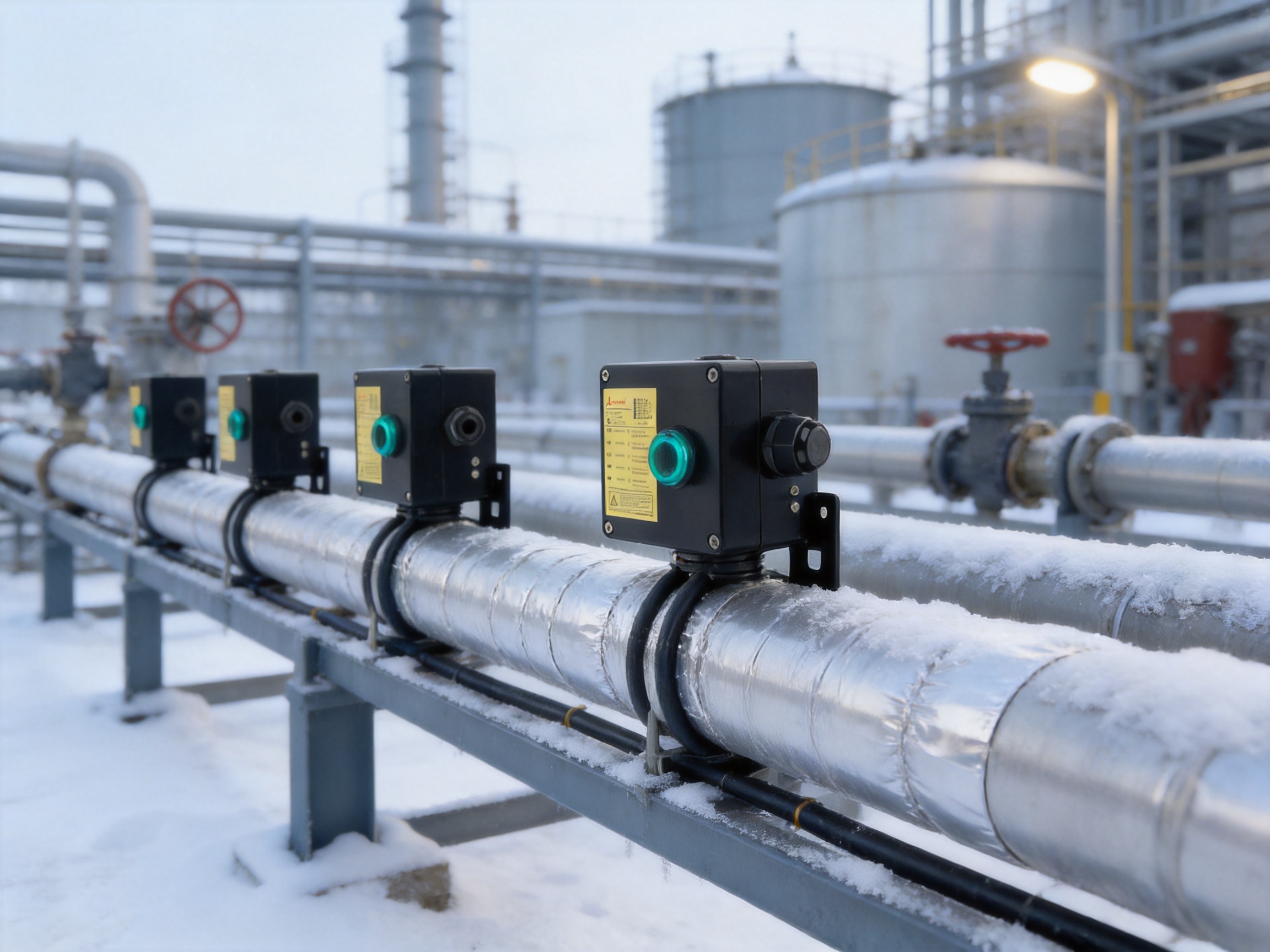
Freeze protection is one of the most common applications for electric heat tracing. When temperatures fall below freezing, unprotected water lines, drain lines, fire protection systems, and process fluids can freeze, expand, block flow, and damage equipment. Heating cables prevent freezing by maintaining the pipe surface or fluid above a safe temperature.
However, freeze protection systems must be reliable exactly when conditions are harshest. Snow, ice, wind, condensation, and low temperature all challenge electrical accessories. The MFS-100-L-E and MFS-100-L-EP are designed for such conditions with low-temperature installation capability, sealed housing, durable materials, and protected cable entry.
The LED indicator is particularly helpful during winter inspections. Maintenance teams can visually confirm power status at connection points without opening boxes in snow, wind, or freezing rain. This improves inspection efficiency and reduces exposure of internal terminals to moisture.
In process industries, heat tracing may be used not only to prevent freezing but also to maintain fluids at a required processing temperature. Materials such as oils, chemicals, resins, syrups, and specialty fluids may become too viscous, crystallize, or separate if temperature falls below target levels. A reliable power connection is therefore part of process quality control.
The MFS-100 single-circuit junction box contributes to process reliability by ensuring that power is delivered securely to the heating cable circuit. Its certified design, terminal quality, and sealing performance reduce the likelihood of unexpected circuit failure. The indicator module helps maintenance teams identify whether a circuit is energized during troubleshooting.
When paired with properly selected heating cables, controls, and insulation, the junction box becomes part of a complete thermal management system. Its value is not measured only by electrical connection, but by its contribution to stable operation, reduced downtime, and lower maintenance risk.
Santo Thermal Control Technology Co., Ltd. has developed from a long history in electric heating technology. Its background includes the establishment of an electric heating instrument factory in 2000, ISO quality system certification in 2002, an irradiation center in 2013, brand development in 2016, explosion-proof and EAC certification achievements, invention activities in carbon fiber parallel heating cable technology, and continued expansion including new factory development and a simulation testing laboratory.
The company reports more than 35 years of industry experience, annual output exceeding 10,000 units, more than 2,000 distributors, and business coverage in over 85 areas. These figures indicate a production and distribution base capable of supporting both standard orders and project-based supply.
For buyers, manufacturing scale matters because heat tracing projects often require consistent product availability. A supplier with broad product lines, quality certification, testing capability, and market experience can better support engineering consultation, product selection, delivery planning, and after-sales service.
The company’s stated emphasis on innovation, cooperation, effectiveness, and development aligns with the needs of industrial customers who require continuous product improvement and practical field support. Its mission to create value and a better life is reflected in products that support safe energy use, freeze protection, and process reliability.
When selecting between the MFS-100-L-E and MFS-100-L-EP, the most important distinction is the power cable type and grounding requirement. If the installation uses standard power cable within the suitable gland diameter range of 8 to 17 mm, the MFS-100-L-E configuration is generally appropriate. If the installation uses armored cable and requires a grounding plate and external grounding bolt, the MFS-100-L-EP configuration is the better choice.
Engineers should also verify voltage, current, hazardous-area classification, ambient temperature, heating cable compatibility, insulation thickness, cable entry requirements, and local electrical codes. The maximum working voltage for the E and EP configurations is 254 Vac, and the maximum continuous heating cable circuit current is 40 A. The product should be used within these limits.
The illuminated L versions are recommended where visual power indication is valuable. In large facilities, LED indication can reduce inspection time and simplify troubleshooting. However, users should note the operating temperature range of illuminated versions, which is -40°C to +40°C, compared with -50°C to +40°C for non-illuminated E and EP versions.
For installations involving thick insulation, the product’s support for up to 100 mm insulation layer should be considered in layout planning. Proper positioning of the bracket and cable route will support long-term reliability and service access.
Correct installation should always follow the product instructions, project electrical specifications, and applicable codes. Before installation, personnel should confirm the kit model, heating cable type, power cable type, area classification, and supply voltage. Components should be inspected for damage, and the enclosure should remain clean and dry during assembly.
The heating cable should be prepared according to the specified method for the compatible cable type. The core sealing sleeve should be installed as directed, without the need for hot air gun or spray lamp work. Conductors should be routed neatly to the terminals, and grounding conductors should be properly sleeved and connected.
The cable gland or armored cable grounding arrangement should be tightened correctly to maintain sealing and mechanical retention. The unused M25 opening should be closed with the supplied plug. The cover gasket should be correctly seated before the cover is fastened with stainless steel screws.
After installation, the circuit should be tested according to heat tracing commissioning procedures. This may include insulation resistance testing, continuity checks, grounding verification, visual inspection, and power-on confirmation. For illuminated versions, the LED indicator should be observed through the cover window when energized.
Maintenance should include periodic visual inspection for enclosure damage, loose mounting, gasket condition, cable gland integrity, corrosion, and indicator operation. The box should not be opened unnecessarily, especially in wet or dusty conditions. If opened, the gasket and sealing surfaces should be checked before resealing.
The main purpose is to connect power to a single industrial parallel heating cable circuit while protecting the electrical connection, supporting insulation entry, and maintaining environmental sealing. It is designed as a dedicated heat tracing power connection kit rather than a generic electrical box.
The product is applicable to UFA, UFB, UFC, UFO, and compatible ABB ACC, ADD, AFF, and XP series industrial parallel heating cables. Compatibility should always be confirmed with the project specification and product documentation.
The MFS-100-L-E is suitable for standard Eurasian-region installations using M25 threaded entries and includes an M25 gland for power cables with a diameter of 8 to 17 mm. The MFS-100-L-EP is designed for armored cable applications and includes a grounding plate and external grounding bolt.
Yes. The MFS-100 kit is certified by organizations including CNEX, IECEx, ATEX, DNV, Baseefa, and EAC, supporting use in hazardous-area applications when correctly selected and installed according to the relevant certification conditions and local regulations.
No. When installing the core sealing sleeve, a hot air gun or spray lamp is not required. This helps reduce hot-work requirements and improves safety and installation efficiency in industrial environments.
The MFS-100-L-E and MFS-100-L-EP configurations provide IP66/IP67 protection, supporting resistance against dust and water ingress in demanding outdoor and industrial environments.
The maximum working voltage for the E and EP configurations is 254 Vac.
The maximum continuous working current is 40 A for the heating cable circuit in the E and EP configurations.
The LED indicator provides visible confirmation that the junction box is powered. The cover includes a viewing window, allowing personnel to check energization status without opening the enclosure.
The MFS-100-L-E and MFS-100-L-EP illuminated versions have an operating temperature range of -40°C to +40°C. The non-illuminated E and EP versions are rated from -50°C to +40°C.
The bracket protects the heating cable and supports installation through insulation layers up to 100 mm. It helps keep the junction box accessible while reducing mechanical stress on the heating cable.
This product is engineered specifically for heat tracing power connection. It includes heat tracing-compatible sealing, terminals, bracket support, grounding options, cable entry components, and optional visual indication. A generic box may require additional accessories and may not provide the same installation consistency or certification coverage.
The MFS-100-L-E and MFS-100-L-EP single-circuit power supply junction box provides a robust, certified, and installation-friendly solution for industrial heat tracing systems. Its integrated kit design combines power connection, insulation entry protection, cable support, sealing, grounding, and visual indication into a coordinated assembly. This makes it more effective than generic junction boxes and more efficient than accessory systems requiring complex field adaptation.
Its advantages are especially clear in hazardous areas, cold climates, thick-insulation pipelines, and projects requiring international certification support. The no-hot-work core sealing sleeve improves field safety and saves time. The IP66/IP67 enclosure, engineering polymer housing, stainless steel screws, silicone rubber gasket, and WAGO terminal technology support long-term reliability. The LED indicator improves inspection and troubleshooting by providing visible power status through the cover window.
Behind the product is a manufacturer with decades of electric heating experience, ISO9001 quality management, product research capability, certification experience, testing infrastructure, and broad market reach. This combination of product engineering and manufacturing strength makes the MFS-100-L-E and MFS-100-L-EP a strong choice for industrial heat tracing projects where safety, reliability, and installation efficiency are essential.
International Electrotechnical Commission. IEC 60529: Degrees of Protection Provided by Enclosures.
International Electrotechnical Commission. IEC 60079 Series: Explosive Atmospheres Standards.
European Committee for Electrotechnical Standardization. EN 60079 Series: Equipment for Explosive Atmospheres.
International Organization for Standardization. ISO 9001: Quality Management Systems Requirements.
National Fire Protection Association. NFPA 70: National Electrical Code, Articles Related to Hazardous Locations and Electric Heat Tracing.
IEEE Standards Association. IEEE Recommended Practices for Electric Heat Tracing Systems.
Industrial Heat Tracing Engineering Practice Manuals for Freeze Protection and Process Temperature Maintenance.
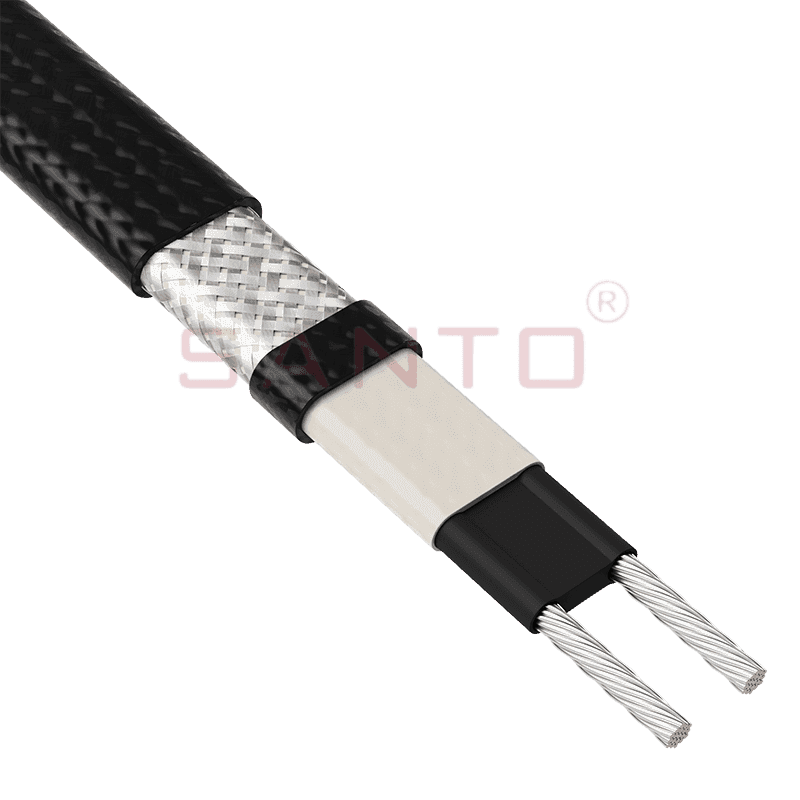
The SANTO UFA range of self-regulating heating cables is mainly used for frost protection of pipes and vessels but can also be used to maintain processes up to 65°C. These heating cables are available...
See Details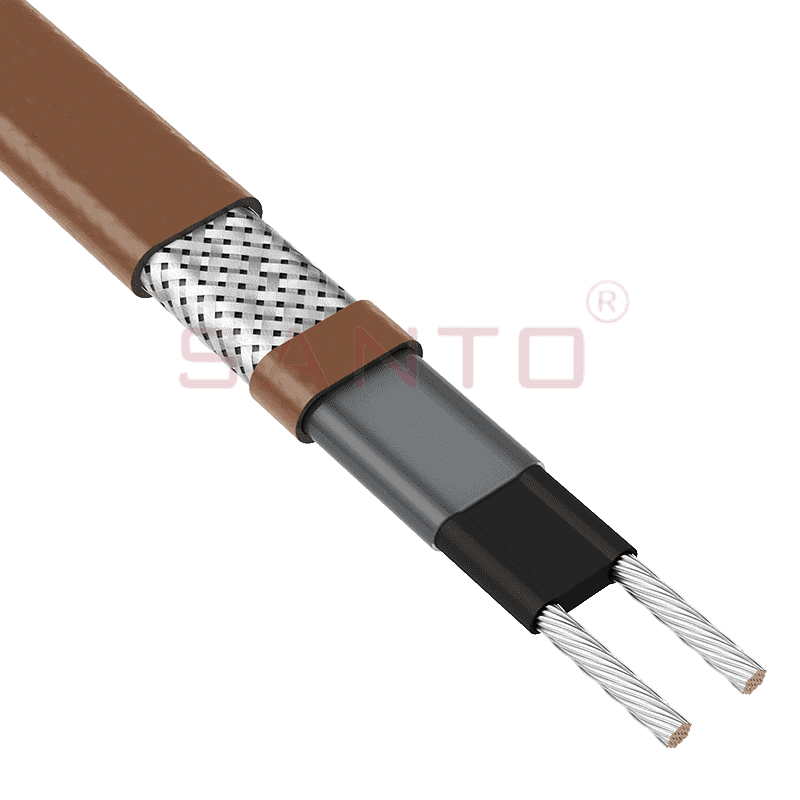
The SANTO UFB range of self-regulating heating cables is mainly used for frost protection of pipes and vessels requiring a higher power output than the UFA heating cables can supply. They can also be ...
See Details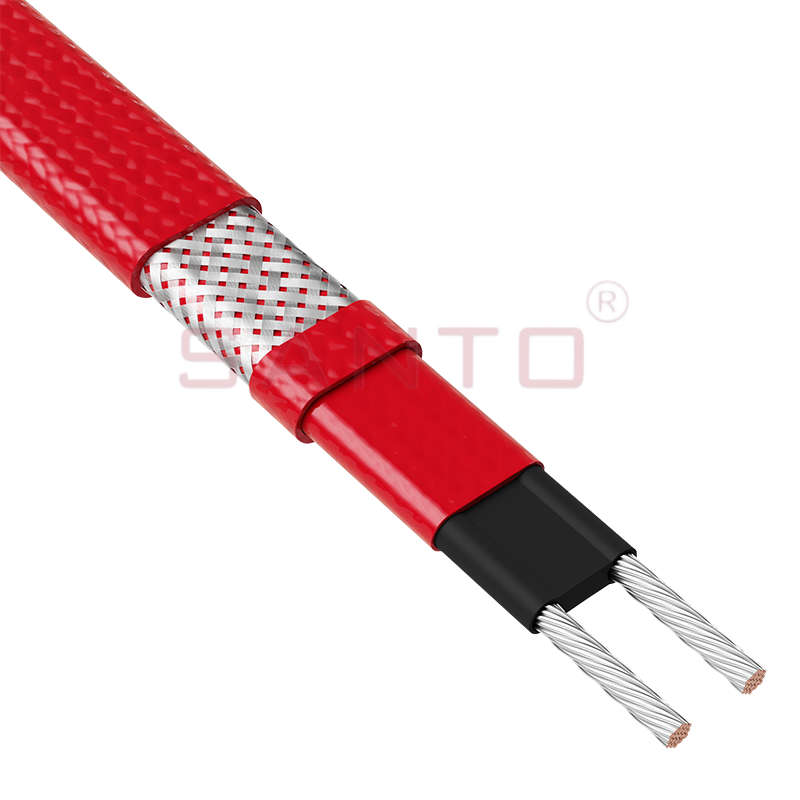
The SANTO UFC range of self-regulating heating cables is used for frost protection of pipes and vessels that require steam cleaning. They can also be used to maintain processes up to 121°C. These heat...
See Details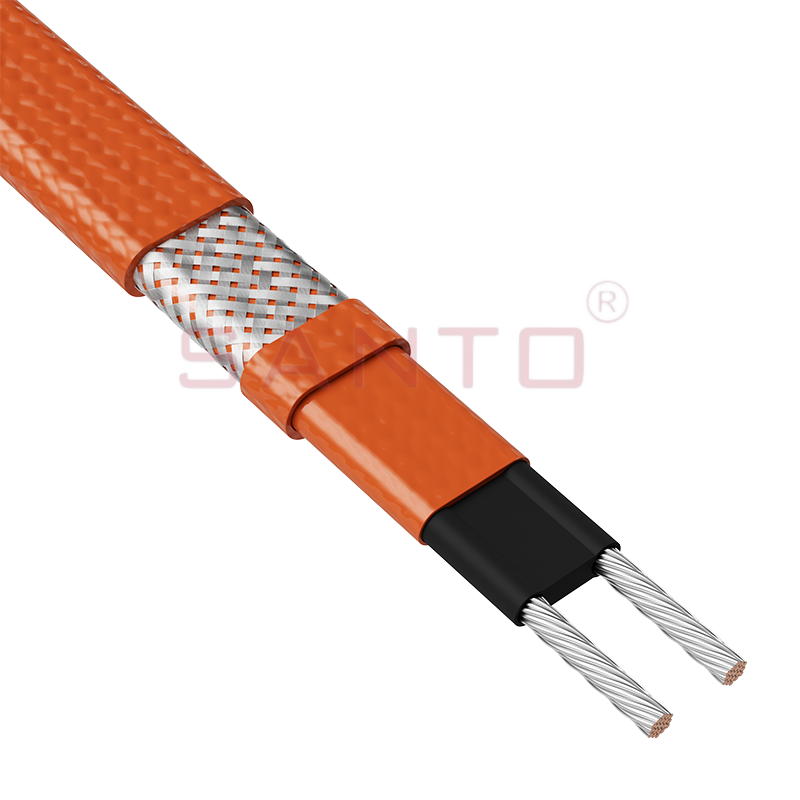
The SANTO UFO range of self-regulating heating cables is mainly used for frost protection of pipes and vessels that require steam cleaning . They can also be used to maintain processes up to 150°C. Th...
See Details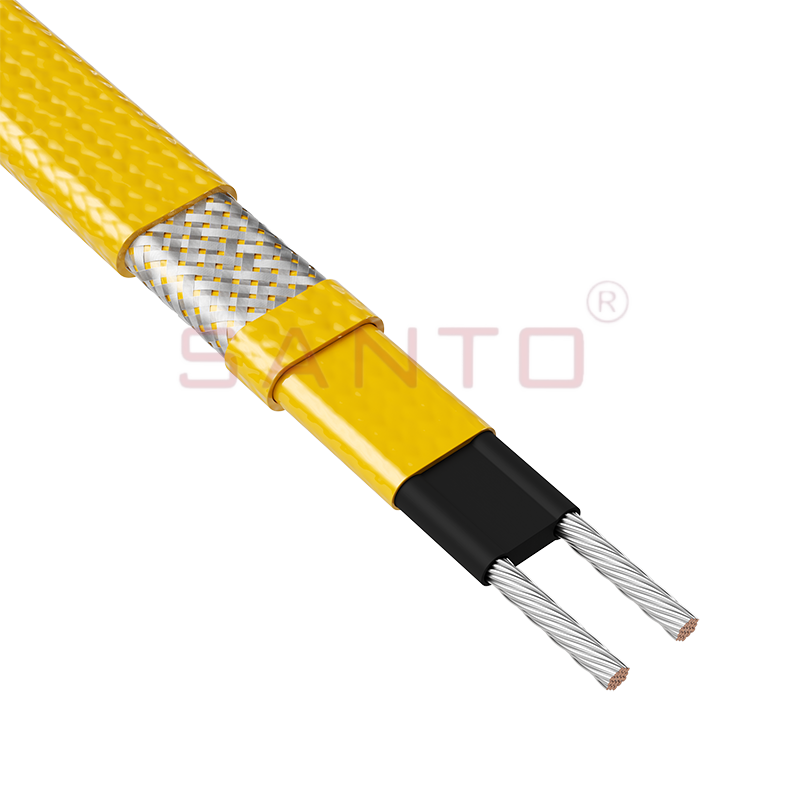
The SANTO UFD series of self-regulating heating cables are mainly used for freeze protection of pipes and vessels, but can also be used to maintain processes up to 200°C. These heating cables are avai...
See Details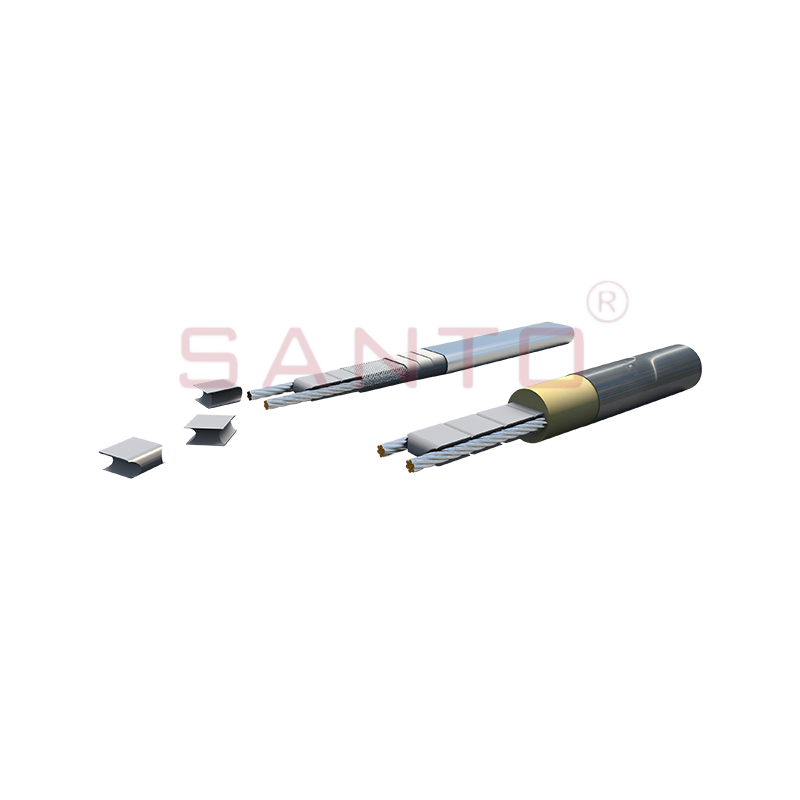
SANTO UFY heating wire is suitable for applications that maintain process temperatures up to 260 ℃ and can be steam blown; The self-regulating and parallel circuit heating wires of the UFY series are ...
See Details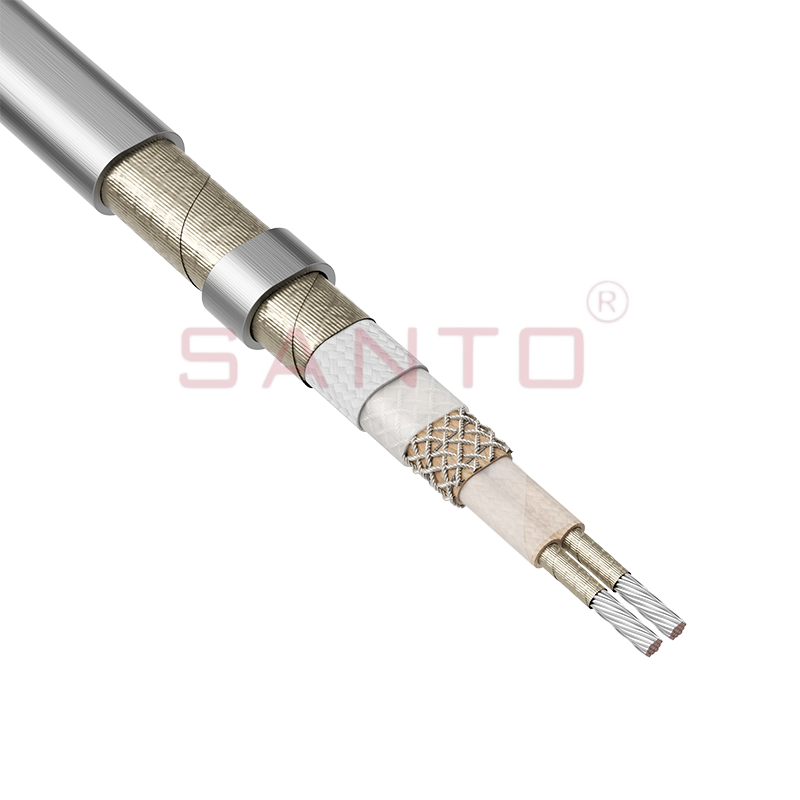
The SANTO UFM series self-regulating heating cables are mainly used for freeze protection of pipes and vessels, but can also be used to maintain processes up to 400°C. These heating cables are availab...
See Details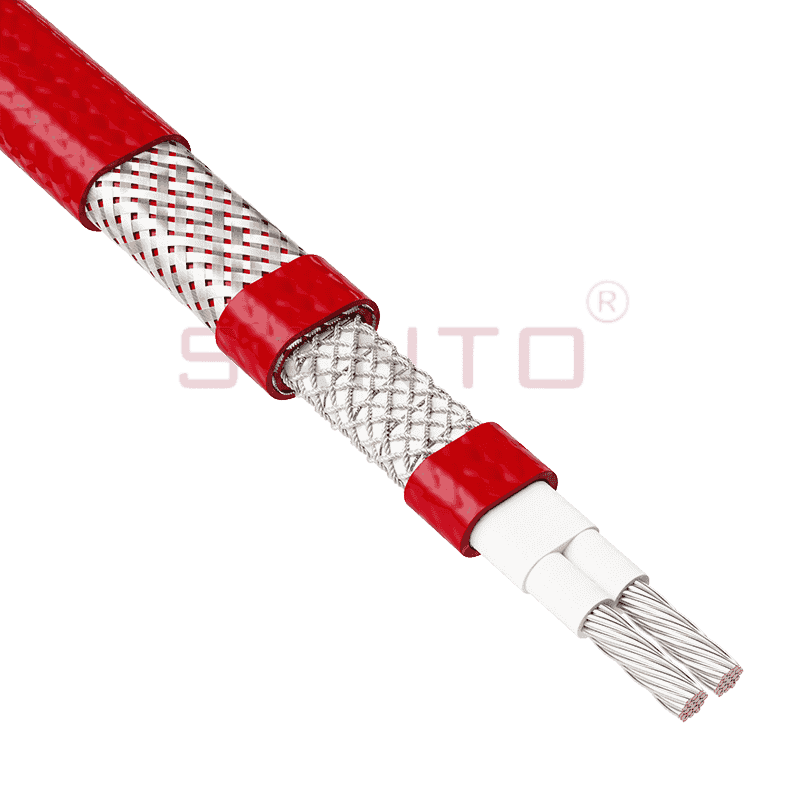
The SANTO ACC range of power-limiting heating cables is mainly used for temperature maintenance of processes and offers the advantage of a high power output at high temperatures which can reduce the n...
See Details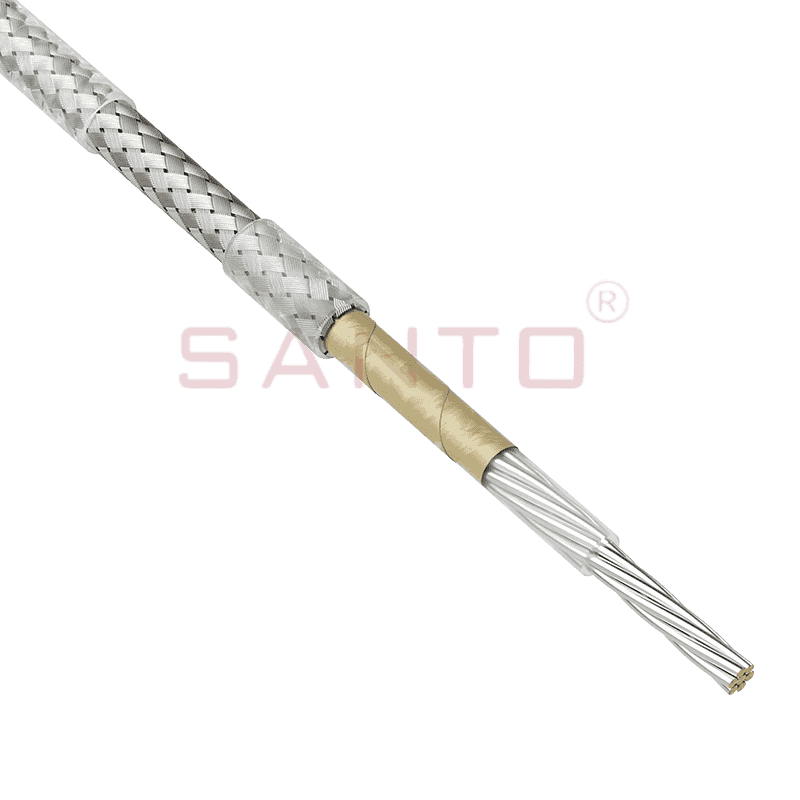
The stranded high temperature conductor is nickel plated to ensure a long life at elevated temperatures in corrosive environments. It is electrically isolated using an innovative sandwich construction...
See Details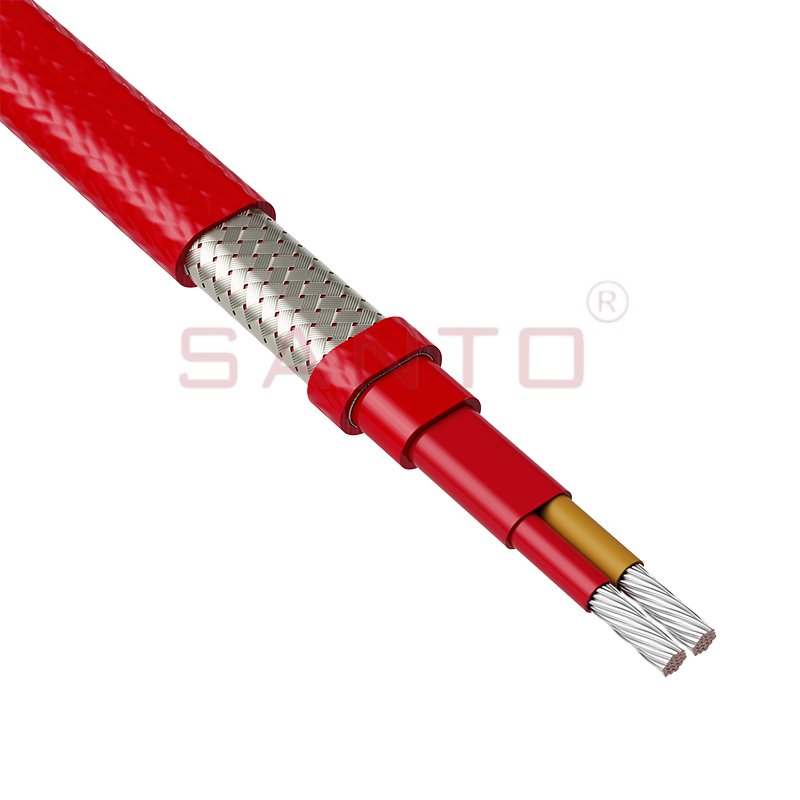
The stranded high temperature conductor is nickel plated to ensure a long life at elevated temperatures in corrosive environments. It is electrically isolated using an innovative sandwich construction...
See Details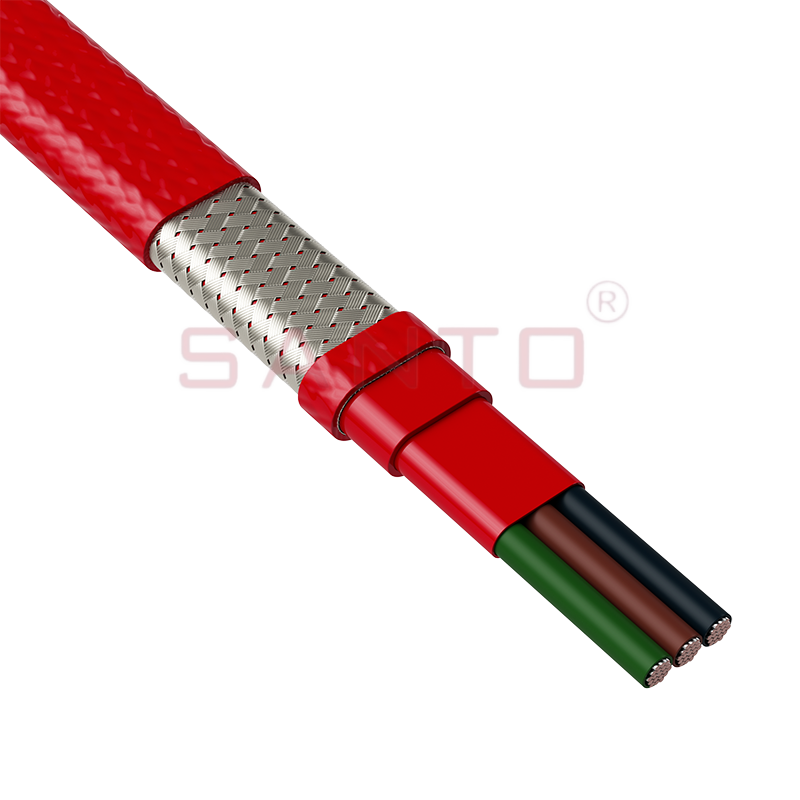
The stranded high temperature conductor is nickel plated to ensure a long life at elevated temperatures in corrosive environments. It is electrically isolated using an innovative sandwich construction...
See Details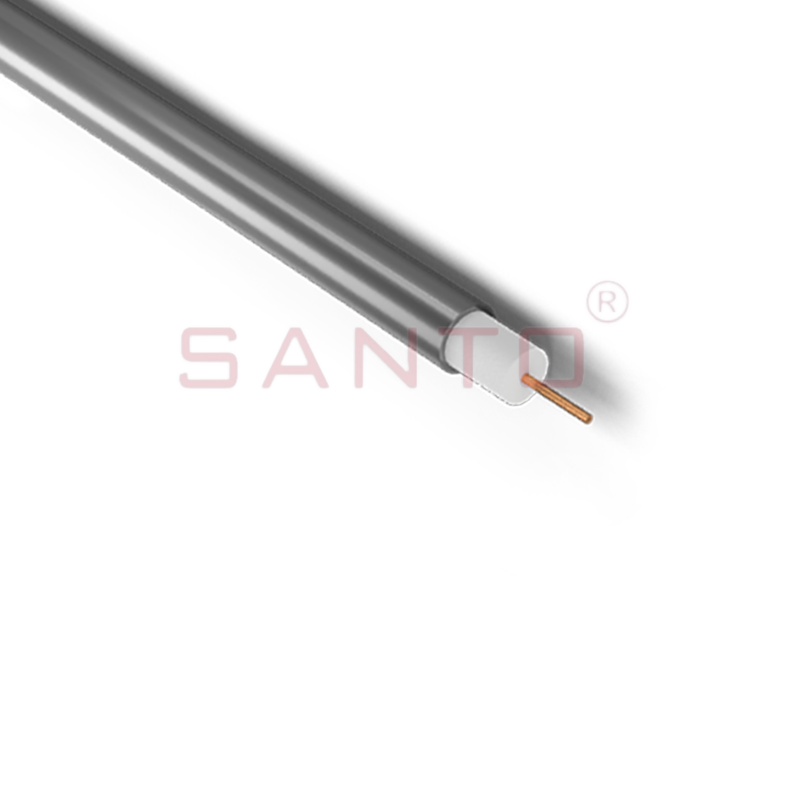
SANTO HAx mineral insulated (MI) Alloy 825 series heating cables are suitable for use in hazardous areas. They have been designed for use in freeze protection and temperature maintenance applications ...
See Details
Santo electric heating strips are widely used in key industries in China.

