 English
  English
 русский
 日本語
日本語 Español
 中文简体
中文简体
The SANTO UFA range of self-regulating heating cables is mainly used for frost protection of pipes and vessels but can also be used to maintain processes up to 65°C. These heating cables are available...
See Details
Barrel heaters are practical thermal-control devices designed to warm liquids, semi-solid materials, and solidified substances stored in drums and barrels. In petrochemical, chemical, adhesive, coating, maintenance, and manufacturing environments, many materials become highly viscous or completely solid when exposed to low temperatures. Adhesives, grease, asphalt, paint, paraffin, oil, waxes, and resin raw materials may then be difficult to discharge, pump, mix, or transfer. A properly designed barrel heater restores workable viscosity through controlled and uniform heating.
The barrel heater described in this article uses a flexible silicone rubber heating system with an integrated temperature-control option. It is designed to be wrapped around the external surface of a barrel and secured with a metal buckle. Sensors can be installed on the heater surface to monitor temperature directly, allowing the operator to adjust heating conditions according to the material and process requirements. Compared with improvised heating methods, this arrangement provides more consistent heat distribution, improved handling, better energy control, and a safer approach to warming temperature-sensitive substances.
Modern industrial users need more than a simple heating element. They require a product that is easy to install, suitable for repeated operation, compatible with different barrel sizes, and manufactured with dependable insulation and temperature-control components. Santo Thermal Control Technology Co., Ltd. combines silicone heating technology, temperature-control integration, custom accessory options, and established electric-heating manufacturing experience to meet these requirements.
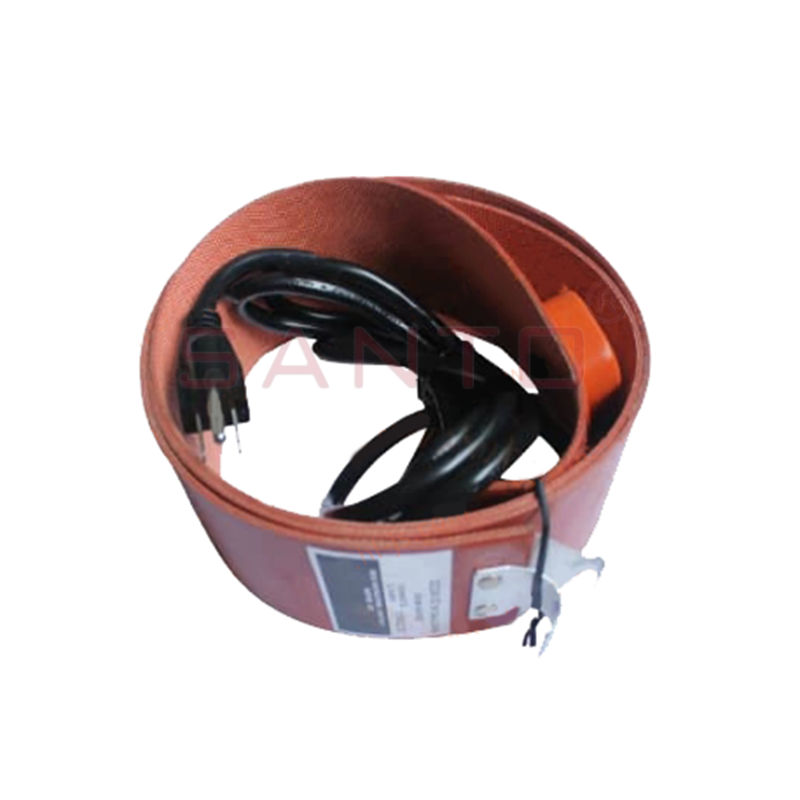
Barrel heater
Content
Many petrochemical and industrial materials are stored in drums because barrels are convenient for transportation, inventory control, and batch handling. However, storage temperature has a direct effect on the physical properties of the contents. A liquid that flows easily at normal room temperature may become thick during winter. A semi-solid product may harden around the barrel wall. A material that has crystallized or separated may require controlled heating before it can be transferred or processed.
When material viscosity increases, pumps must work harder to move the product. Higher resistance can lead to slower discharge, increased electrical consumption, longer production cycles, and greater mechanical stress on pump components. In severe cases, a pump may be unable to draw the product from the barrel at all. Operators may then resort to manual methods that are slow, difficult to control, and potentially unsafe.
A barrel heater addresses this problem by applying heat directly to the outer surface of the container. As the barrel wall warms, heat passes gradually into the stored material. The material becomes less viscous and easier to pour, pump, mix, or measure. Because the heating process can be controlled by a temperature regulator and surface sensor, the operator can avoid unnecessary overheating while maintaining a suitable working temperature.
Controlled barrel heating is especially valuable for substances that require consistent handling properties. A material that is too cold may not flow correctly, while a material that is too hot may degrade, cure prematurely, evaporate, or change its chemical characteristics. The purpose of the barrel heater is therefore not simply to produce high heat. Its purpose is to provide usable, repeatable, and controllable thermal energy.
The heater can be used for many materials whose viscosity changes with temperature. Applications may include industrial adhesives, lubricating grease, asphalt products, paints, paraffin, petroleum-based oils, resin raw materials, wax-containing compounds, and other chemical or process materials. The exact heating requirement depends on the material’s melting point, softening point, viscosity curve, container construction, and sensitivity to heat.
Adhesives may become too thick to dispense efficiently during cold storage. Gentle external heating can help restore the required consistency without exposing the adhesive to an uncontrolled flame or concentrated hot spot. Grease and lubricating compounds may also become difficult to remove from drums when ambient temperatures fall. A barrel heater can reduce resistance and help the product move toward a pump inlet or dispensing opening.
Asphalt and bituminous materials are commonly affected by low temperatures. They can become rigid or semi-solid, making transfer and application difficult. Heating the barrel gradually can soften the material and reduce the time needed for preparation. Paints, coatings, and resins may also require stable temperatures to maintain predictable flow and mixing performance.
Paraffin, waxes, and certain resin materials can solidify during storage. The heater helps melt or soften the material from the outside inward. Operators should select a temperature appropriate for the product and should confirm that the material, barrel, sensor, and heater are compatible before operation.
The product uses a silicone rubber heating system that converts electrical energy into heat through an embedded resistance circuit. The flexible heater conforms to the exterior of the barrel, creating a broad contact area rather than heating only one small location. Heat is transferred through the barrel wall and gradually distributed through the stored contents.
A silicone rubber construction is useful for barrel applications because the material is flexible, lightweight, and suitable for close contact with curved surfaces. Unlike rigid heating plates, a flexible heater can wrap around a cylindrical container and can be fitted to different working arrangements. The design also supports fast installation and removal, which is important when one heating device must be used for multiple barrels or batches.
The heater may be equipped with a temperature sensor positioned on or near the heater surface. The sensor provides information for the temperature regulator, allowing the operator or control system to adjust electrical output. The regulator can be integrated with the silicone heater, simplifying installation and reducing the need for a separate control enclosure in basic applications.
When energized, the heating element raises the temperature of the external barrel surface. The heat then moves through the container wall and into the material. A gradual warm-up process is generally preferred because it reduces thermal shock and supports more even heating. The required heating time depends on barrel size, material volume, starting temperature, barrel material, insulation, heater power, and target temperature.
The supplied product information specifies a thickness of at least 1.0 millimeter. The maximum heating temperature is listed as 200 degrees Celsius. The power density is listed as no more than 3 watts per square centimeter. The insulation resistance is specified at 1000 volts and at least 100 megohms. These figures provide a basic technical framework for product selection and system design.
| Specification | Stated value | Practical significance |
|---|---|---|
| Product type | Flexible barrel heater | Designed for external heating of drums and barrels |
| Heating material | Silicone rubber heating system | Flexible construction for curved container surfaces |
| Thickness | At least 1.0 mm | Supports a compact form factor while maintaining structural integrity |
| Maximum heating temperature | Up to 200 °C | Provides a broad operating range for suitable industrial materials |
| Power density | Not more than 3 W/cm² | Helps control heat concentration and surface loading |
| Insulation resistance | At least 100 MΩ at 1000 V | Supports electrical insulation performance when properly manufactured and installed |
| Temperature control | Integrated regulator option | Allows direct adjustment of heating conditions |
| Temperature sensing | Surface sensor option | Provides feedback for temperature monitoring |
| Installation | Metal buckle fastening | Enables quick fitting and removal around the barrel |
The stated values should be treated as product-selection parameters rather than a substitute for a complete application assessment. The actual barrel heater configuration should be selected according to the barrel diameter, contents, required heating rate, supply voltage, ambient conditions, and operating environment. If the material is flammable, combustible, reactive, or classified for hazardous-area use, the complete installation must meet the applicable safety requirements.
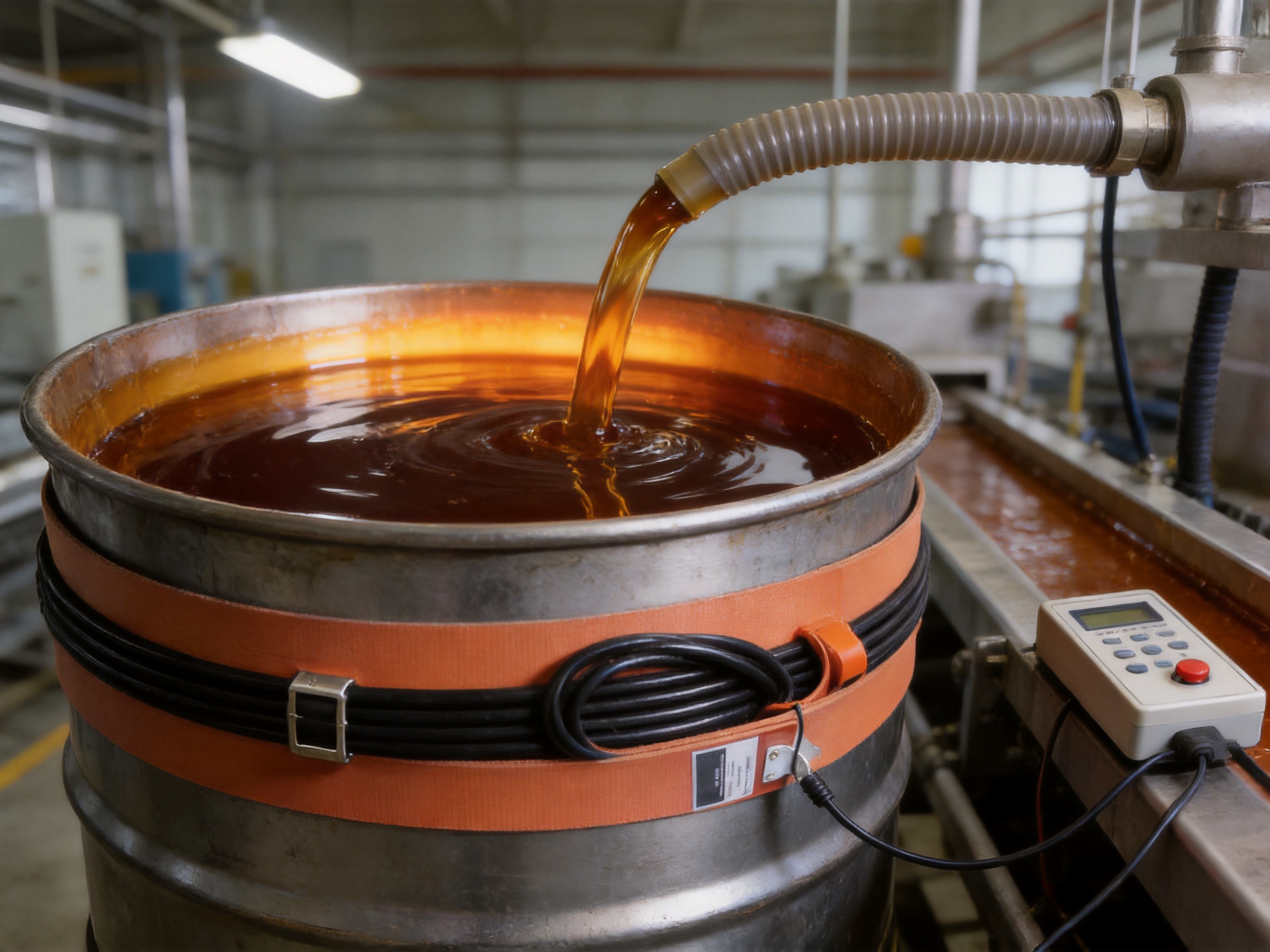
A flexible heater can follow the contour of a cylindrical barrel more closely than a rigid heating element. Close contact reduces unnecessary air gaps between the heater and the container wall. This helps improve heat transfer and reduces the risk that one part of the barrel will become significantly hotter than another part of the heated zone.
Good contact is particularly important when warming viscous materials. Thick products do not circulate as easily as low-viscosity liquids, so heat may spread slowly through the contents. A broad heating area helps introduce energy over a larger portion of the barrel rather than depending on one small hot area.
The integrated silicone heater and temperature regulator are designed to be lightweight and easy to install. A heavy heating jacket can make drum handling difficult, especially when operators need to move the heater between storage locations or production areas. A lightweight design reduces manual effort and can support more efficient work during batch preparation.
The metal buckle provides a simple fastening method. The operator positions the heater around the barrel, adjusts the fit, and secures the buckle. This avoids complex permanent installation and allows the device to be removed when heating is not required. The arrangement is useful for facilities that handle different materials in standard drums or that need temporary heating during cold-weather operations.
With a listed thickness of at least 1.0 millimeter, the heater can remain relatively compact around the barrel. A low-profile product is easier to store and less likely to interfere with normal access to the barrel’s lid, pump connection, valves, or lifting equipment. It may also be easier to use in areas where floor space is limited.
Uncontrolled heat sources may create uneven surface temperatures. A flame, hot-air gun, or concentrated heating plate can damage the barrel, overheat the nearby material, or create avoidable risks. The barrel heater uses an electrical resistance heating circuit and can be combined with a temperature sensor and regulator. This supports a more stable heating process and gives operators a practical method for adjusting temperature.
Barrel heating can be performed with several methods, including hot rooms, steam jackets, immersion systems, heating blankets, heating bands, hot-air equipment, and external flames. Each method has an appropriate use. However, the flexible silicone barrel heater offers a combination of mobility, direct surface contact, adjustable temperature, and straightforward installation that can be advantageous for individual drums and small batches.
Open flames provide rapid heat but are difficult to control and may be unsuitable around combustible materials, vapors, coatings, or petrochemical products. Flame heating can also create localized hot spots and may damage the barrel surface. A properly selected electrical barrel heater avoids direct flame contact and offers a more uniform heating approach. It must still be installed in accordance with electrical and area-classification requirements.
Hot-air systems can warm a barrel from the outside, but heat may be lost to the surrounding environment. Air movement can also produce uneven heating, particularly in open or drafty workspaces. A silicone heater transfers heat directly through contact with the barrel wall, which may improve thermal efficiency and reduce the need for high airflow.
Permanent jackets can be effective in fixed processing systems, but they generally require more installation work and are associated with one vessel. A flexible barrel heater is more mobile and can be deployed on different drums. This makes it useful for warehouses, maintenance departments, laboratories, pilot plants, and production areas that do not need every barrel to have a permanent heating system.
Immersion heaters enter the material directly and therefore require an opening, a suitable mounting arrangement, and confirmation that the heater material is compatible with the product. They may be unsuitable for sealed containers, viscous compounds, or materials that could coat the heating element. External barrel heating avoids direct contact between the heating element and the contents.
Some general-purpose heating blankets offer limited adjustment or lack a suitable feedback sensor. The described product can include an integrated temperature regulator and surface sensor, giving it a more purposeful design for controlled industrial heating. Optional insulation, thermal-conductivity materials, aluminum plates, adhesive layers, and other accessories can also help tailor the system to the application.
Temperature control is one of the most important features of a barrel heater. The correct setting depends on the material being heated. A product may need only mild warming to reduce viscosity, while another may require a higher temperature to soften or melt. The operator should always follow the material supplier’s heating recommendations and avoid assuming that the maximum heater temperature is appropriate for every product.
The surface sensor monitors the temperature at the heater or barrel interface. This provides a useful control point because it helps prevent the heater from operating without feedback. A regulator can cycle or adjust power according to the measured temperature. In practical use, the sensor should be placed securely and should remain in good contact with the intended monitoring surface.
Temperature control may be configured as a simple adjustable regulator for manual operation or as part of a more advanced control system. The appropriate arrangement depends on whether the user needs basic warming, repeatable batch processing, automatic temperature maintenance, alarm functions, data recording, or integration with a plant control system.
When heating a solidified or highly viscous product, it is often better to begin at a moderate setting and increase gradually. This allows the material near the barrel wall to soften before the heating load is raised. Operators should monitor the product condition, barrel surface, and discharge behavior. If the material has poor thermal conductivity, a longer heating period may be more appropriate than a sudden increase in temperature.
The product can be supplied with a range of optional accessories. These include wires, adhesive layers, aluminum plates, thermal-conductivity materials, insulation materials, temperature controllers, and sensors. The availability of these options allows the heater to be configured for different operating conditions instead of forcing every user to adopt one fixed design.
Wiring can be selected according to the installation layout, supply arrangement, control method, and required cable length. Cable routing should protect the conductors from abrasion, sharp edges, excessive bending, heat damage, chemicals, and mechanical impact. The power connection must be suitable for the rated electrical load and installed by qualified personnel where required.
An adhesive layer may help improve contact between the heater and a compatible surface. It can be useful where the heater must remain in a fixed position or where movement could create an air gap. The adhesive must be compatible with the silicone heater, barrel surface, operating temperature, and chemical environment. A buckle remains useful when removability is important.
An aluminum plate can support heat spreading and mechanical protection in selected designs. Aluminum has good thermal conductivity and may help distribute heat across a larger area. The plate should be specified carefully because additional rigidity may affect flexibility and installation around the barrel.
Thermal-conductivity materials can improve the transfer of heat from the heating element to the barrel surface. They may help reduce thermal resistance where the contact interface is not ideal. The selected material must remain stable at the intended operating temperature and must not react adversely with the barrel, heater, or surrounding environment.
Insulation can reduce heat loss from the outer surface of the heater and improve overall heating efficiency. It can also help protect operators from contact with a hot surface. Insulation should not cover electrical connections, sensors, control devices, or areas where heat must dissipate. The insulation system must be designed for the operating temperature and the specific work environment.
Temperature controllers and sensors are essential when the product requires a stable processing temperature. A sensor can provide feedback, while a controller regulates power. For demanding applications, users may request a control arrangement with additional monitoring, independent over-temperature protection, alarms, or other functions. The exact configuration should be agreed during technical specification and quotation.
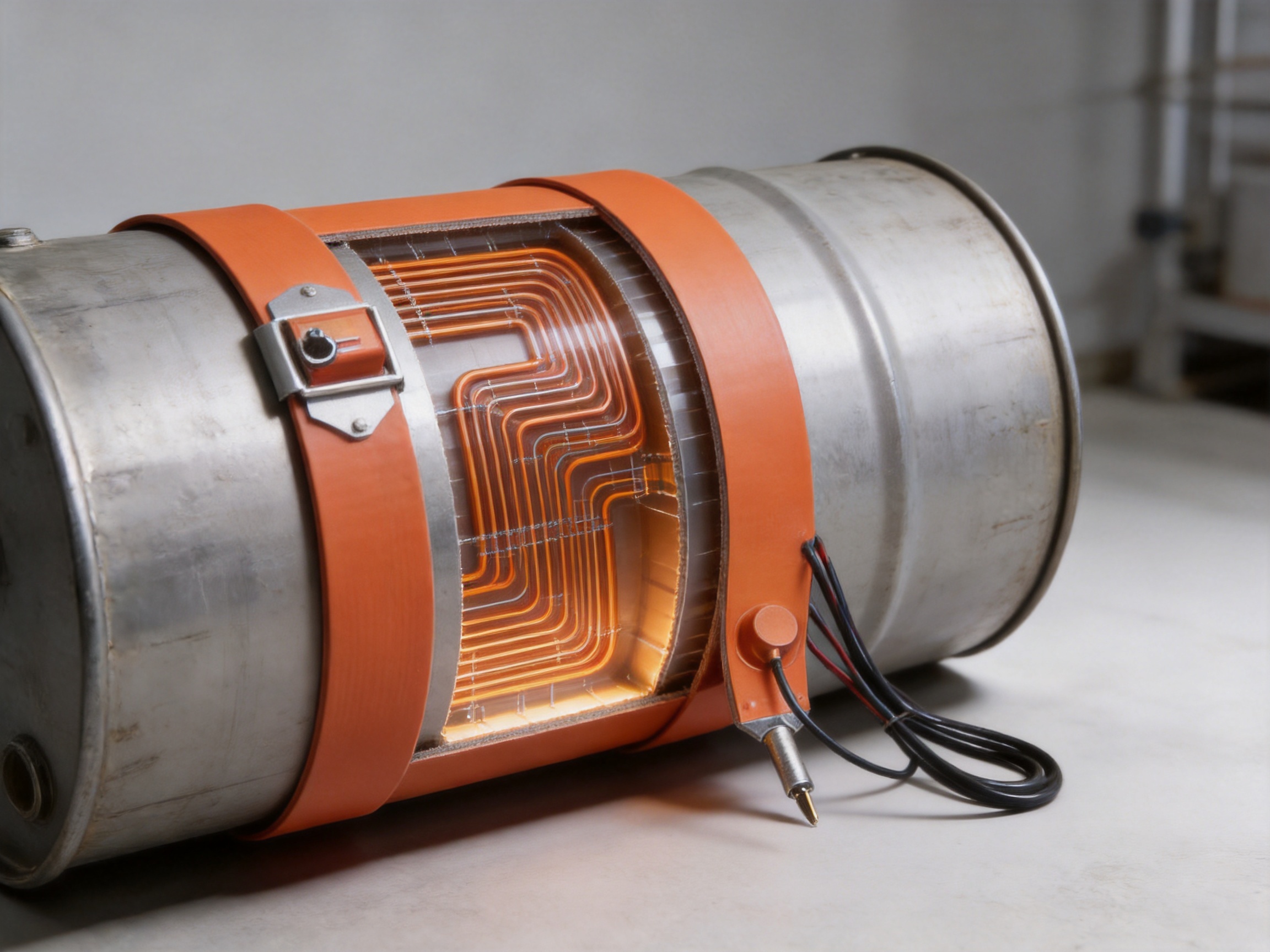
Santo Thermal Control Technology Co., Ltd. is a Chinese manufacturer specializing in electric heating and thermal-control products. The company conducts research, design, production, and manufacturing for automatic temperature-control heating belts, self-limiting heating belts, constant-power heating belts, silicone rubber heating belts, glass-fiber heating belts, mineral-insulated cables, snow-melting cables, electric hot wires, and related accessories.
This product range is relevant to barrel-heater manufacturing because a barrel heater is not an isolated component. It combines heating-element design, flexible insulation, temperature sensing, electrical connection, mechanical fastening, and optional thermal-management materials. Experience across multiple heating technologies can help a manufacturer select a suitable construction for the required temperature range, power density, flexibility, and environmental conditions.
The company reports more than 35 years of industry experience, annual output exceeding 10,000 units or products, more than 2,000 distributors, and business coverage in more than 85 areas. These figures indicate an established production and distribution structure rather than a small workshop focused on one custom order at a time. A broader production base may support more consistent procurement, manufacturing organization, technical support, and after-sales service.
Research and development are important in electric heating because the performance of a heater depends on the interaction of several materials. The resistance circuit must produce the required heat. The insulation must withstand the operating temperature and electrical stress. The external surface must remain flexible or mechanically stable as required. The sensor and controller must provide meaningful temperature feedback. These elements must operate together over repeated heating cycles.
The company states that it cooperates in product research with Harvard University in the United States and has developed several electric-heating technologies. Its reported development history includes a self-limiting temperature nano far-infrared heater for high-temperature pipeline heating and tracing, a carbon-fiber parallel heating cable, and other patented heating products. These developments demonstrate attention to material science, temperature control, and application-specific heating design.
For barrel-heater customers, research capability can be valuable when standard products do not fully match the application. A user may need a particular barrel diameter, supply voltage, heating area, control range, cable arrangement, insulation package, or fastening method. A manufacturer with design experience can evaluate these requirements and recommend a suitable structure rather than simply supplying an oversized or undersized heater.
The manufacturing process begins with an understanding of the application. Important factors include the barrel dimensions, material type, target temperature, initial temperature, desired heating time, ambient conditions, available electrical supply, and whether the heater will be used indoors or outdoors. The manufacturer may also need information about cleaning methods, chemical exposure, movement, storage, and operating frequency.
Based on these requirements, the heating area and power density can be considered. The design must provide enough heat to achieve the target temperature without producing excessive local temperature. The stated power-density limit of no more than 3 W/cm² is an important design reference. Other parameters, such as total wattage and voltage, should be established for the individual model.
The resistance heating circuit is prepared according to the required electrical output and heating pattern. The circuit must be arranged so that heat is distributed across the intended surface. Poor spacing, damaged conductors, or inconsistent resistance can lead to uneven heating and reduced service life. Manufacturing controls should therefore include dimensional checks, resistance checks, and visual inspection.
The heating element is integrated with silicone rubber or another specified flexible insulating structure. The encapsulation process protects the resistance circuit and helps maintain the shape and electrical separation of the heater. It also creates the flexible surface that can conform to the barrel.
Material preparation, cleanliness, curing conditions, thickness control, and bonding quality all affect the finished product. The stated thickness of at least 1.0 millimeter provides a basic dimensional requirement, but a reliable production process must also control surface quality, edge condition, flexibility, and the absence of visible defects.
Power leads and sensor wires are connected to the heating assembly in accordance with the design. Connections must be mechanically secure and electrically stable. The transition between the flexible heater and the cable should be designed to limit stress during installation and removal. Strain relief is especially important for a barrel heater because the product may be repeatedly wrapped, unwrapped, folded, and transported.
Where the regulator is integrated with the heater, the control device is assembled and checked as part of the complete product. The sensor position, controller response, lead routing, and adjustment range should correspond to the intended application. The finished assembly should be inspected to ensure that the controller is accessible and that the sensor is not trapped in a position that produces misleading readings.
The metal buckle or fastening system is attached to support quick fitting around the barrel. The buckle must provide sufficient holding force without damaging the silicone surface. It should allow the heater to remain close to the barrel while avoiding excessive compression. The fastening design may be adjusted for different barrel diameters or heating lengths.
Electrical testing is a central part of production. The supplied specification identifies an insulation resistance of at least 100 megohms at 1000 volts. Testing can help identify insulation damage, incomplete encapsulation, moisture-related issues, poor connections, or other defects that may compromise electrical safety.
Additional checks may include conductor resistance, dielectric strength, power output, sensor continuity, controller operation, visual appearance, dimensional accuracy, and functional heating tests. Test records can support batch traceability and quality review. The exact test program depends on the model, customer requirements, and applicable standards.
The company states that it has passed ISO9001 quality system certification and that its products have obtained national CCC certification. These credentials indicate a structured approach to quality management and product conformity within the stated scope. Customers should confirm the certification scope and the specific certification status of the barrel-heater model being ordered.
A quality management system is valuable because it addresses more than final inspection. It can cover purchasing, incoming materials, production control, equipment maintenance, staff training, documentation, nonconforming products, corrective action, and customer feedback. Consistency in these areas helps reduce variation from one production batch to another.
The company also reports explosion-proof certification and EAC Eurasian Union certification within its broader development history. These qualifications may apply to certain products or markets rather than automatically applying to every barrel heater. When the heater will be installed in a hazardous or regulated environment, the customer should specify the required certification before design and confirm that the proposed complete assembly meets the relevant rules.
Cold weather can significantly affect the handling of oils, adhesives, asphalt, paraffin, grease, and resins. Without heating, a product may be workable during warm months but difficult to pump in winter. The barrel heater reduces dependence on ambient temperature by allowing the user to condition the stored material when required.
This makes the device suitable for year-round operation. A facility can maintain a consistent preparation procedure across different seasons rather than changing pumps, manually warming containers, or delaying production when temperatures fall. The heater is also useful in warehouses where barrels may be stored in unheated areas before being transferred to the production line.
Seasonal use should still include appropriate storage and inspection. The heater should be kept dry, protected from sharp objects, and stored without excessive folding or crushing. Cables, fasteners, sensors, and the silicone surface should be checked before each heating cycle, particularly after long periods without use.
Before installation, inspect the heater for cuts, cracks, deformation, exposed conductors, damaged wires, loose fasteners, or contamination. Confirm that the heater rating is suitable for the available power supply. Check the barrel for leaks, severe corrosion, sharp projections, or surface contamination that could damage the heater or prevent close contact.
Place the heater around the selected heating zone of the barrel. The heating surface should lie as flat as possible against the container. Avoid folds, creases, trapped debris, and unnecessary gaps. The heater should not cover access points that must remain available unless the design specifically allows this arrangement.
Close and adjust the metal buckle so that the heater remains in close contact with the barrel. The fastening should be firm but not excessively tight. Excessive tension may damage the heater or restrict expansion during heating. The heater should remain stable when the barrel is stationary and during normal handling procedures.
Position the sensor according to the control design. Connect the controller and power supply only after confirming that the wiring is correct. The control device should remain accessible for adjustment and should be protected from direct contact with liquids, impact, and excessive heat.
Start at a moderate temperature setting suitable for the material. Observe the barrel surface, heater condition, and material response during the initial heating period. If the material remains too viscous, increase the setting gradually within the approved operating range. Do not leave a newly installed heater unattended until its operation has been verified.
Once the material reaches the desired viscosity or temperature, reduce or stop heating as required. If the material is being pumped, maintain only the heat needed to support stable flow. After operation, allow the heater to cool before removing or folding it. Disconnect the power supply before handling the heater.
Barrel heaters must be used with attention to electrical, thermal, mechanical, and chemical risks. The maximum stated heating temperature of 200 degrees Celsius does not mean that every material or barrel can safely be heated to that temperature. The operator must identify the material’s safe heating limit and the barrel manufacturer’s temperature restrictions.
Combustible or flammable materials require special assessment. Although external electrical heating avoids open flame, the complete system may still present an ignition risk if it is not appropriately rated, installed, grounded, protected, and maintained. Hazardous-area requirements should be reviewed before use in petrochemical locations.
Do not operate a damaged heater. Do not place the heater on an empty barrel unless the design and operating instructions specifically permit that condition. An empty container may heat more rapidly and may not absorb energy in the same way as a filled barrel. Avoid covering the heater with unsuitable materials or placing objects on top of it.
Do not immerse the heater, controller, or electrical connections in water or process liquids. Keep the power connection away from wet floors, leaking containers, and chemical splash zones. Use suitable protective equipment when handling heated barrels, including thermal gloves and protective clothing where appropriate.
The heater should not be installed over sharp edges, damaged barrel surfaces, or areas where mechanical equipment can pinch the flexible assembly. Cables should be routed to prevent tripping, crushing, or repeated bending. If an unusual smell, smoke, arcing, temperature rise, controller fault, or visible damage occurs, disconnect power and investigate the cause before further use.
Direct external heating can support energy efficiency by concentrating thermal energy on the container rather than heating a complete room or storage area. The benefit depends on the heater size, insulation, ambient temperature, barrel material, and operating method. Adding suitable insulation around the heater may reduce heat loss and shorten the time needed to reach the target condition.
Lower viscosity can also improve pump performance. When a pump encounters less resistance, the system may require less operating effort and may achieve a more stable flow rate. This can help reduce waiting time during transfer and support more predictable batch preparation. The result is not only a heating benefit but also a potential improvement in material-handling efficiency.
Uniform temperature control can reduce waste caused by overheating or incomplete softening. If a product is heated excessively, it may become unusable or require additional quality checks. If it is not heated enough, the pump may stall or the production cycle may be interrupted. A controlled barrel heater helps operators reach a practical balance between thermal input and material performance.
Barrels vary in diameter, height, material, volume, and construction. Some contain thin liquids, while others hold dense compounds that respond slowly to heat. A single standard heater may not be ideal for every application. Customization can address the heating area, electrical rating, sensor location, controller type, cable length, fastening system, and insulation package.
Customers should provide accurate barrel dimensions and describe the material to be heated. Information about the target temperature, desired warm-up time, starting temperature, and daily operating cycle will help determine the required configuration. If the barrel is made from plastic, steel, stainless steel, or another material, this should also be identified because heat transfer and temperature limitations can differ.
The supplier can offer optional wire, adhesive, aluminum plate, thermal-conductivity material, insulation, controller, and sensor arrangements. These options make it possible to develop a more suitable system for fixed production, mobile maintenance, warehouse warming, laboratory work, or repeated batch processing.
Customization should be completed before production begins. A technically correct heater must be matched with the correct voltage, current, connector, control method, and installation environment. Clear specifications reduce the risk of receiving a product that heats too slowly, operates at an unsuitable temperature, or cannot be installed safely on the intended barrel.
Routine inspection helps preserve heater performance. Before use, examine the silicone surface for cuts, abrasions, hardening, swelling, discoloration, or signs of overheating. Inspect the metal buckle for corrosion and deformation. Check the power lead, sensor cable, controller housing, and connector for damage.
Keep the heater clean and dry. Remove compatible residues using a method that does not attack the silicone surface or cable insulation. Do not scrape the heater with sharp tools. If a chemical has contacted the heater, consult the chemical compatibility information before cleaning or returning the product to service.
Electrical inspection should be performed at suitable intervals. Insulation resistance can be checked using appropriate test equipment by qualified personnel. A reading below the specified requirement may indicate moisture, damage, contamination, or a developing insulation problem. The heater should not be used until the cause has been identified and corrected.
Store the heater in a cool, dry location away from sunlight, corrosive chemicals, sharp objects, and heavy loads. Avoid tight creasing. A loose roll or flat storage arrangement is generally preferable to repeated folding along the same line. Allow the heater to cool naturally before storage.
Industrial users often need equipment that can be deployed quickly without major modification to existing facilities. The barrel heater’s buckle fastening and lightweight silicone construction support this requirement. It can be moved between barrels, installed for a particular batch, and removed after the material reaches a workable condition.
The product also supports process flexibility. A maintenance team may use it to warm lubricants or grease. A chemical plant may use it to reduce the viscosity of resins or adhesives. A coating operation may use it to condition paint or related raw materials. A warehouse may use it during winter storage. These applications share the same basic requirement: controlled heat applied to a container without direct immersion in the material.
The company’s wider product portfolio provides additional support for customers whose heating requirements extend beyond barrels. Its product range includes self-limiting heating belts, constant-power heating belts, silicone rubber heating belts, glass-fiber heating belts, mineral-insulated cables, snow-melting cables, and electric-heating accessories. This broader capability can simplify supplier selection when a customer needs several heating solutions for one industrial project.
Heating products operate under electrical and thermal stress. A heater that appears simple from the outside may contain carefully arranged resistance circuits, insulation layers, sensor connections, protective materials, and mechanical components. Manufacturing experience helps the supplier understand how these parts behave during production, installation, heating, cooling, and repeated handling.
Long-term experience can also improve technical communication. A capable supplier should be able to discuss power density, thermal transfer, insulation, control accuracy, barrel compatibility, environmental conditions, and certification requirements. This is especially important when the customer’s material is viscous, temperature-sensitive, or used in a regulated industrial environment.
Santo Thermal Control Technology Co., Ltd. states that it integrates scientific research, development, manufacturing, and sales. This integrated structure can shorten communication between design and production teams. It may also make it easier to implement custom heating layouts, evaluate accessory requirements, and coordinate technical service after delivery.
Before requesting a quotation, buyers should prepare a complete technical description. The barrel diameter and height are essential. The material name, approximate viscosity, melting or softening behavior, safe temperature range, and required working temperature should also be provided. The buyer should state whether the material is flammable, corrosive, reactive, or classified for hazardous-area use.
Electrical details should include available voltage, frequency, phase arrangement if relevant, desired power, plug or terminal requirements, and the preferred controller. The customer should also specify whether the heater will be used indoors, outdoors, in a warehouse, in a production line, or in a petrochemical area.
Other useful information includes the number of barrels to be heated, heating frequency, expected warm-up time, need for insulation, cleaning method, required cable length, and whether the heater must be removable. Photographs or dimensional drawings of the barrel and installation area can help reduce design uncertainty.
Buyers should request confirmation of the heater’s operating temperature, power density, insulation resistance, control method, sensor type, dimensions, and certification status. If the product is intended for export, packaging, labeling, documentation, and destination-market requirements should also be discussed before shipment.
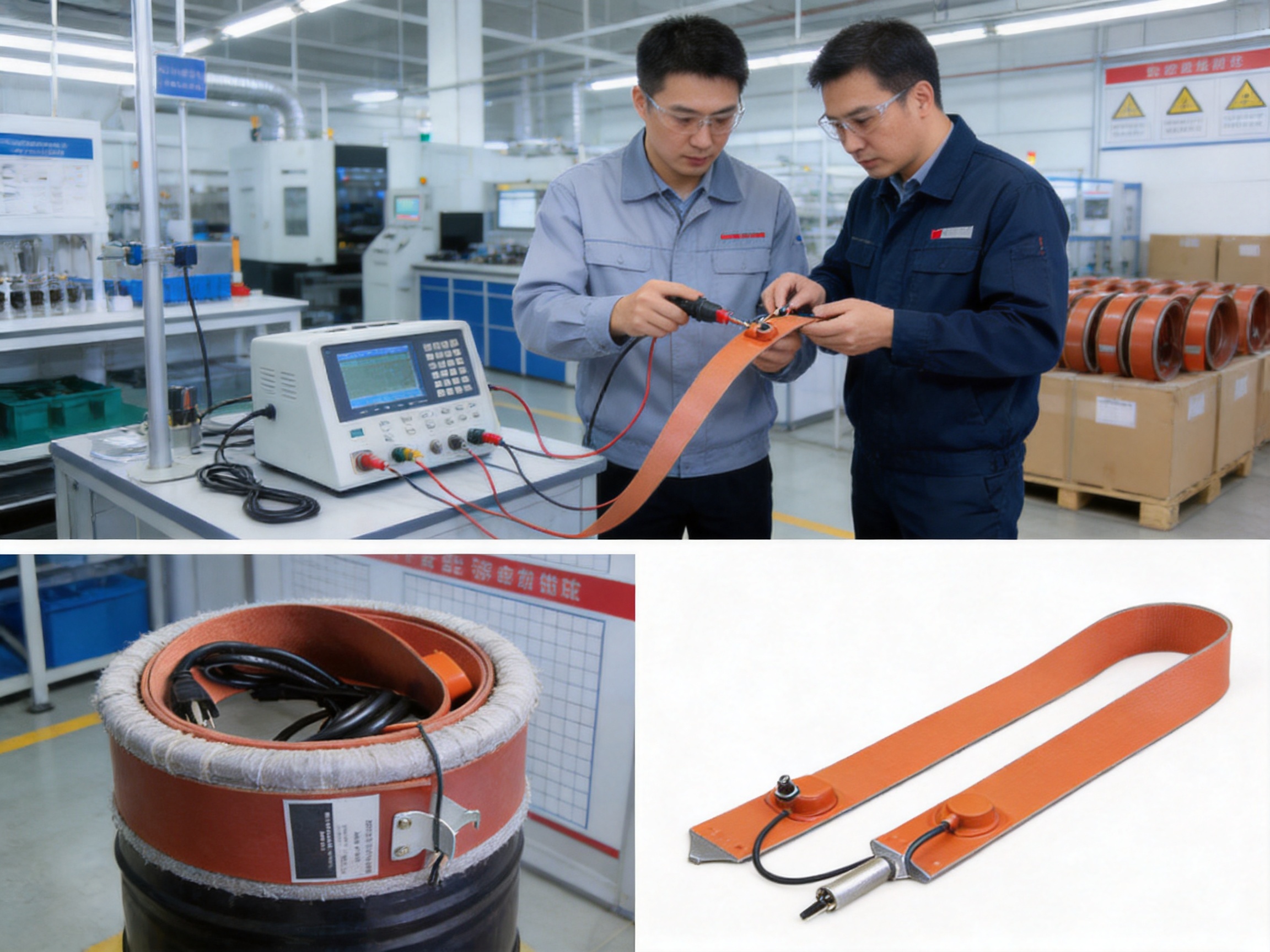
An adhesive stored in a cold warehouse may become too thick for dispensing. A barrel heater can warm the drum gradually and restore a more usable viscosity. The operator can use the temperature regulator to maintain the required condition during transfer while avoiding unnecessary high temperatures that could affect curing behavior.
Grease and heavy lubricants may resist pumping when ambient conditions are low. External barrel heating can reduce the resistance near the pump inlet and help establish a more stable flow. The heater should be selected according to the lubricant’s temperature limits and the compatibility of the barrel surface.
Asphalt may become difficult to remove from a drum when it cools. A broad flexible heater can support gradual softening across the container wall. Insulation may be added to reduce heat loss, especially in outdoor or unheated environments. Operators should monitor the material carefully because asphalt products can respond differently depending on formulation.
Some paints and coatings become more viscous during storage. Moderate heating may improve flow and support easier transfer. Since coating formulations can be sensitive to temperature, the controller and sensor should be used to maintain a suitable range rather than applying maximum heat.
Paraffin and certain resin raw materials may solidify during storage. A barrel heater can help melt or soften the material from the outer surface inward. Depending on the product, the heating cycle may need to be extended to allow the center of the barrel to reach a workable condition.
A barrel heater is used to warm materials stored in drums and barrels. It can reduce viscosity and help remove or transfer adhesives, grease, asphalt, paint, paraffin, oil, and resin raw materials that become thick or solidified.
The flexible silicone rubber heater is placed around the outside of the barrel. Electrical resistance in the heating circuit creates heat, which passes through the barrel wall and gradually warms the stored material.
Yes. The heater is particularly useful during winter or in cold storage areas, but it can be used whenever a material requires controlled warming. It helps reduce dependence on seasonal ambient temperatures.
The supplied product information lists a heating temperature of no more than 200 degrees Celsius. The correct operating temperature must be determined by the material requirements, barrel limitations, and application conditions.
The product can include an integrated temperature regulator and a surface sensor. These components allow the operator to monitor and adjust the heating temperature. The exact controller arrangement should be confirmed for the selected model.
The stated power density is no more than 3 watts per square centimeter. Total power and voltage depend on the specific heater dimensions and customer requirements.
The stated insulation resistance is at least 100 megohms at 1000 volts. The heater should still be inspected, tested, and installed correctly to maintain electrical safety in service.
The heater is positioned around the barrel and secured with a metal buckle. It should lie flat against the surface without folds, sharp bends, or excessive tension. Electrical connections must be made according to the product instructions.
Optional components include wire, adhesive layers, aluminum plates, thermal-conductivity materials, insulation materials, temperature controllers, and sensors. Custom dimensions, power, voltage, cable arrangements, and control requirements should be discussed before production.
Suitability depends on the complete product configuration and the installation classification. A standard heater should not automatically be assumed to be suitable for a hazardous area. Buyers must specify the required explosion protection, certification, grounding, control, and installation conditions and obtain confirmation from the supplier.
It may be possible, but the plastic type, wall thickness, temperature rating, and material compatibility must be reviewed first. The barrel and its contents must be able to withstand the selected heating temperature.
Suitable external insulation can reduce heat loss and improve heating efficiency. Insulation should be compatible with the operating temperature and should not cover sensors, electrical connections, or areas that require ventilation or heat dissipation.
Inspect the silicone surface, wires, sensor, controller, and metal buckle before use. Keep the heater clean and dry, avoid sharp tools and excessive folding, and conduct electrical testing at appropriate intervals.
Provide barrel dimensions, material name, target temperature, initial temperature, desired heating time, electrical supply, operating environment, hazardous-area requirements, heating frequency, cable needs, and any requirements for insulation or removable installation.
A barrel heater provides a controlled and practical way to restore the flowability of viscous or solidified materials. By applying heat across the external surface of a drum, it can help reduce pump resistance, improve material transfer, shorten preparation time, and support year-round operation. The flexible silicone rubber structure, lightweight construction, metal buckle fastening, integrated temperature-control option, and sensor compatibility make the product suitable for a wide range of industrial handling tasks.
The stated technical characteristics include a thickness of at least 1.0 millimeter, a maximum heating temperature of 200 degrees Celsius, a power density of no more than 3 watts per square centimeter, and insulation resistance of at least 100 megohms at 1000 volts. Optional wires, adhesive layers, aluminum plates, thermal-conductivity materials, insulation, controllers, and sensors allow the heater to be adapted to individual applications.
Its advantages are strengthened by the manufacturer’s broader experience in electric heating, thermal control, product research, production, quality management, and international distribution. With more than 35 years of reported industry experience, a broad electric-heating product portfolio, ISO9001 quality system certification, and stated CCC product certification, Santo Thermal Control Technology Co., Ltd. is positioned to support both standard and customized barrel-heating requirements.
Successful application depends on correct product selection, careful installation, appropriate temperature control, regular inspection, and compliance with the safety requirements of the material and operating area. When these factors are addressed, a flexible barrel heater can become a dependable part of petrochemical and industrial material-handling operations.
1. Santo Thermal Control Technology Co., Ltd. Product information for flexible silicone rubber barrel heaters.
2. Santo Thermal Control Technology Co., Ltd. Corporate information, electric-heating product portfolio, and development history.
3. ISO 9001. Quality Management Systems: Requirements.
4. IEC 60519. Safety in Electroheat Installations.
5. IEC 60335-1. Household and Similar Electrical Appliances: General Safety Requirements, used as a general reference for electrical heating safety principles where applicable.
6. General industrial guidance on thermal processing, viscosity control, electrical insulation, and safe handling of heated petrochemical materials.
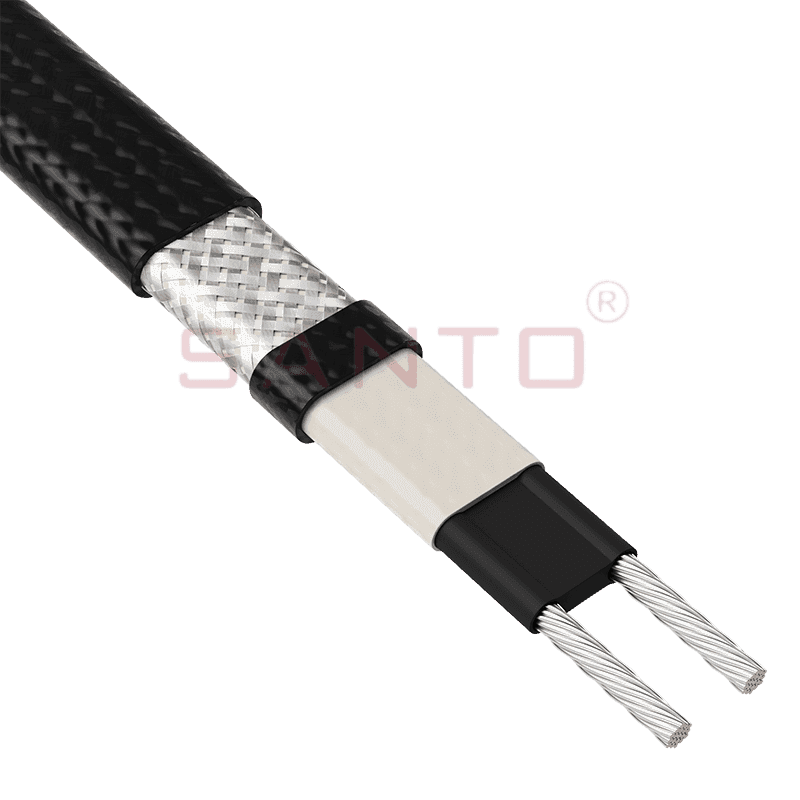
The SANTO UFA range of self-regulating heating cables is mainly used for frost protection of pipes and vessels but can also be used to maintain processes up to 65°C. These heating cables are available...
See Details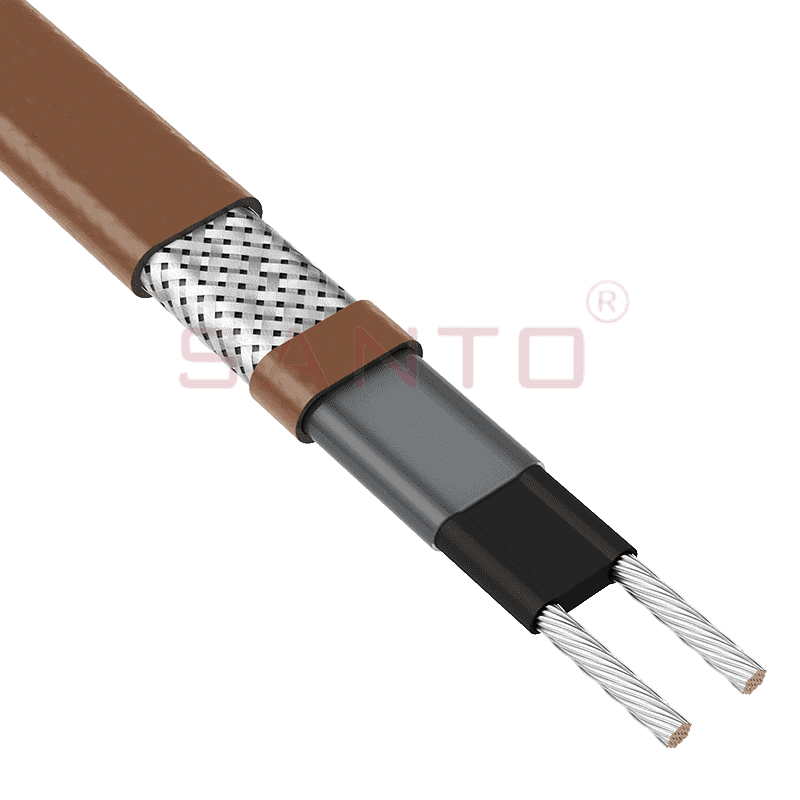
The SANTO UFB range of self-regulating heating cables is mainly used for frost protection of pipes and vessels requiring a higher power output than the UFA heating cables can supply. They can also be ...
See Details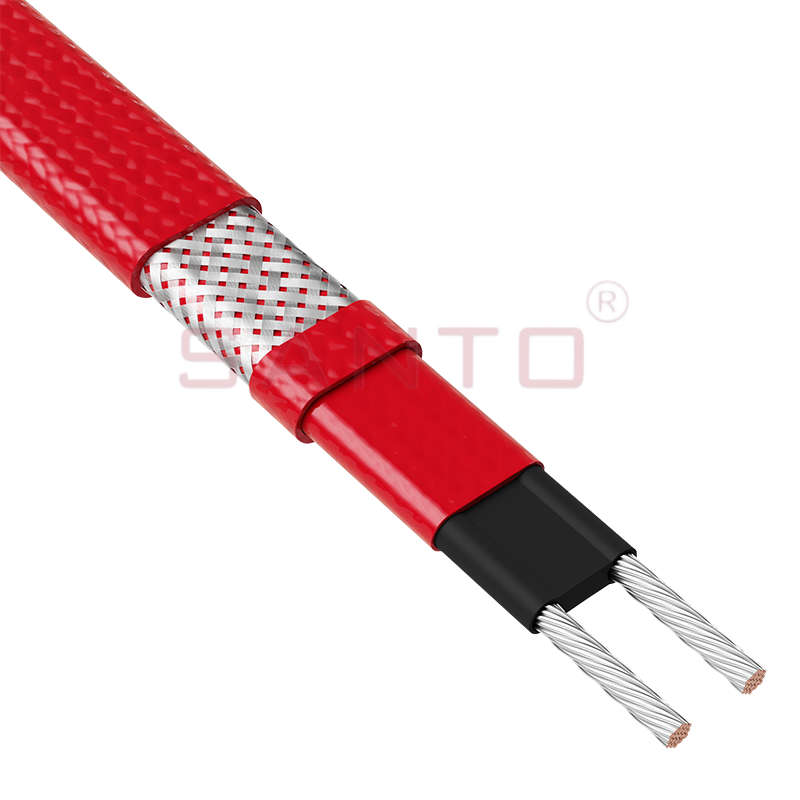
The SANTO UFC range of self-regulating heating cables is used for frost protection of pipes and vessels that require steam cleaning. They can also be used to maintain processes up to 121°C. These heat...
See Details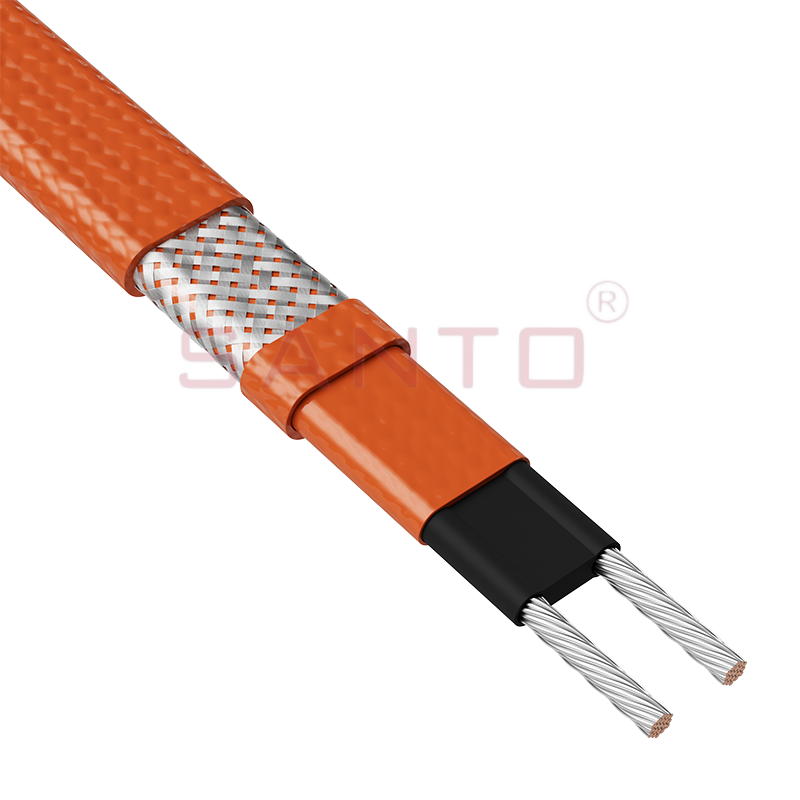
The SANTO UFO range of self-regulating heating cables is mainly used for frost protection of pipes and vessels that require steam cleaning . They can also be used to maintain processes up to 150°C. Th...
See Details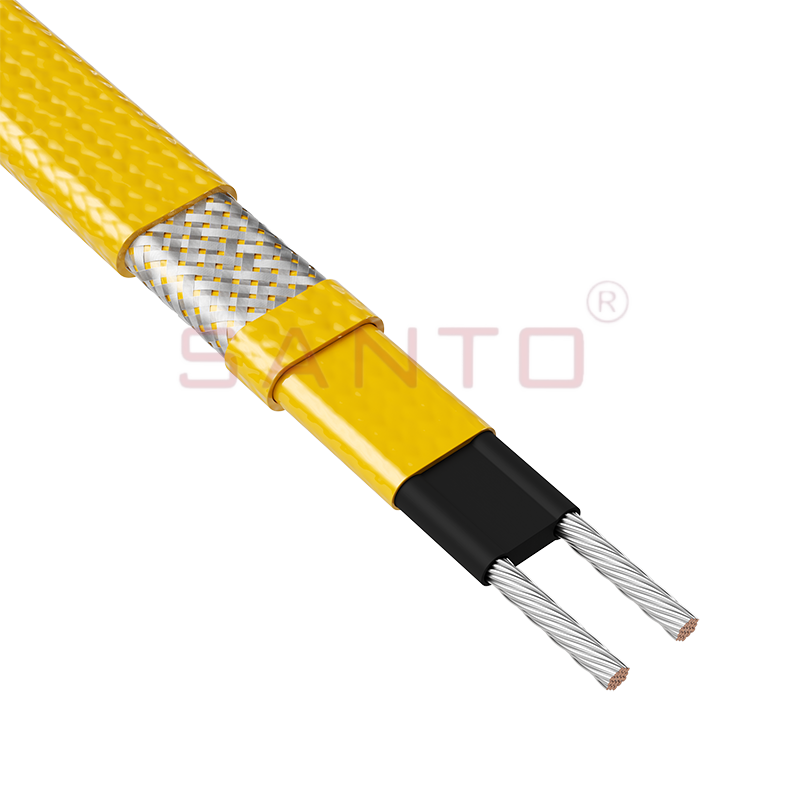
The SANTO UFD series of self-regulating heating cables are mainly used for freeze protection of pipes and vessels, but can also be used to maintain processes up to 200°C. These heating cables are avai...
See Details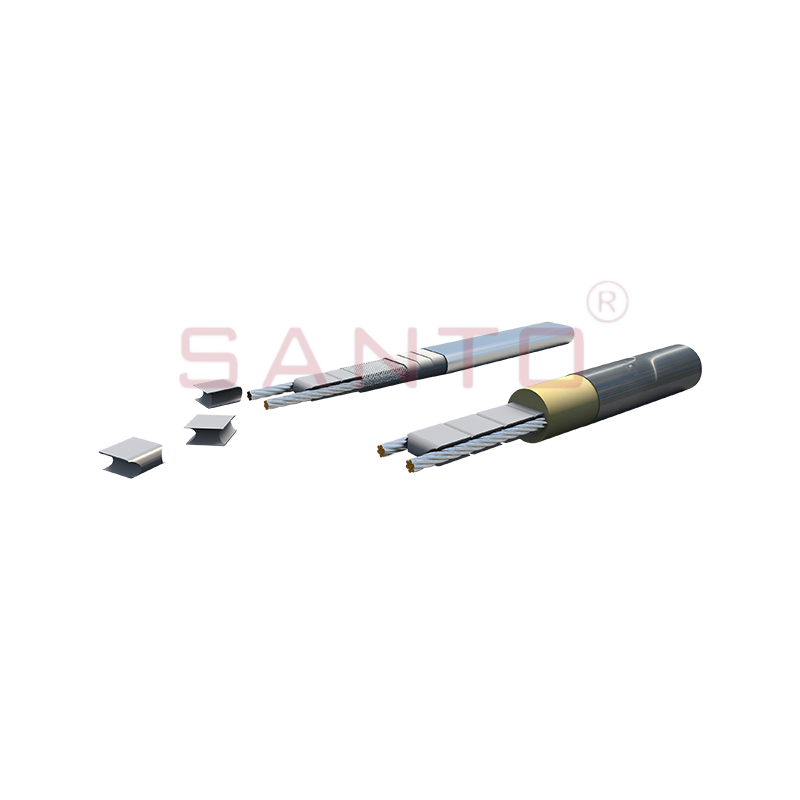
SANTO UFY heating wire is suitable for applications that maintain process temperatures up to 260 ℃ and can be steam blown; The self-regulating and parallel circuit heating wires of the UFY series are ...
See Details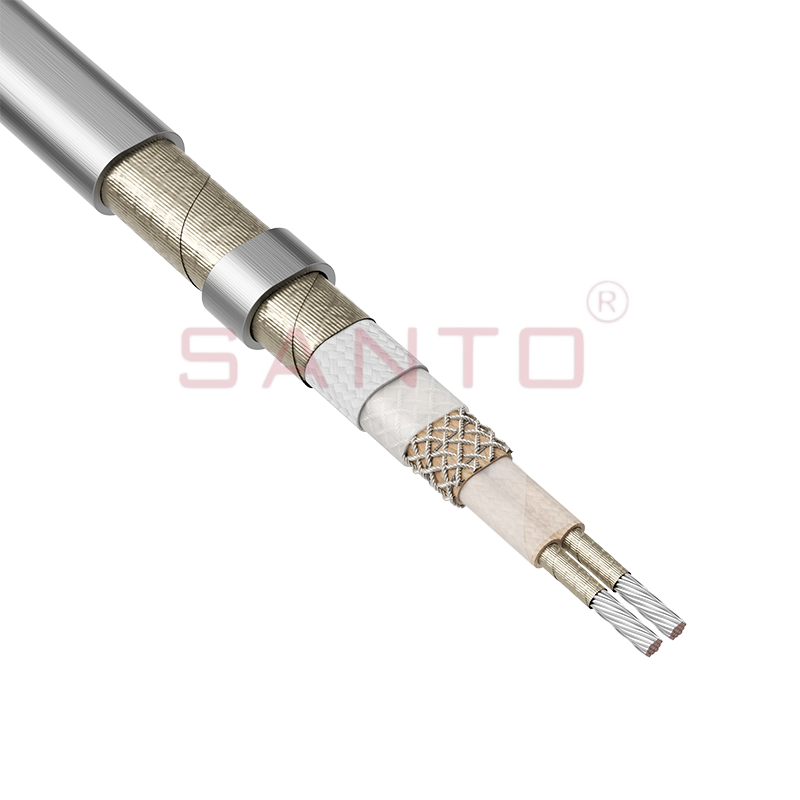
The SANTO UFM series self-regulating heating cables are mainly used for freeze protection of pipes and vessels, but can also be used to maintain processes up to 400°C. These heating cables are availab...
See Details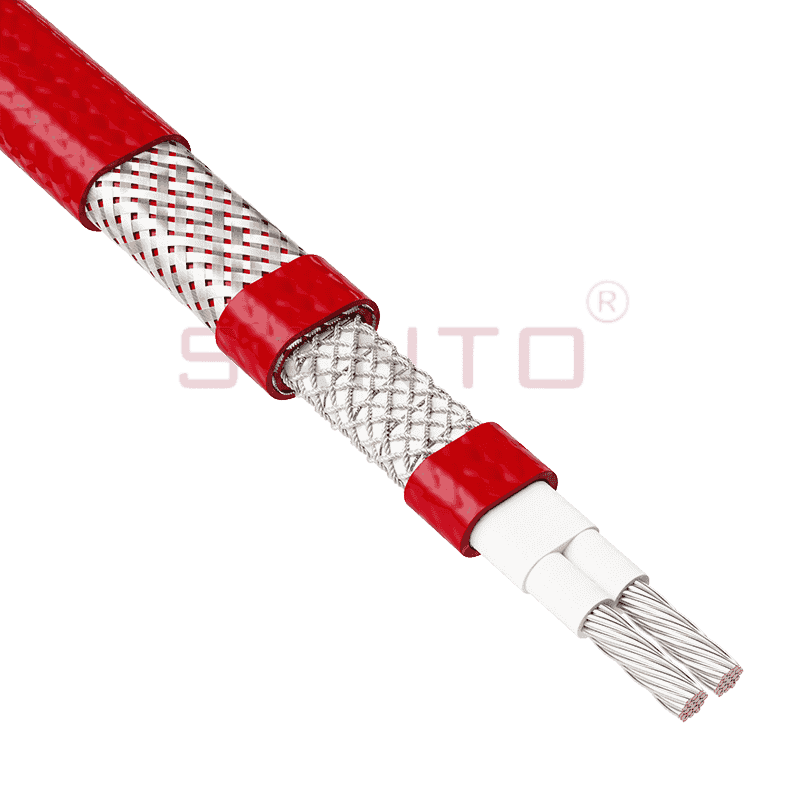
The SANTO ACC range of power-limiting heating cables is mainly used for temperature maintenance of processes and offers the advantage of a high power output at high temperatures which can reduce the n...
See Details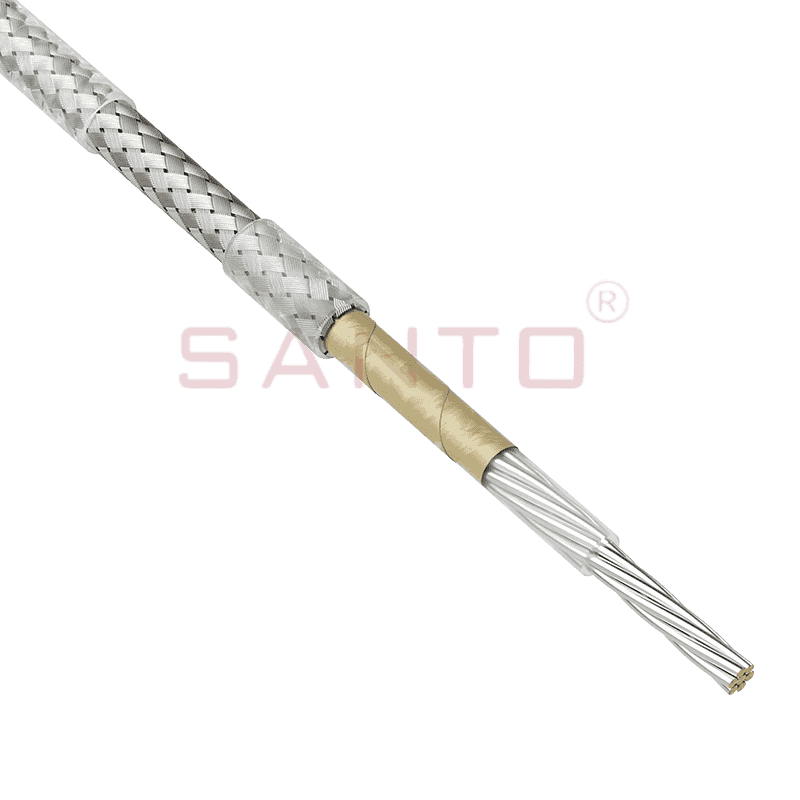
The stranded high temperature conductor is nickel plated to ensure a long life at elevated temperatures in corrosive environments. It is electrically isolated using an innovative sandwich construction...
See Details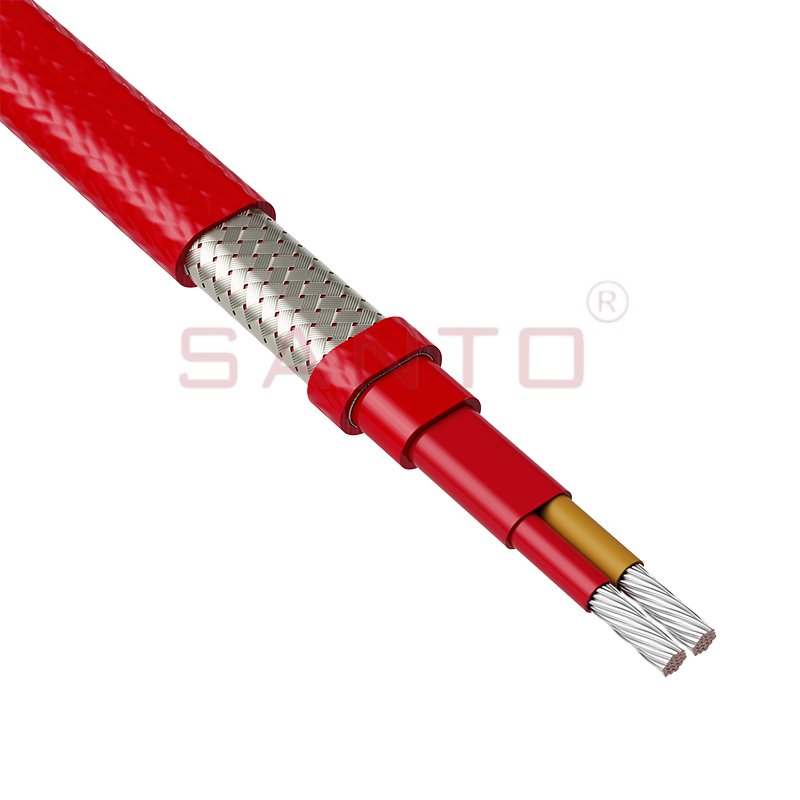
The stranded high temperature conductor is nickel plated to ensure a long life at elevated temperatures in corrosive environments. It is electrically isolated using an innovative sandwich construction...
See Details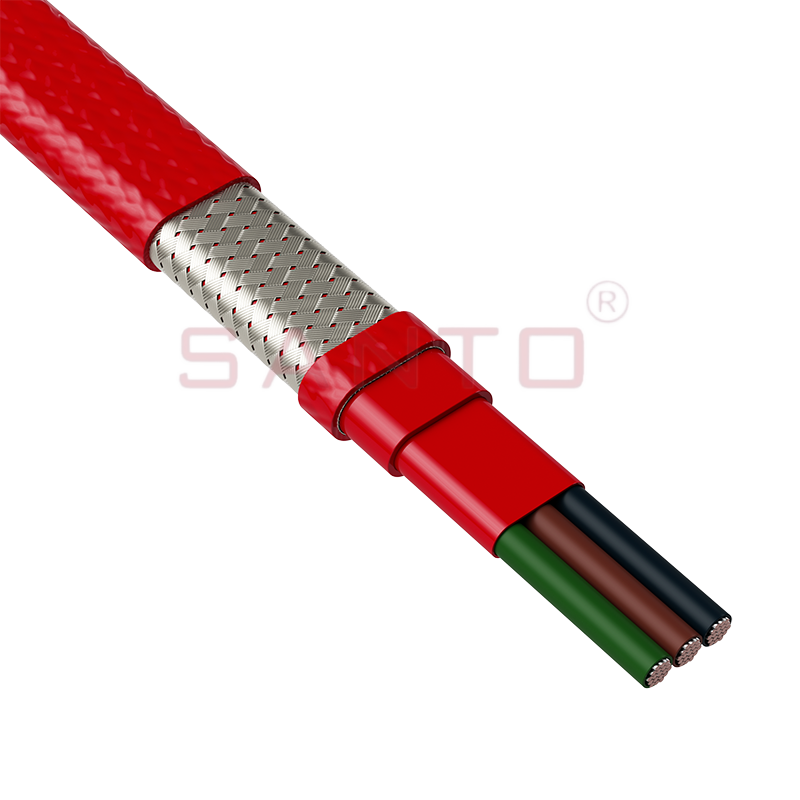
The stranded high temperature conductor is nickel plated to ensure a long life at elevated temperatures in corrosive environments. It is electrically isolated using an innovative sandwich construction...
See Details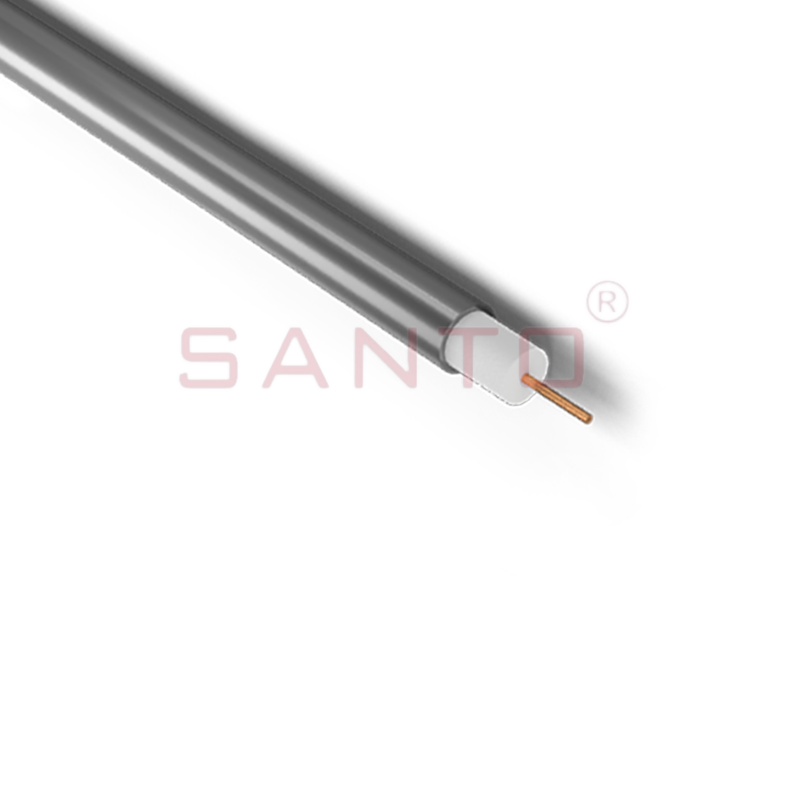
SANTO HAx mineral insulated (MI) Alloy 825 series heating cables are suitable for use in hazardous areas. They have been designed for use in freeze protection and temperature maintenance applications ...
See Details
Santo electric heating strips are widely used in key industries in China.

