 English
  English
 русский
 日本語
日本語 Español
 中文简体
中文简体
The SANTO UFA range of self-regulating heating cables is mainly used for frost protection of pipes and vessels but can also be used to maintain processes up to 65°C. These heating cables are available...
See Details
Electrical heating and heat-tracing systems depend on more than the performance of the heating cable itself. A complete installation also requires dependable connection points, protected enclosures, accurate positioning, and mechanical support. The power box bracket is a small but important component in this arrangement. It helps secure the power box, supports a stable connection between the supply cable and heating cable, and contributes to an orderly installation that can be inspected and maintained over time.
The SB-110 Universal Bracket is designed for use with power boxes in electric heating and heat-tracing applications. Its purpose is to provide practical mounting support while helping installers create a cleaner, more secure, and more serviceable system. As an accessory for electrically heated tracing cables, skin-effect heating tracing systems, snow and ice melting systems, underfloor heating mats, tubing bundles, and silicone rubber heating systems, the bracket can be integrated into many different project configurations.
Although a bracket may appear simple, the requirements placed on it can be demanding. It may be installed in industrial facilities, outdoor areas, construction projects, process plants, energy sites, agricultural installations, or commercial buildings. It may be exposed to vibration, temperature changes, moisture, dust, and repeated maintenance activity. A suitable bracket therefore needs to combine structural support, installation convenience, compatibility, and long-term reliability.
The SB-110 addresses these needs through a universal design intended to simplify power box installation. Its value is not limited to holding an enclosure in place. It can help standardize the installation process, reduce unnecessary field fabrication, improve cable routing, and support the safe organization of heating system components.
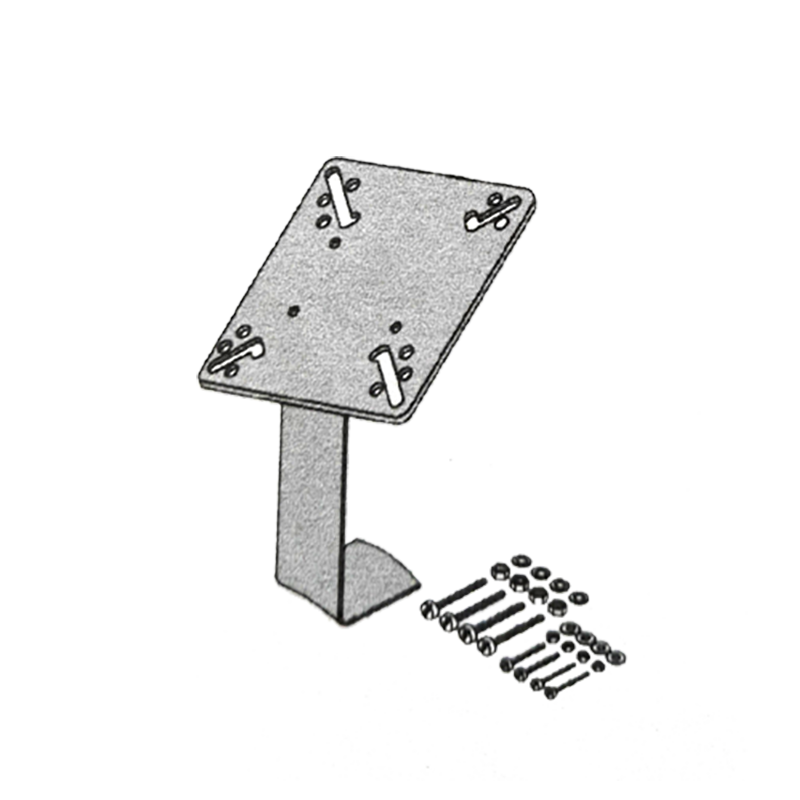
SB-110 Universal bracket
Content
The SB-110 Universal Bracket belongs to the power box bracket category. It is an accessory used to support or mount a power box associated with an electrically heated system. The power box may serve as the point where an electrical supply, heating cable, temperature-control equipment, or other system components are connected and organized.
In a typical heat-tracing installation, the power box must remain securely positioned while allowing sufficient access for wiring, inspection, testing, and future servicing. If the box moves, becomes misaligned, or is mounted in an unsuitable location, the installation may become difficult to inspect and more vulnerable to mechanical stress. A dedicated bracket helps provide a defined mounting arrangement instead of relying on improvised supports.
The word “universal” is important because heating projects vary significantly. Some systems are installed on process pipelines, some on roofs and walkways, some beneath floors, and others alongside tubing bundles or equipment. A universal bracket is intended to offer flexibility across different mounting situations and project layouts. The final installation should always be checked against the relevant power box specification, project drawings, environmental conditions, and applicable electrical requirements.
The product is supplied as part of a wider range of accessories for thermal control systems. These accessories support the practical installation of products such as self-regulating heating cables, constant-power heating cables, silicone rubber heaters, snow-melting cables, glass-fiber heating products, mineral-insulated cables, and related electric heating equipment.
| Item | Information |
|---|---|
| Product name | SB-110 Universal Bracket |
| Product category | Power Box Bracket |
| Primary function | Supporting and positioning a power box in a heating or heat-tracing installation |
| Application range | Electrical heat tracing, skin-effect heating, snow and ice melting, underfloor heating, tubing bundles, and silicone rubber heating systems |
| Related documentation | Power Box Bracket Product Specification |
| Recommended evaluation | Confirm dimensions, mounting arrangement, environmental suitability, and system compatibility before installation |
This product information provides a general overview. Exact dimensions, material specifications, surface treatment, load limits, and installation details should be confirmed using the product specification and the requirements of the intended project.
The power box is often the transition point between field wiring and the heating element. It may be exposed to pulling forces from cables, movement caused by vibration, and repeated opening during commissioning or maintenance. Without suitable mechanical support, these forces can be transferred to terminals, cable glands, or the heating cable connection.
A bracket helps separate mechanical support from electrical connection. The enclosure can be held in a defined position, while cables can enter through appropriate glands and be routed with suitable bend radii. This arrangement reduces the likelihood that the cable connection will be used as a structural support point.
Good mounting also improves inspection. Technicians can more easily identify the power box, check cable entry points, inspect fasteners, and access the enclosure when the box is installed in a consistent and visible position. In large facilities, standardization can be especially valuable because maintenance teams may be responsible for hundreds or thousands of heating circuits.
A suitable bracket can also support project efficiency. Field workers do not need to design a separate support solution for every installation. A repeatable accessory reduces the need for cutting, drilling, welding, or modifying unrelated structural parts on site. This can reduce installation time and help produce a more consistent finished result.
The primary advantage of the SB-110 is its universal application concept. Heating systems are installed on equipment of different sizes, shapes, and orientations. A bracket designed with flexibility in mind can be used in more than one project configuration, helping contractors simplify procurement and installation planning.
Instead of selecting a completely different support component for every heating project, users can evaluate one standardized bracket for compatible power box arrangements. This can reduce the number of accessory types held in inventory and make spare-part management easier. It may also help engineering teams create repeatable mounting details for similar installations.
Universal does not mean that every installation is automatically identical. The installer must still verify the power box dimensions, fixing points, cable entry orientation, available clearance, environmental exposure, and required load support. However, the universal design provides a broader starting point than a highly specialized bracket intended for only one enclosure or one application.
A power box should remain stable during normal operation and maintenance. The SB-110 is intended to provide a defined support structure so that the enclosure is not left hanging from cables or attached through unsuitable improvised methods. Stable mounting can help protect electrical connections from unnecessary tension and movement.
Mechanical support is particularly important in industrial environments. Pumps, motors, compressors, vehicles, process equipment, and other machinery can generate vibration. Outdoor installations can experience wind, rain, snow, ice, and thermal expansion. A properly selected and installed bracket helps the power box remain aligned under these conditions.
The bracket should be used together with suitable fasteners and a suitable supporting surface. The complete mounting arrangement, rather than the bracket alone, determines the final mechanical performance. The installer should consider the weight of the power box, cable loads, vibration, temperature, corrosion exposure, and the strength of the substrate.
Heating installations often contain supply cables, cold leads, heating cables, sensors, control wires, labels, and protective components. If the power box is not positioned properly, these parts may cross one another, create tight bends, or obstruct access to the enclosure cover.
A dedicated bracket helps establish an organized installation point. The power box can be positioned according to the project layout, while the heating cable and supply cable are routed in a planned direction. Better organization may reduce confusion during commissioning and make it easier to trace a circuit during future maintenance.
Orderly installation is also useful for documentation. When power boxes are mounted consistently, photographs, inspection records, circuit schedules, and as-built drawings can be prepared more efficiently. This is valuable in commercial and industrial projects where maintenance teams need to identify equipment quickly.
Field-fabricated supports can produce inconsistent results. A worker may cut a piece of metal, drill holes, or weld a custom support to suit a particular location. Such work may be practical in some situations, but it can also introduce variation in dimensions, surface protection, alignment, and workmanship.
A manufactured universal bracket provides a ready-made accessory that can reduce the amount of modification required at the job site. Less field fabrication can help shorten installation time and reduce dependence on site tools and specialist labor. It may also lower the risk of damage to protective finishes caused by uncontrolled cutting or drilling.
Factory-produced accessories are easier to standardize. The same product can be evaluated during design, purchased in planned quantities, and installed according to a repeatable procedure. This is an advantage for contractors working on multiple buildings, process lines, or heating zones.
Heat-tracing systems should be inspected periodically, especially in applications where loss of heating could result in freezing, process interruption, equipment damage, or safety concerns. The power box may need to be opened for electrical testing, terminal inspection, cable replacement, or control verification.
When mounted on a suitable bracket, the power box can be positioned with space for access to the cover, cable glands, and identification labels. The bracket should not be installed in a way that blocks the cover or places the enclosure behind permanent obstructions. Before final tightening, installers should confirm that the intended maintenance clearance is available.
Maintenance-friendly mounting can lower the total cost of ownership. A technician who can reach the power box directly may spend less time removing unrelated components or working in an awkward position. Clear access also encourages more regular inspection and can support early detection of loose connections, damaged glands, corrosion, or other issues.
The SB-110 is associated with a broad portfolio of electric heating products. These include self-limiting heating cables, constant-power heating cables, skin-effect tracing systems, snow and ice melting cables, underfloor heating mats, tubing bundles, silicone rubber heating systems, glass-fiber heating products, mineral-insulated cables, and related accessories.
Each heating technology has different installation characteristics. A self-regulating cable may be used for pipe freeze protection or temperature maintenance. A constant-power cable may be selected for a defined heat output. Skin-effect systems may be used for long-distance industrial heat tracing. Snow-melting systems may be installed on ramps, roofs, gutters, or walkways. Underfloor heating mats and silicone rubber heaters may be used in building or equipment applications.
Although the bracket does not determine the electrical performance of these heating products, it can support the common requirement for a stable, accessible power connection point. This makes the accessory useful as part of a complete system rather than as an isolated component.
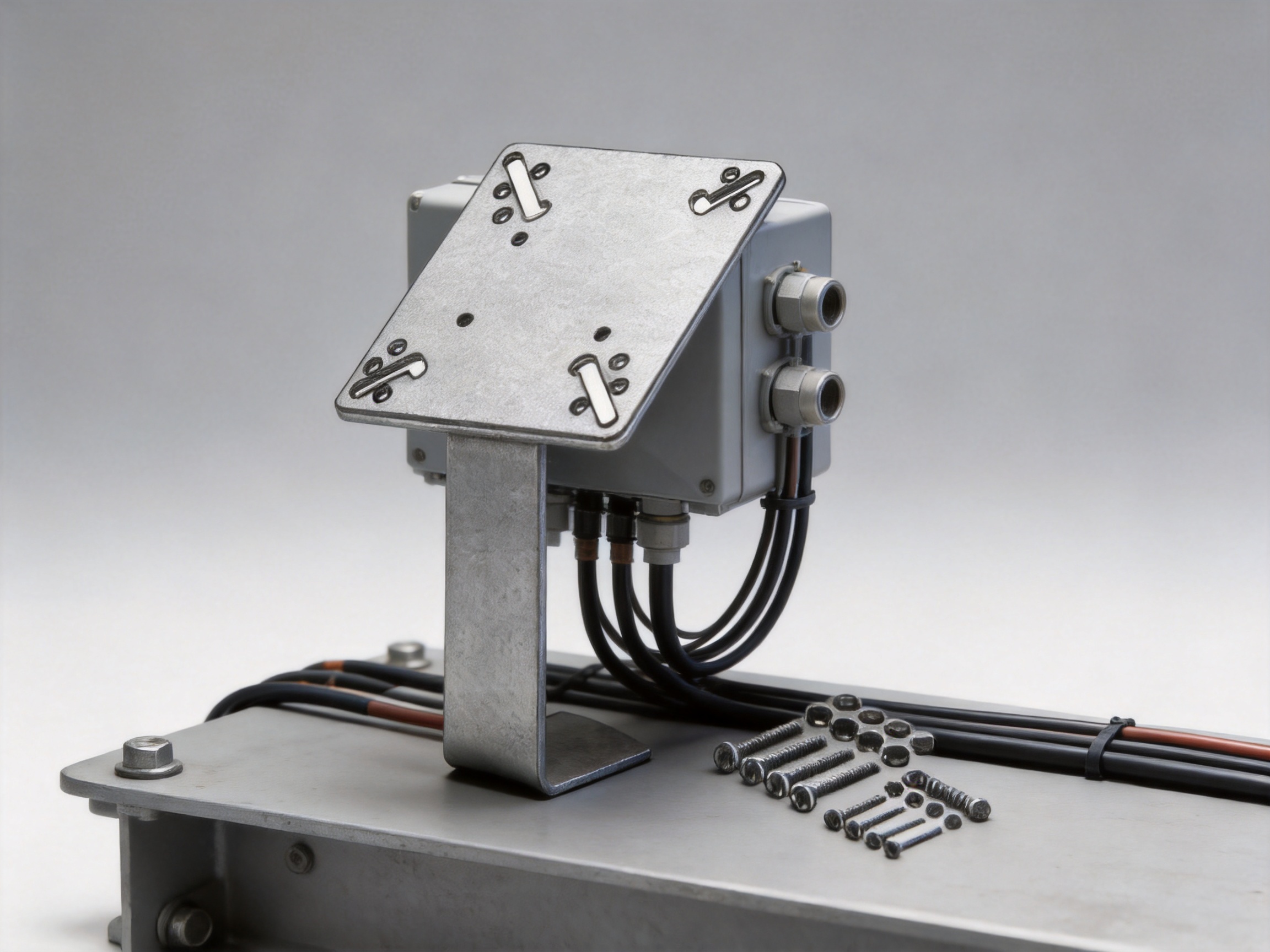
Electric heat tracing is used to maintain temperature, prevent freezing, compensate for heat loss, or support process operation. A heating cable is installed along a pipe, vessel, tank, valve, roof edge, drain, or other surface. The circuit is then connected to a power supply, control system, or junction arrangement.
The power box bracket can be used to support the connection enclosure at a selected point along the installation. The location should be chosen so that the heating cable can reach the box without excessive tension or an unsuitable bend. The power supply should also be routed in a way that avoids contact with hot surfaces, sharp edges, moving equipment, or areas where water may accumulate.
For process heat tracing, the bracket may be installed near a pipe support, equipment frame, or other structural member. The installer should verify that the mounting surface can withstand the combined weight and environmental forces. If insulation will be installed around the pipe or equipment, the location of the power box and bracket should be coordinated before the insulation work begins.
For freeze-protection systems, the power box is often positioned near the beginning of a heating circuit. The bracket helps keep this point visible and accessible. This is useful when circuits are divided into several zones and each zone must be identified, tested, and controlled separately.
Skin-effect heating tracing systems are used for specialized long-distance or industrial heating applications. They generally involve a carefully engineered circuit in which current distribution and heating behavior depend on the system design. Because these installations may extend across substantial distances or operate in demanding environments, the physical organization of connection points is important.
A stable power box support helps keep the termination area protected from avoidable mechanical movement. The bracket can contribute to a tidy arrangement of the supply connection, heating circuit, and associated enclosure. Project engineers should select the location according to the skin-effect system design, cable routing requirements, clearances, and operating temperature.
In industrial facilities, the bracket may be installed near a pipe rack, equipment frame, or service platform. The installation team should make sure that the power box remains accessible without compromising personnel safety. Where the equipment is located in a hazardous or classified area, the entire assembly must comply with the relevant explosion-protection requirements. A bracket alone does not make an electrical installation suitable for hazardous locations.
Snow and ice melting systems are installed on driveways, ramps, loading areas, walkways, stairs, bridges, roofs, gutters, and drainage channels. These systems must often operate in wet, cold, and mechanically active environments. The power box may be located outdoors, where wind, rain, snow, ultraviolet exposure, and temperature cycling can affect equipment.
The SB-110 can help provide an organized support point for the power box in a snow-melting installation. The mounting position should be above areas that may collect standing water and should not interfere with vehicles, pedestrian traffic, snow removal, or drainage. Outdoor enclosures and cable entries must be selected for the expected weather exposure.
For roof and gutter systems, installers should coordinate the bracket position with roofing materials, drainage paths, expansion joints, and access routes. A bracket must not create a leak path or obstruct the movement of water. Mechanical attachment should be performed according to the building design and the recommendations for the mounting surface.
In ramps and walkways, the power box should be protected from impact and positioned away from areas where it could be struck by vehicles or maintenance equipment. A well-planned bracket location supports safer access and reduces the chance of accidental damage.
Underfloor heating mats provide distributed heat beneath floor finishes. They are used in residential, commercial, healthcare, hospitality, and other building applications. The heating mat itself is typically installed within a defined floor construction, while the electrical connection and control components are placed in an accessible location.
A power box bracket may be used where the underfloor heating design includes a dedicated connection enclosure or service box. The bracket can help position the box in relation to the floor structure, wall space, or equipment cabinet. Installers should ensure that the bracket does not interfere with floor levels, insulation layers, expansion joints, waterproofing, or finish materials.
Building projects often involve several trades working in sequence. Electrical installers, flooring contractors, insulation workers, and control-system technicians must coordinate their work. A clearly mounted power box can make the installation easier to identify and reduce the possibility that the connection point will be covered or damaged during later construction stages.
The heating mat, control device, power box, and bracket should be treated as parts of a planned system. Electrical ratings, sensor placement, floor construction, and control methods must be confirmed separately from the mechanical mounting arrangement.
Heated tubing bundles are used to protect process lines, sampling lines, instrumentation tubes, and small-diameter pipes from freezing or excessive temperature loss. A tubing bundle may contain several tubes, heating elements, insulation, and an outer jacket. The bundle connection point must be supported without crushing or sharply bending the assembly.
The SB-110 may be used to support the power box associated with a tubing bundle installation. The bracket can help keep the enclosure aligned with the bundle route and can make the termination area easier to inspect. The installer should maintain the minimum bend radius of the tubing bundle and heating cable and should prevent the bracket or fasteners from damaging the outer jacket.
In process facilities, tubing bundles may run through congested areas containing valves, instruments, cable trays, and structural steel. A compact and organized mounting arrangement can help reduce interference with neighboring equipment. The power box should be labeled clearly so that it can be associated with the correct tubing bundle and electrical circuit.
Silicone rubber heating systems are used where flexible heating elements are required for tanks, vessels, pipes, drums, cabinets, or other equipment. Silicone rubber products can provide useful flexibility and resistance to many operating conditions, but the connection area still requires suitable mechanical support.
A power box bracket can help position the connection enclosure away from direct heat, sharp edges, moving parts, or areas of chemical exposure. The bracket should be installed so that it does not place pressure on the silicone heating element or its lead wires. The cable transition should be supported according to the heating product’s installation instructions.
For removable equipment such as drums or process containers, the bracket location should account for access, cleaning, replacement, and movement. For fixed equipment, the installer should consider thermal expansion and the possibility that the vessel surface will become hot during operation.
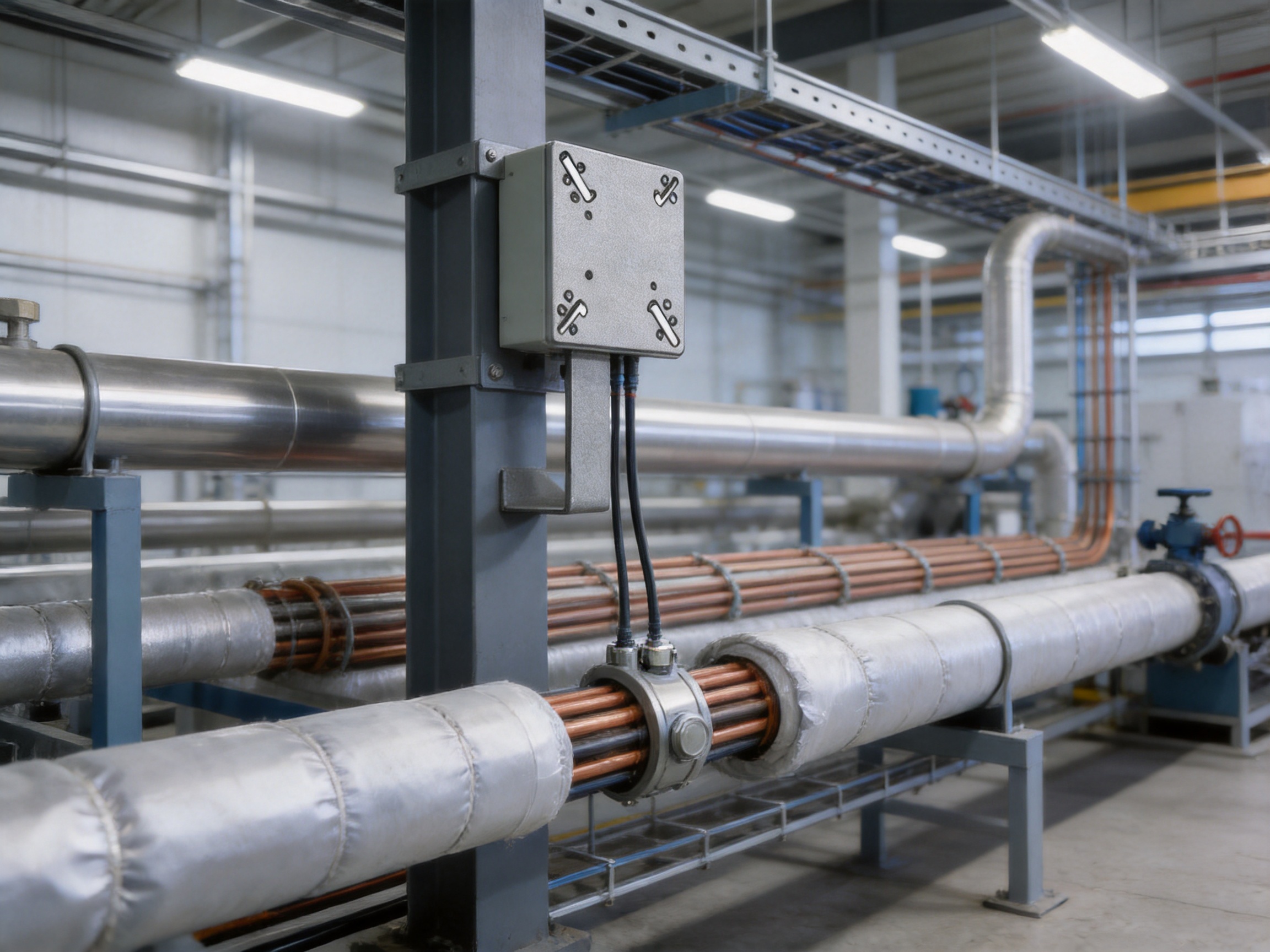
The performance of a power box bracket begins with design, but consistent manufacturing is equally important. A support component must be produced with repeatable dimensions and dependable workmanship so that it can be installed as intended. The manufacturer’s experience in electric heating accessories provides a useful foundation for understanding the practical requirements of connection and support components.
Santo Thermal Control Technology Co., Ltd. is based in Jiangsu Province, an area recognized for its electric heating belt industry. The company combines research, design, production, manufacturing, and sales across a broad range of thermal control products. Its product portfolio includes automatic temperature-control heating belts, self-limiting heating belts, constant-power heating belts, glass-fiber heating belts, silicone rubber heating products, mineral-insulated cables, snow-melting cables, tubing-related products, and accessories.
This product experience is relevant to the SB-110 because a bracket is most useful when it is developed with an understanding of complete heating installations. The manufacturer works with products that must be routed, terminated, protected, controlled, and maintained in real industrial and building environments. Such experience can help inform accessory design and application guidance.
The company states that it cooperates in product research with Harvard University in the United States and has invested in the development of new electric heating technologies. Its reported development history includes work on self-limiting temperature heating products, carbon-fiber parallel heating cables, infrared heating technologies, and other thermal control solutions.
Research and development experience can support more than the creation of heating elements. It can also encourage improvements in connection arrangements, installation accessories, product simulations, testing methods, and system integration. Accessories such as brackets are important because they connect product design with field installation.
The company has also reported the establishment of an irradiation center and the development of a product simulation testing laboratory. Testing and simulation can help manufacturers evaluate products before large-scale production and can support more reliable quality-control procedures. The exact testing program for the SB-110 should be confirmed in the relevant product documentation.
Santo Thermal Control Technology Co., Ltd. reports that it has passed ISO 9001 quality system certification and that its products have obtained national CCC certification. Quality-system certification provides a framework for managing design, purchasing, production, inspection, documentation, and corrective actions. It does not replace product-specific evaluation, but it indicates an organized approach to manufacturing management.
For a bracket, quality management may include control of incoming materials, dimensional inspection, forming or machining control, surface-finish checks, assembly verification, packaging inspection, and traceability. Consistency is especially important when the bracket is used with standardized power boxes on multiple projects.
Customers should request the appropriate technical documentation when project specifications require evidence of material grade, coating, corrosion resistance, mechanical performance, or inspection procedures. Product selection should be based on the actual operating environment rather than on general appearance alone.
The company reports more than 35 years of industry experience, annual output exceeding 10,000 units, and a distribution network covering more than 2,000 distributors and over 85 areas. These figures indicate experience in serving a broad customer base and managing products for different application environments.
Long-term manufacturing experience can provide practical advantages in product refinement. Feedback from contractors, distributors, engineers, and end users may reveal recurring installation challenges. Manufacturers can use this information to improve mounting convenience, packaging, labeling, documentation, and compatibility.
For international customers, experience in export markets can also be valuable. Heating projects may require different documentation, packaging arrangements, electrical standards, and communication practices. A supplier familiar with overseas business is better positioned to support customers during product selection and order coordination.
The SB-110 should be evaluated not only against other manufactured brackets but also against common alternatives such as improvised metal strips, cable ties, general-purpose shelves, or supports fabricated at the installation site. These alternatives may appear inexpensive, but their total cost can be higher when installation time, maintenance, appearance, and reliability are considered.
| Evaluation factor | Universal manufactured bracket | Improvised support |
|---|---|---|
| Installation repeatability | More consistent across projects when used according to the specification | Can vary according to individual site fabrication |
| Planning | Can be included in drawings, bills of materials, and standard work instructions | May require decisions and modifications during installation |
| Mechanical organization | Provides a defined support point for the power box | May leave the enclosure misaligned or dependent on nearby components |
| Maintenance access | Can support planned positioning and visibility | May obstruct access or place the box in an awkward location |
| Field labor | May reduce cutting, drilling, and welding at the job site | Often requires additional tools, labor, and adjustment |
| Documentation | Easier to describe as a standard accessory | May be difficult to document consistently |
| Project appearance | Supports a cleaner and more professional installation | Can look inconsistent or unfinished |
A generic support may still be suitable when it has been engineered and approved for the application. The important point is that the support must be selected deliberately. The SB-110 offers a practical standardized option for projects where its dimensions, materials, and mounting arrangement meet the requirements.
Before installing the SB-110, the project team should review the power box specification and the surrounding equipment layout. The bracket should be positioned so that the enclosure is secure, accessible, and protected from avoidable hazards. Planning should occur before cables are permanently routed and before insulation, cladding, flooring, or other finishing work conceals the installation.
The supporting surface may be structural steel, a wall, a frame, equipment support, a pipe rack, or another approved structure. It must be strong enough to support the bracket, power box, connected cables, and environmental forces. The surface should be clean and suitable for the selected fasteners.
Installers should avoid attaching the bracket to thin panels, fragile insulation cladding, unsupported covers, or surfaces that can move excessively. If the support is part of process equipment, the installation should not compromise pressure boundaries, insulation systems, corrosion protection, or equipment certification.
Adequate clearance is required around the power box for cable entry, cover removal, testing, and maintenance. The bracket should not be placed where the enclosure will contact hot pipes, moving machinery, sharp edges, standing water, or chemical discharge.
Clearance should also be checked against future insulation. A power box that is accessible during rough installation may become difficult to reach after insulation and cladding are added. The installation drawing should show the final position of the box and any required service space.
Cables should approach the power box without excessive tension, twisting, or sharp bends. The bracket position should support a natural cable route and should not force the heating cable to cross a sharp corner. Cable glands and entry points must be suitable for the cable type and environmental conditions.
The heating cable must be installed according to its own instructions. The bracket should not be used to pull, stretch, pinch, or compress the heating cable. Where a cable transition or cold lead requires additional support, that support should be provided according to the heating system design.
Fasteners should be selected according to the mounting surface, bracket material, expected loads, vibration, and corrosion exposure. Outdoor or chemically aggressive environments may require corrosion-resistant fasteners. The installer should follow the project requirements for torque, washers, locking methods, and inspection.
Fasteners should be tightened securely without deforming the bracket or damaging the power box. After installation, the bracket should be checked for movement, sharp edges, interference, and proper alignment.
The suitability of a bracket depends on the environment in which it is installed. Temperature, humidity, water exposure, salt, chemicals, ultraviolet radiation, dust, vibration, and mechanical impact should all be considered. The product specification should be reviewed for material and surface-treatment information.
In corrosive environments, the bracket and fasteners should be compatible with surrounding materials. Dissimilar metals may create galvanic corrosion under wet conditions. Where the bracket is installed near stainless steel, galvanized steel, aluminum, or coated surfaces, the project team should evaluate material compatibility.
In high-temperature areas, the bracket should be located and selected so that it does not exceed its allowable operating conditions. The power box and cable connection must also be suitable for the temperature. A bracket may remain mechanically intact while the enclosure, cable gland, or insulation system becomes unsuitable, so the complete installation must be evaluated.
Electrical safety remains essential. Power should be isolated before installation, inspection, or maintenance. The heating circuit should be tested by qualified personnel, and grounding, protection, insulation resistance, and control functions should be verified according to the applicable standards and project procedures.
Where a heating system is installed in a hazardous area, the power box, glands, cable, bracket arrangement, and installation method must meet the area classification requirements. The bracket does not provide electrical protection by itself. It must be incorporated into an approved complete system.
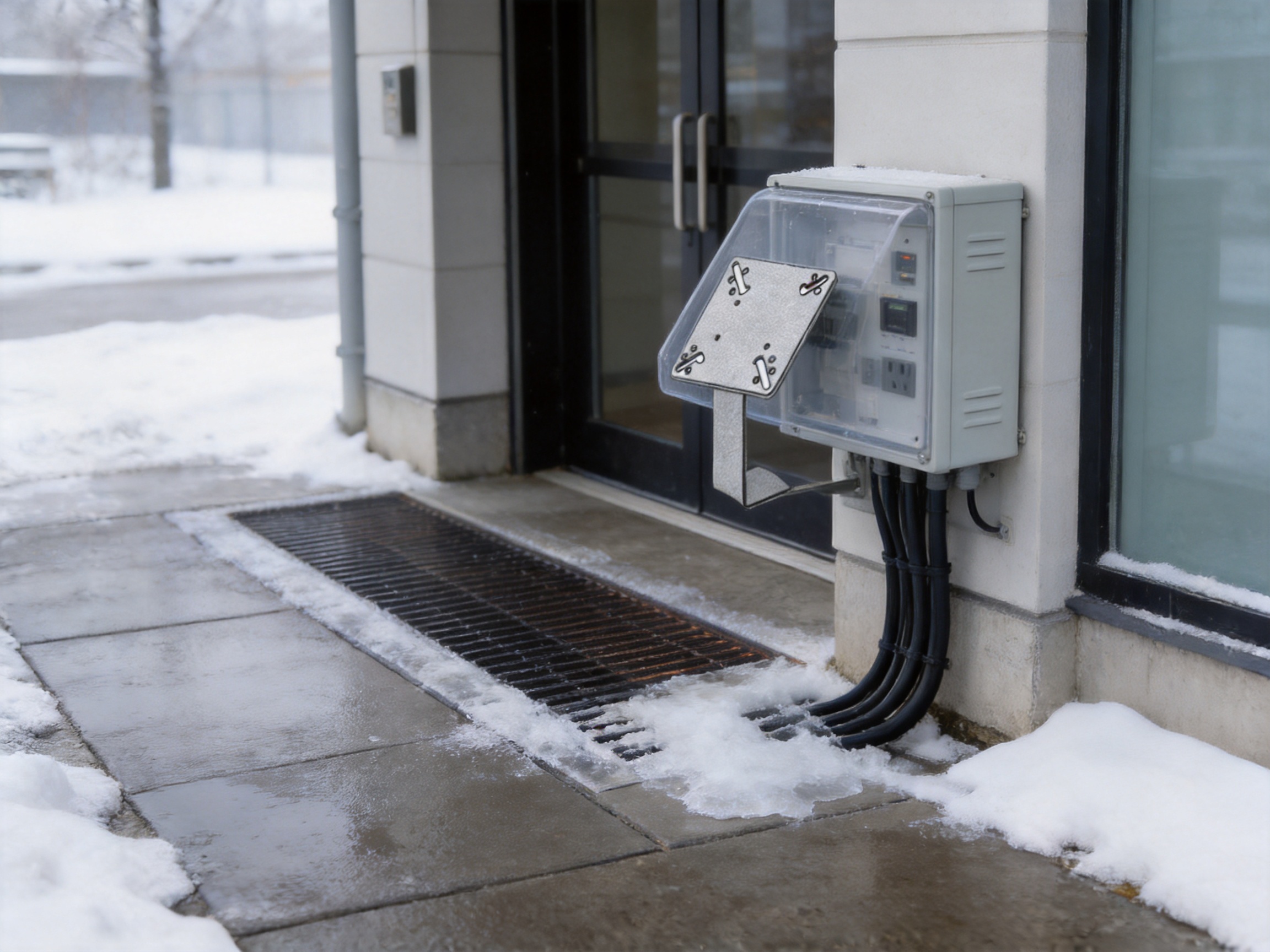
After the bracket and power box have been installed, the completed arrangement should be inspected before energization. The enclosure should be firmly mounted, correctly oriented, and free from visible damage. The cover should open as required, and cable entries should be properly sealed.
Inspectors should verify that cables are not carrying the weight of the enclosure and that no cable is trapped between the bracket and the mounting surface. Cable bends should be smooth and within the manufacturer’s specified limits. Labels should identify the heating circuit, supply source, control zone, and relevant safety information.
The bracket should be checked for movement by applying a reasonable manual inspection force. It should not wobble, tilt, or interfere with nearby equipment. If vibration is expected, the installation should be reviewed after the system has operated for an appropriate period.
Electrical commissioning should be performed according to the heating product instructions. Depending on the system, this may include continuity testing, insulation resistance testing, resistance measurement, sensor verification, control testing, ground-fault protection checks, and operational temperature checks.
Commissioning records should include the power box identification, circuit identification, test results, installer information, date, and any observations. Photographs of the mounted bracket and power box can be useful for future maintenance records.
Routine inspection helps preserve the reliability of the complete heating system. The inspection interval depends on the application, operating conditions, environmental exposure, and project maintenance plan. Outdoor snow-melting systems may require seasonal inspection, while industrial heat tracing may be checked during planned shutdowns.
Maintenance personnel should look for loose fasteners, corrosion, damaged coatings, distortion, cable movement, cracked glands, water ingress, blocked access, and labels that have become unreadable. Any problem should be corrected before it affects the electrical connection or heating performance.
If the power box is opened, the bracket and mounting surface should also be checked. Repeated access can gradually loosen fasteners if the installation is subject to vibration. The box should be closed and sealed correctly after inspection.
When a heating cable or power box is replaced, the bracket should not be assumed to be reusable without inspection. Confirm that it has not been bent, corroded, or damaged during previous work. Replacement components should match the intended application and environmental conditions.
When ordering the SB-110 Universal Bracket, customers should provide information about the intended application. Useful details include the type of heating system, power box model, mounting surface, indoor or outdoor location, temperature range, corrosive exposure, vibration, required quantity, and applicable project standards.
The Power Box Bracket Product Specification should be reviewed before purchase. It should be used to confirm product dimensions, mounting details, materials, finish, and any limitations. If the specification does not answer a project-specific question, the customer should request technical clarification before installation.
For large projects, it may be beneficial to approve a sample bracket and power box assembly before purchasing the full quantity. This can verify clearance, cable routing, fastening, access, and appearance. A sample installation can also help contractors prepare a standard work instruction for the project.
Packaging and labeling should allow the bracket to be identified easily at the job site. If multiple heating products and accessories are being delivered together, clear product codes and packing lists can reduce the chance of incorrect installation.
Santo Thermal Control Technology Co., Ltd. integrates the research, design, manufacturing, and sale of electric heating products. The company’s reported product range covers automatic temperature-control heating belts, self-limiting heating belts, constant-power heating belts, silicone rubber heating belts, glass-fiber heating belts, electric heating wires, mineral-insulated cables, snow-melting cables, LCD tracked heaters, tubing-related products, and accessories.
The company states that its products are used in petroleum, chemical, gas, construction, solar energy, geothermal cultivation, and other industries. These applications require different combinations of temperature control, freeze protection, deicing, insulation, and heat tracing. Experience across these sectors can help a supplier understand how accessories must function under varying installation conditions.
The organization reports a history that began with the founding of Desheng Electric Heating Instrument Factory in 2000, followed by quality-system certification, development of an irradiation center, expansion of heating technology research, creation of the SANTO brand, and continued factory and laboratory investment. It also reports establishing a factory in Russia in 2023 to support broader market development.
Its stated company culture emphasizes environmental health, value creation, innovation, cooperation, effectiveness, development, perseverance, hard work, realism, and pragmatism. These principles are relevant to product accessories because the success of a heating system depends on cooperation between the manufacturer, designer, distributor, contractor, and end user.
The company’s stated business scale includes more than 35 years of industry experience, annual output above 10,000 units, more than 2,000 distributors, and business coverage in over 85 areas. Customers should evaluate these capabilities together with product-specific documentation, technical support, quality records, and project references.
The SB-110 is used to support and position a power box in an electrical heating or heat-tracing installation. It provides a defined mounting arrangement for the enclosure and can help organize cable connections and improve access for inspection and maintenance.
The bracket is described as universal, but compatibility should not be assumed without checking. Users should compare the power box dimensions, fixing points, weight, cable entry arrangement, and required clearances with the Power Box Bracket Product Specification.
The bracket is intended for applications associated with electrically heated tracing cables, skin-effect heating tracing systems, snow and ice melting systems, underfloor heating mats, tubing bundles, and silicone rubber heating systems. The complete installation must be evaluated for the specific heating product and environment.
Outdoor use depends on the bracket material, surface treatment, fasteners, power box enclosure, and environmental conditions. Rain, snow, salt, ultraviolet exposure, temperature cycling, and standing water should be considered. Confirm outdoor suitability in the product documentation before installation.
No. The bracket is a mechanical support accessory. Electrical protection is provided by the correctly selected power box, cable glands, grounding, circuit protection, controls, enclosure rating, and installation method.
Modification should be avoided unless it has been approved by the manufacturer or project engineer. Cutting, drilling, or welding may alter strength, dimensions, corrosion protection, or compatibility. A standard installation is preferable wherever possible.
Check the power box specification, mounting surface, enclosure weight, cable routing, service clearance, temperature, corrosion exposure, vibration, fastener requirements, and applicable safety standards. The final position should be coordinated with insulation, cladding, flooring, and other construction work.
A manufactured bracket can provide greater consistency, easier planning, reduced field fabrication, improved appearance, and more predictable maintenance access. An improvised support may be acceptable only when it has been properly engineered, fabricated, inspected, and approved for the application.
The bracket alone does not establish hazardous-area suitability. In a classified location, the complete assembly must comply with the relevant explosion-protection requirements, including the power box, cable glands, cables, fasteners, grounding, and installation method.
Customers should consult the Power Box Bracket Product Specification and contact the manufacturer or authorized distributor for project-specific information. Technical details should be confirmed before purchase when dimensions, materials, certifications, or environmental ratings are critical.
The SB-110 Universal Bracket is a practical accessory for power box mounting in electric heating and heat-tracing installations. Its main contribution is mechanical and organizational: it helps position the power box, reduces dependence on improvised supports, protects the connection area from unnecessary mechanical stress, and supports better access for inspection and maintenance.
Its universal design concept makes it suitable for evaluation across multiple application areas, including pipe heat tracing, skin-effect heating, snow and ice melting, underfloor heating, tubing bundles, and silicone rubber heating systems. The bracket can help contractors standardize installation practices and can help engineers create repeatable project details.
The most important advantage comes from using the bracket as part of a complete, properly designed system. Compatibility, mounting surface, environmental conditions, cable routing, fasteners, service clearance, electrical protection, and applicable standards must all be considered. Correct installation and regular inspection are essential to long-term performance.
Supported by a manufacturer with experience in electric heating products, research and development, quality management, and international supply, the SB-110 offers a dependable option for customers seeking a more organized and professional power box installation. Before ordering, users should review the product specification and obtain confirmation for their specific application.
1. Power Box Bracket Product Specification, SB-110 Universal Bracket.
2. ISO 9001, Quality Management Systems—Requirements.
3. IEC 62395, Electrical Resistance Trace Heating Systems for Industrial and Commercial Applications.
4. IEC 60529, Degrees of Protection Provided by Enclosures.
5. International electrical installation practices for heating cables, power connections, grounding, and circuit protection.
6. Manufacturer information concerning electric heating cables, heat-tracing systems, snow-melting products, underfloor heating products, tubing bundles, silicone rubber heating systems, and related accessories.
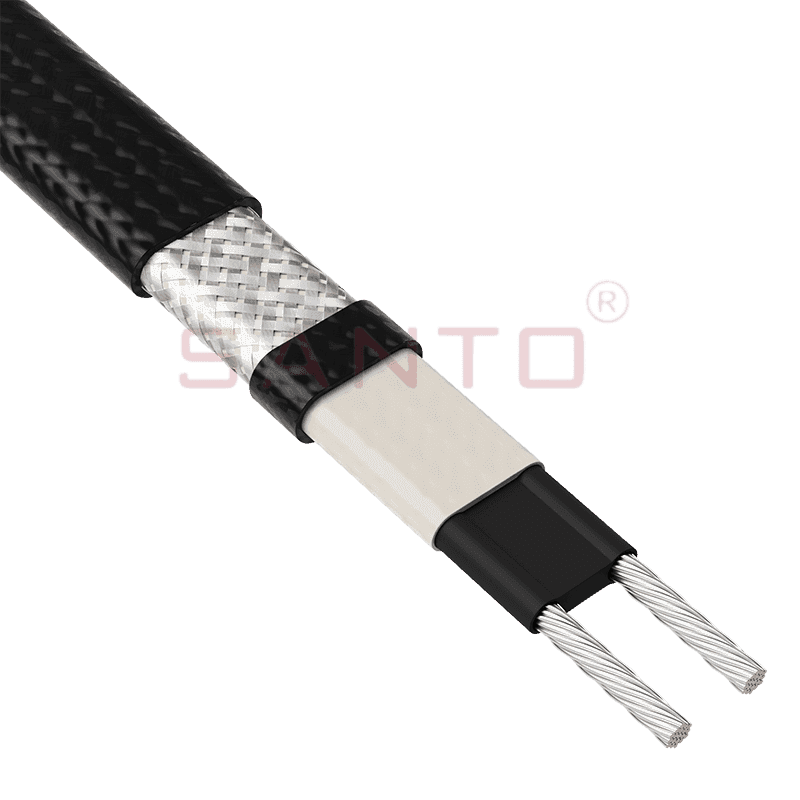
The SANTO UFA range of self-regulating heating cables is mainly used for frost protection of pipes and vessels but can also be used to maintain processes up to 65°C. These heating cables are available...
See Details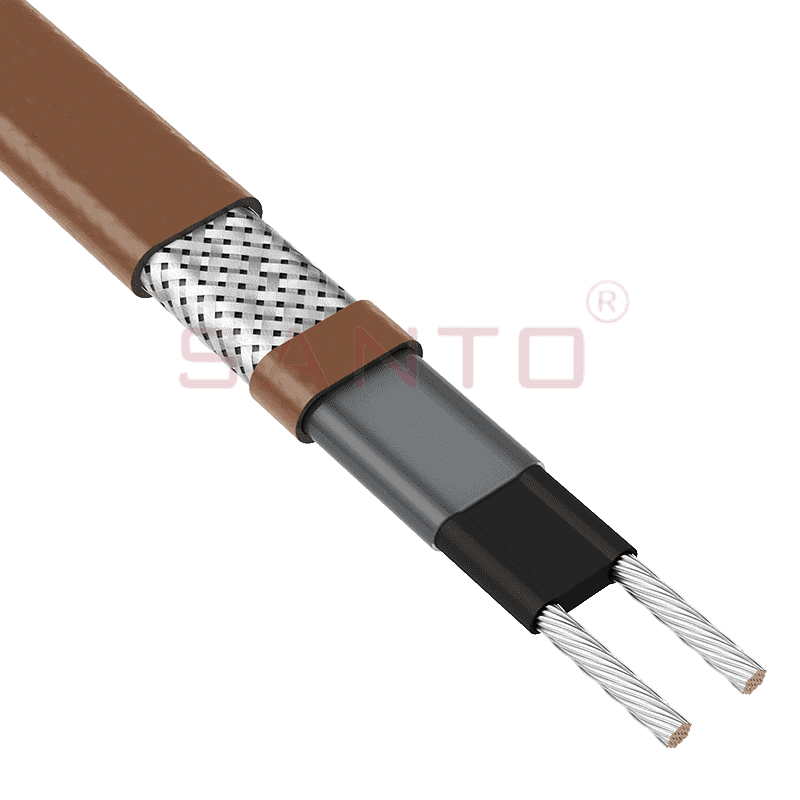
The SANTO UFB range of self-regulating heating cables is mainly used for frost protection of pipes and vessels requiring a higher power output than the UFA heating cables can supply. They can also be ...
See Details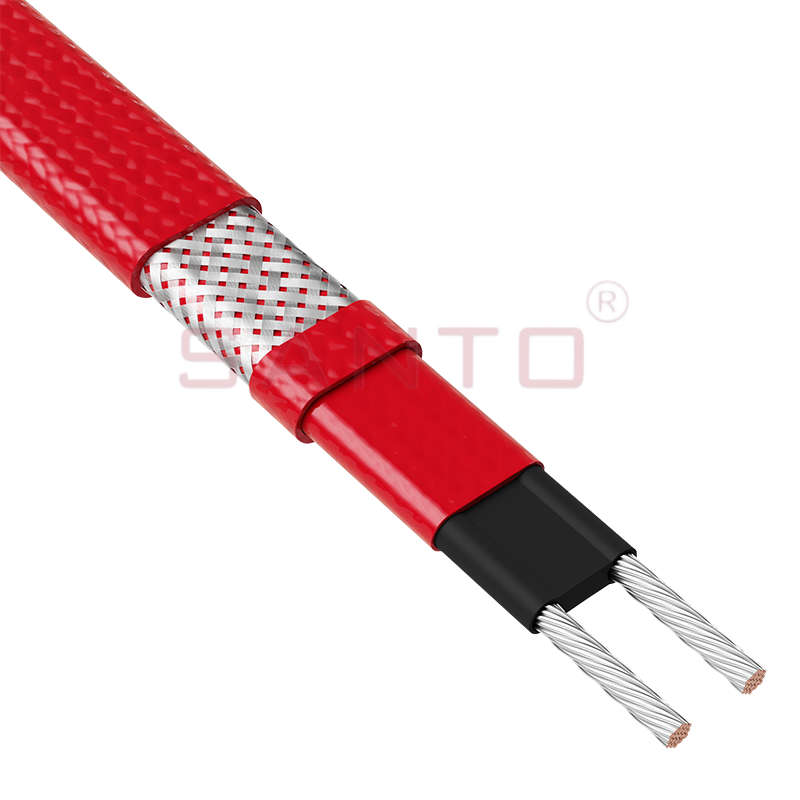
The SANTO UFC range of self-regulating heating cables is used for frost protection of pipes and vessels that require steam cleaning. They can also be used to maintain processes up to 121°C. These heat...
See Details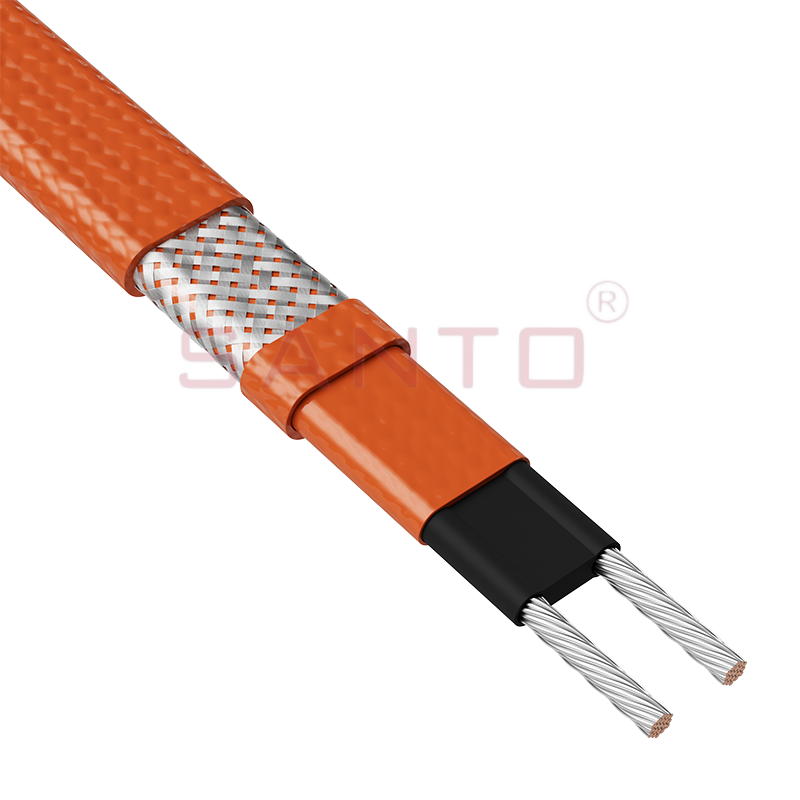
The SANTO UFO range of self-regulating heating cables is mainly used for frost protection of pipes and vessels that require steam cleaning . They can also be used to maintain processes up to 150°C. Th...
See Details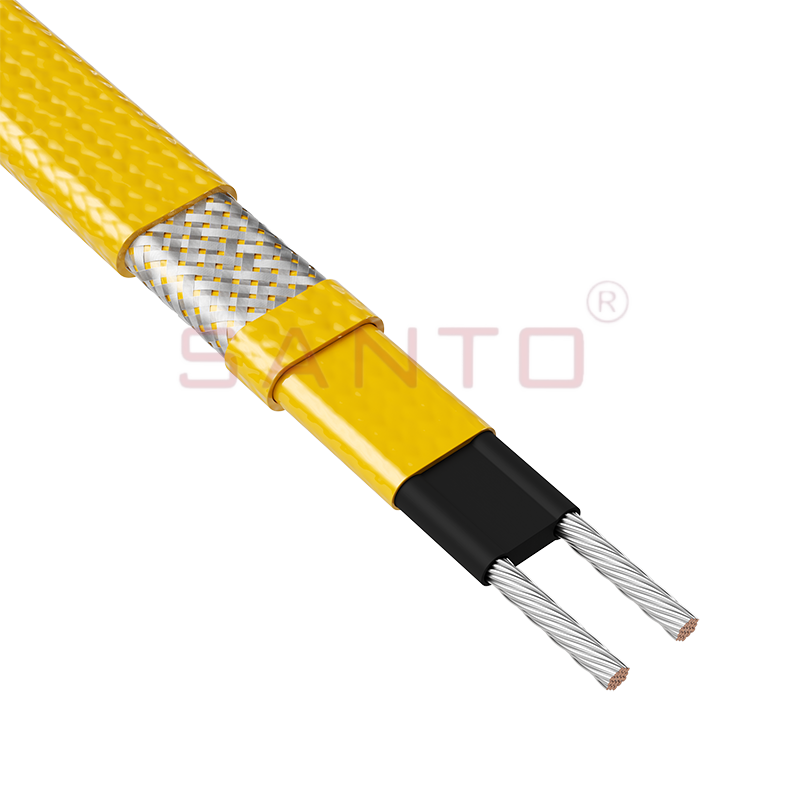
The SANTO UFD series of self-regulating heating cables are mainly used for freeze protection of pipes and vessels, but can also be used to maintain processes up to 200°C. These heating cables are avai...
See Details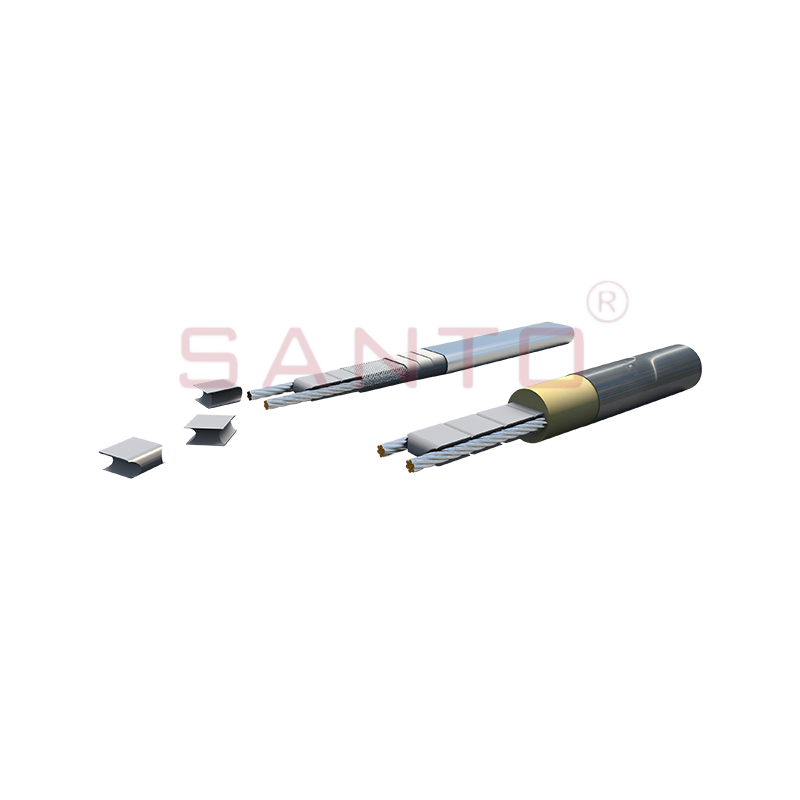
SANTO UFY heating wire is suitable for applications that maintain process temperatures up to 260 ℃ and can be steam blown; The self-regulating and parallel circuit heating wires of the UFY series are ...
See Details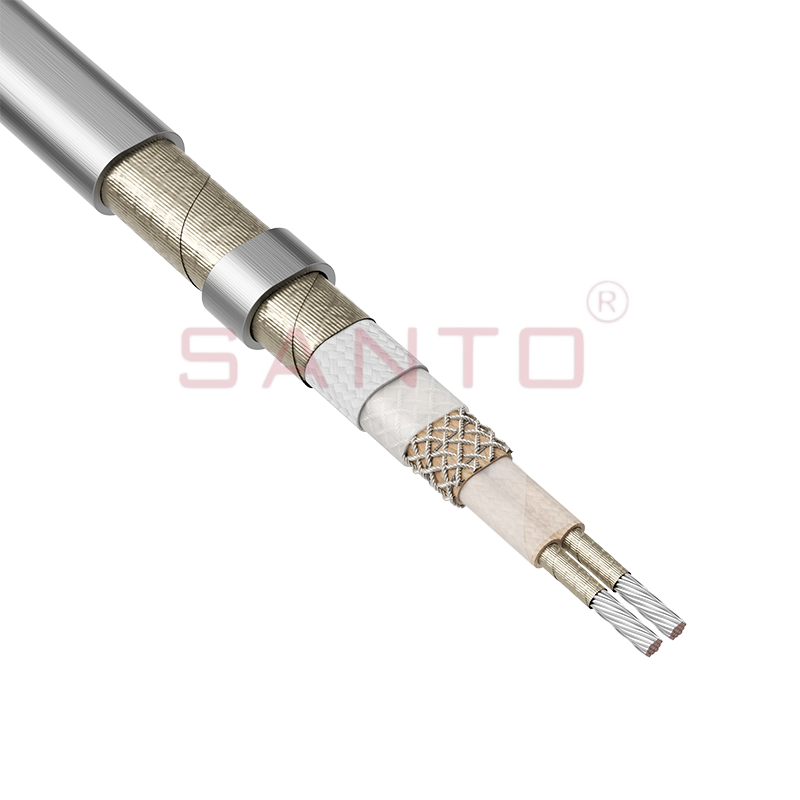
The SANTO UFM series self-regulating heating cables are mainly used for freeze protection of pipes and vessels, but can also be used to maintain processes up to 400°C. These heating cables are availab...
See Details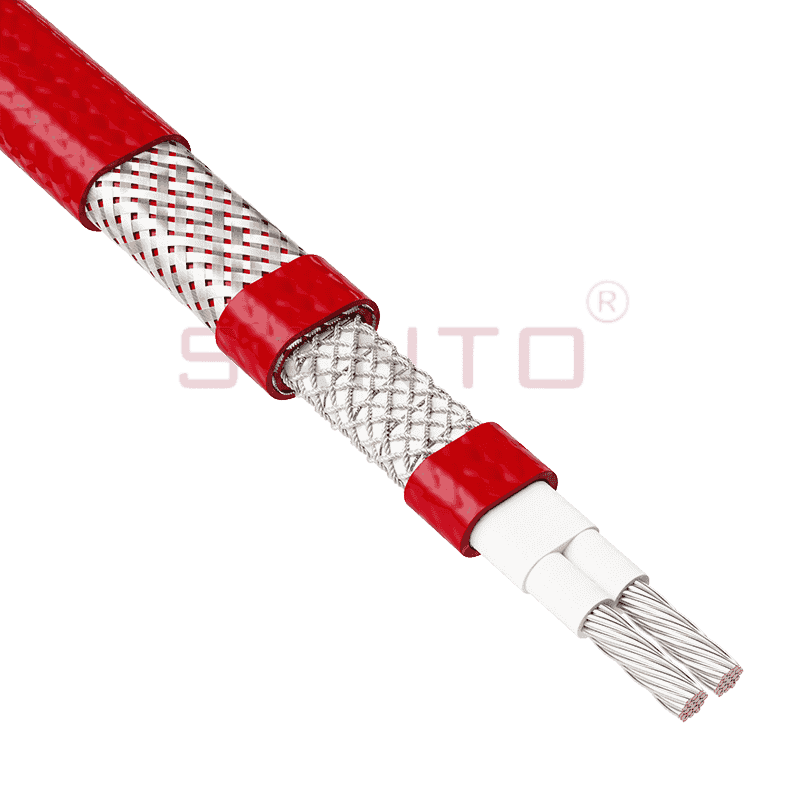
The SANTO ACC range of power-limiting heating cables is mainly used for temperature maintenance of processes and offers the advantage of a high power output at high temperatures which can reduce the n...
See Details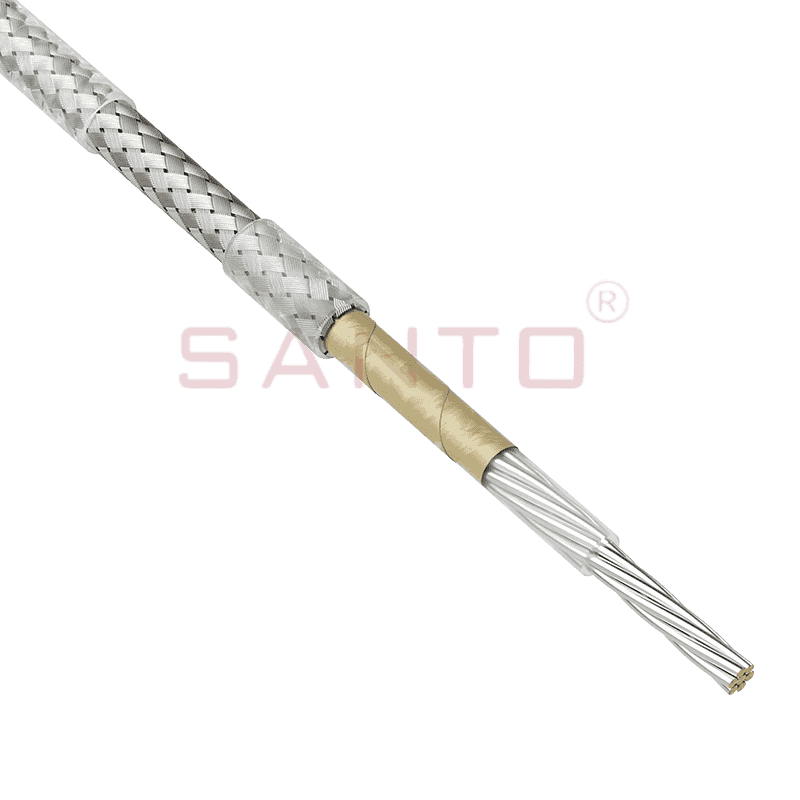
The stranded high temperature conductor is nickel plated to ensure a long life at elevated temperatures in corrosive environments. It is electrically isolated using an innovative sandwich construction...
See Details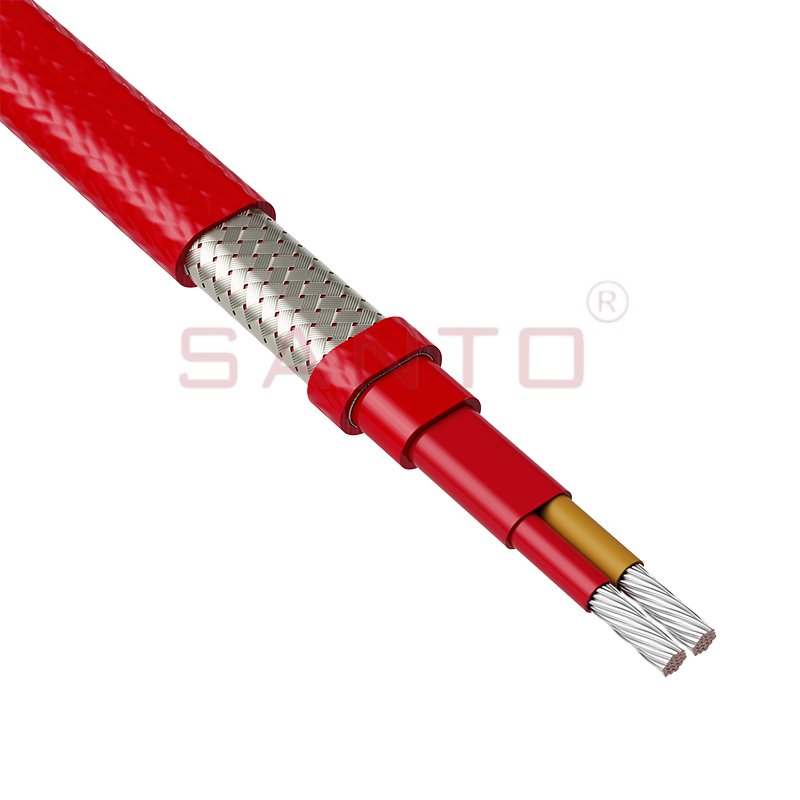
The stranded high temperature conductor is nickel plated to ensure a long life at elevated temperatures in corrosive environments. It is electrically isolated using an innovative sandwich construction...
See Details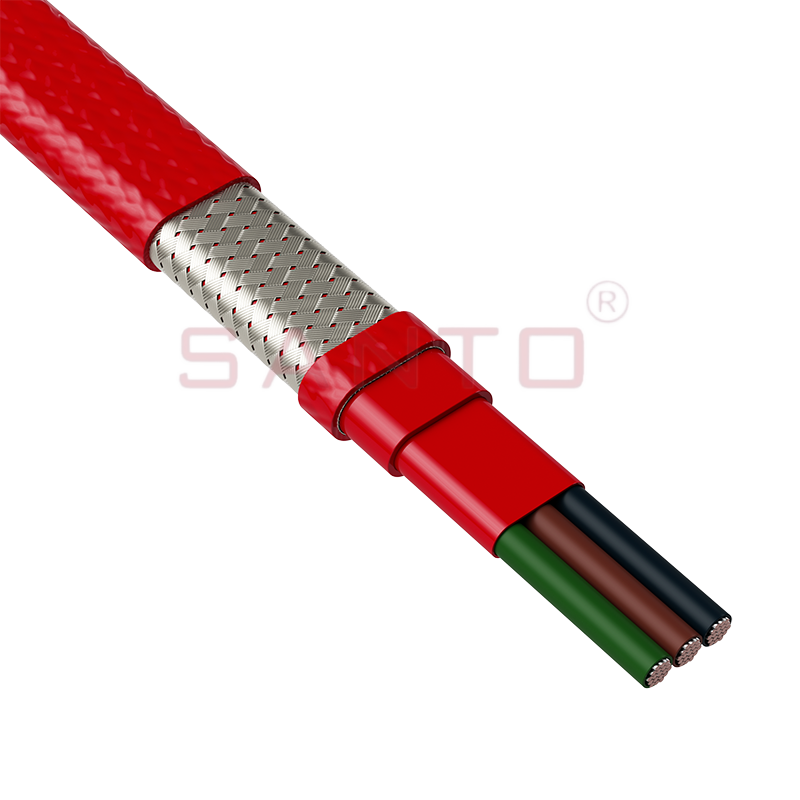
The stranded high temperature conductor is nickel plated to ensure a long life at elevated temperatures in corrosive environments. It is electrically isolated using an innovative sandwich construction...
See Details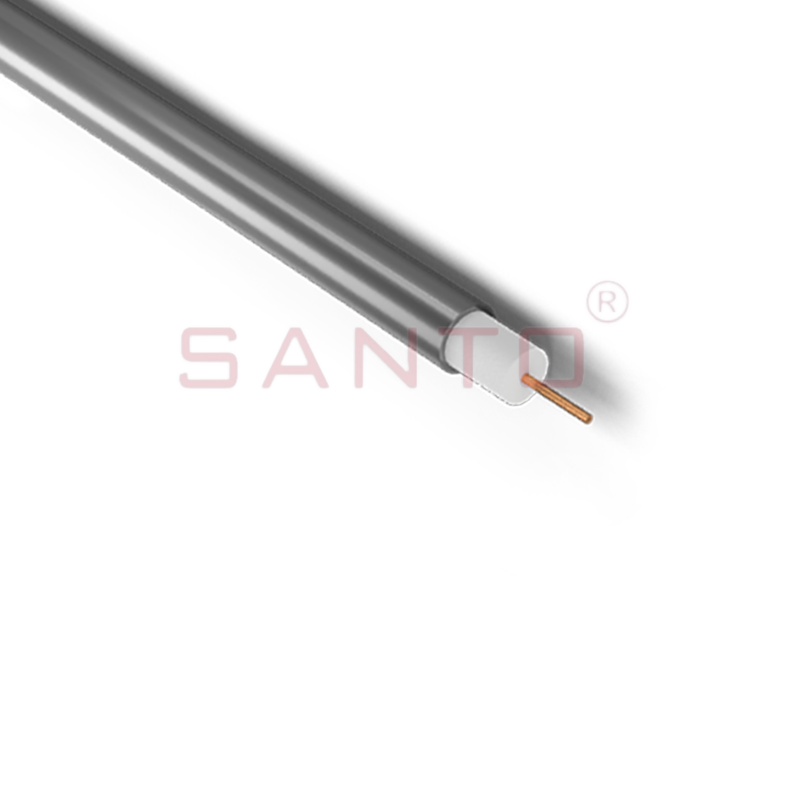
SANTO HAx mineral insulated (MI) Alloy 825 series heating cables are suitable for use in hazardous areas. They have been designed for use in freeze protection and temperature maintenance applications ...
See Details
Santo electric heating strips are widely used in key industries in China.

