 English
 English
 русский
 日本語
 Español
 中文简体

The SANTO UFA range of self-regulating heating cables is mainly used for frost protection of pipes and vessels but can also be used to maintain processes up to 65°C. These heating cables are available...
See Details
Content
Temperature and humidity control is a fundamental requirement in electrical cabinets, semiconductor production areas, automation systems, instrumentation enclosures, and other environments where sensitive equipment must operate under stable conditions. Excessive heat can shorten component life, increase the risk of thermal failure, and affect measurement accuracy. Excessive humidity can lead to condensation, corrosion, insulation deterioration, leakage currents, and unreliable operation. A compact temperature and humidity controller provides a practical way to monitor these conditions and help maintain the environment within a defined operating range.
The temperature and humidity controller described in this article is designed for installation in electrical cabinets and similar controlled environments. It displays the current temperature and humidity and helps stabilize both parameters within the user-defined range. With a compact housing measuring 48 mm in length, 48 mm in width, and 80 mm in height, the device is suitable for applications where cabinet space is limited but environmental monitoring remains essential.
Its working voltage is 100–250 V AC, allowing it to support a broad range of common industrial and commercial power systems. The specified installation temperature is 0–60 °C. These characteristics make the controller suitable for cabinet climate management, semiconductor-related equipment, control panels, industrial automation systems, and electrical installations that require continuous environmental supervision.
Beyond the basic function of showing temperature and humidity, the controller supports a more complete environmental management strategy. When properly connected to compatible heating, ventilation, dehumidification, or other cabinet climate-control equipment, it can help maintain the internal environment in a more stable state. This reduces the need for constant manual inspection and provides operators with a clearer view of changing cabinet conditions.
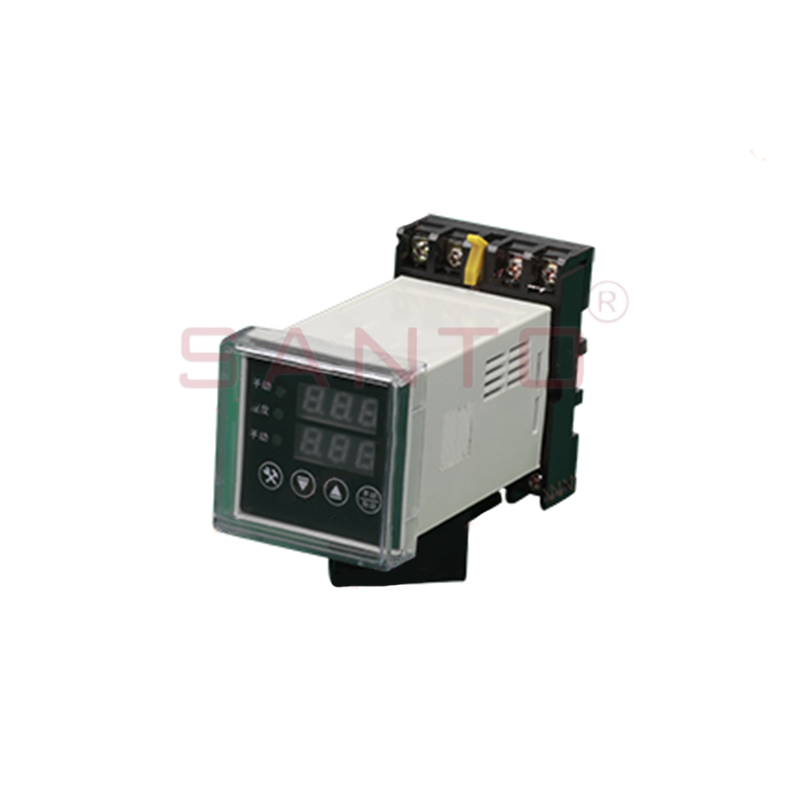
Temperature and humidity controller
Electrical cabinets are often installed in locations with changing ambient conditions. These locations may include factories, outdoor control stations, utility rooms, process plants, semiconductor facilities, warehouses, and mechanical equipment rooms. Even when the surrounding air appears acceptable, the temperature and humidity inside a closed cabinet may vary significantly because of heat generated by electrical components, limited ventilation, daily temperature changes, or sudden changes in the surrounding environment.
Heat-producing components such as power supplies, relays, inverters, contactors, transformers, drives, and communication devices can raise the internal cabinet temperature. If this heat is not managed, sensitive components may operate outside their recommended range. Repeated overheating can contribute to premature aging, unstable signals, nuisance alarms, unexpected shutdowns, and maintenance costs.
Humidity presents a different but equally important challenge. When warm, humid air enters a cabinet and later cools, condensation may form on metal surfaces and electronic components. Water droplets can create short circuits, accelerate corrosion, and reduce insulation resistance. In semiconductor-related environments, even small changes in moisture conditions may affect process stability, equipment reliability, or the performance of sensitive electronic assemblies.
A temperature and humidity controller helps operators respond to these risks through continuous observation and automatic control. Instead of depending entirely on occasional manual checks, users can view current environmental conditions and define an acceptable range. If the controller is integrated with suitable cabinet heaters, fans, dehumidifiers, or related equipment, the connected devices can be activated as required to support the desired environment.
This approach is especially valuable where the cabinet must remain operational for extended periods. Continuous monitoring helps identify abnormal conditions earlier, while automatic regulation reduces the possibility that a gradual environmental change will go unnoticed.
The controller is intended to display the current temperature and humidity of the surrounding environment and help stabilize these values within a preset range. Its principal application is electrical cabinet climate management, although the same operating concept can be applied to other enclosed technical spaces.
The unit combines measurement, display, and control functions in one compact product. This reduces the need to install separate monitoring instruments and control devices for basic temperature and humidity management. A combined design can also simplify panel layout, improve visibility for operators, and reduce the number of components required in a control cabinet.
The product is suitable for users who need a straightforward environmental controller rather than a complex supervisory system. It can serve as a local control point for an individual cabinet or as part of a larger environmental protection arrangement. Its usefulness depends on correct installation, suitable external equipment, appropriate sensor positioning, and correctly configured set values.
| Specification | Provided Information |
|---|---|
| Product type | Temperature and humidity controller |
| Primary application | Electrical cabinets and controlled technical environments |
| Main functions | Current temperature display, current humidity display, and environmental stabilization control |
| Dimensions | 48 mm L × 48 mm W × 80 mm H |
| Working voltage | 100–250 V AC |
| Installation temperature | 0–60 °C |
| Industry focus | Semiconductor industry and industrial electrical equipment |
The compact dimensions are particularly important in modern control equipment. Electrical cabinets frequently contain terminal blocks, circuit protection devices, communication modules, power conversion equipment, relays, and cable management systems. A large environmental controller could consume valuable panel space or require a separate enclosure. The compact form of this product allows designers to reserve more space for essential electrical and process-control equipment.
The controller displays the current temperature of the monitored environment. This gives operators immediate visibility into the condition inside an electrical cabinet or other enclosure. A visible temperature reading helps maintenance personnel identify abnormal heat accumulation, evaluate the effect of cabinet loads, and confirm whether connected heating or ventilation equipment is working as intended.
Temperature information is also useful during commissioning. After installation, engineers can observe how quickly the cabinet temperature changes when equipment is energized, when doors are opened, or when the surrounding temperature changes. These observations can help determine whether the selected heating, ventilation, or cooling arrangement is adequate.
The humidity display provides information about the moisture condition of the monitored environment. This is important because humidity may increase even when the temperature remains within an apparently safe range. By displaying both parameters, the controller gives users a more complete picture than a temperature-only thermostat.
Monitoring humidity is especially valuable in environments exposed to outdoor air, process moisture, cleaning operations, temperature cycling, or seasonal changes. It can also help users identify conditions that may lead to condensation. When temperature and humidity are considered together, maintenance personnel can make better decisions about cabinet sealing, heating, ventilation, and dehumidification.
The controller is designed to stabilize temperature and humidity within a set range. This means it is not limited to passive measurement. When connected to appropriate external equipment, it can support active environmental regulation. For example, a cabinet heater may be used to prevent the internal temperature from falling too low, while a suitable dehumidification or ventilation device may help reduce moisture accumulation.
The exact control arrangement should be selected according to the application. A cabinet exposed to cold and damp conditions may require an anti-condensation heater. A cabinet installed in a warm, humid area may need ventilation, a dehumidifier, or another compatible climate-control device. The controller can serve as the monitoring and switching element within that arrangement, provided that the connected loads and electrical interfaces are suitable.
Local display is valuable in industrial environments because it allows technicians to check cabinet conditions without connecting a computer or accessing a remote software platform. During inspection, the technician can read the current temperature and humidity directly from the front of the controller.
This reduces the time required for routine checks and can make troubleshooting more efficient. If an alarm, process interruption, or equipment malfunction occurs, environmental readings can help determine whether temperature or humidity contributed to the event.
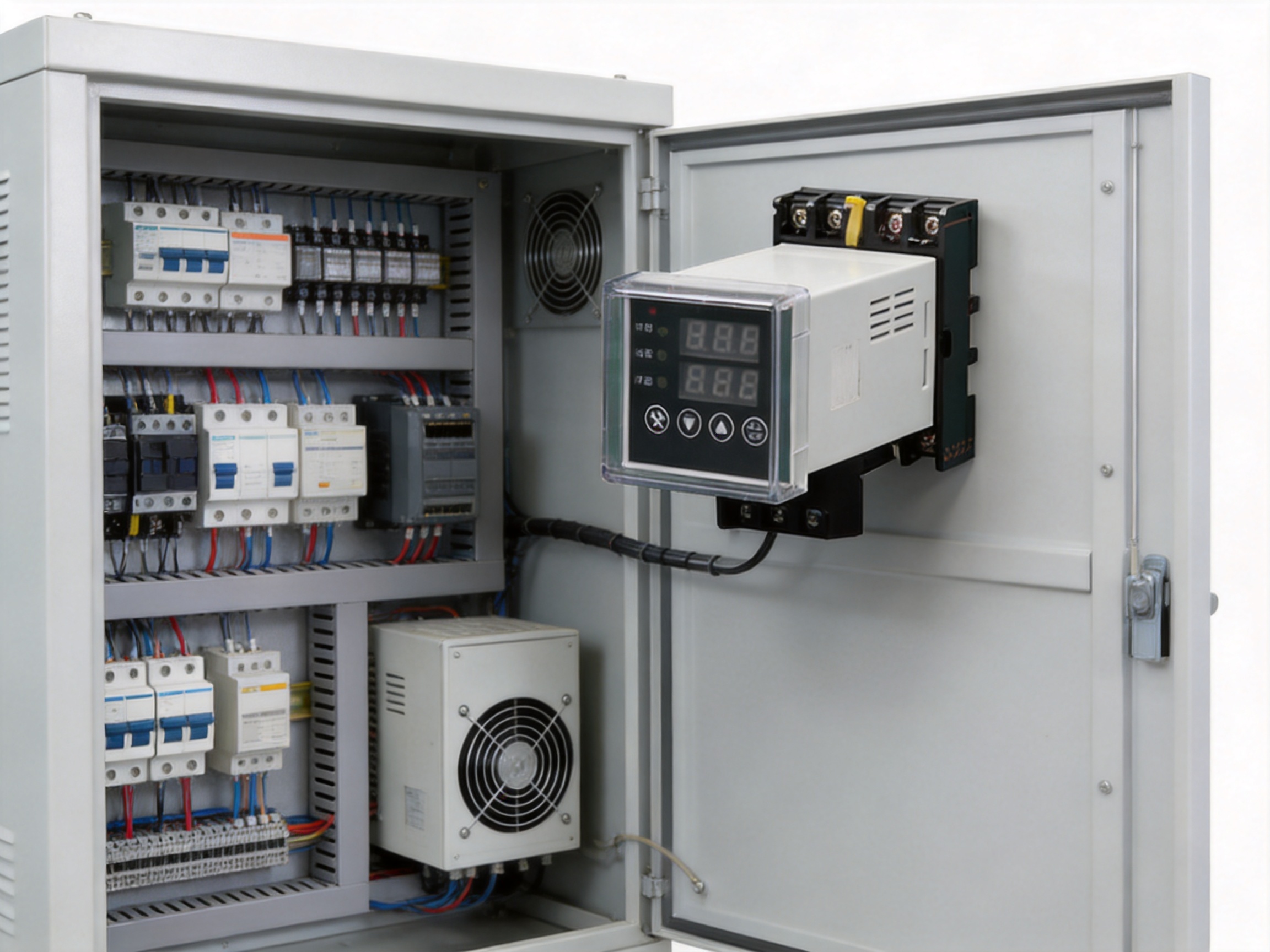
Many conventional cabinet thermostats monitor temperature only. While temperature control is important, it does not provide information about moisture conditions. A temperature-only device may indicate that the cabinet is cool enough while failing to reveal a humidity problem that could cause condensation or corrosion.
The main advantage of a combined temperature and humidity controller is broader environmental awareness. It allows users to observe two related variables through one compact device. This is particularly useful in installations where temperature and moisture interact, such as outdoor cabinets, semiconductor equipment, process-control enclosures, and electrical panels installed in areas with significant seasonal variation.
Monitoring temperature and humidity together provides more useful information than monitoring either variable independently. A rise in humidity may be harmless at one temperature but create a condensation risk when the cabinet surface temperature falls. Likewise, a rise in temperature may reduce relative humidity while increasing thermal stress on electrical components. A combined controller helps users evaluate these conditions as part of one environmental picture.
The 48 mm by 48 mm footprint is suited to compact panel layouts. Compared with installing separate temperature and humidity instruments, a combined controller may reduce the space required for displays and simplify the front-panel design. This can be an important advantage in semiconductor equipment and automation cabinets, where every panel opening and mounting position must be planned carefully.
The specified 100–250 V AC working voltage range provides flexibility for different electrical installations. This broad range can simplify product selection for projects operating under different supply conditions. It is still essential for installers to verify the actual supply voltage, wiring method, protection requirements, and applicable electrical standards before commissioning the device.
The product focuses on the functions most commonly required for cabinet environmental management: measurement, display, and stabilization support. It does not require users to deploy a large control system for a relatively simple application. This practical configuration can be advantageous for individual electrical cabinets, small equipment groups, and installations where local control is preferred.
Environmental information can help maintenance teams identify developing problems before they become equipment failures. Gradual temperature increases may indicate blocked ventilation, increased electrical loading, a failing fan, or a deteriorating component. Increasing humidity may indicate a damaged cabinet seal, a change in the surrounding environment, or inadequate anti-condensation protection.
By making these changes visible, the controller supports a preventive maintenance approach. Technicians can inspect the cabinet, verify connected equipment, and correct the cause before a more serious incident occurs.
The semiconductor industry places demanding requirements on process equipment, automation systems, cleanroom support systems, test equipment, material-handling systems, and control cabinets. Although a cabinet temperature and humidity controller is not a replacement for a complete facility environmental-control system, it can provide localized monitoring and regulation for individual equipment enclosures.
Semiconductor manufacturing and testing equipment often includes sensitive control boards, power electronics, sensors, communication devices, and precision instrumentation. These components may be affected by unstable temperature or moisture. A local controller can help maintain a more consistent internal cabinet environment, especially where the cabinet is exposed to changing conditions outside the controlled production area.
Potential applications include equipment-control cabinets, auxiliary electrical enclosures, process-support equipment, test stations, automation panels, utility-control panels, and cabinets containing semiconductor handling or inspection systems. The suitability of the controller should always be assessed according to the specific process requirements and the environmental limits of the installed components.
In a semiconductor facility, stable environmental conditions can also contribute to more predictable equipment behavior. Reduced temperature variation may support consistent operation of electronic control systems, while humidity supervision can help limit the risk of condensation during equipment shutdown, startup, or seasonal changes.
Industrial control panels frequently contain programmable controllers, relays, motor drives, power supplies, and communication equipment. The heat generated by these devices may create a higher temperature inside the enclosure than outside. A temperature and humidity controller can provide local information and support the operation of compatible cabinet climate equipment.
Outdoor cabinets are exposed to rain, solar heating, cold nights, daily temperature cycles, and changing humidity. Even sealed enclosures can experience internal condensation as air temperature changes. A controller can help monitor these conditions and support the operation of anti-condensation heating or other protective equipment.
Power distribution equipment, renewable-energy systems, battery-control units, and utility automation cabinets may be installed in locations where maintenance access is limited. Local environmental monitoring can help operators verify that the cabinet remains within the intended condition between scheduled inspections.
Communication cabinets and data-related equipment depend on reliable power and stable electronics. Temperature and humidity monitoring can support the protection of network components, power converters, signal equipment, and control modules installed in enclosed spaces.
Process facilities often have areas with temperature fluctuations, vapors, moisture, or dust. The controller can be considered for suitable cabinet applications where the electrical design, enclosure rating, and connected equipment are appropriate. Any hazardous-area installation must be evaluated separately, and the controller should not be used in an explosive atmosphere unless the complete product and installation have the required approvals.
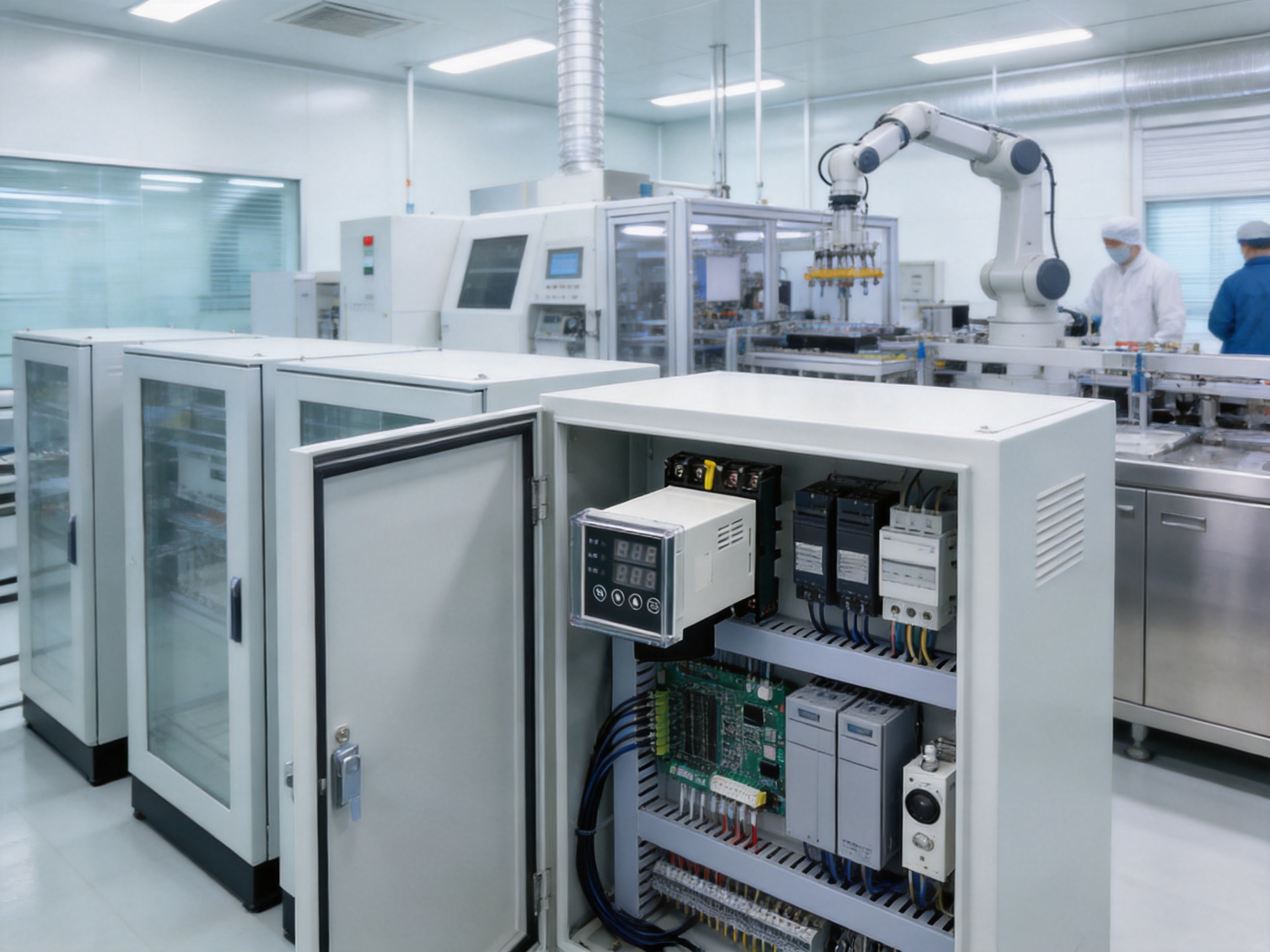
The performance of an environmental controller depends not only on its stated specifications but also on the consistency of its design, assembly, testing, and quality management. The manufacturer behind this product has a long history in electric heating and thermal-control technology. Its experience includes research, design, production, and manufacturing of automatic temperature-control heating belts, self-limiting heating belts, heat-tracing products, constant-power heating products, silicone rubber heating products, glass-fiber heating products, MI cables, snow-melting cables, and related accessories.
This product background is relevant because temperature and humidity control is closely connected with thermal management. A company that develops heating and heat-tracing systems understands the practical requirements of temperature regulation, electrical safety, material selection, insulation, connection methods, and application engineering. Such experience can support the development of complementary control products used in electrical cabinets and industrial environments.
The company identifies product research and technical development as important parts of its business. It cooperates in product research with Harvard University in the United States and has developed products covering self-limiting heating, high-temperature pipeline tracing, carbon-fiber parallel heating cables, and other thermal-control technologies.
Although the controller is a distinct product from a heating cable, this broader research background provides an engineering foundation for applications where sensing, control, and thermal equipment must work together. Understanding how a heating device behaves under different ambient conditions is valuable when designing a controller intended to regulate an enclosed environment.
The manufacturer has more than 35 years of industry experience according to the provided company information. Its product range covers multiple heating technologies and application fields, including petroleum, chemical processing, gas, construction, solar energy, geothermal cultivation, and industrial electric heating.
This experience supports a practical understanding of field conditions. Thermal-control products may be installed in clean industrial environments, outdoor locations, process facilities, or areas exposed to vibration and changing temperatures. Product development informed by these applications can help improve usability, reliability, and compatibility with real-world installation requirements.
The company integrates scientific research, product development, manufacturing, and sales. This structure can provide advantages in product improvement because feedback from customers and application engineers can be communicated to design and production teams. It can also support customized technical discussions for users with special cabinet dimensions, voltage requirements, operating environments, or control arrangements.
For industrial customers, a supplier that combines manufacturing and technical support may be more responsive than a supplier that only distributes standard products. This is particularly important when a controller must be integrated with heating cables, cabinet heaters, sensors, or other thermal-control components.
The company has passed ISO9001 quality system certification, according to the supplied information. A quality management system establishes documented procedures for design, purchasing, production, inspection, corrective action, and continual improvement. Certification alone does not guarantee that every application will be successful, but it indicates that the organization has implemented a formal framework for managing product quality.
The company also states that its products have obtained national CCC certification. Certification requirements apply according to product type and scope, so customers should request the relevant certificate and verify that it covers the specific controller model and intended application. Proper documentation is especially important for industrial projects with formal procurement and compliance requirements.
The company purchased additional land in 2022 to build a new factory and product simulation testing laboratory. A simulation and testing facility can support evaluation under controlled conditions before products are released for field use. Testing may include functional checks, electrical verification, temperature-related evaluation, material assessment, and application simulation, depending on the product and the applicable standards.
For a temperature and humidity controller, controlled testing is important because the device must provide stable readings and reliable control behavior over its specified installation range. Production testing and inspection can also help identify assembly problems, display issues, wiring errors, and other defects before shipment.
A reliable controller requires more than a compact enclosure and a display. Consistent manufacturing involves material control, circuit assembly, component inspection, calibration or verification, functional testing, and final quality inspection. Each stage contributes to the product’s ability to operate in electrical cabinets over time.
Electrical and electronic components should be sourced according to defined specifications. The enclosure material, terminal components, display elements, sensing components, circuit-board materials, and protective parts must be appropriate for the intended voltage, installation temperature, and industrial environment.
Incoming inspection helps ensure that materials conform to purchasing requirements. Consistent component quality reduces variation between production batches and supports more predictable assembly and testing results.
The electronic control board must be assembled with attention to component placement, soldering quality, insulation spacing, and connection reliability. In a device operating from 100–250 V AC, electrical safety is particularly important. The design and assembly process should maintain suitable separation between energized circuits and low-voltage or sensing circuits.
Automated or controlled assembly methods may improve repeatability, while visual inspection and electrical testing help detect assembly defects. The exact production method depends on the internal design, production volume, and applicable quality requirements.
Because the product is intended to display temperature and humidity, measurement verification is a central part of quality control. Sensors and measurement circuits should be checked against reference conditions or approved testing procedures. Verification helps confirm that readings are consistent and that the display responds correctly to changes in the monitored environment.
Customers requiring calibrated measurement should clarify the available calibration documentation, accuracy requirements, sensor configuration, and test conditions before placing an order. The provided product information confirms the display and control functions but does not specify measurement accuracy, sensing range, or calibration tolerance.
Functional testing can confirm that the controller powers on correctly, displays environmental readings, responds to set values, and operates its control outputs as designed. Testing may also verify behavior during changes in temperature or humidity, provided that suitable test equipment is available.
Electrical safety testing may include checks related to insulation, dielectric strength, grounding, leakage, and correct terminal operation, according to the applicable product standards and design requirements. These tests are important for devices installed directly in electrical cabinets.
Final inspection should confirm the product model, dimensions, visible condition, terminals, markings, accessories, and documentation. Proper packaging protects the controller from impact, dust, moisture, and electrostatic or mechanical damage during storage and transport.
Industrial customers should receive sufficient installation and operating information. Documentation should explain electrical connections, mounting requirements, set-point adjustment, environmental limits, recommended external equipment, and precautions related to energized circuits.
The controller should be installed by qualified personnel who understand electrical cabinet design and applicable safety requirements. Before installation, verify the working voltage, cabinet layout, mounting opening, wiring arrangement, and compatibility of all connected devices.
The controller should be positioned where its sensor can represent the cabinet environment accurately. It should not be placed directly beside a high-heat component, a heater outlet, a cooling air discharge, or a location exposed to water droplets. If the sensor is influenced by a localized heat source, the displayed value may not represent the average cabinet condition.
The display should remain visible to maintenance personnel. Adequate clearance should be provided for wiring, inspection, and future replacement. The specified installation temperature range is 0–60 °C, so the actual mounting location should remain within this range during normal operation.
The 100–250 V AC working voltage range should be verified against the available supply before wiring. Appropriate circuit protection, isolation, grounding, conductor sizing, and terminal tightening should be provided according to local regulations and the cabinet design.
External heaters, fans, dehumidifiers, or other loads should be checked for voltage, current, switching characteristics, and compatibility with the controller’s output arrangement. If a connected load exceeds the controller’s permissible switching capacity, an appropriate relay, contactor, or interface device should be used. The controller should never be connected to an incompatible load simply because the voltage appears suitable.
The controller should be installed in an enclosure that protects it from direct water, excessive dust, corrosive gases, and mechanical damage. The cabinet’s overall ingress protection should match the site conditions. If the installation is exposed to vibration, chemical vapors, or electromagnetic interference, the complete system should be evaluated accordingly.
Set points should be selected according to the requirements of the cabinet components and the operating environment. Excessively narrow control ranges may cause frequent switching, while excessively broad ranges may fail to provide sufficient protection. The selected range should balance equipment needs, energy use, switching frequency, and stability.
After configuration, the installer should observe the system through a complete operating cycle. This confirms that the controller responds correctly and that the connected heating, ventilation, or dehumidification equipment operates in the intended direction.
The controller can be especially useful when integrated with electric heating equipment. In cold or humid conditions, a cabinet heater or heating cable may be used to keep internal surfaces above the condensation point. The controller can monitor the environment and support activation of the heating equipment when conditions approach the configured lower limit.
The manufacturer’s broader product range includes self-limiting heating belts, constant-power heating belts, silicone rubber heating belts, glass-fiber heating belts, MI cables, snow-melting cables, and other electric heating products. These technologies serve different applications and should not be substituted for one another without engineering review.
A self-limiting heating product can reduce output as its temperature rises, while a constant-power product provides a more consistent output under specified conditions. Silicone rubber and glass-fiber heating products may be selected for different flexibility, temperature, or installation requirements. MI cables are used in demanding industrial applications where mineral insulation and robust construction are required.
When selecting a heating product to operate with the controller, users should consider the cabinet volume, heat loss, ambient temperature, desired internal temperature, insulation, duty cycle, available voltage, and required protection. The controller manages environmental conditions, but the heating element must be correctly sized for the application.
| Approach | Typical Function | Advantages | Limitations |
|---|---|---|---|
| Manual inspection | Periodic visual or handheld measurement | Low initial equipment cost and simple deployment | Does not provide continuous observation or automatic response |
| Temperature-only thermostat | Monitors and controls temperature | Simple and suitable for basic heating applications | Does not show humidity or provide combined environmental awareness |
| Separate temperature and humidity instruments | Independent measurement of each parameter | May offer flexible component selection | Requires more panel space, wiring, and coordination |
| Remote monitoring system | Collects data through a network or supervisory platform | Supports centralized visibility and data recording | May require additional communication hardware, software, and commissioning |
| Combined temperature and humidity controller | Local display and stabilization support for both parameters | Compact, direct, and practical for cabinet-level control | May not replace a full facility monitoring system |
The combined controller is not intended to eliminate every other form of environmental management. Large semiconductor facilities may require centralized building-management systems, data logging, alarms, validated monitoring, or remote access. However, local control remains valuable because a facility-wide system may not detect every condition inside a particular cabinet with sufficient speed or resolution.
For small and medium-sized applications, a local controller can provide a useful balance between functionality and system complexity. It offers more information than a basic thermostat while avoiding the cost and engineering effort of a fully networked monitoring platform.
Routine maintenance helps preserve the value of the controller and the equipment it protects. Maintenance personnel should periodically inspect the display, wiring, terminals, mounting condition, sensor location, and connected heating or dehumidification equipment.
Dust accumulation can affect cabinet ventilation and increase heat retention. Loose terminals can create electrical resistance and localized heating. A damaged door seal can allow moist air to enter. A failed fan or heater can cause the internal environment to drift outside the intended range. The controller may reveal the symptom, but maintenance personnel must still investigate and correct the underlying cause.
Calibration or measurement verification should be performed according to the accuracy requirements of the application. Critical semiconductor equipment may require a documented verification schedule. Users should confirm the recommended procedure with the supplier and maintain records of inspections, adjustments, and replacements.
If the controller is removed for service, the electrical supply must be isolated and verified as de-energized before work begins. Replacement parts should match the original electrical and environmental specifications. After servicing, the system should be functionally tested before being returned to production.
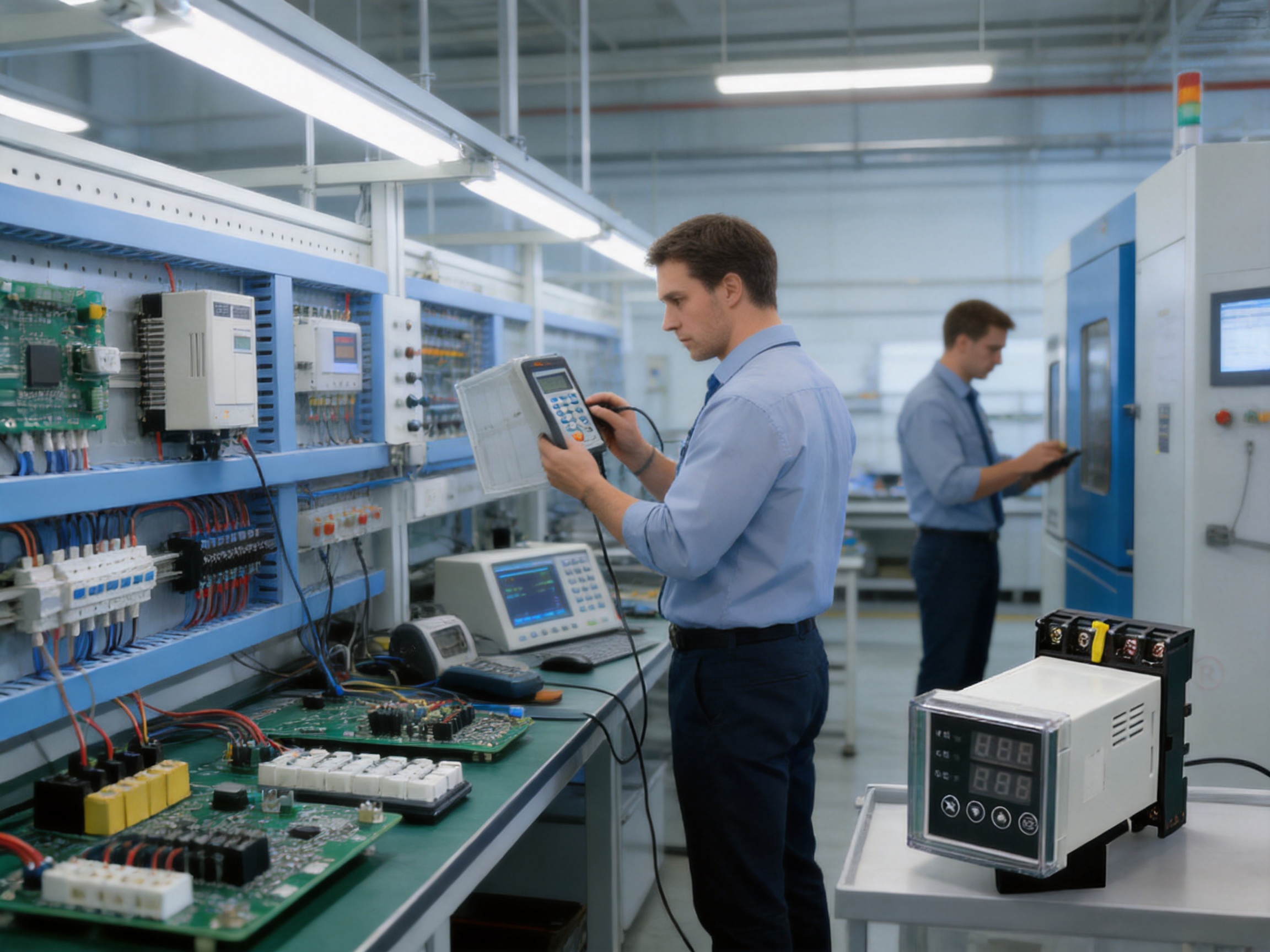
Before purchasing a temperature and humidity controller, buyers should define the application and confirm the technical requirements. The following questions can help create a suitable specification:
What is the available supply voltage, and does it fall within the 100–250 V AC working range?
What are the expected minimum and maximum temperatures at the proposed installation location?
Is the controller intended for a sealed electrical cabinet, a ventilated enclosure, a test station, or another application?
Will the controller operate a cabinet heater, fan, dehumidifier, contactor, relay, or another external device?
What are the voltage, current, and switching characteristics of the connected load?
Is local display sufficient, or are remote communication and data logging also required?
Does the project require calibration documents, inspection records, certification, or special compliance documentation?
Are there hazardous gases, corrosive chemicals, high vibration, dust, or outdoor exposure at the installation site?
Does the cabinet have sufficient space for the 48 mm × 48 mm × 80 mm product dimensions and its wiring?
What temperature and humidity range is appropriate for the installed electrical components?
Answering these questions before ordering can reduce installation delays and prevent incompatibility between the controller and the wider cabinet system.
Choosing a supplier with broad thermal-control experience can provide advantages beyond the purchase of a single controller. A supplier familiar with heating cables, cabinet heaters, heat tracing, and environmental protection can help customers consider the controller as part of a complete solution.
The manufacturer described in the supplied information has more than 35 years of industry experience, more than 10,000 units of annual output, more than 2,000 distributors, and business covering more than 85 areas. These figures indicate an established production and sales structure. They also suggest experience serving different industries and adapting products to varied application environments.
The company’s product development history includes the establishment of an irradiation center, the development of high-temperature self-limiting heating technology, invention of a carbon-fiber parallel heating cable, expansion into explosion-proof and EAC-certified product fields, and the construction of a product simulation testing laboratory.
Its history also includes the establishment of the SANTO brand and the development of a Russia factory to expand international business. For export customers, production capacity, technical communication, documentation, and after-sales support are important factors when selecting a long-term supplier.
A manufacturer with its own research, production, and application experience may be better positioned to provide related products, including heating cables, heating belts, sensors, control accessories, and cabinet climate solutions. This can simplify sourcing and help maintain compatibility across a complete installation.
Its main purpose is to display the current temperature and humidity of an electrical cabinet or similar environment and help stabilize those conditions within a set range when connected to compatible external equipment.
It is primarily intended for electrical cabinets. It may also be considered for semiconductor equipment, industrial automation panels, test equipment, utility enclosures, communication cabinets, and other enclosed technical environments where temperature and humidity monitoring are required.
The stated working voltage is 100–250 V AC. The actual supply must be verified before installation, and the wiring must comply with applicable electrical regulations and project requirements.
The stated dimensions are 48 mm in length, 48 mm in width, and 80 mm in height. Buyers should confirm the mounting arrangement and required panel opening with the supplier before finalizing the cabinet design.
The specified installation temperature is 0–60 °C. The actual installation location should remain within this range during normal operation.
The controller provides measurement, display, and control support. Heating, ventilation, or dehumidification normally requires compatible external equipment. The complete system should be designed so that the controller and connected devices are electrically and functionally compatible.
It may be used as part of a cabinet heating arrangement when the heating cable or heater, switching device, voltage, current, and control method are suitable. The heating element must be correctly selected and installed for the cabinet and operating environment.
It is categorized for the semiconductor industry and may be suitable for local environmental management in semiconductor-related electrical cabinets and equipment. The user must confirm that the controller’s measurement capability, installation temperature range, control function, and documentation meet the specific process requirements.
The provided information describes local temperature and humidity display and stabilization control. It does not specify communication interfaces, remote data logging, or network connectivity. These functions should be confirmed with the supplier if required.
Customers should request the complete datasheet, wiring diagram, mounting instructions, control output details, measurement accuracy, sensing range, applicable certificates, calibration information, and recommended connected equipment. These details are important for engineering approval and safe installation.
Temperature control alone cannot reveal moisture conditions. A cabinet may remain within its temperature range while humidity rises enough to cause condensation or corrosion. Combined monitoring provides a more complete view of the cabinet environment.
It is generally intended for local cabinet-level monitoring and control. It may complement a larger building-management or facility-monitoring system, but it should not automatically be considered a replacement for centralized monitoring, data logging, alarms, or validated environmental-control systems.
Qualified electrical or control-system personnel should install the controller. They should verify isolation, supply voltage, protective devices, terminal connections, external loads, sensor placement, and final operation before commissioning.
A temperature and humidity controller provides a practical method for improving environmental awareness and stability inside electrical cabinets. By displaying both temperature and humidity, it offers a broader view than a conventional temperature-only thermostat. Its compact 48 mm × 48 mm × 80 mm design supports space-conscious cabinet layouts, while the 100–250 V AC working voltage provides flexibility for many common installations.
The product is particularly relevant to semiconductor equipment, industrial automation, electrical control panels, outdoor enclosures, utility systems, and other applications where heat and moisture may affect reliability. When connected to compatible heating, ventilation, or dehumidification equipment, it can support automatic stabilization and reduce dependence on manual inspection.
Its value is strengthened by the manufacturer’s broader experience in thermal-control products, heating cables, heat tracing, electric heating systems, research, production, and international sales. The company’s stated ISO9001 quality certification, CCC-related product credentials, testing-laboratory development, and long-term industry presence provide a foundation for industrial supply and technical cooperation.
Successful use still depends on correct application engineering. Buyers should confirm measurement specifications, output compatibility, installation conditions, certification requirements, and the characteristics of all connected devices. When correctly selected and installed, the controller can become an effective part of a cabinet protection strategy, helping maintain a more stable environment and supporting the dependable operation of sensitive electrical and semiconductor equipment.
1. Product information supplied for the temperature and humidity controller, including dimensions, working voltage, installation temperature, application, and operating functions.
2. Company information supplied for Santo Thermal Control Technology Co., Ltd., including manufacturing capabilities, product categories, development history, certifications, and company scale.
3. ISO 9001, Quality Management Systems: Requirements.
4. General principles of electrical cabinet thermal management, condensation prevention, and industrial equipment maintenance.
5. General engineering practices for temperature and humidity monitoring in semiconductor equipment and industrial control enclosures.
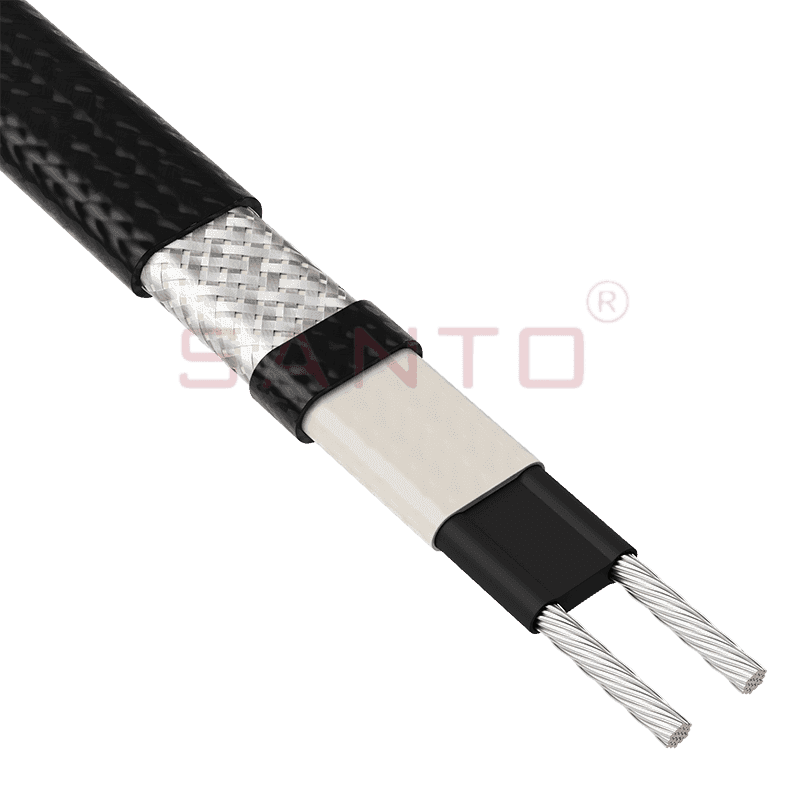
The SANTO UFA range of self-regulating heating cables is mainly used for frost protection of pipes and vessels but can also be used to maintain processes up to 65°C. These heating cables are available...
See Details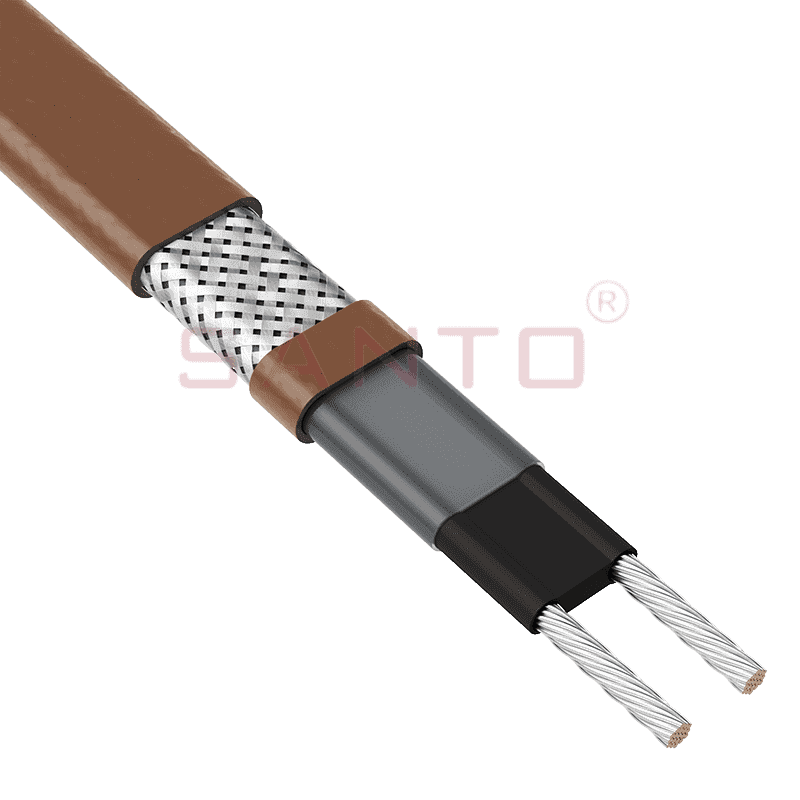
The SANTO UFB range of self-regulating heating cables is mainly used for frost protection of pipes and vessels requiring a higher power output than the UFA heating cables can supply. They can also be ...
See Details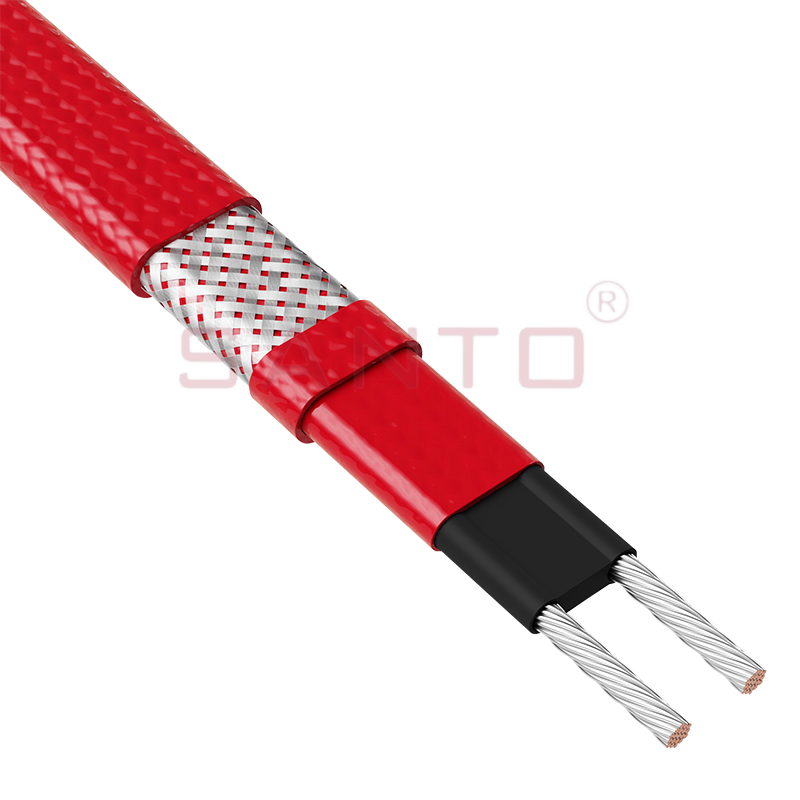
The SANTO UFC range of self-regulating heating cables is used for frost protection of pipes and vessels that require steam cleaning. They can also be used to maintain processes up to 121°C. These heat...
See Details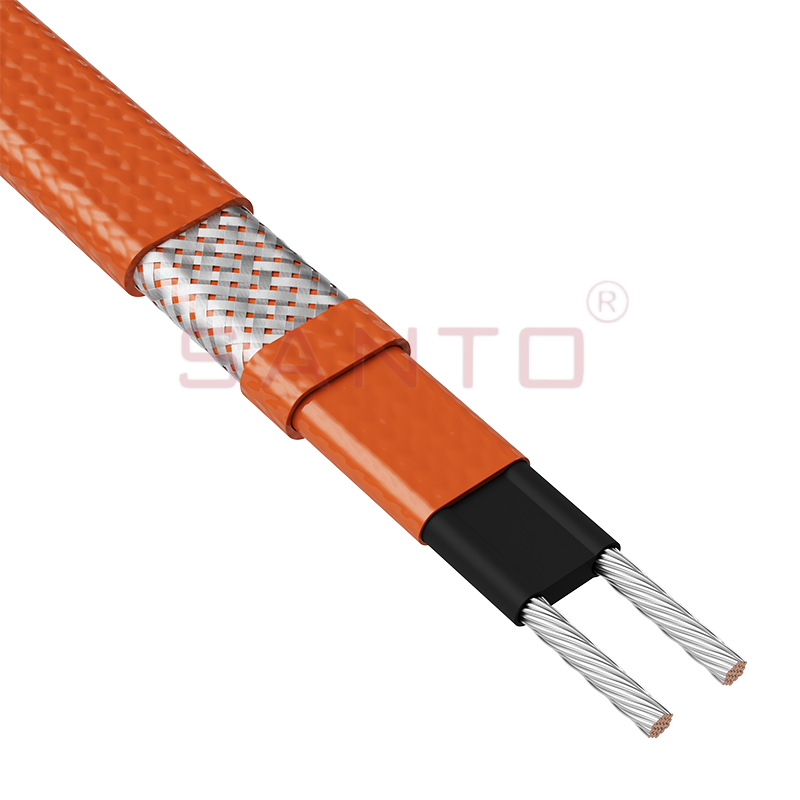
The SANTO UFO range of self-regulating heating cables is mainly used for frost protection of pipes and vessels that require steam cleaning . They can also be used to maintain processes up to 150°C. Th...
See Details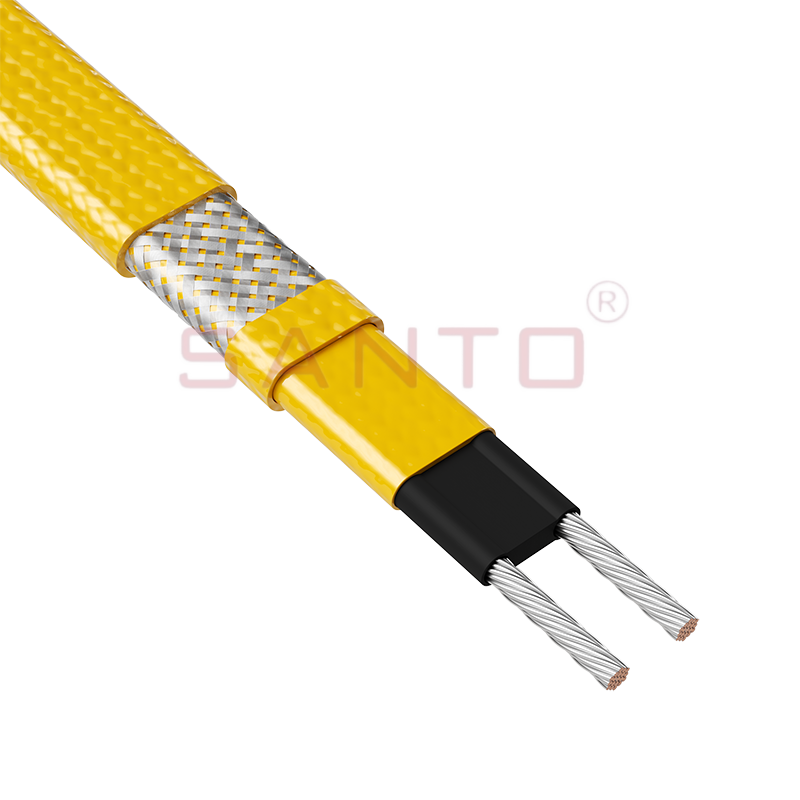
The SANTO UFD series of self-regulating heating cables are mainly used for freeze protection of pipes and vessels, but can also be used to maintain processes up to 200°C. These heating cables are avai...
See Details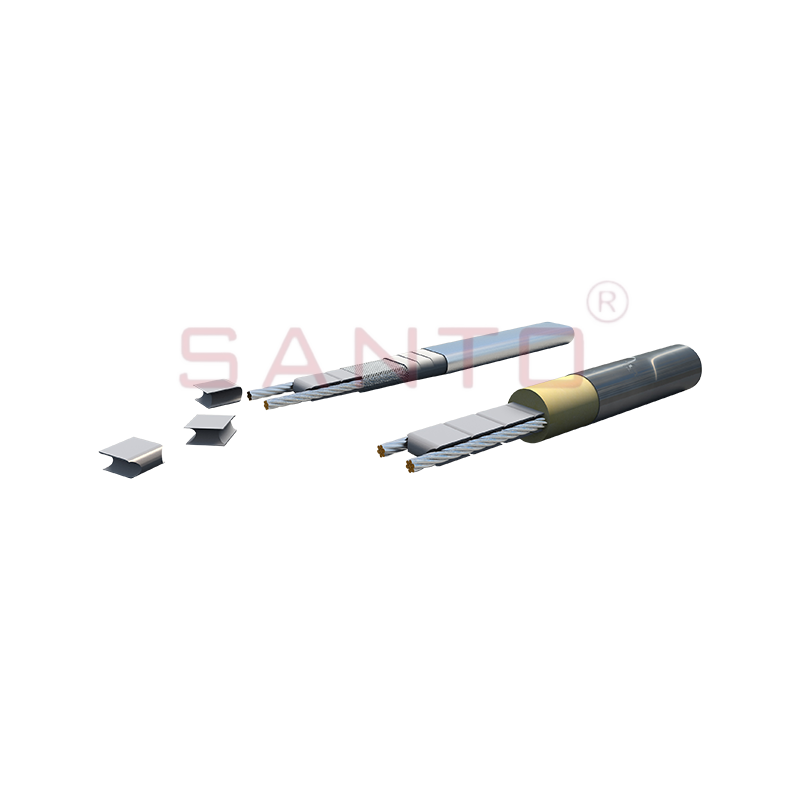
SANTO UFY heating wire is suitable for applications that maintain process temperatures up to 260 ℃ and can be steam blown; The self-regulating and parallel circuit heating wires of the UFY series are ...
See Details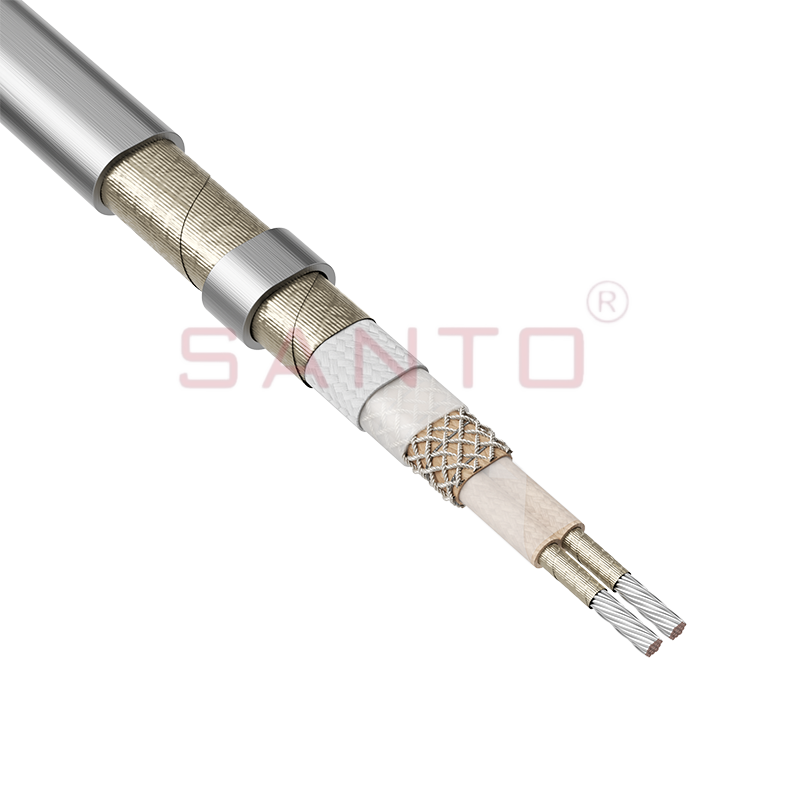
The SANTO UFM series self-regulating heating cables are mainly used for freeze protection of pipes and vessels, but can also be used to maintain processes up to 400°C. These heating cables are availab...
See Details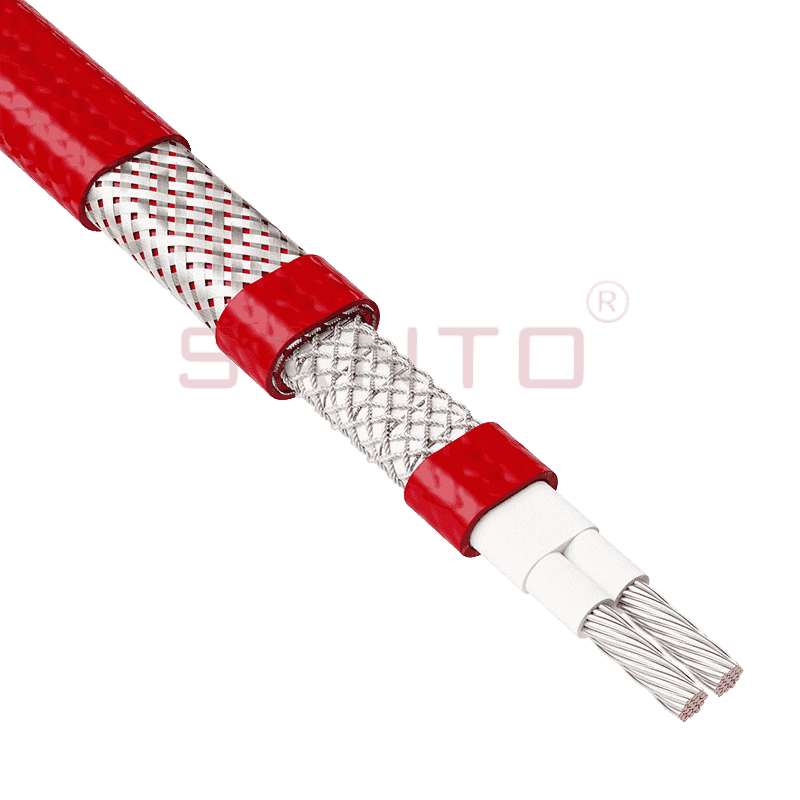
The SANTO ACC range of power-limiting heating cables is mainly used for temperature maintenance of processes and offers the advantage of a high power output at high temperatures which can reduce the n...
See Details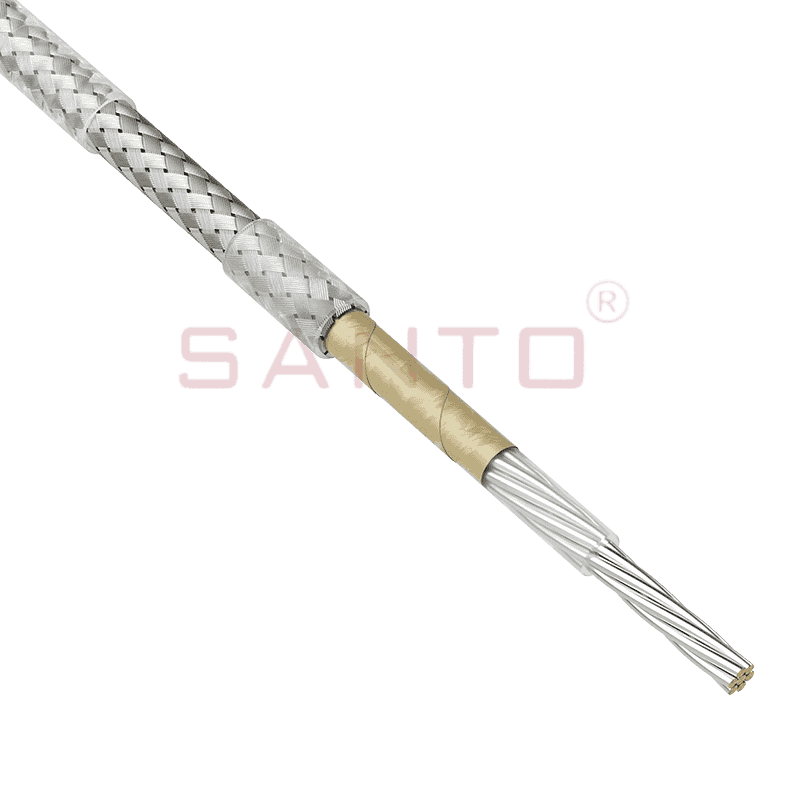
The stranded high temperature conductor is nickel plated to ensure a long life at elevated temperatures in corrosive environments. It is electrically isolated using an innovative sandwich construction...
See Details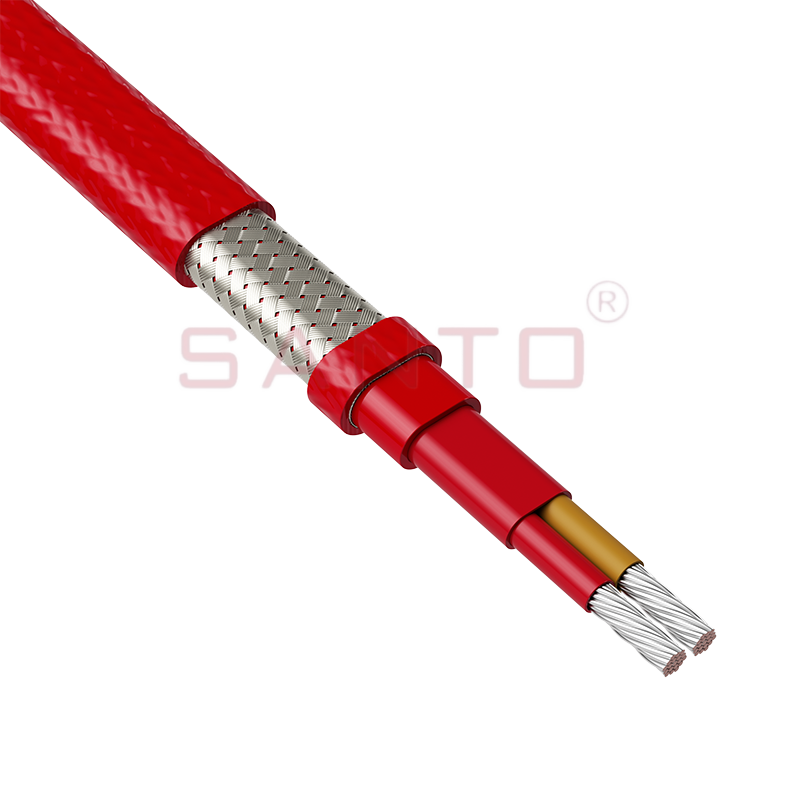
The stranded high temperature conductor is nickel plated to ensure a long life at elevated temperatures in corrosive environments. It is electrically isolated using an innovative sandwich construction...
See Details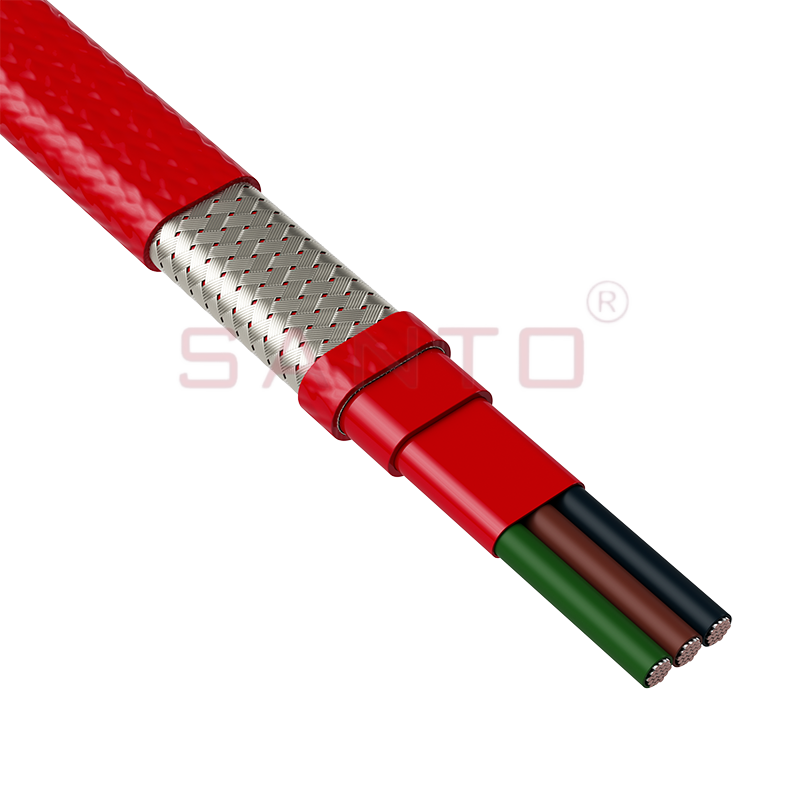
The stranded high temperature conductor is nickel plated to ensure a long life at elevated temperatures in corrosive environments. It is electrically isolated using an innovative sandwich construction...
See Details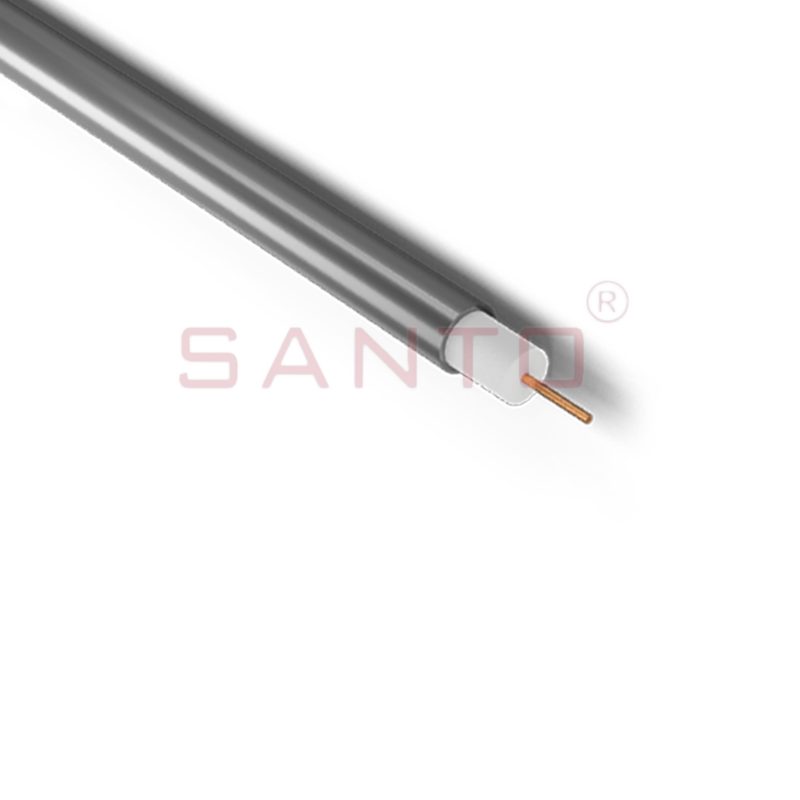
SANTO HAx mineral insulated (MI) Alloy 825 series heating cables are suitable for use in hazardous areas. They have been designed for use in freeze protection and temperature maintenance applications ...
See Details
Santo electric heating strips are widely used in key industries in China.

