 English
  English
 русский
 日本語
日本語 Español
 中文简体
中文简体
The SANTO UFA range of self-regulating heating cables is mainly used for frost protection of pipes and vessels but can also be used to maintain processes up to 65°C. These heating cables are available...
See Details
Nuclear magnetic resonance equipment depends on exceptional stability. In clinical imaging, laboratory spectroscopy, pharmaceutical research, and materials analysis, small variations in temperature can affect performance, uptime, measurement repeatability, operator confidence, and maintenance cost. A nuclear magnetic resonance instrument heater is therefore not a simple warming accessory; it is a precision thermal component designed to support stable operating conditions around sensitive equipment assemblies.
The nuclear magnetic resonance instrument heater described here is engineered for medical and analytical equipment that requires efficient, reliable, and customizable heating. With a thin structure, high thermal efficiency, dependable insulation performance, and optional integration with wiring, adhesive layers, aluminum plates, thermal conductive materials, insulation materials, temperature controllers, and sensors, it provides a flexible heating solution for complex instrument environments.
Key product parameters include a thickness of at least 0.15 mm, a maximum heating temperature of 180 ℃, a power density of up to 3 W/cm², and insulation resistance of at least 100 MΩ under 1000 V test conditions. These values reflect a design philosophy focused on compact installation, controlled heat output, electrical safety, and long-term reliability.
For equipment manufacturers, maintenance teams, laboratories, and medical device integrators, the value of such a heater lies in more than its rated performance. The greater advantage comes from its ability to be customized to the geometry, thermal load, wiring route, control strategy, and operating environment of the target instrument. This makes it suitable for applications where standard heating pads, generic heating tapes, or off-the-shelf resistive elements may not provide sufficient fit, consistency, or durability.
Nuclear magnetic resonance instrument heater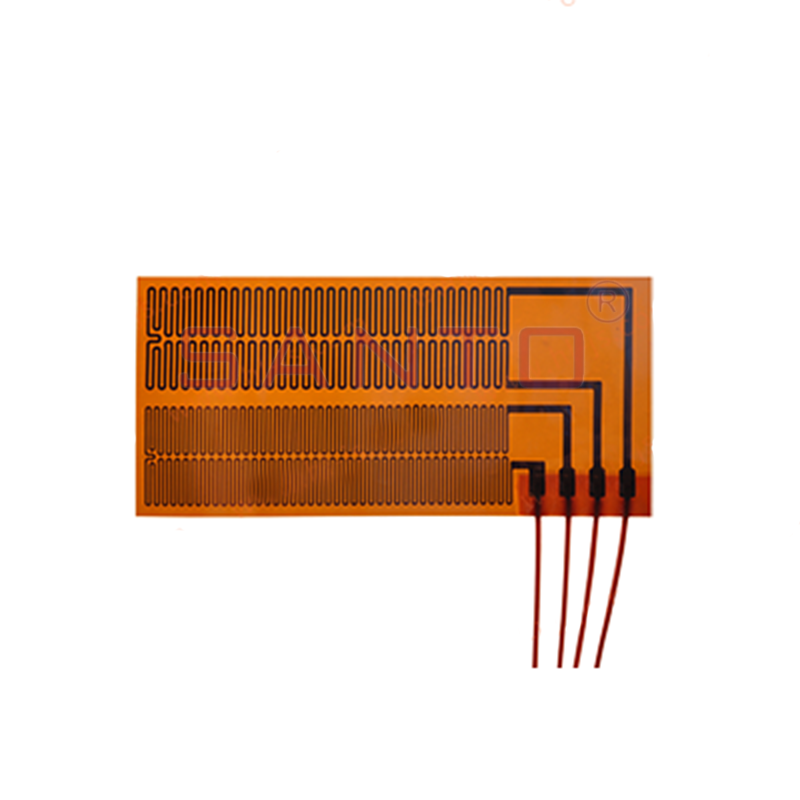
Content
The nuclear magnetic resonance instrument heater is a flexible or semi-flexible electric heating component used to provide controlled heat to selected parts of nuclear magnetic resonance instruments. It can be designed in different shapes, thicknesses, power ratings, lead-wire configurations, adhesive structures, and thermal interface combinations according to the equipment requirements.
Its purpose is to maintain or raise the temperature of specific components, surfaces, housings, chambers, or support assemblies. In an NMR-related environment, heating must be accurate enough to prevent local cold spots, efficient enough to reduce unnecessary power consumption, and reliable enough to operate for long periods without frequent replacement.
The heater can be manufactured with optional accessories such as lead wires, pressure-sensitive adhesive layers, aluminum heat-spreading plates, thermal conductive materials, insulation materials, temperature controllers, and sensors. These options allow the heater to become part of a complete thermal control system rather than a separate isolated component.
Because NMR instruments are sophisticated systems, a heater used near them should be thin, predictable, electrically insulated, and mechanically adaptable. A minimum thickness of 0.15 mm supports compact installation in limited spaces. A heating temperature limit of 180 ℃ gives sufficient capacity for many controlled warming applications while remaining within a manageable range for polymer-based heating structures. A power density of up to 3 W/cm² allows strong heat generation where needed while preserving control flexibility.
Nuclear magnetic resonance instruments rely on stable physical conditions. Temperature variation can influence electronics, sample environments, supporting mechanical structures, and peripheral systems. Even when the primary magnetic field and core imaging or spectroscopy functions are controlled by specialized subsystems, surrounding thermal disturbances can still create drift, condensation risks, uneven expansion, or inconsistent measurement environments.
In medical imaging facilities, instrument uptime is critical. A system that suffers frequent thermal instability may require more calibration, longer warm-up periods, and additional service attention. In research laboratories, reproducibility is equally important. Experimental results are more valuable when environmental and instrument variables are minimized.
Heating may be required in several situations. Some assemblies must remain above ambient temperature to avoid condensation. Certain components may require stable thermal conditions for predictable operation. Other areas may need supplemental heat during start-up, low-temperature storage, or use in facilities where ambient conditions fluctuate. In specialized equipment, heaters may also be used as part of a designed temperature regulation system.
A well-designed NMR instrument heater helps solve these challenges by delivering heat exactly where it is needed. Compared with external room heating or oversized heating devices, a localized heater reduces energy waste and supports faster response. Compared with ordinary resistive wire wrapped manually around components, a custom flat heater offers better contact, more uniform heat distribution, and more consistent installation quality.
The product is built around practical performance values suitable for medical-industry equipment integration. The following table summarizes the main technical characteristics and available configuration options.
| Parameter | Specification | Practical Meaning |
|---|---|---|
| Product Type | Nuclear magnetic resonance instrument heater | Designed for controlled heating in NMR-related medical or analytical equipment |
| Application Category | Medical industry | Suitable for precision equipment where reliability and safety are priorities |
| Thickness | ≥ 0.15 mm | Supports compact installation and close surface contact |
| Heating Temperature | ≤ 180 ℃ | Provides sufficient thermal capacity for controlled heating applications |
| Power Density | ≤ 3 W/cm² | Allows efficient heat generation with controlled design flexibility |
| Insulation Resistance | 1000 V, ≥ 100 MΩ | Supports electrical safety and dependable insulation performance |
| Optional Accessories | Wire, adhesive layer, aluminum plate, thermal conductive material, insulation material, temperature controller, sensor | Enables customized integration into complete thermal control assemblies |
| Customization | Available according to equipment requirements | Allows adaptation to geometry, mounting method, power rating, and control needs |
The numerical ratings are important, but the true value of the product is revealed when these specifications are applied to real equipment needs. Thinness improves fit. Controlled power density reduces unnecessary overheating risk. High insulation resistance supports long-term safety. Optional accessories reduce installation complexity and help the heater perform as part of a stable system.
Many competitors offer standard heating pads or general-purpose heating cables with limited size options. In contrast, a heater intended for nuclear magnetic resonance instruments must match the available space, avoid sensitive areas, follow the equipment structure, and maintain reliable contact with the target surface. Customization can include overall dimensions, hole positions, cutouts, edge shapes, lead-wire exits, adhesive backing, and mounting orientation.
This improves installation quality. When a heater fits properly, technicians do not need to fold, force, trim, or manually modify the product. Better fit reduces mechanical stress, improves thermal contact, and enhances repeatability from one instrument to another.
A thickness beginning at 0.15 mm gives the heater a major advantage in compact assemblies. Many NMR-related devices have limited installation space, and a bulky heating component can interfere with panels, brackets, insulation layers, or electronic modules. A thin heater can be placed closer to the target surface, improving heat transfer and reducing the thermal delay between power input and surface response.
Thin construction also supports low thermal mass. A heater with lower thermal mass generally responds faster to control signals than a heavy heating block. This can help a temperature controller maintain a tighter operating range, especially when paired with a properly positioned sensor.
Thermal efficiency is not only about the heating element itself. It depends on contact, heat spreading, insulation, controller strategy, and the relationship between power density and surface area. This heater can be supplied with thermal conductive materials and aluminum plates to improve heat spreading. It can also be paired with insulation material to reduce heat loss to surrounding areas.
Compared with loosely installed heating wire, a custom flat heater provides more even contact with the heated surface. Compared with oversized cartridge heaters or rigid elements, it can distribute heat over a broader area and reduce localized hot spots. Compared with low-cost pads that lack integrated thermal design, it can be configured as a complete heating assembly with better efficiency and consistency.
Electrical reliability is essential in medical and analytical equipment. The heater offers insulation resistance of at least 100 MΩ under 1000 V test conditions. This indicates a strong insulation design intended to separate the heating circuit from surrounding structures and reduce leakage risk.
Generic heaters may claim broad applicability but may not be optimized for sensitive instruments. A heater selected for nuclear magnetic resonance equipment should be designed and tested with attention to insulation quality, wire termination strength, dielectric performance, and long-term aging resistance. These factors support safe operation over repeated heating and cooling cycles.
A maximum power density of 3 W/cm² supports efficient heat generation without forcing the system into overly aggressive heating behavior. High power density can be useful in some industrial applications, but sensitive equipment often benefits from controlled and predictable heating. Excessive power density may create local overheating, insulation stress, or unstable control response if not carefully managed.
By setting an appropriate power density according to the instrument’s thermal load, the heater can provide the required temperature rise while maintaining long service life. This is especially valuable when the equipment must operate continuously or undergo repeated start-stop cycles.
The heater can be supplied with a temperature controller and sensor. This is a major advantage over simple heating elements that require the customer to source controls separately. Integrated control planning helps ensure that heater wattage, sensor position, target temperature, switching method, and safety margin are considered together.
In many applications, the sensor location is as important as heater power. A sensor mounted too far from the heat source may respond slowly. A sensor placed in a hot spot may cause underheating elsewhere. A customized heater assembly can be designed with better sensor placement and wiring paths, improving system performance.
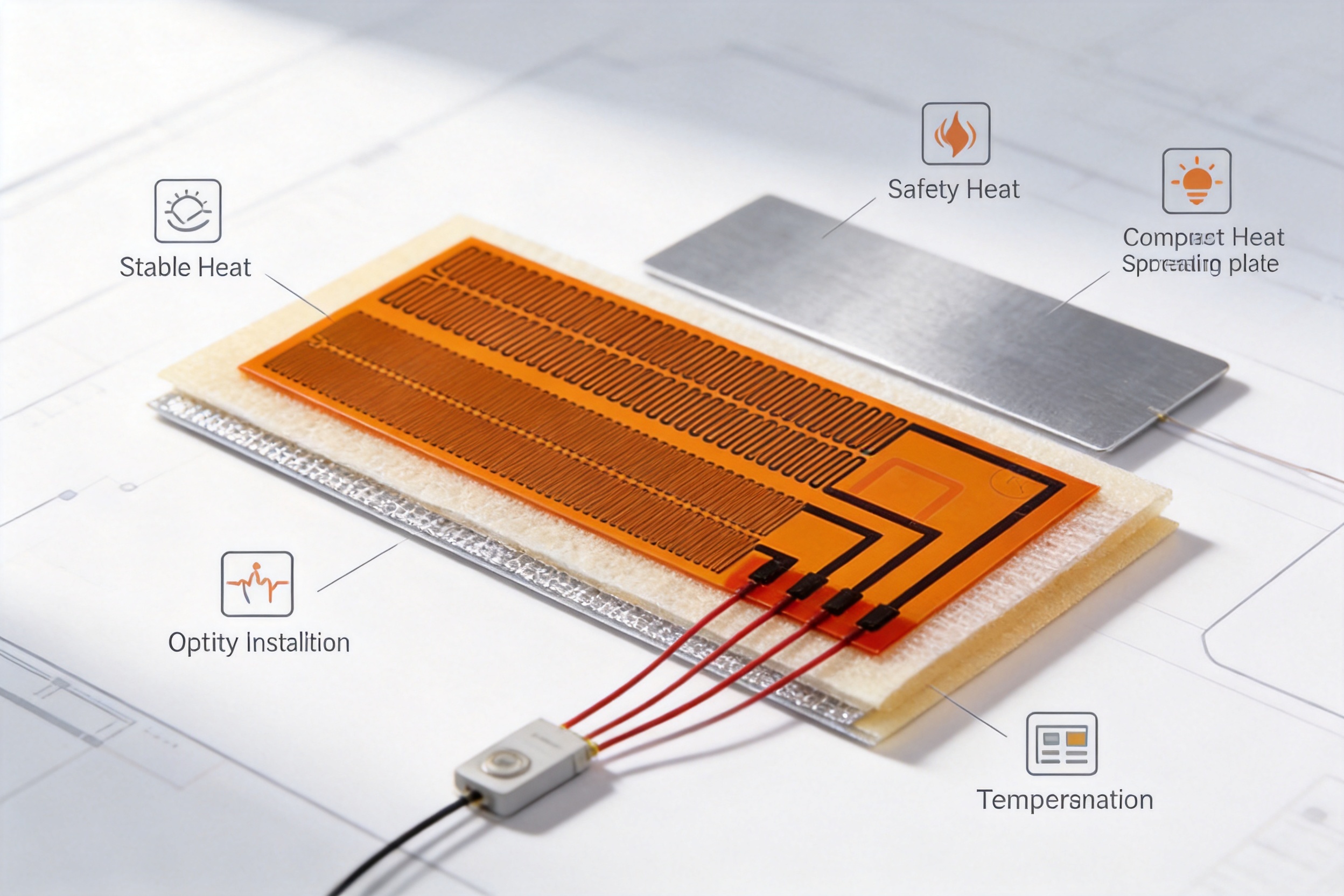
A nuclear magnetic resonance instrument heater must balance flexibility, insulation, heat transfer, mechanical protection, and manufacturability. The heating circuit must convert electrical energy into heat evenly. The insulation must withstand operating temperature and electrical stress. The surface materials must support installation and long-term adhesion where adhesive mounting is used.
Silicone rubber heating systems are often valued for flexibility, temperature resistance, moisture resistance, and good electrical insulation. In precision equipment, silicone rubber-based heater designs can be shaped to suit complex surfaces and can maintain performance under repeated thermal cycling. Depending on the project, additional layers may be added to improve heat spreading, bonding, or insulation.
An adhesive layer is useful when the heater must be attached to a flat or gently curved surface. Adhesive selection must consider operating temperature, surface material, expected service life, and whether future removal is required. A strong adhesive improves heat transfer by reducing air gaps, while a poor adhesive can allow delamination and uneven heating.
An aluminum plate may be used when heat needs to be distributed more uniformly. Aluminum has high thermal conductivity and can reduce hot spots by spreading heat across the target area. This is especially beneficial when the heating circuit cannot cover every portion of the surface evenly or when the heated object requires uniform temperature distribution.
Thermal conductive materials can fill microscopic gaps between the heater and the target surface. Even surfaces that appear smooth may contain tiny air spaces, and air is a poor conductor of heat. A thermal interface layer can reduce contact resistance and improve efficiency.
Insulation material can be added to direct heat toward the target rather than allowing it to dissipate outward. This reduces energy consumption and helps surrounding components remain cooler. In instruments with sensitive electronics, controlled heat direction can be an important design factor.
The performance of a precision heater depends strongly on manufacturing capability. Santo Thermal Control Technology Co., Ltd. is located in Jiangsu Province, a region known for electric heating belt production and thermal control expertise. The company has accumulated more than 35 years of industry experience and has built its business around research, design, production, manufacturing, and sales of electric heating products.
The company’s product range includes automatic temperature-control electric heating belts, self-limiting electric heating belts, heat tracing belts, constant-power electric heating belts, glass fiber electric heating belts, mineral insulated cables, silicone rubber electric heating systems, snow melting cables, tubing bundles, and electric heating accessories. This broad experience matters because different heating applications require different material systems, conductor designs, insulation structures, and quality-control methods.
For an NMR instrument heater, manufacturing strength appears in several practical ways. First, the company can evaluate a customer’s equipment requirements and propose a heater structure suited to the application. Second, it can produce custom heating elements rather than forcing customers to adapt equipment around standard products. Third, it can combine heating components with accessories such as wires, controllers, sensors, adhesive layers, aluminum heat spreaders, and insulation materials. Fourth, it can apply established quality management procedures to reduce variation between production batches.
The company has passed ISO9001 quality system certification, and its products have obtained national CCC certification for applicable categories. It has also developed international business experience, with products entering overseas markets and business coverage extending across many regions. The company’s development history includes the establishment of an irradiation center, development of advanced heating technologies, brand expansion, patent activity, and investment in a new factory and product simulation testing laboratory.
These strengths are important for customers who need dependable supply, repeatable quality, and technical support. A heater for medical equipment is not only a component purchase; it is a long-term supply-chain decision. Instrument manufacturers need a partner capable of stable production, design communication, documentation support, and continuous improvement.
The manufacturing process begins with understanding the equipment. Engineers review the required heating area, target temperature, available voltage, allowable current, temperature uniformity requirement, installation space, operating environment, lead-wire route, control method, and safety margin. If the heater is intended for a specific instrument model, dimensional drawings or sample parts may be used to define the exact shape.
This stage is critical because mistakes made during specification can reduce performance even if the heater is manufactured correctly. For example, a heater with adequate wattage but poor sensor placement may not control temperature well. A heater with the right shape but unsuitable adhesive may detach during operation. Proper requirement analysis prevents these problems.
After the requirements are clear, the heating area and power density are calculated. The maximum available power density is 3 W/cm², but the actual design may use a lower value depending on the required temperature rise, heat loss, insulation level, and safety considerations. Engineers may divide the heater into zones or adjust circuit spacing to improve uniformity.
Thermal design also considers whether an aluminum plate, thermal conductive layer, or insulation layer is needed. These choices determine how heat moves from the heating element to the target surface and how much energy is lost to the environment. A well-designed heater provides sufficient heat without wasting power or creating local hot spots.
The heating circuit is prepared according to the specified shape and resistance value. Materials are selected for temperature resistance, electrical performance, and mechanical durability. The circuit must maintain stable resistance under thermal cycling and must be positioned accurately within the insulating structure.
Material preparation may include cutting insulation sheets, preparing conductive elements, selecting lead wires, preparing adhesive films, and arranging optional thermal layers. Clean handling and accurate positioning are important because contaminants, misalignment, or weak bonding can affect insulation and service life.
The heating element is laminated or bonded into its final structure. This step ensures the heater has secure internal contact, stable insulation, and the desired thickness. For thin heaters, lamination control is especially important because uneven pressure or poor bonding can create weak points.
If adhesive backing is required, the adhesive layer is applied according to the installation method. If an aluminum plate is specified, it is integrated to improve heat distribution. If additional insulation is required, it is added to the correct side of the heater so that heat is directed efficiently.
Lead-wire connection is one of the most important reliability points in any electric heater. The termination must handle electrical load, mechanical movement during installation, and long-term thermal cycling. Poor wire termination is a common failure point in low-cost heaters. A robust manufacturing process focuses on secure connection, strain relief, insulation protection, and routing accuracy.
For NMR instrument applications, lead-wire placement may also need to avoid interference with service access, covers, fasteners, and sensitive assemblies. Custom lead exits and wire lengths help simplify installation and reduce the need for field modification.
Quality inspection verifies that the heater meets design requirements before shipment. Important tests may include dimensional inspection, resistance measurement, insulation resistance testing, appearance inspection, power verification, and heating performance checks. For the stated insulation resistance requirement, testing at 1000 V with a minimum value of 100 MΩ confirms that the insulation barrier meets the expected level.
Testing is not merely a final step; it is part of process control. Stable test results over many batches show that materials, operators, equipment, and procedures are controlled. This is essential for instrument manufacturers who require repeatable components for serial production.
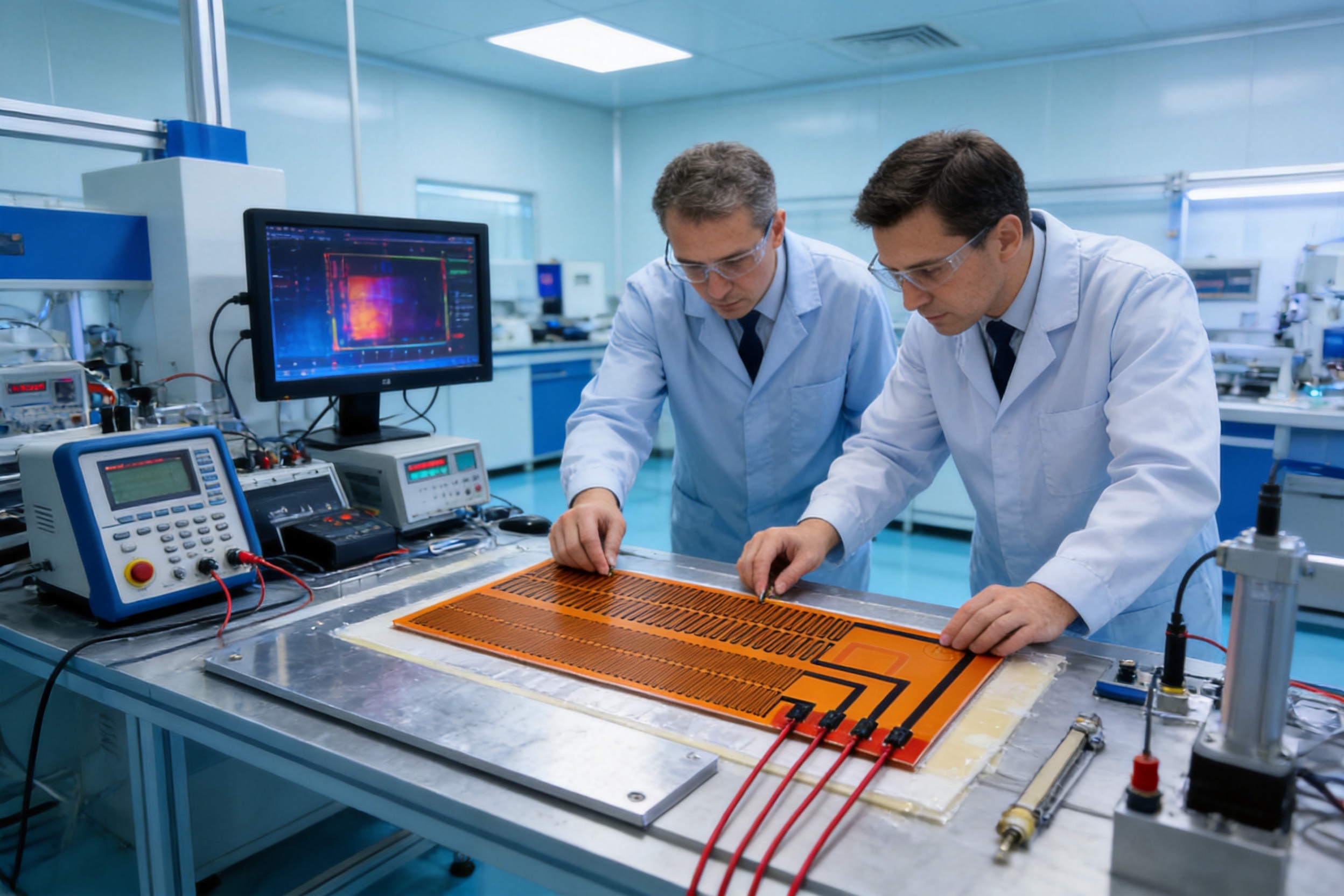
The heater can be customized according to equipment requirements. This is one of the product’s most important strengths. Different NMR instruments may vary in internal layout, mounting surfaces, thermal needs, and control architecture. A single standard heater is rarely ideal for every design.
Customization may begin with dimensions. The heater can be designed as a rectangle, ring, strip, curved profile, or irregular shape. Holes and cutouts can be added for screws, sensors, brackets, connectors, or service openings. Edge profiles can be adjusted to prevent contact with sharp structures or moving parts.
Electrical customization includes voltage, resistance, total power, power density, circuit layout, lead-wire type, lead length, connector type, and grounding or shielding considerations when required by the equipment design. Control customization may include sensor type, sensor location, thermostat integration, controller selection, or multi-zone heating design.
Mechanical customization includes adhesive backing, reinforced edges, flexible zones, aluminum backing plates, insulation layers, and thermal interface materials. The heater can be supplied as a simple heating component or as a ready-to-install thermal assembly.
For customers, this reduces design burden. Instead of buying a heater, adhesive, sensor, and controller from separate suppliers and then solving compatibility issues internally, the customer can work with one heating specialist to develop a matched solution.
The main application is heating for nuclear magnetic resonance instruments, but the same design principles may be useful in related medical and analytical equipment where compact, reliable, and controlled heating is required. Possible heating locations include instrument panels, sample conditioning areas, environmental protection zones, auxiliary modules, support frames, cover assemblies, or equipment sections exposed to low ambient temperature.
In medical facilities, equipment may operate in controlled rooms, but temperature differences can still occur due to air conditioning, ventilation, start-up conditions, or seasonal changes. A localized heater helps maintain stability where room-level control is insufficient.
In research laboratories, instruments may be installed in environments with varying use patterns. Some systems run continuously, while others are started and stopped. A heater can reduce warm-up time, protect selected components, and support stable experimental conditions.
In equipment manufacturing, heaters can be integrated during assembly to improve final product reliability. A custom heater designed into the instrument from the beginning is often better than adding a generic heater later during troubleshooting. Early integration allows designers to optimize mounting points, wiring routes, control logic, and safety features.
When selecting a heater for nuclear magnetic resonance equipment, buyers often compare custom precision heaters with generic heating pads, heating wires, cartridge heaters, and imported specialty components. The nuclear magnetic resonance instrument heater offers several competitive advantages.
Compared with generic heating pads, it provides stronger customization and better integration options. Generic pads may be available quickly, but they often come in fixed sizes and ratings. If they do not fit properly, the customer may accept uneven heating, poor adhesion, or difficult wiring. A custom heater avoids these compromises.
Compared with manually installed heating wire, it provides better repeatability. Heating wire can be wrapped differently by different technicians, creating variation in heat distribution and installation quality. A manufactured heater has a defined circuit layout and controlled geometry, improving consistency.
Compared with rigid heaters, it provides better adaptability to limited spaces and shaped surfaces. Rigid cartridge or block heaters may be powerful, but they require mechanical cavities or mounting hardware. A thin heater can be placed directly on surfaces where rigid elements cannot fit.
Compared with low-cost products that lack testing discipline, it offers documented performance values and insulation resistance requirements. For sensitive equipment, the cheapest heater can become expensive if it causes downtime, rework, or safety concerns. A reliable heater reduces total cost of ownership.
Compared with suppliers that only sell standard products, Santo Thermal Control Technology Co., Ltd. provides broader electric heating experience and custom manufacturing capability. Its long industry history, quality-system certification, product development background, and manufacturing scale support customers who need more than a catalog item.
Long service life is one of the stated strengths of the product. Heater lifetime depends on many factors, including operating temperature, power density, duty cycle, mechanical stress, insulation quality, connection quality, and environmental exposure. By designing the heater according to actual equipment requirements, unnecessary stress can be reduced.
Operating below maximum limits is a common way to improve longevity. Although the heater can operate up to 180 ℃, many applications may require lower temperatures. Similarly, although the power density can reach 3 W/cm², using only the necessary power can reduce thermal stress. Proper thermal contact also extends life because heat is transferred away from the element efficiently instead of accumulating in isolated hot spots.
Lead-wire protection is another major factor. During installation, wires may be bent, pulled, or routed around sharp edges. A customized wire exit, suitable lead length, and strain relief design can prevent early failure. In long-term operation, secure termination helps resist thermal cycling and vibration.
Adhesion and mounting also affect reliability. A heater that lifts from the surface loses thermal contact, causing uneven heating and potentially higher local temperatures. Selecting the correct adhesive and preparing the mounting surface properly are therefore important for service life.
Electric heaters used in medical or analytical equipment must be selected and installed carefully. The heater’s insulation resistance of at least 100 MΩ under 1000 V test conditions supports electrical safety, but system-level safety also depends on correct installation, proper grounding where applicable, temperature control, over-temperature protection, and compliance with the equipment manufacturer’s standards.
Temperature sensors and controllers are recommended where stable temperature is required. In some designs, a secondary safety thermostat or thermal cutoff may be appropriate. The heater should not be operated beyond its rated temperature, power density, voltage, or environmental limits.
Mechanical protection should be considered if the heater is installed in a service area. Sharp edges, screw pressure, abrasion, liquid exposure, and repeated bending can damage heaters. Proper routing and protective layers help maintain safety.
Because NMR-related environments may involve sensitive electronics and magnetic systems, equipment engineers should evaluate the heater’s electrical layout, wiring path, controller type, and installation position as part of the complete instrument design. A custom approach makes this easier because the heater can be adapted to the equipment rather than forcing the equipment to adapt to the heater.
Initial purchase price is only one part of heater selection. Total cost of ownership includes design time, installation labor, energy consumption, maintenance frequency, downtime risk, replacement cost, and customer satisfaction. A custom NMR instrument heater can reduce these costs in several ways.
First, it reduces installation labor. A heater with the correct shape, adhesive layer, wire length, and connector is faster to install than a generic component requiring modification. Second, it improves thermal efficiency. Better contact and optional insulation reduce wasted heat. Third, it lowers maintenance risk by using suitable materials and tested insulation. Fourth, it supports stable equipment performance, which can reduce recalibration or troubleshooting time.
For equipment manufacturers, a custom heater can also simplify production. Assemblers can install the same part in the same location using the same method every time. This improves manufacturing repeatability and reduces training complexity. For service teams, standardized custom parts make replacement easier.
The long-term value is especially important in medical and scientific settings where downtime can be costly. A heater that costs less but fails early, fits poorly, or causes unstable temperature may ultimately be far more expensive than a properly engineered component.
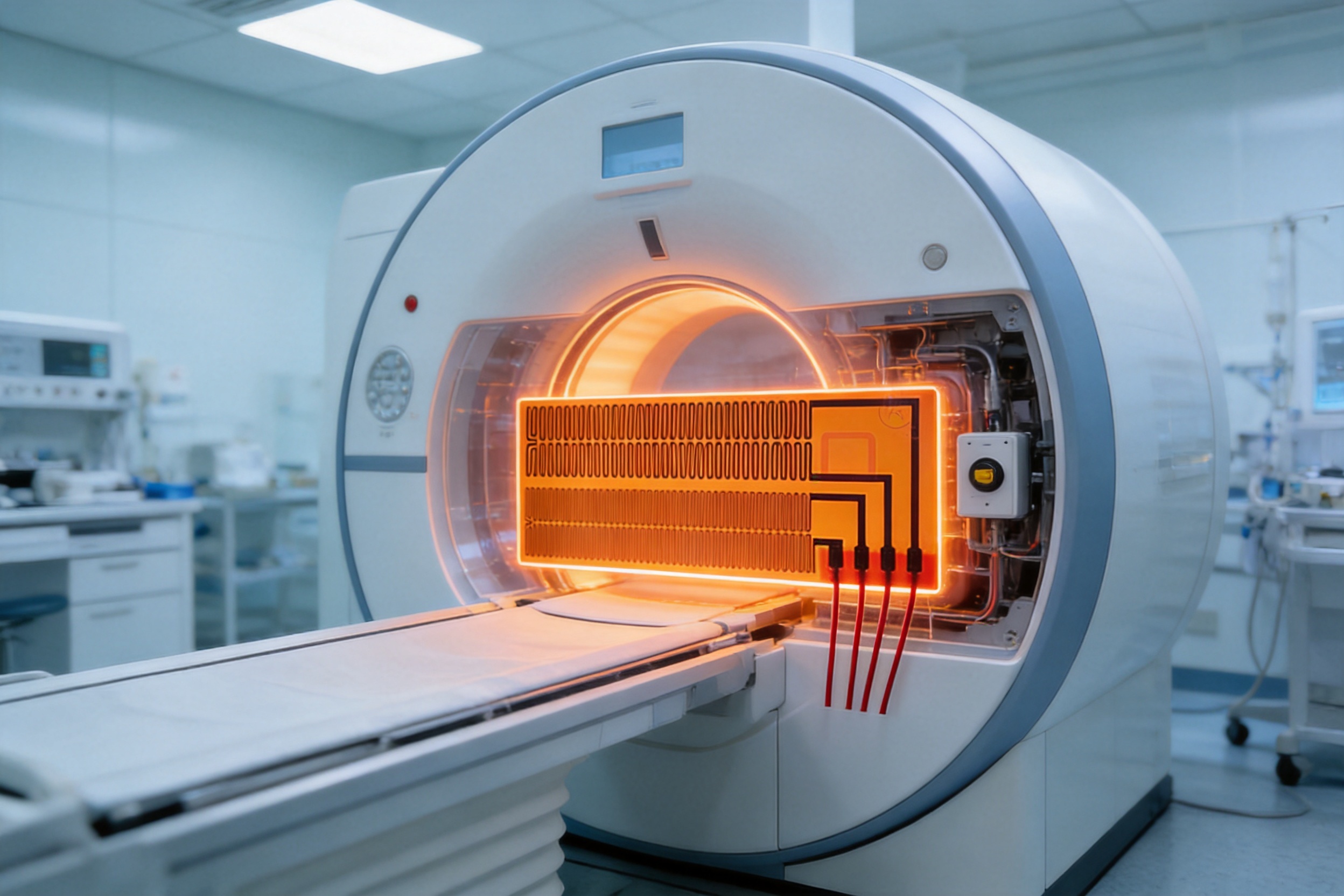
Santo Thermal Control Technology Co., Ltd. has developed from a specialized electric heating manufacturer into a supplier with broad thermal control capabilities. Its experience covers industrial heat tracing, self-limiting heating belts, constant-power heating belts, glass fiber heating belts, mineral insulated cables, silicone rubber heating strips, snow melting systems, tubing bundles, and accessories. This broad technical base supports the development of heaters for precision applications such as nuclear magnetic resonance instruments.
The company emphasizes research, design, production, and manufacturing. It has cooperated in product research with Harvard University in the United States and has invested in new product development. Its history includes patented heating technologies and continuous expansion of production and testing capacity. Such development reflects a long-term approach to thermal technology rather than short-term trading.
The company has more than 35 years of industry experience, annual output exceeding 10,000 units, and a distributor network covering many regions. It has built business presence in domestic and international markets, including expansion into Russia. This scale helps support stable delivery and customer service for projects that require ongoing supply.
Quality management is another strength. ISO9001 certification indicates that the company has established a formal quality management system. Product certifications such as CCC for applicable products show attention to regulatory requirements. Experience with explosion-proof certification and EAC Eurasian Union certification in relevant product areas demonstrates familiarity with demanding technical markets.
For customers selecting a nuclear magnetic resonance instrument heater, these strengths provide confidence that the supplier can manage design communication, production control, inspection, and after-sales support. A precision heater is most successful when the manufacturer understands both heating technology and the customer’s application.
To obtain the best heater design, buyers should prepare detailed application information. Useful information includes the target heated surface size, material, desired temperature, ambient temperature range, available power supply, maximum allowable surface temperature, installation space, mounting method, sensor preference, controller requirement, and expected operating cycle.
If the heater must fit a specific instrument part, drawings or 3D models are helpful. If drawings are not available, a sample part or detailed measurements can support design. Buyers should also identify any areas that must not be heated, such as connectors, sensors, labels, screws, vents, or plastic parts with lower temperature limits.
The desired level of temperature uniformity should be stated clearly. Some applications only require frost prevention or general warming, while others need tight control. Uniformity requirements influence circuit layout, power density, heat-spreading layers, and sensor placement.
Buyers should also consider maintenance. If the heater may need replacement, a removable mounting method or accessible wiring may be preferable. If the heater is intended to last for the full equipment life, permanent bonding may be acceptable. These choices should be made during design rather than after installation problems occur.
Before installation, the mounting surface should be clean, dry, and free of oil, dust, sharp burrs, and loose coatings. Good surface preparation improves adhesion and heat transfer. If an adhesive-backed heater is used, pressure should be applied evenly according to the recommended method, and sufficient bonding time should be allowed when required.
The heater should be installed flat against the target surface without folds, wrinkles, or trapped air gaps. It should not be cut, pierced, overlapped, or modified unless the manufacturer has specifically designed it for such handling. Lead wires should be routed to avoid sharp bends, pinch points, hot surfaces beyond their rating, and moving parts.
A temperature controller and sensor should be used when precise temperature regulation is necessary. The sensor should be positioned where it accurately represents the controlled surface temperature. In some applications, testing may be needed to confirm the best sensor location.
During initial operation, the heater should be monitored to verify that the temperature rise, control behavior, and surface distribution match expectations. Any abnormal odor, discoloration, hot spot, unstable control response, or insulation issue should be investigated before continued operation.
A high-quality heater is the result of controlled design, controlled materials, controlled production, and controlled testing. Dimensional accuracy ensures that the heater fits the equipment. Resistance accuracy ensures that power output matches the design. Insulation resistance testing confirms electrical separation. Appearance inspection helps detect physical defects. Functional heating tests verify performance.
For medical-industry equipment, traceability and repeatability are especially valuable. If a customer uses the heater in serial production, every batch should match the approved design. Process documentation, inspection records, and communication between engineering and manufacturing teams help maintain consistency.
Advanced manufacturing processes also reduce hidden defects. Proper lamination prevents internal air gaps. Accurate circuit placement improves uniformity. Strong termination reduces wire failure. Suitable packaging protects the heater during transport. Each step contributes to final reliability.
It is used to provide controlled heating for selected parts of nuclear magnetic resonance instruments or related medical and analytical equipment. Its purpose is to support stable temperature conditions, improve thermal efficiency, reduce cold spots, and protect equipment performance in applications where reliable localized heating is required.
The heater has a thickness of at least 0.15 mm, a heating temperature of up to 180 ℃, a power density of up to 3 W/cm², and insulation resistance of at least 100 MΩ under 1000 V test conditions. It can also be customized with wires, adhesive layers, aluminum plates, thermal conductive materials, insulation materials, temperature controllers, and sensors.
NMR instruments have complex structures, limited installation space, and sensitive operating requirements. Customization allows the heater to match the instrument’s shape, heating area, wiring route, control method, and safety requirements. This improves fit, heat transfer, installation efficiency, and long-term reliability.
Ordinary heating pads are often limited to standard sizes and fixed ratings. This heater can be engineered according to the equipment design, with optional accessories and controlled specifications. It offers better integration, improved thermal contact, more consistent installation, and stronger suitability for precision instruments.
Yes. Temperature controllers and sensors are optional accessories. Integrating these components helps create a complete thermal control solution and supports more stable temperature regulation.
The insulation resistance rating of 1000 V and at least 100 MΩ indicates that the heater’s insulation is designed to provide strong electrical separation between the heating circuit and surrounding structures. This is important for safety and reliability in sensitive equipment.
An aluminum plate can spread heat more evenly across the target surface. It helps reduce local hot spots and improves temperature uniformity, especially when the heated area requires balanced heat distribution.
Customers should provide the target size, shape, required temperature, ambient temperature, voltage, power preference, installation method, sensor location, wiring route, operating cycle, and any drawings or samples of the equipment part. More complete information leads to a better heater design.
The manufacturer has more than 35 years of electric heating experience, ISO9001 quality system certification, broad thermal control product expertise, research and development capability, international market experience, and investment in production and testing facilities. These strengths support consistent manufacturing and custom engineering.
Its primary described application is heating for nuclear magnetic resonance instruments, especially in the medical industry. However, the same thin, customizable, and reliable heating design may also be adapted to related precision equipment where controlled localized heating is needed.
The nuclear magnetic resonance instrument heater is a precision thermal solution designed for equipment that requires stable, efficient, and dependable heating. With a thin structure, heating temperature up to 180 ℃, power density up to 3 W/cm², and insulation resistance of at least 100 MΩ under 1000 V test conditions, it provides a strong technical foundation for medical and analytical instrument applications.
Its greatest advantage is customization. The heater can be designed with suitable shape, power, lead wires, adhesive layers, aluminum plates, thermal conductive materials, insulation materials, controllers, and sensors. This enables close integration with the target instrument and helps overcome the limitations of standard heating pads, manual heating wire installations, and rigid heating elements.
Behind the product is a manufacturer with decades of electric heating experience, broad product capability, certified quality management, research and development background, and expanding international presence. These strengths support not only product supply but also design collaboration, process control, testing, and after-sales service.
For nuclear magnetic resonance instrument manufacturers, medical equipment integrators, laboratories, and maintenance teams, choosing the right heater is a decision that affects performance, safety, reliability, and total cost of ownership. A custom-engineered nuclear magnetic resonance instrument heater offers a practical path toward stable thermal control and long service life in demanding precision environments.
1. Incropera, F. P., DeWitt, D. P., Bergman, T. L., and Lavine, A. S. Fundamentals of Heat and Mass Transfer. Wiley.
2. Holman, J. P. Heat Transfer. McGraw-Hill Education.
3. Lienhard, J. H. A Heat Transfer Textbook. Phlogiston Press.
4. IEC 60601 Series. Medical Electrical Equipment Safety and Essential Performance Standards.
5. ISO 9001. Quality Management Systems Requirements.
6. Callister, W. D., and Rethwisch, D. G. Materials Science and Engineering: An Introduction. Wiley.
7. Haacke, E. M., Brown, R. W., Thompson, M. R., and Venkatesan, R. Magnetic Resonance Imaging: Physical Principles and Sequence Design. Wiley.
8. Product technical materials and company information provided for the nuclear magnetic resonance instrument heater.
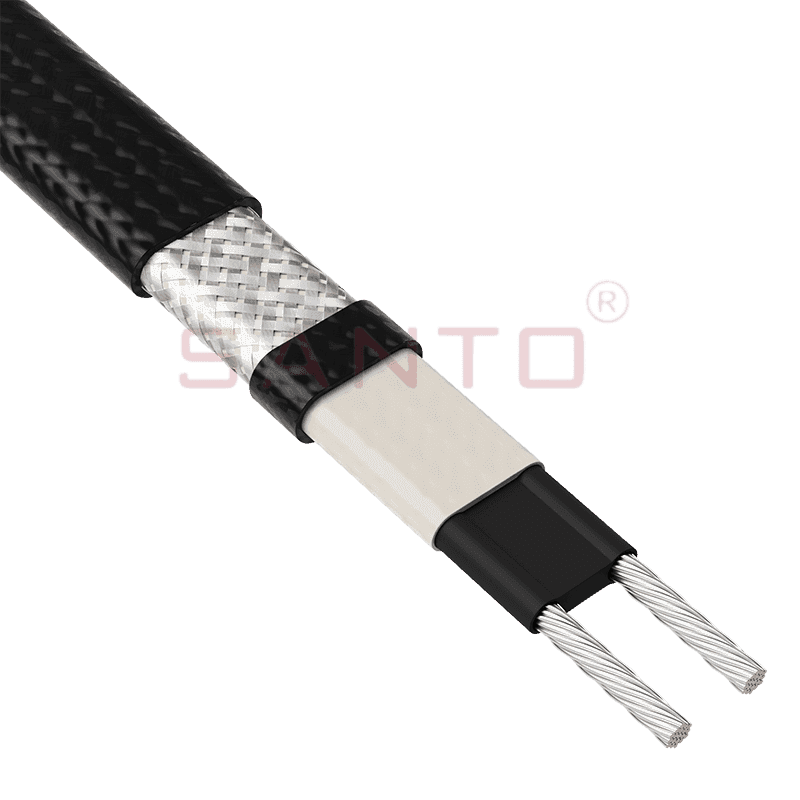
The SANTO UFA range of self-regulating heating cables is mainly used for frost protection of pipes and vessels but can also be used to maintain processes up to 65°C. These heating cables are available...
See Details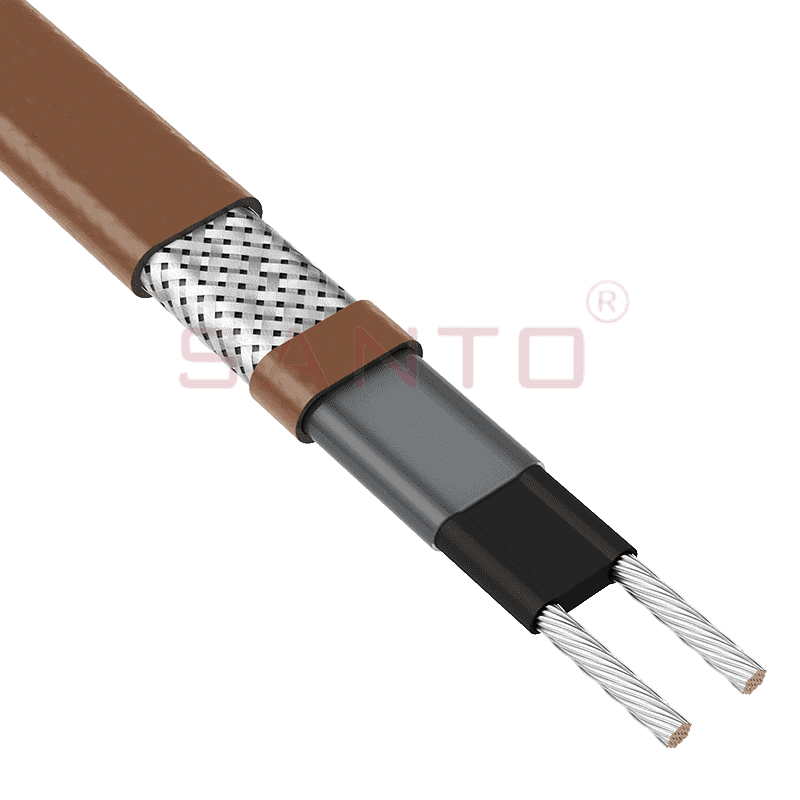
The SANTO UFB range of self-regulating heating cables is mainly used for frost protection of pipes and vessels requiring a higher power output than the UFA heating cables can supply. They can also be ...
See Details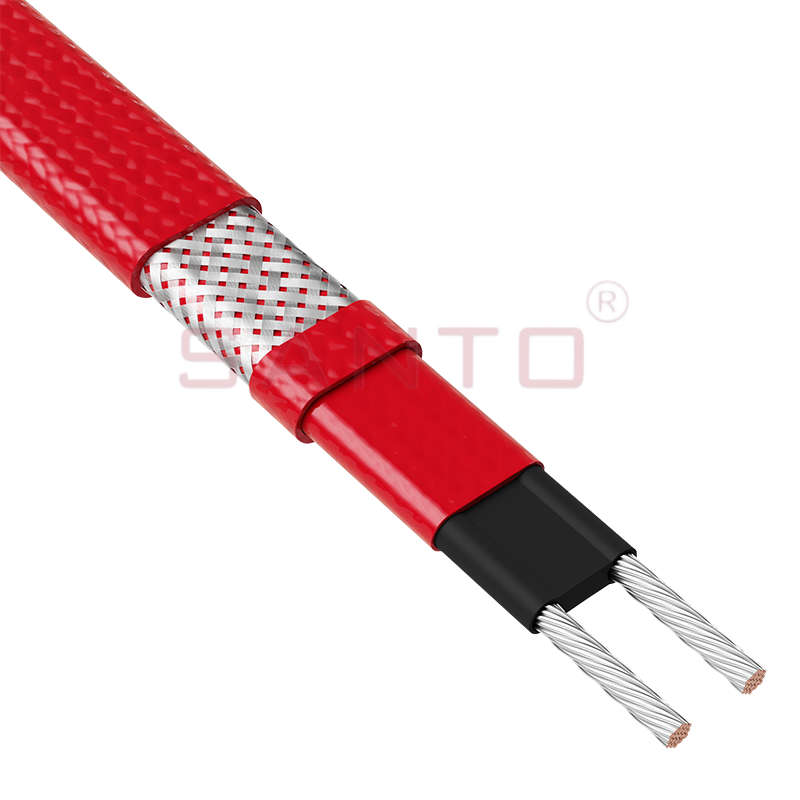
The SANTO UFC range of self-regulating heating cables is used for frost protection of pipes and vessels that require steam cleaning. They can also be used to maintain processes up to 121°C. These heat...
See Details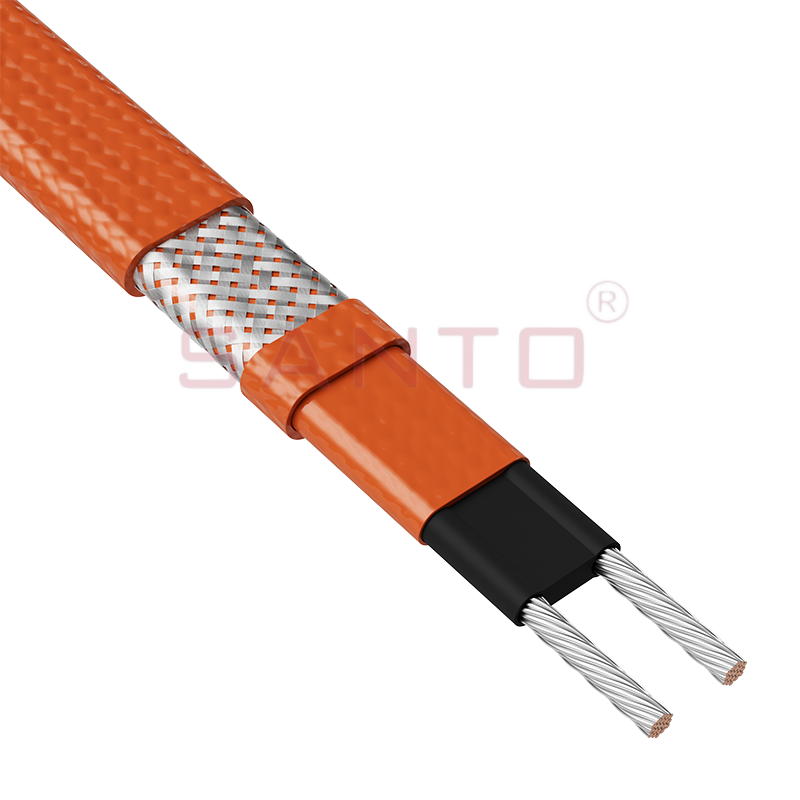
The SANTO UFO range of self-regulating heating cables is mainly used for frost protection of pipes and vessels that require steam cleaning . They can also be used to maintain processes up to 150°C. Th...
See Details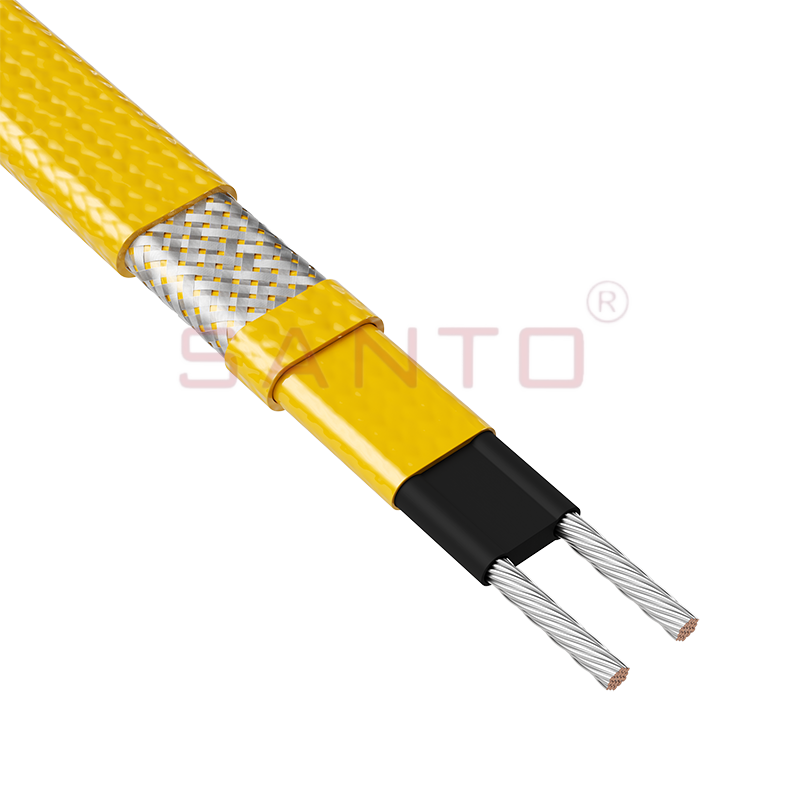
The SANTO UFD series of self-regulating heating cables are mainly used for freeze protection of pipes and vessels, but can also be used to maintain processes up to 200°C. These heating cables are avai...
See Details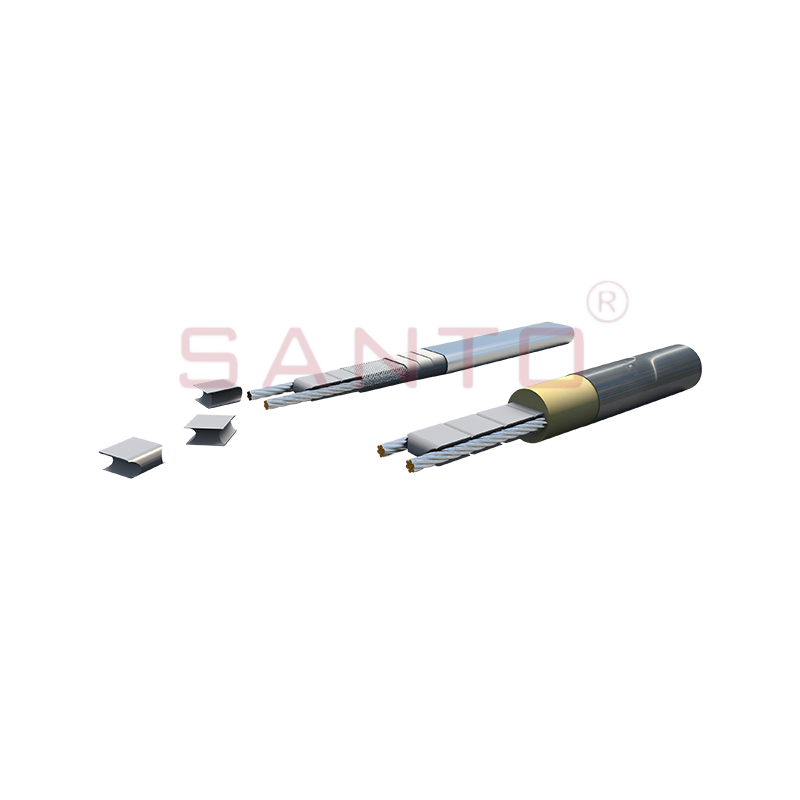
SANTO UFY heating wire is suitable for applications that maintain process temperatures up to 260 ℃ and can be steam blown; The self-regulating and parallel circuit heating wires of the UFY series are ...
See Details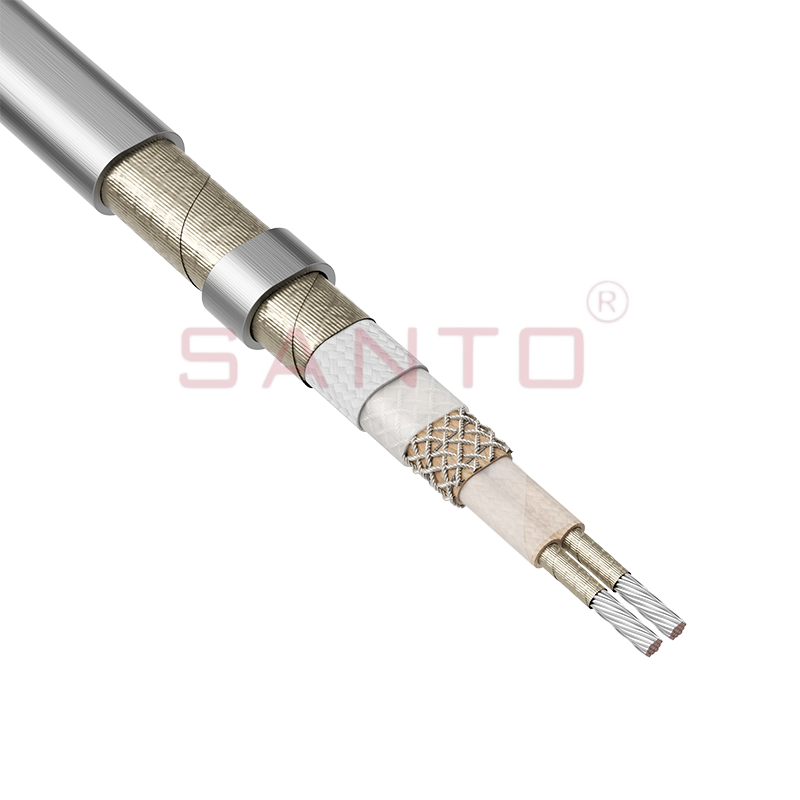
The SANTO UFM series self-regulating heating cables are mainly used for freeze protection of pipes and vessels, but can also be used to maintain processes up to 400°C. These heating cables are availab...
See Details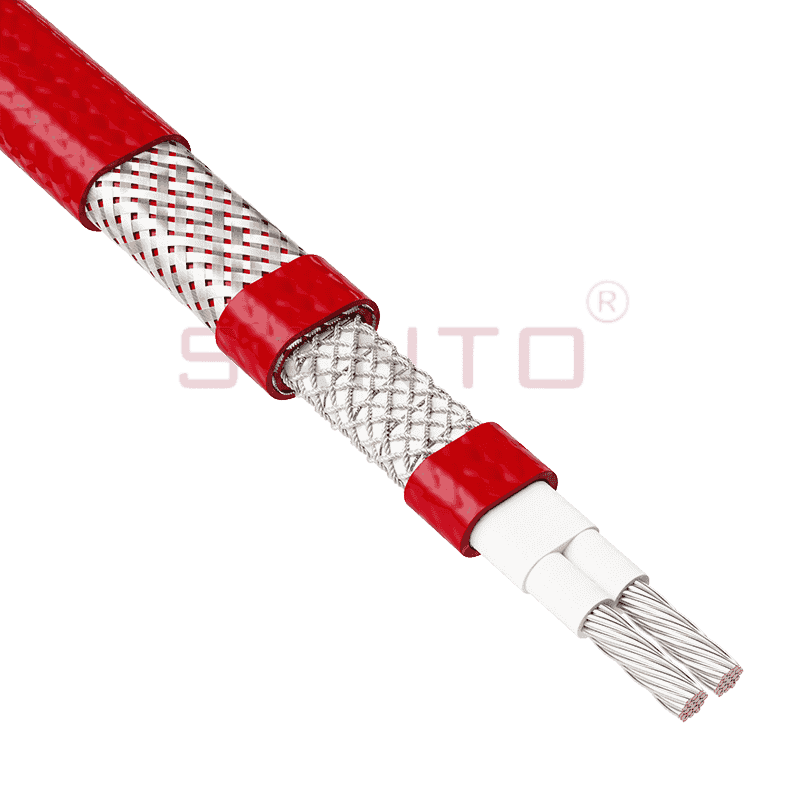
The SANTO ACC range of power-limiting heating cables is mainly used for temperature maintenance of processes and offers the advantage of a high power output at high temperatures which can reduce the n...
See Details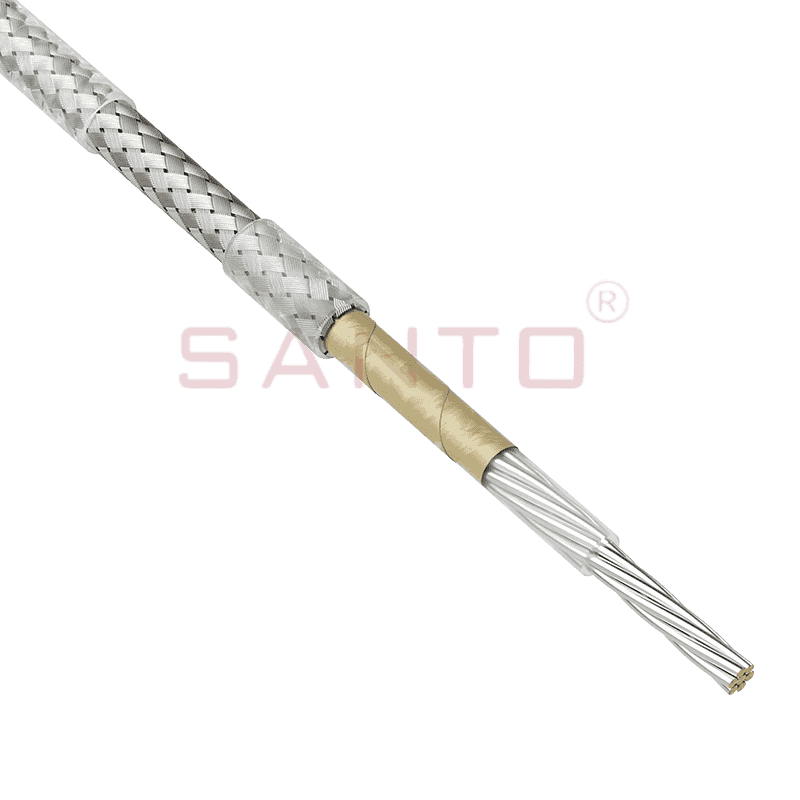
The stranded high temperature conductor is nickel plated to ensure a long life at elevated temperatures in corrosive environments. It is electrically isolated using an innovative sandwich construction...
See Details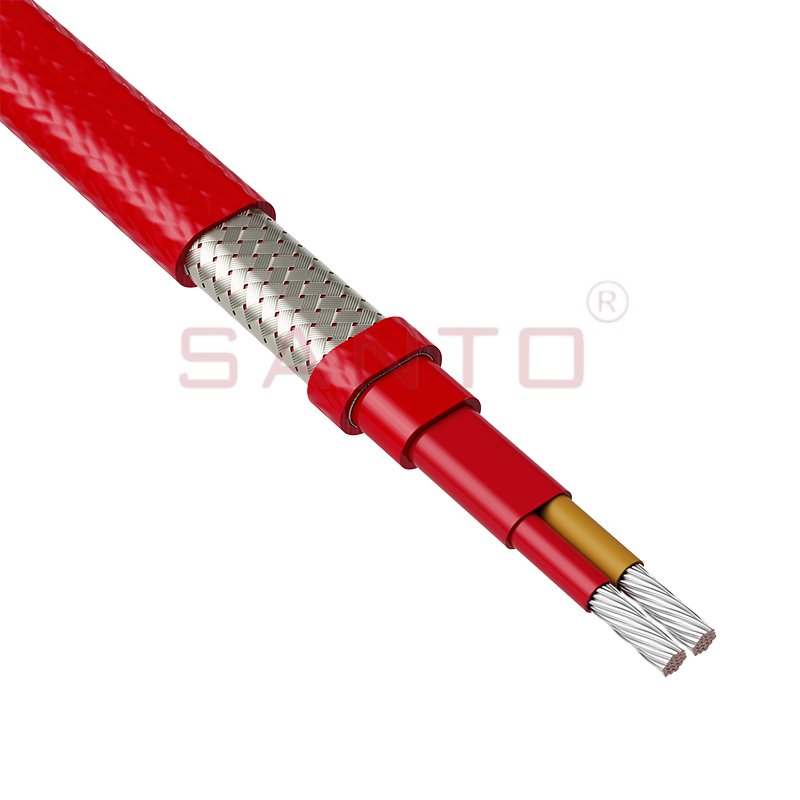
The stranded high temperature conductor is nickel plated to ensure a long life at elevated temperatures in corrosive environments. It is electrically isolated using an innovative sandwich construction...
See Details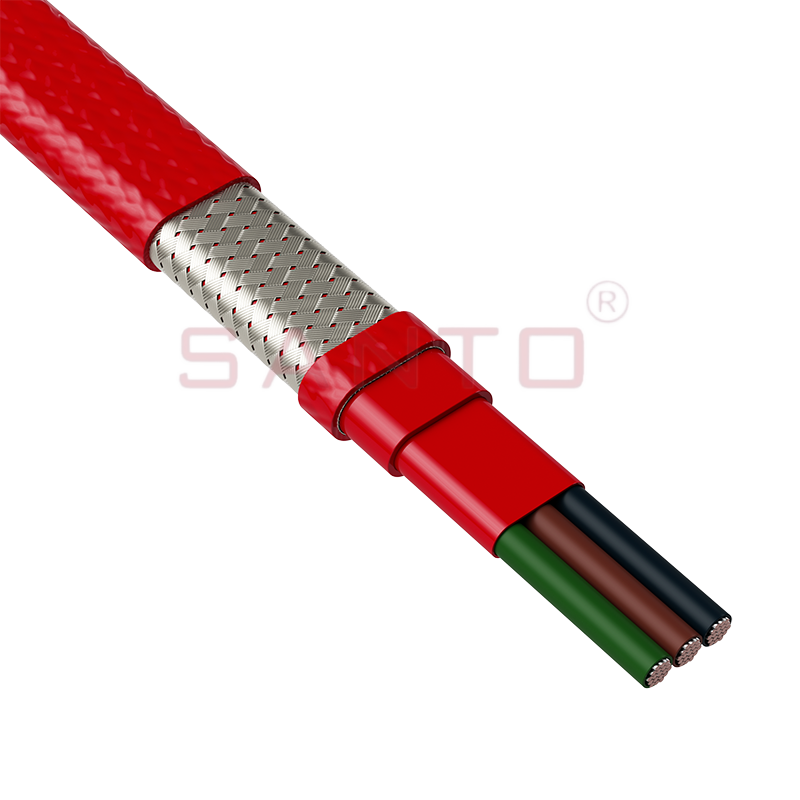
The stranded high temperature conductor is nickel plated to ensure a long life at elevated temperatures in corrosive environments. It is electrically isolated using an innovative sandwich construction...
See Details
SANTO HAx mineral insulated (MI) Alloy 825 series heating cables are suitable for use in hazardous areas. They have been designed for use in freeze protection and temperature maintenance applications ...
See Details
Santo electric heating strips are widely used in key industries in China.

