 English
  English
 русский
 日本語
日本語 Español
 中文简体
中文简体
The SANTO UFA range of self-regulating heating cables is mainly used for frost protection of pipes and vessels but can also be used to maintain processes up to 65°C. These heating cables are available...
See Details
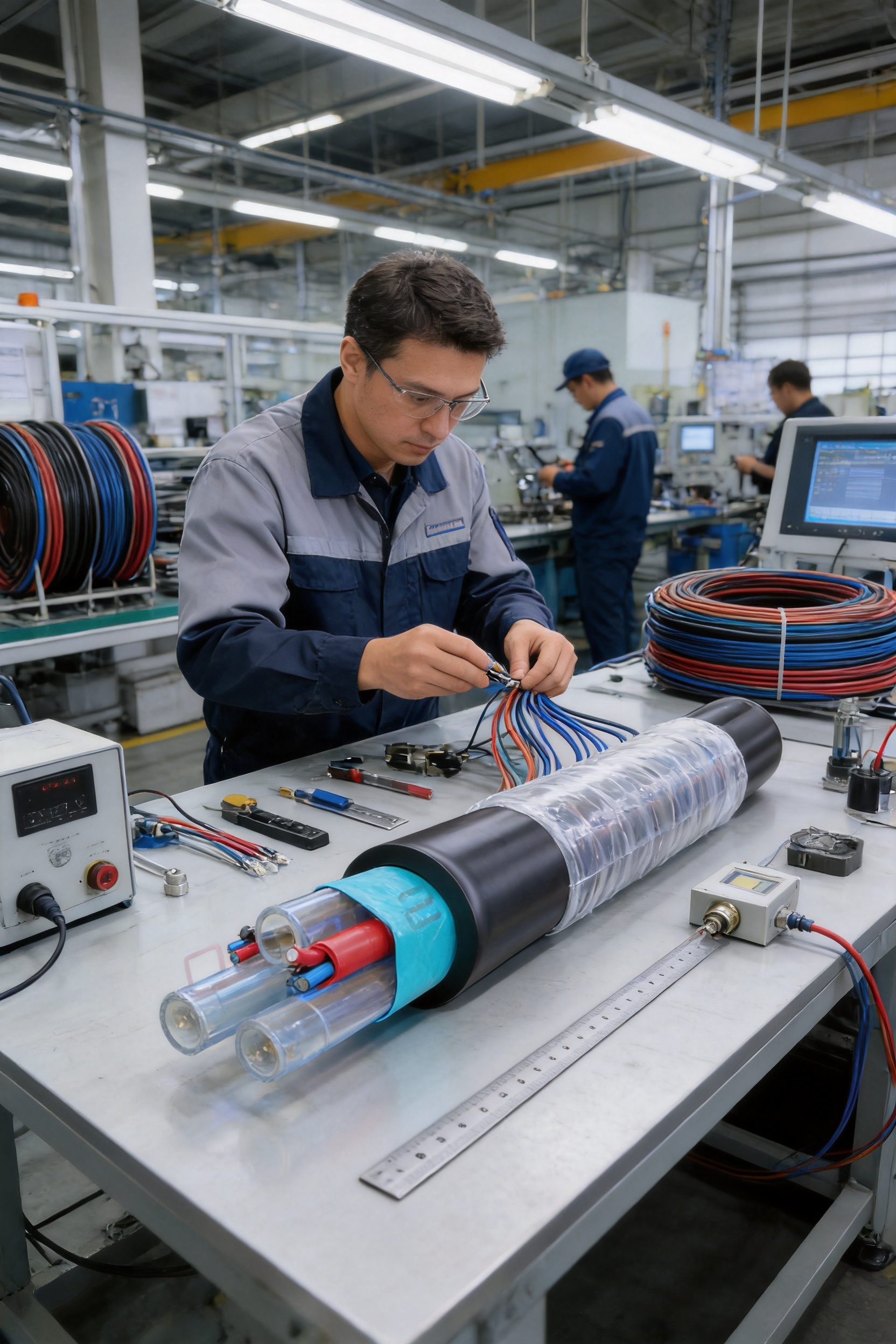
In industrial facilities, tubing used for instrument air, hydraulic signals, pneumatic control, and process measurement must remain protected from changing environmental conditions. Although a single tube may appear simple, its reliability can determine whether a valve responds correctly, whether a pressure signal remains accurate, or whether an automated process continues to operate safely. Non-insulated tubing bundles provide a practical solution by grouping one or more tubes inside a protective outer arrangement without adding thermal insulation. This configuration offers an economical and flexible method for organizing, protecting, and routing instrumentation lines in both indoor and outdoor installations.
The non-insulated type tubing bundle is designed for applications in which the main requirement is environmental protection rather than active heat retention. It can be used for instrument air supply, hydraulic transmission, pneumatic signals, and other communication or control functions. By bringing several tubes together into one organized bundle, the system reduces installation complexity, improves routing efficiency, and helps protect tubing from mechanical contact, dust, moisture, sunlight, and general industrial exposure.
Manufactured by Santo Thermal Control Technology Co., Ltd., this product forms part of a wider range of electric heating, tracing, tubing, and process-control solutions. The company combines product design, material selection, manufacturing, testing, quality management, and technical service within an integrated operation. Its experience in thermal-control products also supports the development of tubing bundle systems that can be customized for different industries, layouts, tube quantities, and communication requirements.
This article explains the construction, operating purpose, advantages, applications, customization possibilities, manufacturing strengths, quality considerations, installation principles, and selection criteria associated with non-insulated tubing bundles.
Content
A non-insulated tubing bundle is an assembly in which one or more instrument tubes are grouped and protected as a single unit. The tubes may carry compressed air, hydraulic fluid, pneumatic signals, or other media used in measurement and control systems. Depending on the project, communication wires can also be included to provide an electrical connection between field equipment, sensors, transmitters, valves, and control panels.
The term “non-insulated” describes the thermal configuration of the product. Unlike heated or thermally insulated tubing bundles, this type does not primarily depend on an insulation layer or an integrated heating element to maintain the temperature of the transported medium. Its principal functions are mechanical protection, organization, simplified installation, and improved resistance to the surrounding environment.
This distinction is important during system design. Some process lines require heat tracing to prevent freezing, condensation, crystallization, or excessive viscosity. Other lines operate satisfactorily at ambient temperature and mainly need protection from physical damage or environmental contamination. In the second situation, a non-insulated bundle can deliver the required performance with lower material usage, reduced weight, and a simpler installation method.
Bundling also allows several independent lines to follow the same route. Rather than installing each tube separately, an engineering team can define one coordinated path for a complete group. This reduces visual clutter, makes cable and tubing identification easier, and can shorten installation time. A well-organized bundle is especially valuable in plants where hundreds or thousands of small-bore lines connect field instruments to control systems.
Many process plants use instrument air to operate pneumatic actuators, control valves, positioners, relays, and other devices. The air must be delivered through tubing that remains clean, mechanically sound, and correctly routed. A non-insulated tubing bundle can group air supply lines and related signal tubes, helping engineers maintain an orderly connection between the air distribution system and field devices.
Because instrument air tubing often travels through production areas, pipe racks, equipment zones, and outdoor corridors, it can be exposed to accidental contact, vibration, dust, water spray, and ultraviolet radiation. A suitable bundle provides a more controlled physical environment than a collection of completely exposed individual tubes.
Hydraulic control systems depend on the stable transmission of fluid pressure. Small-bore hydraulic tubing may connect control units, actuators, pressure devices, and remote instrumentation. Grouping these lines into a protective bundle can reduce the chance of accidental bending, abrasion, or confusion during installation and maintenance.
The selection of tube material, diameter, pressure rating, and connection system must always correspond to the hydraulic medium and operating conditions. The bundle arrangement protects and organizes the lines, but the pressure capability of the complete system remains dependent on the tube, fittings, connections, and design parameters specified for the application.
Pneumatic signals have historically been used in process-control systems and remain important in many industrial environments. Pneumatic tubing may carry control pressure from a transmitter, controller, relay, or signal converter to a receiving device. A multi-tube bundle helps maintain a consistent route for several signal channels and can simplify the identification of individual lines.
In a complex plant, the ability to trace a signal from a control cabinet to a field instrument is a major maintenance advantage. Neatly arranged tubing reduces the likelihood of crossed routes, unintentional disconnection, and difficult troubleshooting. This practical benefit can be as important as the protective function of the outer bundle.
Communication wires may be incorporated into the bundle when the design requires an electrical connection for monitoring, control, power, or signal transmission. Combining tubing and wires in a coordinated assembly can reduce the number of separate routes between the instrument and the control system.
The inclusion of communication wires must be evaluated according to voltage, current, electromagnetic compatibility, grounding, separation requirements, hazardous-area rules, and the applicable project standards. Where a project requires strict segregation between electrical and pneumatic systems, the bundle design should include appropriate separation or use independent assemblies.
Individual instrument tubes installed without organized protection may be exposed to scratches, impact, dirt, moisture, sunlight, and repeated contact with nearby equipment. A non-insulated bundle creates a more controlled protective arrangement. It helps shield the tubes from ordinary environmental exposure and reduces the risk that one unprotected line will be damaged during plant operation.
The degree of protection depends on the selected outer covering, tube material, installation method, and environmental conditions. Nevertheless, bundling generally provides a stronger and more orderly solution than simply placing several loose tubes along the same route.
Installing multiple tubes individually requires repeated measuring, routing, fastening, and identification. A pre-arranged bundle can reduce these tasks by allowing several lines to be handled as one assembly. This is useful in new construction projects, equipment skids, modular systems, and retrofit work where installation time is limited.
Bundled installation can also reduce the amount of support hardware required. Instead of separately securing every tube at every location, installers can use a coordinated support arrangement suitable for the bundle diameter and weight. The specific spacing and fastening method must be determined from the project design, but the general result is a cleaner and more efficient installation.
Industrial facilities often contain crowded pipe racks, cable trays, equipment platforms, and instrument corridors. A tubing bundle consolidates multiple lines into a defined route. This can improve the use of available space and reduce interference with other services.
Good organization supports future maintenance. Technicians can identify the bundle, follow its route, and locate the required line more efficiently. Labels, color coding, numbering, and documentation can be applied to the individual tubes or to the bundle assembly according to the project’s identification system.
When multiple loose tubes are installed in the same area, it may be difficult to distinguish supply lines, return lines, signal lines, and spare lines. A designed bundle provides a more consistent arrangement from the point of manufacture through installation. This reduces the possibility of connecting the wrong tube to an instrument or valve.
Clear identification remains essential. The bundle does not replace engineering documentation or proper labeling, but it provides a better physical foundation for a traceable instrumentation system.
Non-insulated tubing bundles are often more economical than heated or heavily insulated alternatives when temperature maintenance is not required. They avoid the additional materials and electrical components associated with heat tracing, temperature control, thermal insulation, and power connections.
The cost advantage is not limited to the initial purchase. A simpler assembly can reduce installation labor, support hardware, inspection effort, and maintenance requirements. It can also lower the weight placed on support structures. These benefits make the non-insulated design suitable for projects seeking reliable environmental protection without unnecessary thermal complexity.
The product is suitable for indoor and outdoor applications when its materials and construction are selected for the specific environment. Indoor installations may involve control rooms, equipment packages, production units, laboratories, utility areas, and machinery rooms. Outdoor installations may include pipe racks, tank farms, compressor stations, treatment plants, solar facilities, and remote instrument locations.
Outdoor suitability requires attention to ultraviolet exposure, rainfall, condensation, wind, temperature variation, chemical contact, mechanical impact, and the presence of corrosive atmospheres. The final design should specify materials and protection levels based on the actual site conditions rather than relying on a general application label.
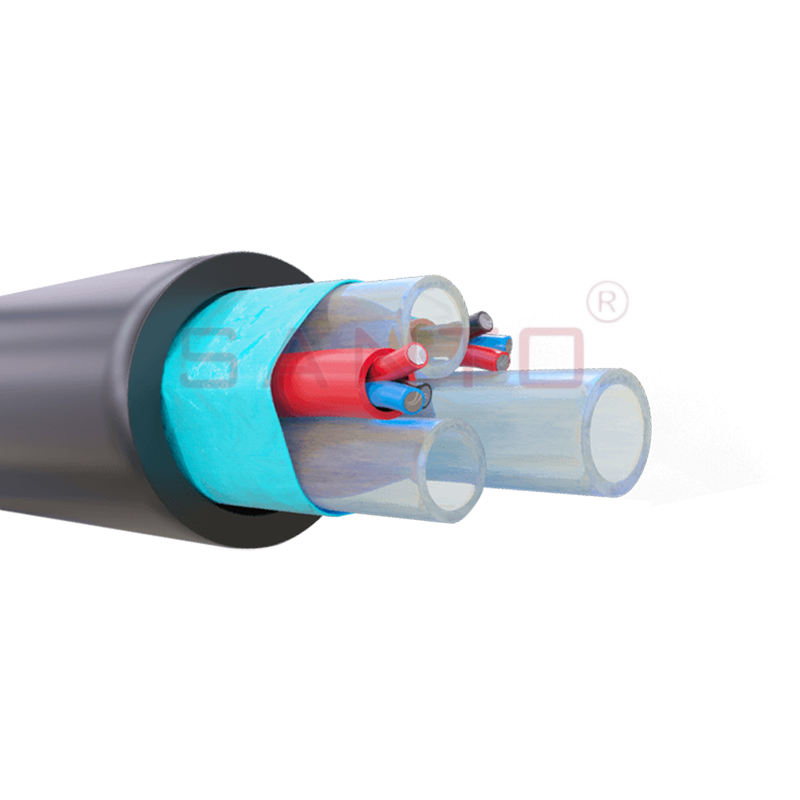
Non-Insulated Type Tubing Bundles
The configuration of a tubing bundle varies according to the number of tubes, tube dimensions, service medium, pressure requirements, route length, installation environment, and connection method. The basic assembly may contain a single tube or multiple tubes. It may also include communication wires where electrical connectivity is required.
A single-tube bundle is useful when one instrument line requires additional physical protection or organized routing. It can be selected for a dedicated air line, a hydraulic signal line, or a pneumatic connection that must be protected from the surrounding environment.
Compared with an unprotected individual tube, the single-tube arrangement may offer better resistance to handling damage and a more professional installation appearance. It can also simplify attachment to support structures and make the route easier to identify.
Multi-tube bundles are used when several lines serve the same instrument group, process skid, or equipment area. The tubes can be selected with different internal diameters or specifications when the application requires it. For example, a bundle may include separate supply, signal, purge, and spare lines, subject to engineering approval.
The number of tubes should be established before production. It is also helpful to define whether spare tubes are required for future expansion. Adding a spare line during the original installation may be more economical than installing a new route after the plant is operating.
Communication wires may be incorporated when the system needs electrical communication between instruments and associated equipment. This feature can support a coordinated connection arrangement and reduce the need for a completely separate route.
Electrical and tubing components must be selected as a compatible system. The design should consider insulation, temperature rating, bending radius, voltage class, signal type, shielding, grounding, and the requirements of the installation area. Where hazardous-area certification or special separation is required, the bundle should be engineered to comply with the applicable rules.
The outer protection of the bundle is an important factor in service performance. It should be selected for the expected exposure, including abrasion, moisture, sunlight, chemicals, oil, temperature changes, and mechanical stress. A factory-produced bundle can provide a more consistent outer arrangement than an assembly made entirely at the installation site.
The outer surface should also support practical handling. It should be possible to transport, unwind, route, secure, and identify the bundle without causing damage to the internal tubes or wires. During installation, installers must observe the recommended bending radius and avoid crushing, twisting, or sharp pulling forces.
Refineries, storage terminals, chemical plants, and petrochemical facilities use extensive instrumentation to monitor pressure, flow, temperature, level, and equipment status. Tubing bundles can connect field instruments with control systems while helping maintain organized routes through process units and pipe racks.
In these environments, material compatibility and hazardous-area requirements are especially important. The tubing and outer protection must be selected for contact with hydrocarbons, solvents, process vapors, and outdoor weather. Where the installation is located in an explosive atmosphere, the complete system must comply with the project’s explosion-protection strategy.
Gas facilities frequently use pneumatic actuators, instrument air systems, pressure transmitters, and remote control equipment. Non-insulated bundles can provide a practical route for air and signal lines where the process conditions do not require active thermal maintenance.
Utility systems such as compressed air, nitrogen, cooling water monitoring, and equipment protection may also use bundled tubing. The final selection depends on the medium and the pressure or temperature conditions associated with each line.
Power plants contain extensive control and monitoring equipment. Turbine systems, boiler systems, water treatment units, fuel systems, and emissions-control equipment may all require pneumatic or hydraulic instrument connections.
Bundled tubing supports orderly installation around large equipment and helps technicians trace instrument lines across crowded plant areas. It can be used in conventional power facilities, industrial cogeneration systems, and renewable-energy support installations when the materials are appropriate for the site.
Large solar installations and energy facilities use monitoring equipment, actuators, weather stations, tracking systems, and balance-of-plant controls. These systems may require protected tubing routes and electrical communication connections. A non-insulated bundle can be suitable in locations where the process medium does not require heating.
Outdoor energy projects must account for ultraviolet radiation, wind, rain, dust, thermal cycling, and long cable or tube routes. Proper support, sealing, identification, and material selection are essential to long-term performance.
Automation equipment often combines pneumatic motion, sensing, control signals, and electrical communication. Tubing bundles can help connect automated machinery, control cabinets, actuators, and sensors in a compact and organized manner.
In production equipment, the bundle must also accommodate movement where applicable. Dynamic applications require special attention to flexibility, repeated bending, torsion, minimum bend radius, and fatigue resistance. A static industrial bundle should not automatically be used in a continuously moving application without confirmation from the manufacturer and system designer.
Non-insulated tubing bundles may also be used in building services, infrastructure equipment, water treatment systems, and specialized mechanical installations. They can protect small-bore lines used for monitoring and pneumatic control while providing an orderly appearance in technical spaces.
Applications in public infrastructure may require additional fire, smoke, environmental, or local regulatory considerations. These requirements should be addressed during specification and approval.
Selecting a tubing bundle requires more than choosing the number of tubes. The complete operating environment and connection system should be reviewed before production. A detailed specification helps the manufacturer provide a suitable construction and reduces the risk of changes during installation.
| Selection Item | Key Questions | Why It Matters |
|---|---|---|
| Tube quantity | How many active and spare tubes are required? | Determines bundle size, routing space, and future capacity. |
| Tube dimensions | What are the outside diameter, wall thickness, and length? | Influences pressure capability, weight, bending, and connection selection. |
| Service medium | Will the tubes carry air, hydraulic fluid, gas, water, or another medium? | Determines material compatibility and cleanliness requirements. |
| Operating pressure | What are the normal, maximum, and transient pressures? | Supports safe tube and fitting selection. |
| Temperature | What are the minimum, normal, and maximum temperatures? | Ensures that tubes, wires, and outer materials remain suitable. |
| Installation environment | Is the bundle indoors, outdoors, underground, or in a corrosive area? | Determines weather, chemical, ultraviolet, and mechanical protection. |
| Electrical content | Are communication wires, power conductors, or shielding required? | Defines electrical construction and separation requirements. |
| Route conditions | What are the length, bends, supports, and access restrictions? | Helps establish handling, bending, and installation requirements. |
| Regulatory requirements | Are certifications, hazardous-area approvals, or customer standards applicable? | Ensures the supplied assembly can be accepted for the intended project. |
Engineers should also consider the expected service life, inspection method, replacement strategy, and availability of spare connections. A well-defined specification allows the product to be designed for the actual project rather than treated as a generic tube package.
Santo Thermal Control Technology Co., Ltd. integrates research, design, production, manufacturing, and sales. This integrated structure is valuable for tubing bundle projects because the product may require coordination between materials, mechanical construction, thermal-control knowledge, electrical components, and customer-specific requirements.
The company operates in Jiangsu Province, an important center for China’s electric heating belt industry. Its product portfolio includes self-limiting heating belts, constant-power heating products, glass-fiber heating belts, silicone rubber heating systems, mineral-insulated cables, snow-melting cables, electric hot wires, and accessories. Although a non-insulated tubing bundle does not require active heating, experience across these related technologies supports a broader understanding of industrial routing, environmental exposure, insulation systems, electrical integration, and process applications.
The company emphasizes new product development and technical improvement. Its history includes cooperation in product research with Harvard University in the United States and the development of specialized electric heating technologies. This research-oriented approach supports the ability to evaluate new materials, construction methods, and application requirements.
For tubing bundle customers, research capability can be important when the application does not match a standard catalog arrangement. A project may require an unusual tube combination, special outer protection, communication-wire integration, long continuous lengths, or compatibility with a difficult environment. A manufacturer with an established development process is better positioned to assess and produce such configurations.
The company has decades of experience in electric heating and thermal-control products. Its listed development history extends from the founding of an electric heating instrument factory in 2000 through later investment in irradiation facilities, product testing, new manufacturing capacity, and international expansion.
This background is relevant even when the selected tubing bundle is non-insulated. Industrial customers often operate several types of tracing, heating, instrumentation, and protection systems in the same facility. Working with a manufacturer that understands both heated and non-heated configurations can simplify product coordination across a project. If future sections of the installation require a heated tubing bundle or heat-traced process line, the same technical partner may be able to support those requirements.
Integrated manufacturing helps maintain control over key production stages. These may include material preparation, tube grouping, wire placement, outer covering, length control, marking, inspection, packaging, and final release. Consistent control of these stages is essential for a product that may be installed over long distances and connected to sensitive instrumentation.
The company has passed ISO9001 quality system certification and states that its products have obtained national CCC certification where applicable. Quality-system certification provides a framework for documented procedures, process control, inspection, corrective action, and continual improvement. Customers should confirm which certifications apply to the specific tubing bundle configuration and project location.
The company reports more than 35 years of industry experience, annual output exceeding 10,000 units or product assemblies, more than 2,000 distributors, and business coverage in more than 85 areas. It has also invested in additional land, a new factory, and a product simulation testing laboratory.
These resources can support stable production, larger project orders, repeat purchasing, and the development of custom products. For industrial customers, manufacturing capacity is important because a tubing bundle order may need consistent dimensions and construction across multiple batches or project phases.
The company’s products have entered international markets, and its development history includes the establishment of a Russia factory. International experience can support communication with overseas customers, adaptation to different project specifications, export packaging, documentation, and coordination with distributors.
Global projects often require more than a product quotation. They may require technical drawings, material information, inspection records, installation guidance, packaging controls, and clear communication regarding standards. An experienced export manufacturer is more familiar with these practical requirements.
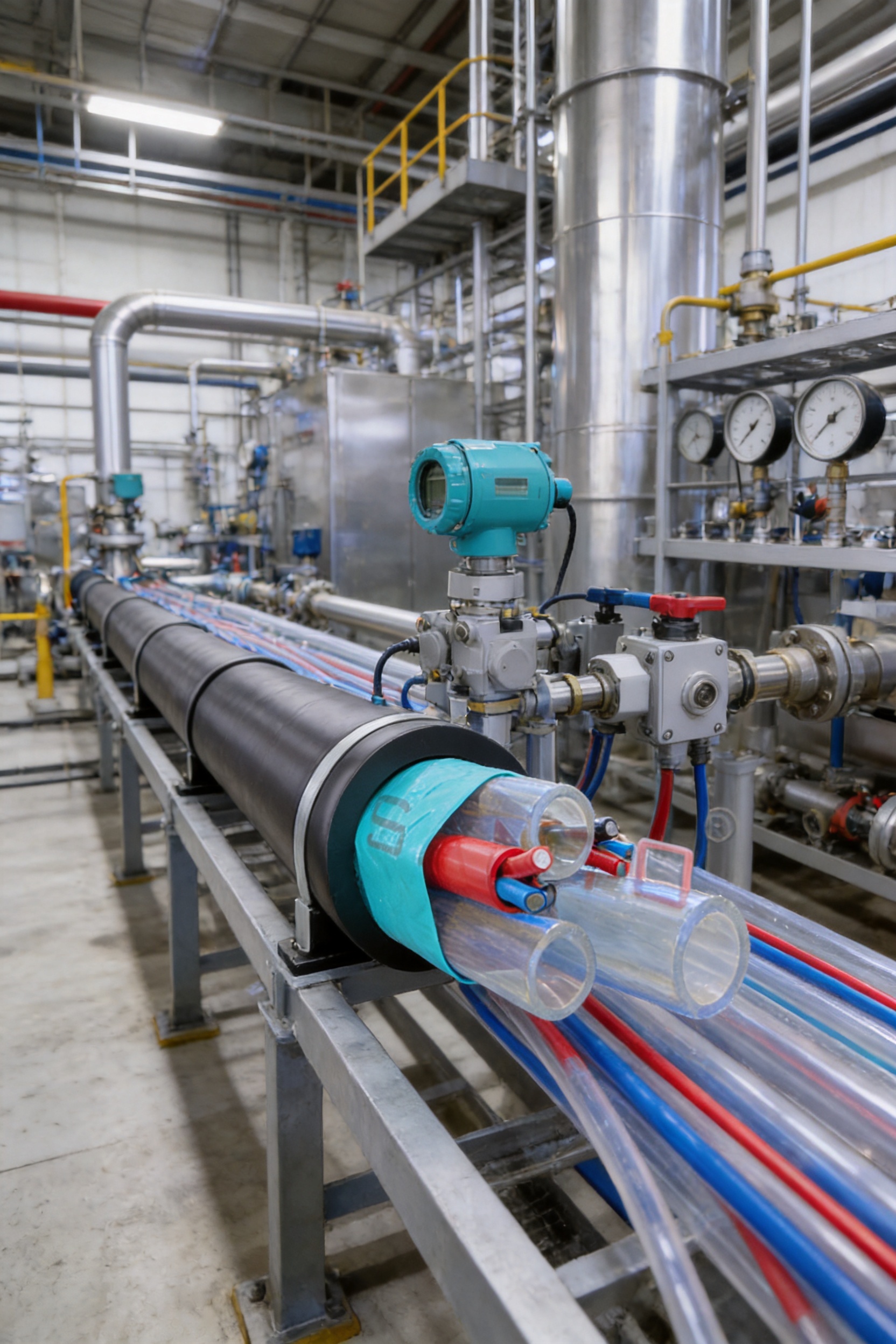
Material selection is the foundation of tubing bundle performance. The tube material must be compatible with the transported medium and the external environment. Common considerations include corrosion resistance, pressure capability, flexibility, temperature range, cleanliness, and connection compatibility.
The outer protection must also be chosen carefully. Indoor dry environments, outdoor installations, chemical plants, coastal sites, and high-vibration equipment may require different material solutions. A reliable manufacturer should review the application before confirming the construction rather than applying one outer material to every project.
During production, each tube must be correctly identified, measured, routed, and arranged within the bundle. Tube crossover, excessive stress, sharp bends, and uneven tension can create installation and service problems. Controlled assembly helps maintain a consistent arrangement along the full length.
For multi-tube assemblies, identification should be maintained from the beginning to the end of the bundle. Marking, numbering, color coding, or documentation may be used according to the customer’s requirements. Accurate identification is particularly valuable when several bundles appear similar but serve different instruments or process units.
Bundled tubing is often ordered in specific lengths based on equipment layouts. Correct length control can reduce field splicing, excess material, and installation waste. The manufacturer should review the route, connection locations, allowance for movement, and termination requirements before cutting or assembling the product.
Overly short bundles can create installation difficulties, while excessive length can increase storage, handling, and routing challenges. A coordinated engineering review helps establish a practical length that includes appropriate installation allowance without creating unnecessary surplus.
Inspection requirements depend on the tube type, service, pressure, project standards, and customer specifications. Possible checks may include visual inspection, dimensional verification, tube identification, continuity testing for communication wires, pressure or leak testing, and review of documentation.
Testing should be defined before production because the required method may vary by application. Instrument air systems, hydraulic lines, pneumatic signals, and electrical communication components do not necessarily use the same inspection criteria. The manufacturer and customer should agree on the inspection plan before the order enters production.
Long tubing bundles must be packaged to prevent crushing, excessive bending, contamination, and moisture intrusion during transport and storage. Coiling or winding must respect the minimum bending radius of the assembly. Ends should be protected to keep dirt and water out of the tubes and to preserve connection areas.
Packaging labels should identify the product, length, bundle number, tube arrangement, destination, and handling instructions where required. Clear packaging improves receiving inspection and reduces the risk of installing the wrong bundle in a complex project.
Installation should follow the approved drawings, product documentation, and site safety procedures. Before installation, the bundle should be inspected for transport damage, incorrect labeling, moisture, crushed sections, or exposed components.
The route should be checked for sharp edges, hot surfaces, moving equipment, chemical exposure, standing water, and possible interference with other services. Supports should be sized for the bundle’s weight and installed at suitable intervals. Excessive compression from clamps or ties should be avoided because it can deform the outer protection or restrict the internal tubes.
The minimum bending radius must be respected during unwinding, routing, and connection. A bundle should not be sharply folded to fit a restricted space. If the route contains tight bends, the design should be reviewed before installation or a more flexible configuration should be selected.
Connections should be made using fittings and termination methods suitable for the tube material, pressure, and service medium. Ends should be kept clean. Tubes should be correctly identified before connection, and all unused or spare tubes should be capped or protected according to the project procedure.
After installation, the system should be inspected for correct routing, secure support, proper identification, connection integrity, and damage. Pressure, leak, continuity, or functional tests should be completed as required. Documentation should record the test results and any deviations from the approved design.
A non-insulated tubing bundle is designed to reduce routine maintenance by protecting and organizing the tubing, but regular inspection remains important. Maintenance personnel should look for cuts, abrasion, crushing, chemical attack, loose supports, water entry, ultraviolet deterioration, and signs of leakage at connections.
Outdoor bundles should be inspected more frequently in locations exposed to intense sunlight, severe weather, salt spray, or industrial chemicals. Indoor bundles should also be reviewed when they pass near rotating equipment, high-temperature surfaces, cranes, walkways, or areas subject to accidental impact.
Identification should remain legible throughout the service life. If labels become damaged or unclear, they should be replaced using the approved identification system. Correct labeling can significantly reduce the time required to isolate a fault or replace an instrument.
When a tube must be replaced, the maintenance team should determine whether the complete bundle can be repaired or whether a new assembly is required. Cutting into a factory-produced bundle may affect protection, identification, and sealing. Any field modification should follow the manufacturer’s instructions and the project’s maintenance procedures.
Industrial tubing routes differ widely. A standard bundle may be suitable for one project but unsuitable for another because of different tube quantities, pressures, lengths, materials, connection types, or environmental conditions. Customization allows the product to match the actual installation instead of forcing the installation to adapt to a generic product.
Possible customization factors include the number of tubes, tube outside diameter, wall thickness, material, length, wire inclusion, outer protective construction, marking system, end preparation, packaging, and documentation. Customers may also request sample approval, production drawings, inspection records, or special export packaging.
Customization should begin with accurate technical information. The customer should provide process data, route drawings, connection details, environmental conditions, applicable standards, and expected quantities. The manufacturer can then review the requirements and recommend a practical configuration.
Santo Thermal Control Technology Co., Ltd. describes itself as an OEM and ODM manufacturer with experience in custom heating cable production and export. This custom-manufacturing background is also relevant to tubing bundle projects because customers may require non-standard configurations or coordinated product families for a complete industrial installation.
Loose tubes can have a low initial material cost, especially for short routes. However, they often require more installation labor and support hardware. They may also be more vulnerable to confusion, abrasion, and disorganized routing. A tubing bundle generally provides better coordination and a more professional long-term installation.
Insulated bundles are appropriate when the process medium must be protected from low or high ambient temperatures, condensation, freezing, or viscosity changes. However, insulation adds bulk and cost and may require additional maintenance. When thermal maintenance is not necessary, the non-insulated type can be a simpler and more economical alternative.
Heated bundles combine tubing with an electrical heating system and may include insulation and temperature control. They are useful for demanding process conditions but introduce power requirements, control components, electrical design, and additional inspection needs. The non-insulated type avoids these extra systems where the application does not require active heating.
Rigid conduit and pipe can provide strong mechanical protection, but they may be heavier, less flexible, and more difficult to install around complex equipment. A tubing bundle can offer a lighter and more adaptable solution for small-bore instrumentation routes, provided that its protection level is suitable for the environment.
Successful tubing bundle projects depend on coordination among process engineers, instrumentation engineers, mechanical designers, procurement teams, installers, and maintenance personnel. The product should be considered during the early routing stage rather than added after all available space has been allocated.
Important documents may include product specifications, dimensional drawings, tube schedules, material certificates, inspection and test plans, packing lists, installation instructions, and certificates required by the project. The exact documentation package should be agreed upon during quotation and order confirmation.
Clear communication is especially important for international projects. Units, standards, drawings, labeling language, delivery terms, and acceptance procedures should be confirmed in writing. The manufacturer’s export experience and distributor network can support communication and delivery coordination, but the customer remains responsible for confirming the requirements of the final installation.
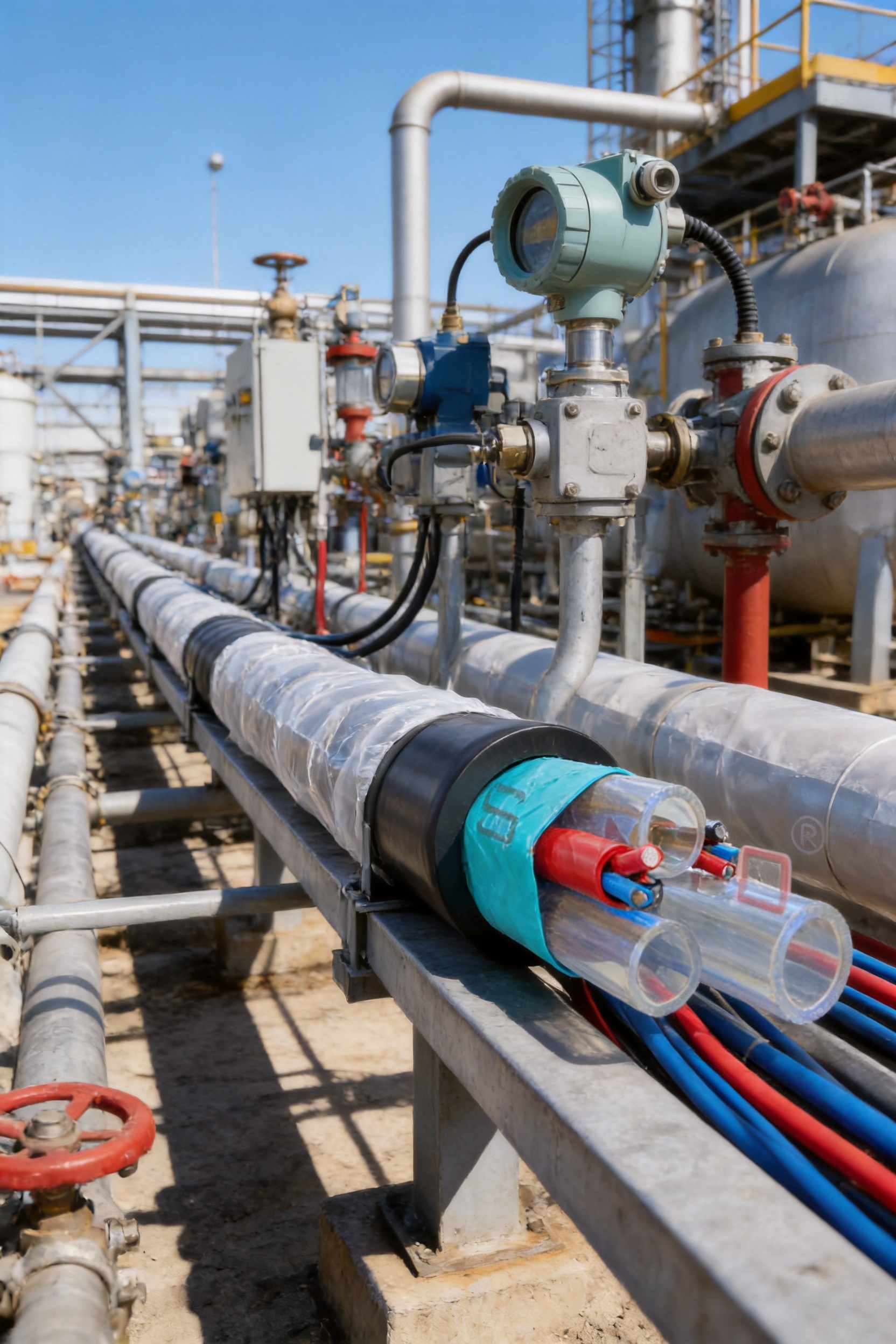
A tubing bundle should never be selected solely on appearance or general application descriptions. The complete assembly must be suitable for the pressure, temperature, medium, environment, and installation classification. Safety factors, local regulations, customer standards, and equipment instructions must be considered.
For hazardous locations, the bundle’s use must be evaluated alongside the site’s explosion-protection concept. The presence of communication wires, conductive materials, static electricity, and chemical exposure may affect the design. Where certification is required, customers should confirm that the exact configuration has the necessary approval rather than assuming that a related product certificate applies automatically.
Pressure systems should be isolated and depressurized before maintenance. Instrument air, hydraulic fluid, and pneumatic signals can create stored-energy hazards. Personnel should use suitable protective equipment and follow lockout, isolation, and test procedures.
Electrical wires included in a bundle must be installed and tested by qualified personnel. Electrical and fluid systems should be clearly identified, and connections should be checked before energization or pressurization.
An experienced manufacturer contributes more than production capacity. It can help identify missing technical information, recommend suitable materials, coordinate tube and wire arrangements, review installation constraints, and prepare a product that matches the customer’s operational needs.
Santo Thermal Control Technology Co., Ltd. has developed a broad industrial product portfolio and a long history in electric heating and thermal-control manufacturing. Its stated strengths include research cooperation, quality-system certification, product development, manufacturing integration, international business, and customer-oriented customization.
The company’s experience with petroleum, chemical, gas, construction, solar, electric heating, and geothermal applications provides familiarity with the demanding environments in which tubing and instrumentation systems are commonly used. Its product range also includes accessories and related heating systems, allowing customers to coordinate multiple thermal-control requirements through one source when appropriate.
For a project that includes both non-heated instrument tubing and heated process lines, a manufacturer with knowledge of both categories may help reduce interface problems. The customer can define which sections require only environmental protection and which sections require insulation or active heating. This approach supports a more efficient overall design.
To receive an accurate quotation and technical recommendation, customers should provide the following information whenever possible:
1. Product application, such as instrument air, hydraulic signal, pneumatic signal, or communication connection.
2. Number of tubes required in each bundle.
3. Tube material, outside diameter, wall thickness, and pressure rating.
4. Fluid or gas carried by each tube.
5. Normal, minimum, and maximum operating temperature.
6. Normal and maximum operating pressure.
7. Required bundle length and estimated route.
8. Indoor or outdoor installation location.
9. Exposure to ultraviolet radiation, chemicals, oil, moisture, vibration, or impact.
10. Communication wire type, quantity, voltage, shielding, or grounding requirements.
11. Connection, termination, and end-preparation requirements.
12. Identification, color coding, marking, and documentation requirements.
13. Applicable standards, certifications, inspection procedures, and customer specifications.
14. Packaging, delivery location, and project schedule.
Providing this information at the beginning helps avoid delays and allows the manufacturer to confirm whether the non-insulated design is appropriate or whether an insulated or heated alternative should be considered.
It is an assembly containing one or more tubes grouped together and protected as a coordinated unit without relying on thermal insulation or active heating as its primary function. It is commonly used for instrument air, hydraulic signals, pneumatic signals, and related control connections.
The main purposes are to protect tubes from ordinary environmental exposure, organize multiple lines, simplify installation, reduce routing confusion, and provide an economical alternative when temperature maintenance is not required.
Yes. It is suitable for outdoor use when the selected materials and construction are appropriate for sunlight, rain, temperature changes, chemicals, mechanical exposure, and other site conditions. Outdoor suitability should be confirmed for the specific configuration.
Yes. Communication wires may be included to support electrical connections between equipment. The design must account for wire type, voltage, shielding, grounding, separation, electromagnetic compatibility, and any hazardous-area requirements.
Not necessarily. If the transported medium may freeze, crystallize, condense, or become excessively viscous, an insulated or heated tubing bundle may be required. A thermal assessment should be completed before selecting the non-insulated type.
The quantity depends on the application, tube dimensions, required protection, route conditions, and customer specifications. The manufacturer can develop single-tube or multi-tube arrangements based on the project requirements.
In many custom applications, different tube sizes may be coordinated in one assembly, subject to manufacturing feasibility and installation requirements. The tube schedule should be provided for review before production.
Typical industries include petroleum, petrochemical processing, gas, power generation, industrial automation, water treatment, solar energy, construction services, and other facilities that use pneumatic, hydraulic, or instrument-control systems.
A bundle generally provides better organization, easier handling, improved identification, and more consistent protection. It can also reduce installation labor and support hardware. Loose tubing may still be appropriate for simple, short, or highly accessible installations.
A non-insulated bundle is simpler and usually more economical when heat retention is not required. A heated bundle is more appropriate when the process medium needs freeze protection, condensation control, viscosity management, or temperature maintenance.
Important information includes tube quantity, dimensions, materials, service media, pressure, temperature, length, environment, communication-wire requirements, connection details, standards, marking, testing, and packaging requirements.
The company states that it has passed ISO9001 quality system certification and that its products have obtained national CCC certification where applicable. Customers should verify the certificates and their applicability to the exact product and destination market.
Potentially, but the complete design must be reviewed against the hazardous-area classification, applicable explosion-protection requirements, material properties, electrical components, and project certifications. Approval should be confirmed for the exact configuration.
Maintenance personnel should inspect the bundle for abrasion, cuts, crushing, chemical damage, loose supports, water entry, deteriorated labels, and connection leakage. Pressure and electrical safety procedures must be followed before inspection or repair.
A manufacturer experienced in both heated and non-heated systems can help distinguish where active thermal control is necessary and where a simpler protective bundle is sufficient. This may support better coordination for projects containing several types of tracing and instrumentation products.
Non-insulated tubing bundles provide a practical solution for protecting and organizing instrument air lines, hydraulic signals, pneumatic signals, and communication connections. Their main advantages include simplified installation, improved route organization, reduced tube confusion, lower weight, flexible indoor and outdoor use, and economical operation when thermal maintenance is not required.
The product is particularly valuable in industrial environments where many small-bore lines must travel through crowded process areas. By treating several tubes as a coordinated assembly, it supports more efficient construction and more manageable maintenance. At the same time, proper engineering remains essential. Tube materials, pressure ratings, service media, environmental exposure, electrical content, hazardous-area requirements, and installation methods must all be reviewed before production.
Santo Thermal Control Technology Co., Ltd. combines industrial manufacturing experience, research and development, quality-system management, customization capability, international market experience, and a broad thermal-control product portfolio. These strengths provide a suitable foundation for customers seeking reliable tubing bundle solutions and coordinated support for broader electric heating or process-control projects.
The best result comes from selecting the product according to actual operating conditions rather than choosing a standard configuration without technical review. With accurate project information, controlled manufacturing, appropriate testing, correct installation, and regular inspection, a non-insulated tubing bundle can provide a durable and cost-effective connection solution for modern instrumentation systems.
1. Product information for Non-Insulated Type Tubing Bundles, supplied technical material.
2. Santo Thermal Control Technology Co., Ltd. company profile and product portfolio information.
3. ISO 9001, Quality Management Systems—Requirements.
4. General industrial practices for instrument air, pneumatic control, hydraulic signal, and process instrumentation installation.
5. General engineering practices for tubing selection, pressure containment, environmental protection, identification, and maintenance.
6. General project practices for electrical communication wiring, hazardous-area evaluation, grounding, shielding, and equipment integration.
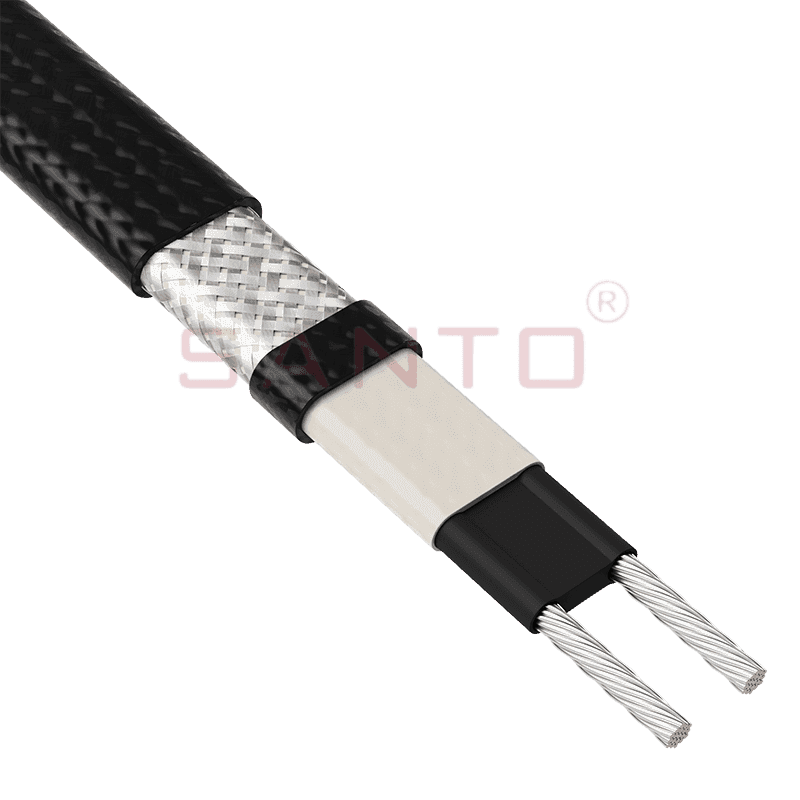
The SANTO UFA range of self-regulating heating cables is mainly used for frost protection of pipes and vessels but can also be used to maintain processes up to 65°C. These heating cables are available...
See Details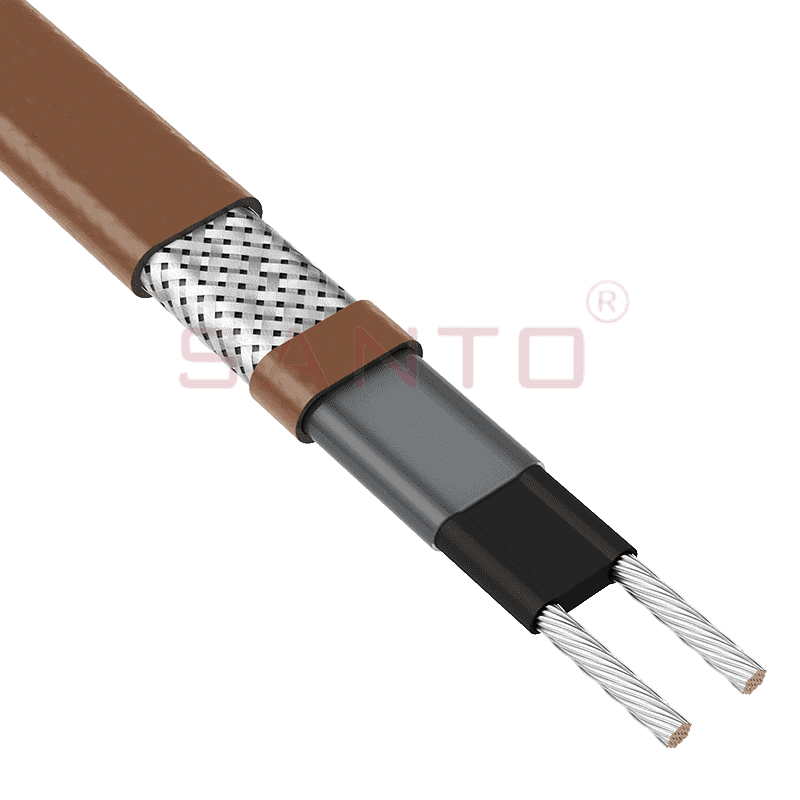
The SANTO UFB range of self-regulating heating cables is mainly used for frost protection of pipes and vessels requiring a higher power output than the UFA heating cables can supply. They can also be ...
See Details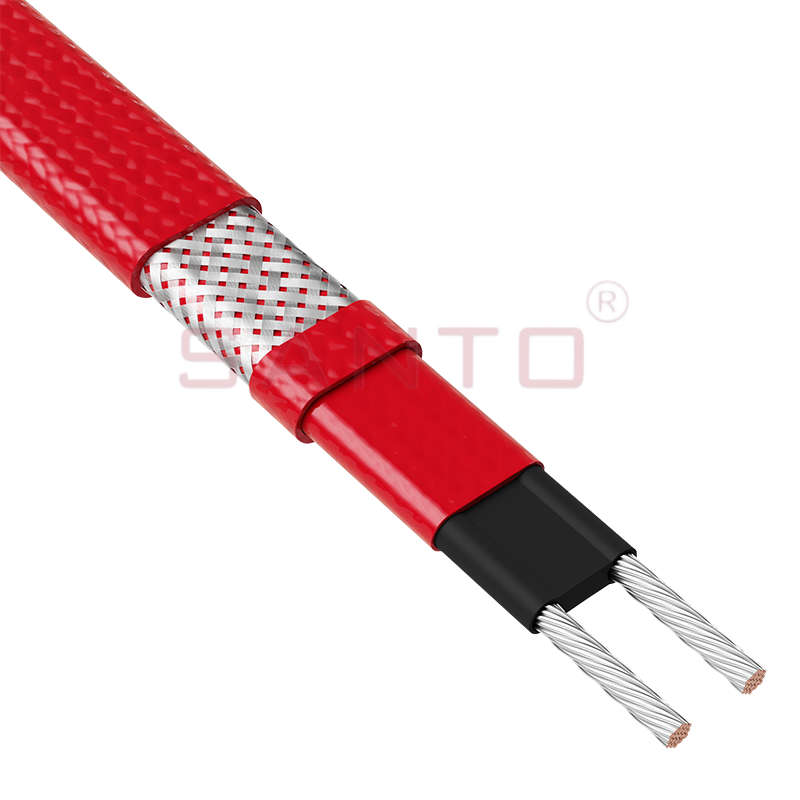
The SANTO UFC range of self-regulating heating cables is used for frost protection of pipes and vessels that require steam cleaning. They can also be used to maintain processes up to 121°C. These heat...
See Details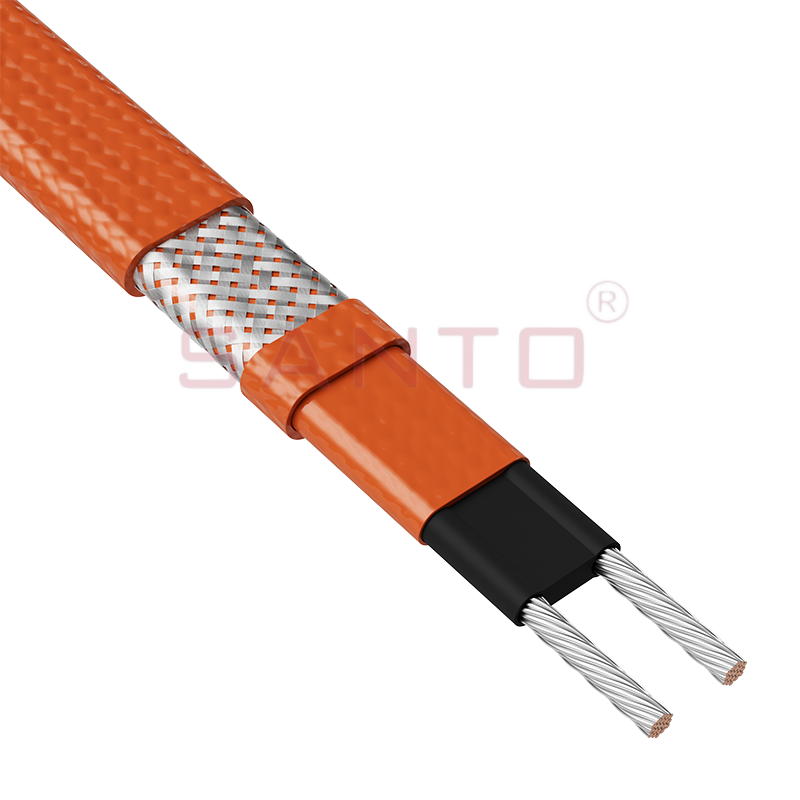
The SANTO UFO range of self-regulating heating cables is mainly used for frost protection of pipes and vessels that require steam cleaning . They can also be used to maintain processes up to 150°C. Th...
See Details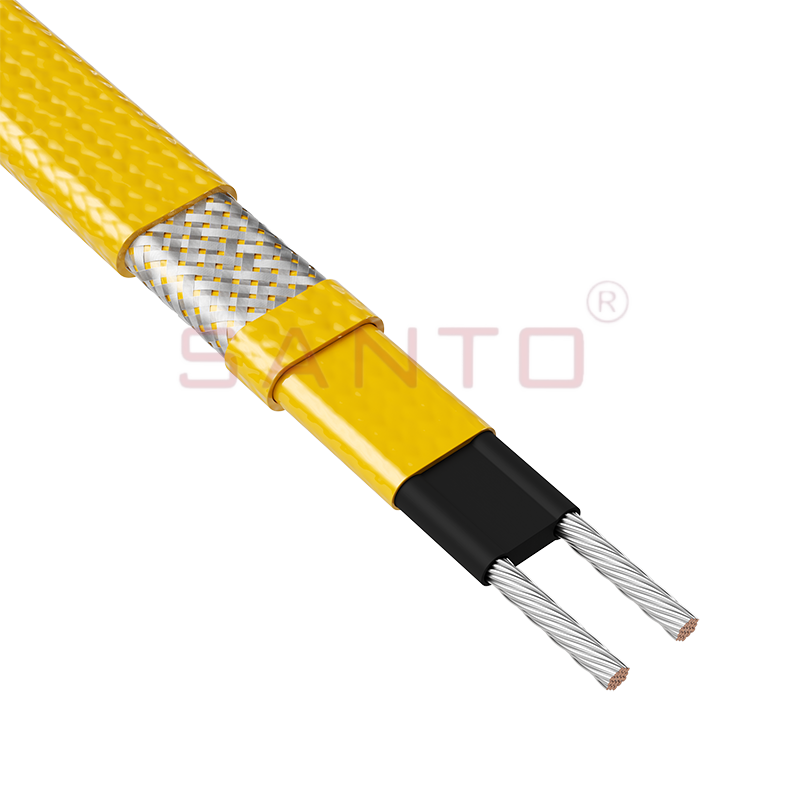
The SANTO UFD series of self-regulating heating cables are mainly used for freeze protection of pipes and vessels, but can also be used to maintain processes up to 200°C. These heating cables are avai...
See Details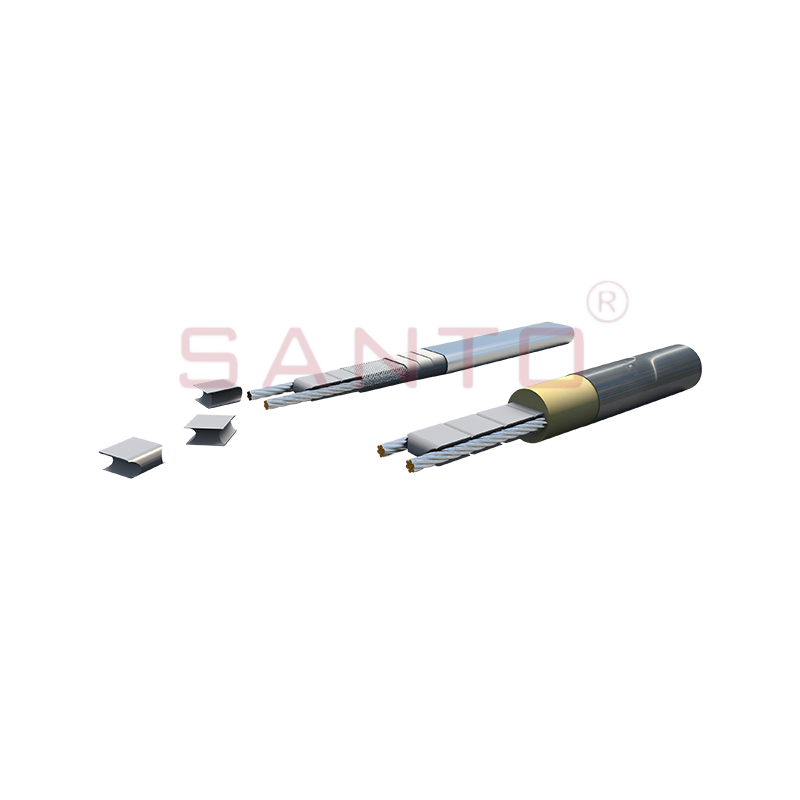
SANTO UFY heating wire is suitable for applications that maintain process temperatures up to 260 ℃ and can be steam blown; The self-regulating and parallel circuit heating wires of the UFY series are ...
See Details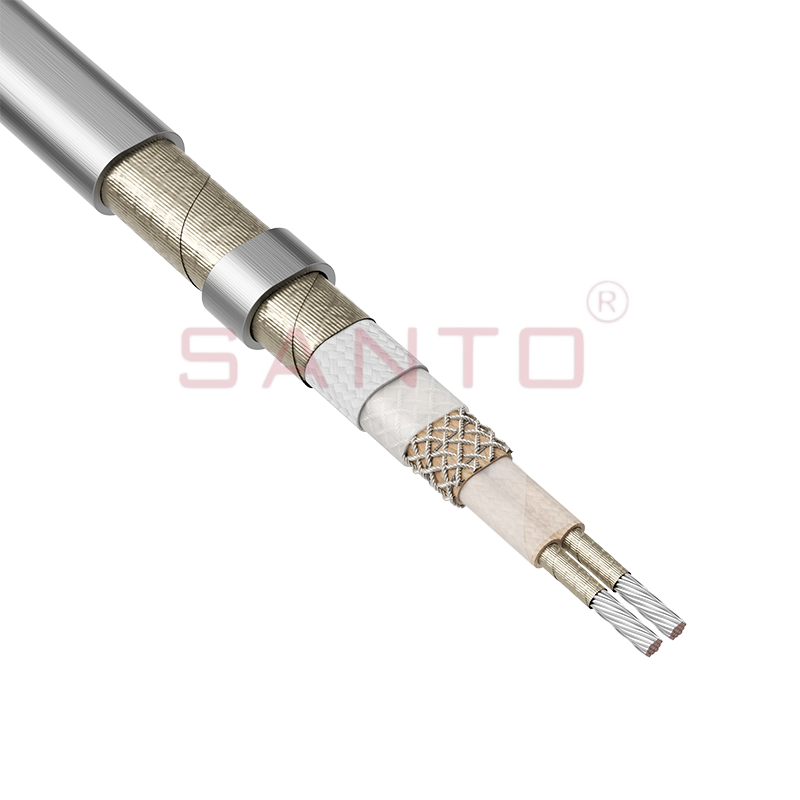
The SANTO UFM series self-regulating heating cables are mainly used for freeze protection of pipes and vessels, but can also be used to maintain processes up to 400°C. These heating cables are availab...
See Details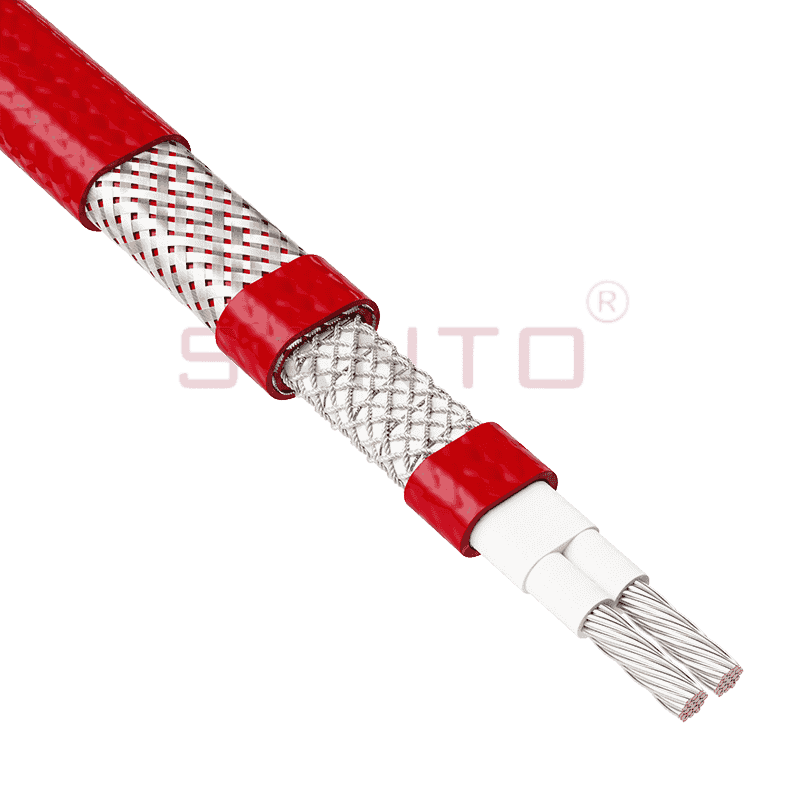
The SANTO ACC range of power-limiting heating cables is mainly used for temperature maintenance of processes and offers the advantage of a high power output at high temperatures which can reduce the n...
See Details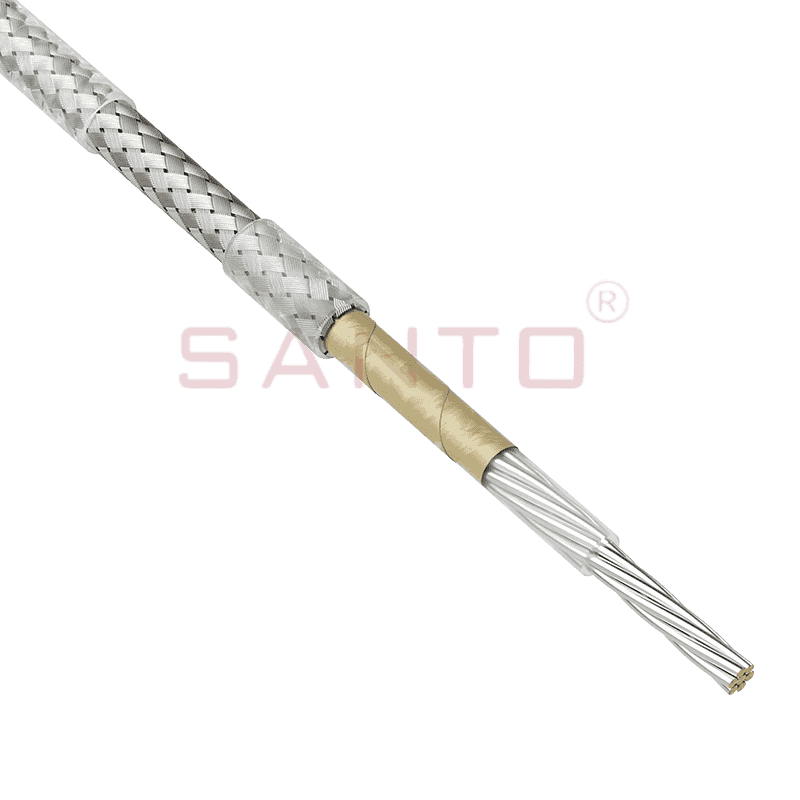
The stranded high temperature conductor is nickel plated to ensure a long life at elevated temperatures in corrosive environments. It is electrically isolated using an innovative sandwich construction...
See Details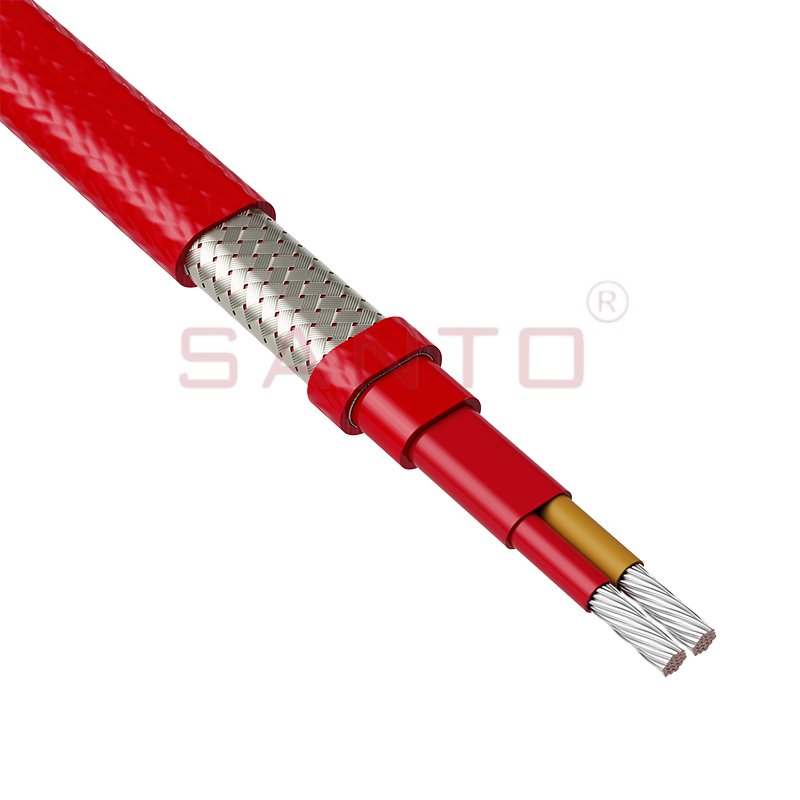
The stranded high temperature conductor is nickel plated to ensure a long life at elevated temperatures in corrosive environments. It is electrically isolated using an innovative sandwich construction...
See Details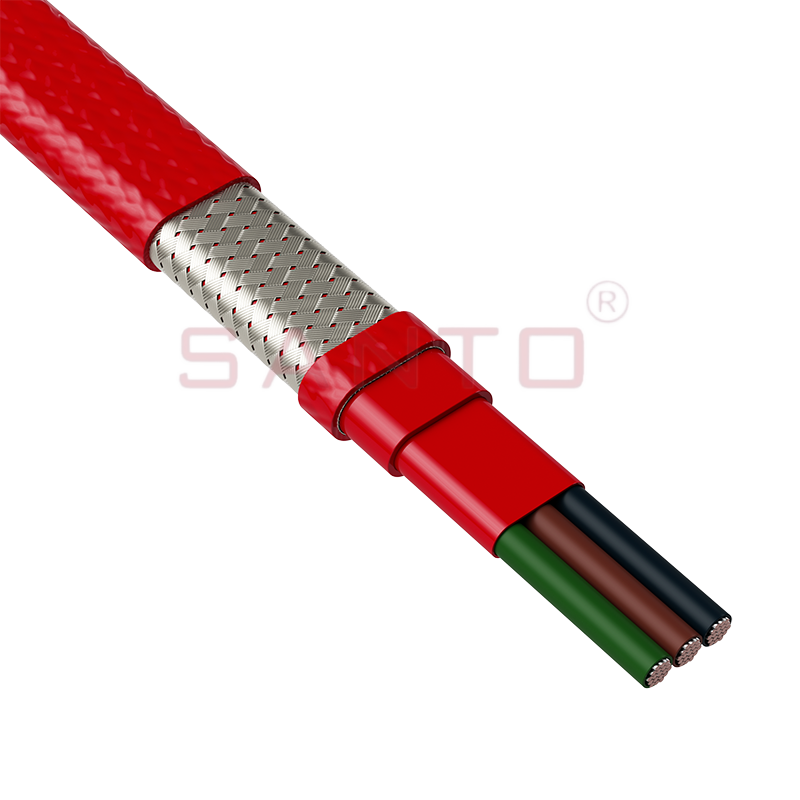
The stranded high temperature conductor is nickel plated to ensure a long life at elevated temperatures in corrosive environments. It is electrically isolated using an innovative sandwich construction...
See Details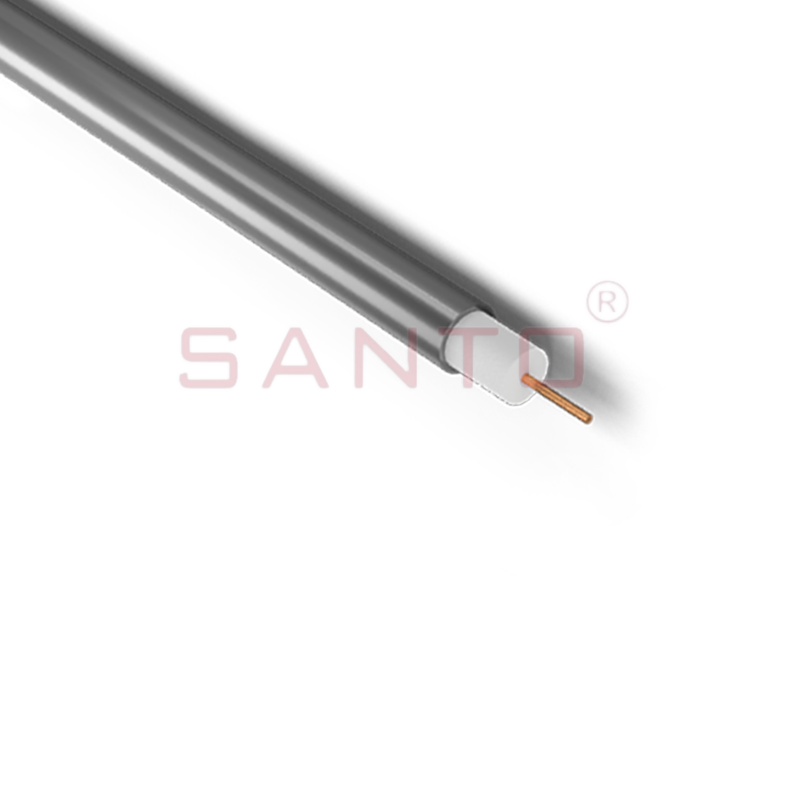
SANTO HAx mineral insulated (MI) Alloy 825 series heating cables are suitable for use in hazardous areas. They have been designed for use in freeze protection and temperature maintenance applications ...
See Details
Santo electric heating strips are widely used in key industries in China.

