 English
  English
 русский
 日本語
日本語 Español
 中文简体
中文简体
The SANTO UFA range of self-regulating heating cables is mainly used for frost protection of pipes and vessels but can also be used to maintain processes up to 65°C. These heating cables are available...
See Details
In industrial heat tracing, a junction box is not a minor accessory; it is one of the most important connection points in the electrical heating circuit. The MF-EX-21 Multi-Purpose Junction Box is designed for power supply, end termination, splicing, and marshalling functions in demanding environments where safety, reliability, ingress protection, and installation flexibility are essential. Built for hazardous-area applications and engineered to support power cables, heating cables, and cold leads, this junction box provides a practical and robust interface for modern electric heat tracing systems.
The product is especially valuable for projects involving electrically heated tracing cables, skin-effect heating systems, snow and ice melting systems, tubing bundles, underfloor heating mats, silicone rubber heating systems, and related heating cable accessories. In these applications, electrical connections must remain stable under temperature variation, vibration, moisture exposure, chemical atmosphere, and long operating periods. The MF-EX-21 addresses these requirements through its engineered polymer enclosure, silicone rubber sealing gasket, stainless steel captive lid screws, DIN-rail-mounted terminals, and configurable cable entry system.
Unlike many general-purpose junction boxes that require extensive field modification before use, the MF-EX-21 is supplied as a dedicated industrial heat tracing connection enclosure. It is available in configurations suited for spring-type terminals and large screw terminal applications. This allows engineers and contractors to choose the appropriate terminal capacity for standard heat tracing connections or higher-current, larger-conductor series heating cable installations. The result is a connection platform that supports both installation efficiency and long-term operational confidence.
Santo Thermal Control Technology Co., Ltd. supports the product with decades of electric heating industry experience, advanced product development capabilities, quality management systems, and a manufacturing portfolio covering self-limiting heating cables, constant-power heating cables, MI cables, silicone rubber heating systems, glass fiber heating products, and heat tracing accessories. The company’s deep understanding of heating cable behavior, installation requirements, and field maintenance needs is reflected in the practical design of the MF-EX-21.
MF-EX-21 Multi-Purpose Junction Box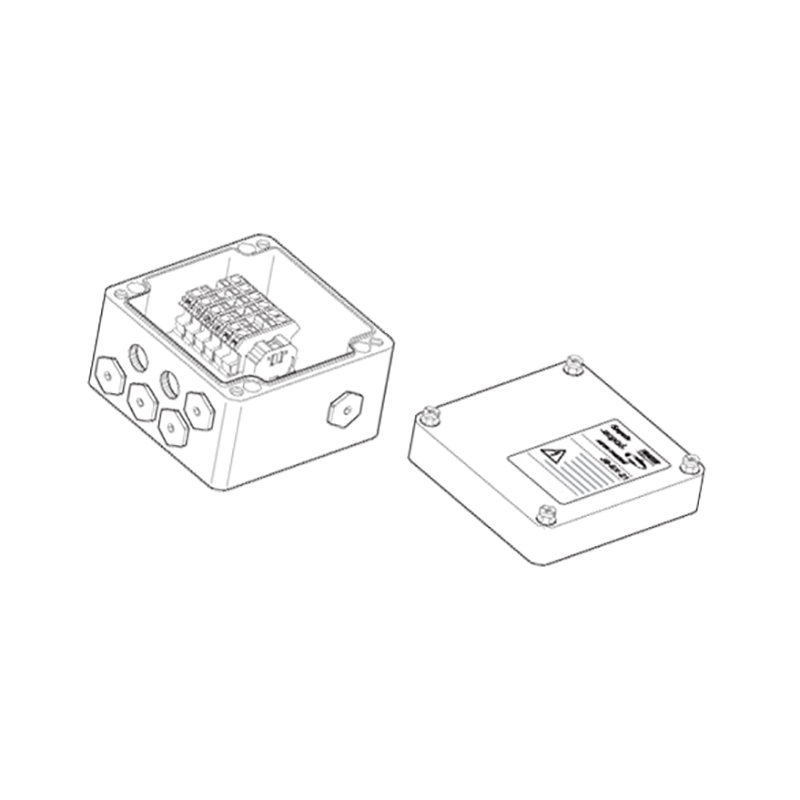
Content
The MF-EX-21 Multi-Purpose Junction Box is an industrial polyester junction box developed for use in hazardous areas. Its main role is to provide a safe, protected, and organized space for electrical connections between power cables, heating cables, and cold leads. Depending on the configuration of the heat tracing system, it can accommodate multiple heating cable or cold lead connections together with a power cable. This capability makes it suitable for power supply boxes, end boxes, splice boxes, three-phase and loop configurations, and marshalling boxes.
The enclosure is designed with multiple cable entries, including M20 entries for heating cable or cold lead connection kits and a larger power cable entry, such as M32 or M40 depending on the configuration. M20 connection kits are ordered separately according to the type of heating cable being used. This modular approach is important because heat tracing systems often use different cable types, including polymer-insulated cables, mineral-insulated cables, self-regulating heating cables, and constant-wattage products. A one-size-fits-all connection method can compromise installation quality, while the MF-EX-21 allows the installer to match the gland and kit to the cable.
The standard MF-EX-21 configuration uses DIN-rail-mounted spring-type terminals. These terminals are designed for fast, secure, and maintenance-friendly conductor connection. Spring-type terminals help maintain contact pressure over time, which can be beneficial in applications subject to thermal cycling. The large terminal version, MF-EX-21/35MM2, uses screw terminals from Weidmuller and is intended for applications where larger terminal sizes and higher current capacity are required, especially with PI and MI heating cables.
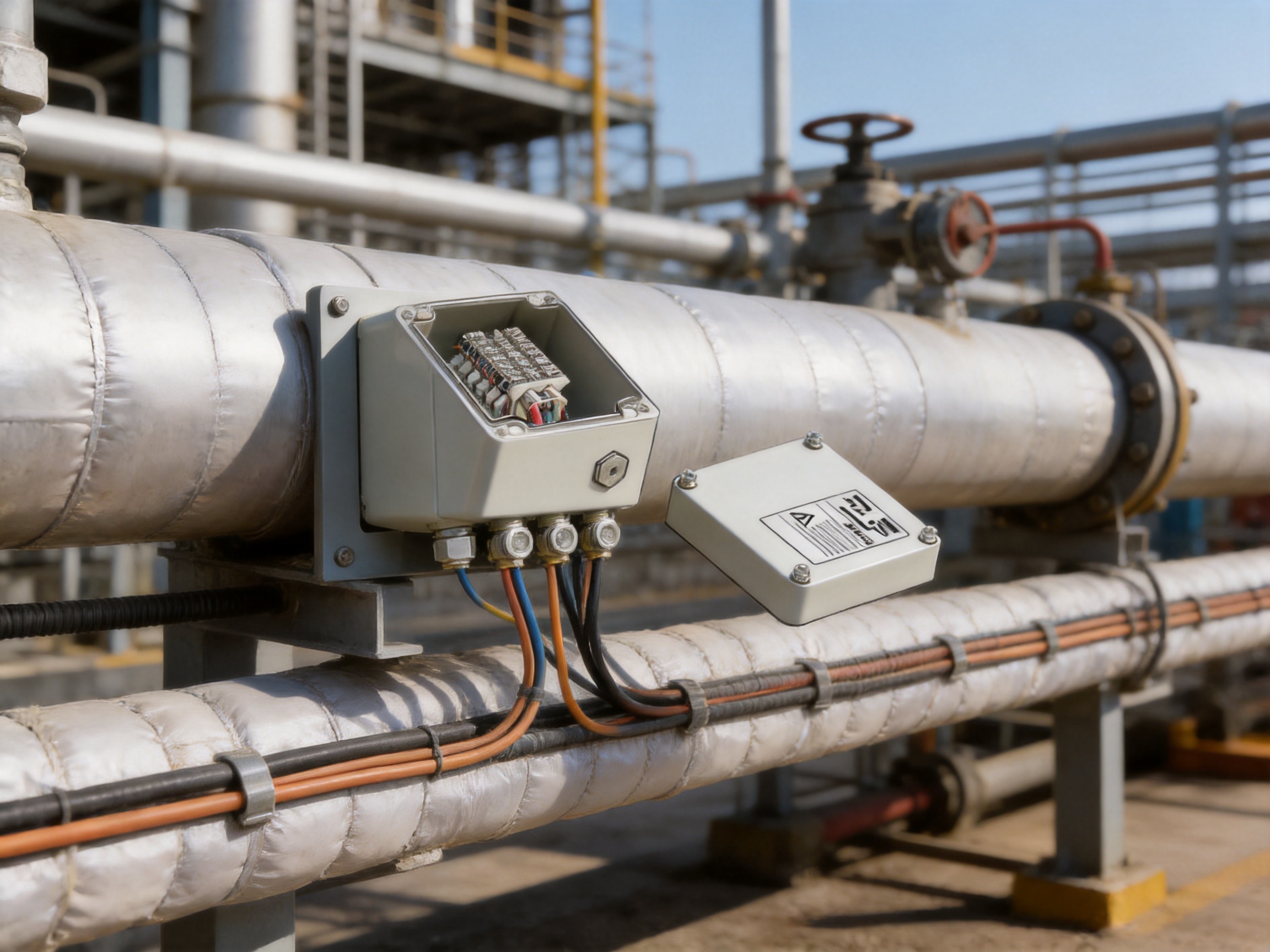
The box can be wall mounted using the four molded holes in the base. For pipe mounting, standard support brackets such as SB-100 and SB-101 may be used where applicable. This mounting flexibility helps contractors adapt the box to pipe racks, tanks, process lines, skids, and field structures without excessive custom fabrication.
Electric heat tracing systems are used to maintain process temperatures, prevent freezing, protect pipelines, support viscosity control, enable snow and ice melting, and improve operational safety in industrial and commercial facilities. In such systems, the heating cable may run over long distances, across multiple zones, and through areas exposed to dust, rain, chemicals, oil, vibration, and hazardous atmospheres. Each connection point must be electrically safe, mechanically secure, and protected against environmental ingress.
The MF-EX-21 provides a stable connection point for these conditions. As a power supply box, it connects incoming power cables to heating cable circuits. As an end box, it protects termination points. As a splice box, it enables cable extension or repair connections. As a marshalling box, it organizes multiple cable connections for easier field management. This multifunctional character reduces the number of different enclosure types required on a project and helps standardize installation practices.
For engineering procurement and construction contractors, standardization can significantly reduce design complexity. A project that uses several different junction box models may require more documentation, more installation training, and more spare parts. By using a versatile enclosure like the MF-EX-21, teams can streamline purchasing, installation, inspection, and maintenance. This is one of the key advantages over competing generic junction boxes, which may not be optimized for heat tracing circuits or hazardous-area installation details.
Item |
MF-EX-21 Standard Configuration |
MF-EX-21/35MM2 Large Terminal Configuration |
Typical Use |
Power supply box, end box, splice box, three-phase and loop box, marshalling box |
Power supply, end, splice, and marshalling box for PI and MI series heating cables requiring larger terminals |
Cable Entries |
6 x M20 and 1 x M32 |
6 x M20 and 1 x M40 |
Terminal Type |
DIN-rail-mounted spring-type terminals |
DIN-rail-mounted screw terminals |
Terminal Quantity |
6 pieces, labeled 1, 2, 3, and 3 x PE |
3 WDU35 screw terminals, 2 WPE10 earth terminals, and 1 WPE35 earth terminal |
Maximum Conductor Size |
10 mm² solid and stranded |
35 mm² stranded and 16 mm² solid |
Maximum Operating Voltage |
550 Vac |
690 Vac |
Maximum Operating Current |
53 A |
100 A |
Ingress Protection |
IP66 |
IP66 |
Ambient Temperature Range |
-55°C to +55°C |
-50°C to +55°C |
Construction Materials |
Electrostatic charge-resistant glass-filled engineered polymer, silicone rubber gasket, stainless steel captive screws |
Electrostatic charge-resistant glass-filled engineered polymer, silicone rubber gasket, stainless steel captive screws |
Many ordinary junction boxes are designed for general electrical distribution and may not provide the correct combination of material resistance, sealing performance, entry configuration, and certified accessory compatibility needed for hazardous-area heat tracing. The MF-EX-21 is developed specifically for industrial environments where hazardous-area requirements must be considered from the beginning. Its electrostatic charge-resistant glass-filled engineered polymer enclosure helps reduce risk related to static charge accumulation, while its robust structure supports demanding field service.
Hazardous-area systems require more than a label. They require coordination between enclosure design, glands, stopping plugs, cable kits, terminals, earthing, conductor clearances, and installation method. The MF-EX-21 supports this coordinated approach by providing compatible entries, terminal arrangements, stopping plugs, rain plugs, and accessory options. When used with approved glands and connection kits, the box becomes part of a well-managed hazardous-area heat tracing connection strategy.
Ingress protection is critical for heat tracing circuits. Moisture entering a junction box can cause insulation breakdown, corrosion, nuisance trips, or dangerous faults. The MF-EX-21 provides IP66 ingress protection, meaning it is designed to resist dust ingress and powerful water jets when properly installed with suitable glands and sealing components. This makes it appropriate for outdoor process facilities, washdown areas, exposed pipework, and locations where rain, snow, or industrial spray may be present.
Compared with lower-rated enclosures, IP66 protection offers a higher level of confidence in long-term field operation. In heat tracing, failures often occur not because the heating cable itself is defective, but because connection points are poorly sealed or mechanically stressed. A well-protected junction box reduces this risk and contributes to the overall reliability of the heating circuit.
The standard configuration is specified for ambient temperatures from -55°C to +55°C, while the large terminal configuration is specified from -50°C to +55°C. This temperature range is especially important for freeze protection, pipeline tracing, tank heating, and outdoor installations in cold climates. Some competing products are only suitable for moderate environments, forcing engineers to select special enclosures for low-temperature regions. The MF-EX-21 is ready for severe cold applications, helping simplify product selection for demanding projects.
Low-temperature performance matters not only for the enclosure body but also for sealing integrity, screw retention, terminal stability, and cable gland compatibility. The silicone rubber sealing gasket helps maintain sealing performance across a broad temperature range, while stainless steel captive lid screws provide corrosion resistance and reduce the chance of losing fasteners during maintenance.
The MF-EX-21 offers six M20 entries and one larger power cable entry, such as M32 or M40 depending on the model. This layout supports a practical combination of heating cable connections and power input. The M20 entries can be used with connection kits for PI cold leads, MI cold leads, and other heating cable accessories. The larger entry accommodates power cable glands suitable for larger diameter power cables.
In comparison, many standard enclosures are supplied blank and require drilling on site. Field drilling can introduce dimensional errors, burrs, sealing problems, and certification concerns. A preconfigured entry system helps improve installation consistency and reduces labor. It also makes it easier to prepare installation drawings, cable schedules, and material take-offs before construction begins.
The availability of both spring-type and screw terminal configurations is a major product strength. Spring-type terminals are convenient for many standard circuits because they offer quick installation and stable contact pressure. The standard configuration supports conductors up to 10 mm², a maximum voltage of 550 Vac, and a maximum current of 53 A. This is suitable for many heat tracing circuits and control applications.
For heavier-duty circuits, the MF-EX-21/35MM2 version supports larger conductors, higher operating voltage, and higher current. With a maximum conductor size of 35 mm² stranded and 16 mm² solid, a maximum voltage of 690 Vac, and a maximum current of 100 A, it is suitable for series heating cable connections and applications requiring more robust terminal capacity. This two-tier product architecture gives engineers choice without forcing them to over-specify every connection point.
Competing products may offer only one terminal type or require extensive customization to handle larger conductors. The MF-EX-21 family addresses this by offering factory-defined configurations that align with real heat tracing project requirements.
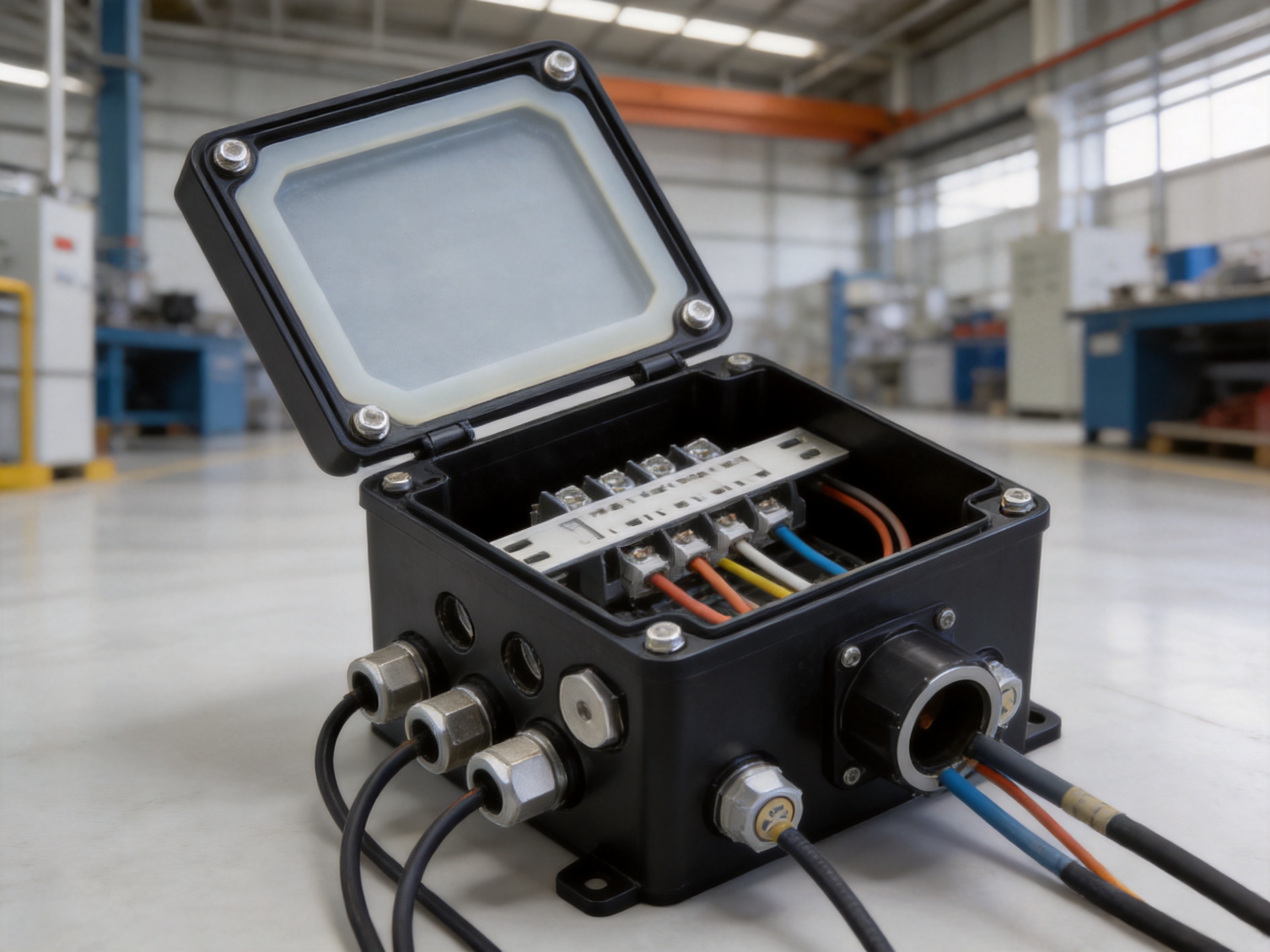
The enclosure body and lid are made from electrostatic charge-resistant glass-filled engineered polymer in black. This material selection provides several advantages over simple plastic enclosures and some metal boxes. Glass-filled engineered polymers offer good mechanical strength, dimensional stability, corrosion resistance, and reduced weight. In chemically aggressive or coastal environments, polymer enclosures can avoid corrosion issues that may affect painted or plated metal boxes.
The electrostatic charge-resistant characteristic is especially relevant in hazardous-area environments. While the full safety of an installation depends on system design and certified installation practices, material selection is an important part of reducing potential ignition risks. By choosing a material appropriate for industrial hazardous-area service, the MF-EX-21 demonstrates a more application-focused design than many low-cost general enclosures.
The sealing gasket is made from silicone rubber. Silicone rubber is known for its flexibility, thermal stability, and weathering resistance. In a junction box, the gasket must maintain compression over time and resist hardening or cracking under environmental exposure. A poor gasket can compromise ingress protection even if the enclosure body is strong. The use of silicone rubber supports the IP66 protection rating and helps preserve sealing performance through temperature changes.
The lid fixing screws are stainless steel and captive. Stainless steel provides corrosion resistance, while captive design prevents screws from being lost during inspection or maintenance. This may seem like a small feature, but in field operation it is extremely practical. Lost screws can delay maintenance, compromise sealing, or lead to the use of incorrect replacements. Captive screws support proper reassembly and help maintain enclosure integrity.
Installation time is a major cost factor in heat tracing projects. Each connection point may require cable preparation, gland installation, terminal wiring, insulation entry, labeling, testing, and inspection. The MF-EX-21 is designed to simplify these tasks through its accessible enclosure layout, DIN rail terminal mounting, multiple entries, and wall or pipe mounting options.
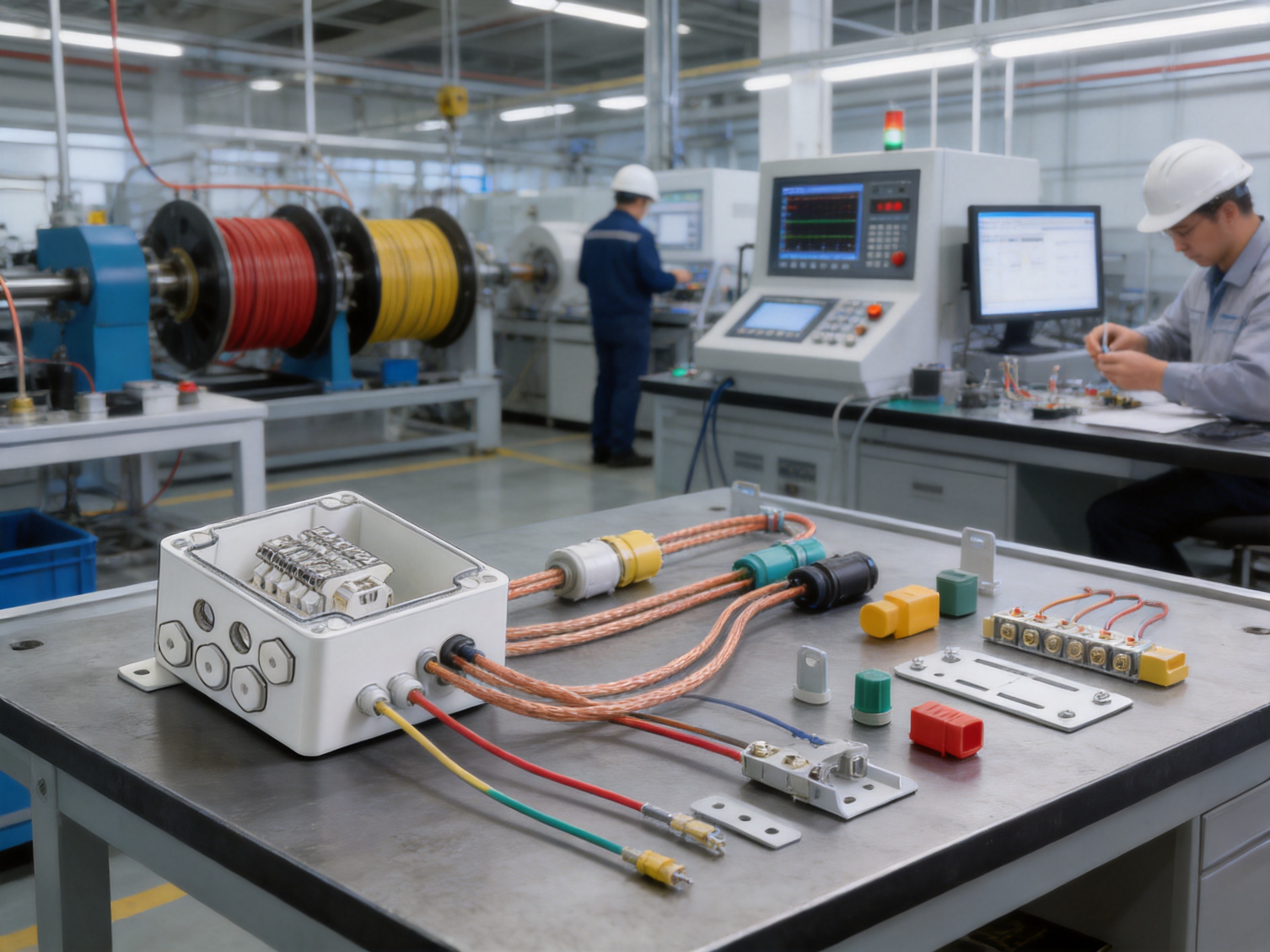
The standard kit contents include the junction box with terminals on a DIN rail, M20 stopping plugs, temporary M20 rain plugs, a larger stopping plug, and a terminal jumper for various wiring configurations. The large terminal configuration includes the junction box with screw terminals on a DIN rail, M20 stopping plugs, temporary rain plugs, and an M40 stopping plug. These contents reduce the need for installers to source basic closure accessories separately, while still allowing cable-specific glands and connection kits to be selected according to the heating cable type.
Because the M20 connection kits are ordered separately, contractors can prepare an installation package specific to the project. For example, a PI cold lead may require a hazardous-area approved gland for cables in a certain diameter range, while MI cold leads may be supplied with factory-terminated glands. Power cable entries can use compatible M32 or M40 hazardous-area approved glands depending on the cable diameter. This separation between enclosure and cable-specific accessories improves application accuracy.
Wall mounting via molded base holes supports direct installation on panels, structural members, or brackets. Pipe mounting through standard support brackets allows the box to be positioned close to the traced line. Proximity to the pipeline can reduce cable slack, simplify routing, and improve maintenance access. For contractors, these details contribute to faster and cleaner field work.
The electrical ratings of the MF-EX-21 are aligned with industrial heat tracing requirements. The standard model’s 550 Vac and 53 A rating supports many circuits, including three-phase configurations and loop applications. The large terminal configuration’s 690 Vac and 100 A rating extends the product’s use into higher-capacity systems. These ratings give engineers flexibility when designing power distribution for heat tracing loads.
Proper earthing is essential in electric heating systems. The MF-EX-21 terminal layouts include protective earth terminals, with labeling such as 1, 2, 3, and 3 x PE in the standard version. The large terminal configuration includes dedicated earth terminals for heating cable earth conductors and power cable earth connection. This organization helps installers maintain correct grounding practices and makes inspection easier.
DIN-rail-mounted terminals also support maintainability. If terminals must be replaced, expanded, or inspected, the rail system provides a recognizable and serviceable format. The product documentation notes that in total no more than ten terminals should be installed, ensuring that internal spacing and heat dissipation considerations are respected. This is another example of design discipline: rather than encouraging unlimited field modification, the product defines practical boundaries for safe use.
The MF-EX-21 is intended for use with multiple heat tracing cable types, including PI and MI heating cables when the appropriate configuration and accessories are selected. Polymer-insulated series heating cables are often used for long circuit lengths and high-temperature maintenance applications. Mineral-insulated heating cables are chosen for severe environments, high temperature resistance, mechanical durability, and fire resistance. Both cable types require carefully managed terminations and cold lead connections.
In many industrial facilities, a single project may include self-regulating cable for freeze protection, constant-power cable for longer or higher-load circuits, MI cable for high-temperature equipment, and silicone rubber heaters for specialized surfaces. A versatile junction box platform helps integrate these different heating technologies into a coherent electrical distribution system.
Santo Thermal Control Technology Co., Ltd. manufactures and supports a broad range of electric heating products, including automatic temperature-control heating belts, self-limiting electric heating belts, constant-power heating belts, glass fiber electric heating belts, MI cables, snow melting cables, silicone rubber electric heating systems, and related accessories. This broad product background gives the company a strong understanding of how junction boxes must perform in real installations. The MF-EX-21 is therefore not an isolated accessory; it is part of a complete heat tracing ecosystem.
Design engineers need products with clear ratings, defined entries, known terminal capacities, and appropriate environmental protection. The MF-EX-21 provides these details in a format that can be integrated into heat tracing design packages. The availability of standard and large terminal versions allows engineers to match the box to conductor size and load requirements. IP66 protection and low ambient temperature capability simplify selection for outdoor and cold-climate projects.
The ability to function as a power supply box, end box, splice box, and marshalling box also helps reduce the number of enclosure types specified. This supports standardization and lowers the probability of procurement or installation errors.
Contractors benefit from predictable installation. The MF-EX-21 provides prearranged entries, DIN rail terminals, stopping plugs, and mounting options. These features reduce installation time and help avoid improvisation in the field. The captive stainless steel screws and silicone gasket also support repeated opening and closing during installation checks without unnecessary component loss.
Because cable-specific connection kits and glands are selected separately, contractors can prepare correct kits for each cable type. This reduces mismatch problems, such as trying to fit a cable into an unsuitable gland or using a termination method not intended for the cable construction.
Plant operators value reliability, safety, and maintainability. A connection box that resists water ingress, supports secure terminals, and provides organized wiring can reduce downtime and maintenance risk. The MF-EX-21 helps maintain heat tracing circuit integrity, which is essential for freeze protection, process temperature maintenance, and equipment availability.
In hazardous areas, operators also need confidence that installed accessories are suitable for the environment. The MF-EX-21’s hazardous-area-oriented design and compatibility with approved glands and kits contribute to safer operation when installed according to applicable standards and project requirements.
The quality of a junction box depends not only on its specification sheet but also on the manufacturing organization behind it. Santo Thermal Control Technology Co., Ltd. is located in Jiangsu Province, an important region for China’s electric heating belt industry. The company has developed from an electric heating instrument factory into a high-tech enterprise engaged in research, design, production, manufacturing, and sales of electric heating and heat tracing products.
With more than 35 years of industry experience, the company has accumulated practical knowledge in heating cable design, polymer materials, conductor processing, insulation structures, irradiation technology, temperature control behavior, and accessory integration. This experience is important because heat tracing accessories must work together with heating cables, insulation systems, control panels, power distribution equipment, and field installation practices.
The company has passed ISO9001 quality system certification, and its products have obtained national CCC certification. It has also obtained explosion-proof certification and EAC Eurasian Union certification for relevant products. These quality and certification activities demonstrate a systematic approach to product compliance, process control, documentation, and continuous improvement.
Advanced manufacturing is reflected in several areas. First, the company’s product range requires expertise in conductor selection, insulation extrusion, heating element design, shielding, jacket materials, and termination accessories. Second, the establishment of an irradiation center supports the production of polymer-based heating products with enhanced thermal and mechanical performance. Third, investment in a new factory and product simulation testing laboratory strengthens the company’s ability to verify product behavior under realistic operating conditions.
For the MF-EX-21, this manufacturing background means the product is supported by a company that understands the full chain of heat tracing performance. A junction box must not be designed in isolation. It must be compatible with cable diameters, conductor sizes, cold lead constructions, grounding methods, field mounting conditions, and accessory kits. A manufacturer with broad heat tracing experience is better positioned to provide practical, application-ready solutions.
In electric heating systems, small defects can create large consequences. Loose terminals, poor sealing, unsuitable materials, incorrect entries, or unreliable accessories may cause system failure. Santo’s manufacturing approach emphasizes product quality, scientific management, technology guidance, and after-sales service. These strengths are important for the MF-EX-21 because the box is used at critical connection points.
Quality control for such a product should include enclosure inspection, dimensional verification, material confirmation, gasket fit checks, terminal assembly inspection, thread and entry review, accessory completeness, labeling verification, and packaging control. While the specific factory test procedure may vary by production batch and order requirements, the company’s broader quality system supports consistency across production and delivery.
For OEM and ODM customers, manufacturing discipline is especially important. Projects may require customized cable systems, project-specific accessories, private labeling, documentation packages, or international export support. Santo’s experience in custom heating cable production and export sales helps support these needs. The MF-EX-21 can be integrated into broader heating cable packages, allowing customers to source a more complete system from a manufacturer familiar with heat tracing design and installation.
The MF-EX-21 offers several competitive advantages when compared with generic industrial junction boxes and lower-cost heat tracing accessories. The first advantage is application specialization. It is designed for heat tracing connection duties, not merely general wiring. This means the entry arrangement, terminal layout, kit compatibility, and mounting options are aligned with heating cable field requirements.
The second advantage is hazardous-area suitability. The enclosure material, sealing system, approved accessory options, and defined cable entries support use in hazardous-area projects when properly specified and installed. Generic boxes may require additional engineering review or may not be suitable for such environments.
The third advantage is environmental durability. IP66 protection, silicone rubber sealing, stainless steel captive screws, and low-temperature capability help the box withstand outdoor and industrial conditions. Competing products with weaker ingress protection or less temperature range may be unsuitable for severe service.
The fourth advantage is terminal flexibility. The standard spring-terminal model is practical for common circuits, while the 35 mm² screw-terminal model supports higher current and larger conductors. This gives the product family a broader application range than single-configuration alternatives.
The fifth advantage is system support. Because the manufacturer also produces heating cables and related electric heating products, customers can obtain coordinated technical support for cables, connection kits, glands, and accessories. This reduces the risk of incompatibility and simplifies procurement.
The MF-EX-21 is well suited for petroleum, chemical, gas, construction, solar energy, electric heating, geothermal cultivation, and general industrial heat tracing applications. In petroleum and chemical facilities, it can support process line tracing, tank area circuits, pump station heating, valve body tracing, and instrument line freeze protection. In gas facilities, it can assist with temperature maintenance and freeze prevention in exposed process lines. In construction and building services, it can be used in heating cable systems that require robust junction points.
For snow and ice melting systems, connection boxes often face moisture, freezing temperatures, and outdoor exposure. The IP66 rating and low ambient temperature performance of the MF-EX-21 make it suitable for protected connection points in these systems, provided installation requirements are followed. For tubing bundles and instrument lines, the box can function as a power supply or marshalling point, helping organize multiple circuits in compact field areas.
For silicone rubber heating systems and special surface heaters, the junction box can provide a protected interface between power supply wiring and heater leads. For MI and PI heating cable applications, the large terminal configuration is especially useful when conductor sizes and current requirements exceed the capacity of standard terminal boxes.
Correct accessory selection is essential for reliable installation. The standard MF-EX-21 configuration can be used with support brackets such as SB-100 and SB-101. Glands for PI cold leads include hazardous-area approved gland kits suitable for cables in the approximate diameter range of 5.5 to 13 mm. Power cable glands may be selected for larger cable ranges, such as 12 to 21 mm for certain M32 glands. Loose terminals, earth terminals, end plates, and terminal jumpers can be ordered according to wiring configuration, while respecting the maximum total number of terminals.
The MF-EX-21/35MM2 configuration supports power cable glands such as M40, M32, and M20 options for different cable diameter ranges. A reducer from M40 male to M32 female may be used when appropriate. Loose terminal accessories include 35 mm² phase or neutral terminals, 10 mm² and 35 mm² earth terminals, end plates, and two-pole or three-pole terminal jumpers. For PI cold leads, compatible M20 gland kits and insulation entry kits are available. For factory-terminated MI units, the required gland may already be present.
These accessory options make the junction box adaptable, but they also highlight the importance of engineering selection. The installer should verify cable diameter, hazardous-area requirements, voltage, current, conductor size, earthing method, environmental exposure, and applicable standards before ordering.
To obtain the full benefit of the MF-EX-21, installation should follow project drawings, manufacturer instructions, and applicable electrical codes. Before installation, the box should be inspected for transport damage, correct terminal configuration, correct entries, and accessory completeness. The mounting location should allow safe cable routing, avoid unnecessary mechanical stress, and provide access for inspection.
When installing glands and connection kits, the installer should verify that each gland matches the cable diameter and cable construction. Unused entries should be closed with appropriate stopping plugs. Temporary rain plugs should not be treated as permanent sealing devices unless specifically designed for that purpose. The lid gasket should be clean and correctly seated before closing the enclosure. Captive screws should be tightened evenly to maintain sealing compression.
Electrical connections should be made by qualified personnel. Conductors should be stripped to the correct length, inserted fully into terminals, and checked for secure retention. Protective earth conductors should be connected according to the terminal layout. For screw terminals, torque should follow the terminal manufacturer’s recommendations. For spring terminals, conductors should be inserted correctly and tested for retention. Terminal jumpers should be installed only as required by the wiring configuration.
After wiring, insulation resistance testing and continuity checks should be performed according to the heat tracing system commissioning procedure. The enclosure should be labeled according to project standards, including circuit identification, voltage, area classification information where required, and warning labels. During maintenance, the box should be opened only under safe conditions, especially in hazardous areas. The gasket, terminals, glands, and grounding connections should be inspected periodically.
Long-term heat tracing reliability depends on a chain of components: heating cable, power supply, controls, insulation, weatherproofing, accessories, and junction boxes. A weakness in any link can affect the entire system. The MF-EX-21 strengthens the connection point by combining robust enclosure materials, practical sealing, reliable terminals, flexible entries, hazardous-area-oriented design, and compatibility with approved accessories.
Its value is not limited to initial installation. Over years of operation, maintenance teams need enclosures that can be accessed, inspected, and reclosed without damage. Captive stainless steel screws, DIN rail terminals, organized labeling, and durable materials all contribute to maintainability. The product’s wide ambient temperature range and IP66 protection help maintain function through seasonal changes and harsh weather.
For facility owners, reliability translates into fewer shutdowns, reduced freeze damage risk, lower maintenance cost, and improved safety. For contractors, reliability reduces warranty claims and rework. For engineers, it provides confidence that the specified connection box matches the demands of the heat tracing system.
Santo Thermal Control Technology Co., Ltd. combines manufacturing scale with product development capability. Its business extends across many areas and includes a large distributor network. The company’s products are used in antifreeze, deicing, heating, heat tracing, and insulation applications across multiple industries. This broad market exposure helps the company understand different installation standards, environmental challenges, and customer expectations.
The company emphasizes innovation, cooperation, effectiveness, and development. Its history includes the establishment of an irradiation center, development of advanced self-limiting temperature heating technologies, invention patents related to carbon fiber parallel heating cables, and expansion into international markets. These achievements demonstrate a long-term commitment to electric heating technology rather than short-term accessory production.
For customers selecting the MF-EX-21, this background matters. A junction box is often purchased as part of a larger heating cable package. Having access to a manufacturer that can supply cables, accessories, technical advice, customization, and after-sales support reduces project complexity. The company’s OEM and ODM capability is also valuable for international distributors, engineering companies, and industrial users who require tailored heat tracing solutions.
The MF-EX-21 is used to make safe and organized electrical connections between power cables, heating cables, and cold leads. It can function as a power supply box, end box, splice box, loop box, three-phase connection box, or marshalling box in industrial heat tracing systems.
Yes. The product is designed for hazardous-area industrial applications when used with the correct approved glands, connection kits, stopping plugs, installation methods, and project-specific compliance requirements.
The MF-EX-21 provides IP66 ingress protection when properly installed. This means it is designed to resist dust and powerful water jets, making it suitable for many outdoor and industrial environments.
The standard version uses DIN-rail-mounted spring-type terminals suitable for conductors up to 10 mm², with a maximum operating voltage of 550 Vac and maximum current of 53 A. The MF-EX-21/35MM2 version uses larger screw terminals suitable for conductors up to 35 mm² stranded, with a maximum operating voltage of 690 Vac and maximum current of 100 A.
The standard configuration provides six M20 entries and one M32 entry. The large terminal configuration provides six M20 entries and one M40 entry. Glands and connection kits should be selected separately according to cable type and cable diameter.
The box and lid are made from electrostatic charge-resistant glass-filled engineered polymer. The sealing gasket is silicone rubber, and the lid fixing screws are stainless steel captive screws.
The standard configuration supports ambient temperatures from -55°C to +55°C, and the large terminal configuration supports -50°C to +55°C. This makes it suitable for freeze protection and outdoor heat tracing applications in cold climates.
No. M20 connection kits, power cable glands, and certain cable-specific accessories are ordered separately. This allows the correct accessories to be selected for PI, MI, self-regulating, constant-power, or other heating cable types.
It offers heat tracing-specific entry arrangements, hazardous-area-oriented construction, IP66 protection, low-temperature capability, organized terminal configurations, and compatibility with heating cable accessories. Generic boxes often require more field modification and may not provide the same application-specific reliability.
The product is supported by Santo Thermal Control Technology Co., Ltd., a manufacturer with decades of experience in electric heating cables, heat tracing systems, MI cables, silicone rubber heating products, and related accessories.
The MF-EX-21 Multi-Purpose Junction Box is a practical, durable, and application-focused connection solution for industrial heat tracing systems. Its hazardous-area-oriented construction, IP66 ingress protection, low-temperature capability, flexible cable entries, DIN rail terminal design, and multiple configuration options make it stronger than many conventional junction boxes used in similar environments. It supports power supply, end termination, splicing, and marshalling functions, helping engineers and contractors standardize heat tracing connection points across complex projects.
The standard spring-terminal configuration provides efficient installation for common circuits, while the MF-EX-21/35MM2 version expands the product’s capability for larger conductors, higher current, and PI or MI series heating cable applications. Combined with compatible glands, insulation entry kits, support brackets, stopping plugs, terminal jumpers, and approved accessories, the junction box becomes a reliable part of a complete heat tracing system.
Behind the product is a manufacturer with strong electric heating experience, quality management certification, product development capability, and a broad portfolio of heating cable technologies. Santo Thermal Control Technology Co., Ltd. brings practical manufacturing knowledge and system-level understanding to the design and support of the MF-EX-21. For industrial users seeking safety, reliability, installation efficiency, and long-term maintainability, the MF-EX-21 offers a compelling choice for hazardous-area heat tracing connection applications.
IEC 60529, Degrees of Protection Provided by Enclosures.
IEC 60079 Series, Explosive Atmospheres Standards.
IEEE 515, Standard for the Testing, Design, Installation, and Maintenance of Electrical Resistance Trace Heating for Industrial Applications.
EN 60079 Series, Electrical Apparatus for Explosive Gas Atmospheres.
Manufacturer Product Specification for MF-EX-21 Multi-Purpose Junction Box.
General Engineering Practice for Electric Heat Tracing System Design and Installation.
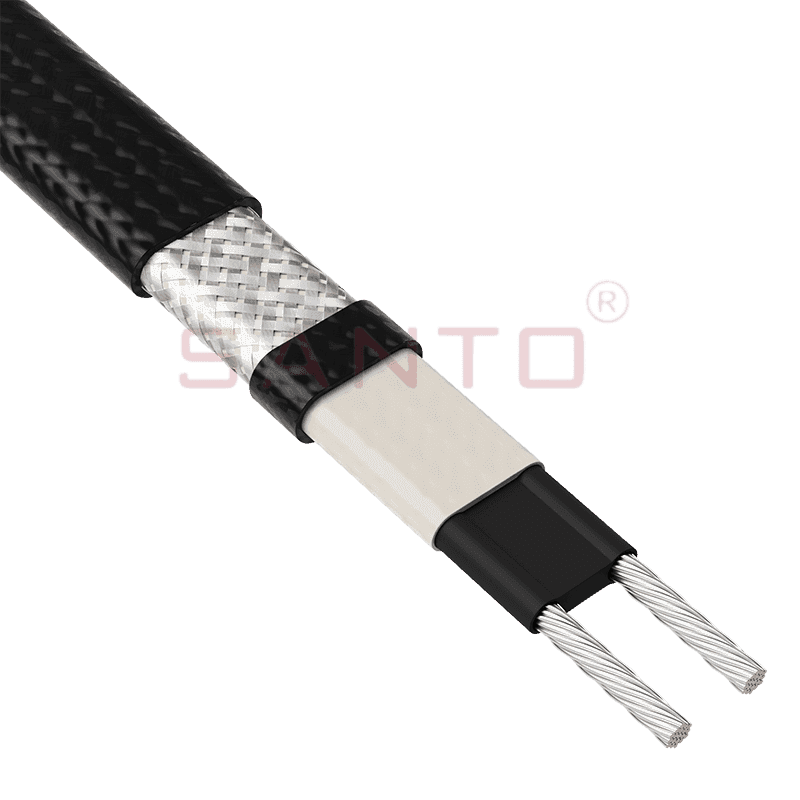
The SANTO UFA range of self-regulating heating cables is mainly used for frost protection of pipes and vessels but can also be used to maintain processes up to 65°C. These heating cables are available...
See Details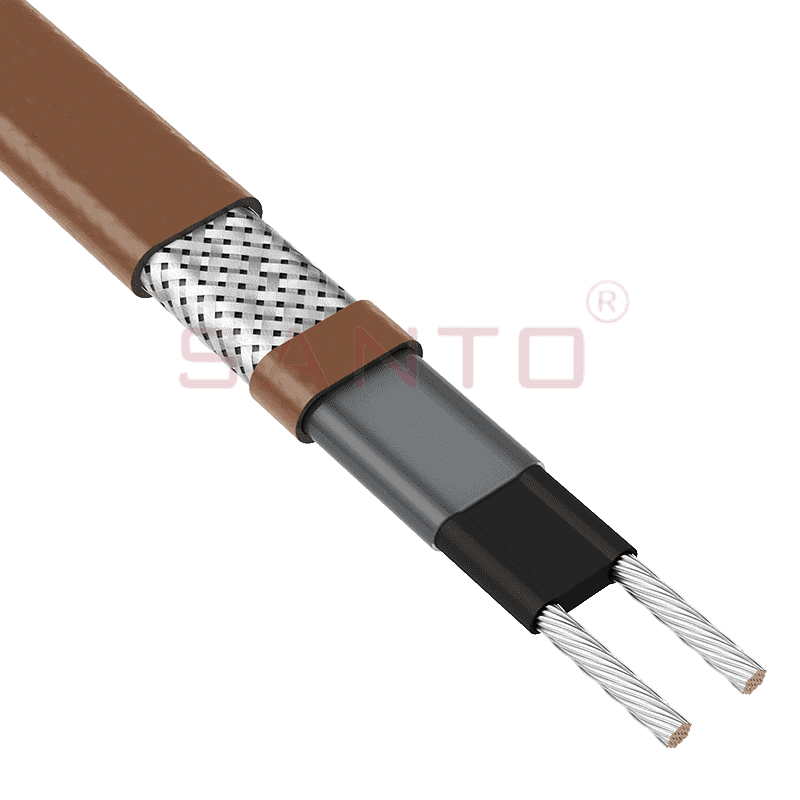
The SANTO UFB range of self-regulating heating cables is mainly used for frost protection of pipes and vessels requiring a higher power output than the UFA heating cables can supply. They can also be ...
See Details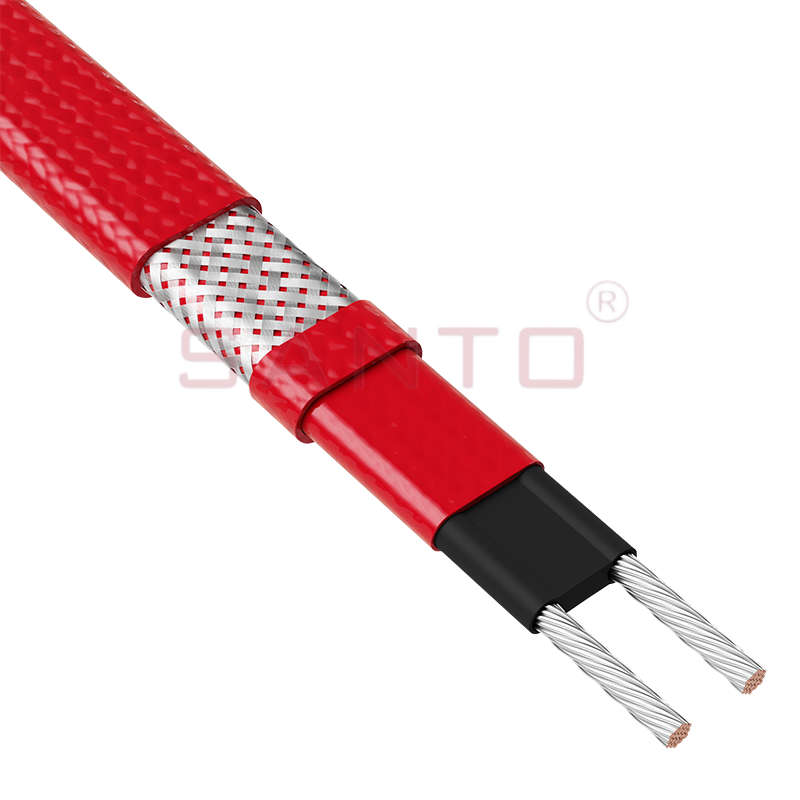
The SANTO UFC range of self-regulating heating cables is used for frost protection of pipes and vessels that require steam cleaning. They can also be used to maintain processes up to 121°C. These heat...
See Details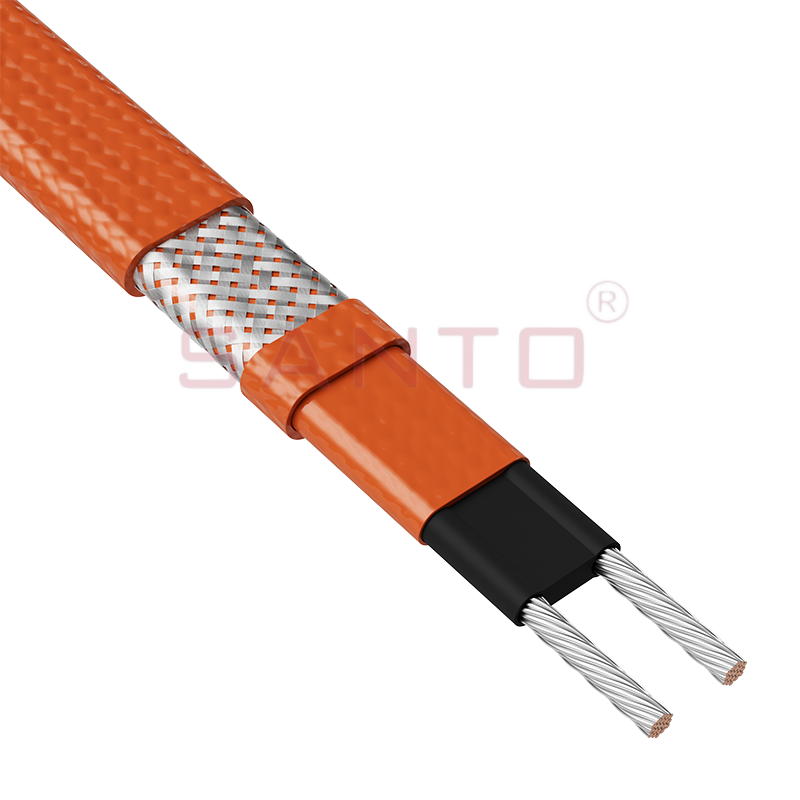
The SANTO UFO range of self-regulating heating cables is mainly used for frost protection of pipes and vessels that require steam cleaning . They can also be used to maintain processes up to 150°C. Th...
See Details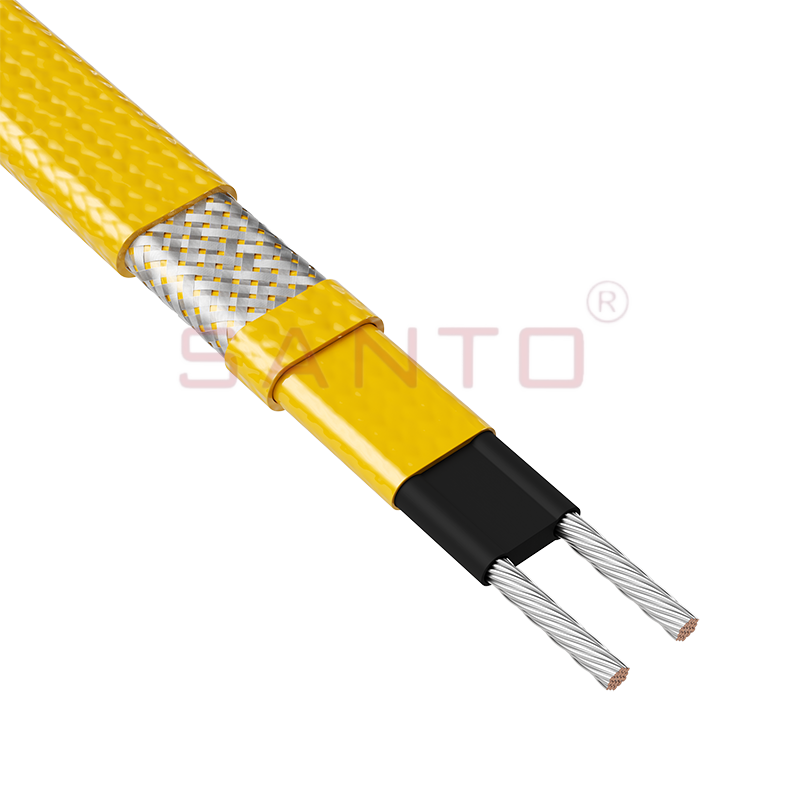
The SANTO UFD series of self-regulating heating cables are mainly used for freeze protection of pipes and vessels, but can also be used to maintain processes up to 200°C. These heating cables are avai...
See Details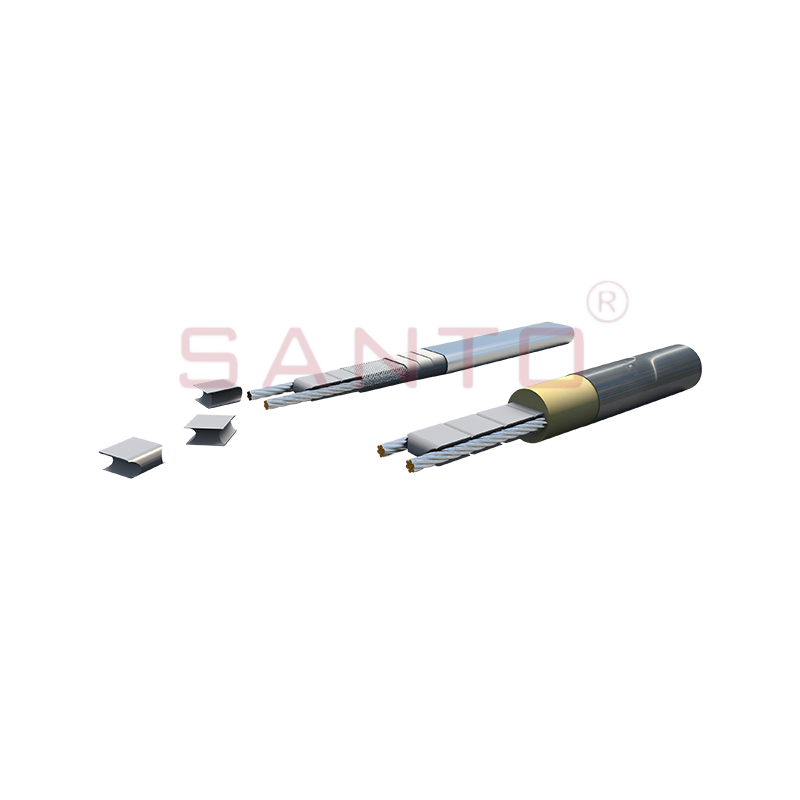
SANTO UFY heating wire is suitable for applications that maintain process temperatures up to 260 ℃ and can be steam blown; The self-regulating and parallel circuit heating wires of the UFY series are ...
See Details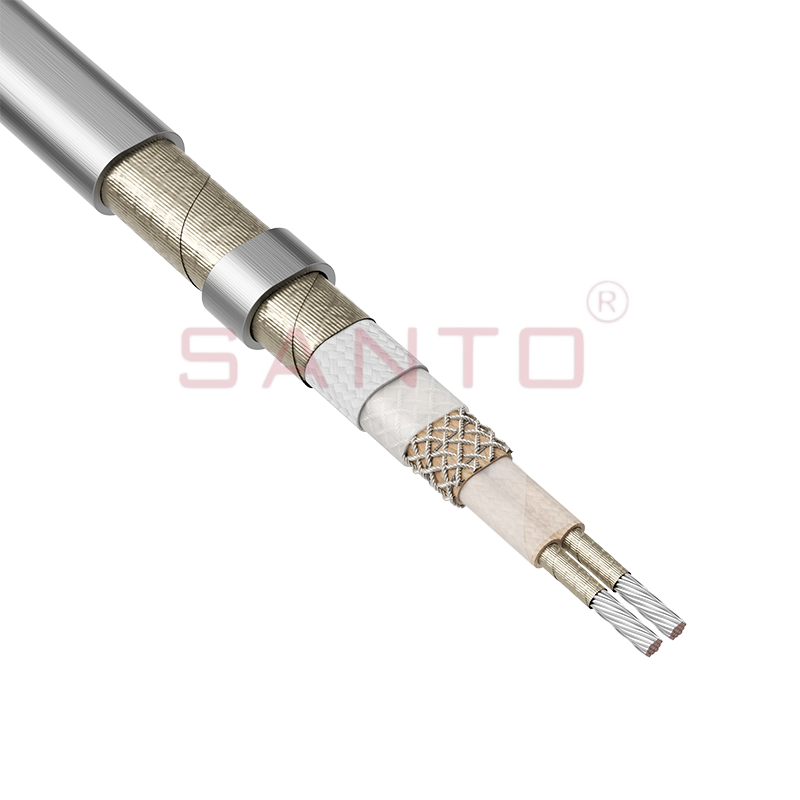
The SANTO UFM series self-regulating heating cables are mainly used for freeze protection of pipes and vessels, but can also be used to maintain processes up to 400°C. These heating cables are availab...
See Details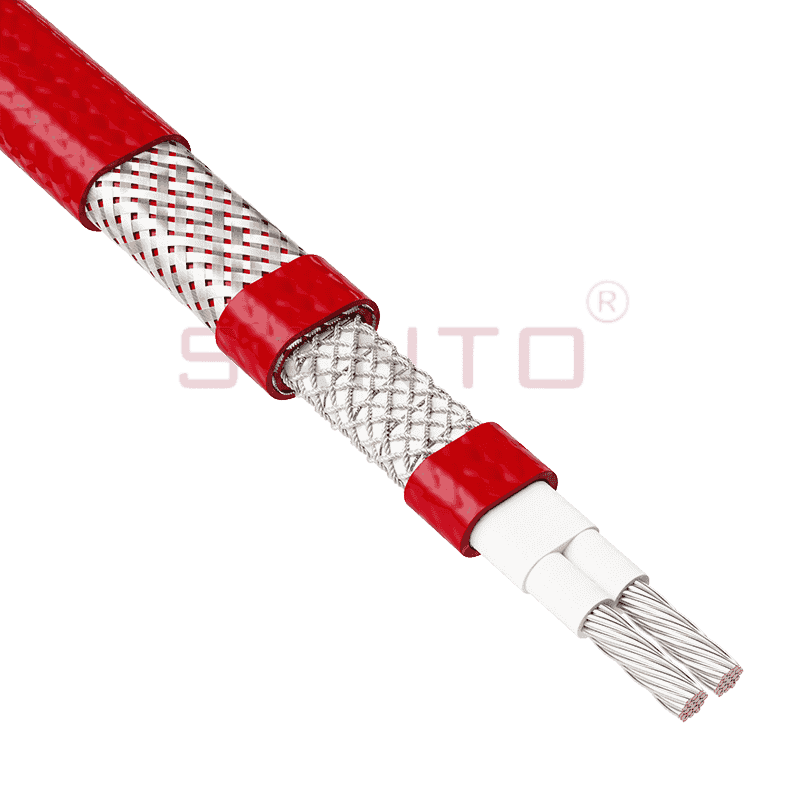
The SANTO ACC range of power-limiting heating cables is mainly used for temperature maintenance of processes and offers the advantage of a high power output at high temperatures which can reduce the n...
See Details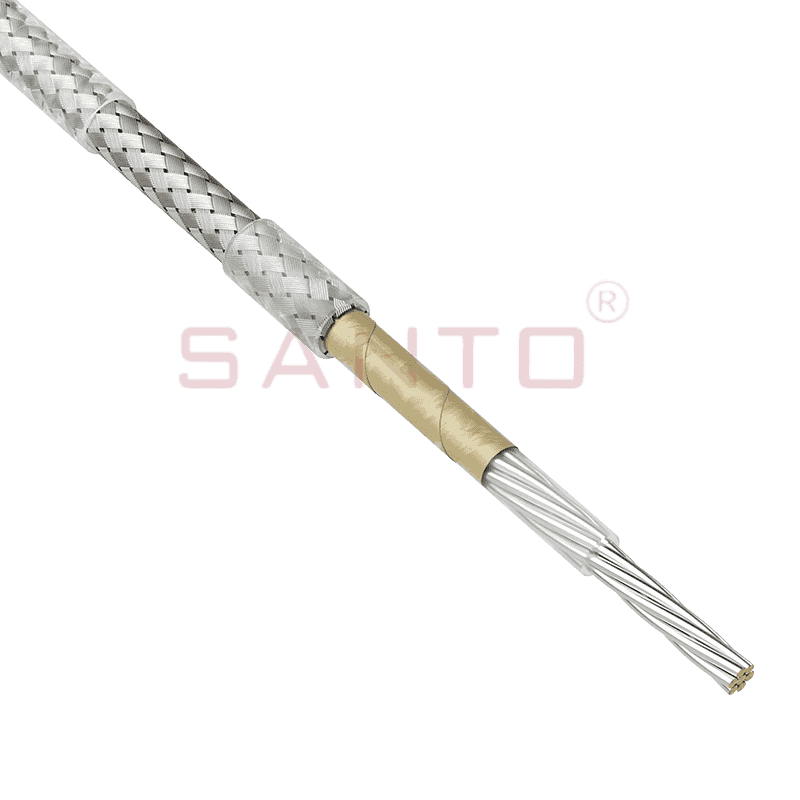
The stranded high temperature conductor is nickel plated to ensure a long life at elevated temperatures in corrosive environments. It is electrically isolated using an innovative sandwich construction...
See Details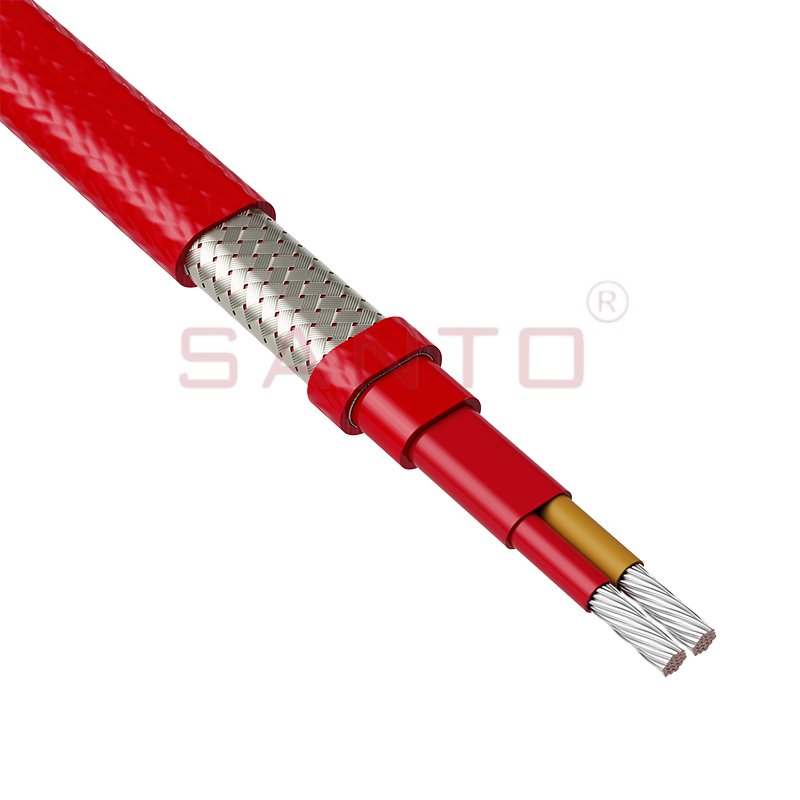
The stranded high temperature conductor is nickel plated to ensure a long life at elevated temperatures in corrosive environments. It is electrically isolated using an innovative sandwich construction...
See Details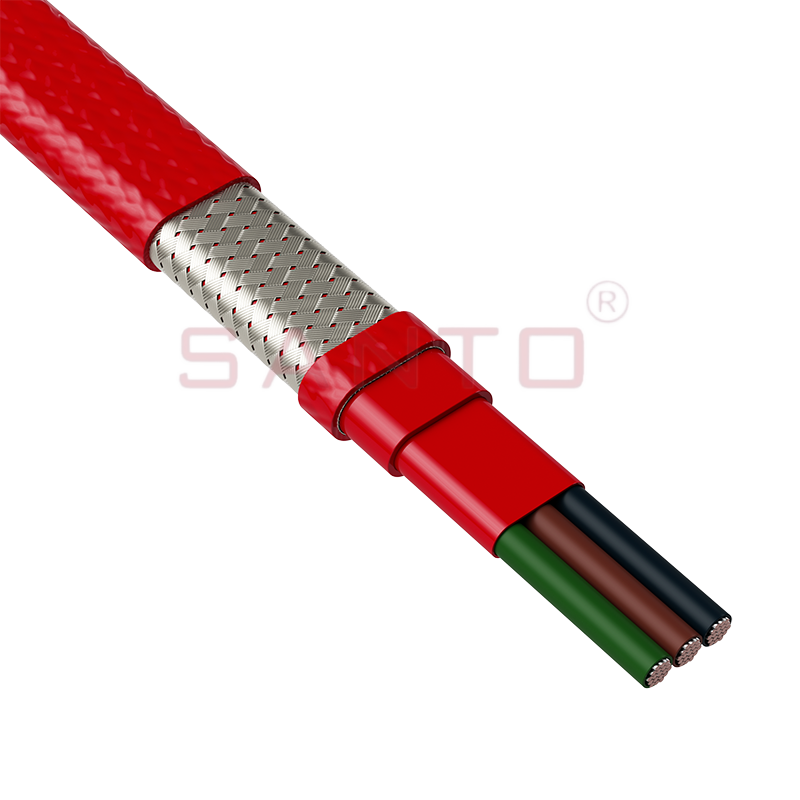
The stranded high temperature conductor is nickel plated to ensure a long life at elevated temperatures in corrosive environments. It is electrically isolated using an innovative sandwich construction...
See Details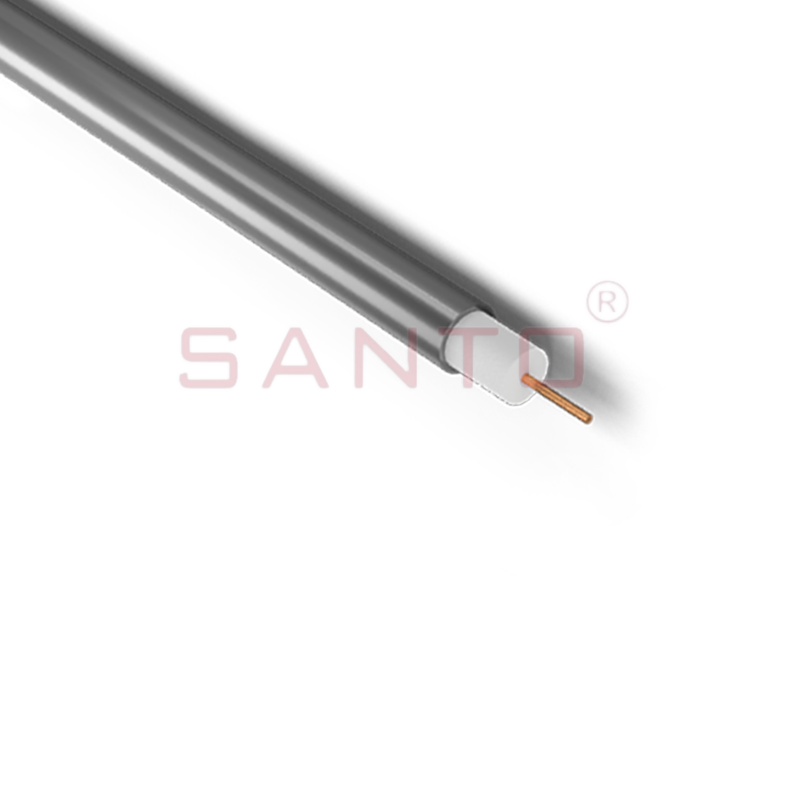
SANTO HAx mineral insulated (MI) Alloy 825 series heating cables are suitable for use in hazardous areas. They have been designed for use in freeze protection and temperature maintenance applications ...
See Details
Santo electric heating strips are widely used in key industries in China.

