 English
 English
 русский
 日本語
 Español
 中文简体

The SANTO UFA range of self-regulating heating cables is mainly used for frost protection of pipes and vessels but can also be used to maintain processes up to 65°C. These heating cables are available...
See Details
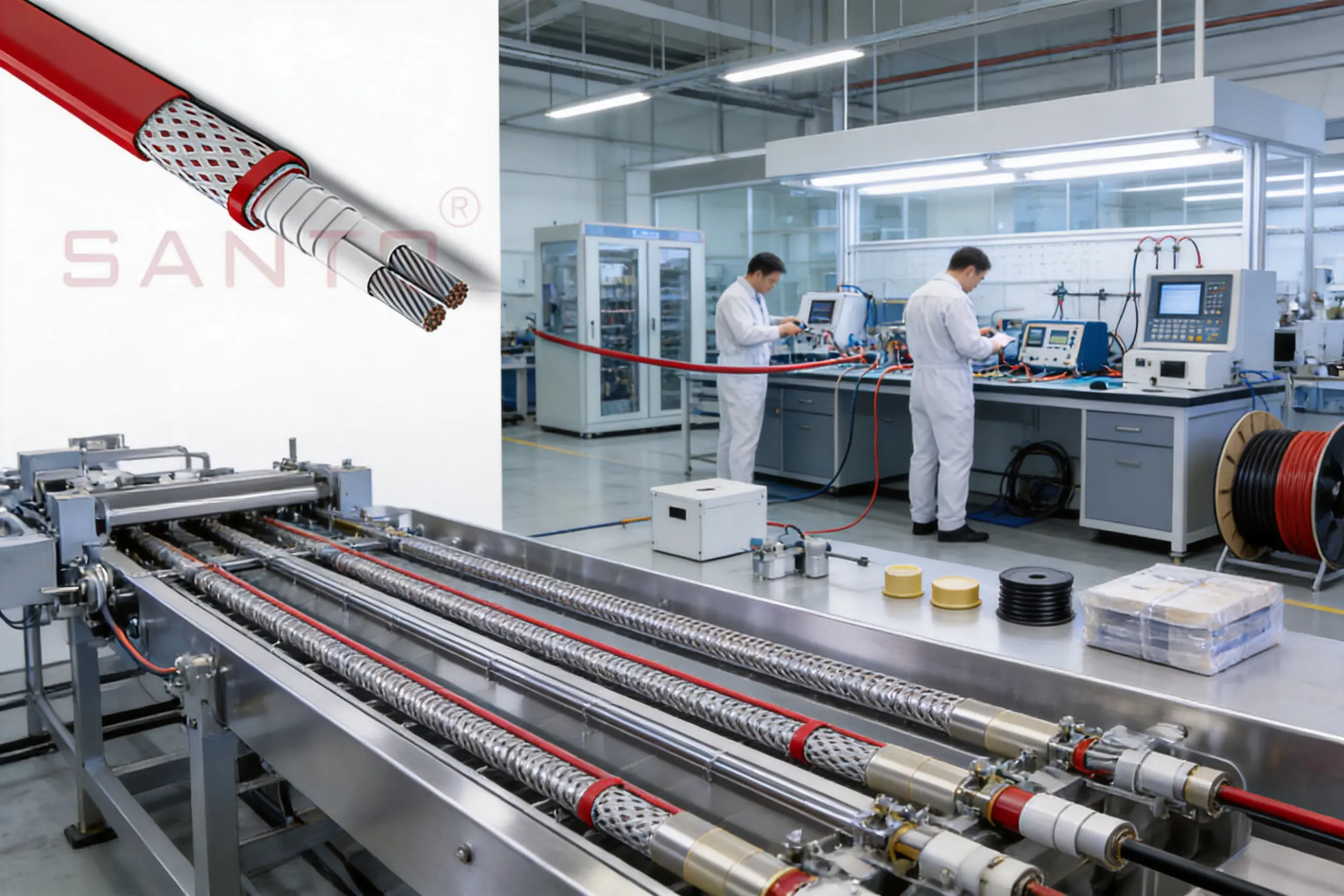
Industrial facilities often operate under conditions where ordinary heating solutions are unable to provide reliable temperature control. Process pipelines, valves, tanks, vessels, loading systems, and chemical equipment may need continuous freeze protection or carefully maintained operating temperatures while exposed to chemicals, moisture, vibration, steam purging, and high ambient temperatures. In these applications, a high-temperature constant-power heating cable provides a practical and robust method of supplying heat directly to the surface that must be protected.
The ADD high-temperature constant-power heating cable is designed for demanding industrial heat-tracing applications. It is suitable for maintaining process temperatures up to 230°C under continuous operation and can withstand exposure temperatures up to 260°C when power is temporarily switched off. Its parallel construction permits field cutting to the required length, while its constant-power design provides a stable output along the heated section.
This article examines the cable’s construction, operating principle, technical performance, installation considerations, safety characteristics, and industrial advantages. It also explains how the manufacturing capabilities of Santo Thermal Control Technology Co., Ltd. support consistent product quality, customization, and long-term application support.
Content
Heat tracing is used to add controlled heat to pipes, equipment, and process systems. The objective may be to prevent freezing, compensate for heat loss, maintain a process temperature, reduce viscosity, prevent crystallization, or preserve the flow characteristics of a product. Unlike temporary heating equipment, a permanently installed heat-tracing system is integrated with the protected asset and insulation system.
In low-temperature applications, self-regulating heating cables are frequently selected because their output decreases as the surrounding temperature rises. However, some industrial applications require a higher and more consistent heat output. They may also involve elevated surface temperatures or periodic exposure to steam and other hot cleaning media. In these environments, a parallel constant-power heating cable can offer advantages over standard self-regulating products.
The ADD cable is intended for applications where high power output and elevated exposure temperatures are important design requirements. It can be used for freeze protection and process temperature maintenance on carbon-steel, stainless-steel, painted, or unpainted metal surfaces. When correctly designed and installed, it provides continuous thermal compensation along the heated length.
A constant-power cable should not be selected solely by comparing watts per meter. The complete design must consider the required maintenance temperature, ambient temperature, insulation type and thickness, pipe dimensions, cable spacing, circuit length, electrical protection, hazardous-area classification, and the characteristics of the process fluid. The cable is a powerful heating component, but safe performance depends on a complete engineered system.
The ADD heating cable is a parallel constant-power electric heat trace. Its heating element is formed from a coiled resistance-alloy heating wire arranged around two parallel conductors. Electrical contact points along the cable create individual heating sections. This construction allows the cable to be cut to length at a designated point and connected with appropriate power and end components in the field.
The parallel arrangement is an important difference between a parallel constant-power cable and a series-resistance cable. In a series cable, the total resistance and output are strongly dependent on the final manufactured length. A parallel design contains repeated heating sections along two continuous conductors, making field sizing and termination more practical for many industrial projects.
The output of the ADD cable does not intentionally decrease as the temperature increases in the same way that a self-regulating cable does. This makes the product suitable for applications requiring relatively high output at elevated temperatures. The cable provides a comparatively gentle power-temperature profile, which helps limit starting current while preserving useful output during high-temperature operation.
The product must not be overlapped. Overlapping a constant-power heating cable can concentrate heat and create a local hot spot. The layout must therefore be planned so that the cable is distributed evenly over the surface, with special attention to flanges, supports, valves, instruments, pipe shoes, and other areas where heat loss may be higher.
For safe and reliable operation, the heating cable is normally combined with suitable cold leads, power junction boxes, end seals, fixing materials, insulation, temperature controls, and electrical protection. These accessories are not optional details. They form part of the complete heat-tracing system and must be selected according to the application and applicable electrical requirements.
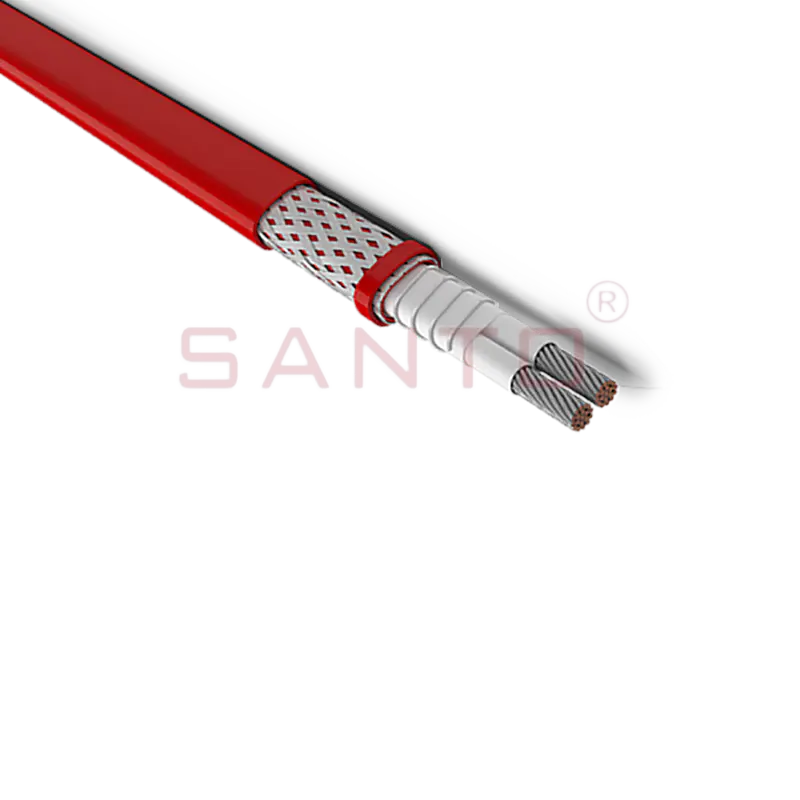
ADD high temperature constant power heating cable
The ADD product family is available in several nominal output ratings. The standard models identified as 5ADD-CT, 10ADD-CT, 15ADD-CT, and 20ADD-CT provide rated outputs of approximately 15 W/m, 30 W/m, 45 W/m, and 61 W/m respectively at 10°C.
| Model | Rated output at 10°C | Standard thickness | Standard width | Standard cold-junction wire or heating-area length |
|---|---|---|---|---|
| 5ADD-CT | 15 W/m | 7.5 mm | 10.7 mm | 1219 mm |
| 10ADD-CT | 30 W/m | 7.5 mm | 10.7 mm | 914 mm |
| 15ADD-CT | 45 W/m | 7.5 mm | 10.7 mm | 610 mm |
| 20ADD-CT | 61 W/m | 7.5 mm | 10.7 mm | 508 mm |
All four standard versions have a listed weight of approximately 180 g/m. The standard dimensions are approximately 7.5 mm in thickness and 10.7 mm in width. These dimensions allow the cable to be installed beneath thermal insulation without creating excessive bulk, although the final arrangement must account for fixing methods, thermal expansion, bends, joints, and the insulation system.
The cable is available for nominal supply voltages of 230 V or 254 V. Other voltage requirements should be reviewed with the manufacturer before selection. Voltage affects current, circuit length, power density, and electrical protection, so a cable intended for one voltage should not automatically be connected to another supply.
The minimum installation temperature is listed as -60°C. At -60°C, the minimum bend radius is stated as 20 mm. The cable should be handled carefully in cold conditions, and bending should remain within the specified radius. Sharp bends, twisting, crushing, or repeated flexing may damage the heating element or its insulation.
The principal advantage of the ADD cable is its ability to operate in high-temperature heat-tracing environments. Depending on the model and voltage, the maximum maintenance temperature under continuous power varies. The product information lists different limits for 230 V and 254 V operation, demonstrating why the voltage and cable model must be considered together during system design.
| Model | Maximum maintenance temperature at 230 V | Maximum maintenance temperature at 254 V |
|---|---|---|
| 5ADD-CT | 230°C | 225°C |
| 10ADD-CT | 210°C | 200°C |
| 15ADD-CT | 180°C | 145°C |
| 20ADD-CT | 150°C | Not permitted |
The maximum exposure temperature with continuous power switched off is listed as 260°C. This capability is particularly relevant to applications involving periodic steam purging, short-term process excursions, or power outages. Exposure temperature and maintenance temperature are not interchangeable terms. The exposure rating describes the temperature the cable can withstand when it is not energized, while the maintenance rating describes the temperature that can be continuously supported during operation under specified conditions.
System designers should also distinguish between cable temperature, pipe-wall temperature, process temperature, and insulation-surface temperature. These values may differ substantially. A temperature sensor should be positioned where it accurately represents the condition that must be controlled, and independent high-temperature limitation may be required to prevent overheating.
Compared with many self-regulating heating cables, a constant-power cable can provide stronger and more predictable heat output at elevated temperatures. Self-regulating products reduce their output as the surrounding temperature rises, which is useful for many freeze-protection applications but may be insufficient for demanding process-temperature maintenance. The ADD design is intended to retain its rated heating capability along the circuit rather than deliberately reducing output with rising temperature.
The parallel structure supports cut-to-length installation and end-of-length connections in the field. This helps installers adapt the cable to actual pipe or equipment dimensions instead of relying only on factory-produced fixed lengths. It can reduce unused cable, simplify project logistics, and make repairs or modifications more practical.
Field cutting must be performed only at approved locations and using the specified termination procedures. The cable should never be cut casually in the middle of an unapproved heating section. Correct end sealing and connection are necessary to maintain electrical insulation, moisture resistance, and system safety.
The listed 260°C power-off exposure rating provides an advantage in areas subject to periodic steam cleaning or hot process conditions. Some conventional products may require removal, special shielding, or temporary disconnection during such operations. The ADD cable is designed to tolerate these demanding conditions when the exposure remains within the approved limits.
The relatively gentle power-temperature profile contributes to low starting current compared with certain high-inrush heating products. Lower starting current can simplify circuit planning and reduce nuisance tripping during cold starts. It can also support more efficient use of distribution equipment, although actual starting current must still be calculated for each design.
The cable can be applied to carbon-steel, stainless-steel, painted, and unpainted metal surfaces. This broad compatibility is valuable in plants where different piping materials and equipment surfaces exist within the same project. Chemical resistance is listed for organic and corrosive environments, while aggressive chemical conditions should be reviewed with a local technical representative before final selection.
The product information indicates that ADD heating cables can be used in hazardous areas, including Zone 1 and Zone 2 gas environments and Zone 21 and Zone 22 dust environments, subject to design requirements. Hazardous-area use is not determined by the cable alone. The complete installation, including junction boxes, glands, controls, protective devices, temperature limitation, grounding, and documentation, must comply with the applicable classification and certification requirements.
High-temperature constant-power cables are suitable for industrial systems where temperature loss can affect safety, production, product quality, or equipment reliability. Typical applications include process pipelines, transfer lines, chemical feed systems, storage tanks, vessels, pumps, valves, loading arms, instrumentation lines, and equipment requiring heat retention.
In cold climates, water lines, fire-protection components, condensate lines, and process pipes may freeze when production stops or ambient temperatures fall below the freezing point. The ADD cable can be selected for freeze protection where the required output is higher than that of a conventional low-power cable or where the system must withstand high-temperature cleaning cycles.
Many liquids become more viscous when cooled. Others may crystallize, separate, solidify, or lose their required flow properties. By supplying controlled heat to the pipe or equipment surface, a heat-tracing system can compensate for thermal losses and maintain the required process condition.
Chemical plants frequently contain long pipe runs, complex valve arrangements, corrosive materials, and hazardous areas. The combination of high output, field sizing, and elevated exposure resistance makes a constant-power cable useful for selected chemical and petrochemical systems. Chemical compatibility should always be confirmed for the cable jacket, accessories, insulation, and any protective covering used in the installation.
Equipment that undergoes periodic steam purging may experience brief temperatures much higher than its normal operating temperature. A cable with a high power-off exposure rating can remain installed during these operations, reducing maintenance work and the possibility of incorrect reconnection after cleaning.
Outdoor tanks, pipes, filters, and process skids may lose substantial heat through wind and low ambient temperatures. The ADD cable can be installed beneath suitable insulation and weatherproofing to maintain thermal performance. The outer weather barrier should prevent water entry while allowing the heat-tracing system to be inspected and maintained.
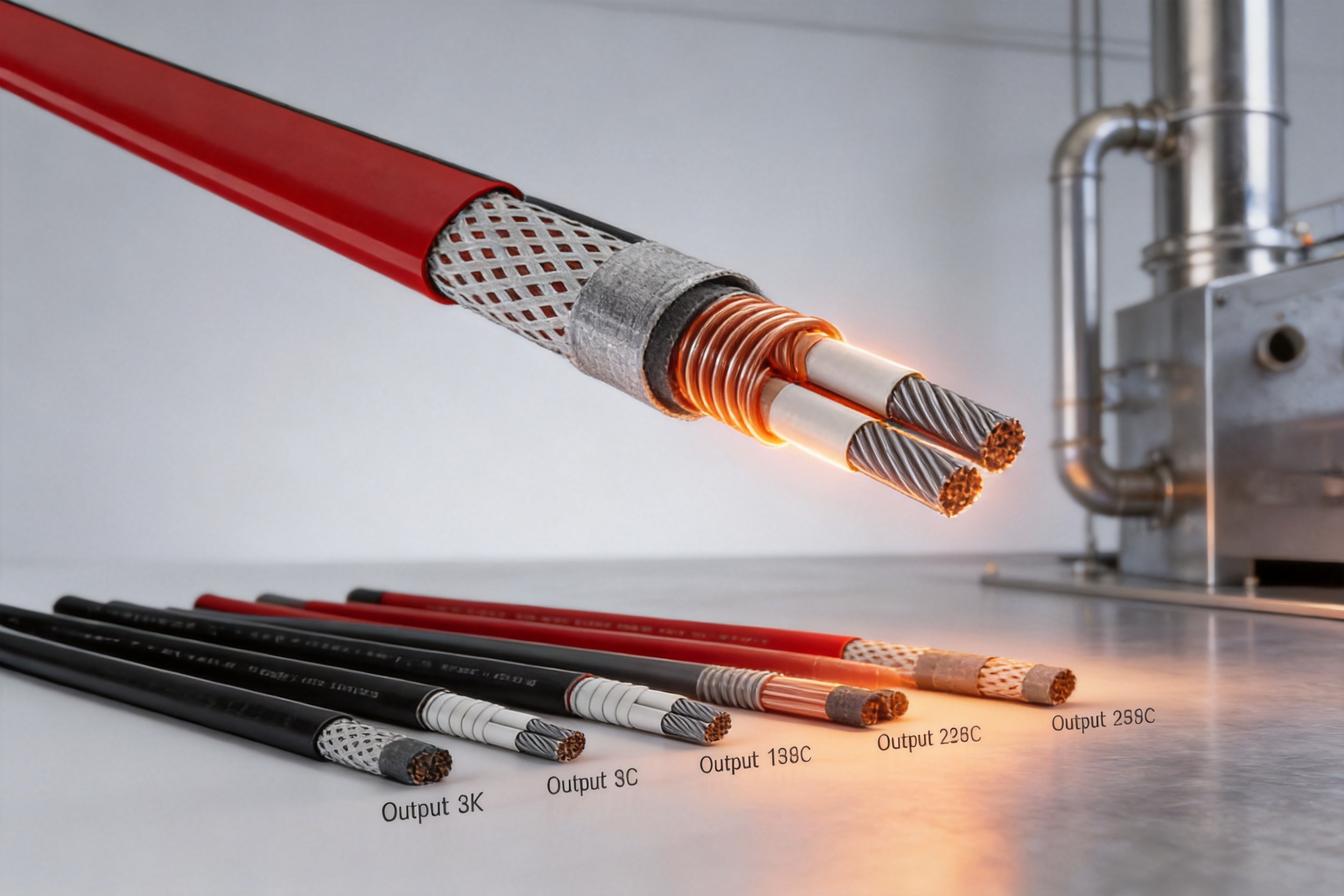
Maximum circuit length depends on the cable model, operating voltage, starting temperature, circuit-breaker rating, and the characteristics of the electrical distribution system. The supplied data provides estimated circuit lengths based on a C-curve circuit breaker in accordance with IEC 60898. These figures are intended for preliminary estimation rather than final approval.
| Protection rating | Starting temperature | 5ADD-CT at 230 V | 10ADD-CT at 230 V | 15ADD-CT at 230 V | 20ADD-CT at 230 V |
|---|---|---|---|---|---|
| 16 A | -20°C | 195 m | 100 m | 70 m | 50 m |
| 16 A | +10°C | 215 m | 110 m | 75 m | 55 m |
| 25 A | -20°C | 220 m | 155 m | 105 m | 80 m |
| 25 A | +10°C | 220 m | 155 m | 115 m | 85 m |
| 32 A | -20°C | 220 m | 155 m | 130 m | 100 m |
| 32 A | +10°C | 220 m | 155 m | 130 m | 110 m |
| 40 A | -20°C | 220 m | 155 m | 130 m | 110 m |
| 40 A | +10°C | 220 m | 155 m | 130 m | 110 m |
The table indicates that a higher-output cable generally has a shorter allowable circuit length for the same protective-device rating. A lower starting temperature may also increase the initial current demand. These relationships should be considered when dividing a large installation into circuits.
The final circuit design should include voltage-drop calculations, breaker coordination, earth-fault protection, ambient conditions, maximum cable temperature, control logic, and the actual installation method. The published figures should not replace a complete electrical design review.
For maximum safety and fire protection, a 30 mA residual-current protection device is recommended in the product information. Applications with naturally high leakage currents may require a device rated up to 300 mA, subject to a documented safety assessment. The correct device depends on the complete installation and local regulations.
Correct installation is essential to obtain the expected heat output and prevent local overheating. Before installation, the pipe or equipment surface should be clean, dry, and free from sharp edges, oil, loose coatings, and contaminants that could damage the cable or reduce heat transfer.
The cable should be routed in accordance with the approved heat-tracing design. On straight pipes, it may be installed in a single run or in multiple parallel runs, depending on the required watt density and pipe size. Extra length may be required around valves, flanges, supports, pumps, and instruments because these components often have higher heat loss than the straight pipe.
The cable must not be overlapped or crossed over itself unless the specific system design and manufacturer instructions expressly permit a particular arrangement. Overlap can produce concentrated heat and may exceed the permitted surface temperature.
Mechanical fixing should hold the cable firmly against the surface without crushing it. Fixing materials must be compatible with the operating temperature and the pipe or equipment material. Metal bands, approved tapes, or other designated fixing methods may be used, depending on the application. Ordinary adhesive tape or unapproved plastic ties may degrade at high temperature.
Temperature sensors should be installed at representative locations. A sensor placed too close to the cable may detect cable temperature rather than process or surface temperature. A sensor placed in an unusually cold or hot location may cause excessive or insufficient heating in other parts of the circuit. Critical systems may require multiple sensors or independent high-temperature limiters.
After installation, the cable should be tested before insulation is applied. Recommended checks may include visual inspection, conductor continuity, insulation resistance, grounding continuity, resistance measurement, and verification of the termination assemblies. Test results should be recorded as part of the project documentation.
Thermal insulation should be installed promptly after testing. A heating cable operating without the intended insulation can lose heat rapidly, increase energy consumption, and potentially reach temperatures different from those assumed in the design. The insulation must be selected for the process temperature, environmental exposure, chemical conditions, and weather requirements.
A weatherproof outer jacket is important for outdoor systems. Water entering the insulation can substantially reduce thermal efficiency and may create electrical leakage. The outer covering should be sealed around penetrations, joints, valves, and supports while still allowing appropriate inspection and maintenance.
A high-temperature cable cannot operate as a safe industrial system without suitable accessories. Power junction boxes provide the electrical transition between the supply wiring and the heating cable. Two-way components may be used where a circuit branches or where a particular layout requires an intermediate connection. Tail-end components close the far end of the heating circuit and maintain insulation integrity.
The manufacturer provides a range of power junction boxes, two-way components, and tail-end components for use with the heating cable. These components should be selected according to the cable model, voltage, hazardous-area requirements, environmental conditions, and applicable electrical regulations.
Controls may include thermostats, electronic temperature controllers, contactors, circuit monitoring, alarm systems, and independent safety limiters. A control system can reduce energy consumption by energizing the circuit only when heat is required. However, a controller should not be treated as a substitute for correct cable selection, insulation, grounding, or overcurrent protection.
In hazardous areas, junction boxes and glands must be appropriate for the area classification. Installation documents should identify the protection method, temperature class where applicable, cable routing, electrical protection, grounding arrangements, and inspection requirements. All components must remain within their approved temperature and environmental limits.
The performance of an industrial heating cable depends not only on its published specifications but also on manufacturing consistency. Resistance wire geometry, conductor spacing, insulation quality, jacket integrity, termination reliability, and dimensional accuracy all influence the final system. A manufacturer with integrated research, production, testing, and service capabilities can respond more effectively to demanding applications.
Santo Thermal Control Technology Co., Ltd. specializes in the research, design, production, and manufacture of automatic temperature-control heating belts, self-limiting heating belts, constant-power heating belts, silicone rubber heating belts, glass-fiber heating belts, mineral-insulated cables, snow-melting cables, electric heating wires, and related accessories.
The company’s product range covers industrial heating, pipeline freeze protection, deicing, snow melting, geothermal cultivation, solar applications, construction, petroleum, chemical processing, gas systems, and other fields. This broad product knowledge is valuable because different applications require different heating technologies. A constant-power product should be selected when its characteristics match the thermal and electrical requirements, rather than used indiscriminately in every situation.
The company reports more than 35 years of industry experience, an annual output exceeding 10,000 units or product sets, and a distribution network covering more than 2,000 distributors and over 85 regions. These figures indicate experience in serving both domestic and international markets, although each project should still be evaluated according to its individual technical requirements.
The company cooperates in product research with Harvard University in the United States and has established a development history involving high-temperature heating, self-limiting technology, carbon-fiber parallel heating cables, and other electric-heating products. The reported invention of a carbon-fiber parallel heating cable and the development of ultra-high-temperature pipeline heating products demonstrate a focus on improving heating performance for specialized applications.
Its reported product-development history also includes a radiation center established in 2013, explosion-proof certification and Eurasian Union certification obtained in 2016, and a product simulation testing laboratory developed as part of factory expansion. These capabilities can support material evaluation, performance verification, and product improvement.
The company has passed ISO 9001 quality management system certification and reports that its products have obtained national CCC certification. Quality-system certification does not eliminate the need for project-specific inspection, but it provides a framework for documented manufacturing processes, quality control, corrective action, and continuous improvement.
For heating cables, quality control should include inspection of conductor dimensions, resistance characteristics, insulation and jacket condition, heating-section spacing, termination integrity, dimensional tolerances, and electrical safety. Traceable inspection records are particularly important for industrial projects and hazardous-area applications.
The company has strengthened its production facilities and established a product simulation testing laboratory. A dedicated testing environment can help evaluate cable performance under representative temperature, electrical, and mechanical conditions before products are released for use.
High-temperature cable manufacturing requires careful control of the resistance-alloy heating element and insulation materials. The heating element must maintain a consistent resistance profile, while the insulation must tolerate the intended temperature and environmental conditions. Manufacturing accuracy is therefore directly connected to heat distribution, circuit current, reliability, and service life.
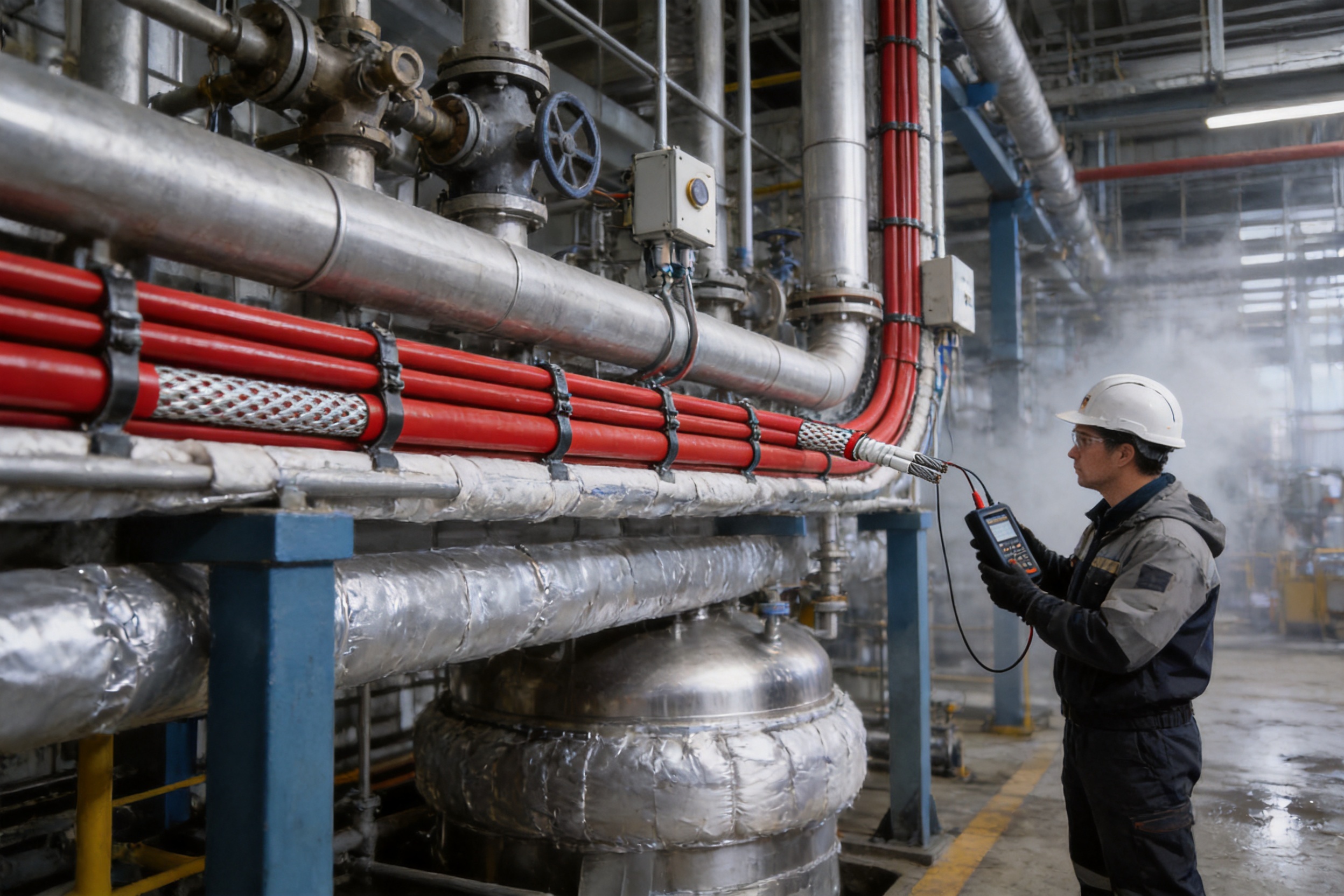
Industrial projects do not always fit a standard catalog configuration. Pipe lengths, supply voltages, hazardous-area requirements, control methods, insulation systems, and installation geometries vary from one plant to another. A manufacturer with OEM and ODM capability can help adapt the product or system to the project’s needs.
Customization may involve cable length, cold-lead configuration, termination arrangement, power rating, connection components, packaging, documentation, or labeling. Any modification must be reviewed for its effect on electrical safety, thermal performance, approvals, and installation procedures.
For an OEM or ODM project, the purchaser should provide accurate information about the protected asset. Useful data includes pipe diameter and material, equipment dimensions, required maintenance temperature, minimum ambient temperature, maximum exposure temperature, insulation thickness, process conditions, supply voltage, circuit-breaker type, area classification, chemical exposure, and control strategy.
Accurate project information enables the manufacturer to recommend an appropriate model and avoid under-sizing or over-sizing. Under-sizing may result in inadequate temperature maintenance, while over-sizing can increase cost, leakage current, circuit loading, and control complexity.
A heat-tracing system should be inspected periodically, particularly before the cold season or before a critical production campaign. Inspection should include the power supply, junction boxes, end seals, visible cable sections, insulation condition, weatherproofing, temperature sensors, controllers, and protective devices.
Damaged insulation or weatherproofing should be repaired promptly. Moisture in the insulation can reduce thermal performance and increase leakage current. Junction boxes should remain closed and properly sealed, and cable glands should be checked for mechanical security and environmental integrity.
Electrical testing may include insulation-resistance measurement, continuity checks, earth-fault protection tests, and verification of circuit current. Measurements should be compared with commissioning records. A significant change may indicate moisture ingress, mechanical damage, an aging termination, or another developing fault.
During maintenance, personnel should isolate the circuit and follow the site’s lockout and tagout procedures. A heating cable may remain hot after power is disconnected, especially when installed beneath insulation. The system should be allowed to cool before physical work is performed.
When process equipment is modified, the heat-tracing system should be reviewed. Removing insulation, changing a valve, relocating an instrument, adding a support, or altering the process temperature may affect cable spacing and thermal performance. Heating cables should not be covered by new equipment or cut without an engineering assessment.
Electrical heating systems combine electrical energy with elevated temperature and, in some cases, flammable or combustible materials. Safety must therefore be addressed at the design, manufacturing, installation, commissioning, operation, and maintenance stages.
The system should include suitable overcurrent protection and residual-current protection. The product information recommends a 30 mA leakage-protection device for maximum safety and fire protection. Where an application has high normal leakage current, a higher-rated device may be necessary, but this decision should be based on a documented risk assessment and the requirements of local electrical codes.
Grounding and bonding must be completed correctly. Metal pipes, equipment, cable screens where applicable, junction boxes, and supporting structures should be integrated into the site’s grounding system according to the approved design.
Temperature limitation is particularly important for constant-power cables. A control thermostat may regulate normal operation, while an independent high-temperature limiter can provide additional protection against sensor failure, incorrect settings, loss of thermal contact, or an unexpected process condition.
In hazardous areas, the installation must use approved components and methods for the specified zone. The fact that a cable may be used in hazardous areas does not mean it can be installed in any hazardous location without review. The complete assembly and installation method must satisfy the relevant certification and regulatory requirements.
Model selection should begin with the heat-loss calculation. The required cable output must be sufficient to compensate for heat loss through the insulation and maintain the process at the target temperature under the design ambient conditions. The cable should not be selected only on the basis of the maximum available wattage.
The 5ADD-CT model provides the lowest listed output and the highest listed continuous maintenance-temperature capability. It may be appropriate for selected high-temperature applications where a moderate heat input is sufficient. The 10ADD-CT model provides approximately twice the nominal output of the 5ADD-CT and may be selected where additional heat compensation is needed.
The 15ADD-CT and 20ADD-CT models offer higher nominal output, but their listed maximum maintenance temperatures are lower than those of the lower-output models. The 20ADD-CT model is not permitted at the listed 254 V operating condition. This illustrates why the highest wattage is not automatically the best choice for a high-temperature application.
Designers should verify the cable model against the process temperature, continuous maintenance temperature, power-off exposure temperature, voltage, circuit length, insulation design, and control method. Where the required conditions are close to a published limit, a technical review should be obtained before purchase.
Energy efficiency in heat tracing is determined by the heat loss of the protected asset and the operating strategy of the system. Good insulation, proper weatherproofing, accurate temperature control, and sensible circuit zoning can reduce unnecessary energy use.
A constant-power cable may provide lifecycle value when its high output and temperature capability reduce the need for additional heating equipment or frequent removal during steam cleaning. Its field cut-to-length construction can also simplify installation and reduce material waste in suitable applications.
Long-term value depends on more than the initial cable price. Factors such as installation time, accessory compatibility, commissioning reliability, maintenance access, spare-parts availability, documentation, and technical support should be included in the project evaluation.
Using a cable that is not suitable for the required temperature or environment can create hidden costs through repeated failures, production interruptions, energy loss, or unsafe operation. The best comparison is therefore based on total installed and operating cost rather than purchase price alone.
A professional heat-tracing project should include a circuit schedule, cable layout, cable model, length, voltage, rated output, circuit-breaker rating, temperature-control method, sensor locations, junction-box details, insulation specification, hazardous-area information, and commissioning records.
Manufacturers and engineering partners can support the project by reviewing heat-loss calculations, recommending cable models, confirming accessories, preparing connection details, and assisting with installation questions. This type of support is especially valuable when systems contain many valves, complex equipment, or hazardous-area restrictions.
Documentation should remain available throughout the service life of the installation. Future maintenance personnel need to know where each circuit begins and ends, which cable model is installed, what maximum temperature applies, and which protective devices are required.
A constant-power heating cable is an electric heat-tracing product designed to provide a substantially consistent power output along its heated length. The ADD cable uses a parallel conductor structure with repeated resistance-heating sections. Unlike a self-regulating cable, its output is not intended to decrease significantly as temperature rises.
Yes. Its parallel construction supports cut-to-length installation and end-of-length connections in the field. Cutting must be performed only at approved points and followed by the correct termination and sealing procedure.
The listed maximum maintenance temperature reaches up to 230°C, depending on the model and voltage. The listed maximum exposure temperature with power continuously switched off is 260°C. The correct limit must be taken from the product model and operating voltage used in the project.
It is designed to withstand high exposure temperatures and is suitable for applications that may involve periodic steam purging when the exposure remains within the specified 260°C power-off limit. The cable should be de-energized when required by the process and installation instructions.
No. The product information specifically states that the ADD heating cable should not be overlapped. Overlapping can create a local concentration of heat and increase the risk of overheating.
The listed standard supply voltages are 230 V and 254 V. Other voltages should be reviewed with the manufacturer. The voltage affects cable performance, circuit length, current, and maximum maintenance temperature.
Yes. The listed application surfaces include carbon steel, stainless steel, painted metal, and unpainted metal. Surface condition, chemical exposure, fixing materials, and insulation design must still be reviewed for the particular installation.
The cable can be used in hazardous areas when the system is correctly designed. The listed areas include Zone 1 and Zone 2 gas environments and Zone 21 and Zone 22 dust environments. The complete system must meet the applicable certification, electrical, grounding, protection, and installation requirements.
The product information recommends a 30 mA residual-current protection device for maximum safety and fire protection. Applications with high leakage current may require a device up to 300 mA, subject to engineering review and applicable regulations.
Control may use a thermostat, electronic temperature controller, contactor, or other suitable method. Critical applications may also require an independent high-temperature limiter and alarm. The sensor must be installed at a representative location.
A complete system normally requires power junction boxes, two-way components where needed, tail-end components, suitable cold leads, fixing materials, electrical protection, controls, sensors, grounding arrangements, and compatible insulation and weatherproofing.
Inspect the circuit, junction boxes, end seals, insulation, sensors, controllers, and protective devices regularly. Electrical testing should be compared with commissioning results. Any damaged insulation, moisture ingress, abnormal current, or change in insulation resistance should be investigated before continued operation.
OEM and ODM capability allows the cable, termination, packaging, documentation, or accessory arrangement to be adapted to project requirements. This can be valuable when the application involves special lengths, voltage requirements, hazardous-area components, unusual equipment geometry, or a large international project.
The ADD high-temperature constant-power heating cable is designed for industrial applications that require substantial and stable heat output, elevated temperature capability, and flexible field installation. Its parallel construction supports cut-to-length installation, while its constant-power operating principle provides useful output for process temperature maintenance and demanding freeze-protection systems.
The product offers listed maintenance temperatures up to 230°C, power-off exposure resistance up to 260°C, operation at 230 V or 254 V, compatibility with several metal surfaces, and use in hazardous areas subject to correct system design. Available output ratings from approximately 15 W/m to 61 W/m allow engineers to select a cable according to the heat-loss requirement rather than relying on one universal configuration.
Its advantages over lower-temperature or self-regulating alternatives include high-temperature capability, a relatively gentle starting-current profile, constant output along the heated section, and field cut-to-length flexibility. However, these advantages can be achieved only when the cable is correctly selected, routed without overlap, terminated with suitable components, protected electrically, controlled by appropriate sensors, and installed beneath correctly specified insulation.
Santo Thermal Control Technology Co., Ltd. supports this product with experience in electric heating research, manufacturing, product development, quality management, testing, and international distribution. Its portfolio of constant-power, self-limiting, silicone rubber, glass-fiber, mineral-insulated, snow-melting, and other heating products enables application-specific product selection. Reported ISO 9001 certification, CCC certification, product research activities, testing facilities, and long-term industry experience further support its position as an OEM and ODM supplier for industrial heating projects.
For plant owners, engineering contractors, and distributors, the most important step is to evaluate the complete application. When the cable model, electrical circuit, accessories, controls, hazardous-area requirements, insulation, and maintenance plan are designed as one integrated system, a high-temperature constant-power heating cable can provide dependable thermal protection and long-term industrial value.
1. Product technical information for ADD high-temperature constant-power heating cable, including construction, ratings, dimensions, temperature limits, circuit-length estimates, and accessory requirements.
2. IEC 60898, Electrical Accessories—Circuit-Breakers for Overcurrent Protection for Household and Similar Installations.
3. ISO 9001, Quality Management Systems—Requirements.
4. General industrial heat-tracing design principles for pipe freeze protection and process-temperature maintenance.
5. Electrical safety practices for residual-current protection, grounding, insulation testing, and hazardous-area installations.
6. Manufacturer information concerning electric heating cable research, production, testing, certifications, OEM services, ODM services, and industrial applications.
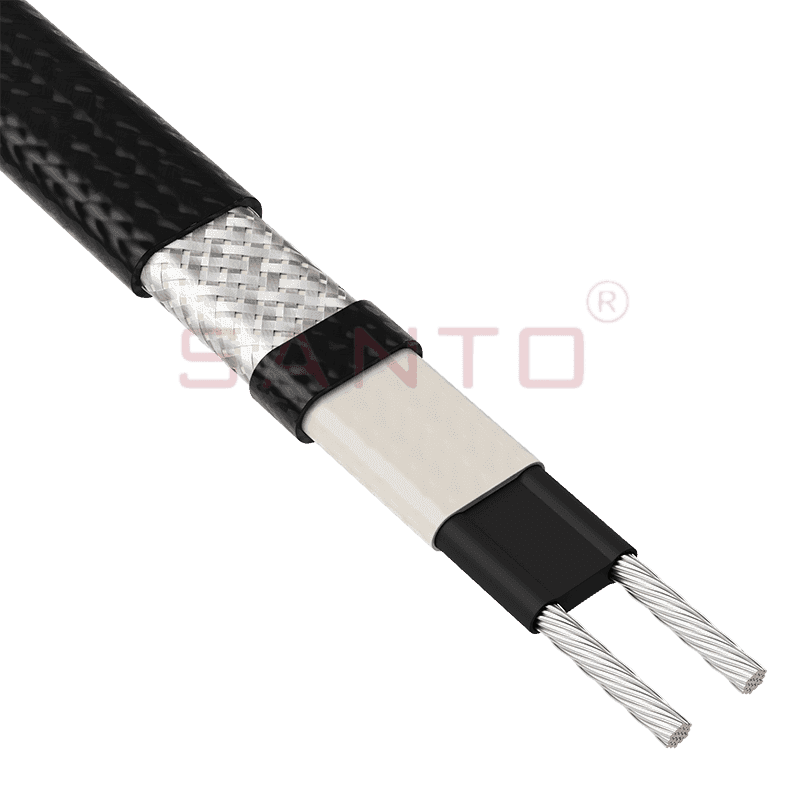
The SANTO UFA range of self-regulating heating cables is mainly used for frost protection of pipes and vessels but can also be used to maintain processes up to 65°C. These heating cables are available...
See Details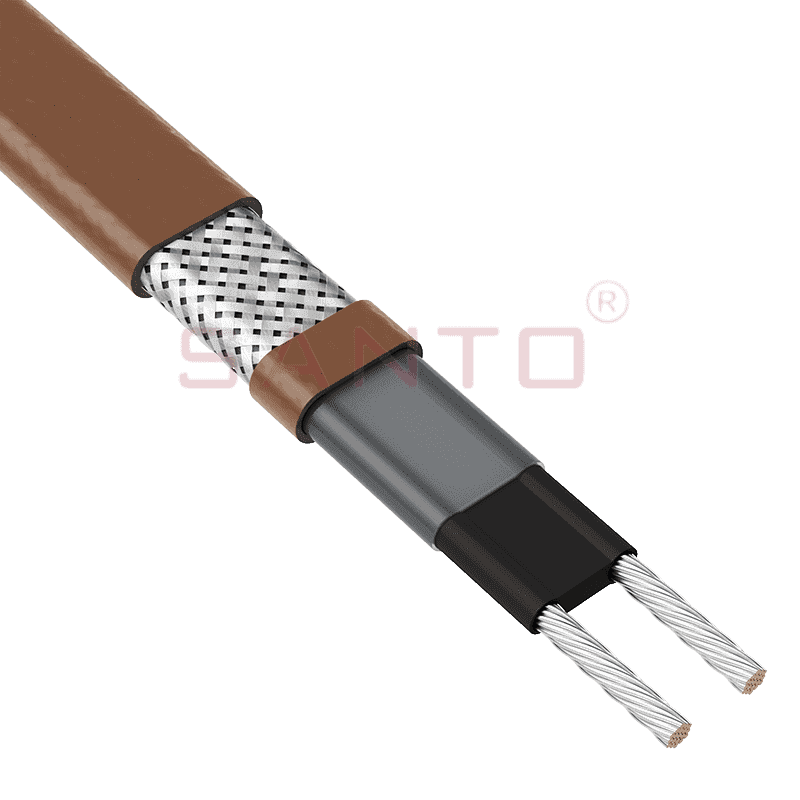
The SANTO UFB range of self-regulating heating cables is mainly used for frost protection of pipes and vessels requiring a higher power output than the UFA heating cables can supply. They can also be ...
See Details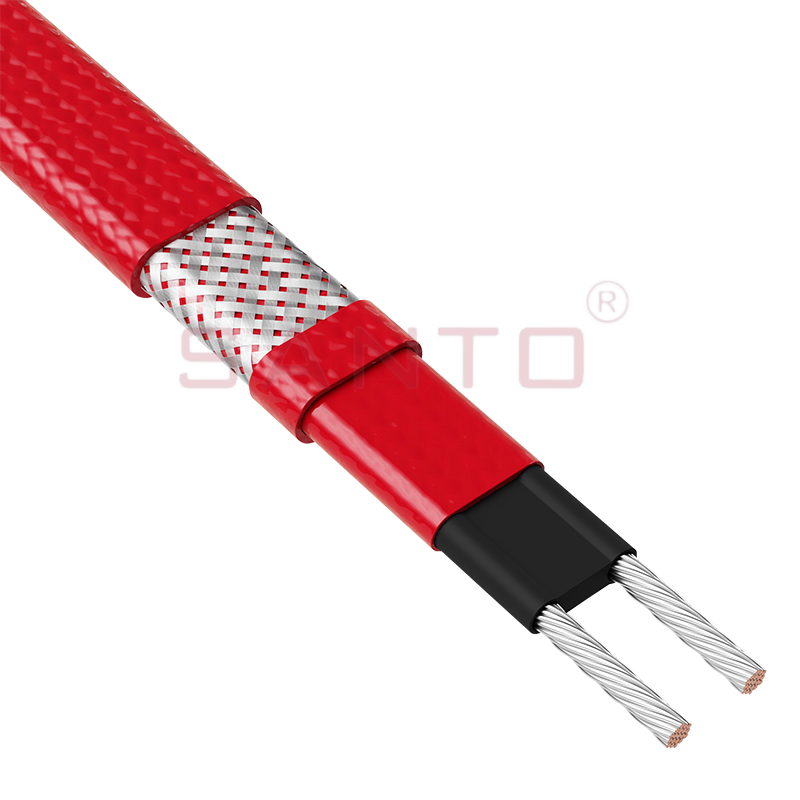
The SANTO UFC range of self-regulating heating cables is used for frost protection of pipes and vessels that require steam cleaning. They can also be used to maintain processes up to 121°C. These heat...
See Details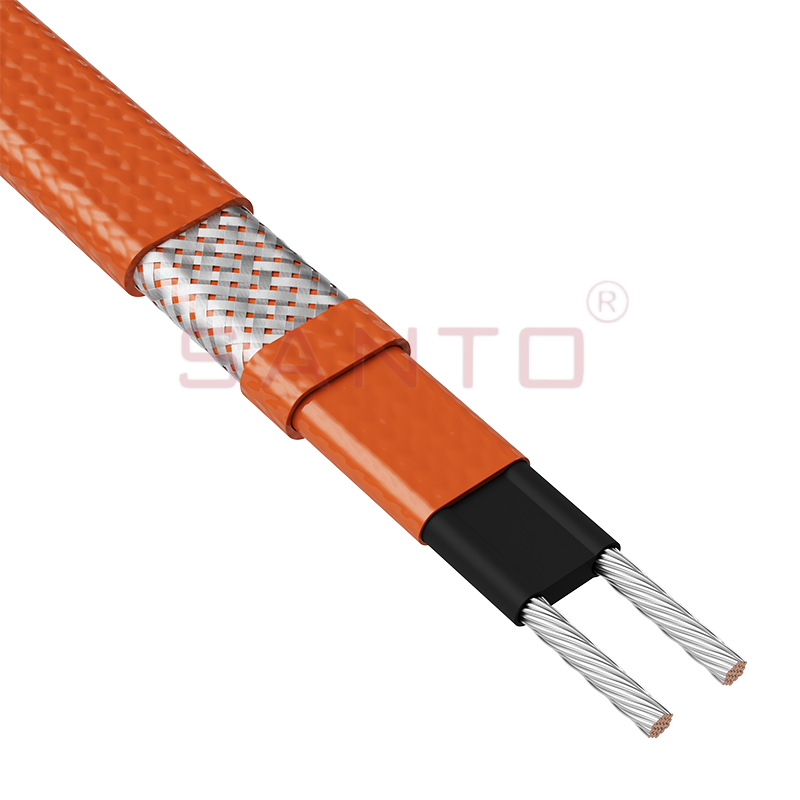
The SANTO UFO range of self-regulating heating cables is mainly used for frost protection of pipes and vessels that require steam cleaning . They can also be used to maintain processes up to 150°C. Th...
See Details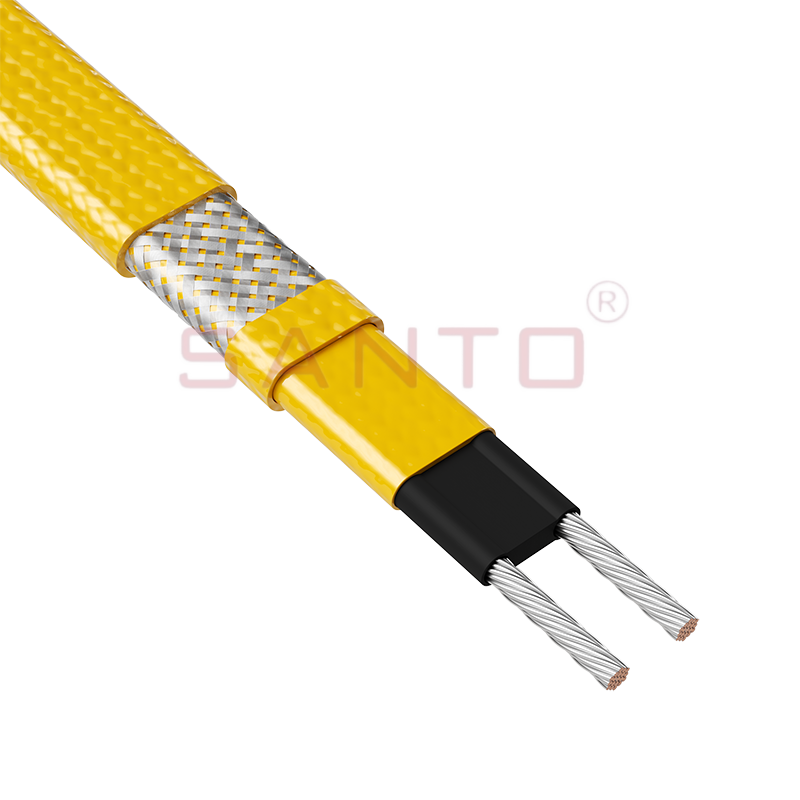
The SANTO UFD series of self-regulating heating cables are mainly used for freeze protection of pipes and vessels, but can also be used to maintain processes up to 200°C. These heating cables are avai...
See Details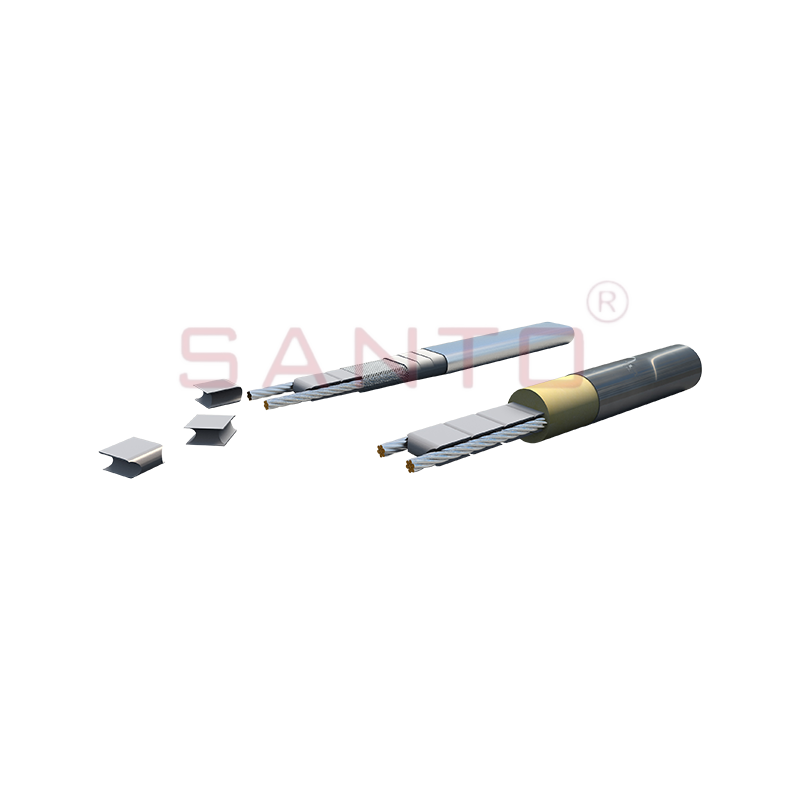
SANTO UFY heating wire is suitable for applications that maintain process temperatures up to 260 ℃ and can be steam blown; The self-regulating and parallel circuit heating wires of the UFY series are ...
See Details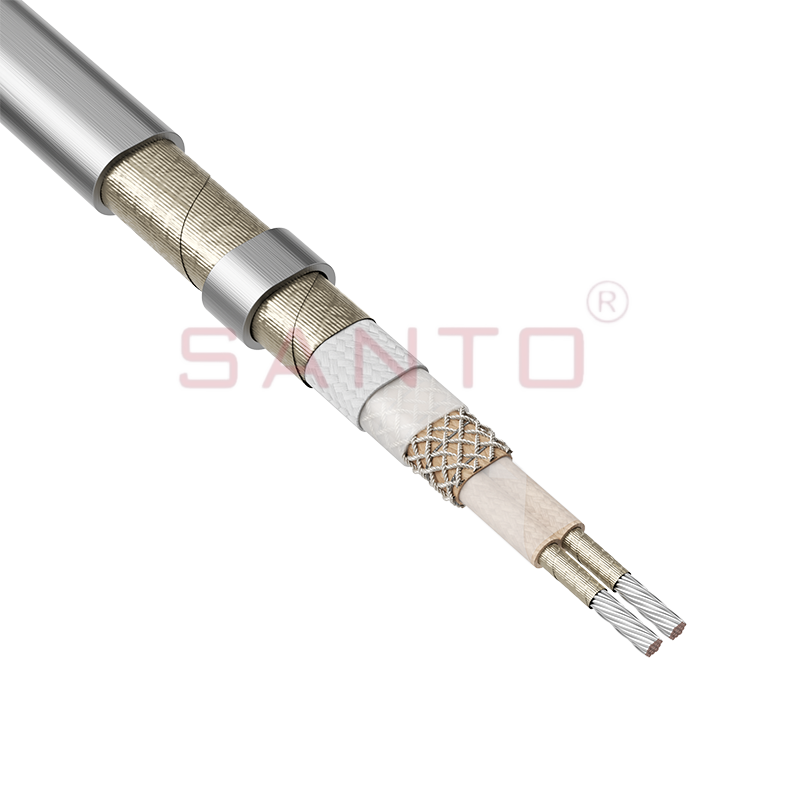
The SANTO UFM series self-regulating heating cables are mainly used for freeze protection of pipes and vessels, but can also be used to maintain processes up to 400°C. These heating cables are availab...
See Details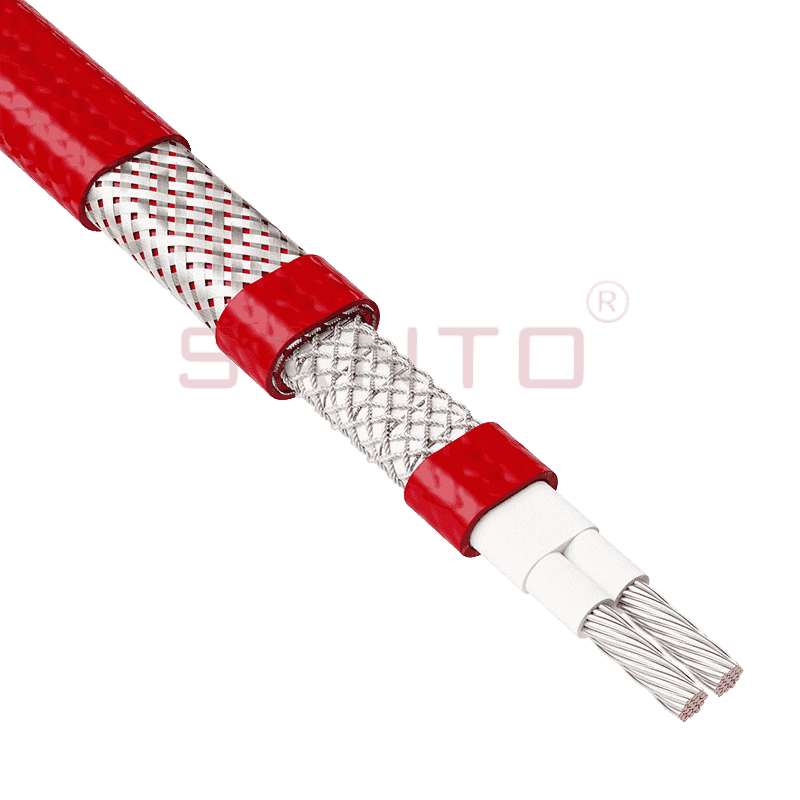
The SANTO ACC range of power-limiting heating cables is mainly used for temperature maintenance of processes and offers the advantage of a high power output at high temperatures which can reduce the n...
See Details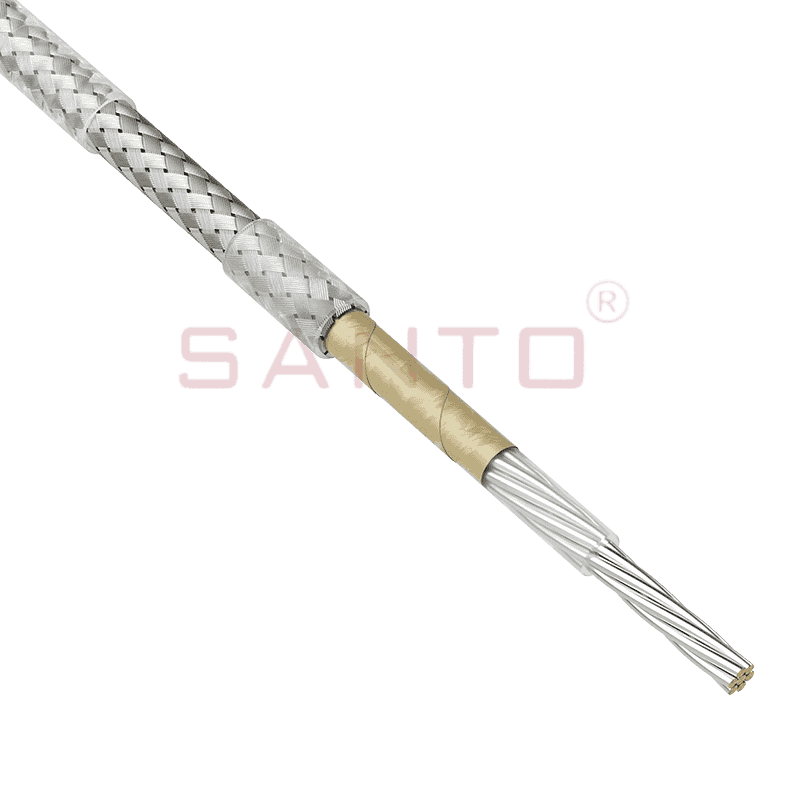
The stranded high temperature conductor is nickel plated to ensure a long life at elevated temperatures in corrosive environments. It is electrically isolated using an innovative sandwich construction...
See Details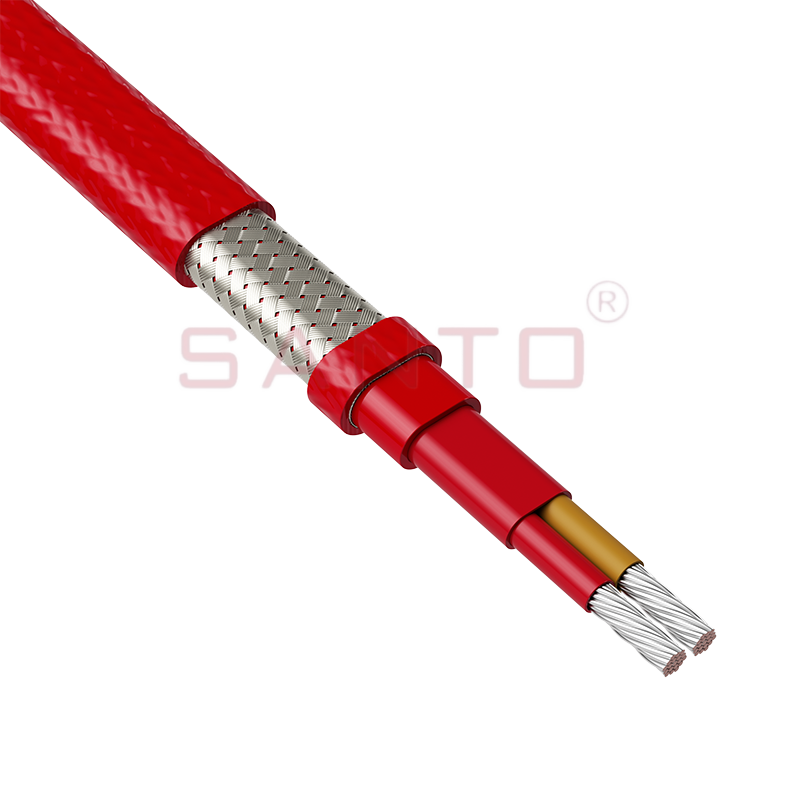
The stranded high temperature conductor is nickel plated to ensure a long life at elevated temperatures in corrosive environments. It is electrically isolated using an innovative sandwich construction...
See Details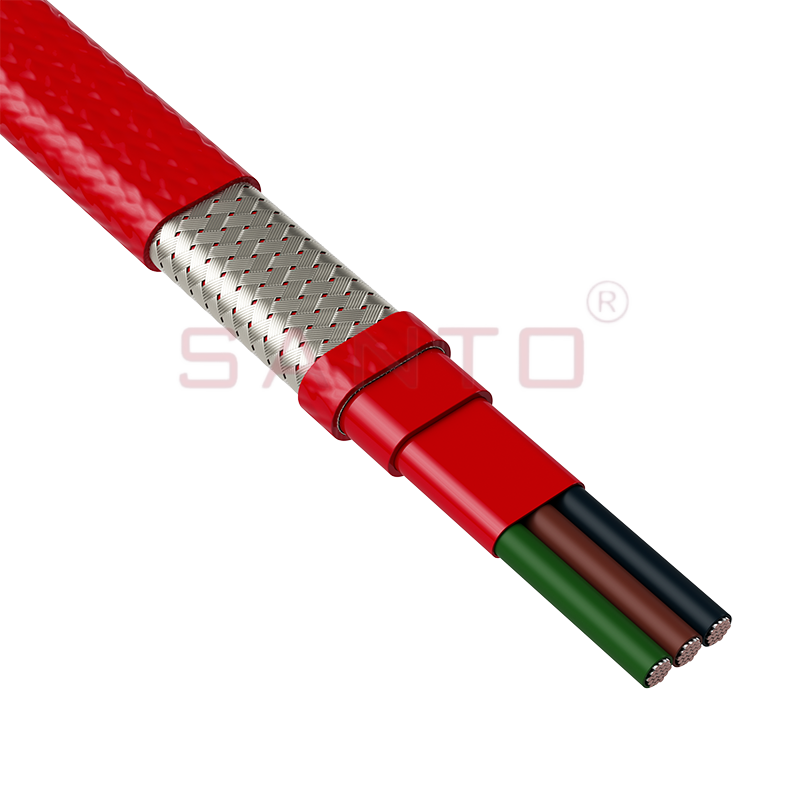
The stranded high temperature conductor is nickel plated to ensure a long life at elevated temperatures in corrosive environments. It is electrically isolated using an innovative sandwich construction...
See Details
SANTO HAx mineral insulated (MI) Alloy 825 series heating cables are suitable for use in hazardous areas. They have been designed for use in freeze protection and temperature maintenance applications ...
See Details
Santo electric heating strips are widely used in key industries in China.

