 English
 English
 русский
 日本語
 Español
 中文简体

The SANTO UFA range of self-regulating heating cables is mainly used for frost protection of pipes and vessels but can also be used to maintain processes up to 65°C. These heating cables are available...
See Details
Industrial heating systems are expected to perform reliably in environments where moisture, dust, combustible gases, chemicals, and temperature fluctuations may be present. In these applications, a conventional control enclosure may not provide sufficient protection for switching, regulating, and monitoring electric heating equipment. An explosion-proof temperature control box is designed to address this challenge by combining temperature management, electrical control, mechanical protection, and hazardous-area safety in one integrated solution.
This type of control box is especially valuable when used with electric heat-tracing cables, constant-power heating belts, self-regulating heating cables, silicone rubber heating systems, mineral-insulated cables, snow-melting systems, and other industrial heating products. It can help maintain process temperatures, prevent freezing, protect pipelines, reduce maintenance requirements, and support safer operation in demanding locations.
Santo Thermal Control Technology Co., Ltd. develops and manufactures electric heating and thermal-control products for industrial, commercial, agricultural, energy, and infrastructure applications. Its explosion-proof temperature control box forms part of a broader product portfolio that includes electrically heated tracing cables, skin-effect heating tracing systems, snow and ice melting systems, underfloor heating mats, tubing bundles, accessories, silicone rubber heating systems, and related temperature-control equipment.
Content
An explosion-proof temperature control box is an electrical enclosure and control assembly engineered for use in locations where an ignitable atmosphere may exist. Such an atmosphere can be created by flammable gases, vapors, combustible dust, or other hazardous substances. The enclosure is intended to prevent internal electrical arcs, sparks, or excessive heat from igniting the surrounding atmosphere under specified operating conditions.
In a heating application, the box may control one or more heating circuits. Depending on the configuration, it can include temperature controllers, contactors, circuit protection, terminal blocks, indicator lights, relays, sensors, switching devices, and cable-entry components. These parts work together to energize the heating system when the measured temperature falls below the selected value and to disconnect or regulate power when the desired temperature is reached.
The control box is not simply a weatherproof cabinet. A weatherproof enclosure protects equipment from rain or dust, while an explosion-proof enclosure is designed around the more demanding problem of containing or preventing the effects of an internal ignition. The distinction is important because a product suitable for outdoor use may not be suitable for a classified hazardous area.
For this reason, the final selection should consider the area classification, gas or dust group, temperature class, ambient temperature, voltage, current, heating load, sensor type, ingress protection, cable-entry arrangement, and applicable certification requirements. A professional supplier can help match the box to the specific heating circuit and installation environment.
Explosion-proof temperature control boxes are suitable for many industrial heating and heat-tracing applications. They are commonly considered for petroleum storage, refineries, chemical plants, natural-gas facilities, pipeline systems, loading stations, tank farms, industrial workshops, process plants, and other locations where heating equipment operates near potentially combustible materials.
In pipeline heat tracing, the control box can be connected to electric heating cables installed along pipes, valves, pumps, and instrumentation lines. The objective is often to prevent freezing, maintain fluid viscosity, compensate for heat loss, or keep a process within a defined operating range. Reliable temperature control is essential because insufficient heating can cause blockages, while excessive heating may damage insulation, degrade process materials, or waste energy.
In oil and gas applications, the box may support heating circuits used for crude oil lines, fuel lines, gas processing equipment, chemical dosing lines, pressure instruments, and outdoor process piping. In chemical production, it may help maintain the temperature of corrosive or temperature-sensitive fluids. In gas-related facilities, appropriate hazardous-area equipment is particularly important because the surrounding atmosphere may contain flammable gas or vapor.
In cold regions, the system can be used with heating cables installed on water lines, fire-protection pipes, roof drains, loading areas, and external equipment. It can also support snow and ice melting systems for ramps, walkways, roofs, gutters, and road surfaces. In these applications, temperature control helps ensure that the heating system operates only when required, reducing unnecessary energy consumption.
Industrial agriculture and greenhouse operations may also benefit from controlled heating. Heating cables and silicone rubber heaters can be applied to tanks, pipes, growing systems, and sensitive equipment. Where combustible gases, dust, or chemicals may be present, an appropriately certified control box provides an additional layer of protection.
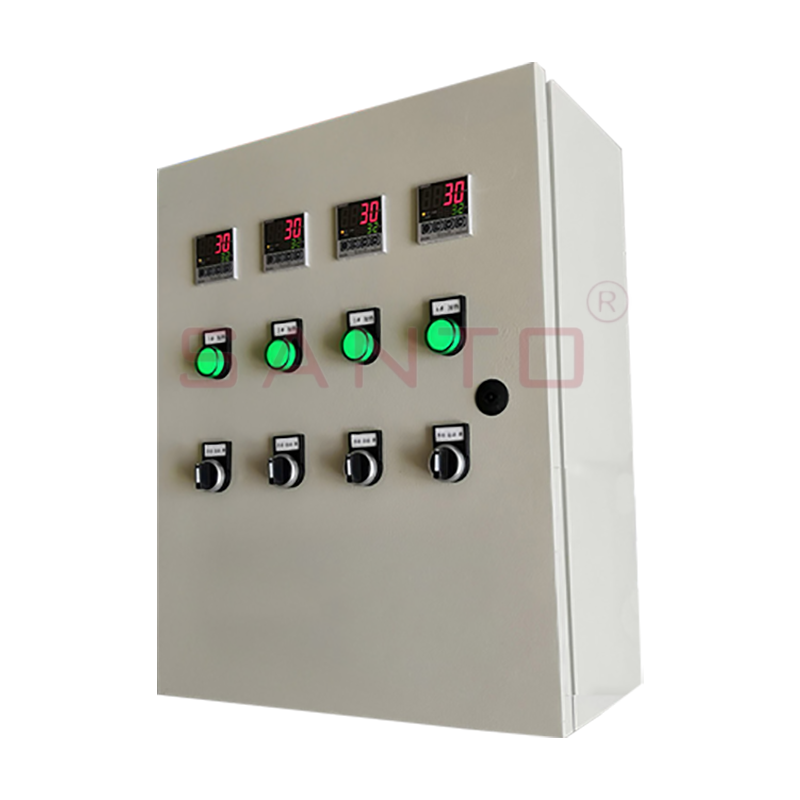
Explosion-proof temperature control box
The operating principle is straightforward but must be implemented with carefully selected components. A temperature sensor measures the temperature of the protected pipe, vessel, surface, room, or process. The sensor transmits a signal to the controller. The controller compares the measured value with the user-defined set point and sends a switching signal to the output device.
The output device may be a contactor, relay, solid-state switching component, or another approved switching element. When heating is required, the device energizes the heating circuit. When the set point is reached, the circuit is disconnected or modulated, depending on the design. Independent over-temperature protection may be included to reduce the risk of overheating in the event of sensor failure, controller malfunction, or an unexpected process condition.
Typical internal elements may include:
• An explosion-proof enclosure made from a suitable metal or engineered material.
• A temperature controller with a clear display and adjustable set points.
• Temperature sensors selected for the required measurement range and installation location.
• Contactors or relays sized for the connected heating load.
• Circuit breakers, fuses, or other overcurrent protection devices.
• Terminal blocks for power, heating circuits, sensors, alarms, and grounding.
• Indicator lamps for power, heating operation, fault status, or alarm status.
• Cable glands and entries designed for the enclosure and hazardous-area requirements.
• Grounding and bonding provisions.
• Optional isolators, emergency-stop interfaces, alarm contacts, and communication functions.
The exact arrangement can vary according to customer requirements. A small single-circuit box may be used for a short heat-tracing line, while a larger multi-circuit panel may control several independent heating zones. Independent control of multiple zones can improve energy efficiency because each pipe, tank, or process section receives the amount of heating it actually requires.
When installed correctly, the control box creates a coordinated system rather than an isolated product. The enclosure, heater, sensor, insulation, power supply, and installation method must all be considered together. The performance of the temperature control box cannot compensate for an incorrectly selected heating cable, damaged insulation, poor sensor placement, or inadequate electrical protection.
The most important advantage is the ability to support heating control in environments where a standard electrical cabinet may be unsuitable. The explosion-proof design is intended to limit the risk that an internal electrical fault will ignite the surrounding atmosphere. This makes the product more appropriate for hazardous industrial locations than an ordinary indoor control panel or general-purpose weatherproof box.
However, explosion-proof suitability is not universal. The enclosure must be selected according to the relevant certification and classification requirements. A box rated for one type of hazardous atmosphere may not be appropriate for another. The user should confirm the applicable certificate, protection concept, temperature class, gas or dust group, and installation conditions before purchase.
A temperature control box enables automatic operation instead of requiring personnel to switch heating circuits on and off manually. Automatic control improves temperature consistency and reduces the risk of human error. It is particularly useful for processes that operate continuously, during night shifts, or in remote locations.
Stable temperature control can protect fluids from freezing, reduce viscosity changes, maintain chemical reaction conditions, and preserve the operating performance of instruments and valves. It can also reduce thermal stress caused by unnecessary cycles of extreme heating and cooling.
A heating cable that operates continuously at full power may consume more energy than necessary. A temperature-controlled system supplies heat according to actual demand. When the monitored surface reaches the selected temperature, the control device reduces or interrupts power. When heat loss causes the temperature to fall, the system resumes operation.
The energy savings depend on the heating load, insulation, outdoor temperature, set point, control accuracy, operating schedule, and system design. Even when the saving cannot be predicted without a site survey, automatic control generally provides a more rational operating method than permanent manual energization.
Compared with a basic junction box, a properly configured control box can combine switching and protective functions in one assembly. Overcurrent protection, short-circuit protection, grounding, circuit isolation, and alarm functions can be organized in a clear structure. This can simplify commissioning and maintenance while improving the visibility of system status.
Protection devices must be sized according to the heating cable’s rated current, starting characteristics, ambient conditions, and applicable electrical standards. A professional manufacturer can configure the internal components based on the customer’s voltage, power, circuit quantity, and control requirements.
The box can be configured for different types of heating systems. It may control self-limiting heating cables, constant-power heating belts, silicone rubber heating strips, glass-fiber heating products, mineral-insulated cables, snow-melting cables, or specialized electric heating elements. This flexibility is valuable for engineering contractors and distributors who serve multiple industries.
Some heating systems are designed for low-temperature frost protection, while others are intended for process heating or high-temperature tracing. The controller, sensor, switching components, and protection settings must be selected accordingly. Configurable manufacturing allows the same basic control concept to be adapted to different applications instead of forcing every customer to use an identical standard model.
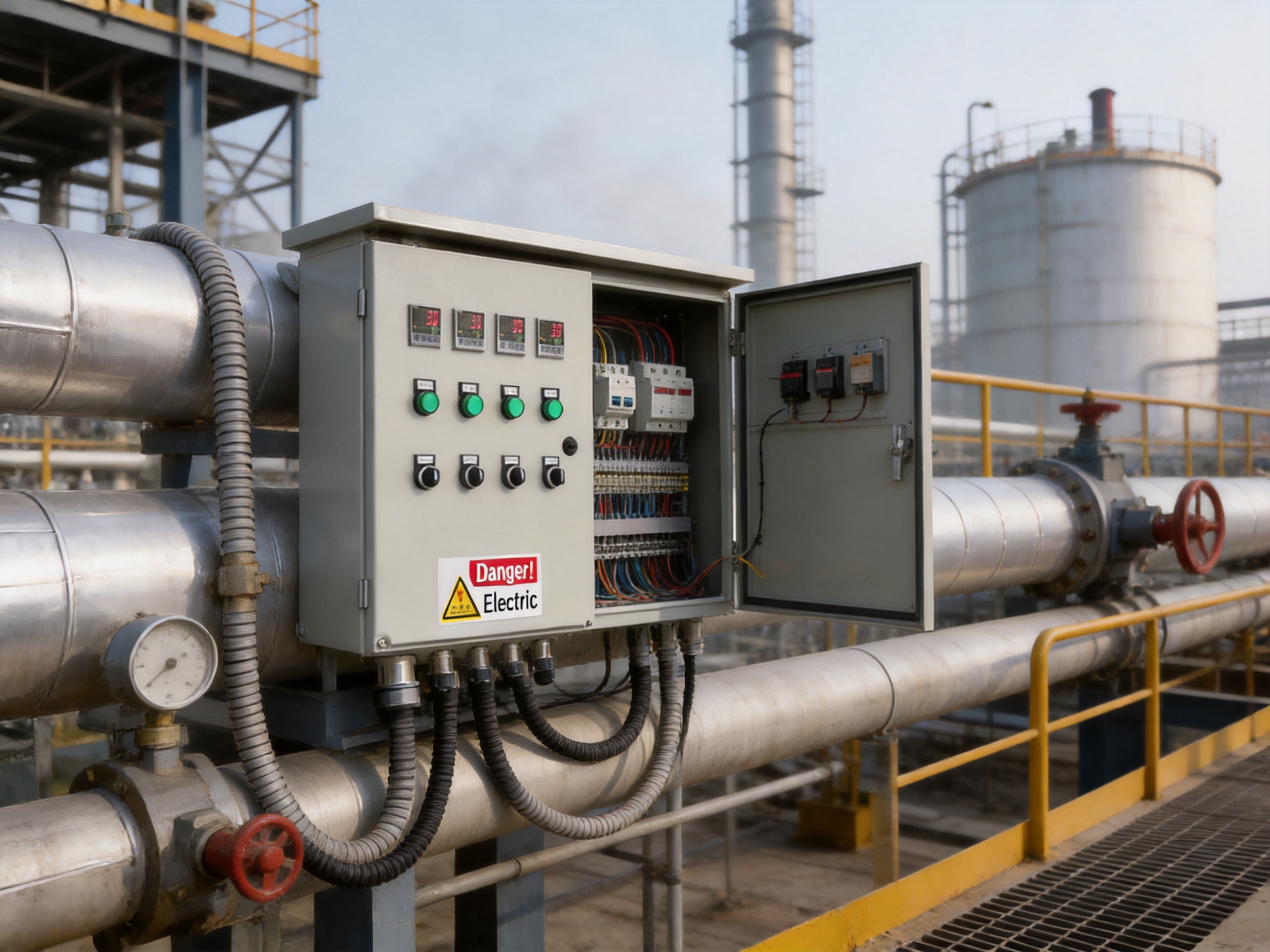
The performance of an explosion-proof temperature control box depends heavily on manufacturing discipline. Enclosure design, component integration, wiring quality, sealing, labeling, testing, and documentation all influence long-term reliability. Santo Thermal Control Technology Co., Ltd. combines product research, design, production, manufacturing, and sales within the electric heating field.
The company has more than three decades of industry experience and developed from an electric heating instrument manufacturer into a broader thermal-control technology enterprise. Its product range covers heating cables, heat-tracing systems, electric heating belts, mineral-insulated cables, heating accessories, temperature-control equipment, and specialized heating solutions.
Experience across multiple heating technologies is valuable because control equipment must be matched to the behavior of the connected heater. A self-limiting cable, a constant-power heater, a silicone rubber heating strip, and a mineral-insulated cable do not necessarily have the same electrical characteristics, temperature limits, installation methods, or control requirements. A manufacturer familiar with these products can make more informed decisions when designing the control assembly.
The company reports cooperation in product research with Harvard University in the United States and has developed several electric heating technologies. Its development history includes work on self-limiting temperature heating products, carbon-fiber parallel heating cables, high-temperature pipeline heating and tracing systems, and related thermal-control products.
Research and development capability supports customization. Customers may need a specific sensor range, multiple heating zones, a special enclosure size, a defined cable-entry arrangement, an alarm output, a different voltage, or integration with a larger process-control system. A manufacturer with internal engineering resources can evaluate these requirements before production rather than treating every request as a simple catalog transaction.
Control box production requires more than installing components inside a metal cabinet. The enclosure must be machined accurately, cable entries must be positioned correctly, internal wiring must be routed and secured, terminals must be identified, and protective conductors must be connected properly. Consistent assembly procedures help reduce loose connections, incorrect wiring, and avoidable commissioning problems.
Quality assembly should include verification of component ratings, tightening of electrical terminals, separation of power and signal wiring where appropriate, inspection of grounding continuity, and confirmation that the final configuration corresponds to the approved design. Wiring diagrams and terminal schedules should be reviewed before shipment.
The company’s ISO9001 quality management certification reflects a structured approach to quality control. Certification alone does not replace product-specific inspection, but it indicates that manufacturing and management activities are organized around documented processes and continual improvement.
The company has developed a product simulation testing laboratory as part of its efforts to improve new product development and technical guidance. Testing capability is important for heating systems because their actual performance depends on electrical load, ambient temperature, heat dissipation, sensor position, insulation quality, and operating duration.
Useful production and validation checks may include insulation resistance testing, dielectric strength testing, protective conductor continuity, functional temperature-control testing, switching verification, visual inspection, enclosure inspection, and review of identification markings. Depending on the product and certification requirements, additional environmental, temperature-rise, ingress-protection, or hazardous-area tests may be necessary.
Testing should be performed according to the product design and applicable standards. The customer should request the relevant inspection records, certificates, wiring diagrams, operating instructions, and product data when these documents are required for project approval.
Santo reports that it has obtained explosion-proof certification and EAC Eurasian Union certification, in addition to national CCC certification and ISO9001 quality system certification. The exact scope and validity of each certificate should be verified for the specific model, voltage, enclosure configuration, and intended market.
Certification experience can simplify communication with engineering contractors, inspection bodies, distributors, and end users. It also helps the manufacturer understand the importance of traceability, technical files, product markings, and controlled changes. If a customer requires a specific certification scheme, the supplier should confirm whether the offered configuration is covered before an order is placed.
The enclosure must protect internal components from mechanical impact, dust, moisture, and the conditions associated with the installation site. Material selection depends on corrosion exposure, temperature, mechanical requirements, and the relevant protection standard. Metal enclosures are commonly used where strength, grounding, and resistance to industrial conditions are important.
Surface treatment is also significant. Coatings, painting systems, and corrosion-resistant materials can improve durability in humid or chemically aggressive environments. For coastal installations or chemical plants, the customer should provide information about salt spray, corrosive vapors, cleaning agents, and expected service life.
Cable entries should be selected to maintain enclosure integrity and match the cable diameter, cable construction, environmental conditions, and hazardous-area requirements. Incorrect glands can compromise sealing, strain relief, or explosion protection. The number and location of entries should be planned before manufacturing to avoid field modifications that may invalidate certification or reduce protection.
Internal wiring should be arranged for safe access and straightforward maintenance. Clear terminal identification, numbered conductors, organized cable routing, and an accurate wiring diagram reduce troubleshooting time. Where several heating circuits are controlled from one box, each circuit should have a clear label showing its destination, rating, and protective device.
The temperature sensor is central to the control system. Sensors may be selected according to the temperature range, chemical environment, mounting method, response time, cable length, and required accuracy. The sensor can be installed on a pipe, tank wall, heater surface, room wall, or another representative location.
Sensor placement affects control quality. If the sensor is too far from the heated surface, the system may respond slowly. If it is placed directly beside the heating cable without adequate thermal contact to the protected equipment, it may read a temperature that does not represent the process. If it is exposed to external sunlight or a local hot spot, it may produce an inaccurate control signal.
The sensor cable should be protected against mechanical damage and routed according to the project’s electrical requirements. Where signal interference is a concern, the installation may require appropriate separation from high-power heating cables or the use of suitable shielded wiring.
Operators benefit from a controller that clearly displays the measured temperature, set point, alarm status, and heating output. Indicator lights can show whether power is available, whether a heating circuit is energized, and whether a fault has occurred. These features are simple but valuable during routine inspection.
For larger installations, optional alarm contacts or communication functions may be integrated into the control design. A fault signal can be sent to a central monitoring system when the sensor fails, the temperature exceeds a limit, a breaker trips, or a heating circuit loses power. Remote monitoring is especially useful for unmanned stations and critical process lines.
Different control methods may appear similar but provide different levels of safety and convenience. The following comparison summarizes general differences. Actual performance depends on the design, certification, installation quality, and operating environment.
| Control solution | Main strengths | Typical limitations | Suitable use |
|---|---|---|---|
| Manual switching | Simple and inexpensive initial arrangement | Requires continuous attention; poor temperature consistency; higher risk of overheating or freezing | Temporary or non-critical applications |
| General-purpose weatherproof box | Protects against common outdoor conditions | May not be suitable for classified hazardous areas | Non-hazardous outdoor installations |
| Basic thermostat and contactor | Automatic temperature control at moderate cost | May lack hazardous-area certification, alarms, or advanced circuit protection | Ordinary industrial and commercial locations |
| Explosion-proof temperature control box | Supports automatic control with enhanced protection for specified hazardous environments | Higher initial cost; must be correctly certified and installed | Petroleum, chemical, gas, and other classified areas |
| Centralized process-control panel | Advanced monitoring, data collection, and multi-system integration | More complex engineering, installation, and maintenance | Large plants and highly automated facilities |
Compared with manual switching, an automatic explosion-proof control box offers better consistency and less dependence on operator availability. Compared with a standard thermostat enclosure, it is better suited to hazardous-area requirements when the relevant certification is provided. Compared with a fully centralized system, it may be simpler and more economical for individual heating zones or medium-sized installations.
The most appropriate solution depends on the importance of the process and the required level of automation. A small number of critical heating circuits may benefit from local control with remote alarm contacts, while a large plant may integrate several local boxes into a supervisory control network.
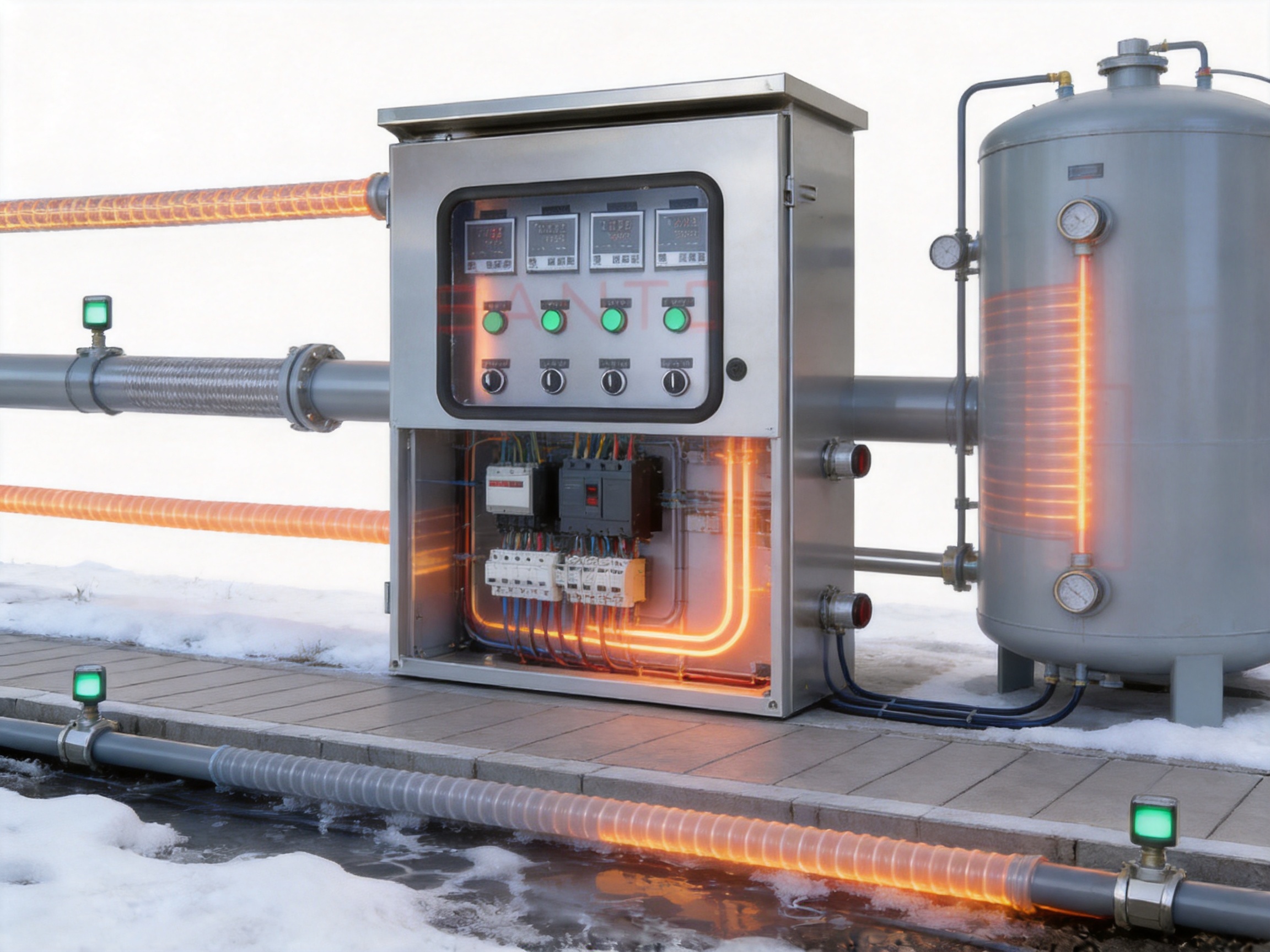
Electric heat tracing is used to compensate for heat loss and maintain a desired temperature. The control box is responsible for managing the energy supplied to the heater, but the complete system also requires correct cable selection, installation, thermal insulation, weatherproofing, and testing.
Self-limiting heating cables automatically reduce their power output as their surrounding temperature rises. They are useful for freeze protection and many moderate-temperature applications. A temperature control box can provide additional switching, monitoring, and safety control, especially where the heating system is large, critical, or installed in a hazardous area.
Constant-power heating belts or cables deliver a relatively stable output per unit length when properly designed. They are suitable for applications requiring predictable heat input. Because the power remains more consistent, circuit loading, maximum exposure temperature, control limits, and protective devices must be carefully evaluated.
Silicone rubber heating systems provide flexibility and can be adapted to tanks, pipes, drums, instruments, and irregular surfaces. They are often selected where close surface contact and flexible installation are important. The control box can manage the heater according to a surface sensor or process sensor, while independent protection helps prevent excessive temperature.
Mineral-insulated cables and other specialized high-temperature products may be used in demanding industrial environments. These systems can require different termination methods, temperature sensors, and control strategies. The advantage of purchasing the heater and control equipment from a manufacturer experienced in multiple heating technologies is that the system can be evaluated as a complete application rather than as unrelated components.
For snow and ice melting, the control logic may use surface temperature and moisture information, a scheduled operating period, or manual override. For underfloor heating, the system may combine floor temperature limitation with room temperature control. For tubing bundles, the sensor and heater must be coordinated with the bundle construction, insulation, and process requirements.
Industrial customers often require more than a standard product. A control box may need to match a plant’s voltage, control philosophy, enclosure dimensions, cable routing, hazardous-area classification, or documentation system. OEM customers may also need private labeling, customized terminal arrangements, special packaging, or repeated production of a defined configuration.
Santo Thermal Control Technology Co., Ltd. presents itself as a China OEM and ODM manufacturer with experience in custom heating cable and thermal-control products. This type of manufacturing relationship can be useful for distributors, engineering contractors, equipment manufacturers, and system integrators that need a stable supply of application-specific products.
Common customization points include:
• Single-phase or three-phase power supply.
• One or multiple independently controlled heating circuits.
• Different current ratings and protective-device arrangements.
• Adjustable temperature ranges for freeze protection or process heating.
• Alternative temperature sensors and mounting accessories.
• Local display, push buttons, selector switches, or status indicators.
• Alarm contacts for connection to a supervisory system.
• Special cable glands, terminal blocks, or entry directions.
• Customized enclosure size and mounting structure.
• Different painting, labeling, and nameplate requirements.
• Project-specific wiring diagrams, inspection documents, and packaging.
Customization should be based on a technical specification rather than a general description. The customer should provide the heating cable model, total length, rated voltage, power per meter, circuit quantity, required temperature, sensor type, ambient temperature, hazardous-area classification, installation location, and certification expectations.
Correct installation is essential to the safety and performance of an explosion-proof control box. The installer should review the product certificate, installation instructions, wiring diagram, terminal schedule, and local electrical regulations before beginning work. The box should be mounted on a stable structure that can support its weight and withstand vibration.
The installation location should provide sufficient access for inspection and maintenance while avoiding unnecessary exposure to impact, water accumulation, corrosive chemicals, or excessive heat. Cable bends should meet the minimum radius specified for the cable and gland. Cable entries should be tightened according to the manufacturer’s instructions.
Grounding and bonding must be completed correctly. The enclosure, incoming power supply, heating circuits, and associated metalwork should be connected in accordance with the applicable electrical system. Protective devices should be checked before energization, and the resistance of the heating circuit should be compared with the expected value.
The temperature sensor should be attached securely to the intended measurement point. Thermal contact should be adequate, but the sensor should not be installed in a position that creates a false temperature reading. The sensor cable should be protected and clearly identified at the control box.
Heating cables should be installed according to their own instructions. They should not be crossed, compressed, sharply bent, or placed beneath materials that exceed their temperature rating. Thermal insulation should be installed after testing the heater and sensor. Any metal cladding or protective covering should be arranged so that it does not damage the heating cable.
Before commissioning, the installer should verify power supply, circuit continuity, insulation resistance, sensor operation, controller settings, contactor operation, alarm functions, and emergency isolation. The system should be observed through a complete heating cycle where possible. Records of the test results should be retained for future maintenance.
Regular inspection helps maintain reliable operation. Inspection intervals should be based on the criticality of the process, the environment, operating hours, local regulations, and the manufacturer’s recommendations. A basic inspection may include checking enclosure condition, cable entries, labels, grounding connections, indicator lights, controller readings, and signs of water ingress or corrosion.
Operators should watch for unexpected temperature changes, repeated breaker trips, slow heating, abnormal switching frequency, damaged insulation, or alarm signals. These symptoms may indicate a failed sensor, damaged heating cable, inadequate insulation, loose connection, overloaded circuit, or incorrect controller setting.
Electrical work should be performed only by qualified personnel. Power must be isolated before the enclosure is opened, and hazardous-area procedures must be followed. Unauthorized drilling, welding, modification, or replacement of certified parts may compromise the product’s protection and certification.
Keeping spare sensors, fuses, contactors, glands, and other approved components can reduce downtime for critical applications. Replacement parts should match the original electrical rating and certification requirements. A maintenance record should include inspection dates, measured values, faults, repairs, and changes to control settings.
The service life of the system depends on the enclosure material, environmental exposure, switching frequency, electrical loading, heating cable condition, insulation quality, and maintenance practices. A well-designed and properly maintained installation can provide dependable service for many years, but no control box can eliminate the need for periodic inspection.
Quality in thermal-control equipment includes product performance, documentation, communication, delivery consistency, and after-sales support. Customers need to know not only that the box can switch a heating circuit, but also that the configuration is traceable and suitable for the intended application.
Santo reports more than 35 years of industry experience, annual output exceeding 10,000 units, more than 2,000 distributors, and business coverage in over 85 areas. These figures indicate experience in serving different customer groups and application environments. For international buyers, manufacturing scale can also support repeat orders, replacement supply, and standardized production.
The company’s product development and manufacturing activities are supported by a stated focus on scientific research, technical guidance, product quality, scientific management, and after-sales service. These capabilities are particularly relevant when customers require engineering consultation before selecting the heating cable and control equipment.
A responsible supplier should help customers answer practical questions: What is the hazardous-area classification? What temperature must be maintained? What is the connected load? Which sensor is appropriate? How many independent circuits are required? What documents are needed for approval? What are the ambient temperature and corrosion conditions? How will the equipment be inspected after installation?
Clear answers to these questions reduce the risk of ordering a technically unsuitable product. They also make it easier to prepare drawings, bills of materials, installation plans, and maintenance procedures.
Before requesting a quotation, the buyer should prepare a technical data sheet. The following information is useful for accurate product selection:
| Item | Information to provide | Why it matters |
|---|---|---|
| Application | Pipeline, tank, valve, instrument, roof, floor, tubing bundle, or other equipment | Determines the heating method and sensor location |
| Hazardous-area classification | Gas, vapor, dust, zone, division, group, and temperature class where applicable | Determines enclosure and certification requirements |
| Power supply | Voltage, phase, frequency, and available short-circuit capacity | Determines switching and protection components |
| Heating load | Heater type, length, power per meter, total power, and rated current | Determines circuit rating and number of outputs |
| Temperature requirement | Minimum, normal, maximum, and alarm temperatures | Determines controller and sensor range |
| Environment | Ambient temperature, moisture, dust, chemicals, vibration, and outdoor exposure | Determines enclosure material and protection level |
| Control method | Local control, remote control, automatic control, alarm, or communication | Determines interface and internal configuration |
| Documentation | Drawings, certificates, manuals, inspection records, and labels | Supports approval, installation, and maintenance |
Providing complete information at the beginning helps prevent changes after production has started. It also allows the manufacturer to identify conflicts, such as a heater that exceeds the controller rating, a sensor that is unsuitable for the temperature range, or a certification requirement that does not match the proposed enclosure.
Many heating projects involve several connected products. A cable may be purchased from one supplier, a thermostat from another, an enclosure from a third, and installation services from a contractor. This approach can work, but it may create uncertainty over compatibility, responsibility, documentation, and troubleshooting.
An integrated thermal-control manufacturer can reduce some of these coordination difficulties. When the same supplier understands the heating cable, sensor, controller, enclosure, and accessories, it can design the products as a system. This may improve wiring consistency, simplify technical communication, and make replacement parts easier to identify.
Integrated manufacturing can also support faster customization. For example, a customer may need a control box matched to a particular constant-power heating cable or a silicone rubber heater with a defined surface temperature limit. The manufacturer can review the electrical and thermal characteristics together instead of treating the control box as a generic device.
This does not mean that every project should use a single supplier. Independent engineering review remains valuable, especially for complex hazardous-area installations. The key benefit is that an integrated supplier can contribute application knowledge and reduce avoidable interface problems.
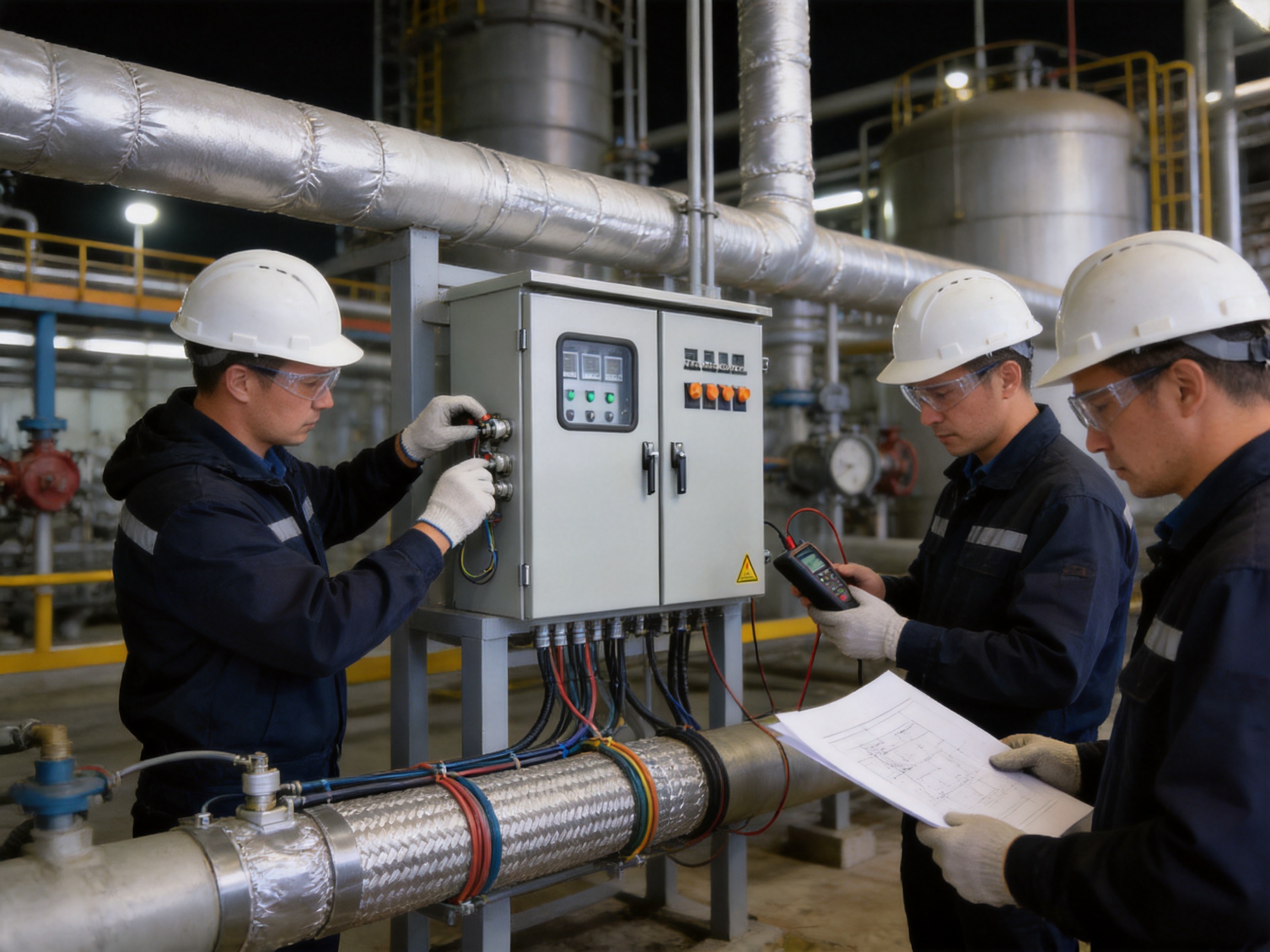
Electric heating systems can contribute to energy efficiency when they are properly designed and controlled. Heat tracing prevents production losses, protects equipment, and avoids the need for emergency thawing or replacement of frozen components. Automatic temperature control further improves efficiency by matching heat input to actual conditions.
Good insulation is essential. The control box cannot make up for excessive heat loss caused by thin, wet, damaged, or poorly installed insulation. The heater should be sized according to the heat-loss calculation, and the control set point should be high enough for the process but not higher than necessary.
Intelligent operating schedules can also reduce consumption. A system used for snow melting may operate only when low temperature and moisture conditions occur. A pipeline freeze-protection system may use a lower set point than a process-maintenance system. Multiple control zones can prevent unused sections from being energized.
The company’s stated vision of protecting environmental health and its focus on innovation, cooperation, effectiveness, and development align with the broader need for efficient thermal management. Energy efficiency should be considered throughout the product life cycle, including material selection, manufacturing, installation, operation, maintenance, and end-of-life replacement.
Distributors need products that are technically credible, repeatable, and suitable for multiple customer applications. A manufacturer with a broad heating product range can offer more than one solution to a distributor’s market. The same customer base may require pipeline tracing, tank heating, floor heating, snow melting, or tubing bundles, and a wider portfolio can support cross-selling and project continuity.
OEM buyers often value consistency. Once a control box has been approved for a piece of equipment, later production should follow the same electrical layout, labeling system, component specification, and documentation format. Controlled manufacturing changes are important because an unapproved component substitution can affect certification, performance, or field maintenance.
Custom manufacturing also allows a buyer to develop a product that is better matched to its own system. Enclosure dimensions can be coordinated with the machine frame, terminal positions can match the factory wiring harness, and control interfaces can be adapted to the OEM’s operating panel or monitoring system.
For project contractors, technical support before purchase can reduce design time. Factory assistance with heat-load calculations, circuit division, sensor selection, and control logic can help create a more complete proposal. The final responsibility for engineering approval remains with the qualified project team, but supplier expertise can make the process more efficient.
One common mistake is selecting an enclosure solely because it is described as waterproof or explosion-proof without checking the actual certificate and classification. Hazardous-area designations are specific, and a product suitable for one environment may not be acceptable in another.
Another mistake is choosing the controller before calculating the heating load. The total current, number of circuits, switching frequency, and startup behavior must be considered. A controller or contactor that is too small may overheat or fail prematurely.
Incorrect sensor placement is another frequent problem. The sensor must represent the temperature of the protected equipment, not merely the temperature inside the enclosure or near the heater. The installation should also protect the sensor cable from physical damage and interference.
Insufficient insulation can lead to continuous heating, unstable temperature, and high energy use. Damaged insulation can also allow moisture to reach the heating cable or create cold spots. Insulation should be inspected after installation and during maintenance.
Unauthorized field modification is particularly risky. Drilling additional holes, replacing cable glands with unapproved parts, changing internal components, or altering the enclosure may invalidate certification. Any modification should be reviewed and approved by the responsible technical authority.
Its primary purpose is to automatically control electric heating equipment while providing an enclosure and electrical arrangement suitable for specified hazardous environments. It can help maintain a target temperature, prevent freezing, reduce heat loss, and manage heating circuits safely.
It can be configured for many heating products, including self-limiting cables, constant-power heating belts, silicone rubber heating systems, glass-fiber heating products, mineral-insulated cables, and snow-melting cables. Compatibility depends on voltage, current, temperature range, control method, and certification requirements.
No. Outdoor exposure alone does not automatically require explosion-proof equipment. The requirement depends on the area classification and the possibility of flammable gas, vapor, dust, or other hazardous atmospheres. A qualified engineer or safety authority should determine the applicable requirements.
Yes, a multi-circuit configuration can be designed for several heating zones. Each circuit may have independent protection and temperature control, depending on the project requirements. Multi-zone control can improve energy efficiency and make troubleshooting easier.
The supplier normally needs the heating cable type, total length, rated voltage, power, circuit quantity, required temperature, sensor details, ambient conditions, hazardous-area classification, enclosure material preference, control method, and documentation requirements.
Remote alarm contacts or other communication functions may be included when requested. These functions can report high temperature, low temperature, sensor failure, circuit failure, or loss of power to a supervisory control system. The interface should be specified before production.
The buyer should request the certificate applicable to the exact product configuration and intended installation area. Depending on the market, this may include hazardous-area certification, national electrical certification, quality-management certification, or regional conformity documentation. The certificate should be checked for model number, protection method, temperature class, and validity.
It switches or regulates the heating system according to measured temperature rather than leaving the heater energized continuously. The level of energy reduction depends on insulation, ambient temperature, heating load, set point, control accuracy, and operating conditions.
The sensor should be installed at a representative point on the protected surface, pipe, tank, room, or process. It should have good thermal contact and should not be exposed to a local heat source or other condition that produces a misleading reading. The exact location should follow the system design.
The company’s product portfolio includes heating cables, heat-tracing systems, snow and ice melting systems, underfloor heating mats, tubing bundles, silicone rubber heating systems, accessories, and temperature-control products. This allows customers to discuss complete or partially integrated solutions with one manufacturer.
A junction box primarily provides a protected point for connecting or branching electrical conductors. A control box can include temperature controllers, switching devices, protective components, indicators, alarms, and other functions. An explosion-proof temperature control box combines connection, control, and protection in a specialized enclosure.
No. Regular inspection remains necessary. Operators should check enclosure condition, cable entries, grounding, sensor readings, protective devices, alarm functions, heating-cable resistance, and insulation. Maintenance should be conducted by qualified personnel according to applicable safety procedures.
A reliable project normally begins with an application survey. The engineering team identifies the equipment to be heated, the required temperature, heat-loss conditions, environmental exposure, power supply, hazardous-area classification, and operating schedule. This information is used to determine the heating method and control architecture.
The next step is a technical proposal. The supplier should provide a recommended heater, control box configuration, sensor arrangement, protection concept, wiring diagram, and relevant certification information. Any assumptions should be stated clearly so that they can be confirmed before production.
After approval, the manufacturer prepares the detailed design and production documents. Component ratings, enclosure dimensions, cable entries, labels, terminals, and control logic should be reviewed. For repeated OEM production, the approved design should be controlled as a formal product configuration.
During manufacturing, the enclosure is assembled, wired, labeled, and inspected. Electrical and functional tests are performed according to the design and applicable standards. The completed equipment is then packaged to protect the enclosure, controller, cable glands, and accessories during transport.
At the installation site, qualified personnel inspect the equipment before connection. The system is wired according to the approved diagram, grounded, tested, and commissioned. Operating personnel should receive basic instructions on normal operation, alarms, isolation, and maintenance.
After commissioning, the project team should retain the technical file. This may include the data sheet, certificate, wiring diagram, inspection records, sensor information, spare-parts list, installation instructions, and maintenance schedule. Complete documentation improves long-term reliability and helps ensure that replacement parts remain compatible.
An explosion-proof temperature control box is an important component for electric heating systems installed in demanding or hazardous environments. By combining automatic temperature regulation, circuit switching, electrical protection, sensor management, and specialized enclosure construction, it can provide a safer and more efficient alternative to manual switching or general-purpose control cabinets.
The product is particularly valuable when used with heat-tracing cables, constant-power heating belts, self-limiting heating cables, silicone rubber heaters, mineral-insulated cables, snow-melting systems, tubing bundles, and other industrial heating technologies. Its benefits include improved temperature stability, reduced energy waste, clearer operating status, more organized maintenance, and better suitability for specified hazardous-area applications.
Santo Thermal Control Technology Co., Ltd. brings broad experience in electric heating research, manufacturing, customization, and international supply. Its reported ISO9001 quality system, explosion-proof certification experience, EAC certification, CCC certification, product simulation laboratory, broad product range, and OEM and ODM capabilities provide a foundation for serving industrial and project-based customers.
The best results depend on correct engineering. Buyers should verify the hazardous-area classification, certificate scope, heating load, sensor requirements, temperature range, enclosure conditions, installation method, and documentation before ordering. When the control box is properly selected, manufactured, installed, and maintained, it can help protect pipelines and equipment, improve process reliability, and support safer long-term operation.
1. International Electrotechnical Commission, Explosive Atmospheres: Equipment Protection and Installation Principles.
2. International Electrotechnical Commission, Electrical Installations in Explosive Gas Atmospheres.
3. International Electrotechnical Commission, Industrial Process Measurement and Control Equipment Requirements.
4. International Organization for Standardization, Quality Management Systems: Requirements.
5. National fire and electrical safety guidance for hazardous-area installations and industrial heat-tracing systems.
6. Manufacturer technical materials for electric heating cables, self-limiting heating systems, silicone rubber heaters, mineral-insulated cables, and temperature-control equipment.
7. Manufacturer installation and maintenance guidance for explosion-proof electrical enclosures and industrial heat-tracing applications.
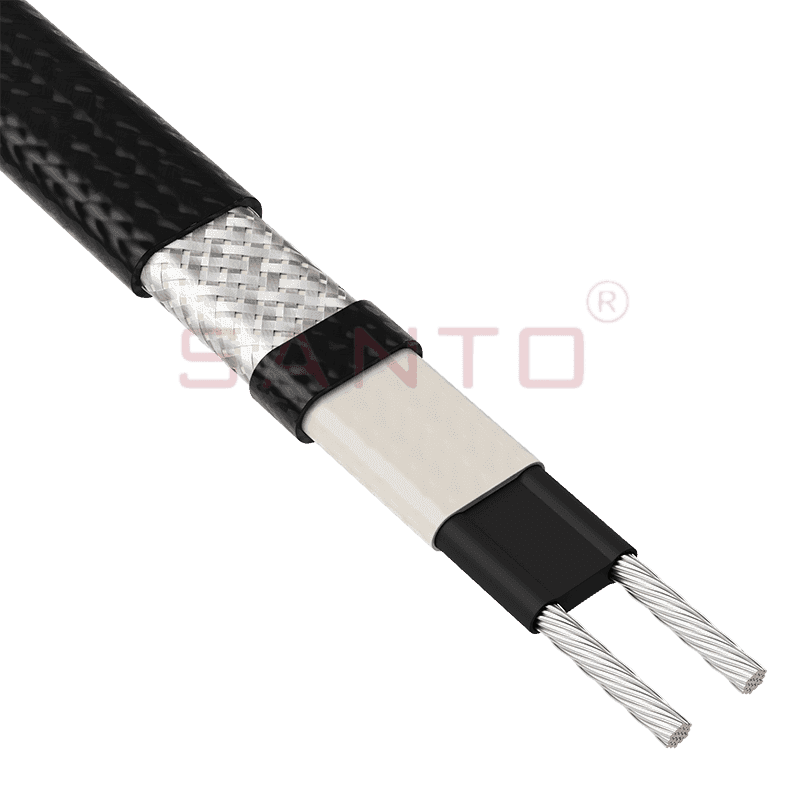
The SANTO UFA range of self-regulating heating cables is mainly used for frost protection of pipes and vessels but can also be used to maintain processes up to 65°C. These heating cables are available...
See Details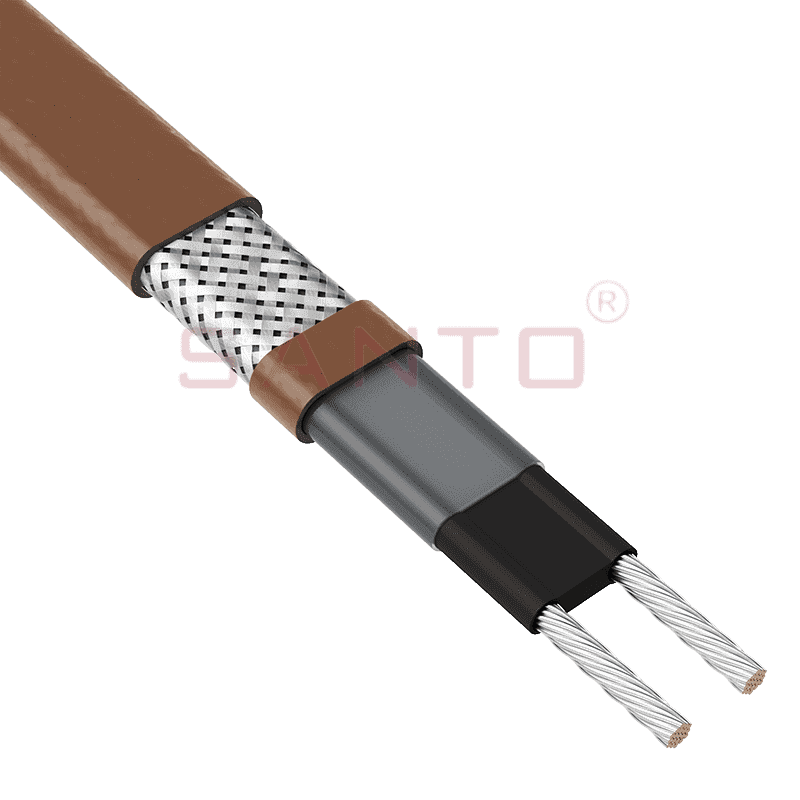
The SANTO UFB range of self-regulating heating cables is mainly used for frost protection of pipes and vessels requiring a higher power output than the UFA heating cables can supply. They can also be ...
See Details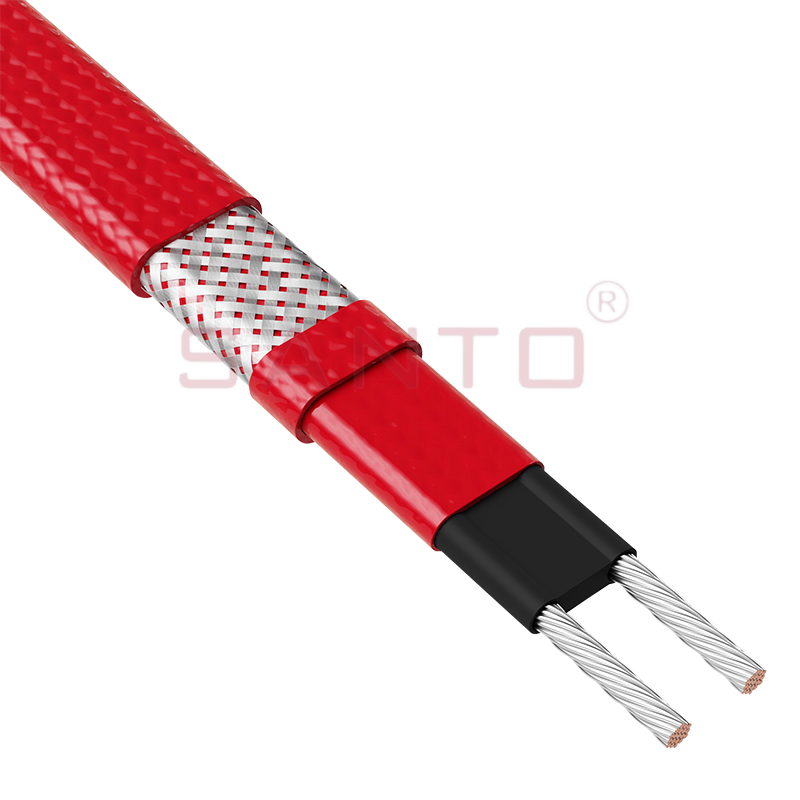
The SANTO UFC range of self-regulating heating cables is used for frost protection of pipes and vessels that require steam cleaning. They can also be used to maintain processes up to 121°C. These heat...
See Details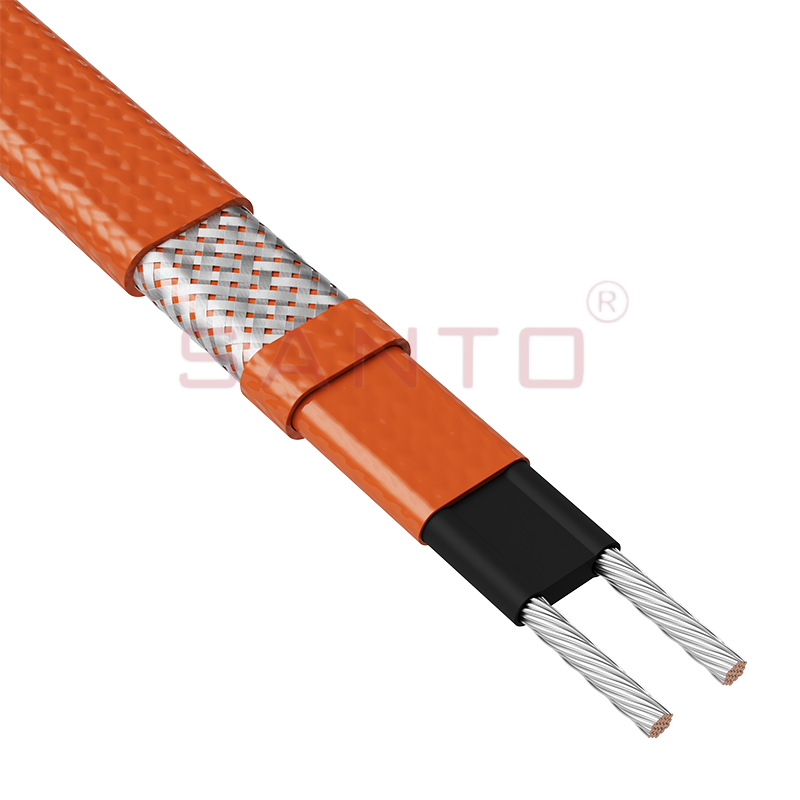
The SANTO UFO range of self-regulating heating cables is mainly used for frost protection of pipes and vessels that require steam cleaning . They can also be used to maintain processes up to 150°C. Th...
See Details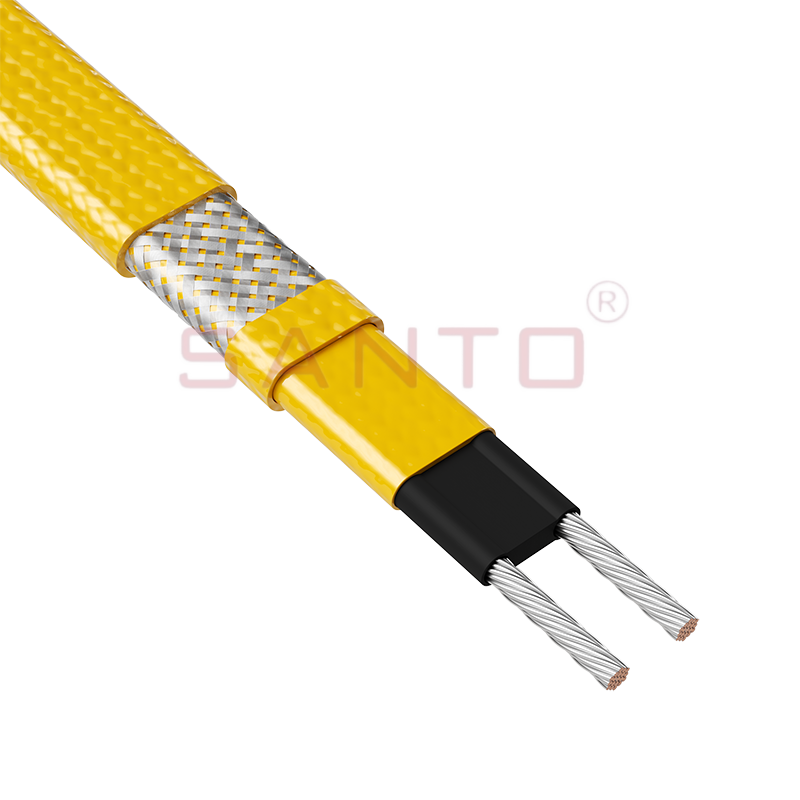
The SANTO UFD series of self-regulating heating cables are mainly used for freeze protection of pipes and vessels, but can also be used to maintain processes up to 200°C. These heating cables are avai...
See Details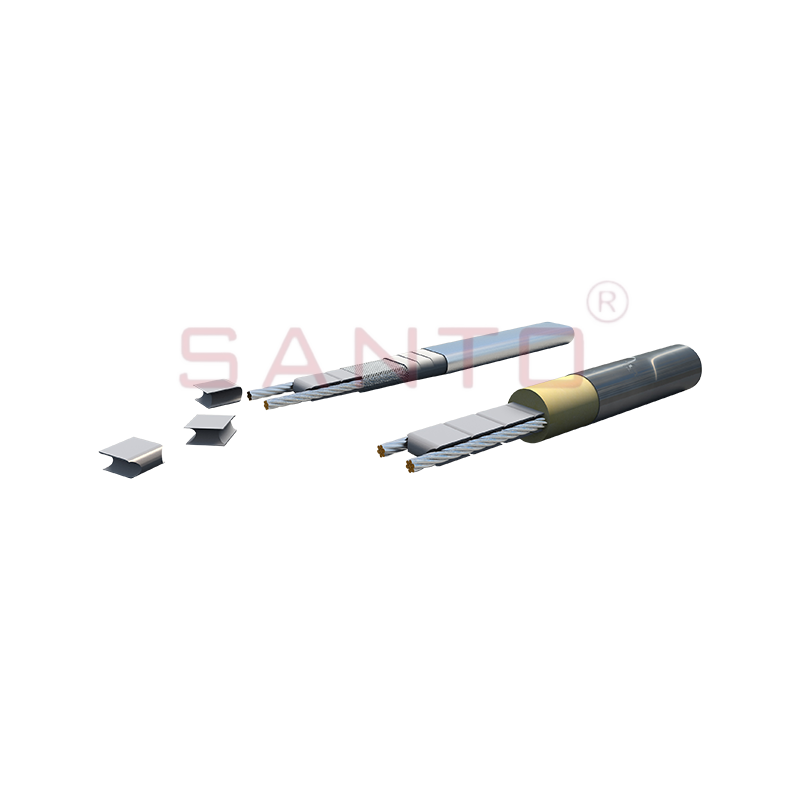
SANTO UFY heating wire is suitable for applications that maintain process temperatures up to 260 ℃ and can be steam blown; The self-regulating and parallel circuit heating wires of the UFY series are ...
See Details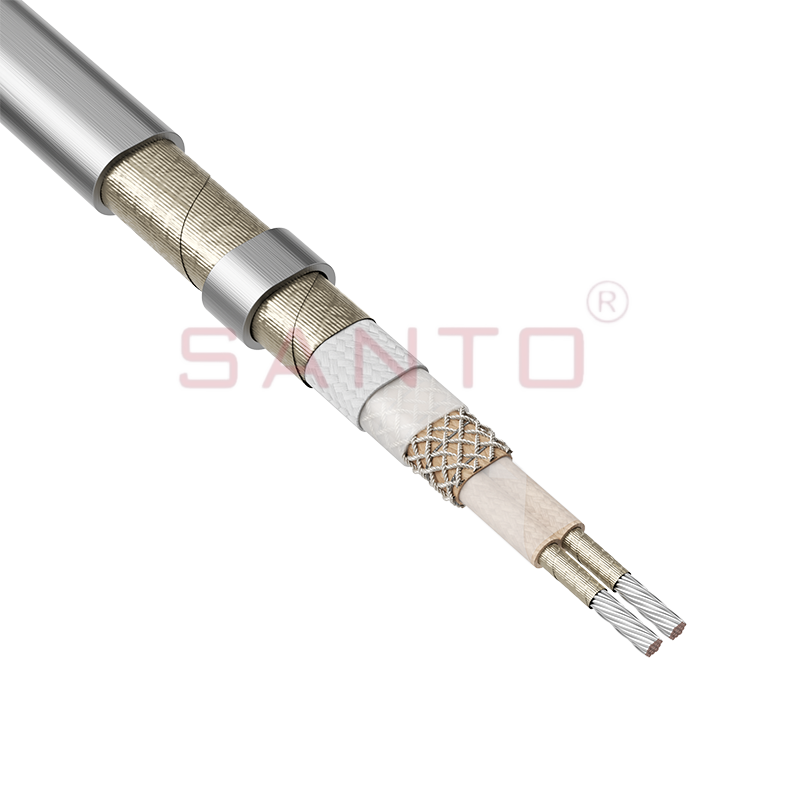
The SANTO UFM series self-regulating heating cables are mainly used for freeze protection of pipes and vessels, but can also be used to maintain processes up to 400°C. These heating cables are availab...
See Details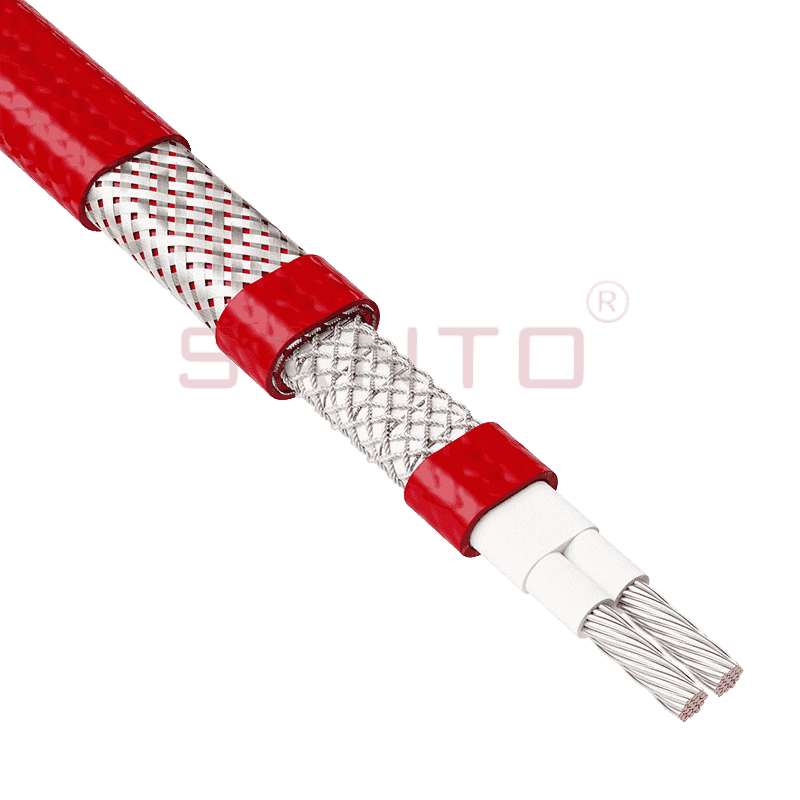
The SANTO ACC range of power-limiting heating cables is mainly used for temperature maintenance of processes and offers the advantage of a high power output at high temperatures which can reduce the n...
See Details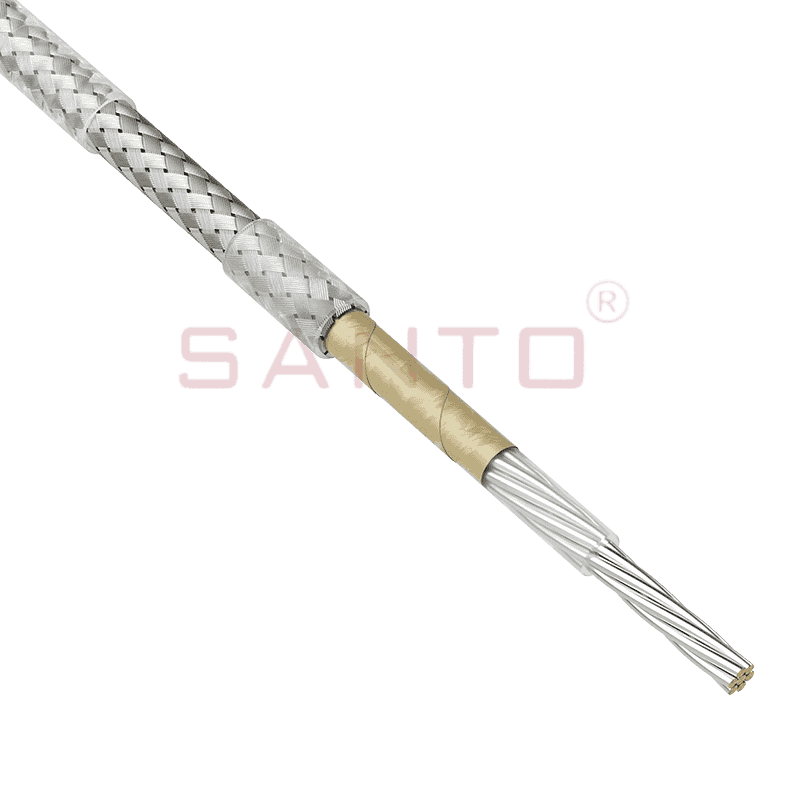
The stranded high temperature conductor is nickel plated to ensure a long life at elevated temperatures in corrosive environments. It is electrically isolated using an innovative sandwich construction...
See Details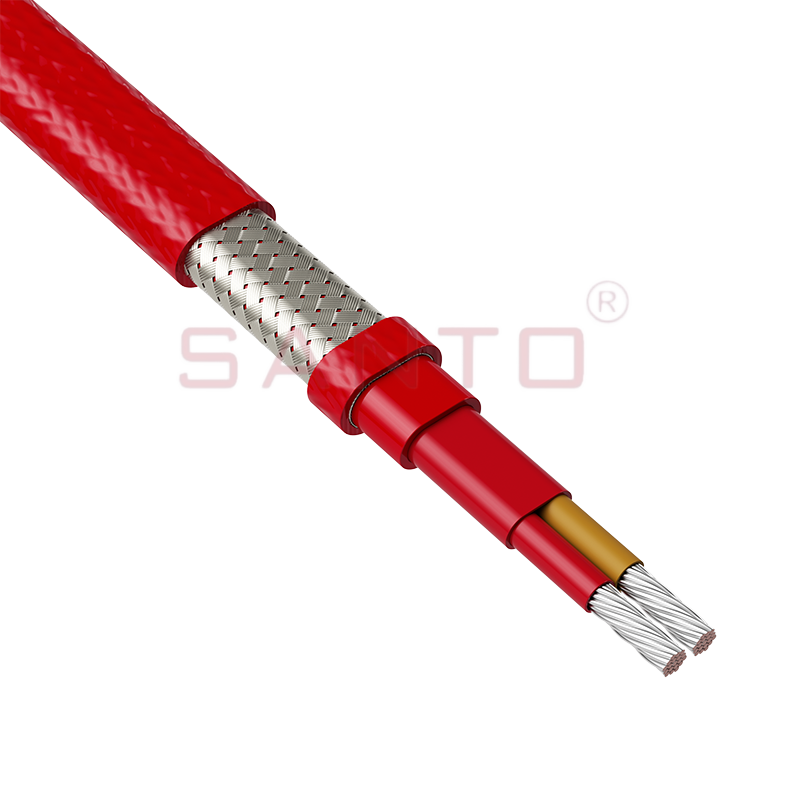
The stranded high temperature conductor is nickel plated to ensure a long life at elevated temperatures in corrosive environments. It is electrically isolated using an innovative sandwich construction...
See Details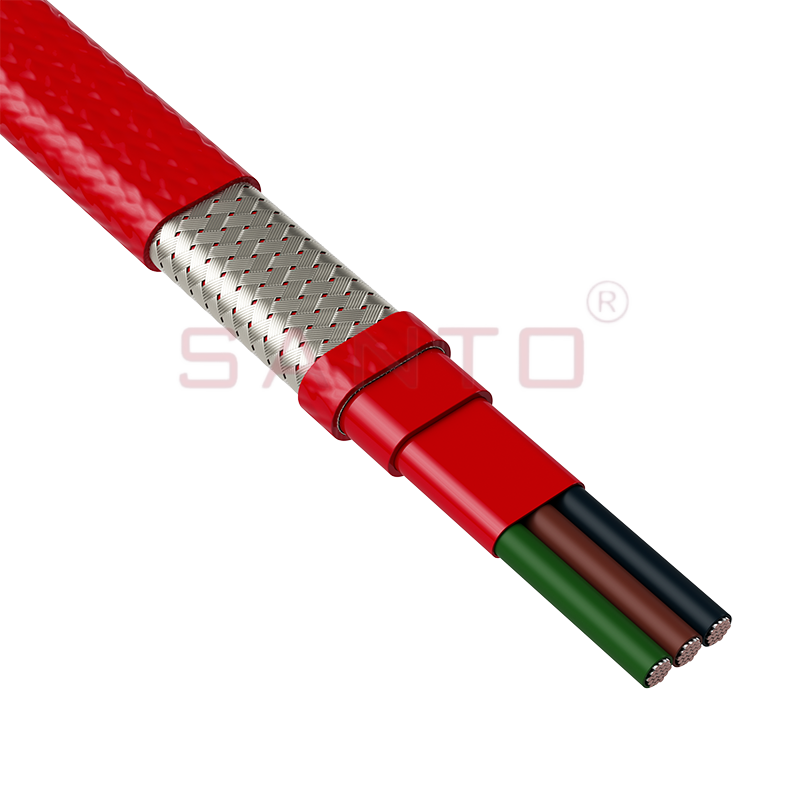
The stranded high temperature conductor is nickel plated to ensure a long life at elevated temperatures in corrosive environments. It is electrically isolated using an innovative sandwich construction...
See Details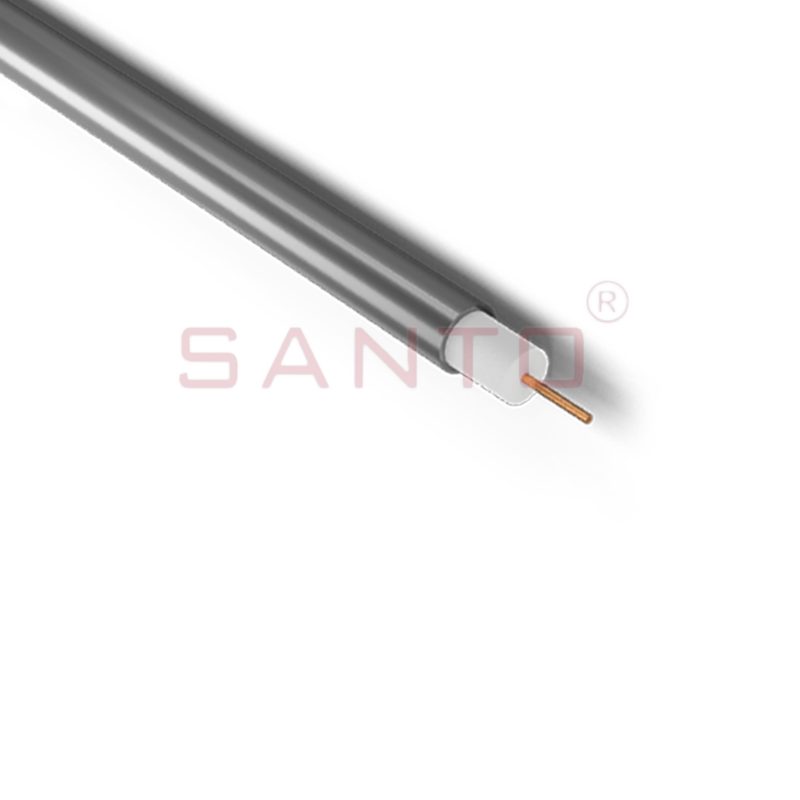
SANTO HAx mineral insulated (MI) Alloy 825 series heating cables are suitable for use in hazardous areas. They have been designed for use in freeze protection and temperature maintenance applications ...
See Details
Santo electric heating strips are widely used in key industries in China.

