 English
  English
 русский
 日本語
日本語 Español
 中文简体
中文简体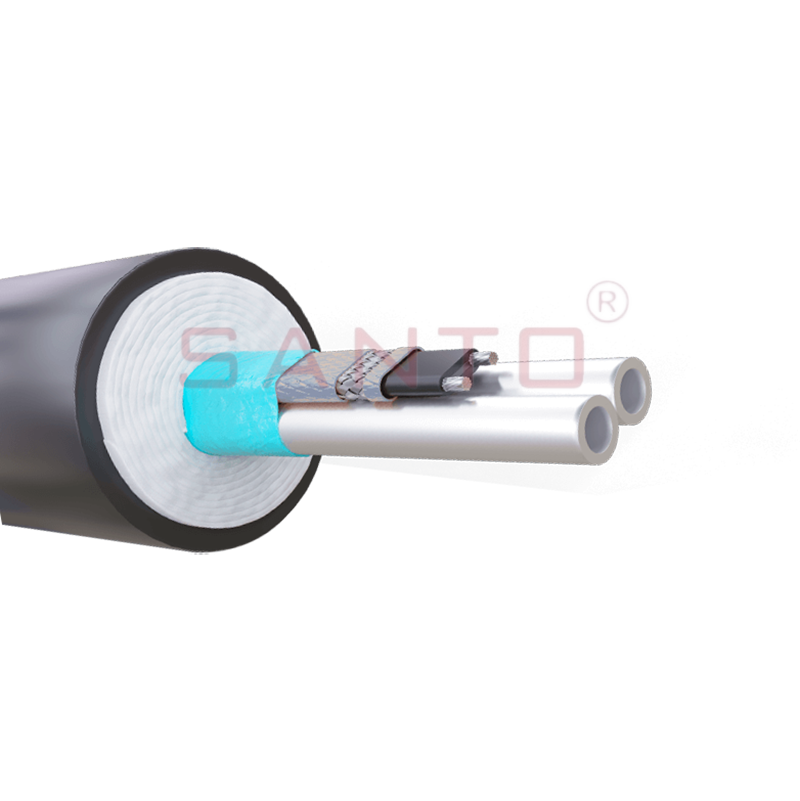

The SANTO UFA range of self-regulating heating cables is mainly used for frost protection of pipes and vessels but can also be used to maintain processes up to 65°C. These heating cables are available...
See Details
Industrial plants, analytical systems, process lines, and utility installations often depend on small-diameter tubing to transport liquids, gases, samples, and sensitive process media. When these lines are exposed to low ambient temperatures, unstable weather, or outdoor installation conditions, freezing and temperature loss can interrupt production, damage instruments, and create safety risks. The DTB2-UFA Tubing Bundles are engineered to address these challenges by combining insulated tube bundle construction with cut-to-length self-regulating electric heat tracing. The result is a practical, efficient, and reliable solution for freeze protection and temperature maintenance where steam-out of the tubing is not possible.
DTB2-UFA Tubing Bundles belong to the electric heating tube bundle product category and are designed for applications requiring continuous thermal control along tubing circuits. The product uses DTB2-UFA self-regulating heat tracing, which automatically varies its heat output in response to surrounding temperature conditions along the entire circuit length. This makes it especially valuable in applications where heat demand changes from one section of tubing to another. Unlike fixed-output systems that continue to produce the same heat regardless of local conditions, the self-regulating design helps reduce the risk of overheating while maintaining the necessary thermal support for freeze protection and process stability.
For industries such as petroleum, chemical processing, gas distribution, construction, solar energy, geothermal cultivation, and general industrial heating, temperature stability is not merely a matter of convenience. It affects flow assurance, measurement accuracy, operational continuity, energy use, and equipment life. DTB2-UFA Tubing Bundles are designed to provide a balanced answer to these requirements by offering flexible installation, easy field termination, low material waste, and dependable thermal performance up to temperature exposures of 85°C, or 185°F.
Content
The DTB2-UFA Tubing Bundle is a bundled tubing solution integrated with self-regulating electric heat tracing. It is developed for freeze protection or temperature maintenance of tubing systems in which traditional steam tracing or steam-out procedures are unavailable, impractical, or undesirable. In many plants, steam may be limited, costly, difficult to control, or incompatible with the process environment. Electric heat tracing provides a cleaner, more controllable alternative, and the DTB2-UFA configuration further improves flexibility through cut-to-length installation.
The defining feature of this product is its self-regulating DTB2-UFA heat tracing cable. A self-regulating heating cable adjusts power output according to local temperature. When the surrounding temperature drops, the cable increases heat output to compensate. When the surrounding temperature rises, the cable reduces heat output. This behavior occurs continuously along the cable length, allowing different sections of the same circuit to respond independently to different thermal conditions. For tubing bundles that may pass through wind-exposed areas, shaded zones, enclosed racks, or warmer process spaces, this localized response is a major advantage.
The product is especially suitable for tubing that must remain above a minimum temperature to prevent freezing, viscosity increase, crystallization, condensation, or process instability. It can support instrument lines, sample transport lines, chemical feed lines, utility tubing, and other small process connections. In such installations, reliable heat tracing is often essential because even a short frozen section can block flow, damage tubing, stop measurements, or disrupt process control.
DTB2-UFA Tubing Bundles are also designed to reduce installed cost. Because the heat tracing is cut to length, installers can adapt the product to actual field routing conditions instead of relying only on fixed pre-manufactured lengths. This reduces waste and simplifies end connections. In large projects with many tubing runs of different lengths, this advantage can significantly reduce unnecessary material use and installation time.
The primary function of DTB2-UFA Tubing Bundles is freeze protection. In cold climates or seasonal freezing conditions, exposed tubing can quickly lose heat to the surrounding environment. If the fluid inside reaches its freezing point, expansion can rupture the tube, fittings, valves, or connected instruments. Even before full freezing occurs, increased viscosity or partial ice formation may restrict flow. For critical process systems, this can cause inaccurate measurement, shutdowns, alarms, or costly maintenance intervention.
The second major function is temperature maintenance. Some fluids must remain above a specified temperature to maintain stable flow properties or process quality. Chemical additives, sampling streams, water-based solutions, condensate lines, and certain process liquids may require consistent thermal support. DTB2-UFA Tubing Bundles provide a heat-traced environment around the tubing, helping maintain the target temperature range and reducing the likelihood of process deviation.
Compared with unheated insulated tubing, a heat-traced tubing bundle offers active thermal compensation. Insulation alone slows heat loss but cannot generate heat. Once the temperature inside the tube falls, insulation cannot recover it. By integrating self-regulating heat tracing, the DTB2-UFA system actively supplies heat when required, making it far more suitable for outdoor or low-temperature installations.
Compared with steam tracing, the electric tubing bundle avoids many issues associated with steam supply, condensate management, traps, pressure control, and maintenance of steam lines. In areas where no steam-out of the tubing is possible, the DTB2-UFA Tubing Bundle provides an independent electric heating approach that is easier to control and more adaptable to distributed installations.
Self-regulating heat tracing technology is based on a heating element that changes its electrical resistance according to temperature. As local temperature decreases, resistance decreases and the cable produces more heat. As local temperature increases, resistance increases and the cable produces less heat. This automatic response allows the cable to match heat output to demand without requiring every section to be separately controlled.
In practical terms, a tubing bundle may experience different heat loss conditions along its route. A section exposed to strong wind may need more heat than a section inside a protected enclosure. A section near warm equipment may require less output than a section crossing an outdoor pipe rack. A constant-wattage cable would deliver the same power along all these sections, potentially wasting energy in warmer areas and creating higher surface temperatures where heat is not needed. The DTB2-UFA self-regulating system reduces this concern by adapting its output locally.
This local variation is especially important for small-diameter tubing. Tubing has relatively low thermal mass, so overheating or insufficient heat can affect the process quickly. A self-regulating cable supports a safer and more forgiving heating profile. It does not eliminate the need for proper design, installation, and control, but it provides an inherent advantage over many fixed-output alternatives.
The product’s exposure capability of 85°C, or 185°F, makes it suitable for many freeze protection and moderate temperature maintenance applications. This rating should be considered during system design to ensure that the tubing bundle is matched to the process temperature, ambient condition, insulation design, electrical classification, and operational requirements.
DTB2-UFA Tubing Bundles provide several competitive advantages when compared with conventional tubing protection methods and less flexible heating systems. These advantages include reduced overheating risk, simplified installation, lower waste, improved field adaptability, and reduced dependence on steam infrastructure.
The first advantage is the self-regulating heating behavior. Many competitor systems use constant-power heating cables or fixed-output heaters that do not naturally reduce output in warmer sections. While constant-power products have their own correct applications, they can require more careful circuit design and control to avoid excessive heat in localized areas. The DTB2-UFA self-regulating heat tracing reduces this risk by lowering output as the environment warms.
The second advantage is cut-to-length flexibility. Fixed-length assemblies can create installation difficulties when the real field route differs from the design drawing. Installers may need to manage excess cable, order new lengths, or make compromises in routing. DTB2-UFA cut-to-length capability allows more precise adaptation to the installed route, which helps reduce material waste and simplifies project execution.
The third advantage is easier end connection. Because the product is designed for field-friendly cut-to-length use, end connections can be made with minimal waste and improved efficiency. In projects involving numerous tubing runs, end connection time is a major cost factor. A product that simplifies termination can help reduce total installation labor.
The fourth advantage is lower installed cost. The purchase price of a heating product is only one part of the total cost. Installed cost includes design effort, material waste, accessories, installation time, commissioning, and long-term maintenance. DTB2-UFA Tubing Bundles are designed to lower this total cost by combining thermal performance with flexible installation.
The fifth advantage is suitability for applications without steam-out capability. Some tubing systems cannot be purged or heated with steam due to process limitations, lack of steam supply, contamination concerns, or safety considerations. Electric heat tracing avoids these constraints and provides a dedicated thermal management solution.
| Feature | DTB2-UFA Tubing Bundles | Typical Fixed-Output Alternatives | Operational Benefit |
|---|---|---|---|
| Heat Output Response | Varies according to surrounding conditions along the circuit | Often delivers constant output regardless of local temperature | Lower risk of overheating and improved energy matching |
| Installation Length | Cut-to-length configuration | May require fixed lengths or more complex field adjustment | Less waste and easier adaptation to site routing |
| End Connections | Designed for easy end connection with minimal waste | May require more time and special planning | Reduced labor and faster project completion |
| Steam Requirement | No steam-out required | Some systems depend on steam tracing or steam infrastructure | Suitable for sites without convenient steam support |
| Exposure Capability | Withstands 85°C / 185°F exposure | Varies by product type and design | Appropriate for freeze protection and moderate maintenance duties |
A reliable tubing bundle installation begins with correct system design. Engineers should consider minimum ambient temperature, desired maintain temperature, tubing size and material, fluid properties, exposure conditions, wind speed, insulation thickness, supply voltage, control method, and area classification. The DTB2-UFA Tubing Bundle provides a flexible product platform, but the final performance depends on matching the system to the application.
For freeze protection, the design goal is normally to keep the fluid above its freezing point with adequate safety margin. For water-based fluids, this may mean maintaining the tube above 0°C, but many industrial fluids require higher temperatures due to viscosity, crystallization, or process quality concerns. For temperature maintenance, the required value may be set by process specifications, instrument requirements, or product stability.
Route layout also affects system performance. Tubing bundles routed through open structures, outdoor pipe racks, or exposed rooftops may require more heat than tubing installed in sheltered locations. Because the self-regulating heat tracing responds to local conditions, DTB2-UFA Tubing Bundles help address such variation, but proper insulation and weatherproofing remain essential.
Electrical design should account for circuit length, startup current, breaker sizing, ground-fault protection, connection kits, control panels, and power distribution. Self-regulating cables can draw higher current during cold starts, so circuit protection and power supply must be selected accordingly. Professional design and installation practices help ensure safe, efficient, and long-lasting performance.
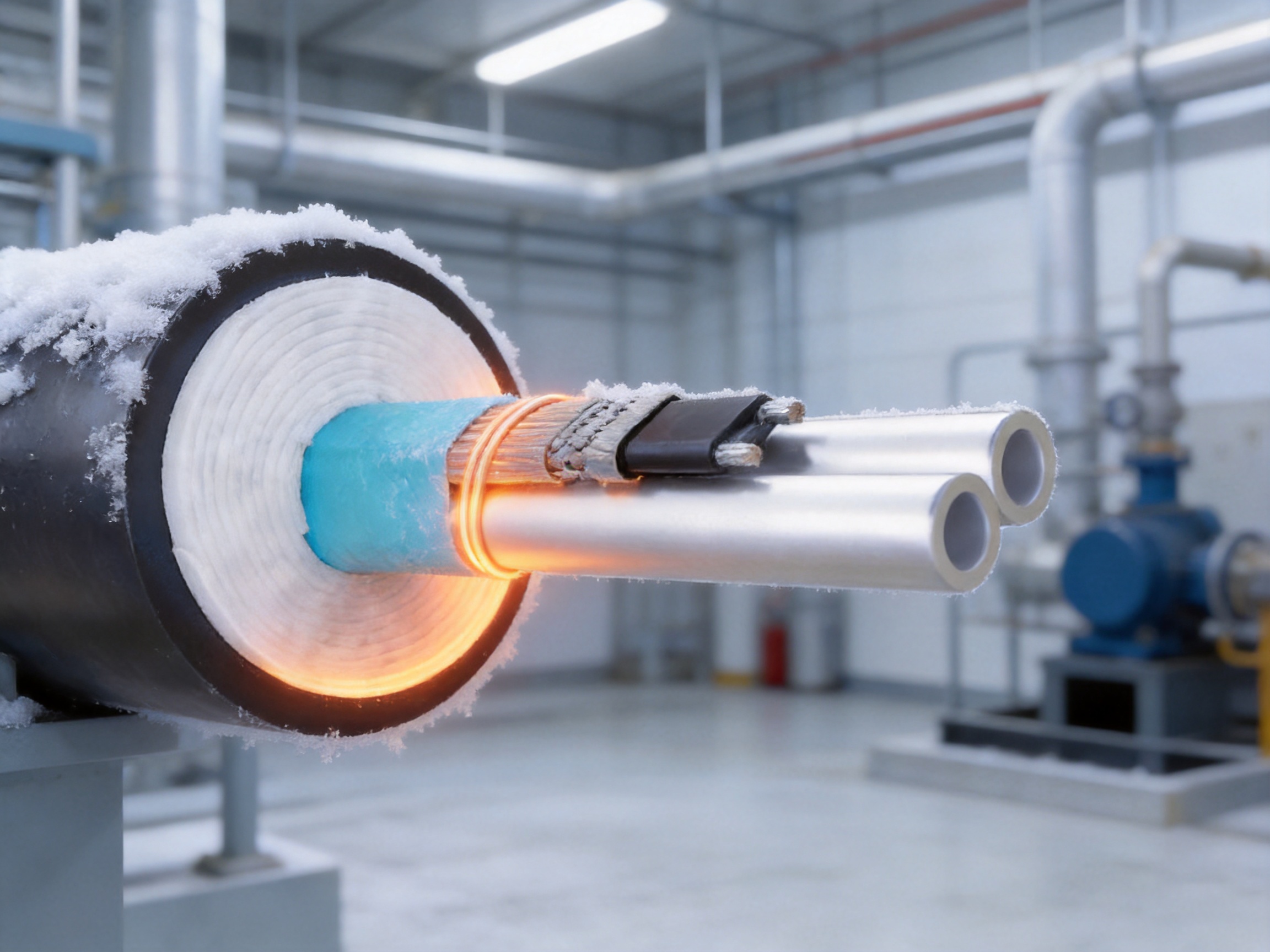
DTB2-UFA Tubing Bundles can be applied in many industries where small-diameter tubing requires thermal protection. In petroleum and gas facilities, instrument impulse lines, chemical injection lines, sampling lines, and analyzer lines must often remain operational under low temperatures. A frozen or cooled line can compromise measurement accuracy or interrupt control functions. Heat-traced tubing bundles support continuous operation and reduce maintenance calls during winter conditions.
In chemical plants, many process fluids have narrow temperature ranges. Additives, reagents, and sample streams may crystallize or thicken if allowed to cool. Electric tubing bundles help maintain stable delivery and improve process consistency. Because self-regulating heat tracing lowers output in warmer conditions, it provides a useful safety advantage for lines that may experience changing process or ambient temperatures.
In construction and building service applications, tubing bundles may support water lines, drainage-related systems, monitoring equipment, or roof and outdoor installations. Freeze protection can prevent service interruption and reduce damage caused by ice expansion. While the DTB2-UFA product is industrial in nature, the principles of electric freeze protection are also valuable in many infrastructure environments.
In solar energy and geothermal cultivation applications, temperature-controlled tubing can help maintain fluid circulation, protect exposed sections, and support reliable system operation. Heat tracing is especially useful where remote installations do not have steam infrastructure and where electric power is easier to distribute and control.
For laboratories, pilot plants, and process analyzer shelters, tubing bundles are often essential for preserving sample integrity. If a sample line cools below the required temperature, components can condense, separate, or react, resulting in inaccurate analysis. A self-regulating heated bundle provides stable thermal support from the sampling point to the analyzer system.
The value of a tubing bundle depends not only on the heating cable design but also on the manufacturing quality behind it. Santo Thermal Control Technology Co., Ltd. is located in Jiangsu Province, a region known for electric heating belt industry development. The company integrates research, design, production, manufacturing, and sales of electric heating products. Its manufacturing portfolio includes automatic temperature-control electric heating belts, self-limiting electric heating belts, heat tracing belts, constant-power electric heating belts, glass fiber electric heating belts, mineral-insulated cables, silicone rubber heating systems, snow melting cables, and electric heating accessories.
With more than 35 years of industry experience, the company has developed a broad understanding of heat tracing applications in petroleum, chemical, gas, construction, solar energy, electric heating, geothermal cultivation, antifreeze, deicing, heating, insulation, and related industries. This experience supports practical product design because heat tracing products must perform under real installation conditions, not only in laboratory tests.
The company has also strengthened new product development, technical guidance, scientific management, product quality, and after-sales service. It has passed ISO9001 quality system certification, and its products have obtained national CCC certification. Such certifications indicate a structured approach to quality management, production control, and compliance with relevant standards.
Manufacturing strength is especially important for self-regulating heat tracing products. Performance depends on material selection, conductor quality, polymer processing, extrusion consistency, irradiation or crosslinking technology where applicable, insulation integrity, sheath durability, and final testing. A small inconsistency in production can affect output stability or service life. Therefore, mature manufacturing systems and quality control procedures are essential for reliable product performance.
High-quality tubing bundles require multiple production disciplines. The heating cable must be manufactured with consistent electrical characteristics, the insulation system must protect against environmental exposure, and the bundle assembly must secure the tube and heating elements in a durable configuration. Each stage requires controlled processes and inspection.
For self-regulating heating cable production, material formulation is critical. The conductive heating core must respond predictably to temperature changes. Uniform mixing and processing help ensure that the cable provides stable output along its length. The extrusion process must create an even profile and strong bonding between layers. Insulation and outer jacket materials must be selected according to expected environmental conditions, mechanical exposure, and electrical safety requirements.
Electrical testing is also essential. Manufacturers typically verify conductor continuity, insulation resistance, dielectric strength, output characteristics, and dimensional conformity. For tubing bundle products, additional checks may include visual inspection, cable placement, jacket integrity, bundle structure, and packaging quality. These controls help ensure that the product arriving at the project site can be installed efficiently and commissioned reliably.
Santo’s development history includes the establishment of an irradiation center in 2013 and ongoing new product development. The company’s technical background includes work in self-limiting temperature heating products and carbon fiber parallel heating cable invention patents. This culture of innovation supports the continuous improvement of electric heating technologies and contributes to the performance of products such as DTB2-UFA Tubing Bundles.
Quality is also influenced by management systems. ISO9001 certification requires documented processes, corrective action mechanisms, supplier control, inspection records, and continuous improvement. For customers purchasing heat tracing systems for industrial use, this provides confidence that the product is manufactured under organized and repeatable controls.
The phrase “cut-to-length” may appear simple, but it has major practical value. Industrial installation conditions are rarely perfect. Routing changes occur because of structural steel, equipment clearances, instrument stand locations, cable tray paths, or last-minute construction modifications. A product that can be cut to the required length in the field gives installers flexibility and reduces delays.
With fixed-length systems, excess cable must be managed carefully. Too much spare length can create clutter, unnecessary heat zones, or installation complications. Too little length can make the product unusable. Reordering materials delays project schedules and increases costs. DTB2-UFA Tubing Bundles reduce this problem because the self-regulating heat tracing can be cut according to the actual tubing run.
Cut-to-length capability also simplifies inventory management. Contractors and maintenance teams can stock a product that adapts to multiple run lengths instead of maintaining a large inventory of pre-set sizes. For maintenance replacements, this is particularly valuable because emergency winter repairs often need fast response. The ability to cut and terminate the heating cable with minimal waste supports rapid restoration of service.
In addition, easy end connections reduce installation complexity. Every termination is a potential point of failure if performed incorrectly. Products designed for straightforward end connection help installers achieve consistent results and reduce the chance of wiring errors or moisture ingress. This contributes to long-term reliability and lower maintenance burden.
Overheating can damage the tubing, degrade the product inside the tube, shorten cable life, or create unsafe surface temperatures. In some applications, overheating can be as harmful as freezing. The DTB2-UFA self-regulating heat tracing design helps reduce this risk by decreasing heat output as the surrounding temperature rises.
This is particularly important when tubing passes through zones with different thermal conditions. A constant-output system may be properly sized for the coldest section but excessive for warmer sections. Self-regulation helps balance these differences. Although temperature controls and proper design remain important, the cable’s inherent behavior provides an additional layer of protection.
Lower overheating risk also supports product quality. Many chemical and analytical fluids are sensitive to excessive temperature. If the line becomes too hot, samples may change composition, dissolved gases may come out of solution, or chemical additives may degrade. A heat tracing system that moderates output according to conditions helps maintain a more controlled environment.
For maintenance teams, reduced overheating risk means fewer concerns about hot spots caused by overlapping, variable ambient exposure, or unexpected process heat. Self-regulating cables are generally more forgiving than fixed-output products, which is one reason they are widely used in freeze protection and temperature maintenance applications.
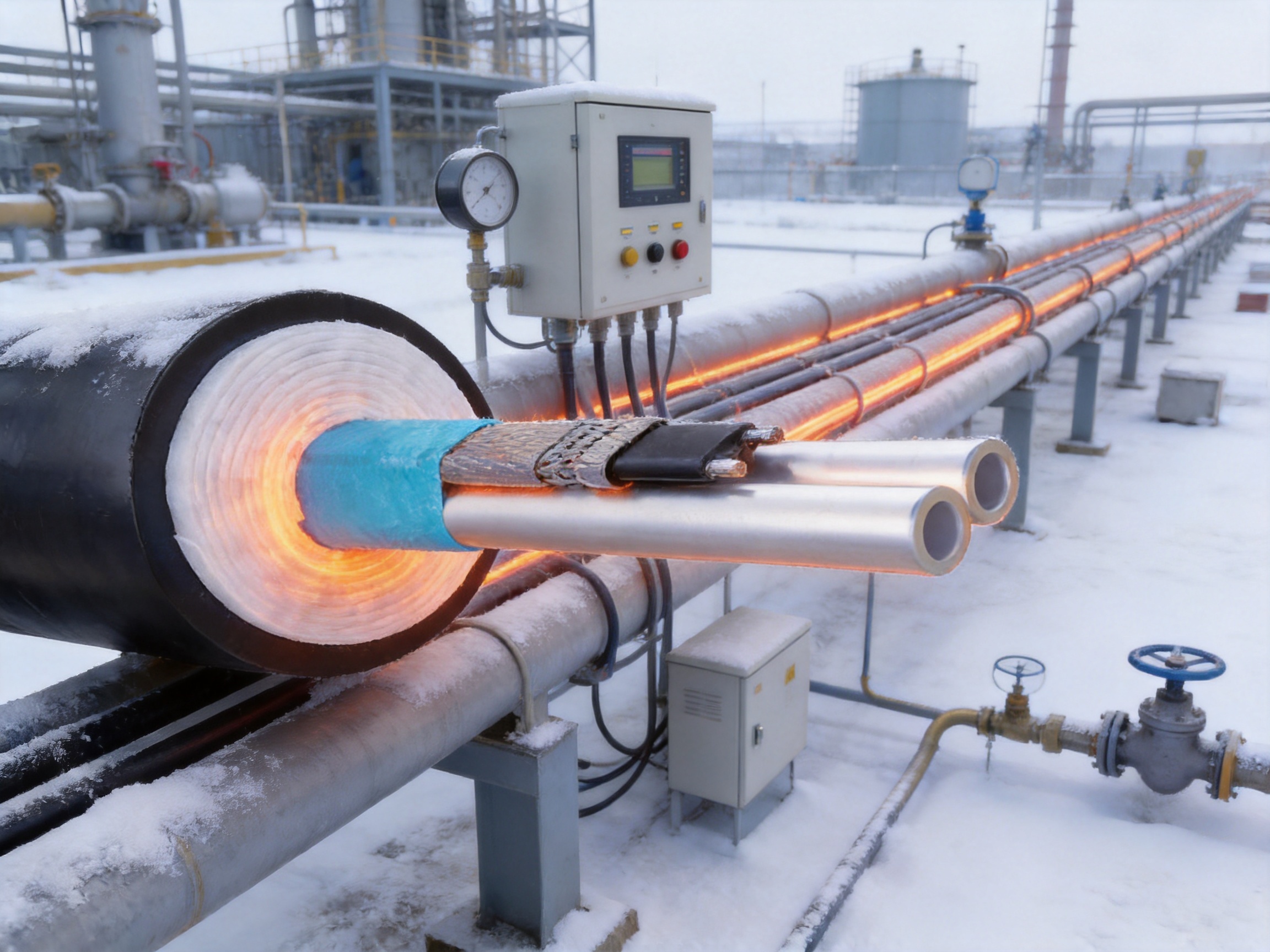
Energy efficiency is an important consideration for any electric heating system. While heat tracing is necessary to prevent freezing and maintain temperature, unnecessary power consumption increases operating costs. DTB2-UFA Tubing Bundles improve energy matching because the self-regulating cable varies its output according to local thermal demand.
When ambient temperature is very low, the cable produces more heat where needed. When conditions become milder, output decreases. This behavior can reduce energy waste compared with systems that continue operating at full fixed output. Over long winter seasons and large numbers of tubing circuits, this difference can contribute to meaningful operational savings.
Installed cost is also reduced through easier installation and minimal waste. A product may appear economical at the purchase stage but become expensive if it requires extensive labor, special routing accommodations, or frequent replacements. DTB2-UFA Tubing Bundles are designed to support lower overall lifecycle cost by combining field flexibility, reduced overheating risk, and reliable performance.
The economic value also includes avoided downtime. A frozen instrument line can stop production or compromise safety systems. The cost of one shutdown can exceed the cost of installing proper freeze protection. By supporting continuous operation, the tubing bundle delivers value through risk reduction as well as direct energy and installation savings.
Steam tracing has long been used in industrial facilities for heating and freeze protection. It can be effective when steam is available and when maintenance teams are equipped to manage steam systems. However, steam tracing also has disadvantages. It requires steam supply lines, condensate return or drainage, steam traps, pressure control, insulation maintenance, and periodic inspection. Steam leaks waste energy and create safety hazards. Condensate problems can reduce heating effectiveness or cause corrosion and freezing in drain lines.
DTB2-UFA Tubing Bundles provide an electric alternative that is especially useful where steam-out is not possible. Electric heat tracing can be distributed to remote areas more easily than steam in many facilities. It can be controlled electrically and integrated with panels, thermostats, sensors, and monitoring systems. It also avoids the complexity of steam trap maintenance.
Another advantage is control precision. Steam tracing often delivers heat based on steam pressure and line condition, and local control can be difficult. Self-regulating electric heating responds directly to local temperature conditions. This provides a more adaptable heating profile for small tubing lines, especially where excessive heat could damage the fluid or equipment.
Electric systems also simplify installation in modular equipment, analyzer packages, and remote skids. Tubing bundles can be installed with power connections without requiring a steam utility network. For new plants designed around electrification and energy management, this can be a strategic advantage.
Industrial tubing systems are exposed to many stresses: vibration, weather, UV exposure, mechanical contact, temperature cycling, moisture, chemicals, and installation handling. A reliable tubing bundle must be engineered and manufactured to tolerate these realities. The DTB2-UFA Tubing Bundle is positioned as a practical product for freeze protection and temperature maintenance under demanding conditions.
The self-regulating heating element reduces thermal stress by adjusting output rather than constantly forcing maximum heat. This can help protect both the cable and the tubing from unnecessary heat exposure. Proper insulation and outer protective layers further reduce heat loss and shield the system from the environment.
Long-term reliability also depends on correct installation. Tubing bundles should be routed with suitable supports, protected from sharp edges, installed according to bending radius requirements, and terminated with appropriate connection kits. Moisture protection at end seals and power connections is particularly important. Even the best heating cable can fail prematurely if terminations are poorly made or water enters electrical components.
For critical services, regular inspection is recommended. Maintenance teams should check physical condition, electrical continuity, insulation resistance, control settings, and power operation before cold seasons. Because DTB2-UFA Tubing Bundles are designed with practical installation in mind, such maintenance can be incorporated into normal plant reliability programs.
Santo Thermal Control Technology Co., Ltd. manufactures a wide range of electric heating products beyond DTB2-UFA Tubing Bundles. Its product categories include electrically heated tracing cables, skin-effect heating tracing systems, snow and ice melting skin effect systems, underfloor heating mats, tubing bundles, accessories, and silicone rubber heating systems. This broad product base allows the company to address many thermal management scenarios rather than offering only one type of heating product.
The company’s main products include constant-power electric heating strips, self-limiting electric heating strips, silicone rubber electric heating strips, glass fiber electric heating strips, electric hot wires, mineral-insulated cables, snow melting cables, LCD tracked heaters, and accessories. Such diversity is valuable for customers because different applications require different heating technologies. A manufacturer with multiple product platforms can recommend a more suitable solution instead of forcing every requirement into one product type.
The company reports more than 10,000 annual output, more than 2,000 distributors, and business in more than 85 areas. These figures indicate a manufacturing and distribution scale capable of supporting both domestic and international customers. For project buyers, supply capability matters because heat tracing materials are often needed in large quantities and within tight construction schedules.
The company’s development history shows a continuous emphasis on product advancement. From the establishment of an electric heating instrument factory in 2000, ISO9001 certification in 2002, an irradiation center in 2013, and the establishment of the SANTO brand in 2016, to patent development and international expansion, the company has built its position through technical progress and market development. This background supports confidence in its ability to manufacture specialized products such as self-regulating tubing bundles.
Correct installation is essential for performance and safety. Before installation, users should review product specifications, installation instructions, circuit design documents, and applicable electrical codes. The tubing route should be inspected to confirm length, support points, power connection location, and environmental exposure. Any sharp edges, crush points, or areas of possible mechanical damage should be corrected before the tubing bundle is installed.
During installation, the tubing bundle should be handled carefully to avoid kinking, excessive bending, or jacket damage. The minimum bending radius should be respected. The bundle should be secured with appropriate supports that do not crush the insulation or heating cable. Power connection and end termination kits should be installed by trained personnel using approved procedures.
Electrical testing should be performed before and after installation. Insulation resistance testing helps verify that the heating cable and terminations are free from damage or moisture intrusion. Continuity checks confirm circuit integrity. For cold-weather readiness, the system should be energized and function-tested before freezing conditions occur.
Controls may include thermostats, ambient-sensing controllers, line-sensing controllers, power distribution panels, and ground-fault protection. Although self-regulating cables adjust output locally, controls are still recommended for energy management, alarm functions, and system safety. In critical applications, monitoring can provide early warning of circuit problems.
Electric heat tracing systems must be designed and installed with safety in mind. Proper circuit protection, grounding, ground-fault devices, moisture-resistant terminations, and suitable cable ratings are essential. The operating environment should be evaluated for hazardous area requirements where flammable gases, vapors, or dust may be present. Product selection should match the electrical classification and regulatory requirements of the installation site.
Temperature ratings must be respected. DTB2-UFA withstands temperature exposures of 85°C, or 185°F. Applications involving higher process temperatures or steam cleaning should be reviewed carefully to ensure compatibility. The product is specifically described for tubing where no steam-out is possible, so users should not assume suitability for steam-out conditions unless confirmed by technical documentation.
Maintenance safety is also important. Before inspecting or repairing electrical heat tracing, personnel should follow lockout and tagout procedures. Damaged jackets, exposed conductors, crushed bundle sections, or failed terminations should be repaired promptly. Unauthorized splicing or substitution of components can compromise safety and reliability.
Compliance with ISO9001 quality management and CCC certification reflects the manufacturer’s commitment to recognized quality and certification systems. However, final project compliance also depends on local electrical codes, engineering standards, and installation practices. Customers should coordinate with qualified engineers and authorized representatives when selecting and applying heat tracing products.
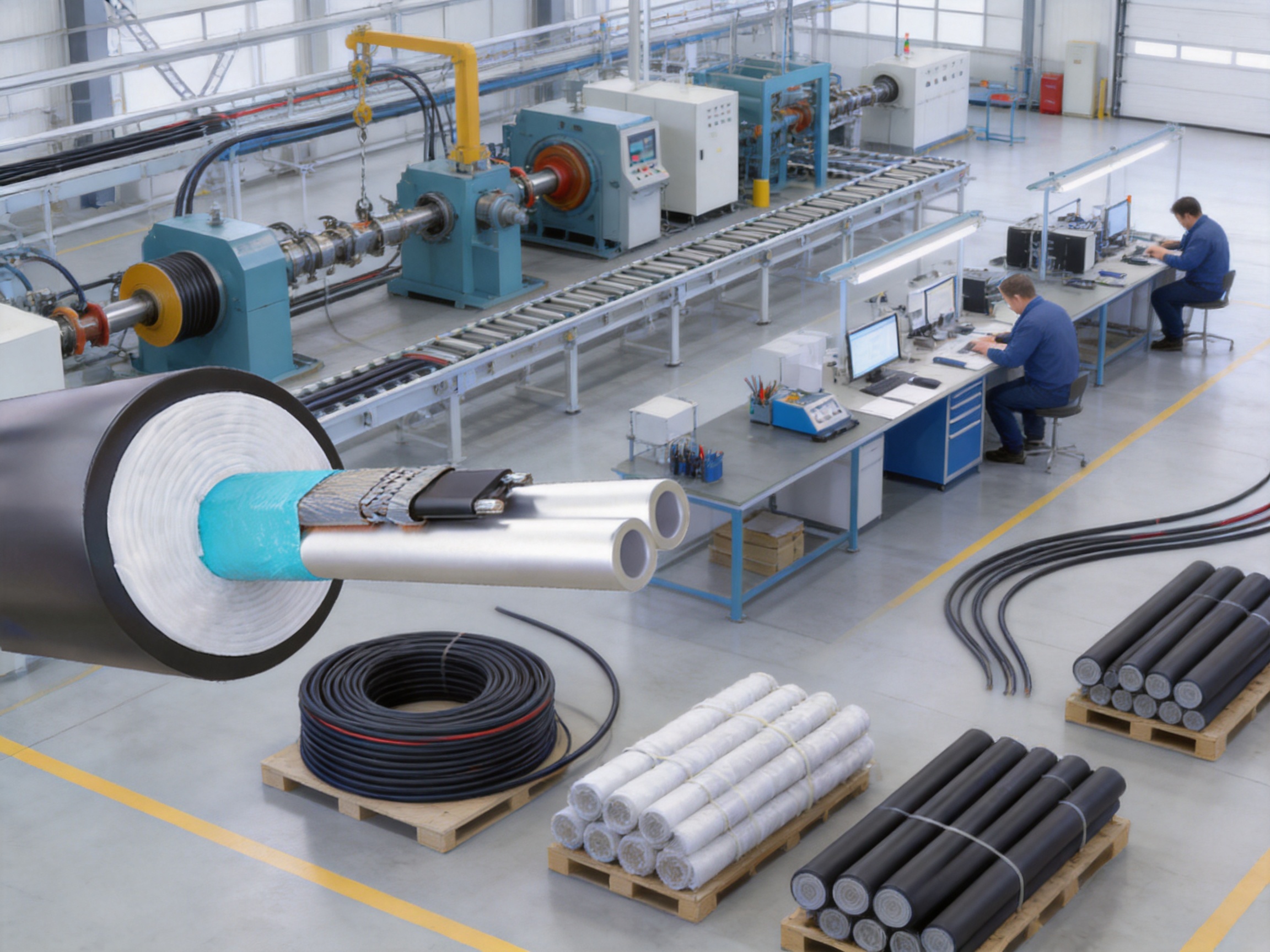
The DTB2-UFA Tubing Bundle offers value across the product lifecycle. During design, it provides a flexible solution for freeze protection and temperature maintenance without requiring steam infrastructure. During procurement, the cut-to-length configuration can reduce the complexity of ordering many fixed lengths. During installation, easier end connections and minimal waste help lower labor and material costs. During operation, self-regulating output helps reduce overheating risk and improve energy matching. During maintenance, the electric system can be inspected and tested as part of normal reliability programs.
For project owners, these benefits translate into lower total cost of ownership. The product is not simply a heating cable attached to a tube; it is a thermal management system designed to protect process continuity. When installed correctly, it can prevent freezing, preserve measurement accuracy, reduce emergency repairs, and support stable plant operation.
For contractors, the field adaptability of cut-to-length heat tracing reduces installation uncertainty. Complex industrial projects often face changing conditions, and a flexible product helps keep work moving. Less waste also supports more efficient material management and reduces project cleanup.
For maintenance teams, self-regulating behavior provides a practical advantage in unpredictable weather. Instead of relying entirely on manual adjustment, the cable responds automatically to local temperature conditions. This helps protect tubing across changing seasons and daily temperature cycles.
DTB2-UFA Tubing Bundles stand out because they combine several important qualities in one product: self-regulating heat output, cut-to-length flexibility, suitability for non-steam applications, lower overheating risk, and cost-conscious installation. These features directly address common pain points in industrial tubing protection.
Many competing solutions solve only part of the problem. Insulation slows heat loss but cannot generate heat. Steam tracing provides heat but requires utility infrastructure and maintenance. Constant-output electric systems can provide heat but may be less adaptive to variable conditions. Fixed-length assemblies can work well when dimensions are certain but can create waste and delays in field installations. DTB2-UFA Tubing Bundles offer a more balanced approach for many freeze protection and temperature maintenance needs.
The manufacturing background behind the product further strengthens its value. A company with decades of electric heating experience, diversified product lines, quality certification, patent development, and international market participation is better positioned to support customers with practical solutions. Manufacturing scale and technical development help ensure product availability, consistency, and continuous improvement.
In a competitive market, the best product is not always the one with the highest theoretical rating. It is the one that fits the application, installs efficiently, operates reliably, and reduces risk. For tubing systems where no steam-out is possible and where freeze protection or temperature maintenance is required, DTB2-UFA Tubing Bundles provide a strong and practical choice.
DTB2-UFA Tubing Bundles are designed to provide freeze protection or temperature maintenance for tubing systems, especially where steam-out of the tubing is not possible. They help prevent freezing, flow blockage, process instability, and instrument line failure in cold or variable temperature environments.
The self-regulating heat tracing varies its heat output according to surrounding conditions along the entire circuit. When local temperature decreases, the cable produces more heat. When local temperature increases, the cable reduces heat output. This helps match heat production to actual thermal demand.
Because the heat output decreases as the surrounding temperature rises, the system is less likely to overheat the tube or the product inside compared with many fixed-output alternatives. Proper design and controls are still important, but the cable’s self-regulating behavior provides an inherent safety advantage.
Cut-to-length capability allows installers to adapt the heat tracing to actual field routing. This reduces excess material, simplifies end connections, minimizes waste, and helps lower installed cost. It is especially useful in projects with many tubing runs of different lengths.
DTB2-UFA withstands temperature exposures of 85°C, or 185°F. Users should ensure that the selected product is suitable for the process temperature and environmental conditions of the specific application.
In many applications, yes. They are particularly useful where steam-out is not possible or where steam infrastructure is unavailable or inconvenient. Electric heat tracing can reduce the need for steam supply lines, condensate handling, steam traps, and related maintenance.
Typical industries include petroleum, chemical processing, gas, construction, solar energy, geothermal cultivation, analytical systems, process instrumentation, and industrial utilities. Any application involving tubing that needs freeze protection or controlled temperature maintenance may benefit from this product.
No. Self-regulating heat tracing improves local thermal response, but controls are still recommended for energy management, monitoring, safety, and alarm functions. Proper electrical design and protective devices remain essential.
Santo Thermal Control Technology Co., Ltd. has more than 35 years of industry experience, ISO9001 quality system certification, CCC-certified products, broad electric heating product capabilities, an irradiation center, patent development history, and business coverage in more than 85 areas. These strengths support stable manufacturing and product development.
Users should follow installation instructions, respect bending radius requirements, protect the bundle from mechanical damage, install approved power and end terminations, perform electrical testing, and ensure proper circuit protection. Qualified personnel should handle electrical connections and commissioning.
DTB2-UFA Tubing Bundles provide a reliable, flexible, and cost-effective solution for freeze protection and temperature maintenance of tubing systems. Their self-regulating heat tracing technology allows heat output to vary with surrounding conditions along the entire circuit, reducing overheating risk and improving energy matching. Their cut-to-length design simplifies installation, reduces waste, and lowers installed cost, especially in complex industrial projects.
For applications where no steam-out is possible, this product offers a practical electric alternative to steam tracing. It avoids many steam-related maintenance issues while providing localized thermal response and field adaptability. With exposure capability up to 85°C, or 185°F, it is well suited for many industrial freeze protection and moderate temperature maintenance applications.
The product is further strengthened by the manufacturing capabilities of Santo Thermal Control Technology Co., Ltd., a company with decades of experience in electric heating products, broad product categories, quality certification, technical development, and international market reach. For customers seeking dependable tubing protection, efficient installation, and a manufacturer with proven thermal control expertise, DTB2-UFA Tubing Bundles represent a strong choice in modern electric heat tracing solutions.
1. Electric Heat Tracing Design Guide for Industrial Freeze Protection and Temperature Maintenance.
2. ISO9001 Quality Management Systems: Requirements and Industrial Manufacturing Applications.
3. Process Instrumentation Tubing and Sample Line Temperature Maintenance Practices.
4. Self-Regulating Heating Cable Technology: Operating Principles and Application Considerations.
5. Industrial Electric Heating Systems: Installation, Testing, and Maintenance Guidelines.
6. Heat Tracing for Petroleum, Chemical, Gas, and Utility Systems: Engineering Practice Handbook.
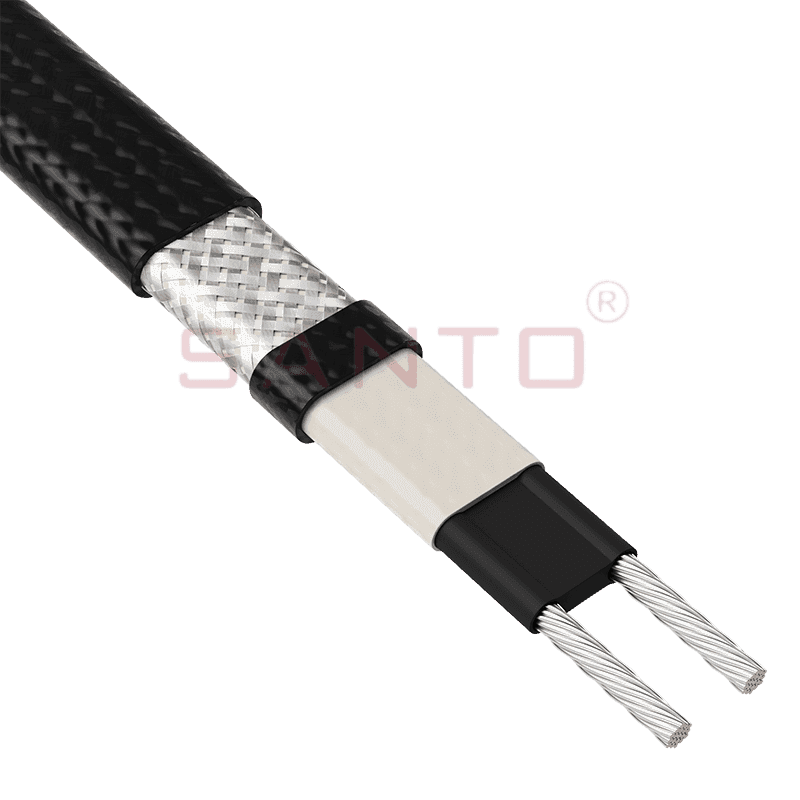
The SANTO UFA range of self-regulating heating cables is mainly used for frost protection of pipes and vessels but can also be used to maintain processes up to 65°C. These heating cables are available...
See Details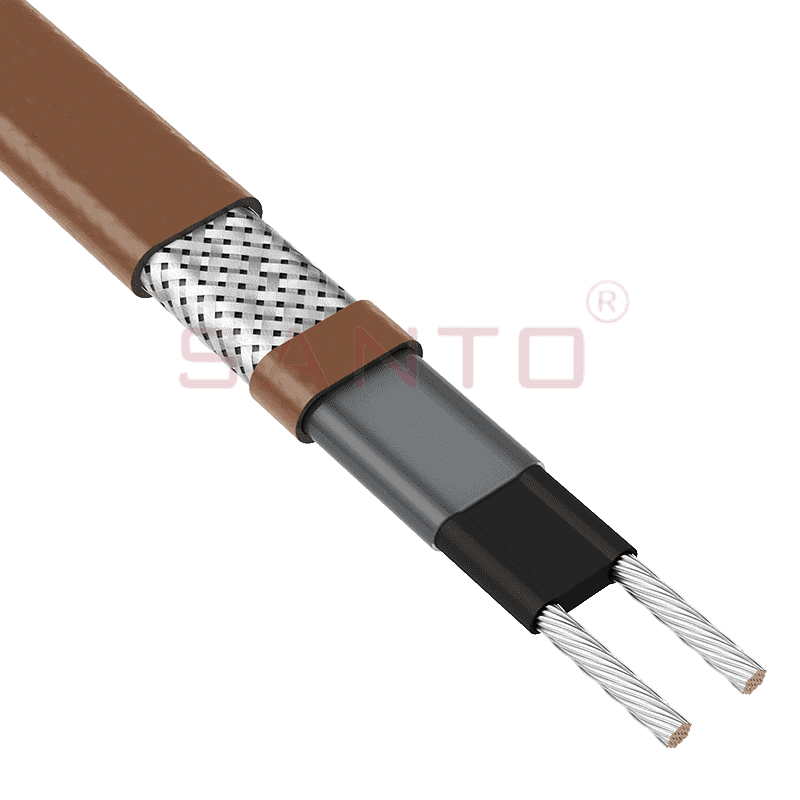
The SANTO UFB range of self-regulating heating cables is mainly used for frost protection of pipes and vessels requiring a higher power output than the UFA heating cables can supply. They can also be ...
See Details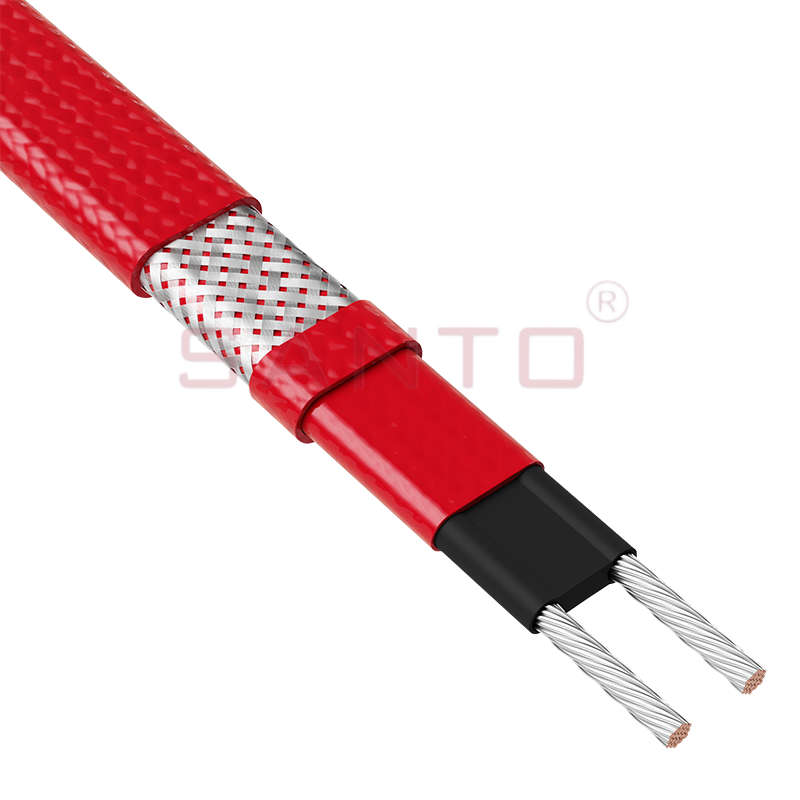
The SANTO UFC range of self-regulating heating cables is used for frost protection of pipes and vessels that require steam cleaning. They can also be used to maintain processes up to 121°C. These heat...
See Details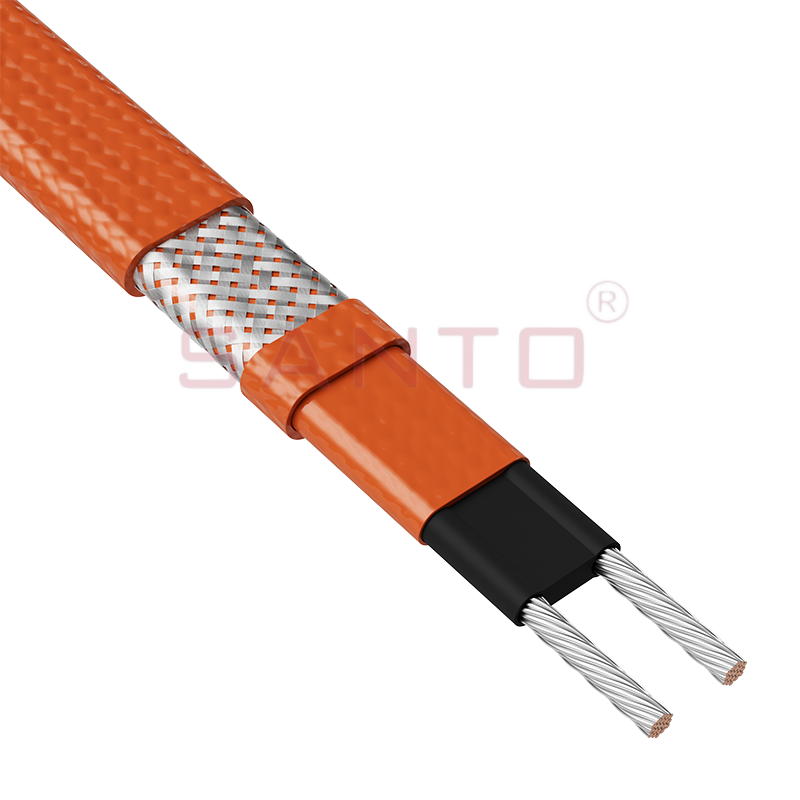
The SANTO UFO range of self-regulating heating cables is mainly used for frost protection of pipes and vessels that require steam cleaning . They can also be used to maintain processes up to 150°C. Th...
See Details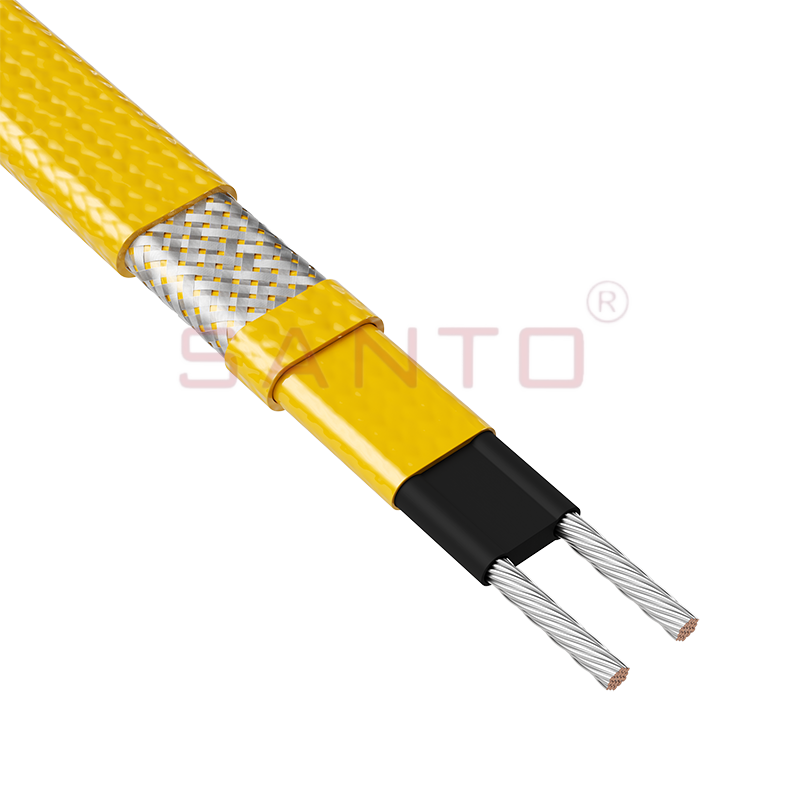
The SANTO UFD series of self-regulating heating cables are mainly used for freeze protection of pipes and vessels, but can also be used to maintain processes up to 200°C. These heating cables are avai...
See Details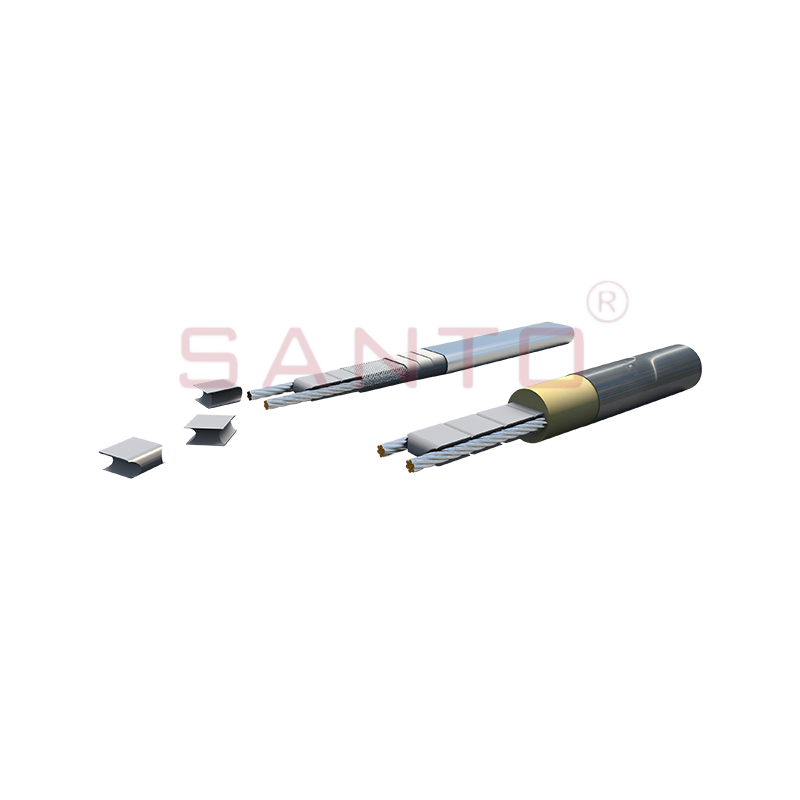
SANTO UFY heating wire is suitable for applications that maintain process temperatures up to 260 ℃ and can be steam blown; The self-regulating and parallel circuit heating wires of the UFY series are ...
See Details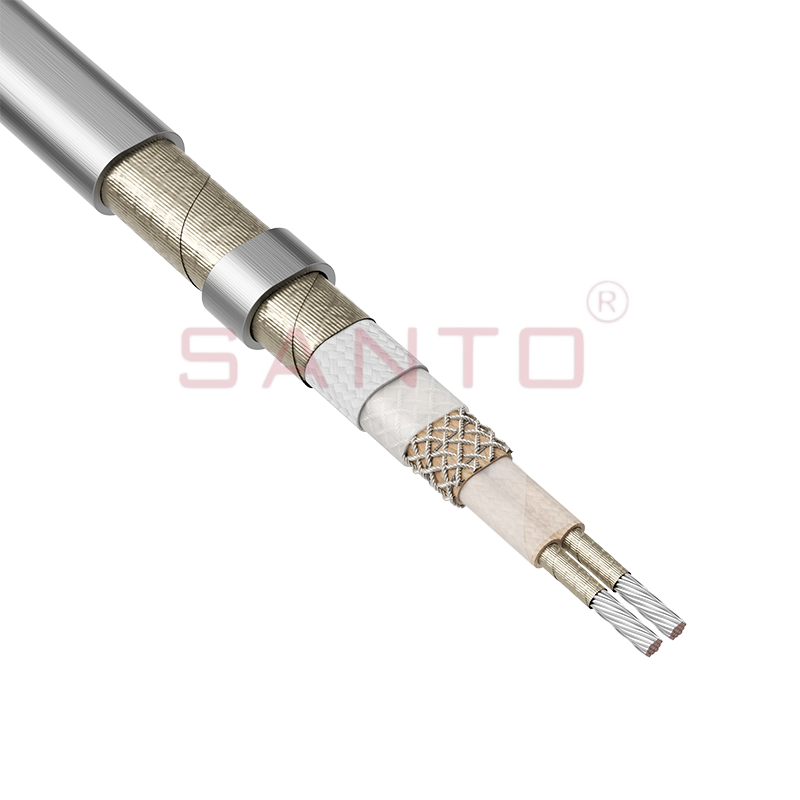
The SANTO UFM series self-regulating heating cables are mainly used for freeze protection of pipes and vessels, but can also be used to maintain processes up to 400°C. These heating cables are availab...
See Details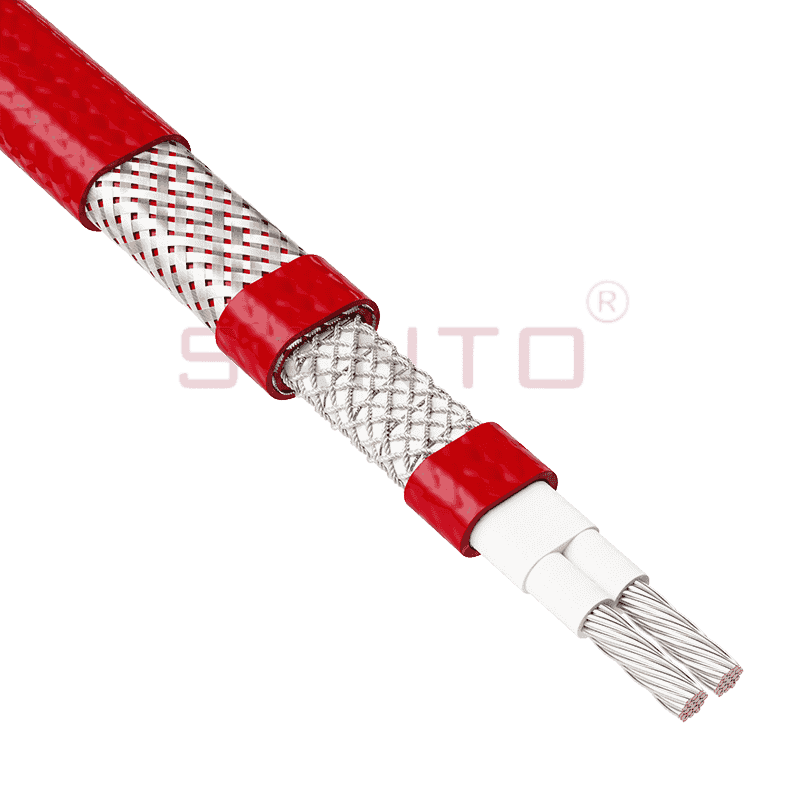
The SANTO ACC range of power-limiting heating cables is mainly used for temperature maintenance of processes and offers the advantage of a high power output at high temperatures which can reduce the n...
See Details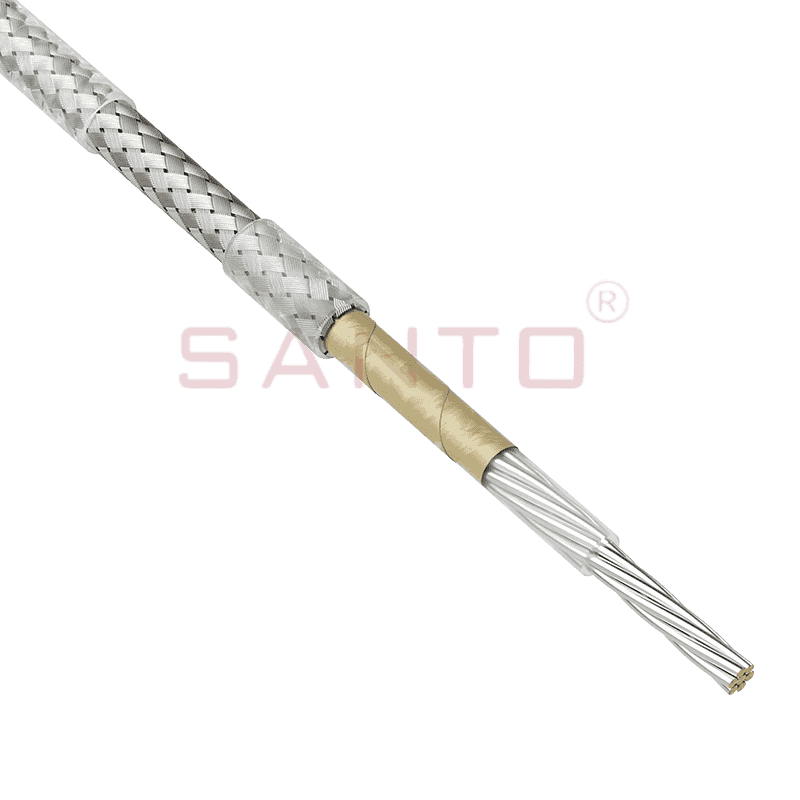
The stranded high temperature conductor is nickel plated to ensure a long life at elevated temperatures in corrosive environments. It is electrically isolated using an innovative sandwich construction...
See Details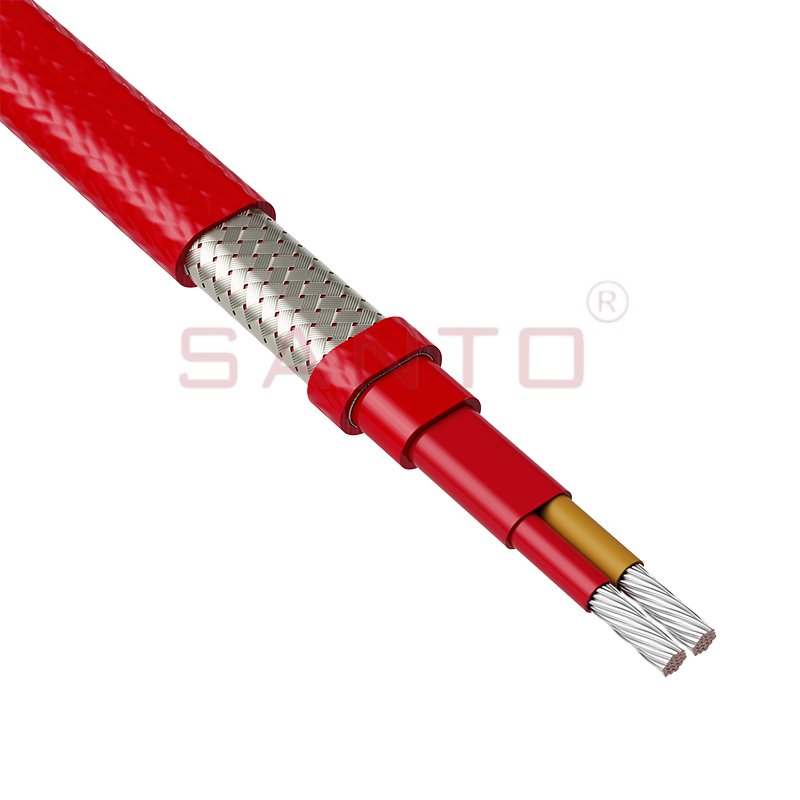
The stranded high temperature conductor is nickel plated to ensure a long life at elevated temperatures in corrosive environments. It is electrically isolated using an innovative sandwich construction...
See Details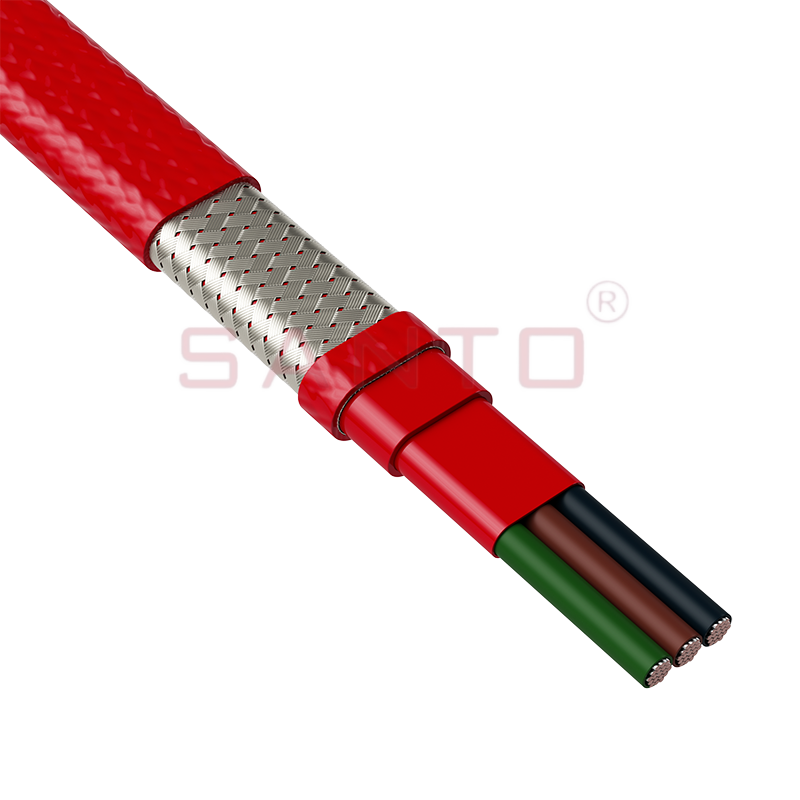
The stranded high temperature conductor is nickel plated to ensure a long life at elevated temperatures in corrosive environments. It is electrically isolated using an innovative sandwich construction...
See Details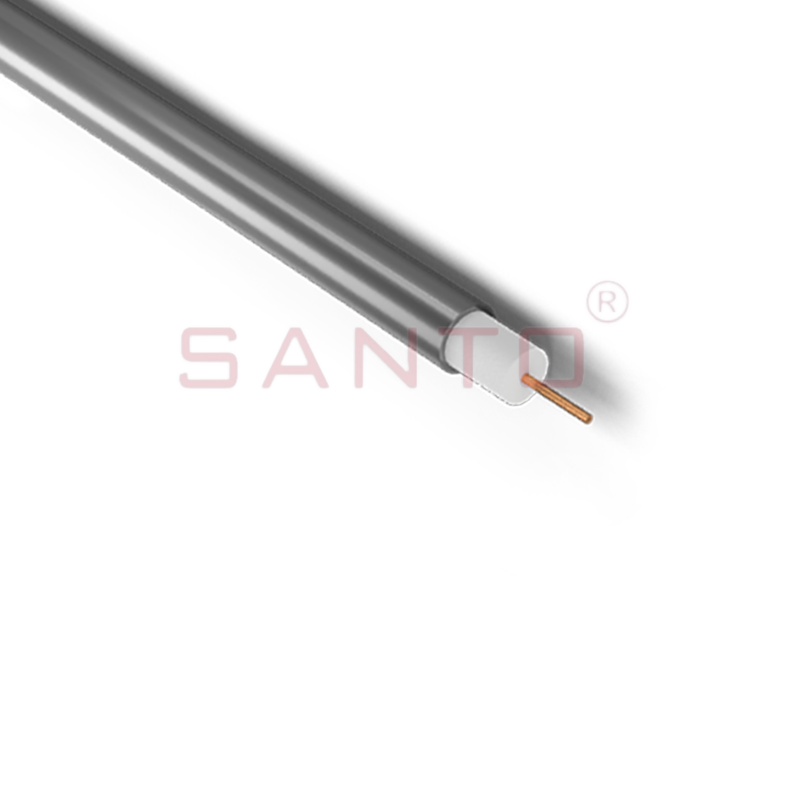
SANTO HAx mineral insulated (MI) Alloy 825 series heating cables are suitable for use in hazardous areas. They have been designed for use in freeze protection and temperature maintenance applications ...
See Details
Santo electric heating strips are widely used in key industries in China.

