 English
  English
 русский
 日本語
日本語 Español
 中文简体
中文简体
The SANTO UFA range of self-regulating heating cables is mainly used for frost protection of pipes and vessels but can also be used to maintain processes up to 65°C. These heating cables are available...
See Details
Semiconductor manufacturing depends on stable, carefully controlled conditions. Production tools, control panels, electrical cabinets, monitoring systems, and automation equipment must operate within suitable environmental limits to maintain reliability and repeatable performance. Temperature fluctuations can accelerate component aging, while excessive humidity may encourage condensation, corrosion, insulation deterioration, and electrical faults. For this reason, a compact temperature and humidity controller can play an important role in protecting cabinet-mounted equipment and maintaining a more stable operating environment.
The temperature and humidity controller described in this article is designed for electrical cabinets used in semiconductor industry applications. It displays the current ambient temperature and humidity, helps stabilize both conditions within a preset range, and supports the maintenance of a more suitable cabinet environment. With dimensions of 48 mm by 48 mm by 80 mm, a working voltage of 100–250 V AC, and an installation temperature range of 0–60 °C, the controller is suitable for compact control panels where space, visibility, and dependable environmental management are important.
Its value is not limited to measurement alone. By combining temperature and humidity indication with control functions in one compact unit, it can help users identify environmental changes early and coordinate cabinet heating, cooling, ventilation, or dehumidification equipment according to the needs of the installation. This integrated approach offers practical advantages over basic temperature-only indicators, separate humidity meters, or larger control assemblies that require more panel space and additional wiring.
Content
Semiconductor production environments include sensitive electrical and electronic equipment. Cabinet assemblies may contain programmable logic controllers, power supplies, relays, circuit breakers, communication modules, motor-control components, signal-processing equipment, and automation interfaces. Although these components are designed for industrial operation, their long-term performance can be affected by unsuitable temperature and humidity conditions.
Temperature is one of the most common environmental factors influencing electrical equipment. High temperatures can reduce the service life of electronic components, increase thermal stress, and affect the performance of power supplies and control devices. Low temperatures may create startup difficulties, increase the risk of condensation during temperature transitions, and reduce the efficiency of certain components. Rapid temperature changes can be just as concerning as sustained extremes because they may produce moisture on cabinet surfaces and internal devices.
Humidity creates another set of risks. High relative humidity can contribute to oxidation, corrosion, leakage current, and insulation degradation. When the cabinet temperature falls below the dew point, water may condense on metallic surfaces, terminals, printed circuit boards, and other components. In a semiconductor facility, even a small environmental event can interrupt equipment availability, create maintenance requirements, or affect production continuity.
A temperature and humidity controller helps operators move from passive observation to active management. Instead of waiting for a fault or relying on occasional manual inspection, the controller provides continuous local information and can support automatic responses when the measured conditions move outside the desired range.
The controller is intended for installation in electrical cabinets and related control enclosures. Its primary functions are to display the current environmental temperature and humidity, maintain these parameters within a configured range, and help preserve a more stable internal cabinet environment.
The unit combines monitoring and control in a single compact housing. This arrangement is useful where panel space is limited or where the user prefers a clear, centralized display rather than separate instruments. The front-facing display allows personnel to review cabinet conditions quickly during inspection, commissioning, and maintenance activities.
Although the controller is compact, its application value is significant. A cabinet may have sufficient heating equipment but no accurate humidity indication, or it may contain a humidity sensor without an integrated method of initiating corrective action. A combined controller can help connect environmental measurement with the operation of suitable external devices, depending on the final system design and electrical configuration.
| Parameter | Specification | Application Significance |
|---|---|---|
| Product type | Temperature and humidity controller | Monitors and helps regulate two important environmental variables |
| Primary application | Electrical cabinets | Suitable for enclosed control and electrical equipment spaces |
| Industry focus | Semiconductor industry | Supports environmental management for sensitive automation and electrical systems |
| Dimensions | 48 mm length × 48 mm width × 80 mm height | Compact format for space-constrained installations |
| Working voltage | 100–250 V AC | Broad AC operating range for compatible power systems |
| Installation temperature | 0–60 °C | Suitable for installation in ordinary industrial cabinet environments within this range |
| Display function | Current temperature and humidity | Provides immediate local visibility of cabinet conditions |
| Control purpose | Stabilization within a set range | Supports automatic environmental management when correctly integrated with external equipment |
The controller operates as part of a broader environmental management system. A typical installation may include a temperature and humidity sensor, the controller itself, a heating element, ventilation equipment, a cooling device, a dehumidification system, or other compatible accessories. The controller evaluates the measured conditions and helps determine when corrective equipment should operate according to the selected settings.
When the cabinet temperature is too low, an external heater may be activated to raise the internal temperature and reduce the possibility of condensation. When humidity rises above the set limit, a ventilation or dehumidification solution may be used, depending on the cabinet design and the surrounding environment. If temperatures become excessive, the control system may be connected to cooling or ventilation equipment. The exact control strategy should be defined by the system designer based on the cabinet heat load, ambient conditions, equipment requirements, and applicable electrical standards.
The controller does not replace the complete thermal design of a cabinet. Rather, it provides the measurement and control interface needed to support a coordinated solution. Proper airflow, suitable enclosure construction, correctly sized heating or cooling devices, sensor placement, and appropriate wiring remain essential to achieving reliable results.
In semiconductor applications, this coordinated approach is particularly useful because equipment may operate continuously and may be difficult or costly to stop for manual adjustment. Automatic environmental control helps reduce dependence on operator intervention and allows the cabinet to respond more consistently to changing conditions.
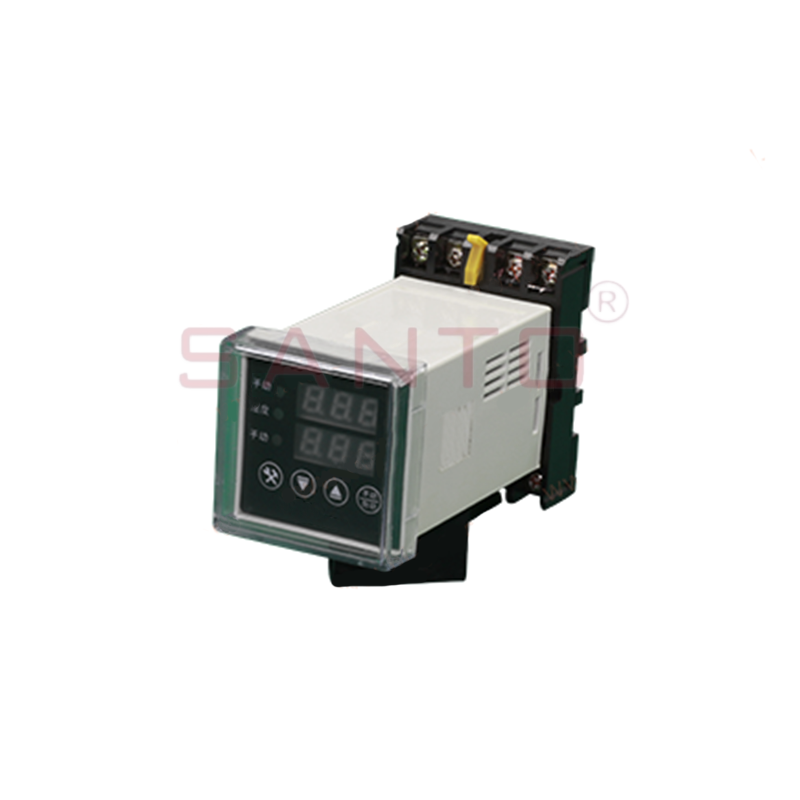
Temperature and humidity controller
Many basic monitoring products measure only temperature. While temperature is important, it does not provide a complete picture of cabinet conditions. A cabinet can remain within an acceptable temperature range while humidity increases enough to create corrosion or condensation risks. By displaying both temperature and humidity, this controller gives operators a more comprehensive understanding of the internal environment.
A separate humidity meter can provide additional information, but installing two independent devices may require more panel space, more wiring, and more complicated maintenance. An integrated controller simplifies the operator interface and makes it easier to review both values at the same location.
The 48 mm by 48 mm front format is suitable for compact control panels and electrical cabinets. Cabinet designers often need to accommodate switches, indicators, meters, protection devices, communication interfaces, and control modules within a limited enclosure area. A compact controller helps preserve valuable panel space and can be installed where a larger instrument would be impractical.
Compact dimensions can also support cleaner panel layouts. A well-organized cabinet improves service access, makes operating conditions easier to understand, and may reduce the time required for inspection. The 80 mm height should be considered during internal layout planning so that sufficient depth and clearance are available behind the mounting surface.
The specified working voltage of 100–250 V AC provides flexibility for compatible electrical systems. Compared with a controller designed for only one narrow nominal voltage, a broad input range can simplify product selection for different facilities and markets. It may also reduce the need to stock multiple voltage-specific versions for projects with varying power arrangements.
Voltage compatibility must always be confirmed before installation. The available supply, protective devices, grounding method, control outputs, and wiring arrangement should be checked by qualified personnel. The broad range is an advantage, but it does not eliminate the need for correct electrical design and safe commissioning.
A visible local display helps maintenance personnel understand cabinet conditions without connecting a separate test instrument. During routine rounds, operators can quickly check whether temperature and humidity are within the intended range. During commissioning, the display can assist with verifying sensor response and observing how the cabinet reacts when heating, ventilation, or other equipment is activated.
Local indication is also valuable when communication with a central monitoring system is unavailable or when personnel need to confirm conditions directly at the equipment. For installations that require remote data collection, the local display can complement rather than replace centralized monitoring.
A device that only displays environmental values requires the operator or a separate control system to take action. This controller is designed to help stabilize temperature and humidity within a set range. When properly connected to compatible external equipment, it can contribute to a more responsive and consistent cabinet environment.
The combination of measurement and control can reduce the number of separate components required in a basic installation. It may also make the operating logic easier to understand because the displayed conditions and the control function are located within one dedicated instrument.
Semiconductor production equipment often operates in environments where reliability, repeatability, and process continuity are priorities. Electrical cabinets can serve as the control center for production-line machinery, handling power distribution, automation signals, safety circuits, and communications. Environmental control supports the stable operation of these functions.
Condensation is one of the most important reasons to manage cabinet temperature and humidity. It can occur when warm, humid air enters a cooler cabinet or when equipment is shut down and internal surfaces cool rapidly. A controlled heating strategy can keep cabinet components above the dew point and reduce the risk of moisture formation.
The controller provides temperature and humidity information that can be used to identify conditions favorable to condensation. By maintaining the selected environmental range, the system can support more consistent cabinet conditions. The effectiveness of condensation prevention depends on correct sensor placement, enclosure sealing, heater sizing, air circulation, and the selected control settings.
Relays, terminals, circuit boards, connectors, and power supplies can all be affected by excessive moisture or temperature. Maintaining a more stable environment helps reduce environmental stress on these components. This may contribute to longer service intervals and more predictable equipment behavior.
Environmental control is not a substitute for high-quality components, proper cabinet design, or scheduled maintenance. It is one part of a complete reliability strategy. When combined with suitable protection ratings, correct wiring, clean installation practices, and regular inspection, it can provide meaningful support for electrical system performance.
Maintenance teams benefit from immediate access to environmental information. If a cabinet shows an unusual humidity value, technicians can investigate possible causes such as a damaged gasket, open door, failed heater, blocked ventilation path, or change in surrounding conditions. Early awareness may allow corrective action before a fault affects production equipment.
The compact display also supports faster troubleshooting. Instead of beginning with a full electrical inspection, a technician can first determine whether the cabinet environment is within the expected range. This does not replace a complete diagnosis, but it helps establish an initial direction.
Many semiconductor facilities operate for extended periods, and unplanned downtime can have significant consequences. Automatic environmental stabilization helps reduce dependence on manual adjustments during nights, weekends, or unattended operating periods. The controller can remain part of the cabinet’s protective and monitoring arrangement while the production system continues to operate.
For critical applications, the controller should be integrated into a broader alarm and maintenance plan. Users may choose to add high-temperature, high-humidity, power-failure, or equipment-failure alarms through the appropriate control architecture.
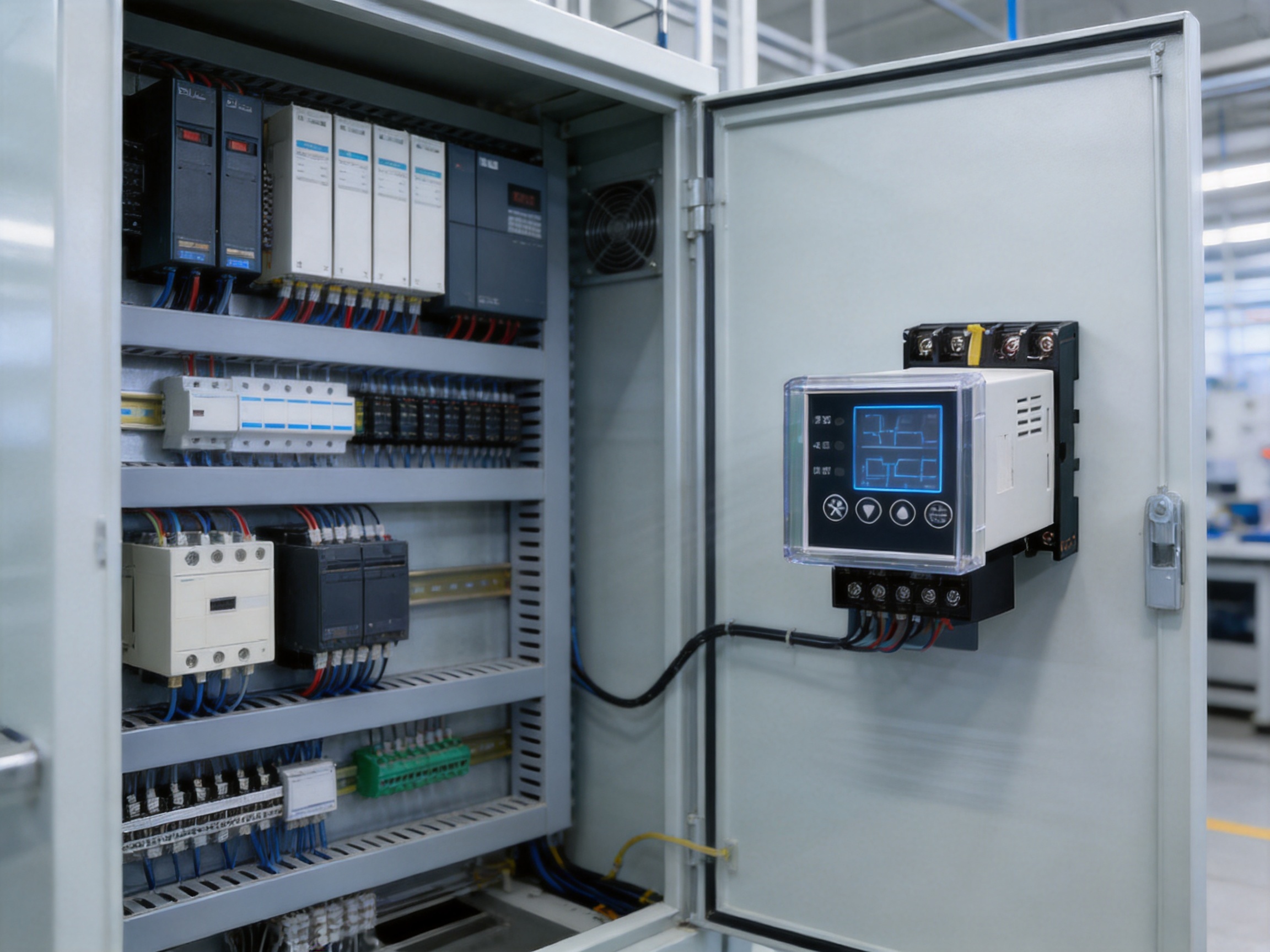
Before installation, the cabinet designer should verify the required panel cutout, mounting method, rear clearance, cable routing, and access for service. The stated external dimensions are 48 mm in length, 48 mm in width, and 80 mm in height. The available space should be checked against the actual enclosure design, including reinforcement bars, wiring ducts, terminal blocks, and nearby components.
The display should be positioned where operators can read it easily without opening the cabinet whenever possible. A convenient viewing position supports regular inspection and makes abnormal readings easier to identify. The installation location should also avoid direct exposure to water, corrosive substances, excessive vibration, and heat generated by high-power equipment unless the complete system has been designed for those conditions.
Sensor placement has a direct influence on measurement quality. A sensor located beside a heater may read a temperature higher than the average cabinet temperature, while a sensor placed near a cold wall may produce a lower reading. The sensor should be installed where it represents the conditions experienced by the most sensitive equipment or the area most likely to develop condensation.
Air circulation should be considered as part of the sensor arrangement. The sensor should not be enclosed in a stagnant pocket or obstructed by wiring and components. At the same time, it should not be placed directly in a strong airflow that does not represent the general internal environment. The final position should be selected after considering cabinet dimensions, heat sources, ventilation routes, and the expected operating cycle.
The controller has a working voltage range of 100–250 V AC. Electrical connection should be completed by qualified professionals in accordance with local regulations and the cabinet’s wiring diagram. Appropriate circuit protection, isolation, grounding, conductor sizing, terminal identification, and overcurrent protection should be included in the design.
Before energizing the controller, technicians should verify the supply voltage, polarity requirements where applicable, terminal assignments, and the compatibility of connected heating, ventilation, cooling, or dehumidification devices. The control capacity and electrical characteristics of external equipment must be confirmed rather than assumed.
Safe installation practices should include isolating the power supply before service, securing all conductors, protecting wiring from sharp edges, and separating power and signal wiring where appropriate. The controller should not be installed in a way that exposes personnel to accessible live parts during normal operation.
Temperature and humidity set points should be selected according to the requirements of the cabinet components, the semiconductor facility, and the equipment manufacturer. There is no universal setting suitable for every application. Users should consider normal ambient conditions, seasonal changes, startup behavior, shutdown periods, condensation risk, and the environmental limits of the most sensitive component.
Control systems may require a difference between the activation and deactivation points to prevent rapid cycling. This principle, often called hysteresis, can help reduce unnecessary switching of heaters, fans, or other equipment. The final control parameters should be tested during commissioning under representative operating conditions.
The controller is supplied by Santo Thermal Control Technology Co., Ltd., a company focused on thermal control and electric heating technologies. The company’s broader product range includes automatic temperature-control electric heating belts, self-limiting electric heating belts, heat tracing belts, constant-power electric heating belts, glass fiber electric heating belts, mineral-insulated cables, silicone rubber heating products, snow-melting cables, and related accessories.
This product background is relevant because environmental controllers are often used together with heating and thermal-management equipment. A manufacturer with experience in temperature control can better understand the relationship between sensing, set-point management, heat output, insulation, cabinet construction, and field application requirements.
The company states that it integrates research, design, production, manufacturing, and sales. This integrated structure can support closer coordination between product development and application requirements. It also allows the manufacturer to develop products for different heating and environmental-control scenarios rather than treating each device as an isolated component.
The company reports more than 35 years of industry experience and traces its development history to the founding of Desheng Electric Heating Instrument Factory in 2000. Over this period, it has expanded from electric heating instrument production into a wider thermal-control product portfolio.
Long-term participation in the industry can provide practical knowledge of field conditions, customer requirements, installation difficulties, and product performance expectations. This experience is especially valuable in industrial applications, where a controller must operate as part of a larger system rather than as a standalone consumer device.
The company’s development history includes work with self-limiting temperature technology, nano far-infrared heating for high-temperature pipeline applications, carbon fiber parallel heating cables, and other electric heating technologies. These activities demonstrate an emphasis on product development and application-specific thermal solutions.
The company states that it cooperates in product research with Harvard University in the United States and has established an irradiation center. It also reports multiple invention patents associated with electric heating technologies. These activities indicate a focus on technical development rather than only assembly and distribution.
For a temperature and humidity controller, research capability can support improvements in sensing, control logic, display performance, electrical compatibility, and integration with heating systems. Product development should address not only the measured values but also the practical conditions in which the device will be installed, including cabinet heat sources, changing ambient conditions, and long operating cycles.
Santo Thermal Control Technology Co., Ltd. states that it has passed ISO9001 quality system certification. A quality management system provides a framework for documenting processes, controlling production activities, managing inspection, and addressing nonconformities. Although certification alone does not guarantee that every application will be successful, it is an important indication that formal quality procedures are part of the company’s operating structure.
The company also reports that its products have obtained national CCC certification. Certification requirements should be reviewed against the specific model, electrical configuration, destination market, and application. Customers should request the applicable compliance documentation when preparing a project or importing equipment.
The company reports annual output exceeding 10,000 units, more than 2,000 distributors, and business coverage in more than 85 areas. It has also invested in additional land for a new factory and product simulation testing laboratory. These resources can support production capacity, product verification, and more systematic evaluation of thermal-control equipment.
Simulation and testing are particularly important for controllers and heating products because real-world performance depends on multiple variables. A product simulation laboratory may be used to evaluate control behavior, temperature response, component interaction, and operating conditions before products reach the field. Customers should confirm the exact tests performed for this controller and request relevant test reports when required.
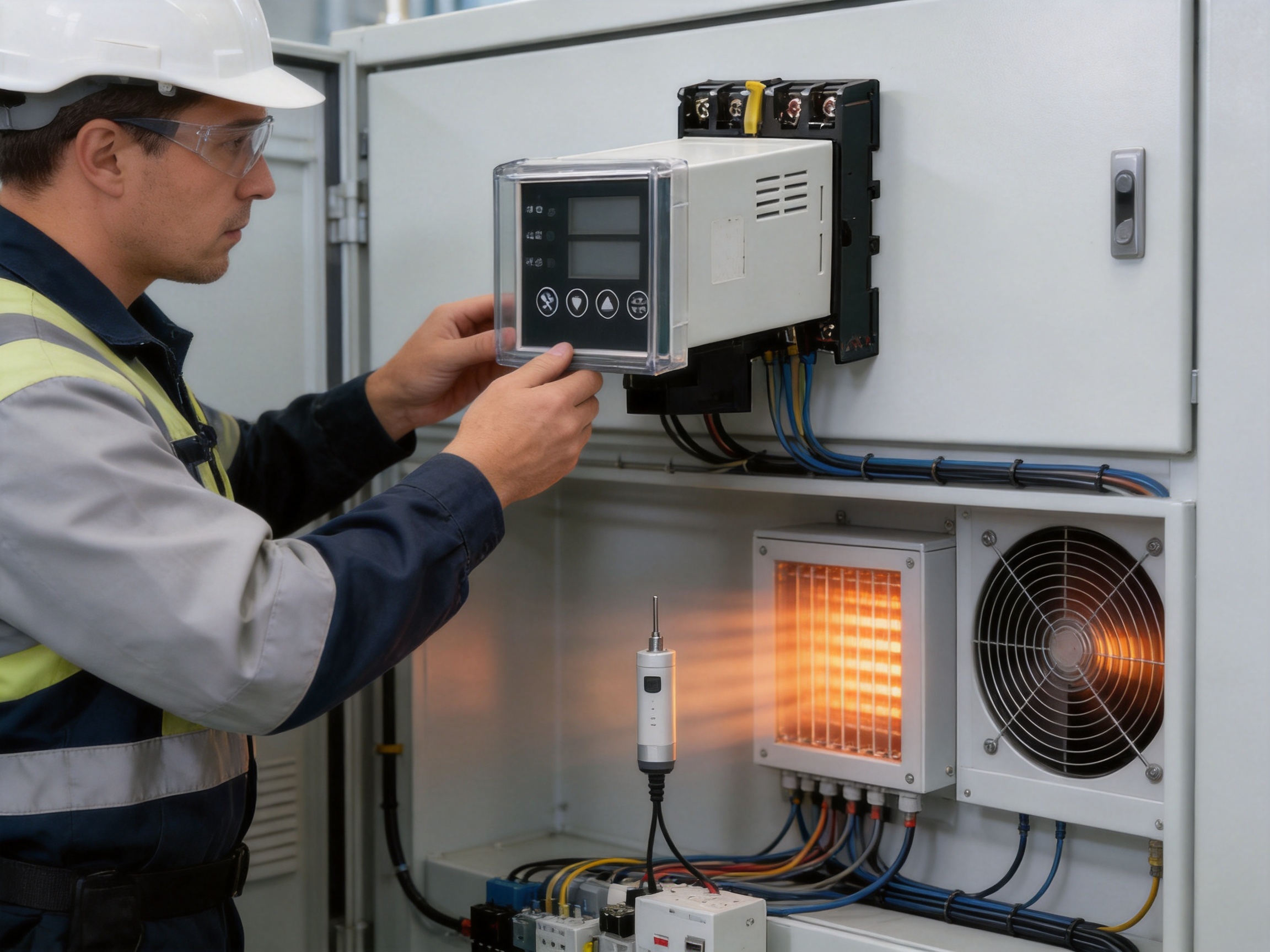
One advantage of working with a manufacturer that supplies both controllers and electric heating products is the potential for better system coordination. In an electrical cabinet, a controller may operate a heater designed to prevent condensation or maintain a minimum internal temperature. Compatibility between the controller, heater, wiring, and enclosure is therefore important.
A thermal-control manufacturer can consider the relationship between control points and heat output. For example, a heater must be sized to compensate for heat loss through the enclosure while avoiding unnecessary temperature rise. A controller must be selected according to the required voltage, sensing arrangement, switching method, and operating environment. When these elements are considered together, the overall system can be easier to specify and maintain.
Santo’s product range includes silicone rubber heating systems, constant-power heating products, self-limiting heating products, glass fiber heating belts, and snow-melting cables. While not all of these products are intended for electrical cabinet use, the variety demonstrates experience with different heating methods and thermal applications. This broader knowledge can help support customized solutions for industrial customers.
| Solution Type | Typical Strength | Potential Limitation | Value of an Integrated Controller |
|---|---|---|---|
| Temperature-only indicator | Simple temperature observation | Does not show humidity-related risks | Displays both temperature and humidity |
| Separate temperature and humidity meters | Independent monitoring | Requires more panel space and may complicate wiring | Combines the two measurements in one unit |
| Manual inspection | Low equipment cost | Intermittent observation and delayed response | Provides continuous local indication and supports automatic stabilization |
| Large environmental control panel | May offer extensive functions | Requires more space and a more complex installation | Offers a compact option for basic cabinet control needs |
| Narrow-voltage controller | Designed for one nominal supply | Less flexible for different electrical systems | 100–250 V AC working range supports broader compatibility |
| Independent heater without control | Provides heat output | May operate inefficiently or fail to respond to humidity changes | Helps coordinate environmental readings with control action |
This comparison describes general differences between product approaches. Actual performance depends on the design, quality, certification, installation, and control features of each competing product. The main advantage of the described controller is its combination of compactness, dual-parameter display, broad AC voltage compatibility, and stabilization-oriented operation.
The first step is to identify the cabinet’s purpose, component list, heat generation, enclosure volume, surrounding temperature, humidity exposure, and expected operating schedule. A cabinet located near a wet process area may require a different environmental strategy from one installed in a dry, temperature-controlled room.
Users should also identify whether the main risk is low-temperature condensation, excessive heat, high humidity, rapid temperature change, or a combination of these factors. This information helps determine whether the controller will operate a heater, fan, cooling unit, dehumidifier, alarm circuit, or multiple devices.
The controller should be evaluated against the required voltage, physical space, environmental range, sensing requirements, control outputs, and interface expectations. The specified 100–250 V AC working voltage and 0–60 °C installation temperature range should be compared with the actual project conditions.
If the installation requires remote communication, data logging, network integration, redundant sensors, or advanced alarm functions, the complete system architecture should be reviewed before purchase. The compact controller may serve as the local environmental control device, while a separate plant monitoring system handles centralized records and alarms.
During installation, the unit should be mounted securely, wired according to the approved diagram, and connected to compatible equipment. The sensor should be placed in a representative location, and all cable entries should be sealed as required by the enclosure design.
Commissioning should include verification of displayed readings, comparison with a calibrated reference instrument when appropriate, confirmation of control response, inspection of switching behavior, and observation under normal operating conditions. The team should record the initial settings and test results for future maintenance.
After commissioning, operators should review the display during routine inspections. Unexpected temperature or humidity changes may indicate a failed heater, obstructed vent, open cabinet door, damaged seal, abnormal ambient condition, or sensor issue. Maintenance personnel should investigate trends rather than simply resetting the controller.
The display surface, cabinet ventilation paths, terminals, sensors, and connected equipment should be included in the maintenance schedule. Inspection intervals should reflect the criticality of the application and the surrounding industrial environment.
Industrial customers often require more than a standard catalog product. They may need specific labeling, packaging, documentation, control settings, wiring arrangements, mounting configurations, or integration with existing electric heating systems. As an OEM and ODM-oriented manufacturer, Santo Thermal Control Technology Co., Ltd. presents experience in custom heating cable and thermal-control product development.
Customization should begin with a technical specification rather than a general request. The customer should define the supply voltage, cabinet dimensions, display requirements, sensor location, control targets, output type, alarm requirements, operating temperature, certification needs, and quantity. Clear requirements help reduce misunderstanding and support efficient engineering review.
For international projects, customers should also confirm language requirements, nameplate information, packaging standards, inspection procedures, shipping documentation, and market-specific compliance. The company’s reported experience with international markets, explosion-proof certification, and EAC Eurasian Union certification may be relevant for certain projects, but the exact applicability must be verified for the selected controller model and destination.
Before ordering, users should confirm the following points:
1. The controller’s 100–250 V AC working voltage is compatible with the available supply.
2. The 48 mm by 48 mm by 80 mm dimensions fit the proposed panel arrangement and internal cabinet clearance.
3. The installation location remains within the specified 0–60 °C installation temperature range.
4. The controller provides the required temperature and humidity display functions.
5. The control function is compatible with the intended heater, ventilation device, cooling equipment, or dehumidification system.
6. The sensor position accurately represents the conditions that need to be controlled.
7. The selected temperature and humidity ranges are suitable for the cabinet components.
8. Required certifications, inspection documents, and technical files are available for the target market.
9. The cabinet includes suitable overcurrent protection, grounding, and safe isolation provisions.
10. Commissioning, calibration verification, maintenance, and replacement procedures have been defined.
A controller can improve environmental management, but it must be used as part of a properly engineered electrical system. Users should not exceed the rated electrical parameters or connect loads without verifying compatibility. Where the controller operates an external heater or other high-power device, an appropriate relay, contactor, solid-state switching device, or other interface may be necessary.
Electrical cabinets should be designed to prevent accidental contact with live parts and to limit the effects of moisture, dust, vibration, and heat. The controller’s presence does not automatically provide the cabinet with a particular ingress protection rating. The complete enclosure and all cable entries must be evaluated as a system.
In critical semiconductor applications, it may be appropriate to provide independent alarms, backup environmental monitoring, or a fault response strategy. If a sensor fails or a control output becomes unavailable, the system should respond in a way that minimizes risk to equipment and production. The correct level of redundancy depends on the process and the consequences of failure.
Santo Thermal Control Technology Co., Ltd. describes itself as a high-tech enterprise in Jiangsu Province. Its activities include product research, engineering design, manufacturing, quality management, technical guidance, and after-sales service. This combination is useful for industrial customers that need assistance beyond the initial product quotation.
The company’s stated business objective is to develop new products, expand domestic and international markets, establish long-term partnerships, and create mutual value with customers. Its reported network of more than 2,000 distributors and business activity in more than 85 areas indicates experience supporting a broad customer base.
The company also reports the establishment of the SANTO brand in 2016, expansion into additional factory and laboratory facilities, and the creation of a Russia factory in 2023. These developments reflect an effort to expand production and international business capabilities. Customers should evaluate the specific supply route, technical support arrangements, lead time, and warranty terms for each project.
For users purchasing temperature and humidity controllers together with electric heating products, a single thermal-control supplier may simplify communication. Technical questions about sensor positioning, heating capacity, cabinet conditions, and control strategy can potentially be reviewed within one product ecosystem. This can reduce coordination difficulties between separate component suppliers.
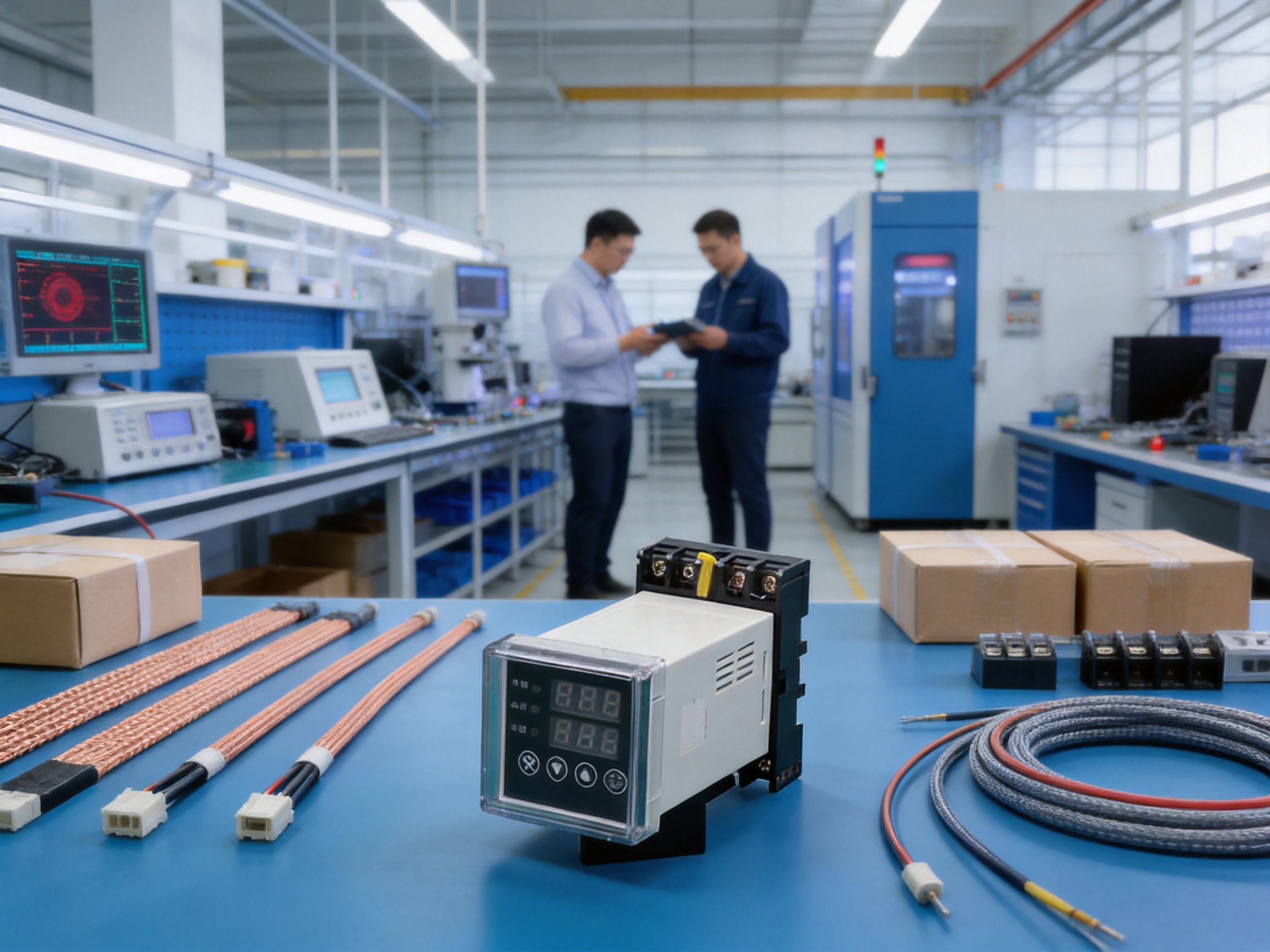
Its primary purpose is to display the current temperature and humidity of an electrical cabinet environment, help stabilize these values within a set range, and support the maintenance of a more suitable internal condition for cabinet equipment.
The stated application is electrical cabinets, with a focus on the semiconductor industry. It may be considered for automation cabinets, control panels, power equipment enclosures, and other industrial cabinets when the electrical and environmental requirements are compatible.
The stated dimensions are 48 mm in length, 48 mm in width, and 80 mm in height. The installation designer should verify the required cutout and rear clearance using the product drawing before final panel fabrication.
The specified working voltage is 100–250 V AC. The actual supply and wiring arrangement must be checked by qualified personnel, and the final installation should comply with local electrical regulations.
The stated installation temperature range is 0–60 °C. The planned cabinet location should remain within this range, and users should distinguish between the controller’s installation temperature specification and the environmental requirements of the equipment being protected.
Yes. The product content specifies that it displays the current temperature and humidity of the environment. This dual display allows users to observe two important conditions from one compact device.
It can support condensation prevention by helping maintain temperature and humidity within a selected range, especially when connected to an appropriately sized heating or environmental-control system. Actual condensation prevention depends on sensor placement, enclosure sealing, heater capacity, airflow, set points, and surrounding conditions.
The available product information describes its stabilization function but does not provide detailed output ratings or terminal specifications. Customers should obtain the complete technical datasheet and confirm whether an external relay, contactor, or other interface is required for the intended load.
Temperature control alone cannot identify all moisture-related risks. Relative humidity may increase while temperature remains acceptable, and condensation may occur during temperature transitions. Monitoring both parameters provides a more complete view of the cabinet environment.
The 48 mm by 48 mm format helps conserve panel space. This is useful in semiconductor electrical cabinets that must accommodate many indicators, switches, protection devices, communication modules, and automation components in a limited area.
No product should be assumed suitable for every installation without a technical review. The controller should be evaluated against the cabinet’s voltage, temperature, humidity, control load, certification, mounting, communication, and safety requirements.
The manufacturer reports more than 35 years of industry experience, research and development activities, ISO9001 quality system certification, national CCC certification for its products, product simulation testing capabilities, and a broad portfolio of electric heating and thermal-control products.
The company describes itself as an OEM and ODM-oriented heating cable manufacturer and offers a wide range of thermal-control products. Customization should be discussed using a detailed technical specification covering voltage, dimensions, control requirements, certification, packaging, and quantity.
The sensor should be placed in a representative area of the cabinet, away from direct heater discharge, cold surfaces, stagnant pockets, and obstructed airflow. The final location should reflect the conditions experienced by the most sensitive equipment.
Commissioning should verify the displayed readings, compare measurements with a suitable reference instrument when required, confirm control response, inspect wiring and terminals, test connected equipment, and record the selected settings and results.
The temperature and humidity controller provides a practical way to improve environmental awareness and stabilization inside semiconductor electrical cabinets. Its combination of temperature display, humidity display, control-oriented operation, compact 48 mm by 48 mm format, 80 mm height, 100–250 V AC working voltage, and 0–60 °C installation temperature range makes it suitable for applications where panel space and cabinet reliability are important.
Compared with temperature-only indicators, separate meters, manual inspection, or uncontrolled heaters, the controller offers a more integrated approach. It helps users observe two critical environmental variables from one device and supports automatic responses when connected to compatible external equipment. This can contribute to condensation prevention, electrical component protection, improved maintenance efficiency, and more stable operation.
Its application value is reinforced by the manufacturer’s broader capabilities in electric heating and thermal-control products. Santo Thermal Control Technology Co., Ltd. reports long-term industry experience, research cooperation, production capacity, quality system certification, product development activity, and international market experience. These strengths may be valuable for customers seeking both a controller and related heating equipment from one technical supplier.
Successful performance ultimately depends on correct system design. Users should confirm the complete technical specifications, select suitable set points, install the sensor correctly, verify the control interface, and follow all electrical and safety requirements. When properly integrated, this compact controller can become an effective part of a semiconductor facility’s strategy for protecting sensitive cabinet equipment and maintaining dependable industrial operation.
1. Product specification supplied for the temperature and humidity controller, including dimensions, working voltage, installation temperature, application, and display functions.
2. Santo Thermal Control Technology Co., Ltd. company information and product portfolio summary.
3. ISO 9001 quality management system principles for manufacturing and process control.
4. General industrial guidance on electrical cabinet temperature management and condensation prevention.
5. General principles of semiconductor manufacturing equipment environmental control and electrical reliability.
6. Standard engineering practices for electrical cabinet layout, sensor placement, wiring protection, and commissioning.
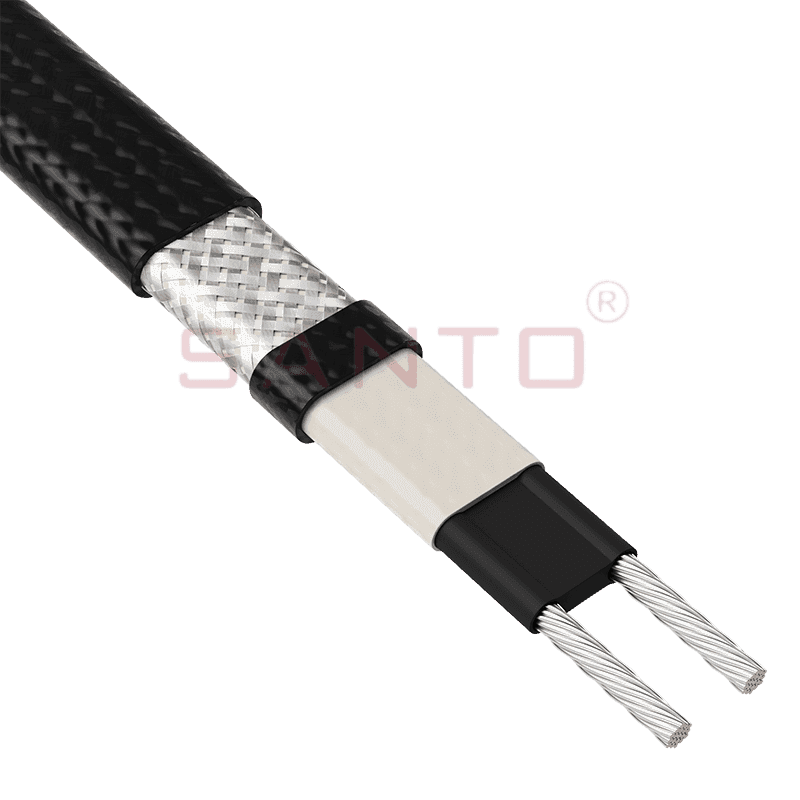
The SANTO UFA range of self-regulating heating cables is mainly used for frost protection of pipes and vessels but can also be used to maintain processes up to 65°C. These heating cables are available...
See Details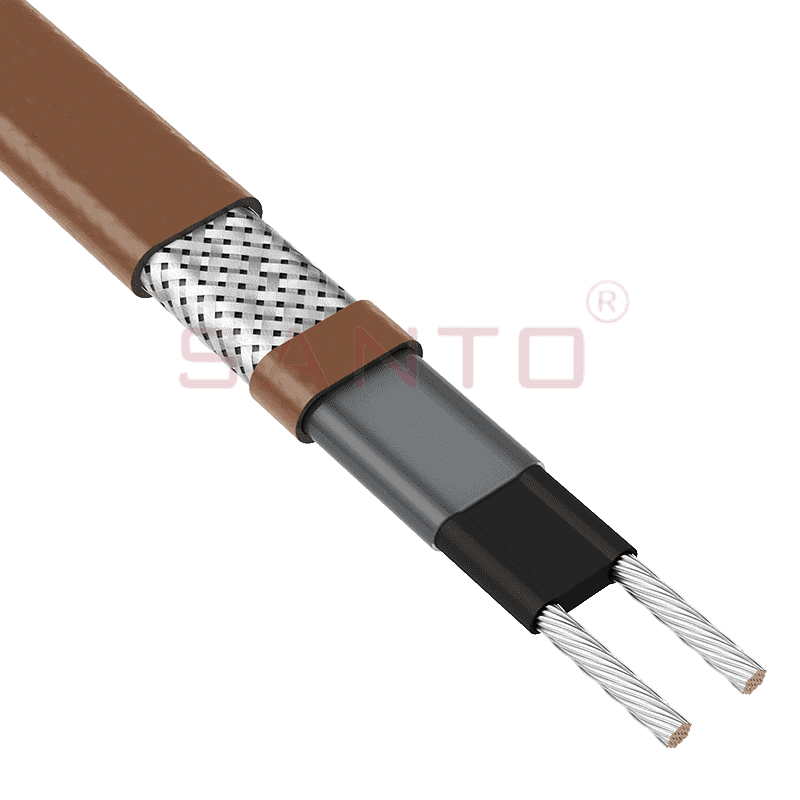
The SANTO UFB range of self-regulating heating cables is mainly used for frost protection of pipes and vessels requiring a higher power output than the UFA heating cables can supply. They can also be ...
See Details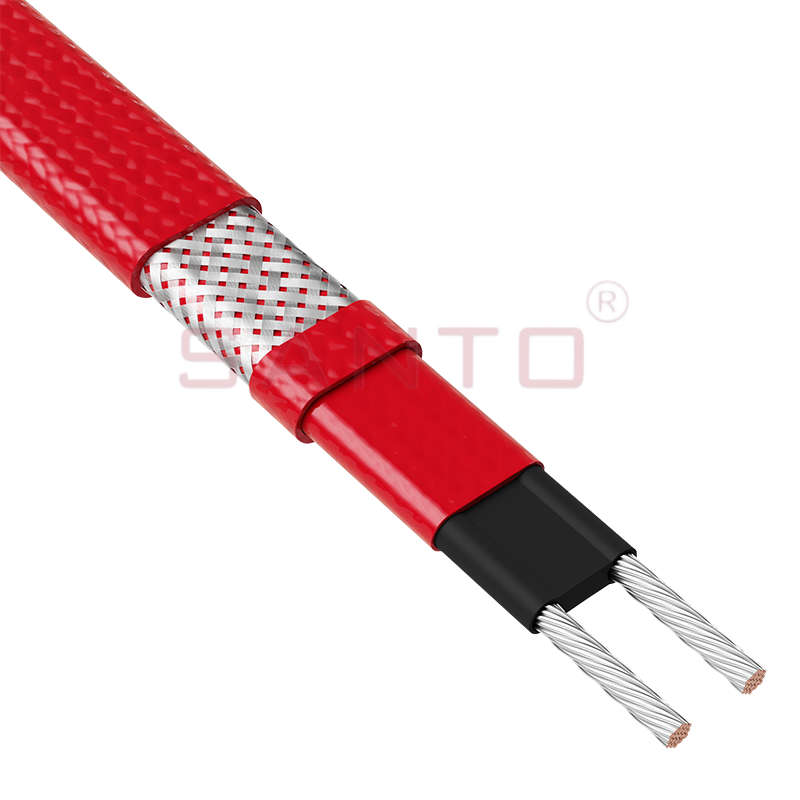
The SANTO UFC range of self-regulating heating cables is used for frost protection of pipes and vessels that require steam cleaning. They can also be used to maintain processes up to 121°C. These heat...
See Details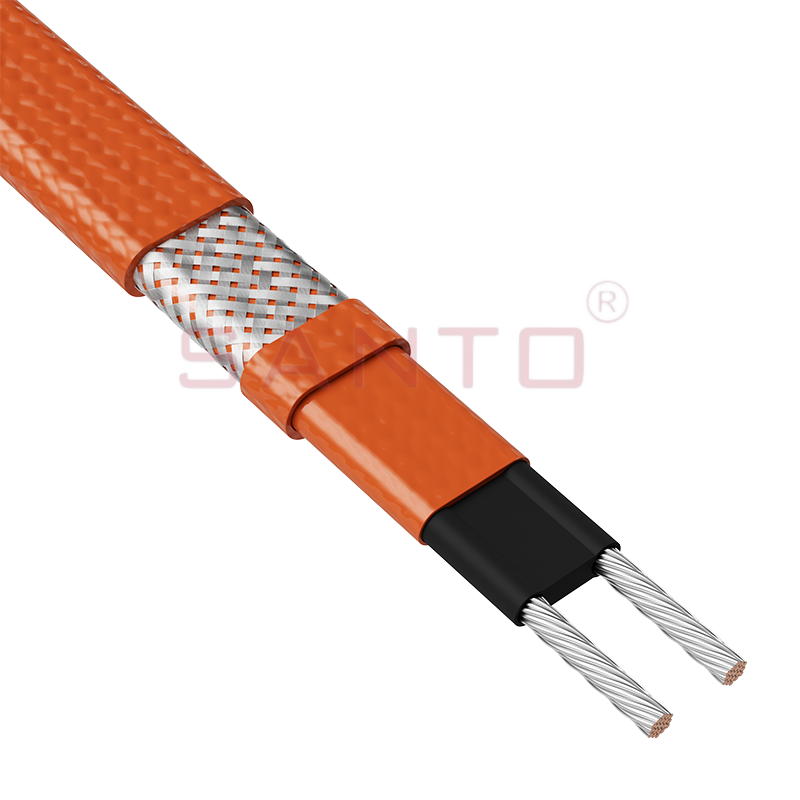
The SANTO UFO range of self-regulating heating cables is mainly used for frost protection of pipes and vessels that require steam cleaning . They can also be used to maintain processes up to 150°C. Th...
See Details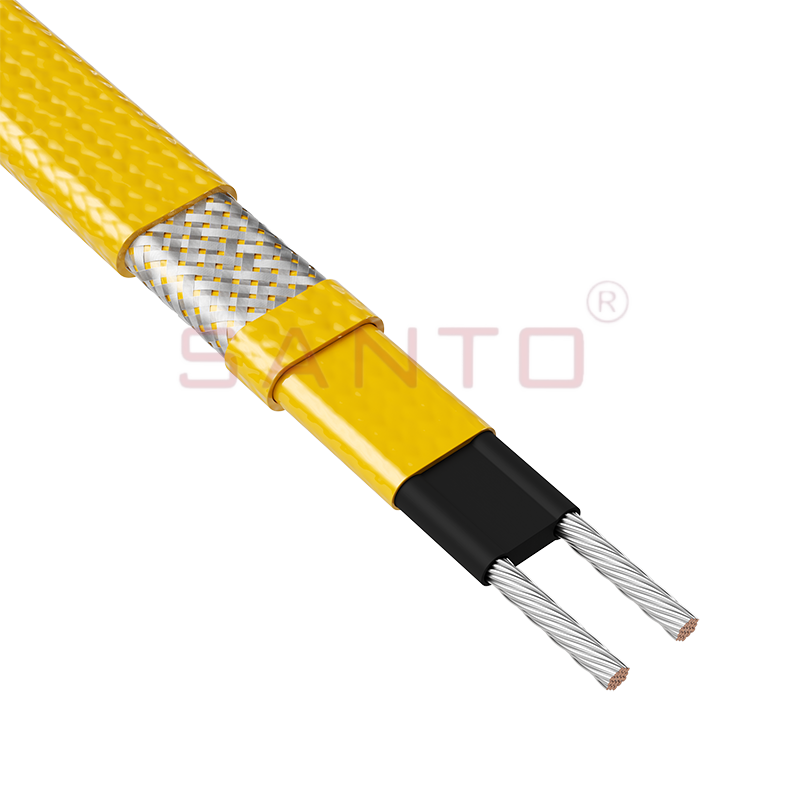
The SANTO UFD series of self-regulating heating cables are mainly used for freeze protection of pipes and vessels, but can also be used to maintain processes up to 200°C. These heating cables are avai...
See Details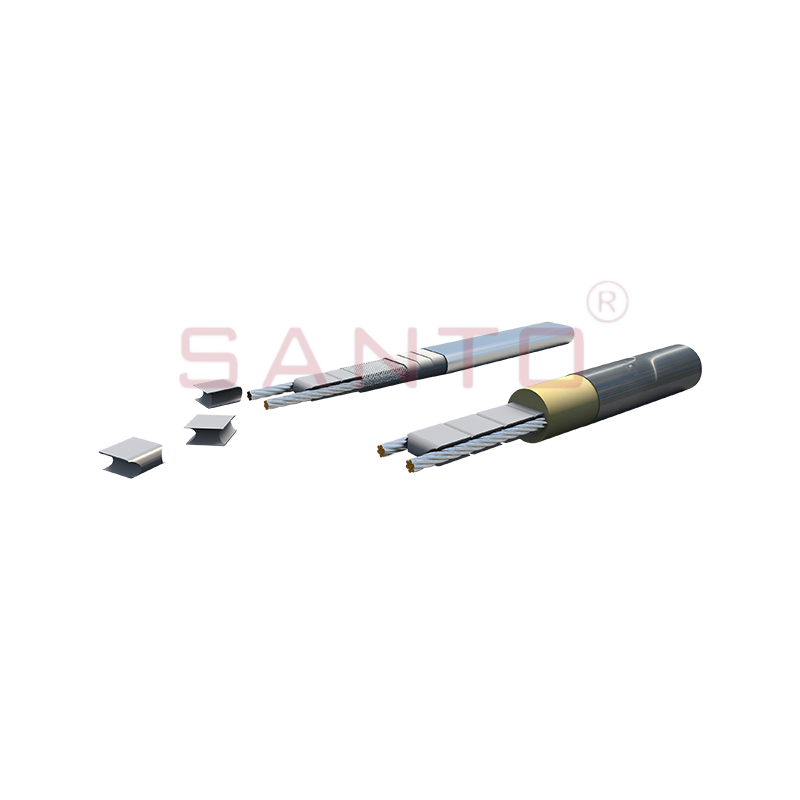
SANTO UFY heating wire is suitable for applications that maintain process temperatures up to 260 ℃ and can be steam blown; The self-regulating and parallel circuit heating wires of the UFY series are ...
See Details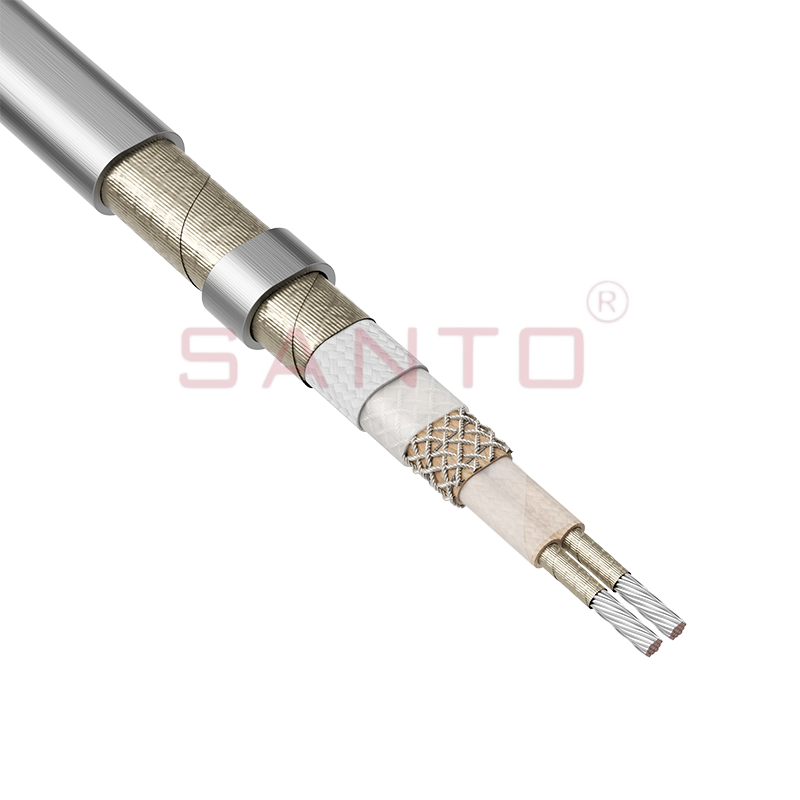
The SANTO UFM series self-regulating heating cables are mainly used for freeze protection of pipes and vessels, but can also be used to maintain processes up to 400°C. These heating cables are availab...
See Details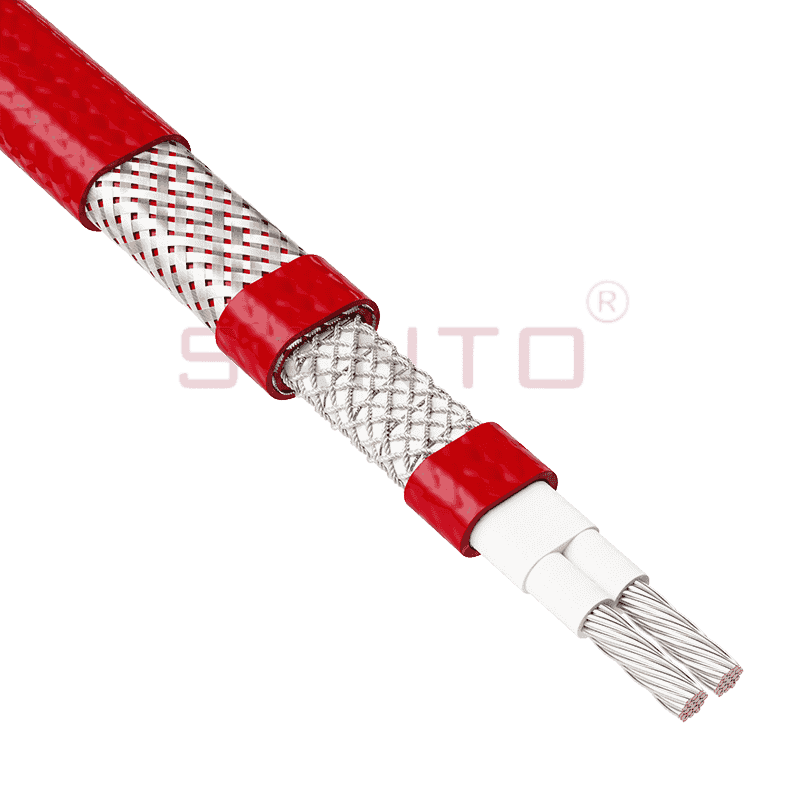
The SANTO ACC range of power-limiting heating cables is mainly used for temperature maintenance of processes and offers the advantage of a high power output at high temperatures which can reduce the n...
See Details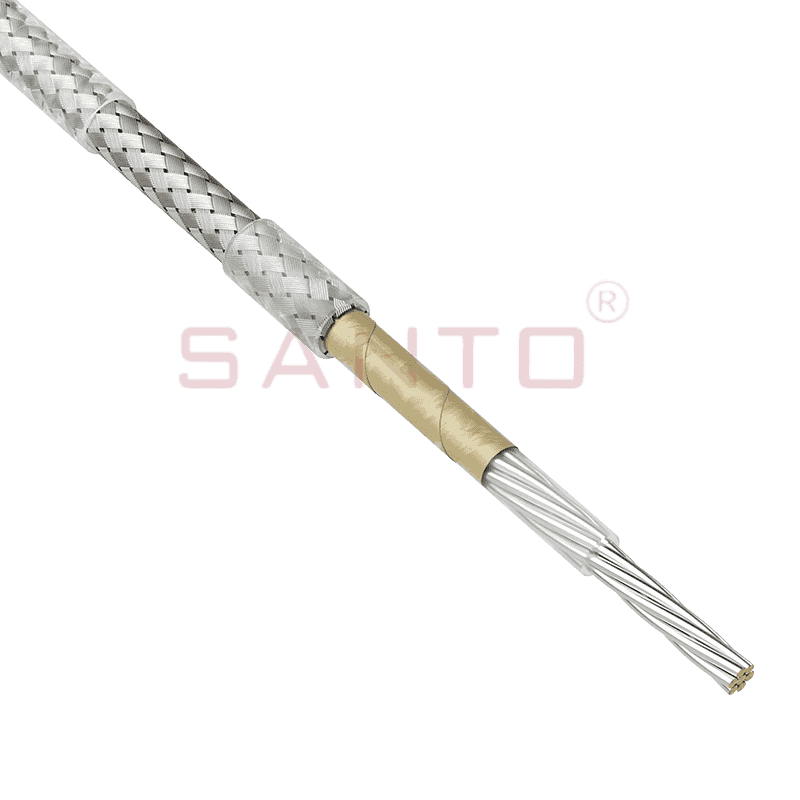
The stranded high temperature conductor is nickel plated to ensure a long life at elevated temperatures in corrosive environments. It is electrically isolated using an innovative sandwich construction...
See Details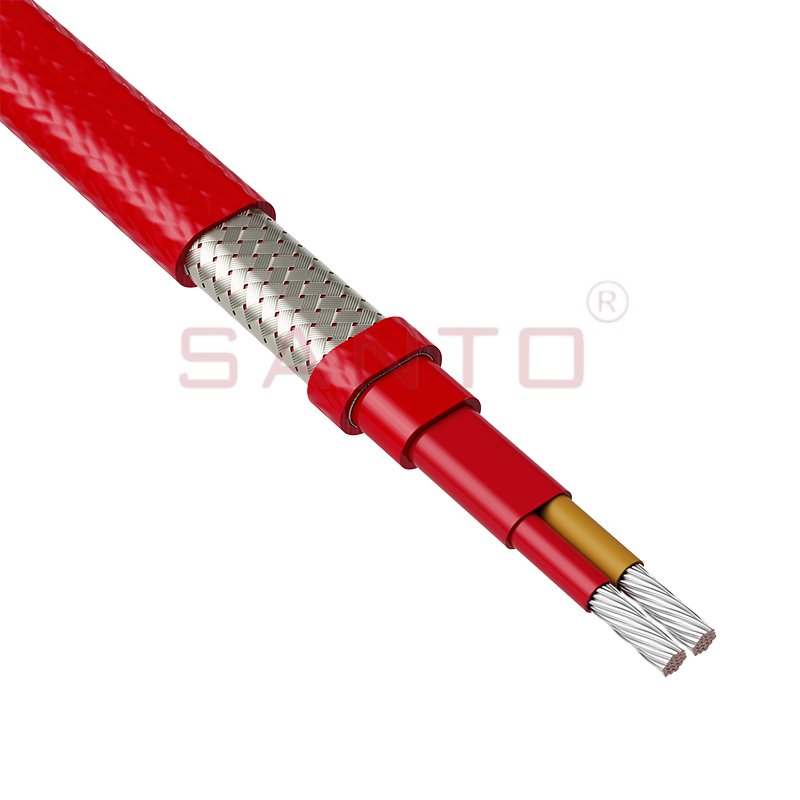
The stranded high temperature conductor is nickel plated to ensure a long life at elevated temperatures in corrosive environments. It is electrically isolated using an innovative sandwich construction...
See Details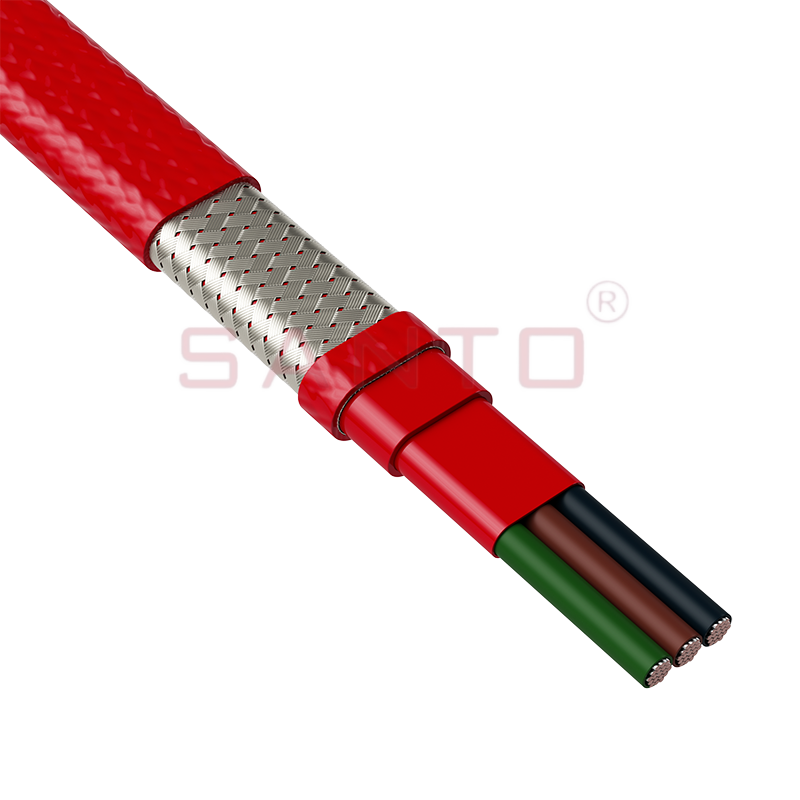
The stranded high temperature conductor is nickel plated to ensure a long life at elevated temperatures in corrosive environments. It is electrically isolated using an innovative sandwich construction...
See Details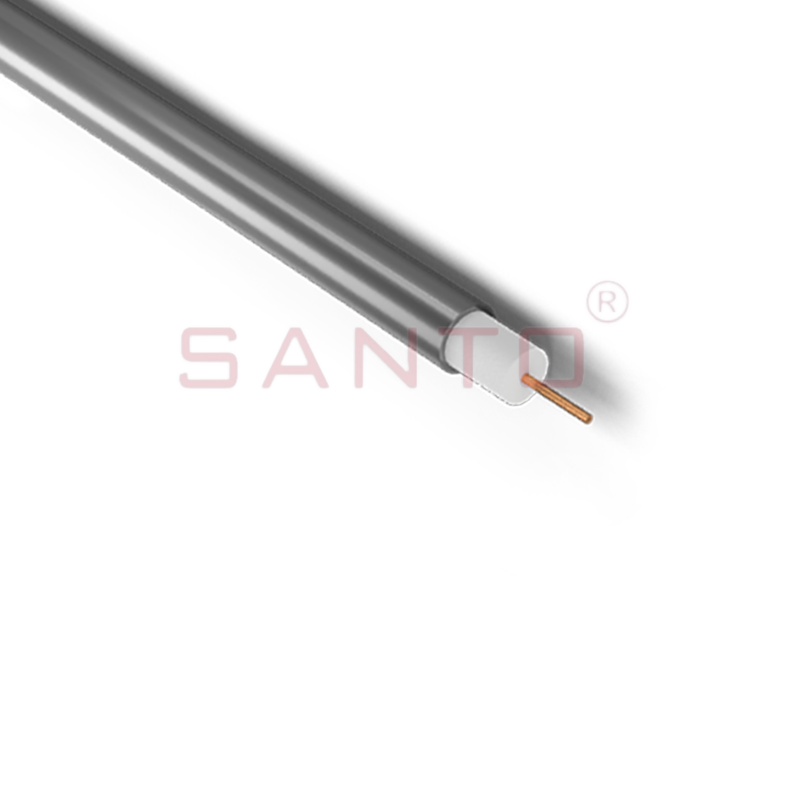
SANTO HAx mineral insulated (MI) Alloy 825 series heating cables are suitable for use in hazardous areas. They have been designed for use in freeze protection and temperature maintenance applications ...
See Details
Santo electric heating strips are widely used in key industries in China.

