 English
  English
 русский
 日本語
日本語 Español
 中文简体
中文简体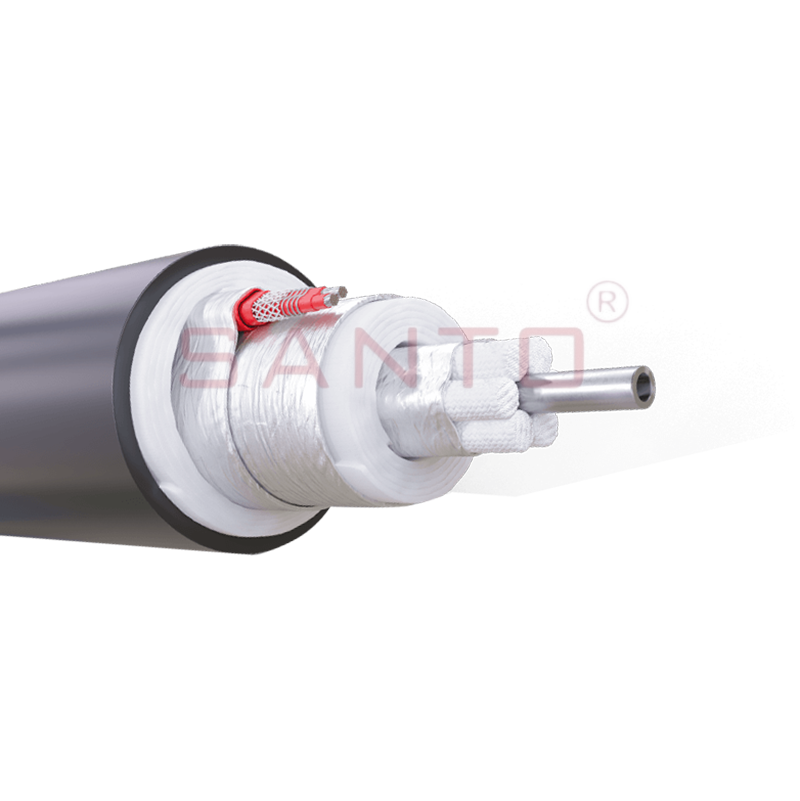

The SANTO UFA range of self-regulating heating cables is mainly used for frost protection of pipes and vessels but can also be used to maintain processes up to 65°C. These heating cables are available...
See Details
In industrial plants where accuracy, safety, and continuous operation are essential, small-diameter tubing can be just as critical as large process pipelines. Steam sample lines, analyzer sample transport lines, and impulse lines connected to pressure transmitters often carry media that must remain within a controlled temperature range. If these lines freeze, cool excessively, condense, plug, or respond slowly, the result can be inaccurate readings, delayed control response, damaged instruments, unplanned shutdowns, and increased maintenance costs. The DTB2-ACC Tubing Bundles product is designed to solve these problems through a pre-engineered electric traced tube bundle configuration developed for demanding high-temperature and freeze-protection applications.
DTB2-ACC Tubing Bundles belong to the electric heating tube bundle category and are intended for applications such as steam sample lines and impulse lines routed to pressure transmitters. The product provides water freeze protection in ambient conditions down to -45°C (-50°F) with 40 kph (25 mph) wind conditions, while also withstanding continuous steam exposure temperatures up to 399°C (750°F). These performance values make the product suitable for plants that require dependable heat tracing in harsh winter environments as well as around high-temperature steam service.
The key advantage of this product is its pre-engineered design. Traditional high-temperature tube tracing often relied on series resistance mineral insulated heat trace, commonly known as MI heat trace. Although MI heaters are durable and capable of high-temperature performance, they are usually custom manufactured for each application. Custom manufacturing can increase engineering time, procurement complexity, lead time, installation planning, and replacement difficulty. DTB2-ACC Tubing Bundles address this challenge by using a parallel resistance heat trace approach that is isolated from direct contact with high-temperature tubing. This configuration allows the system to combine high-temperature exposure capability with practical installation and supply advantages.
For engineering teams, maintenance departments, and project contractors, the value of a tube bundle is not limited to heating performance alone. The best tube bundle solution should simplify project design, reduce field assembly, support consistent thermal performance, protect the tubing and heating elements, and help the facility maintain reliable instrument readings. DTB2-ACC Tubing Bundles are engineered to provide these benefits by integrating tubing, heating, insulation, and outer protection into a coordinated product rather than forcing installers to build a heating system from separate components in the field.
Content
An electric traced tubing bundle is a packaged system that combines one or more process tubes with electric heat tracing, insulation, and an external jacket. Instead of installing bare tubing and then adding heat trace, insulation, and weatherproofing separately at the job site, a tube bundle arrives as a factory-prepared assembly. This approach is especially valuable where numerous instrument lines must be routed across long distances, through outdoor areas, or into cold climates.
In steam sampling applications, the sample must travel from the process connection to the analyzer or sampling station without uncontrolled condensation or freezing. In impulse line applications, the pressure signal from the process must be transferred accurately to a transmitter. If the fluid in the impulse line freezes, the transmitter may stop reading correctly or may be physically damaged. Even partial freezing or excessive viscosity increase can create delayed pressure response, causing the control system to operate with inaccurate information.
DTB2-ACC Tubing Bundles are built for these environments. The product is described as a pre-engineered electric traced tube bundle for steam sample lines and impulse lines to pressure transmitters. This means the system is not merely a heating cable; it is an integrated line solution. The tube bundle concept reduces the number of individual field operations required and helps ensure that the heat trace is properly positioned, insulated, and protected.
In facilities such as refineries, petrochemical plants, chemical processing units, power stations, gas facilities, and outdoor process installations, instrument tubing may be exposed to wind, snow, ice, rain, corrosive atmospheres, and large seasonal temperature swings. A tube bundle helps protect these vulnerable lines against environmental stress. By maintaining suitable heat input along the tubing path, the bundle helps reduce freeze risk and supports stable measurement conditions.
DTB2-ACC Tubing Bundles are designed for demanding industrial heat tracing duties. Their main operating promise is twofold: reliable water freeze protection in extremely cold ambient environments and resistance to continuous high-temperature steam exposure. According to the provided product data, the bundle provides water freeze protection down to -45°C (-50°F) in 40 kph (25 mph) wind conditions. It also withstands continuous steam exposure temperatures up to 399°C (750°F).
This combination is important because many products are optimized for either low-temperature freeze protection or high-temperature exposure, but not both. In a real plant environment, an impulse line may be routed near high-temperature steam or process equipment while also extending through outdoor areas subject to winter freezing. A product that can tolerate high-temperature exposure while still providing freeze protection gives engineers more flexibility and reduces the need to specify multiple special constructions for different sections of the same line.
The product uses parallel resistance heat trace isolated from direct contact with high-temperature tubing. The isolation concept is significant because direct exposure to excessive tube temperature can shorten heater life or create thermal stress in some tracing arrangements. By separating the heat trace from direct high-temperature contact, the design helps preserve heating function while maintaining the ability to operate around steam exposure conditions.
Unlike custom MI heating elements that must be built to exact dimensions, a pre-engineered bundle can reduce procurement uncertainty. Project teams benefit when a product is easier to specify, easier to order, and easier to install. The tube bundle format also supports consistent insulation thickness, trace placement, and outer jacket protection, all of which influence real-world thermal performance.
The first major advantage of DTB2-ACC Tubing Bundles is freeze protection in severe cold. A rating down to -45°C with 40 kph wind conditions addresses the needs of plants operating in northern climates, high-altitude regions, exposed industrial zones, and winterized facilities. Wind is especially important because moving air increases heat loss from tubing. A product that accounts for both low temperature and wind exposure provides a more realistic indication of field suitability than a simple static ambient rating.
The second advantage is high-temperature steam exposure resistance. Continuous exposure up to 399°C allows the product to be used in locations where steam or hot process conditions would challenge lower-temperature traced tubing systems. This makes DTB2-ACC relevant for steam sample lines, steam-assisted systems, and instrument connections located near high-temperature piping.
The third advantage is the pre-engineered construction. Pre-engineering helps standardize performance and reduce installation errors. When heat trace, insulation, tubing, and jacket are assembled as a system, the chance of incorrect field spacing, inadequate insulation coverage, or inconsistent weatherproofing is reduced. This can improve reliability, especially on projects with many instrument lines.
The fourth advantage is the replacement of long-lead custom MI solutions in many suitable applications. Mineral insulated heating cable remains useful in certain extreme conditions, but custom MI circuits can require detailed measurements, engineering review, factory manufacturing, and long delivery times. DTB2-ACC Tubing Bundles offer a more convenient approach by using a parallel resistance heat tracing design that can simplify supply and application.
The fifth advantage is improved maintenance practicality. In industrial facilities, maintenance teams often prefer systems that can be identified, replaced, and standardized across multiple lines. A tube bundle solution can make line routing more organized and easier to inspect than loose tubing and field-applied tracing. It can also reduce the number of exposed components vulnerable to mechanical damage.
Before products such as DTB2-ACC Tubing Bundles became available, high-temperature instrument tubing was frequently heat traced with series resistance MI heating cable. MI heating cable has a metal sheath, mineral insulation, and a heating conductor. It is robust and capable of high-temperature use, but it is often made to length. This custom nature means accurate field measurements are required before production, and later modifications may require new circuits or special handling.
A series resistance circuit must be designed to match voltage, resistance, length, and heat output. If the routing changes, the circuit design may be affected. This creates less flexibility during construction, especially when field conditions differ from drawings. In contrast, a parallel resistance heat trace system can offer more practical installation flexibility because the heating circuit is not dependent on a single custom resistance length in the same way.
Another difference is installation labor. Traditional field tracing may require installers to attach heating cable to tubing, apply insulation, seal the insulation, protect the assembly, and check for gaps. Each step introduces variation. If the heat trace is too loose, too close to high-temperature surfaces, insufficiently insulated, or poorly weatherproofed, performance can suffer. A pre-engineered tube bundle reduces these risks by completing much of the assembly under controlled manufacturing conditions.
The following table summarizes the practical differences between DTB2-ACC Tubing Bundles and conventional field-built or custom MI approaches.
| Evaluation Area | DTB2-ACC Tubing Bundles | Traditional Custom MI or Field-Built Tracing |
|---|---|---|
| Product concept | Pre-engineered electric traced tube bundle with integrated tubing, heat tracing, insulation, and protection | Separate tubing, custom heat tracing, insulation, and field-applied protection |
| Freeze protection | Designed for water freeze protection down to -45°C with 40 kph wind conditions | Depends heavily on custom design, installation quality, and insulation consistency |
| High-temperature exposure | Withstands continuous steam exposure temperatures up to 399°C | MI can withstand high temperatures, but each circuit must be engineered and manufactured for the application |
| Lead time | Pre-engineered approach can reduce project delay compared with fully custom heat trace circuits | Often requires custom manufacture, detailed measurements, and longer procurement cycles |
| Installation consistency | Factory-prepared construction promotes uniform layout and repeatable thermal performance | Quality depends on field workmanship, weather conditions, and installation supervision |
| Heat trace protection | Heat trace is isolated from direct contact with high-temperature tubing | Direct contact or field arrangement may increase thermal stress if not properly designed |
| Maintenance | Organized bundled format supports easier identification and replacement planning | Multiple separate components may be more difficult to inspect and maintain |
This comparison does not mean that one technology is always suitable for every possible project. Instead, it shows why DTB2-ACC Tubing Bundles offer a strong alternative for steam sample and impulse line services where severe ambient freeze protection and high-temperature exposure resistance are both required.
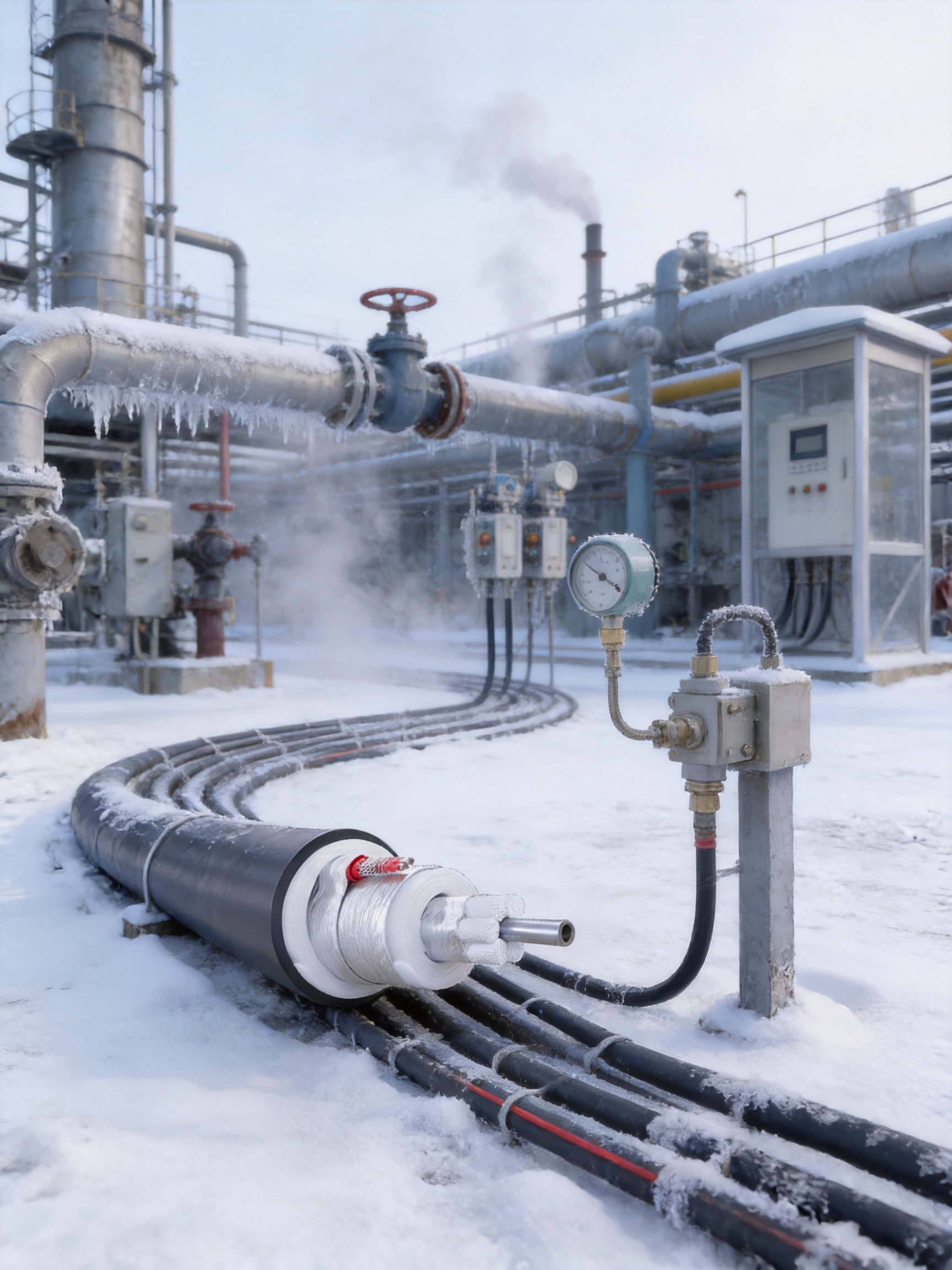
Heat tracing systems must deliver heat to the process tube without causing premature damage to the heating element. When tubing is exposed to high-temperature steam, the tube wall can become hot enough to stress conventional heating cables if they are directly attached. Over time, excessive exposure may degrade insulation materials, reduce electrical integrity, or create localized hot spots.
DTB2-ACC Tubing Bundles solve this challenge by using a parallel resistance heat trace that is isolated from direct contact with the high-temperature tubing. This design principle helps balance two objectives: the tubing receives sufficient heat protection for freeze prevention, while the electric heating component is not forced into continuous direct contact with the hottest surface. Such separation is a practical engineering solution for applications where the tube may experience high steam temperatures but still requires electric tracing for low-temperature ambient conditions.
Isolation also supports product durability. In industrial environments, thermal cycling can be severe. Lines may heat up during operation, cool down during shutdown, and then experience winter ambient conditions. A heating system that is better protected against direct high-temperature stress may have improved service stability and reduced risk of failure due to overheating.
For plant operators, the benefit is not only component life but also confidence in instrument availability. A frozen impulse line can cause false readings, while a damaged tracing system can leave a line unprotected. By protecting both the tubing and the tracing element, the product helps maintain the functional chain from process connection to instrument.
Steam sample lines are used in power generation, petrochemical processing, refining, and other industrial systems where steam quality or process chemistry must be monitored. The sample must be transported from the process to the sampling panel or analyzer under controlled conditions. If temperature drops too much, condensation can form, sample composition can change, and measurement accuracy can be compromised.
In winter climates, condensation is not the only risk. Water in sample lines can freeze, block flow, and damage tubing or fittings. A frozen sample line may cause the operator to lose visibility into important process conditions. Restoring service can require thawing, inspection, and possibly component replacement. Preventing freezing is far more efficient than responding to freeze damage after it occurs.
DTB2-ACC Tubing Bundles support steam sample applications by offering high-temperature exposure capability together with freeze protection. The system is especially useful where sample tubing exits a hot process area and travels through cold outdoor spaces before reaching an analyzer shelter or sampling station. The product helps maintain line availability through changing weather and process conditions.
Because the bundle is pre-engineered, it can simplify layout and construction for sampling projects. Multiple sample lines may be installed across a plant, and standardizing on a tube bundle design can reduce engineering variation. Contractors can route the assembly more efficiently than building each traced line piece by piece.
Impulse lines connect a process tapping point to a pressure transmitter, differential pressure transmitter, or flow measurement instrument. These lines may contain water, condensate, process fluids, or other media that can freeze or become viscous at low temperatures. When the fluid in an impulse line freezes, the pressure signal may be blocked, delayed, or distorted.
Accurate pressure measurement is essential for process safety and control. A blocked impulse line can cause the transmitter to display a constant reading even while actual process pressure changes. In critical service, this may affect alarms, control loops, and safety decisions. Therefore, freeze protection for impulse lines is not merely a comfort feature; it is part of the facility’s instrumentation reliability strategy.
DTB2-ACC Tubing Bundles are designed specifically for impulse lines to pressure transmitters. Their freeze-protection capability down to -45°C with wind conditions helps protect lines exposed to severe winter weather. The high-temperature exposure rating is also useful when impulse lines originate from steam systems or hot process equipment.
The bundled design can also improve physical organization around transmitters. Instrument racks, remote transmitter locations, and process measurement points often become crowded with tubing, cables, supports, and insulation. A factory-assembled tube bundle can reduce clutter compared with loosely installed individual components. This helps installers maintain a cleaner layout and may support easier inspection during maintenance rounds.
A high-performance tube bundle depends not only on the design concept but also on the manufacturing discipline behind it. Santo Thermal Control Technology Co., Ltd. is located in Jiangsu Province, a region known for electric heating belt production. The company has developed extensive experience in electric heating products, including automatic temperature-control electric heating belts, self-limiting electric heating belts, heat tracing belts, constant-power electric heating belts, glass fiber electric heating belts, MI cables, and related electric heating systems.
The company’s manufacturing background supports the DTB2-ACC Tubing Bundles product in several ways. First, experience across multiple heat tracing technologies gives engineers a broader understanding of how different heating systems behave under field conditions. This allows product development to consider not only electrical output but also insulation compatibility, thermal transfer, environmental protection, and installation practicality.
Second, the company has emphasized new product development and technical guidance. Its history includes the establishment of an irradiation center, the development of high-temperature pipeline heating and tracing technologies, and patented innovations involving heating cable structures. This background reflects a commitment to improving product performance rather than relying only on conventional tracing methods.
Third, the company has passed ISO9001 quality system certification, and its products have obtained national CCC certification. It has also obtained explosion-proof certification and EAC Eurasian Union certification. These certifications indicate attention to quality management, electrical product compliance, and market readiness for industrial applications. In heat tracing, quality control is crucial because product defects may not be obvious during installation but can cause serious reliability issues later in service.
Fourth, Santo has expanded manufacturing and testing capability through investment in a new factory and product simulation testing laboratory. Simulation testing is particularly valuable for products such as tube bundles because thermal performance depends on real environmental conditions, including ambient temperature, wind, insulation, heat loss, and operating exposure. A manufacturer with testing capability is better positioned to validate designs and refine product construction.
The production of an electric traced tubing bundle requires coordinated control of several components. Tubing must be selected and prepared for the application. Heating elements must be positioned correctly. Insulation must be applied with suitable coverage and density. The outer jacket must protect against environmental damage. Electrical components must meet safety and performance expectations. Each stage affects final product reliability.
In advanced manufacturing, the process begins with design review and material selection. The expected service temperature, ambient exposure, wind conditions, tube size, media type, electrical supply, installation environment, and required freeze-protection performance must all be considered. For DTB2-ACC Tubing Bundles, special attention is given to the combination of high-temperature steam exposure and severe ambient freeze protection.
Heating cable production requires conductor control, insulation extrusion or application, electrical resistance verification, and dimensional consistency. For parallel resistance heat trace systems, consistent electrical properties are essential to provide predictable heat output. If resistance varies beyond acceptable limits, heating performance may become uneven. Therefore, production quality control must include electrical testing and inspection.
Tube bundle assembly requires careful arrangement to ensure that heat transfer is effective while the heating element remains isolated from direct high-temperature contact. This is one of the product’s key engineering advantages. The manufacturing process must maintain this intended geometry along the bundle length. If the heat trace shifts or is compressed improperly, thermal performance and durability may be affected.
Insulation application is another critical step. Insulation reduces heat loss to the environment and allows the heating system to maintain the tube temperature efficiently. Uneven insulation can create cold spots, while inadequate jacket sealing can allow moisture ingress. Moisture in insulation reduces thermal performance and may promote corrosion or freeze damage. A controlled factory process helps minimize these risks compared with field-applied insulation.
The outer protective jacket must resist mechanical abrasion, weather, and plant handling. During installation, tube bundles may be pulled, bent, supported, and routed around obstacles. A durable jacket protects the internal components from construction damage and long-term environmental exposure. Manufacturing inspection should verify jacket integrity, continuity, and appearance.
Final quality control may include visual inspection, dimensional checks, electrical continuity testing, insulation resistance testing, and packaging review. Proper packaging is often underestimated, but it matters because tube bundles must arrive at the job site without kinks, crushing, moisture damage, or jacket cuts. A strong manufacturer understands that product quality includes the entire chain from raw material to delivery.
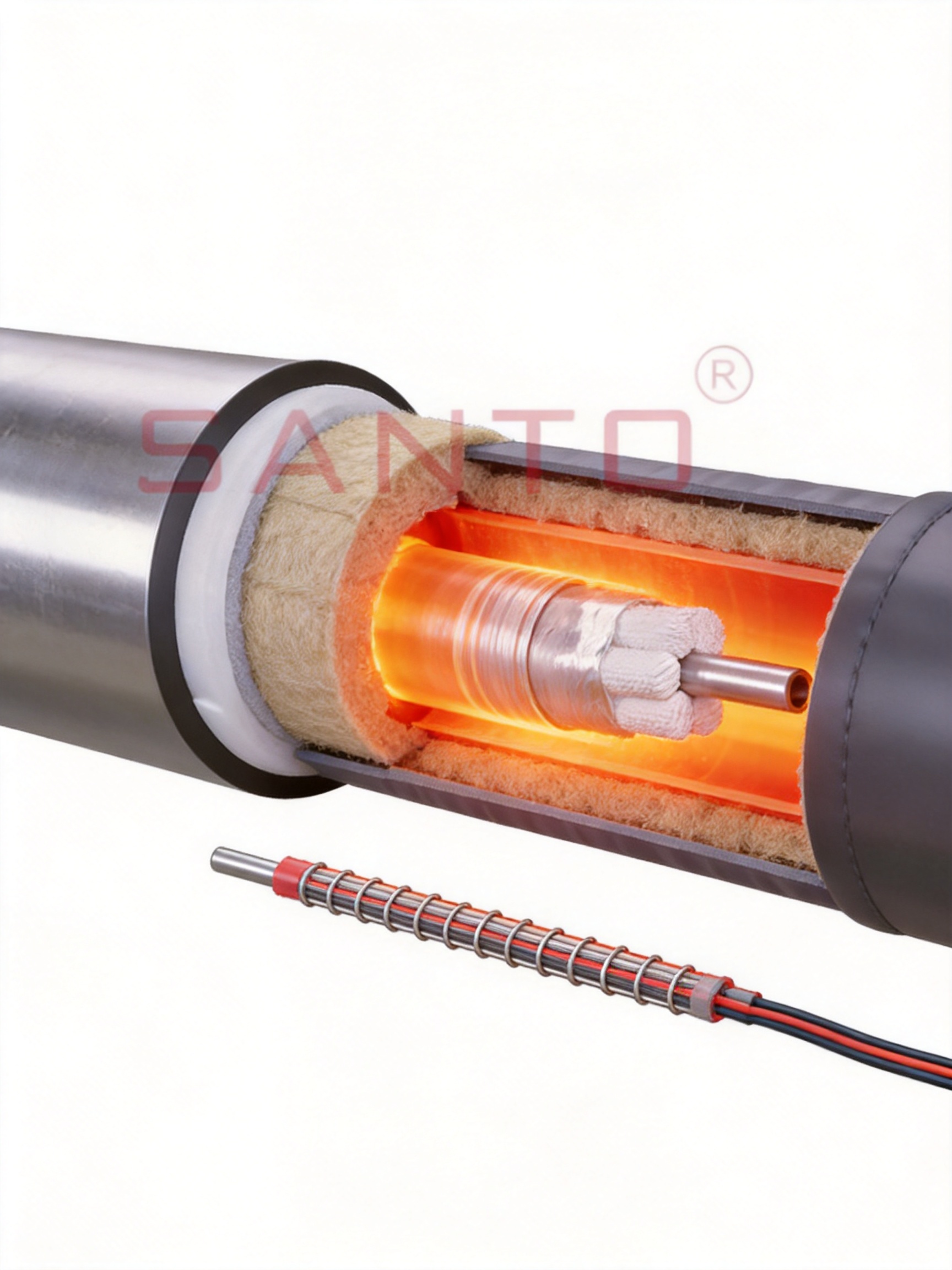
Santo Thermal Control Technology Co., Ltd. has more than 35 years of industry experience, which is an important advantage in the heat tracing market. Heat tracing products must perform over long service periods, often in harsh environments. Experience helps a manufacturer understand the causes of field failure and refine product construction accordingly.
The company reports annual output of more than 10,000 units, a distributor network of more than 2,000, and business coverage in more than 85 areas. Scale matters because it supports supply stability, production efficiency, and service availability. For engineering procurement and construction companies, a supplier with production scale can better support project schedules and repeated orders.
The company’s product portfolio is broad. It includes constant-power electric heating strips, self-limiting electric heating strips, silicone rubber electric heating systems, glass fiber electric heating strips, electric hot wires, MI cables, snow melting cables, tracked heaters, and accessories. This range gives customers access to multiple electric heating solutions from one supplier. It also means that DTB2-ACC Tubing Bundles are supported by a manufacturer familiar with both conventional and specialized heating technologies.
Research and development are also part of the company’s strengths. The company has engaged in product research cooperation with Harvard University in the United States, according to the supplied company information. It has developed patented technologies, including self-limiting temperature nano far-infrared heater concepts and carbon fiber parallel heating cable inventions. These activities show a culture of innovation, which is valuable when developing products for complex industrial environments.
The company’s quality and certification background further strengthens its position. ISO9001 certification supports systematic quality management. CCC certification supports compliance for relevant electrical products. Explosion-proof certification is important for industries such as petroleum, chemical, and gas processing, where hazardous-area requirements are common. EAC certification supports market access in Eurasian regions. Together, these credentials help customers evaluate supplier reliability.
Many competing tube bundle products can provide basic freeze protection, but DTB2-ACC Tubing Bundles stand out because of the combination of low-temperature protection, high-temperature exposure capability, and a pre-engineered construction that reduces dependence on custom MI heating circuits. In competitive selection, this combination can be decisive.
One advantage is application versatility. A product capable of freeze protection down to -45°C and continuous steam exposure up to 399°C can address a wide range of plant conditions. Competitors that focus only on moderate freeze protection may not be suitable for severe climates. Products with lower exposure temperature limits may not be appropriate near steam service.
Another advantage is reduced project complexity. Pre-engineered tube bundles reduce the number of separate materials that must be ordered and coordinated. Instead of sourcing tubing, heat trace, insulation, jackets, connectors, and accessories separately, project teams can work with an integrated solution. This reduces the risk of component mismatch and simplifies procurement documentation.
A third advantage is shorter implementation compared with custom MI tracing. Custom MI circuits require exact lengths and factory termination. If a line route changes during construction, delays may occur. DTB2-ACC’s parallel resistance traced bundle approach can help avoid some of these limitations and provide a more project-friendly solution.
A fourth advantage is more consistent thermal performance. Competitor systems assembled in the field may vary depending on installer skill, weather, time pressure, and inspection quality. Factory-prepared bundles offer more repeatability. Consistency is especially important when many similar lines are installed across a facility.
A fifth advantage is manufacturer depth. Santo’s wide heating product portfolio, certification background, research orientation, and production scale support confidence in product supply and technical development. In many industrial purchases, the supplier’s capability is as important as the product specification. Customers need a manufacturer that can support design questions, documentation, and future replacement needs.
When specifying DTB2-ACC Tubing Bundles, engineering teams should define the service conditions carefully. Important parameters include the fluid inside the tube, minimum ambient temperature, wind exposure, required maintain temperature, maximum exposure temperature, electrical supply, hazardous-area classification, line length, routing, supports, bend radius, termination requirements, and connection to instruments or sampling equipment.
Although the product is pre-engineered, every installation still requires proper design confirmation. Severe climates, unusual mounting conditions, long unsupported spans, or exposure to chemicals may require additional review. The stated freeze-protection performance down to -45°C with 40 kph wind conditions is a strong baseline, but engineers should always match product selection to the actual site environment.
Electrical design should consider circuit length, power distribution, overcurrent protection, grounding, control method, and monitoring requirements. Heat tracing systems may be controlled by ambient thermostats, line-sensing thermostats, control panels, or plant automation systems, depending on the application. Proper control can reduce energy consumption and prevent unnecessary heating.
Mechanical design should consider routing and support. Tube bundles should be installed to avoid sharp bends, crushing, abrasion, and excessive tension. Supports should hold the bundle securely without damaging the jacket. Penetrations through walls or enclosures should be sealed to prevent water ingress. Connections at transmitters and sample panels should be protected from strain and environmental exposure.
Maintenance planning should include accessibility. Even highly reliable systems require inspection. Engineers should route tube bundles so that junction boxes, terminations, and instrument connections can be accessed safely. Clear tagging and documentation should be used so maintenance personnel can identify each line and circuit.
Installation efficiency is one of the most practical reasons to choose a pre-engineered tube bundle. Field installation of individual heat traced tubing can be time-consuming. Installers must route the tube, attach heat trace, secure it at intervals, avoid overlaps or damage, install insulation, apply weatherproofing, and inspect the completed assembly. In poor weather or congested areas, this process becomes even more difficult.
DTB2-ACC Tubing Bundles reduce this field workload. Because the main components are assembled in advance, installation crews can focus on routing, supporting, terminating, and connecting the bundle. This can reduce labor hours and help maintain construction schedules. It can also reduce rework caused by inconsistent field insulation or heat trace placement.
The product’s bundled format also helps protect components during installation. A heating cable attached externally to tubing before insulation may be exposed to pulling damage, foot traffic, tools, or sharp edges. In a tube bundle, internal heating and insulation components are protected by the external jacket. This does not eliminate the need for careful handling, but it provides a more robust assembly than loose components.
For contractors, fewer installation steps also mean simpler quality inspection. Instead of inspecting every wrap of field-applied heat trace and insulation, inspectors can verify routing, supports, electrical tests, terminations, and jacket integrity. Factory consistency makes the inspection process more predictable.
Heat tracing systems consume energy, so efficiency matters. A properly insulated tube bundle reduces heat loss and allows the electric tracing system to provide the required protection without excessive output. The integrated insulation in DTB2-ACC Tubing Bundles helps preserve heat around the process tube and reduces exposure to cold wind.
Energy efficiency also depends on controls. When combined with suitable thermostats or control panels, electric traced tube bundles can operate only when needed or maintain a specific temperature range. This helps reduce unnecessary power consumption during mild weather while ensuring protection during freezing conditions.
Operational reliability is closely connected to energy performance. If insulation becomes wet, damaged, or inconsistent, heat loss increases and the tracing system may struggle to maintain temperature. Factory-applied insulation and jacket protection help reduce the likelihood of such problems. The outer jacket also helps prevent wind-driven moisture intrusion and mechanical deterioration.
Reliable instrument tubing supports reliable plant operation. Pressure transmitters, analyzers, and sample systems provide data used for control, safety, compliance, and optimization. A frozen or unstable line can lead to incorrect decisions. By protecting these small but important lines, DTB2-ACC Tubing Bundles contribute to overall plant dependability.
Safety is a primary concern in electric heat tracing applications. Any system combining electricity, process fluids, high temperatures, and outdoor exposure must be designed and installed correctly. DTB2-ACC Tubing Bundles are intended to support safer operation by reducing freeze-related failures and by protecting the heating element from direct high-temperature contact.
Freeze damage can create safety hazards. A blocked impulse line may hide dangerous process pressure changes. A ruptured sample line can release hot fluid or steam. Frozen water expansion can damage fittings and create leaks. Preventing freezing helps reduce these risks.
Electrical safety requires proper grounding, circuit protection, insulation resistance testing, and compliance with applicable standards. Installation should be performed by qualified personnel following project documentation and applicable electrical codes. In hazardous areas, products and accessories must be selected according to area classification requirements.
Thermal safety is also important. High-temperature exposure can damage unsuitable materials. DTB2-ACC’s ability to withstand continuous steam exposure up to 399°C provides an important safety margin for specified applications. However, users should confirm that all connected accessories, terminations, supports, and seals are appropriate for the service conditions.
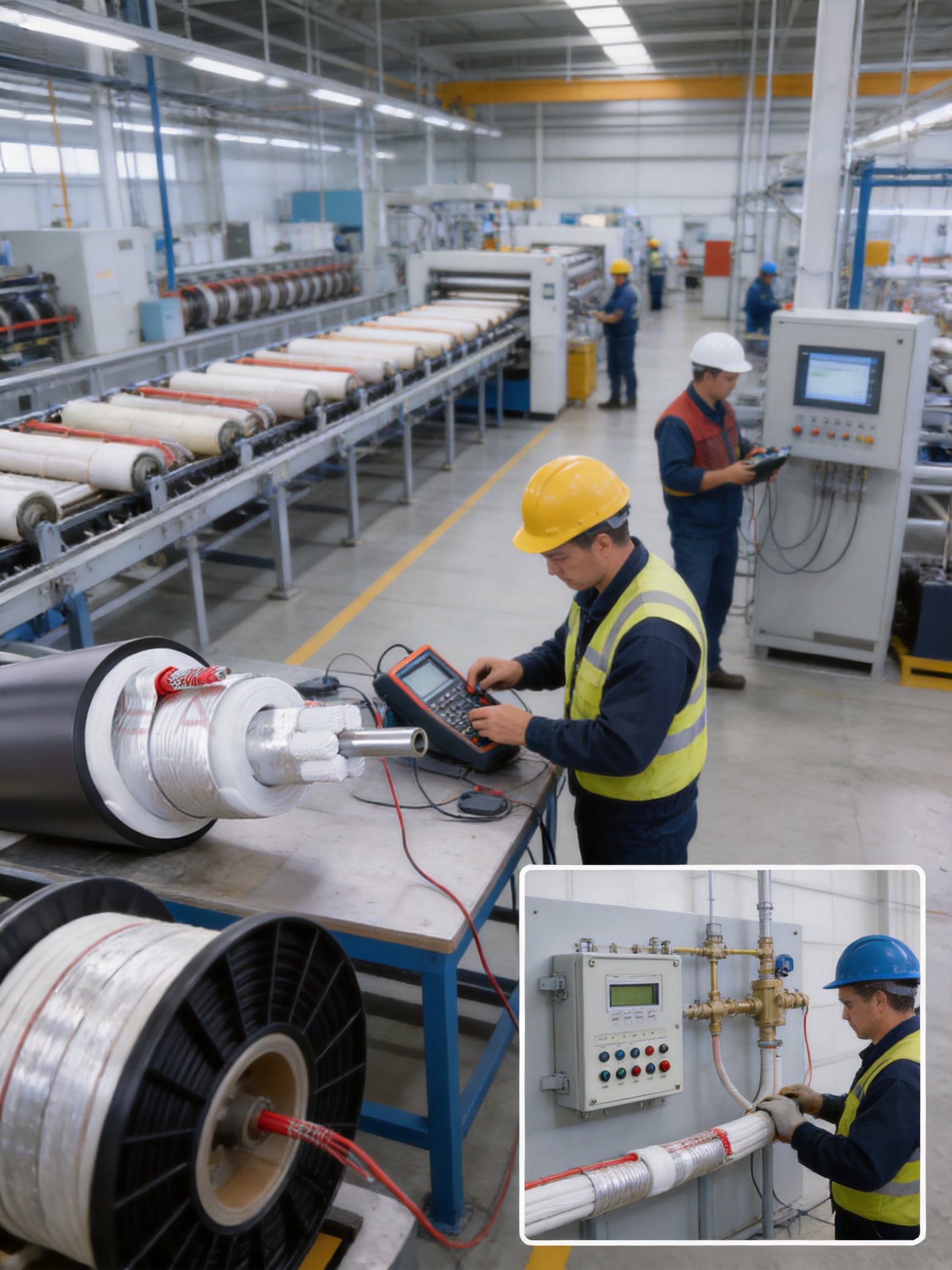
Petroleum and refining facilities can use DTB2-ACC Tubing Bundles for instrument impulse lines, steam service measurements, analyzer transport lines, and outdoor process monitoring. Refineries often have extensive pipe racks and exposed instrumentation, making freeze protection essential in cold climates.
Chemical plants can benefit from stable instrument readings and protected sample lines. Many chemical processes require accurate pressure, flow, and composition measurements. Tube freezing, condensation, or response delay can affect product quality and process safety.
Gas processing and transmission facilities often operate in remote, exposed environments. Wind and low temperatures can be severe. Electric traced tube bundles help protect measurement lines that are essential for custody transfer, compression, dehydration, and process control.
Power plants use steam sample lines, condensate monitoring, boiler chemistry analysis, and pressure measurement systems. DTB2-ACC Tubing Bundles are relevant because they combine steam exposure capability with freeze protection, supporting both high-temperature and winterization needs.
Construction and building-related industrial heating applications may also use electric heat tracing for freeze protection and temperature maintenance. While DTB2-ACC is specifically positioned for steam sample and impulse lines, the manufacturer’s broader product range supports related snow melting, underfloor heating, and silicone rubber heating applications.
Initial product price is only one part of total cost. For industrial heat tracing, total cost of ownership includes engineering time, procurement effort, installation labor, inspection, commissioning, energy consumption, maintenance, downtime risk, and replacement cost. A product that reduces field labor and improves reliability can provide significant value even if the initial component cost is not the lowest.
DTB2-ACC Tubing Bundles can reduce engineering and procurement time by offering a pre-engineered solution. They can reduce installation time by integrating multiple components into one assembly. They can reduce maintenance risk by providing consistent insulation and heat trace placement. They can reduce operational risk by protecting critical sample and impulse lines against freezing.
The product also helps avoid the hidden costs associated with custom MI heat tracing delays. When a custom heater must be fabricated for a specific line, any measurement error or route change may cause schedule disruption. A more flexible pre-engineered bundle approach can help projects move forward with fewer special manufacturing dependencies.
Downtime avoidance may be the greatest value. If a frozen impulse line causes an instrument failure, operators may need to shut down equipment or run with reduced confidence. If a sample line freezes, quality or chemistry monitoring may be interrupted. Preventing these issues helps maintain production continuity and safety.
DTB2-ACC Tubing Bundles are used for steam sample lines and impulse lines connected to pressure transmitters. They are designed to protect tubing from freezing in severe cold while withstanding high-temperature steam exposure.
The product provides water freeze protection in ambient conditions down to -45°C (-50°F) with 40 kph (25 mph) wind conditions.
DTB2-ACC Tubing Bundles can withstand continuous steam exposure temperatures up to 399°C (750°F).
Traditional series resistance mineral insulated heat trace is often custom manufactured for each application, which can increase lead time and reduce field flexibility. DTB2-ACC Tubing Bundles use a pre-engineered approach with parallel resistance heat trace isolated from direct contact with high-temperature tubing, helping simplify procurement and installation.
A pre-engineered tube bundle integrates tubing, heat tracing, insulation, and outer protection into a coordinated assembly. This reduces field labor, improves consistency, lowers installation error risk, and supports more predictable thermal performance.
Isolation helps protect the heating element from continuous direct contact with high-temperature tubing. This can reduce thermal stress and support reliable operation in steam exposure environments.
Relevant industries include petroleum, chemical processing, gas processing, power generation, refining, construction-related industrial systems, and other facilities requiring freeze protection or heat tracing for instrument tubing.
The manufacturer has ISO9001 quality system certification, national CCC certification, explosion-proof certification, and EAC Eurasian Union certification, according to the supplied company information.
Yes. Because it is pre-engineered and avoids some of the custom manufacturing limitations associated with series resistance MI heat trace, it can help reduce procurement and installation delays in suitable applications.
Engineers should review minimum ambient temperature, wind exposure, maximum process exposure temperature, tube routing, electrical supply, hazardous-area classification, line length, control method, support design, and termination requirements.
DTB2-ACC Tubing Bundles provide a practical and technically strong solution for steam sample lines and impulse lines that must remain reliable in severe cold and high-temperature steam exposure environments. With water freeze protection down to -45°C under 40 kph wind conditions and continuous steam exposure resistance up to 399°C, the product addresses a demanding combination of operating challenges.
Its main competitive strength is the pre-engineered tube bundle approach. By integrating tubing, electric heat tracing, insulation, and protection, the product reduces field labor, improves installation consistency, and helps avoid the long lead times associated with custom MI heating circuits. The use of parallel resistance heat trace isolated from direct high-temperature tube contact further strengthens the design by protecting the heating element while supporting thermal performance.
The product is also backed by a manufacturer with broad electric heating expertise, quality certifications, research and development activity, production scale, and experience across many industrial heating applications. These strengths matter because heat tracing reliability depends not only on a product specification but also on design knowledge, manufacturing control, testing capability, and long-term supplier support.
For plants that require reliable instrument tubing protection, especially in steam service and harsh winter conditions, DTB2-ACC Tubing Bundles offer a compelling balance of performance, installation efficiency, and operational dependability. They help protect critical measurement lines, reduce freeze-related risk, simplify project execution, and support safer, more stable industrial operation.
1. Electric Heat Tracing Design Guide for Industrial Freeze Protection and Temperature Maintenance.
2. Instrumentation Tubing and Impulse Line Best Practices for Process Measurement Reliability.
3. Industrial Steam Sampling Systems: Design, Temperature Control, and Maintenance Considerations.
4. Mineral Insulated Heating Cable Applications and Limitations in High-Temperature Service.
5. Quality Management Principles for Electrical Heating Product Manufacturing.
6. Heat Loss, Wind Exposure, and Insulation Performance in Outdoor Process Instrumentation.
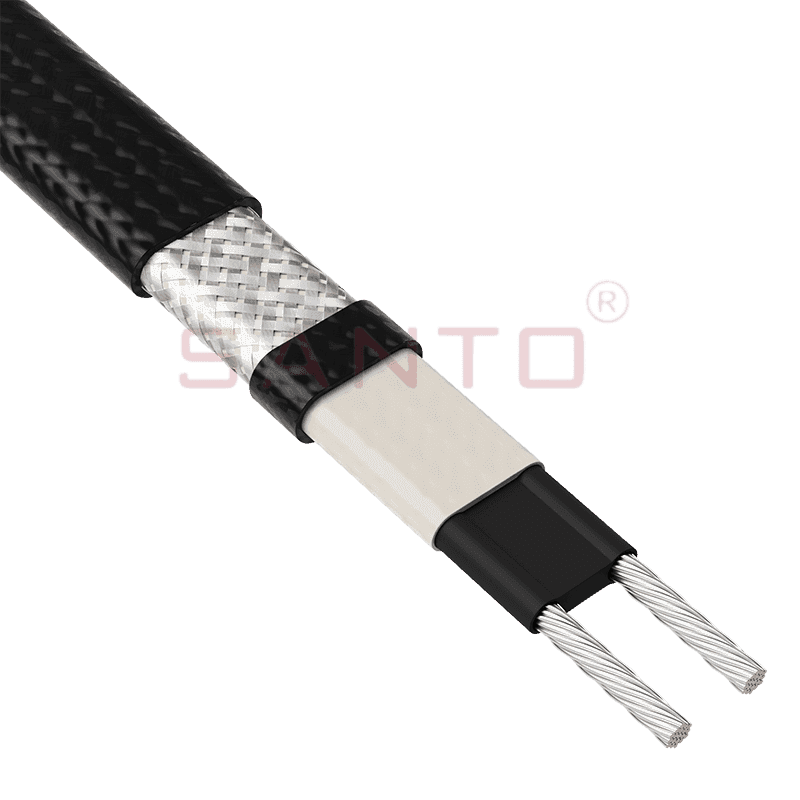
The SANTO UFA range of self-regulating heating cables is mainly used for frost protection of pipes and vessels but can also be used to maintain processes up to 65°C. These heating cables are available...
See Details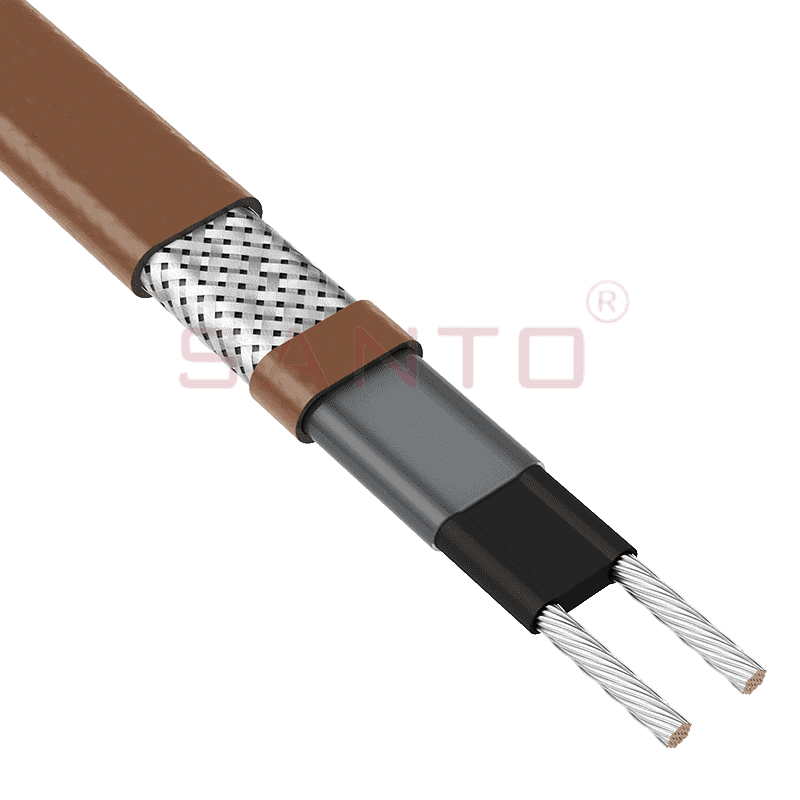
The SANTO UFB range of self-regulating heating cables is mainly used for frost protection of pipes and vessels requiring a higher power output than the UFA heating cables can supply. They can also be ...
See Details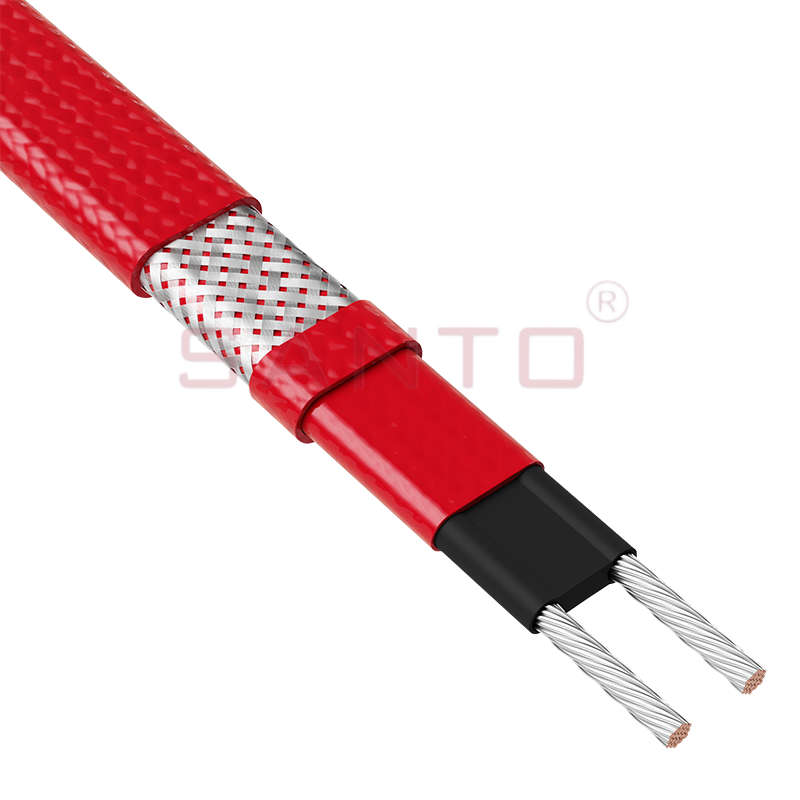
The SANTO UFC range of self-regulating heating cables is used for frost protection of pipes and vessels that require steam cleaning. They can also be used to maintain processes up to 121°C. These heat...
See Details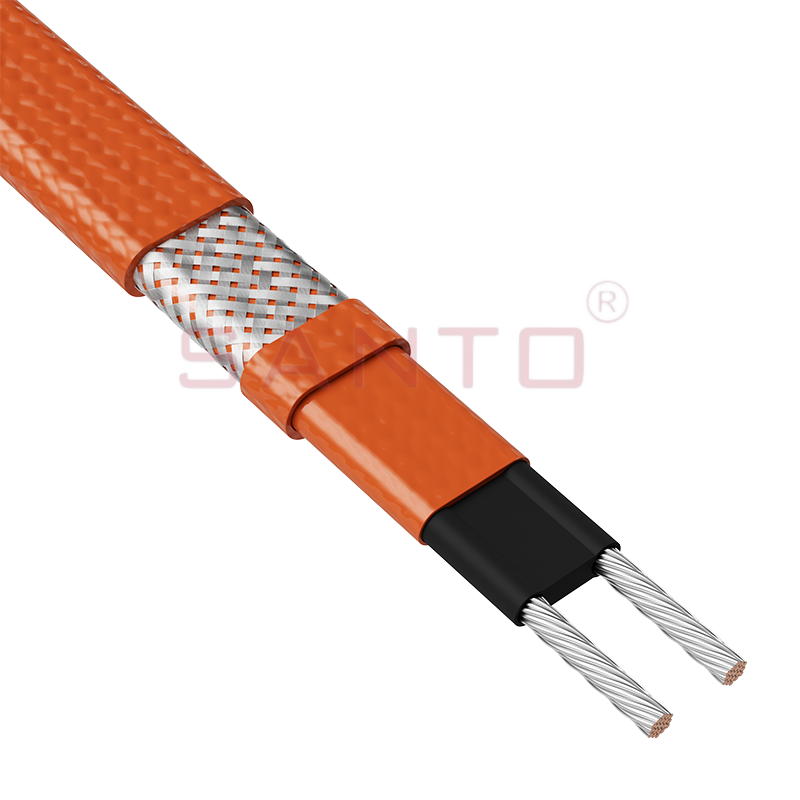
The SANTO UFO range of self-regulating heating cables is mainly used for frost protection of pipes and vessels that require steam cleaning . They can also be used to maintain processes up to 150°C. Th...
See Details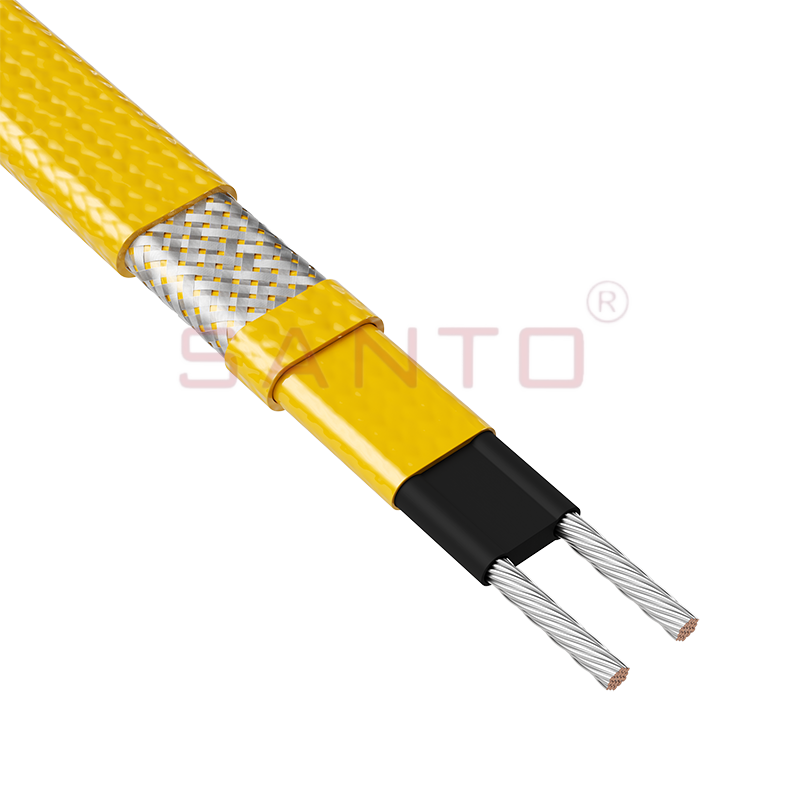
The SANTO UFD series of self-regulating heating cables are mainly used for freeze protection of pipes and vessels, but can also be used to maintain processes up to 200°C. These heating cables are avai...
See Details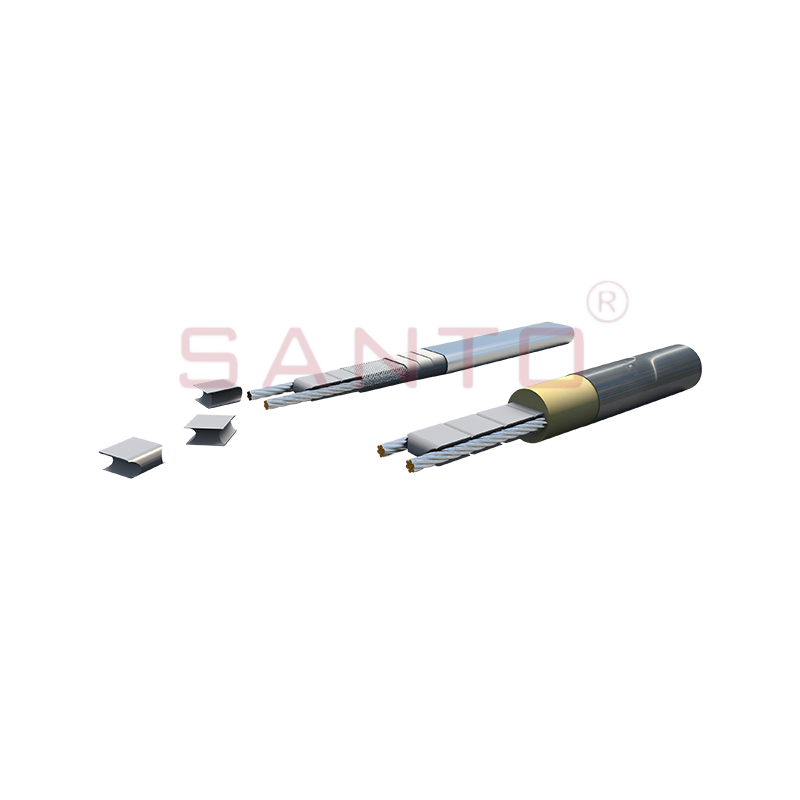
SANTO UFY heating wire is suitable for applications that maintain process temperatures up to 260 ℃ and can be steam blown; The self-regulating and parallel circuit heating wires of the UFY series are ...
See Details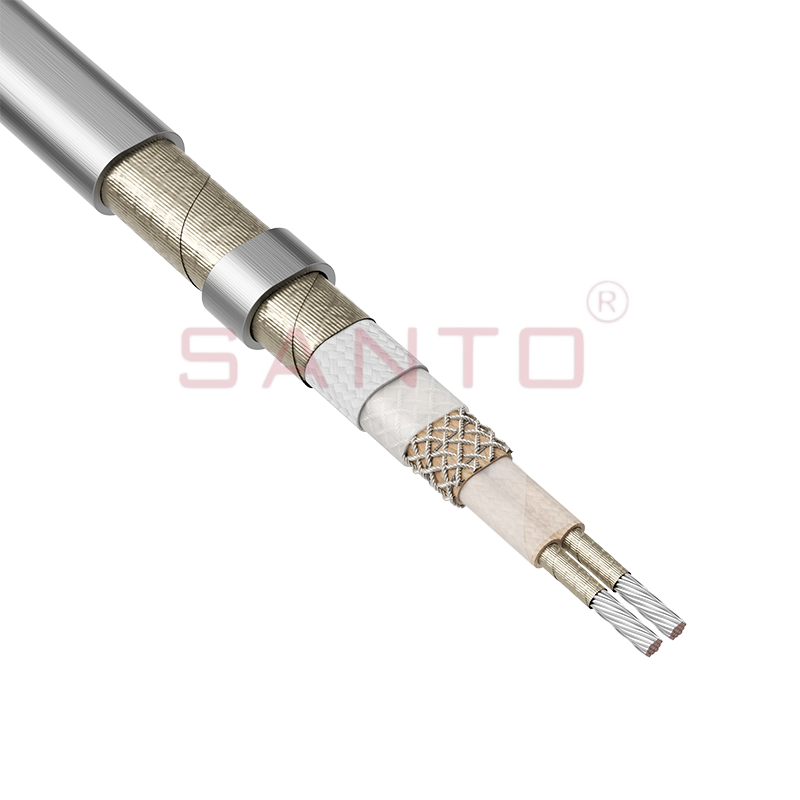
The SANTO UFM series self-regulating heating cables are mainly used for freeze protection of pipes and vessels, but can also be used to maintain processes up to 400°C. These heating cables are availab...
See Details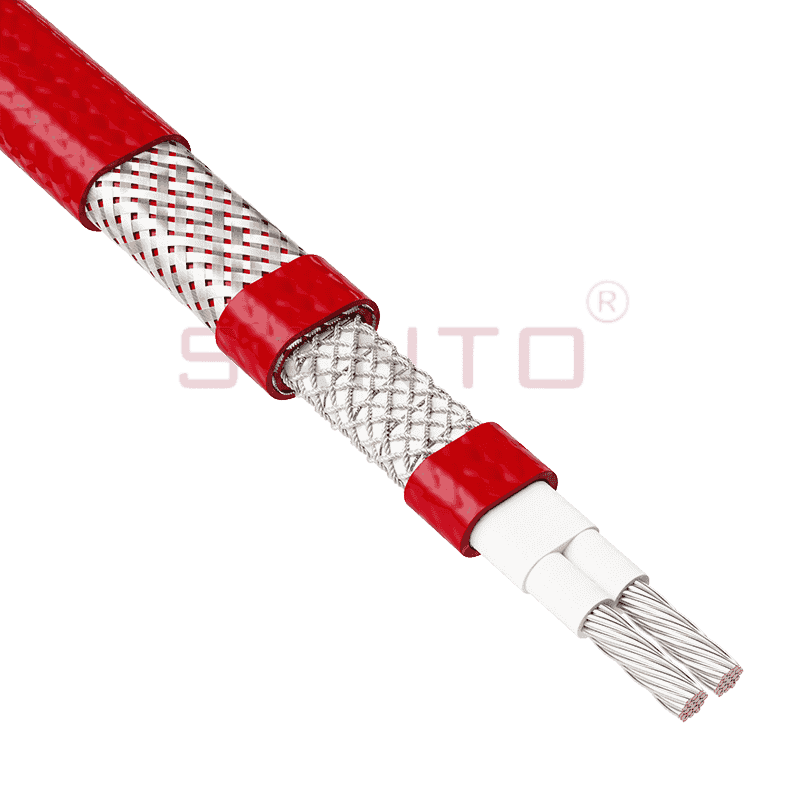
The SANTO ACC range of power-limiting heating cables is mainly used for temperature maintenance of processes and offers the advantage of a high power output at high temperatures which can reduce the n...
See Details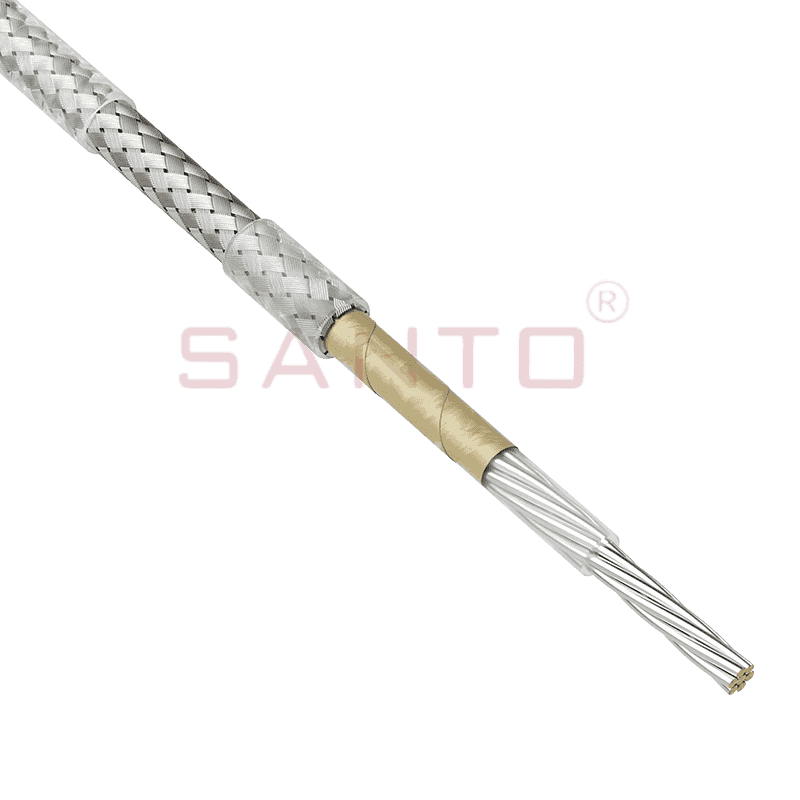
The stranded high temperature conductor is nickel plated to ensure a long life at elevated temperatures in corrosive environments. It is electrically isolated using an innovative sandwich construction...
See Details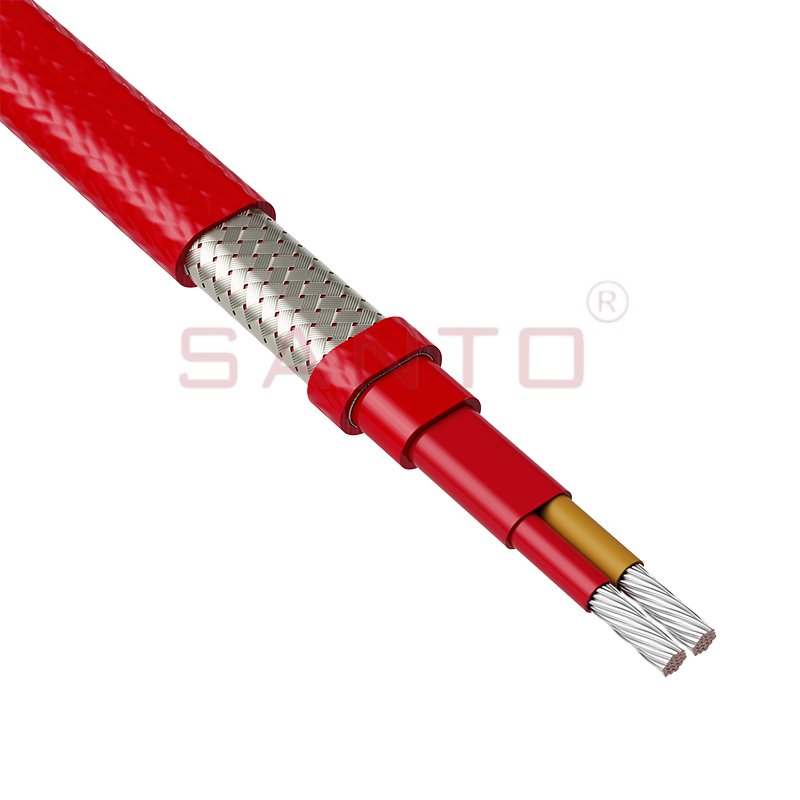
The stranded high temperature conductor is nickel plated to ensure a long life at elevated temperatures in corrosive environments. It is electrically isolated using an innovative sandwich construction...
See Details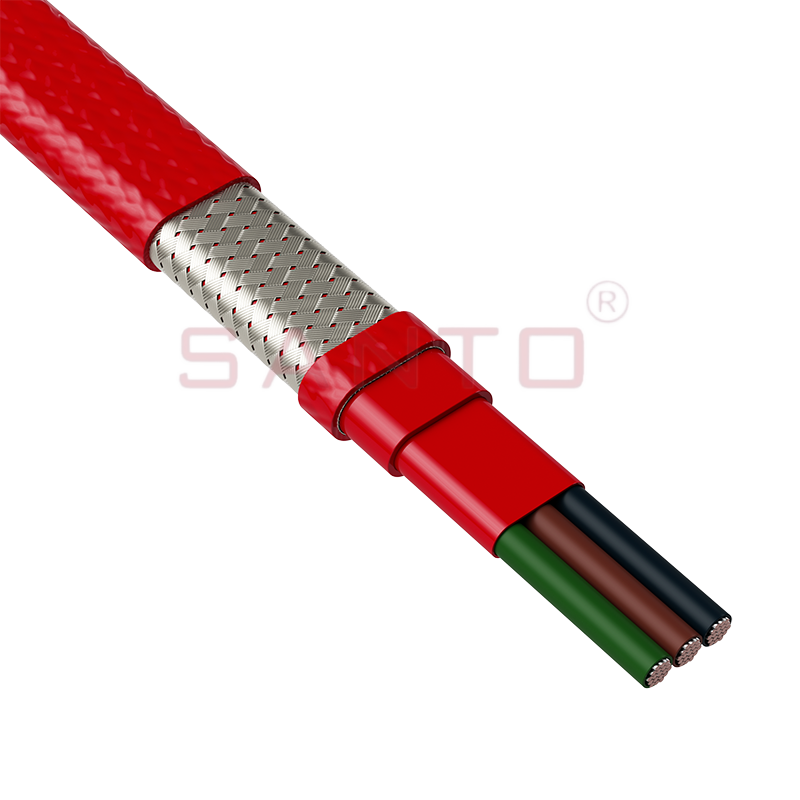
The stranded high temperature conductor is nickel plated to ensure a long life at elevated temperatures in corrosive environments. It is electrically isolated using an innovative sandwich construction...
See Details
SANTO HAx mineral insulated (MI) Alloy 825 series heating cables are suitable for use in hazardous areas. They have been designed for use in freeze protection and temperature maintenance applications ...
See Details
Santo electric heating strips are widely used in key industries in China.

