 English
  English
 русский
 日本語
日本語 Español
 中文简体
中文简体
The SANTO UFA range of self-regulating heating cables is mainly used for frost protection of pipes and vessels but can also be used to maintain processes up to 65°C. These heating cables are available...
See Details
Reliable heat tracing depends not only on the heating cable itself, but also on the quality of every connection, termination, seal, and installation accessory used along the circuit. The FAST-100-E tail end and the FAST-100-L-E illuminated tail end are engineered to provide a strong, sealed, and serviceable termination solution for industrial parallel heating cables used in ordinary and hazardous areas. Designed for demanding pipeline applications, these tail ends combine mechanical durability, moisture resistance, strain relief, low-temperature installation capability, and field-friendly maintenance in a compact accessory package.
In industrial facilities, a tail end is often exposed to the same difficult conditions as the heating cable: vibration, weather, ultraviolet radiation, process temperature changes, chemicals, insulation movement, and routine maintenance activity. A poorly designed end termination can become a weak point in the heat tracing system, leading to moisture ingress, electrical failure, nuisance shutdowns, or unplanned maintenance. The FAST-100-E and FAST-100-L-E are built to reduce those risks by using a robust molded construction, double sealing concept, high mechanical strength, and a design that fixes the heating cable in place through tension relief components.
The standard FAST-100-E provides a durable non-illuminated tail end for industrial heat tracing circuits. The FAST-100-L-E adds a visual signal function through an illuminated green LED module, allowing personnel to verify circuit status more conveniently during inspection. Both versions are suitable for use with all SANTOUFA, UFB, UFC, UFO, ABB, ACC, ADD, and AFF industrial parallel heating lines, giving system designers and maintenance teams a flexible accessory platform for different cable families and project requirements.
FAST-100-E and FAST-100-L-E tail ends and illuminated tail ends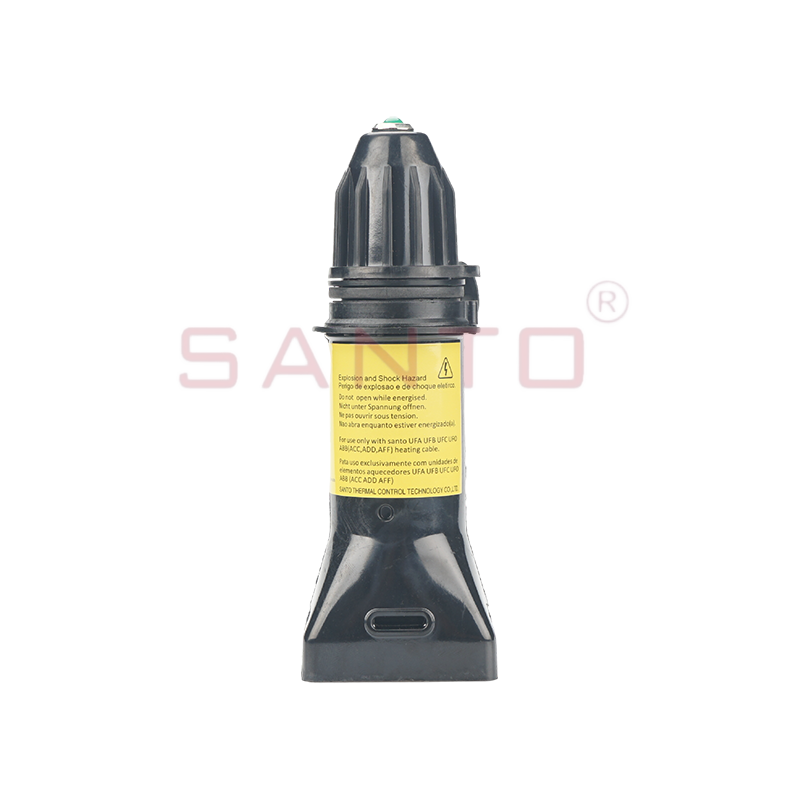
Content
The FAST-100-E and FAST-100-L-E are end termination kits used at the tail end of compatible industrial parallel heating cables. Their role is to complete the heating circuit safely, seal the cable end against moisture, protect the electrical termination from mechanical damage, and help maintain long-term reliability in pipeline heat tracing systems. The products are suitable for indoor and outdoor installation and are certified for hazardous as well as ordinary areas.
The FAST-100-E is the non-illuminated version. It is intended for applications where a strong sealed end termination is required but visual indication at the tail end is not necessary. The FAST-100-L-E includes an indicator module with ultra-bright green LEDs. This illuminated option is especially useful where operators want a clear field indication, where circuits are spread across large pipe racks, or where rapid inspection is valuable during commissioning and maintenance rounds.
The housing is made from sturdy molded parts with a thickness of approximately 4 mm, contributing to impact resistance and durability. The design can be disassembled with relative ease, which supports installation and service activities. Once installed, the tail end is positioned on the pipeline and passes through the insulation layer, helping keep the termination accessible while preserving the thermal insulation envelope around the pipe.
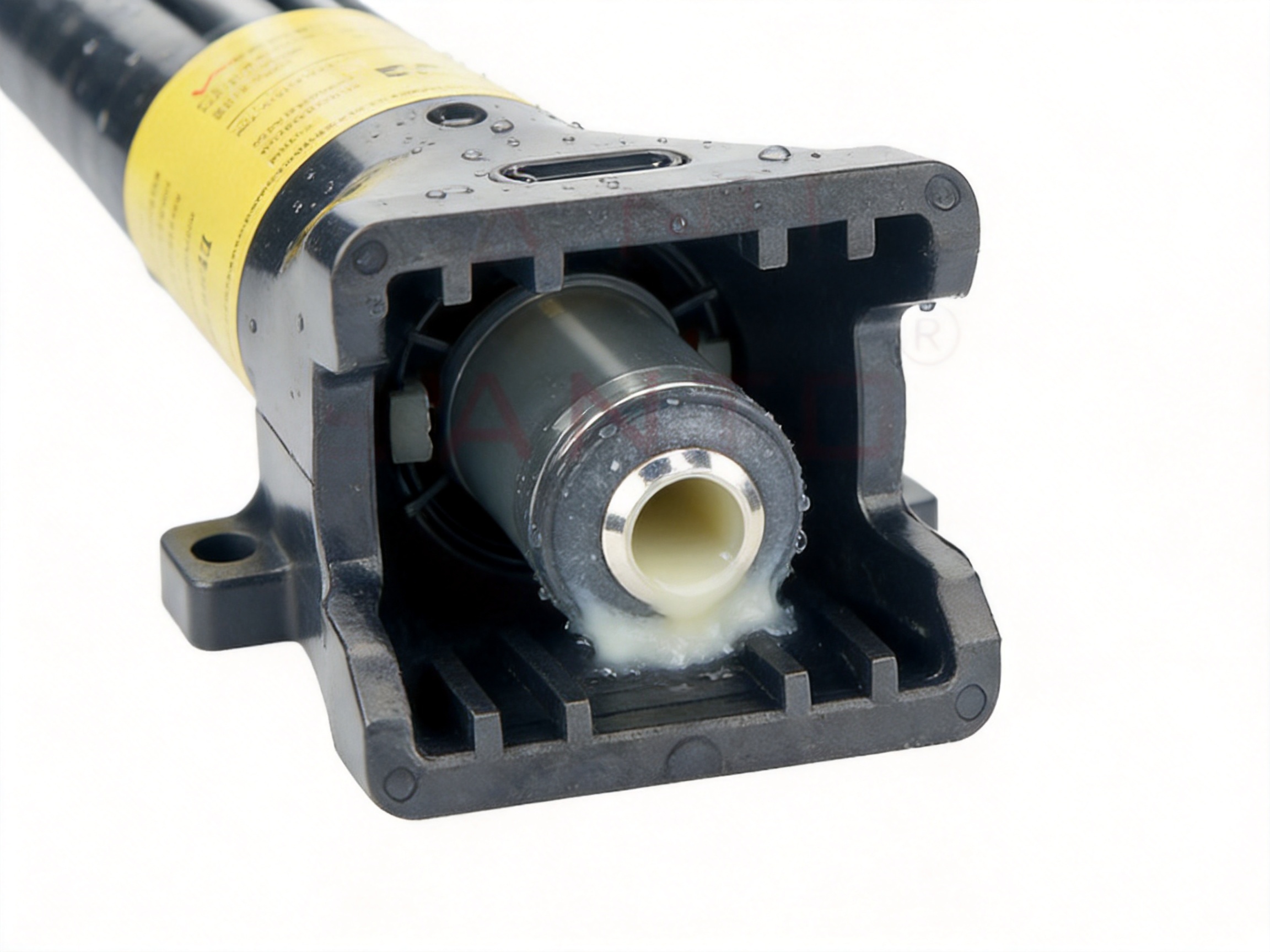
One of the defining characteristics of these tail ends is their sealing method. The heating wire is fixed by tension relief components, then protected through two sealing treatments. First, a drying chamber is created for the heating wire. Second, a sealing sleeve filled with non-curing sealant, excluding silicone, is placed above the end of the heating wire in the drying chamber. This approach helps block moisture migration and protects the terminated cable end against harsh site conditions.
Heat tracing systems are commonly installed on pipelines, tanks, valves, instruments, and process equipment to maintain temperature, prevent freezing, reduce viscosity, or support process stability. While the heating cable receives much of the design attention, accessories determine whether the system remains reliable after years of real-world exposure. Power connection boxes, splice kits, junction boxes, thermostats, insulation entries, and end terminations must all work together as a complete system.
The tail end is particularly important because it is the final boundary of the heating cable circuit. If water enters at the end, it can travel along cable components, create electrical leakage, degrade insulation resistance, and eventually cause faults. If the end termination lacks mechanical support, pulling force or vibration can damage the connection. If the accessory cannot withstand ultraviolet exposure, solvents, or impact, it may age prematurely in outdoor industrial settings.
The FAST-100-E and FAST-100-L-E address these concerns through several integrated design features. Their molded body provides a protective enclosure. Their IP65 protection grade helps resist dust and water ingress under typical industrial conditions. Their strain relief rating of more than 250 N helps secure the cable against mechanical stress. Their impact resistance meets EN 50 014 requirements of at least 7 joules, supporting use in rugged environments. Their ultraviolet stability shows no degradation after 1000 hours, helping outdoor installations remain dependable over time.
In many heat tracing failures, the root cause is not the cable conductor itself, but a termination that was poorly sealed, difficult to install correctly, or unable to tolerate site conditions. A strong tail end accessory reduces the chance that the termination becomes the weakest point in the circuit. For projects where downtime is expensive, where hazardous area compliance is required, or where inspection access is limited, the quality of the tail end can directly influence operating cost and safety confidence.
Compared with ordinary end termination accessories, the FAST-100-E and FAST-100-L-E offer a combination of practical installation benefits and long-term performance advantages. Many basic tail ends rely on simplified sealing methods, thinner shells, or limited strain relief. They may be acceptable for less demanding environments but can become vulnerable when installed outdoors, in low temperatures, near chemical exposure, or on industrial pipelines subject to vibration and thermal cycling.
The first advantage is mechanical strength. The molded components are approximately 4 mm thick, giving the tail end a sturdy structure. This is important because pipe-mounted accessories can be bumped during maintenance, covered and uncovered during insulation work, or exposed to accidental impact. A robust body reduces the likelihood of cracking and protects the sealed heating cable end.
The second advantage is the dual sealing concept. Creating a drying chamber and then adding a sealing sleeve with non-curing sealant provides a more controlled moisture barrier than many simpler end caps. The exclusion of silicone in the sealant can be beneficial in industrial environments where compatibility, long-term sealing behavior, and maintenance cleanliness are considered. A non-curing sealing compound can maintain sealing contact over time as materials expand and contract.
The third advantage is strong tension relief. With tension relief greater than 250 N, the tail end is designed to hold the heating cable securely. This is especially useful during installation, when cables may be pulled through insulation openings, adjusted around pipe supports, or handled repeatedly by installers. It is also valuable after commissioning because the cable may be subject to movement from pipe vibration, thermal expansion, and insulation maintenance.
The fourth advantage is low-temperature installation capability. The minimum installation temperature is minus 50 degrees Celsius, and the operating temperature range is minus 50 degrees Celsius to plus 40 degrees Celsius. This makes the products suitable for cold regions and winter installation schedules, where accessories that become brittle or hard to handle at low temperatures can slow construction progress or compromise workmanship.
The fifth advantage is the illuminated option. The FAST-100-L-E uses ultra-bright green LEDs with long service life and visibility from all angles. This gives maintenance personnel an immediate visual reference during inspections. In sprawling industrial plants, offshore-style modules, terminals, chemical facilities, and utility corridors, visual indication can reduce troubleshooting time and help identify energized or operating circuits more efficiently.
The sixth advantage is compatibility. Because the tail ends can be used with multiple industrial parallel heating lines, they support project standardization. A plant that uses different cable models across process areas can reduce accessory complexity by selecting a tail end family that covers a broad range of applications. This helps simplify spare parts management, installer training, documentation, and maintenance planning.
The following table summarizes important specification information for the FAST-100-E and FAST-100-L-E. Project engineers should always verify final suitability against the heating cable specification, electrical design, installation environment, and applicable local standards.
| Item | FAST-100-E | FAST-100-L-E |
| Product type | Non-illuminated tail end | Illuminated tail end with indicator light |
| Compatible heating lines | SANTOUFA, UFB, UFC, UFO, ABB, ACC, ADD, AFF industrial parallel heating lines | SANTOUFA, UFB, UFC, UFO, ABB, ACC, ADD, AFF industrial parallel heating lines |
| Using zones | Hazardous or ordinary areas, indoor and outdoor | Hazardous or ordinary areas, indoor and outdoor |
| Maximum working voltage | 254 V | 254 V |
| Temperature range | Minus 50 degrees Celsius to plus 40 degrees Celsius | Minus 50 degrees Celsius to plus 40 degrees Celsius |
| Minimum installation temperature | Minus 50 degrees Celsius | Minus 50 degrees Celsius |
| Total height | Approximately 171 mm | Approximately 197 mm |
| Outside diameter | Approximately 46 mm, usable with 100 mm insulation material | Approximately 66 mm |
| Protection grade | IP65 | IP65 |
| Impact resistance | EN 50 014, at least 7 joules | EN 50 014, at least 7 joules |
| Ultraviolet stability | No degradation after 1000 hours | No degradation after 1000 hours |
| Solvent resistance | Outstanding | Outstanding |
| Tension relief | Greater than 250 N | Greater than 250 N |
| Indicator light source | Not applicable | Green LEDs |
| Indicator rated voltage range | Not applicable | 208 to 230 Vac, 50 or 60 Hz |
| Indicator consumption | Not applicable | Less than 2 W |
| Required tools | Cable cutter, wire pliers, screwdriver | Cable cutter, wire pliers, screwdriver, crimping tool, pointed nose pliers |
The specification profile shows that both versions are intended for industrial conditions rather than light-duty use. The illuminated version is taller and wider because it includes the LED indicator assembly, while the standard version remains compact and straightforward. Both share the same basic protection and mechanical performance characteristics, allowing designers to select the version based on inspection and indication needs rather than compromising on sealing or durability.
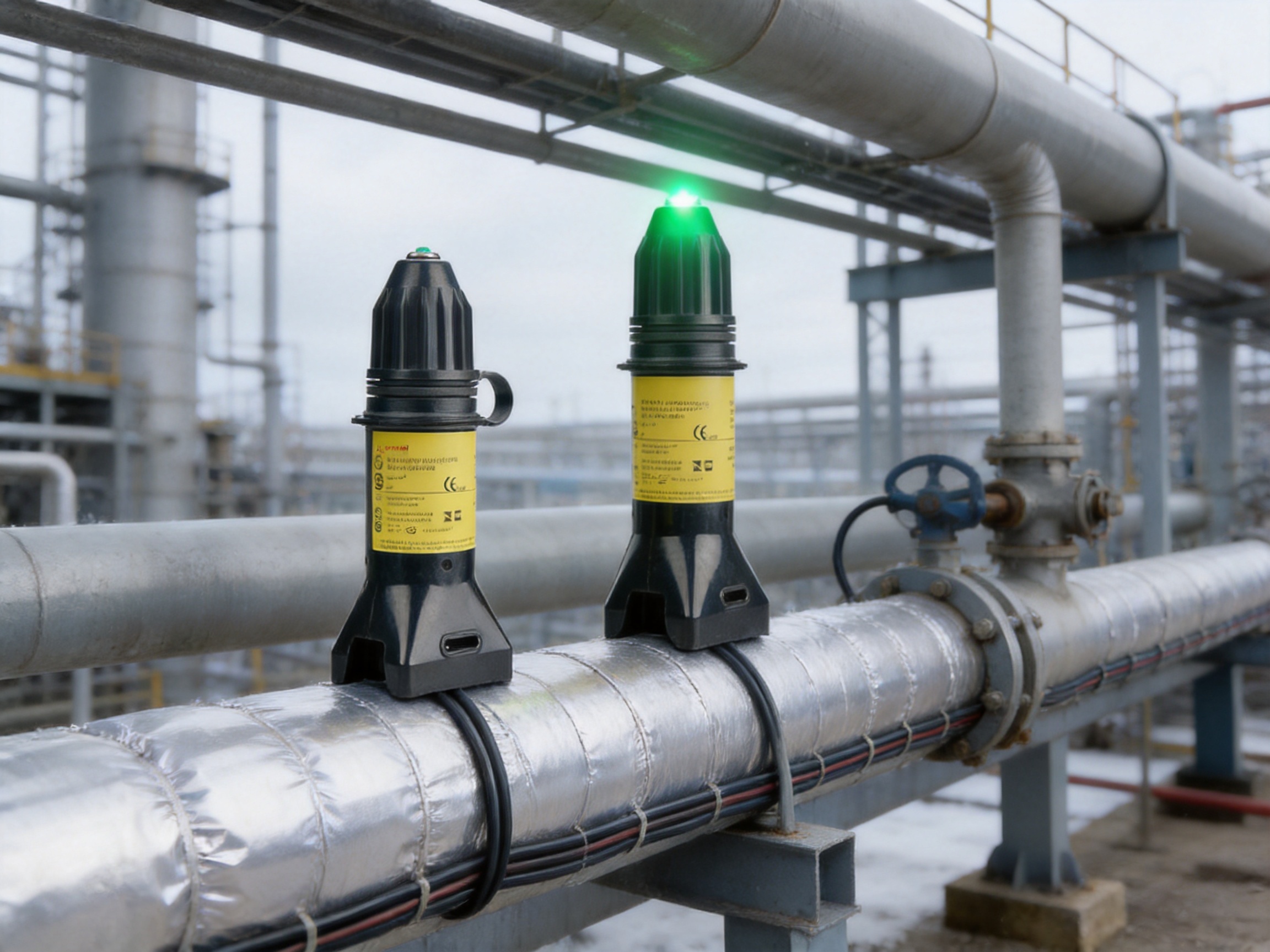
The FAST-100-L-E indicator module uses a row of ultra-bright green LEDs. The design emphasizes long service life, strong sealing performance, and visibility from any angle. This is an important feature because heat tracing circuits are often installed in locations that are not convenient to inspect. A tail end may be near pipe supports, on elevated pipe racks, behind insulation cladding, or in low-light areas. A clear green visual signal can improve the speed and confidence of routine checks.
In traditional systems without local indication, technicians may need to verify circuit status at a panel, measure voltage, check controller output, or open enclosures to confirm operation. Those steps remain important for formal testing, but a visual signal at the tail end can make routine observation faster. During commissioning, operators can walk the line and confirm that illuminated tail ends are present and active where expected. During maintenance, a missing or abnormal indication can direct attention to a specific circuit for further testing.
The indicator consumes less than 2 W, minimizing additional energy demand. It is designed for a rated voltage range of 208 to 230 Vac at 50 or 60 Hz. The module also meets electromagnetic immunity and radiation requirements according to EN 50082-2:1995 and EN 50 081-1:1991. Its seismic resistance conforms to IEC 60068-2-6, with 10 to 150 Hz and 20 m/s2 conditions, while impact resistance complies with IEC 60068-2-7, 50 g and 11 ms. These performance references support the use of the illuminated module in industrial electrical environments where vibration and electromagnetic conditions must be considered.
The illuminated version is particularly valuable for freeze protection systems in outdoor plants. Before winter, maintenance teams often inspect large numbers of circuits. A visible tail-end indicator can help confirm operating status quickly. In process temperature maintenance applications, it can also support routine monitoring by making the circuit condition more visible to operators passing through the area. When properly applied, the indicator becomes a practical tool for reducing inspection time, improving maintenance awareness, and strengthening operational confidence.
Moisture is one of the most common enemies of electrical heat tracing accessories. Rain, condensation, washdown, snowmelt, humidity, and insulation water absorption can all create conditions where a weak termination fails. Once moisture enters a heating cable end, the problem can progress slowly, sometimes appearing first as reduced insulation resistance, intermittent ground-fault trips, or unexplained circuit behavior. Preventing moisture ingress at the tail end is therefore a central design priority.
The FAST-100-E and FAST-100-L-E use two sealing treatments. The first step creates a drying chamber for the heating wire. This chamber helps isolate the cable end from the external environment and supports a controlled termination space. The second step places a sealing sleeve filled with non-curing sealant over the cable end in the drying chamber. The sealant remains capable of maintaining contact rather than hardening into a brittle mass, which can be beneficial when the accessory experiences temperature changes and mechanical movement.
This structure offers an advantage over simple heat-shrink-only or cap-only solutions in demanding environments. Basic accessories may seal adequately under ideal installation conditions but can be more sensitive to imperfect preparation, cable movement, or water exposure. A dual sealing approach provides an additional margin of protection. It also reflects a design philosophy focused on long service life, not merely fast installation.
The sealing sleeve for the FAST-100-E tail end can be ordered separately as a spare part. The FAST-100-BOOT package includes five sealing sleeves and five cable ties, with a package weight of approximately 140 g. Availability of spare sealing components is useful for maintenance programs because damaged or aged sealing elements can be replaced without changing accessory families or improvising with non-standard materials.
Industrial heat tracing accessories are exposed to mechanical hazards throughout their service life. During construction, installers pull cable, mount accessories, fit insulation, apply cladding, and adjust pipe supports. During operation, maintenance teams may remove and reinstall insulation, perform valve work, clean equipment, or move nearby components. Weather, vibration, and temperature cycling add additional stress. A tail end must therefore be more than electrically correct; it must also be mechanically resilient.
The FAST-100-E and FAST-100-L-E are made of sturdy molded parts with a thickness of approximately 4 mm. This gives the accessory a strong physical shell. The products have impact resistance according to EN 50 014, at least 7 joules, indicating their suitability for rugged use. The ultraviolet stability result, showing no degradation after 1000 hours, supports outdoor installation where sunlight exposure can degrade many plastics over time. Outstanding solvent resistance further improves suitability for industrial settings such as chemical processing, oil and gas facilities, and maintenance areas where cleaning agents or process-related substances may be present.
Tension relief greater than 250 N is another key mechanical feature. Heat tracing cable may be pulled accidentally during installation or maintenance. Without proper strain relief, force can transfer directly to the termination, creating a hidden defect. By fixing the heating wire in place through tension relief components, the tail end helps protect the sealed termination from mechanical stress. This can reduce failure risk and improve long-term reliability.
In comparison with lower-grade accessories, these mechanical characteristics make the product more suitable for applications where replacement access is difficult or where downtime carries high cost. A tail end that resists impact, ultraviolet exposure, solvents, and pulling force helps preserve the integrity of the entire heat tracing circuit. For plant operators, this translates into fewer inspection concerns, fewer premature accessory replacements, and greater trust in the installed system.
Ease of installation matters because heat tracing projects often involve many circuits and long cable runs. Accessories that are complicated, fragile, or unforgiving can increase labor time and create inconsistent field quality. The FAST-100-E and FAST-100-L-E are designed to be easy to disassemble, allowing installers to prepare, seal, and assemble the tail end in a controlled manner.
The kit composition supports practical field work. The FAST-100-E kit includes one tail end, one cable tie, and one lubricant. The FAST-100-L-E kit includes one tail end with indicator light, one cable tie, one lubricant, two spare crimping sleeves, and two ABB crimping sleeves. The required tools for the non-illuminated version are a cable cutter, wire pliers, and screwdriver. The illuminated version also requires a crimping tool and pointed nose pliers because of the additional indicator wiring and crimping requirements.
The installation process involves preparing the heating cable, fixing it through the tension relief components, creating the drying chamber, applying the sealing sleeve with non-curing sealant, and mounting the end on the pipeline so that it passes through the insulation layer. The outside dimensions are designed to suit insulated pipe installations. The FAST-100-E has an outside diameter of approximately 46 mm and can be used with 100 mm insulation material. The FAST-100-L-E has an outside diameter of approximately 66 mm to accommodate the indicator module.
A small pipe adapter is available for pipes of 1 inch, or DN 25, and smaller. The adapter package D90515-000 includes five adapters. This accessory helps ensure proper installation on smaller pipe diameters, where standard mounting geometry may not provide the best fit. The availability of adapters and spare sealing sleeves demonstrates that the product line has been developed with real installation conditions in mind.
For service teams, disassembly and spare parts availability are valuable. In the field, accessories may need inspection after insulation damage, plant modification, or cable testing. A tail end that can be handled without destroying the entire assembly supports more efficient maintenance. The illuminated version also assists serviceability by providing a local visual indication, helping technicians prioritize circuits during troubleshooting.
The FAST-100-E and FAST-100-L-E can be used with all SANTOUFA, UFB, UFC, UFO, ABB, ACC, ADD, and AFF industrial parallel heating lines. This broad compatibility helps meet the needs of industrial sites where several cable types may be present. It also supports system expansion, modernization, and standardization across different project phases.
Typical applications include freeze protection for water lines, fire protection piping, chemical transfer lines, instrument impulse lines, and utility pipelines. The tail ends can also be used in process temperature maintenance systems where heat tracing helps keep fluids at a required temperature. In outdoor environments, the IP65 protection grade, ultraviolet stability, solvent resistance, and low-temperature capability are particularly relevant. In hazardous areas, certification suitability provides an important basis for safe application when matched with the correct system design and installation standards.
The products are not limited to a single industry. Heat tracing is used in petroleum, chemical, gas, construction, solar energy, electric heating, geothermal cultivation, and many other sectors. Wherever industrial parallel heating cables require a sealed end termination, these tail ends can serve as a robust accessory choice. Their combination of compact size, strong sealing, and mechanical resilience makes them suitable for both new construction and maintenance replacement projects.
When selecting between the two versions, the decision usually depends on whether visual indication is required. The FAST-100-E is ideal when a reliable sealed termination is the main requirement and circuit status is monitored elsewhere. The FAST-100-L-E is appropriate when field-visible indication improves safety, inspection efficiency, or operating convenience. Both versions share core durability features, so the illuminated model adds functionality without abandoning the mechanical and sealing strengths of the standard design.
Santo Thermal Control Technology Co., Ltd. is located in Jiangsu Province, a region known for electric heating belt industry development. The company focuses on research, design, production, and manufacturing of automatic temperature-control electric heating belts, self-limiting electric heating belts, heat tracing belts, constant-power electric heating belts, glass fiber electric heating belts, mineral insulated cables, and related electric heating products. This broad manufacturing foundation supports accessory development because heat tracing accessories must be designed with deep knowledge of cable structure, installation methods, electrical behavior, and field conditions.
The company has more than 35 years of industry experience and integrates scientific research, development, manufacturing, and sales. Its products are used internationally, and the organization has built experience across many application fields, including petroleum, chemical, gas, construction, solar energy, electric heating, and geothermal cultivation. This broad exposure helps the company understand how heat tracing products perform under different climates, installation practices, electrical standards, and process demands.
Advanced manufacturing strength is reflected in the company’s emphasis on product development, technology guidance, scientific management, product quality, and after-sales service. It has passed ISO9001 quality system certification, and its products have obtained national CCC certification. The company has also obtained explosion-proof certification and EAC Eurasian Union certification in its development history, supporting its participation in industrial and international markets.
The company’s product range includes constant-power electric heating strips, self-limiting electric heating strips, silicone rubber electric heating systems, glass fiber electric heating strips, electric hot wires, mineral insulated cables, snow melting cables, tracked heaters, and electric heating strip accessories. Because it manufactures both heating cables and accessories, the company can develop termination products with a system-level perspective. A tail end is not treated as an isolated plastic part; it is part of a complete electrical heating solution that must match cable geometry, insulation requirements, sealing behavior, and installation practice.
The company’s development history also shows a long-term commitment to innovation. It began with electric heating instrument manufacturing, passed ISO9001 certification early in its development, established an irradiation center, developed patented heating technologies, and expanded into international markets. Recent investment in a new factory and product simulation testing laboratory further supports product verification and manufacturing capability. For customers, this background provides confidence that accessories such as the FAST-100-E and FAST-100-L-E are supported by a manufacturer with experience across the full heat tracing ecosystem.
A high-performance tail end requires consistent materials, accurate molding, reliable sealing components, clear assembly procedures, and final quality checks. Manufacturing quality is especially important because small variations in sealing surface, material thickness, or component fit can influence field reliability. Santo’s focus on scientific management and product quality supports a controlled production approach for heat tracing accessories.
In advanced heat tracing manufacturing, process control begins with material selection. Molded components must resist impact, ultraviolet exposure, solvent contact, and temperature variation. Sealing sleeves must be compatible with the cable and sealant. Crimping sleeves and electrical parts must maintain conductivity and mechanical integrity. For illuminated models, electronic assemblies must be sealed against moisture while providing stable LED performance. Each material choice influences long-term product behavior.
Precision molding is another important process. The 4 mm molded structure needs consistent wall thickness and accurate geometry so that parts assemble properly and maintain sealing pressure. Poorly controlled molding can create weak points, warpage, gaps, or uneven sealing surfaces. A manufacturer with experience in electric heating accessories understands that enclosure shape and fit are directly linked to field reliability.
Assembly process discipline is equally critical. The tail end sealing concept depends on correct placement of the heating wire, tension relief components, drying chamber, sealing sleeve, and sealant. Production documentation and installer instructions must be clear enough to ensure repeatability. For the illuminated version, crimping quality and LED module sealing are essential. The inclusion of spare crimping sleeves in the illuminated kit reflects attention to practical field assembly needs.
Quality philosophy also extends to after-sales service. Heat tracing systems often operate for many years, and customers may need technical support, spare parts, replacement accessories, or installation guidance. A manufacturer that combines production capability with after-sales service can support customers throughout the product life cycle. This is a meaningful advantage over suppliers that only provide commodity accessories without engineering support.
For design engineers, the main value of the FAST-100-E and FAST-100-L-E is predictable system integration. The products have defined specifications, compatible cable families, hazardous and ordinary area suitability, IP65 protection, and clear mechanical ratings. These characteristics make it easier to specify the accessory as part of a complete heat tracing design. Engineers can choose the non-illuminated or illuminated version according to inspection philosophy and project budget.
For installers, the advantages are practical. The products are easy to disassemble, include necessary kit components, use common tools, and support low-temperature installation down to minus 50 degrees Celsius. The tension relief structure helps secure the cable, while the sealing sleeve and lubricant support correct assembly. The optional small pipe adapter helps with installation on smaller pipe sizes. These details reduce installation uncertainty and support consistent workmanship.
For plant operators, the advantages are operational. Robust sealing reduces moisture-related failures. Mechanical durability helps the accessory survive the plant environment. The illuminated version improves visibility during inspections. Spare sealing sleeves and adapters support maintenance planning. Compatibility with multiple industrial parallel heating lines simplifies spare parts inventory. Over time, these benefits can reduce troubleshooting effort, lower maintenance cost, and improve confidence in freeze protection and temperature maintenance systems.
Compared with competitors that provide basic end caps or single-function terminations, this product family offers a more comprehensive balance of sealing, strength, compatibility, and serviceability. The illuminated version adds a diagnostic convenience that many conventional tail ends do not offer. The manufacturing background behind the products also matters: a company that produces heat tracing cables, accessories, and related systems can optimize accessory design based on real cable behavior and field experience.
To obtain the best performance from the FAST-100-E and FAST-100-L-E, users should follow project documentation, product instructions, and applicable electrical standards. The maximum pipeline temperature should be checked against the specification of the companion heating cable. The tail end is part of a system, so cable type, voltage, controller settings, insulation thickness, area classification, and environmental exposure must all be considered together.
Before installation, confirm that the selected tail end matches the heating cable type and application zone. Inspect the kit to ensure that all parts are present. Prepare the cable carefully with proper cutting and stripping tools. Avoid damaging conductors, bus wires, insulation, or protective layers. Use the supplied components as intended, including the lubricant, cable tie, sealing sleeve, and crimping sleeves for the illuminated model.
During installation, ensure that the heating wire is properly fixed through the tension relief components. The drying chamber and sealing sleeve must be correctly positioned so that the cable end is protected. The tail end should be mounted on the pipeline and integrated with the insulation layer in a way that preserves both accessibility and thermal performance. On small pipes, use the appropriate adapter when needed.
After installation, perform required electrical tests according to the project procedure. These may include insulation resistance testing, continuity checks, voltage verification, controller checks, and visual inspection. For the FAST-100-L-E, verify that the LED indication operates within the specified voltage range. During routine maintenance, inspect the accessory for physical damage, secure mounting, visible seal condition, and, where applicable, LED function.

The FAST-100-E is a non-illuminated tail end used to seal and protect the end of compatible industrial parallel heating cables. The FAST-100-L-E performs the same basic tail-end function but includes a green LED indicator module for local visual indication.
Yes. The products are suitable for indoor and outdoor use. They have an IP65 protection grade, ultraviolet stability with no degradation after 1000 hours, outstanding solvent resistance, and a rugged molded construction for industrial environments.
Yes. The FAST-100-E and FAST-100-L-E are certified for use in hazardous areas as well as ordinary areas. Final use should always follow the project’s area classification, electrical design, and applicable local regulations.
They can be used with SANTOUFA, UFB, UFC, UFO, ABB, ACC, ADD, and AFF industrial parallel heating lines. Compatibility should still be checked against the specific project documentation and cable specification.
The double sealing design helps prevent moisture ingress. It creates a drying chamber for the heating wire and then places a sealing sleeve filled with non-curing sealant above the cable end. This provides stronger moisture protection than many simple end-cap approaches.
The green LED indicator provides local visual indication at the tail end. It helps operators and maintenance personnel check circuit status more quickly during commissioning, inspection, and troubleshooting.
For the FAST-100-E, the required tools are a cable cutter, wire pliers, and screwdriver. For the FAST-100-L-E, the required tools are a cable cutter, wire pliers, screwdriver, crimping tool, and pointed nose pliers.
Both versions can be installed at temperatures as low as minus 50 degrees Celsius, making them suitable for cold-climate projects and winter installation schedules.
Yes. The sealing sleeve for the FAST-100-E tail end can be ordered separately. The FAST-100-BOOT package includes five sealing sleeves and five cable ties.
These tail ends provide stronger mechanical construction, IP65 protection, double sealing, tension relief greater than 250 N, ultraviolet stability, solvent resistance, hazardous area suitability, and an optional illuminated indicator. These features make them better suited for demanding industrial heat tracing systems than many basic termination accessories.
The FAST-100-E and FAST-100-L-E tail ends are engineered for heat tracing applications where reliability, sealing integrity, mechanical strength, and field practicality matter. The non-illuminated FAST-100-E provides a robust end termination for compatible industrial parallel heating cables, while the illuminated FAST-100-L-E adds a green LED signal for easier field verification. Both versions are suitable for hazardous and ordinary areas, indoor and outdoor environments, and low-temperature installation conditions.
Their advantages are built around real industrial needs: a 4 mm molded structure, IP65 protection, strong impact resistance, ultraviolet stability, outstanding solvent resistance, tension relief greater than 250 N, and a double sealing system that helps protect the cable end from moisture. The illuminated model enhances maintenance efficiency with ultra-bright green LEDs, low power consumption, and industrial-grade electronic performance.
Behind the product is a manufacturer with long experience in heat tracing cables, electric heating systems, accessories, research, manufacturing, quality management, and international market development. This system-level capability helps ensure that the tail ends are not generic accessories, but purpose-built components designed for dependable performance in complete heat tracing installations.
For engineers, installers, and plant operators seeking a durable and serviceable tail-end solution, the FAST-100-E and FAST-100-L-E offer a strong balance of compatibility, protection, installation practicality, and long-term reliability. In industrial heat tracing, where a single weak termination can compromise an entire circuit, investing in a high-quality tail end is a practical decision that supports safety, uptime, and maintenance efficiency.
FAST-100-E and FAST-100-L-E Product Specification, technical product documentation.
EN 50 014, Electrical apparatus for potentially explosive atmospheres, general requirements.
EN 50082-2:1995, Electromagnetic compatibility, generic immunity standard for industrial environments.
EN 50 081-1:1991, Electromagnetic compatibility, generic emission standard.
IEC 60068-2-6, Environmental testing, vibration test methods.
IEC 60068-2-7, Environmental testing, impact and shock test methods.
ISO9001 Quality Management System Standard, international quality management requirements.
Industrial Electric Heat Tracing Design and Installation Practices, engineering reference material for process temperature maintenance and freeze protection systems.
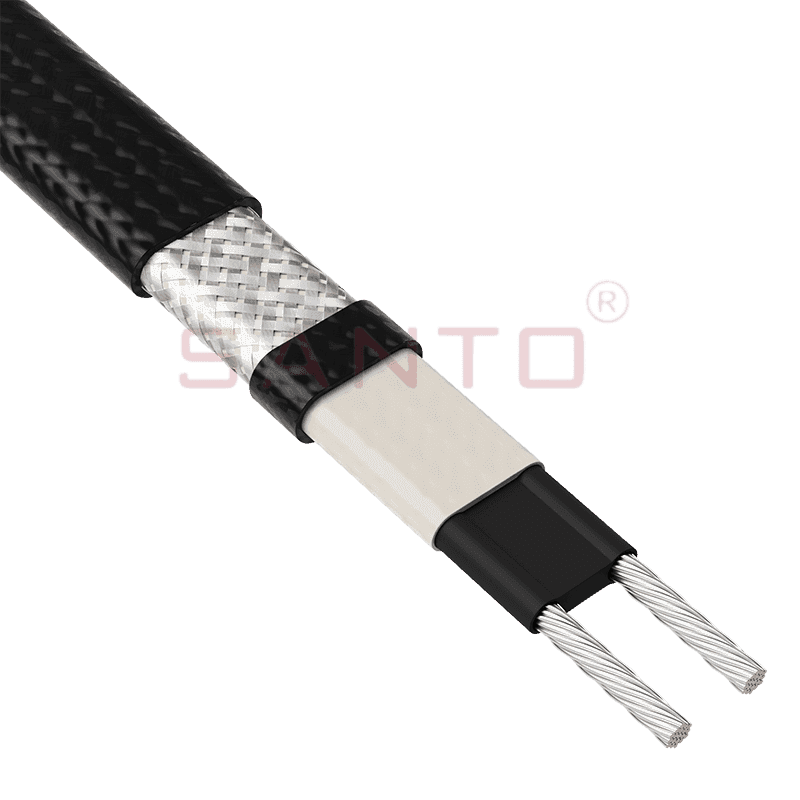
The SANTO UFA range of self-regulating heating cables is mainly used for frost protection of pipes and vessels but can also be used to maintain processes up to 65°C. These heating cables are available...
See Details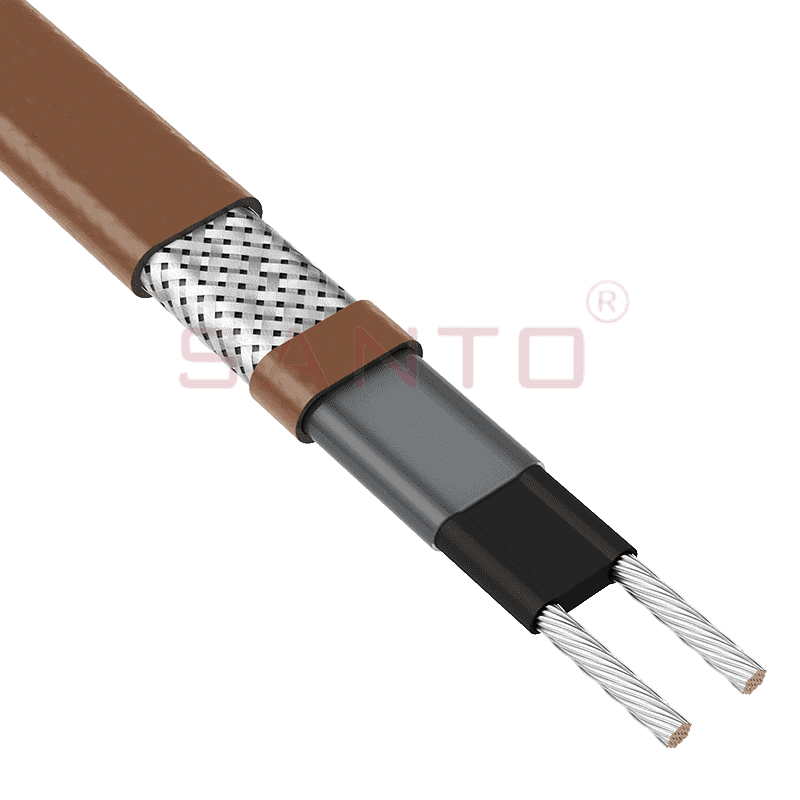
The SANTO UFB range of self-regulating heating cables is mainly used for frost protection of pipes and vessels requiring a higher power output than the UFA heating cables can supply. They can also be ...
See Details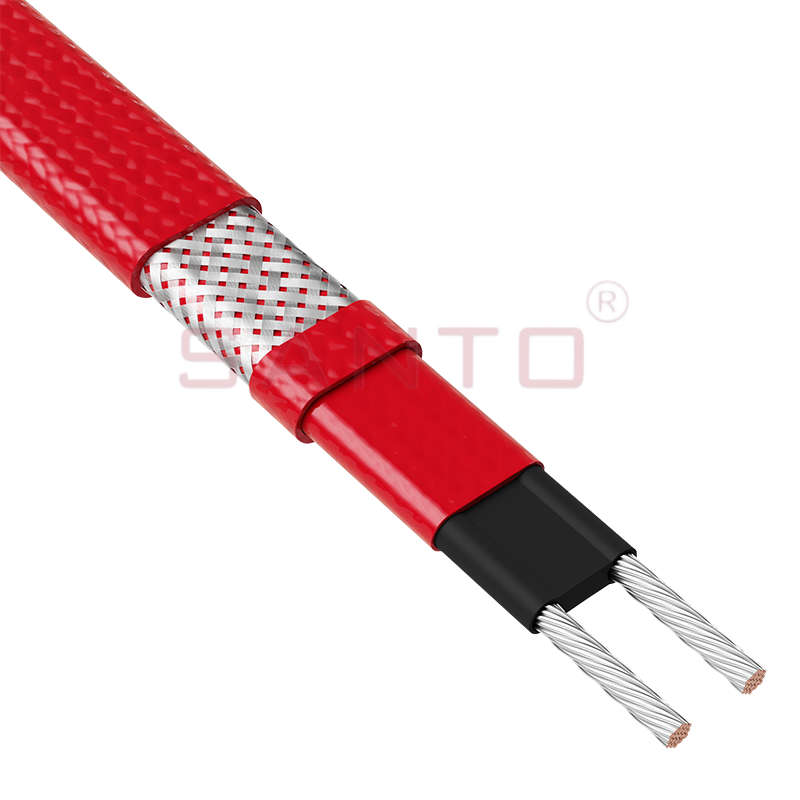
The SANTO UFC range of self-regulating heating cables is used for frost protection of pipes and vessels that require steam cleaning. They can also be used to maintain processes up to 121°C. These heat...
See Details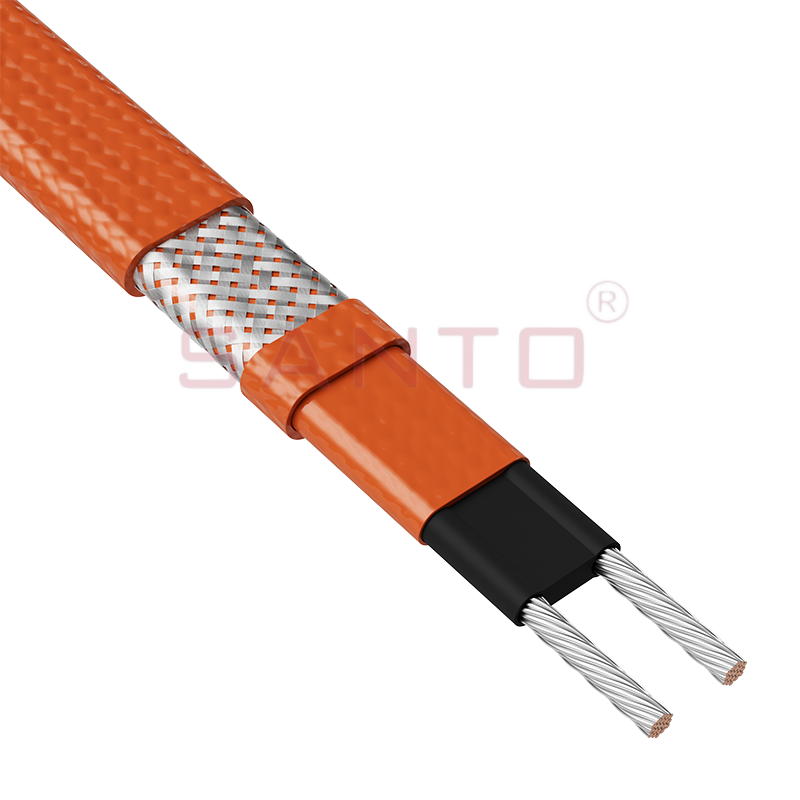
The SANTO UFO range of self-regulating heating cables is mainly used for frost protection of pipes and vessels that require steam cleaning . They can also be used to maintain processes up to 150°C. Th...
See Details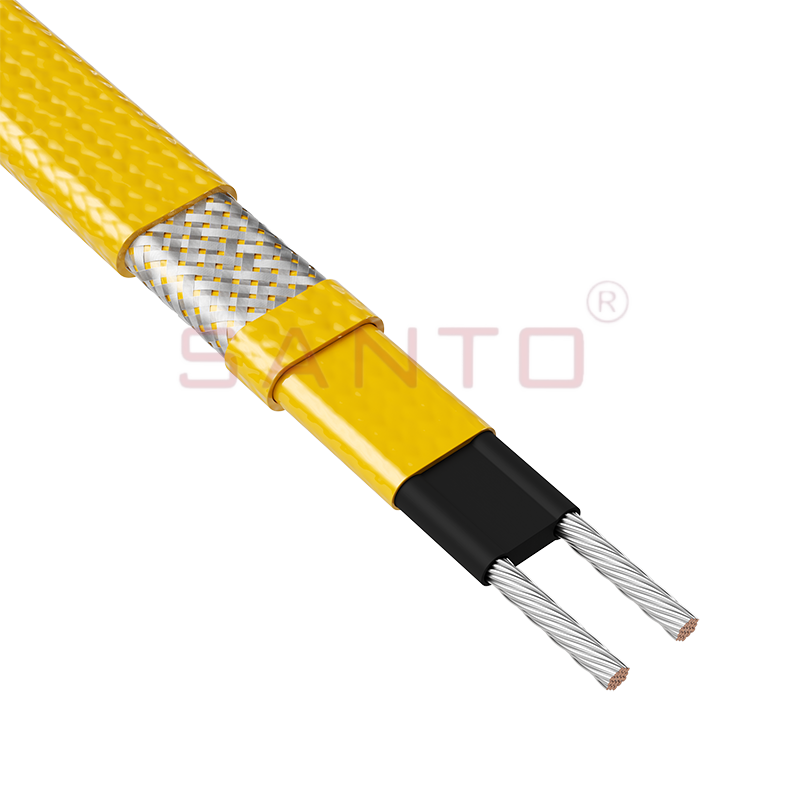
The SANTO UFD series of self-regulating heating cables are mainly used for freeze protection of pipes and vessels, but can also be used to maintain processes up to 200°C. These heating cables are avai...
See Details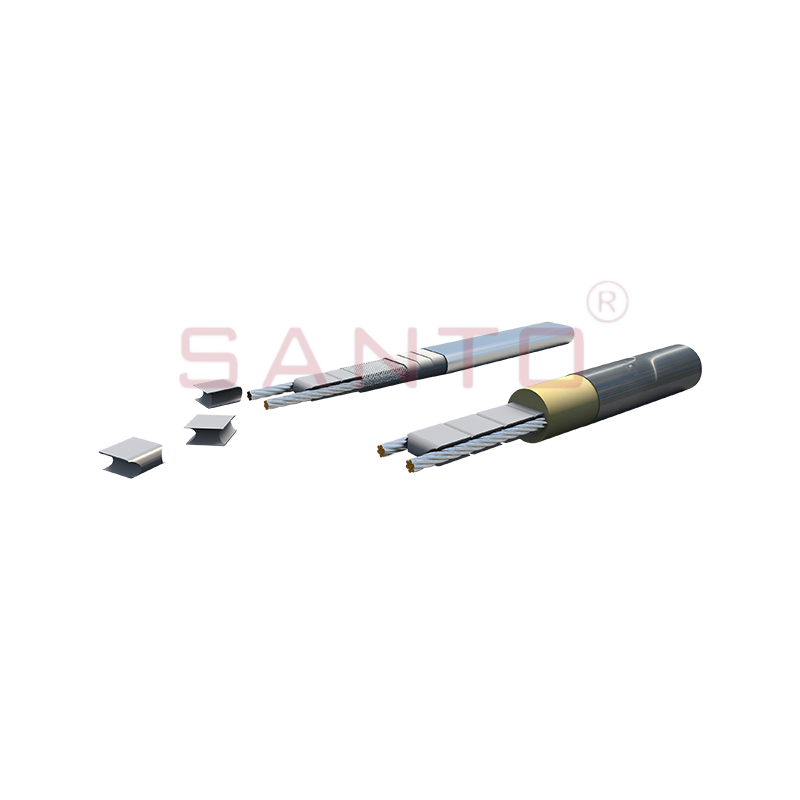
SANTO UFY heating wire is suitable for applications that maintain process temperatures up to 260 ℃ and can be steam blown; The self-regulating and parallel circuit heating wires of the UFY series are ...
See Details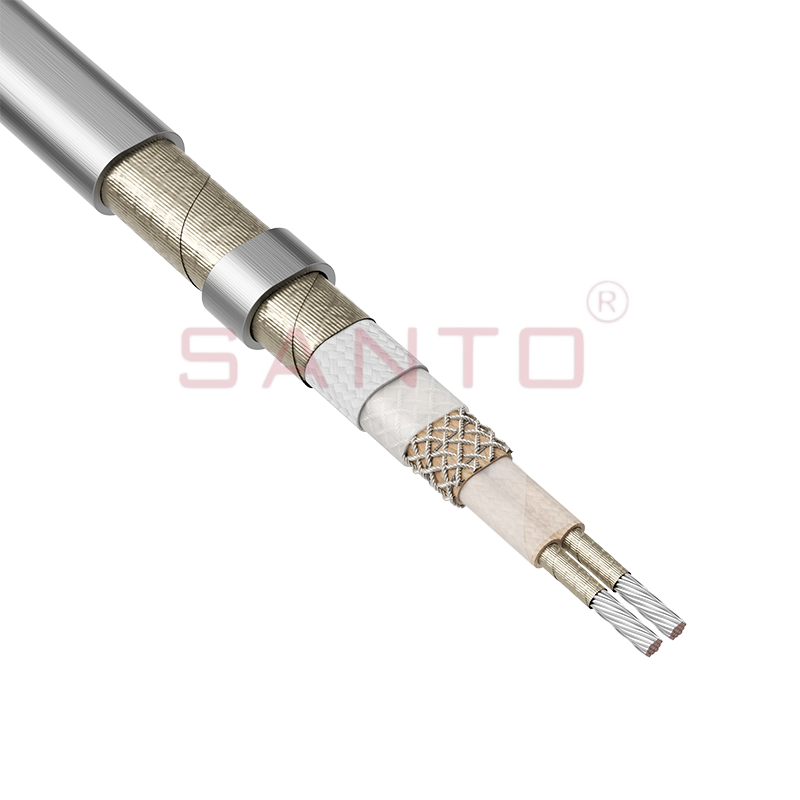
The SANTO UFM series self-regulating heating cables are mainly used for freeze protection of pipes and vessels, but can also be used to maintain processes up to 400°C. These heating cables are availab...
See Details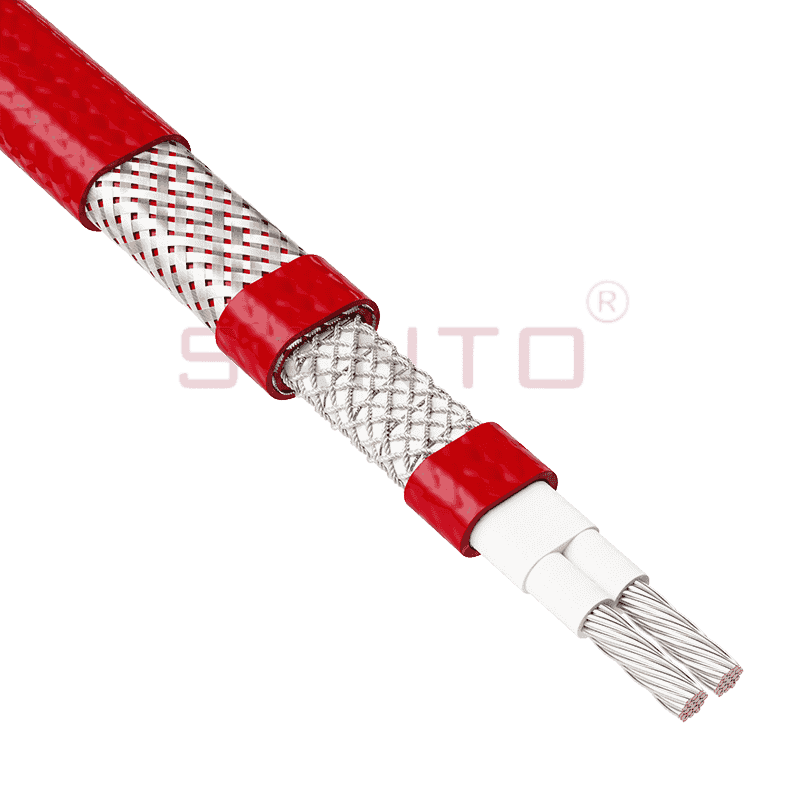
The SANTO ACC range of power-limiting heating cables is mainly used for temperature maintenance of processes and offers the advantage of a high power output at high temperatures which can reduce the n...
See Details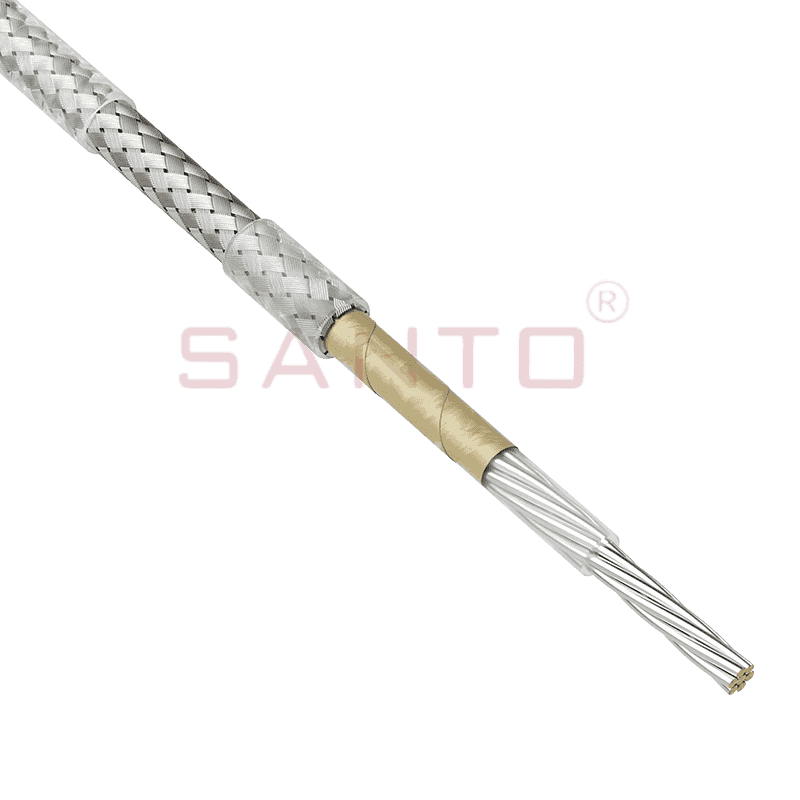
The stranded high temperature conductor is nickel plated to ensure a long life at elevated temperatures in corrosive environments. It is electrically isolated using an innovative sandwich construction...
See Details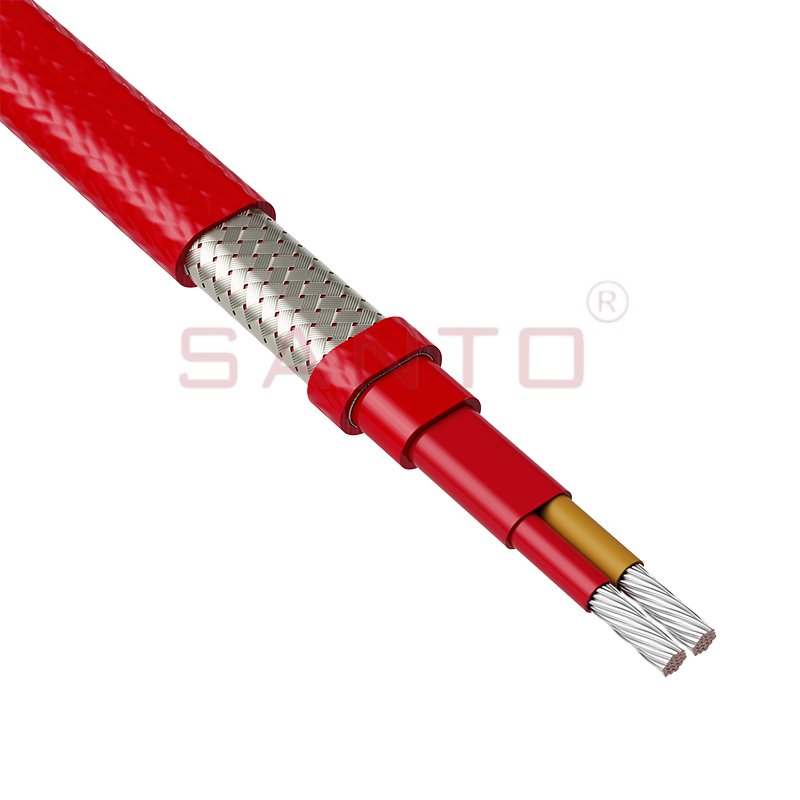
The stranded high temperature conductor is nickel plated to ensure a long life at elevated temperatures in corrosive environments. It is electrically isolated using an innovative sandwich construction...
See Details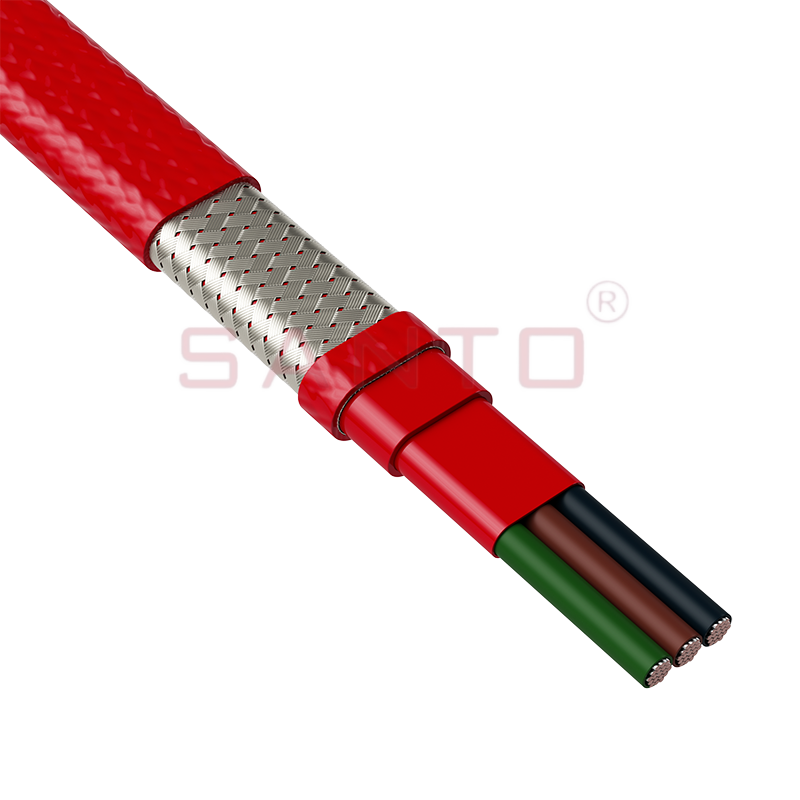
The stranded high temperature conductor is nickel plated to ensure a long life at elevated temperatures in corrosive environments. It is electrically isolated using an innovative sandwich construction...
See Details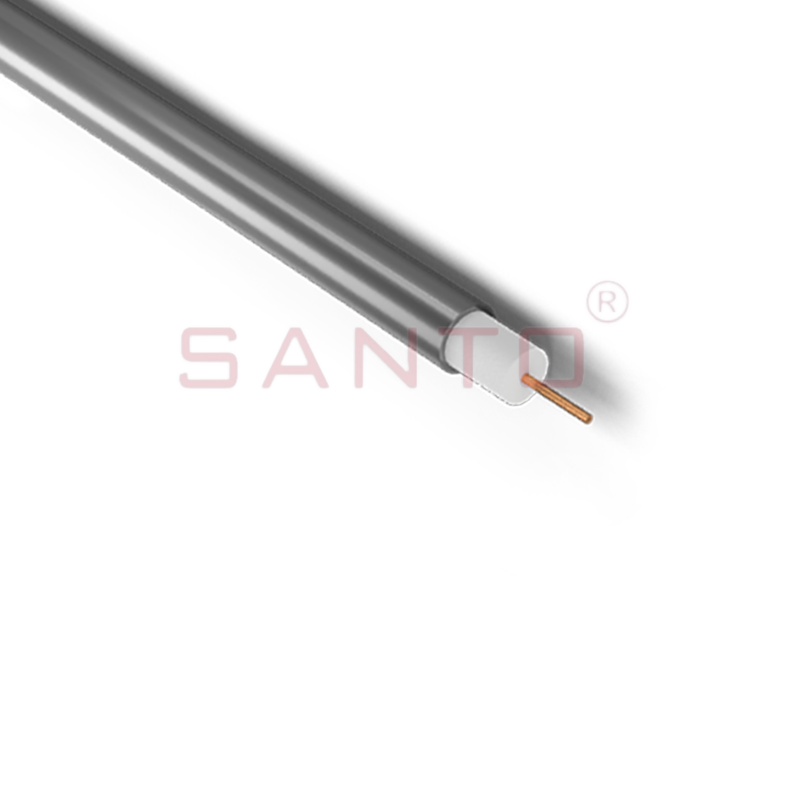
SANTO HAx mineral insulated (MI) Alloy 825 series heating cables are suitable for use in hazardous areas. They have been designed for use in freeze protection and temperature maintenance applications ...
See Details
Santo electric heating strips are widely used in key industries in China.

