 English
  English
 русский
 日本語
日本語 Español
 中文简体
中文简体
The SANTO UFA range of self-regulating heating cables is mainly used for frost protection of pipes and vessels but can also be used to maintain processes up to 65°C. These heating cables are available...
See Details
Battery performance is strongly influenced by temperature. In new energy electric vehicles, battery packs must operate within a controlled thermal range to support dependable starting, charging, driving range, service life, and safety. When temperatures fall too low, battery chemistry slows down, internal resistance increases, charging efficiency declines, and available power may be reduced. A carefully designed battery heating system can help overcome these limitations by supplying controlled heat directly to the battery assembly.
An epoxy board battery heater is a practical solution for this purpose. It combines an electrically resistive heating element with an insulating and mechanically supportive epoxy board structure. The resulting heater can be designed as a compact, thin, durable, and easily integrated component for battery modules, battery packs, energy storage systems, and other low-temperature applications.
Santo Thermal Control Technology Co., Ltd. develops and manufactures electric heating products for industrial, energy, transportation, construction, and specialized thermal management applications. With decades of experience in electric heating technology, the company provides customized heating solutions that can be adapted to different voltage levels, power requirements, dimensions, mounting methods, and operating environments.
This article explains the construction, operating principle, benefits, manufacturing process, customization possibilities, quality considerations, and application value of epoxy board battery heaters for new energy electric vehicles.
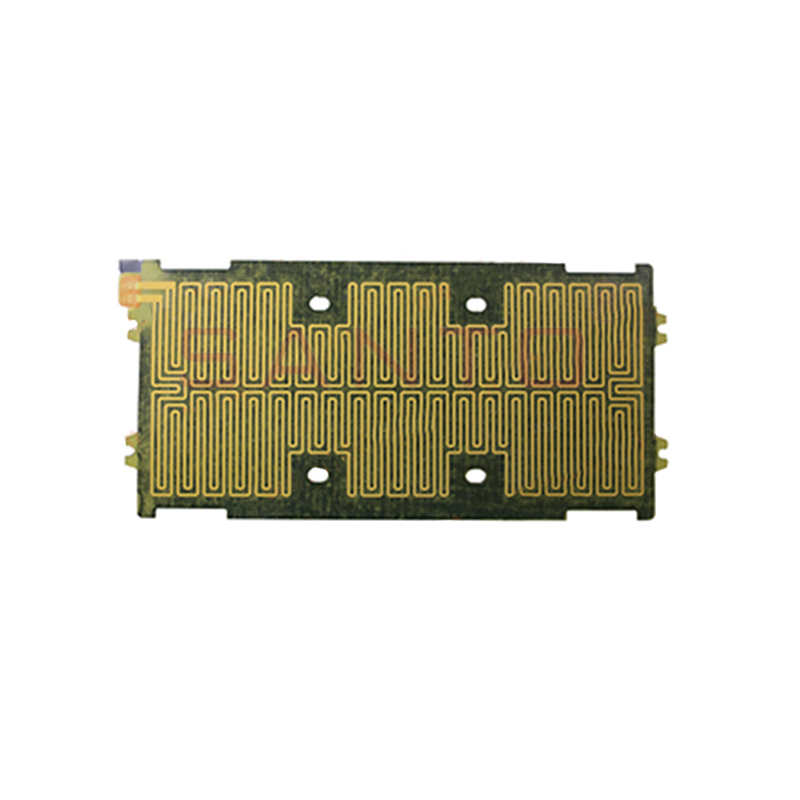
Epoxy board battery heater
Content
An epoxy board battery heater is a flat electric heating component designed to warm a battery module, battery case, battery tray, or related thermal management surface. The heater generally consists of a resistance heating circuit, an epoxy board or epoxy-based insulation layer, electrical insulation materials, connection leads, and optional protective or mounting structures.
When electrical current passes through the resistance element, electrical energy is converted into heat. The heat is transferred through the board and into the battery assembly. Depending on the application, the heater may be installed beneath a battery module, between protective layers, on the external surface of a battery enclosure, or in another position approved by the vehicle or energy-storage-system designer.
The epoxy board serves several functions. It can support the heating circuit, provide electrical insulation, improve dimensional stability, protect the conductive element from mechanical contact, and help distribute heat over a defined surface area. Its rigid or semi-rigid form also makes installation more predictable than the installation of a loose heating wire.
Unlike a general-purpose heating pad, an automotive battery heater must be designed around the conditions of electric vehicles. These conditions may include vibration, repeated thermal cycling, limited installation space, exposure to moisture, electrical insulation requirements, assembly tolerances, and the need to work with a battery management system or dedicated temperature controller.
For this reason, the heater should not be selected only according to nominal wattage. The complete design must consider the battery chemistry, battery capacity, enclosure construction, ambient temperature, required heating rate, allowable surface temperature, vehicle operating strategy, and safety requirements.
Most rechargeable batteries perform best within a moderate temperature range. At low temperatures, the movement of ions inside the battery becomes slower. The battery may deliver less power, accept charge more slowly, and show a temporary reduction in usable capacity. In some lithium-ion battery chemistries, charging at very low temperatures can increase the risk of undesirable lithium plating, which may affect battery life and safety.
A battery heater can support the preheating process before charging or driving. It can also help maintain a minimum temperature during cold-weather parking, especially when the vehicle is exposed to wind, snow, or freezing conditions for an extended period. By bringing the battery closer to its preferred operating range, the heater can improve the effectiveness of the battery management strategy.
Thermal control is also important in hybrid vehicles, electric buses, utility vehicles, low-speed electric vehicles, electric construction equipment, electric boats, and stationary energy storage systems. In each application, the heating target may be different. Some systems require rapid preheating, while others need only low-power temperature maintenance.
A well-designed heater does not replace the battery management system, coolant circuit, sensors, or thermal insulation. Instead, it works as one part of a coordinated thermal management system. The battery management system can monitor cell temperature and activate the heater when conditions require additional heat.
The heater may be used in several operating modes:
1. Preheating before vehicle operation.
2. Preheating before low-temperature charging.
3. Maintaining a minimum temperature during vehicle parking.
4. Protecting battery modules in cold storage or transportation.
5. Supporting temperature stability in stationary energy storage cabinets.
6. Providing auxiliary heat during the early stage of vehicle operation.
The resistance heating element is the active heat-generating part of the product. Its resistance value is selected according to the required voltage and power. The heating circuit may be arranged in a serpentine pattern, parallel layout, grid structure, or another geometry that provides suitable heat distribution across the target surface.
Heating-element design requires attention to line spacing, current density, bend radius, connection points, and the available board area. If the heating circuit is too concentrated, local hot spots may develop. If it is too widely spaced, the heater may not deliver adequate temperature uniformity. An experienced manufacturer can balance these factors according to the battery module geometry and thermal requirements.
The epoxy board provides a stable foundation for the heating circuit. Epoxy materials are widely used in electrical insulation and industrial composite applications because they can offer good dielectric performance, mechanical strength, dimensional stability, and resistance to many environmental influences when correctly formulated and processed.
The board thickness, resin system, reinforcement structure, and surface finish can be selected according to the application. A thin board may be appropriate where installation space is limited. A thicker or mechanically reinforced board may be preferred where the heater must resist handling, vibration, or assembly pressure.
The epoxy board also helps make the heater easier to handle during assembly. Instead of positioning a flexible wire or unsupported heating element, the installer can place a defined board in a specified location. This can improve repeatability and reduce the chance of accidental bending, crossing, or displacement of the heating circuit.
Additional insulation may be applied over or beneath the heating circuit. These layers can improve electrical isolation, reduce the possibility of abrasion, and provide protection during battery-pack assembly. Depending on the intended environment, the heater may also require sealing, encapsulation, edge protection, or a protective surface coating.
The final protection method should be selected together with the customer. A heater installed inside a sealed battery enclosure may have different requirements from one mounted externally beneath a battery tray. The manufacturer must understand the complete installation environment before confirming the final construction.
Connection leads, terminal blocks, connectors, or custom bus connections can be supplied according to the vehicle architecture. Cable length, conductor size, insulation material, terminal type, and exit position may all affect installation performance.
Lead routing is particularly important in compact battery packs. The connection must avoid sharp edges, excessive bending, moving components, high-temperature surfaces, and areas where it could be compressed by the enclosure. Customized lead exits can simplify assembly and help maintain a clean internal layout.
The heater operates according to Joule heating. When current flows through a resistance element, the element generates heat. The approximate electrical relationship is represented by the following formulas:
Power: P = V × I
Power: P = V² ÷ R
Power: P = I² × R
In these formulas, P represents power, V represents voltage, I represents current, and R represents resistance. The actual design must also consider heat transfer, installation conditions, electrical tolerances, control strategy, and the thermal characteristics of the battery system.
The heater itself may be electrically simple, but the application is not. A battery heater must transfer heat effectively without creating unsafe surface temperatures. It must work with a suitable controller and temperature sensor. It must also be compatible with the vehicle’s high-voltage or low-voltage electrical architecture, depending on the system design.
For this reason, product development normally begins with application information rather than a standard catalog selection. Important information includes the battery module dimensions, target heating area, operating voltage, required power, ambient-temperature range, installation location, expected heating time, connector requirements, and control method.
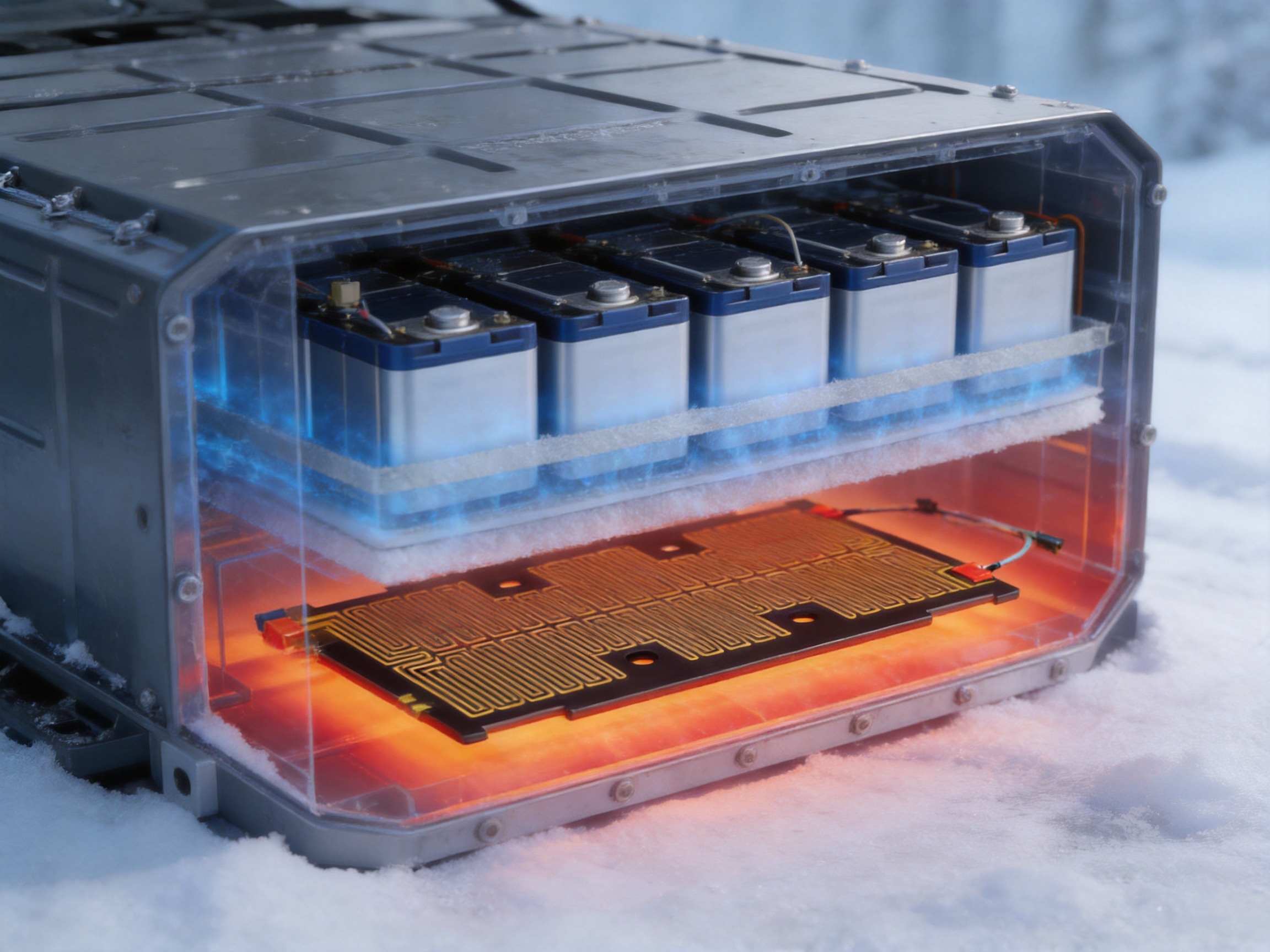
Electric vehicle battery packs are designed to use space efficiently. An epoxy board heater can be produced in a thin, flat form that fits beneath or alongside a battery module. Compared with bulky air-heating equipment, the board requires little additional space and can be integrated into the battery structure more easily.
The compact form is valuable where ground clearance, pack height, and internal volume are strictly limited. A custom-shaped board can also be designed around mounting points, openings, brackets, or other features in the battery enclosure.
Air-based heating systems warm the surrounding air first, after which heat must move through the enclosure and reach the battery. This process may be slow and uneven. An epoxy board heater transfers heat directly through a defined contact area, reducing unnecessary heat loss in the surrounding space.
Direct heating can be especially useful during preheating. The heater is positioned near the part of the battery that requires temperature support, allowing the thermal design to be more targeted. Proper contact pressure, surface flatness, thermal interface materials, and insulation should be considered to improve heat transfer.
The resistance pattern can be designed to match the shape of the heating area. This provides more flexibility than a single concentrated heating element. Designers can specify different circuit paths and power densities to reduce cold zones and improve temperature uniformity.
Uniformity is important because a battery pack may contain multiple cells or modules with different thermal conditions. A balanced heating layout helps reduce unnecessary temperature differences, provided that the complete pack design also includes suitable thermal insulation and monitoring.
A board-based heater is less likely to shift during handling than a loose wire or unsupported heating strip. The rigid or semi-rigid epoxy structure supports a repeatable installation position. This can simplify assembly and reduce the possibility of contact between the heating element and conductive or sharp components.
Mechanical stability is also relevant to long-term durability. Electric vehicles experience vibration, acceleration, braking, road impact, and repeated thermal expansion and contraction. A suitable board structure and secure installation method can help the heater withstand these conditions.
Battery packs contain high-voltage conductors and conductive metal structures. Electrical insulation is therefore a fundamental requirement. The epoxy board and additional insulating layers can help separate the resistance circuit from the battery enclosure and other components.
Insulation performance depends on material selection, board thickness, processing quality, surface condition, edge treatment, and the presence of moisture or contamination. The finished heater should be tested according to the customer’s electrical safety requirements.
There is no single electrical specification suitable for every electric vehicle. Some systems use a low-voltage auxiliary circuit, while others use a higher-voltage battery or dedicated heating circuit. The heater can be developed with a specified resistance value to match the intended electrical system.
Power can also be tailored. A small battery module may require a relatively low-power heater, whereas a large battery pack may require several heating zones or multiple heater boards. A modular design can make service, replacement, and control easier.
Compared with systems containing fans, pumps, or moving mechanical components, a properly manufactured electric board heater has few moving parts. This can reduce mechanical maintenance requirements. Its useful life will still depend on electrical loading, temperature, vibration, moisture, installation, and control quality.
Preventive inspection should include electrical connections, insulation condition, mounting security, connector integrity, and temperature-sensor operation. A maintenance plan should be developed for the complete vehicle or energy storage system rather than for the heater alone.
The epoxy board battery heater offers several advantages when it is designed specifically for new energy vehicle use:
| Design factor | Value for the battery system | Customization approach |
|---|---|---|
| Flat board construction | Supports installation in limited spaces beneath or beside battery modules | Adjust dimensions, thickness, shape, and mounting features |
| Defined heating circuit | Provides predictable resistance and heat generation | Configure voltage, power, resistance, and circuit layout |
| Epoxy insulation | Helps separate the heating element from conductive structures | Select suitable insulation structure and protective layers |
| Direct heat transfer | Supports faster and more targeted warming than indirect air heating | Match heating area to the battery module and thermal interface |
| Board stability | Improves handling and installation repeatability | Choose rigid or semi-rigid construction for the assembly environment |
| Custom cable exit | Helps simplify routing within the battery enclosure | Specify lead length, connector, terminal, and exit position |
| Scalable design | Allows single-module or multi-zone heating solutions | Use multiple boards, independent zones, or coordinated control |
These advantages do not mean that every epoxy board heater is automatically suitable for every vehicle. The design must be validated in the complete battery assembly. However, the platform provides a practical starting point for developing a reliable and space-efficient heating system.
Customization is one of the most important factors in battery heater development. The heater must fit the customer’s mechanical and electrical design rather than forcing the battery pack to accept a generic component.
Customers may provide drawings, samples, three-dimensional models, or basic dimensional information. The manufacturer can then review the required length, width, thickness, corner radius, mounting holes, cutouts, heating zones, and cable-exit position.
When the board is installed in a narrow or irregular space, edge clearances and component interference must be reviewed carefully. The heater should not press against sensitive cell surfaces, terminals, busbars, enclosure edges, or moving parts.
The operating voltage, rated power, resistance tolerance, current, and control method should be confirmed before production. The design may be intended for continuous operation, intermittent operation, pulse heating, or temperature-maintenance duty.
It is also important to define the expected electrical tolerance. Resistance variation can influence power output, especially in systems where the voltage is fixed. The manufacturer and customer should agree on the allowable tolerance and the test method used to verify it.
The heater may be controlled through a thermostat, temperature sensor, battery management system, vehicle control unit, relay, power semiconductor, or dedicated temperature controller. The heater supplier can provide the heating element, while the vehicle integrator manages the control logic, or the two parties can develop a coordinated solution.
Temperature sensors should be positioned where they can represent the actual battery temperature. A sensor placed too close to the heater may read a local hot spot, while one placed too far away may respond too slowly. The control strategy should consider both sensor location and heat transfer delay.
Contact between the heater and the battery surface affects thermal performance. Air gaps can increase thermal resistance and create uneven heating. Depending on the assembly, a thermally conductive but electrically insulating interface material may be used.
The selected interface material must be compatible with the battery enclosure, insulation layers, adhesives, pressure conditions, temperature range, and service requirements. The heater manufacturer can provide design recommendations, but the complete thermal interface should be validated by the system designer.
The connection method should be designed as part of the battery pack rather than treated as an afterthought. The cable must have adequate insulation, flexibility, current capacity, and mechanical protection. Connector selection should take account of voltage, current, sealing, vibration, temperature, and service access.
Where the battery pack contains multiple heater boards, each zone may have an individual connection or several zones may be connected through a harness. Independent zones can improve temperature control but may increase wiring complexity. The appropriate solution depends on the battery architecture.
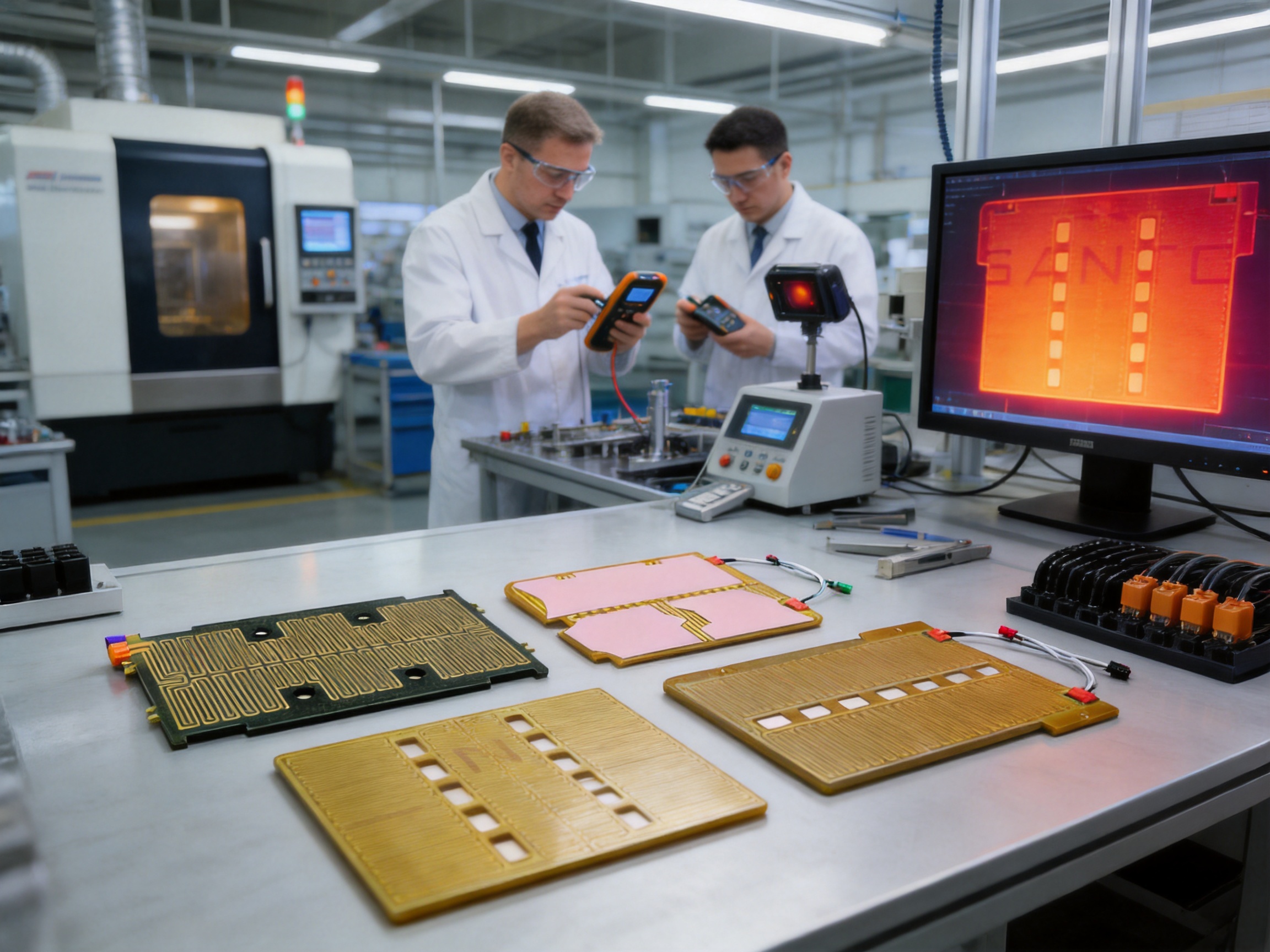
The performance of an epoxy board battery heater depends not only on the design but also on the consistency of manufacturing. Santo Thermal Control Technology Co., Ltd. combines product development, engineering, production, testing, and technical service in its electric heating operations.
Manufacturing begins with a review of the intended application. Engineers examine the customer’s drawings, electrical requirements, installation position, operating conditions, target temperature, and expected production volume. This stage helps identify risks before tooling or mass production begins.
Questions may include whether the heater is installed inside or outside the battery enclosure, whether it is exposed to moisture, whether it must withstand vibration, how it is fixed, and how it is controlled. These details affect material selection and construction.
The heating circuit is developed according to the required resistance and heat distribution. The circuit geometry must fit within the board while maintaining safe clearances and a suitable connection layout.
Engineering review may include resistance calculations, current-density analysis, thermal simulation, prototype evaluation, and design revision. For complex or high-volume projects, the heating pattern may be optimized through multiple test cycles before the final production design is approved.
Materials must be identified, inspected, stored, and prepared according to their characteristics. Epoxy boards, conductive heating materials, insulation layers, adhesives, leads, terminals, and protective components should be controlled to support consistent production.
Moisture, contamination, unsuitable storage temperature, or incorrect material identification can affect electrical insulation, bonding, dimensional stability, and long-term reliability. A controlled material-management process is therefore essential.
The epoxy board is prepared to the required size and shape. Depending on the design, this may involve cutting, drilling, machining, surface preparation, cleaning, and inspection. Edges and openings should be treated carefully so that they do not damage insulation or cables during assembly.
Dimensional control is especially important for battery applications because battery-pack clearances can be small. A board that is slightly oversized may interfere with the enclosure, while a misplaced opening may affect the position of a fastener or cable.
The resistance heating element is placed or formed according to the approved design. The process must control position, spacing, connection quality, and contact with the supporting structure. Any deviation in the heating pattern may influence heat distribution and resistance.
Special attention is given to the transition between the heating circuit and the connection leads. This area can experience electrical and mechanical stress. It should be designed and manufactured to reduce the risk of fatigue, local overheating, or insulation damage.
After the heating element is assembled, insulation or encapsulation is applied as specified. The purpose is to protect the circuit, improve dielectric strength, stabilize the structure, and support environmental resistance.
Processing parameters may include mixing ratio, coating thickness, curing temperature, curing time, pressure, and surface preparation. These parameters should be controlled because incomplete curing, trapped air, uneven thickness, or contamination can reduce product reliability.
Electrical leads and terminals are installed according to the approved drawing. Cable routing should be neat and secure, and the exit area should have suitable strain relief. The final assembly must maintain required creepage and clearance distances.
Where customized connectors are used, the connector model, pin arrangement, sealing method, and polarity should be checked carefully. Identification marks can help prevent incorrect installation in the battery-pack assembly line.
Epoxy-based structures require controlled curing. The curing process determines many of the final mechanical and electrical properties. The manufacturer should maintain suitable process records and avoid premature handling that could distort the board or damage the heating circuit.
After curing, the heater can be inspected for flatness, appearance, edge condition, lead security, and dimensional conformity. Any visible defect should be reviewed before the product moves to electrical testing.
Testing may include resistance measurement, insulation resistance testing, dielectric withstand testing, appearance inspection, dimensional inspection, lead-pull or connection checks, and functional heating tests. The exact test plan should be agreed with the customer and adapted to the product design.
Prototype samples may undergo more extensive evaluation, including repeated heating and cooling, vibration simulation, moisture exposure, mechanical handling, and long-duration operation. These tests help confirm whether the design is suitable for the intended vehicle environment.
Santo Thermal Control Technology Co., Ltd. has more than three decades of experience in the electric heating industry. The company integrates research, design, production, manufacturing, and sales, allowing customer requirements to move through a coordinated technical and commercial process.
The company’s product range includes automatic temperature-control heating cables, self-regulating heating cables, constant-power heating cables, glass-fiber heating cables, silicone rubber heating products, mineral-insulated cables, snow-melting cables, heating wires, and related accessories. This broad experience is valuable when developing a battery heater because electric vehicle thermal management may involve more than one heating technology.
The company reports ISO9001 quality management system certification and national CCC certification for relevant products. It has also developed products for international markets and has obtained certifications associated with specific product applications and regions. Certification requirements vary by product and destination, so customers should confirm which certificates apply to the final battery heater configuration.
SANTO has established an irradiation center and has invested in a product simulation testing laboratory. These capabilities support material development, process evaluation, and performance verification. The company also reports cooperation in product research with Harvard University in the United States, reflecting its emphasis on technical development.
Its manufacturing approach is supported by several practical strengths:
1. Long-term experience in electric heating materials and circuit construction.
2. Ability to develop customized heating products rather than relying only on standard sizes.
3. Integration of design, manufacturing, testing, and technical support.
4. Experience serving industrial and international customers.
5. Product-development capability for self-regulating, constant-power, silicone rubber, glass-fiber, and other heating formats.
6. A quality-management structure supported by ISO9001 certification.
7. Production and testing experience for applications involving antifreeze, deicing, heating, heat tracing, insulation, and thermal maintenance.
The company states that it has more than 35 years of industry experience, an annual output exceeding 10,000 units or products across its operations, more than 2,000 distributors, and business coverage in more than 85 areas. These figures indicate an established supply network, although project-specific capacity and delivery schedules should always be confirmed during procurement.
Heating power determines how much energy is supplied to the battery system over time. A higher power rating may shorten heating time, but it can also increase current demand, wiring requirements, energy consumption, and thermal-control complexity.
The correct power should be selected through thermal analysis and testing. The target is not simply maximum heat. The target is sufficient and controlled heat that brings the battery into the desired operating range without exceeding local temperature limits.
Temperature uniformity depends on the heating pattern, heater position, contact quality, battery construction, insulation, and control strategy. A heater with a carefully designed circuit may still produce uneven temperatures if it is installed with large air gaps or placed beneath a surface with significantly different thermal conductivity.
Testing should therefore evaluate the heater in a representative assembly. Measurements at several points can reveal hot spots, cold areas, and thermal delays that are not visible in a simple free-air test.
The heater should maintain suitable insulation resistance throughout its expected operating life. Electrical testing should be performed after manufacturing and, when required, after environmental or durability tests.
Insulation design must account for the highest working voltage, transient conditions, moisture, contamination, mechanical movement, and manufacturing tolerances. The battery-pack designer should also verify the complete system’s insulation coordination.
Battery heaters may be exposed to vibration, compression, bending during installation, thermal expansion, and repeated vehicle movement. A rigid epoxy board can provide structural support, but it must still be installed in a way that avoids excessive stress.
Mounting methods may include mechanical fasteners, clips, pressure plates, thermally conductive adhesive, insulating adhesive, or a designed battery-tray feature. The chosen method should prevent movement without creating excessive pressure on cells or the heater board.
Vehicle battery systems may encounter condensation, road splash, dust, cleaning fluids, salt, and temperature changes. The heater’s environmental protection must match its location within the vehicle.
A heater inside a sealed enclosure may need a different protection level from an externally mounted heater. The customer should define the environmental exposure and any required ingress-protection or chemical-resistance evaluation during the design stage.
Repeated temperature changes cause expansion and contraction in the epoxy board, heating element, insulation, adhesive, leads, and surrounding battery materials. Differences in thermal expansion can create stress over time.
Thermal-cycle testing helps assess whether the heater maintains electrical and mechanical integrity after repeated heating and cooling. Test temperatures, cycle duration, ramp rate, and electrical operating conditions should represent the intended application.
Before installation, inspect the heater for damage, contamination, deformation, or loose connections. Confirm that the model, resistance, voltage, dimensions, and cable arrangement match the approved design.
The mounting surface should be clean, dry, and free of sharp projections. If a thermal interface material or adhesive is specified, it should be applied evenly and at the recommended thickness. Excessive thickness can reduce heat transfer, while insufficient coverage can create air gaps.
Do not fold, sharply bend, drill, cut, or modify the heater unless the design authority has approved the change. Altering the resistance circuit or insulation structure can create an electrical or thermal hazard.
Cables should be routed away from sharp edges, moving parts, high-temperature components, and areas subject to compression. Strain relief should be provided near the connection point. The connector should be fully engaged and protected from accidental reverse connection.
Temperature sensors should be placed according to the thermal-control design. The heater should not be operated without the required control and protection system. A test run should confirm current, resistance, sensor response, surface temperature, and heating uniformity before the vehicle is released for regular operation.
Battery heating systems must be designed with safety as a primary requirement. The heater should be compatible with the battery voltage, control system, fuse or circuit-protection strategy, and emergency shutdown logic.
Overtemperature protection is essential. Depending on the vehicle design, protection may be provided by a temperature sensor, thermostat, software limit, independent thermal cutoff, current monitoring, or a combination of these methods.
The heater should be kept away from combustible materials unless the complete assembly has been designed and validated for that configuration. The battery enclosure should provide suitable mechanical and electrical protection, and the heater should not interfere with cell pressure management, venting, cooling channels, or service disconnects.
During maintenance, the relevant electrical supply must be isolated according to the vehicle manufacturer’s high-voltage safety procedures. Personnel should not test or repair a battery heater without suitable training and protective equipment.
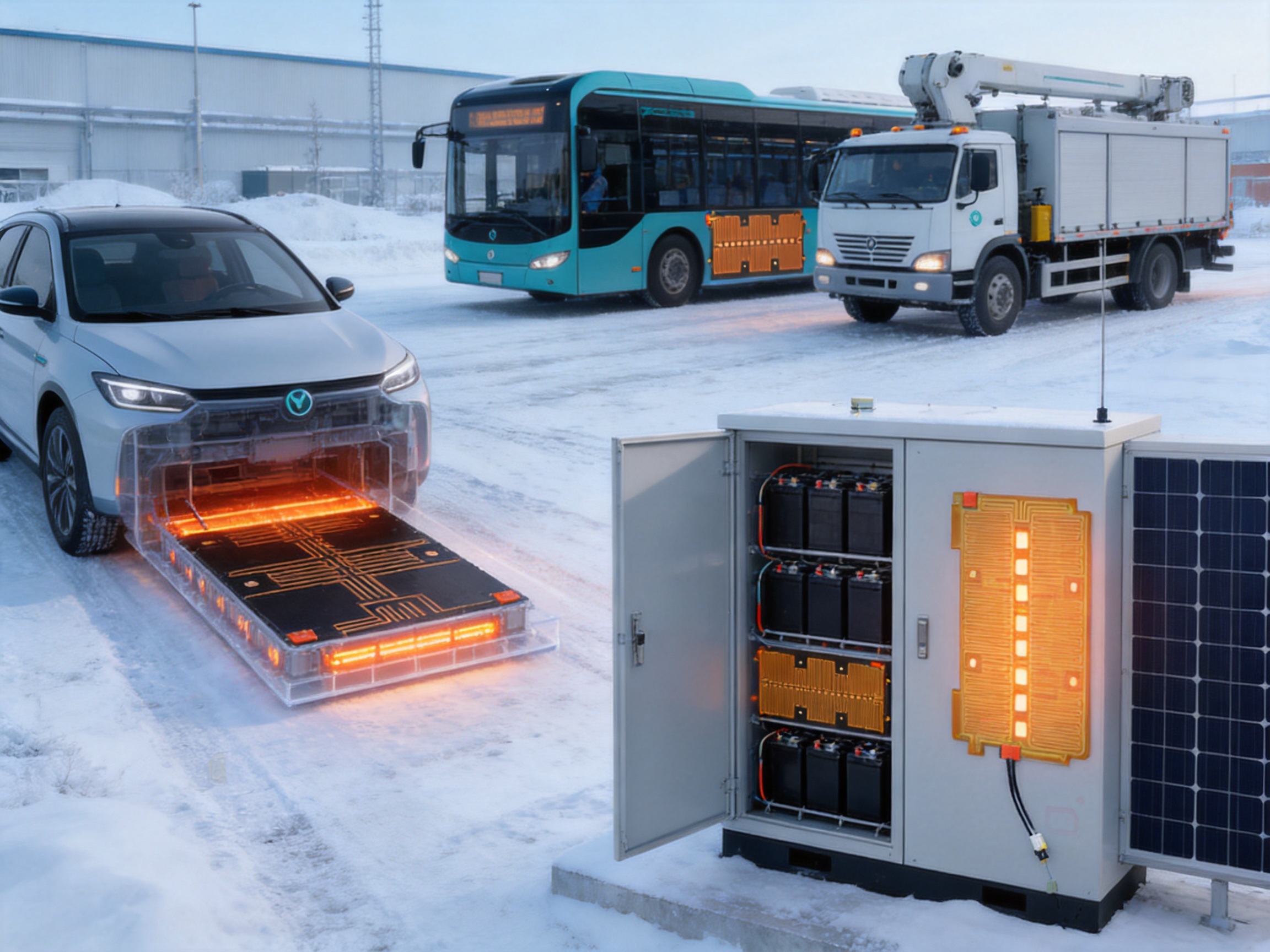
Although electric passenger cars are an important application, epoxy board battery heaters can also support other new energy systems.
Electric buses may require battery heating because they operate outdoors for long periods and may be expected to start service in cold weather. A modular heater arrangement can be designed for large battery packs with multiple modules.
Electric trucks and logistics vehicles may require thermal support during overnight parking, scheduled charging, or long-distance operation. In these vehicles, energy consumption, charging time, and battery availability are closely connected.
Electric construction machinery may face especially demanding conditions, including vibration, dust, cold storage, and irregular duty cycles. The heater design should be reviewed together with the machine’s enclosure and operating environment.
Electric boats and marine equipment may require additional attention to moisture, corrosion, and sealing. The final product should be specified according to the relevant marine environment and system requirements.
Stationary energy storage cabinets may use battery heaters to maintain a suitable temperature in outdoor installations, remote facilities, telecommunications sites, renewable-energy systems, and emergency power equipment. In these systems, the heater may operate for temperature maintenance rather than rapid vehicle preheating.
Battery transportation and storage equipment can also benefit from controlled heating where batteries must be kept within a defined temperature range during cold-weather handling.
A battery heater is a specialized component. Its success depends on the relationship between electrical design, material selection, thermal behavior, mechanical installation, and quality control. An experienced heating manufacturer can identify interactions that may not be obvious when the product is treated as a simple resistor.
A manufacturer with a broad heating-product background can also compare alternative technologies. For some applications, an epoxy board heater may be the best solution. For others, a silicone rubber heater, flexible heating film, heating cable, constant-power heater, or self-regulating product may be more appropriate.
Santo’s experience with multiple electric heating technologies allows customers to discuss the application at the system level. The company can evaluate the required heating method, available installation space, control strategy, insulation requirements, and production expectations before recommending a final structure.
Long-term manufacturing experience also supports supplier consistency. A repeatable process is important when customers require multiple production batches, replacement parts, or heaters for different vehicle models. Documentation, sample approval, production inspection, and after-sales communication all contribute to project reliability.
The company’s development history reflects continuous investment in electric heating technology. It was founded as an electric heating instrument factory in 2000, passed ISO9001:2000 quality system certification in 2002, established an irradiation center in 2013, developed specialized self-limiting temperature heating products in 2014, established the SANTO brand in 2016, and developed carbon-fiber parallel heating cable technology in 2017. The company was formally renamed Santo Thermal Control Technology Jiangsu Co., Ltd. in 2019 and later invested in additional factory and laboratory facilities.
This history is relevant to battery heater procurement because new energy vehicle projects often require engineering flexibility, prototype development, testing, and production support rather than a one-time purchase of an off-the-shelf item.
To obtain an accurate proposal, customers should provide as much of the following information as possible:
1. Battery type and chemistry.
2. Battery module or pack dimensions.
3. Available heater installation area.
4. Required operating voltage.
5. Required rated power or heating rate.
6. Minimum and maximum ambient temperatures.
7. Desired battery temperature range.
8. Required preheating time.
9. Whether heating is required during charging, driving, parking, or storage.
10. Installation position and mounting method.
11. Required board thickness, shape, holes, or cutouts.
12. Cable length, connector, and cable-exit position.
13. Temperature sensor and control-system requirements.
14. Environmental exposure, including moisture, dust, chemicals, salt, and vibration.
15. Required certifications, inspection documents, and testing standards.
16. Prototype quantity, annual volume, packaging requirements, and delivery schedule.
Drawings and samples are especially useful. If a complete drawing is not available, photographs, sketches, and measurements can help the engineering team create an initial concept.
A typical project can begin with a technical consultation. The manufacturer reviews the application and proposes a preliminary construction. The customer then confirms the main dimensions, electrical parameters, mounting method, and testing requirements.
Prototype samples are produced for fit and function evaluation. The customer may install the samples in a representative battery module or test fixture. During this stage, the most important observations include current draw, heating time, temperature distribution, installation convenience, cable routing, and interference with other components.
If changes are needed, the design can be revised before mass production. Modifications may involve the resistance pattern, board dimensions, insulation thickness, power rating, cable position, connector, or mounting method.
Once the sample is approved, production documentation should define the materials, dimensions, electrical parameters, inspection points, packaging, and acceptance criteria. Production batches can then be manufactured under the approved process.
For original equipment manufacturers and system integrators, consistency between prototype and production is important. A change in material, heating pattern, or curing process can affect performance. Any significant change should be reviewed through a controlled engineering-change procedure.
Reliable battery thermal management supports the broader development of electric transportation. When batteries can operate more effectively in cold conditions, vehicles may provide more predictable performance and users may experience fewer limitations during winter operation.
Electric heating does consume energy, so the design should be optimized rather than oversized. A correctly selected heater, combined with insulation and intelligent control, can supply heat only when required. The battery management strategy can reduce unnecessary operation by using temperature feedback, charging schedules, ambient conditions, and vehicle status.
The use of a compact heater can also support simpler mechanical integration. A product that fits the battery structure without extensive additional equipment may reduce packaging complexity and help manufacturers develop more adaptable vehicle platforms.
From a commercial perspective, a customized board heater can be designed for specific battery models, equipment platforms, or regional climate conditions. This allows vehicle and energy-storage manufacturers to address different markets while maintaining a coordinated supply chain.
Its main function is to provide controlled electrical heat to a battery module, battery pack, battery enclosure, or related surface. The purpose is to support battery operation, charging, storage, or preheating in low-temperature conditions.
Yes. Dimensions, thickness, heating area, resistance, voltage, power, circuit pattern, cable length, connector, lead-exit position, mounting features, and insulation structure can be developed according to the application.
No single heater is suitable for every vehicle. Suitability depends on the battery design, required power, installation space, temperature range, electrical architecture, control system, environmental exposure, and validation requirements. The heater should be reviewed as part of the complete battery thermal management system.
An epoxy board heater provides direct surface heating and can be installed close to the battery module. Air heating warms the surrounding air before heat reaches the battery. The board heater may be more compact and targeted, while the best choice depends on the battery enclosure and overall thermal design.
It can be designed for use during charging if the vehicle control system, battery management system, electrical protection, and battery manufacturer’s requirements permit it. Charging-temperature limits must be respected, and the heater must be controlled by an appropriate strategy.
The board heater itself normally generates heat according to its electrical input. Automatic temperature regulation usually requires a sensor, thermostat, controller, battery management system, or other control device. Self-regulating designs may be considered where suitable, but this depends on the application.
Useful information includes the required dimensions, voltage, power, resistance, heating time, battery type, installation location, ambient-temperature range, cable and connector requirements, control method, environmental conditions, quantity, and certification requirements.
Yes. Multiple boards can be used for separate modules or heating zones. They may be connected individually or through a designed harness. Independent zones can improve control, but the wiring and protection system must be designed accordingly.
Typical evaluations may include resistance, insulation resistance, dielectric withstand, dimensional inspection, heating performance, temperature uniformity, thermal cycling, vibration, moisture exposure, connection security, and long-duration operation. The final test plan should be based on the customer’s product and applicable standards.
Yes. The same basic technology can be adapted for energy storage cabinets, outdoor battery systems, remote power equipment, telecommunications backup systems, and renewable-energy storage applications. The environmental and control requirements may differ from those of a vehicle.
The epoxy board can provide mechanical support, electrical insulation, dimensional stability, and a defined platform for the heating circuit. It can also make the heater easier to handle and install than an unsupported heating wire.
The manufacturer can support material selection, heating-circuit design, prototype production, electrical testing, thermal evaluation, customization, production documentation, and batch manufacturing. The vehicle or battery-system designer remains responsible for validating the complete system in its intended application.
Epoxy board battery heaters provide a compact and adaptable method for supporting battery thermal management in new energy electric vehicles. Their flat structure, direct heating capability, electrical insulation, mechanical stability, and customization potential make them suitable for battery modules, battery packs, energy storage systems, and other cold-weather applications.
The most important advantage is not simply that the heater produces heat. Its value comes from the ability to deliver controlled heat in a defined location while fitting the mechanical, electrical, and environmental requirements of the battery system. Correct circuit design, suitable epoxy insulation, reliable lead connections, effective thermal contact, and appropriate temperature control are all necessary for successful operation.
Santo Thermal Control Technology Co., Ltd. brings extensive experience in electric heating research, design, production, and international supply. Its product range, quality-management practices, engineering resources, testing capabilities, and history of technical development provide a strong foundation for customized battery heating projects.
For vehicle manufacturers, battery developers, energy-storage integrators, and equipment producers, the recommended approach is to begin with a detailed application review. By confirming the battery dimensions, electrical parameters, thermal targets, installation conditions, control strategy, and testing requirements, the heater can be developed as a reliable part of the complete thermal management system.
With careful engineering and validation, an epoxy board battery heater can help improve low-temperature readiness, support safer charging strategies, reduce thermal-management complexity, and contribute to more dependable performance for new energy transportation and energy storage.
1. International Electrotechnical Commission, standards and technical guidance concerning rechargeable battery safety, electrical insulation, and environmental testing.
2. International Organization for Standardization, ISO 9001 quality management system principles and requirements.
3. United Nations Economic Commission for Europe, regulations and technical recommendations relating to rechargeable battery systems in electric vehicles.
4. Society of Automotive Engineers, technical publications concerning electric vehicle battery thermal management and low-temperature operation.
5. Battery engineering textbooks covering lithium-ion battery chemistry, temperature effects, charging behavior, and thermal control.
6. Electrical heating engineering references covering resistance heating, Joule heating, insulation systems, thermal transfer, and temperature control.
7. Materials engineering references covering epoxy resins, reinforced electrical boards, curing behavior, dielectric performance, and environmental durability.
8. Manufacturer technical information concerning electric heating cables, silicone rubber heaters, constant-power heating products, self-regulating heating products, and customized thermal-control components.
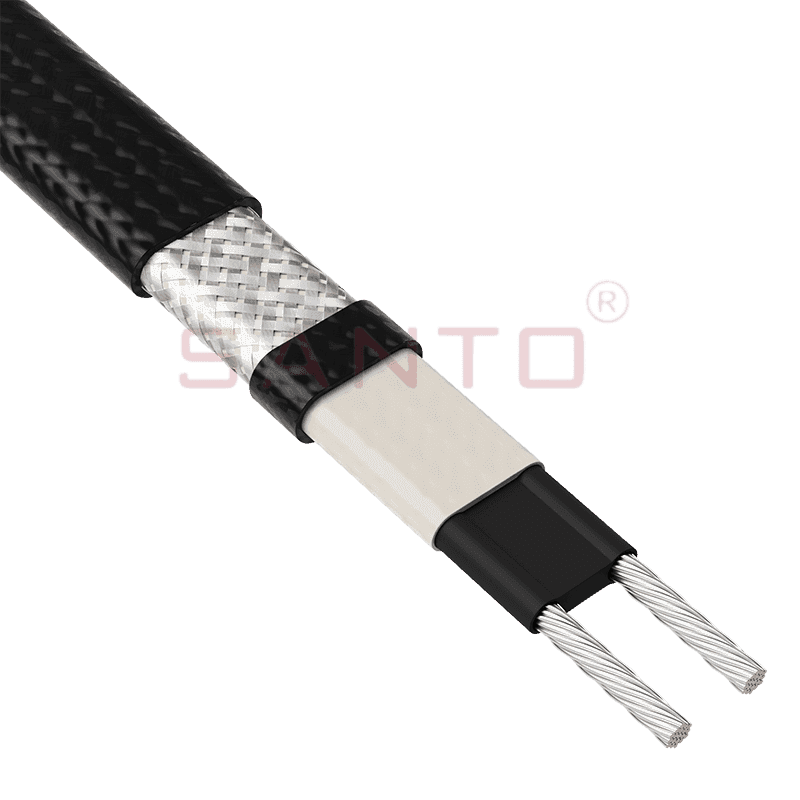
The SANTO UFA range of self-regulating heating cables is mainly used for frost protection of pipes and vessels but can also be used to maintain processes up to 65°C. These heating cables are available...
See Details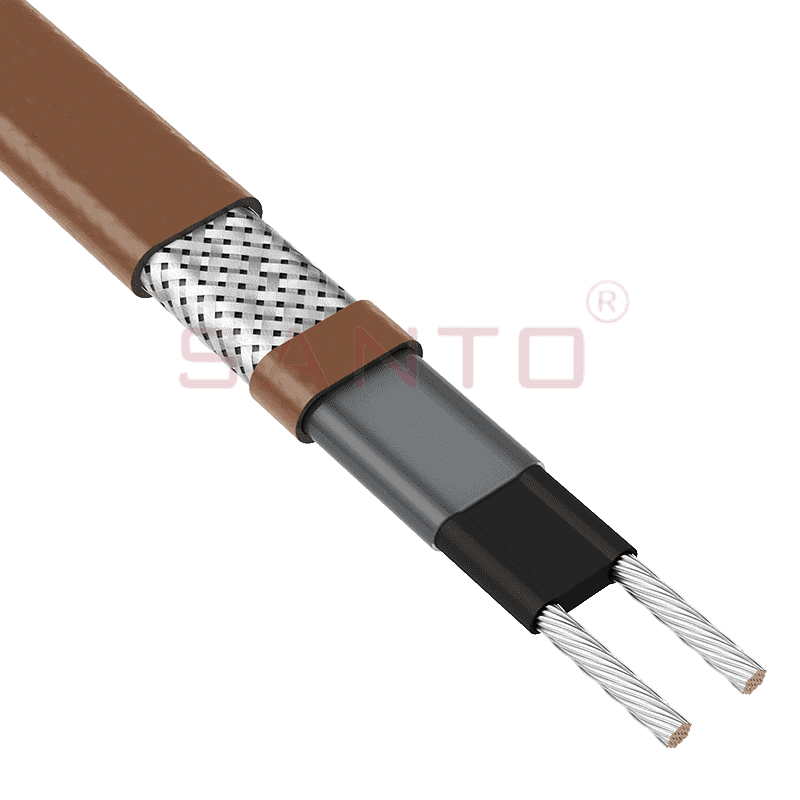
The SANTO UFB range of self-regulating heating cables is mainly used for frost protection of pipes and vessels requiring a higher power output than the UFA heating cables can supply. They can also be ...
See Details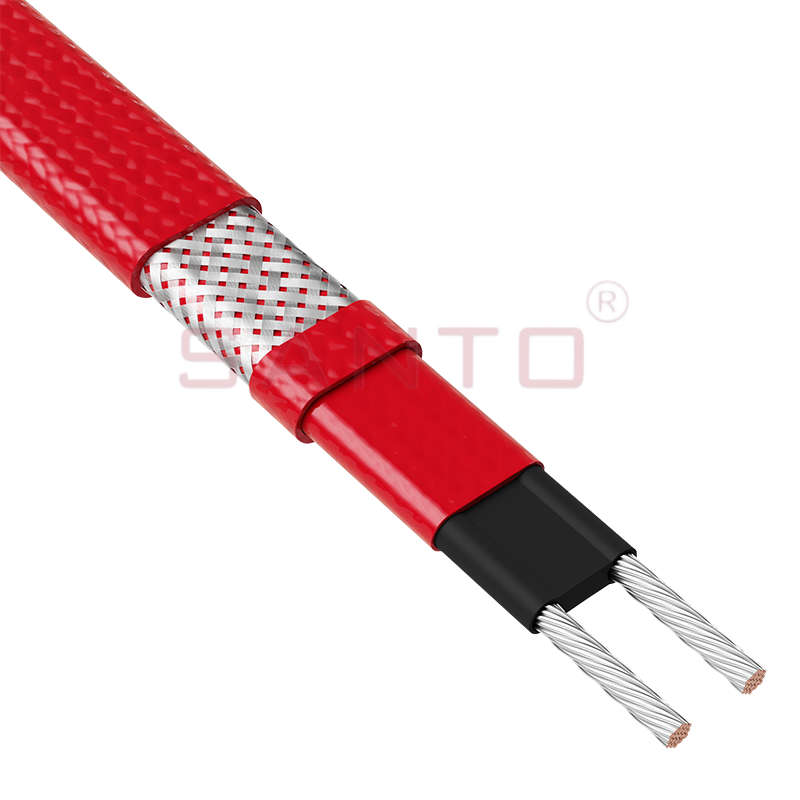
The SANTO UFC range of self-regulating heating cables is used for frost protection of pipes and vessels that require steam cleaning. They can also be used to maintain processes up to 121°C. These heat...
See Details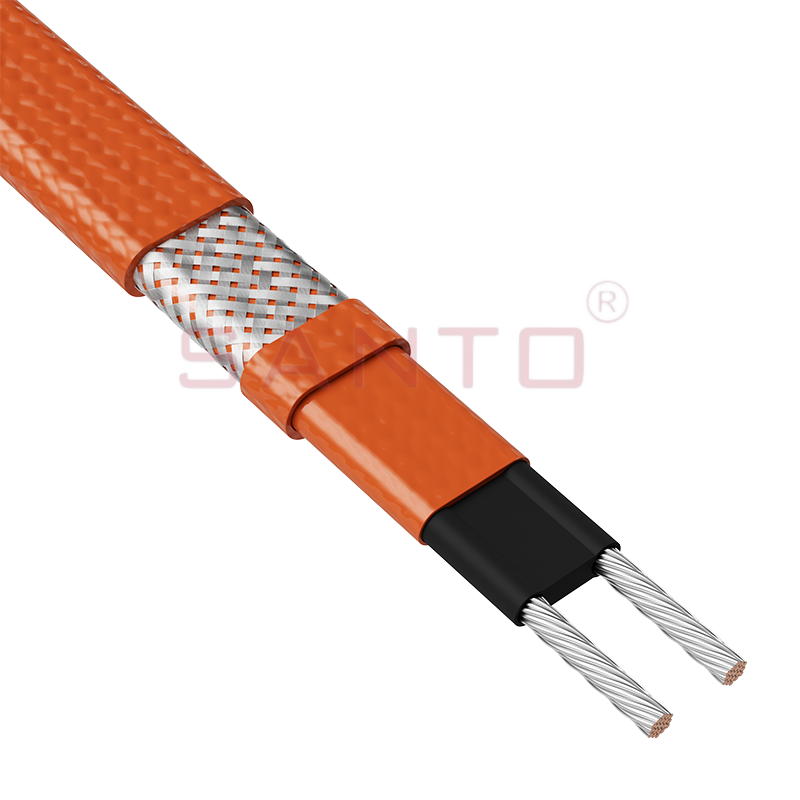
The SANTO UFO range of self-regulating heating cables is mainly used for frost protection of pipes and vessels that require steam cleaning . They can also be used to maintain processes up to 150°C. Th...
See Details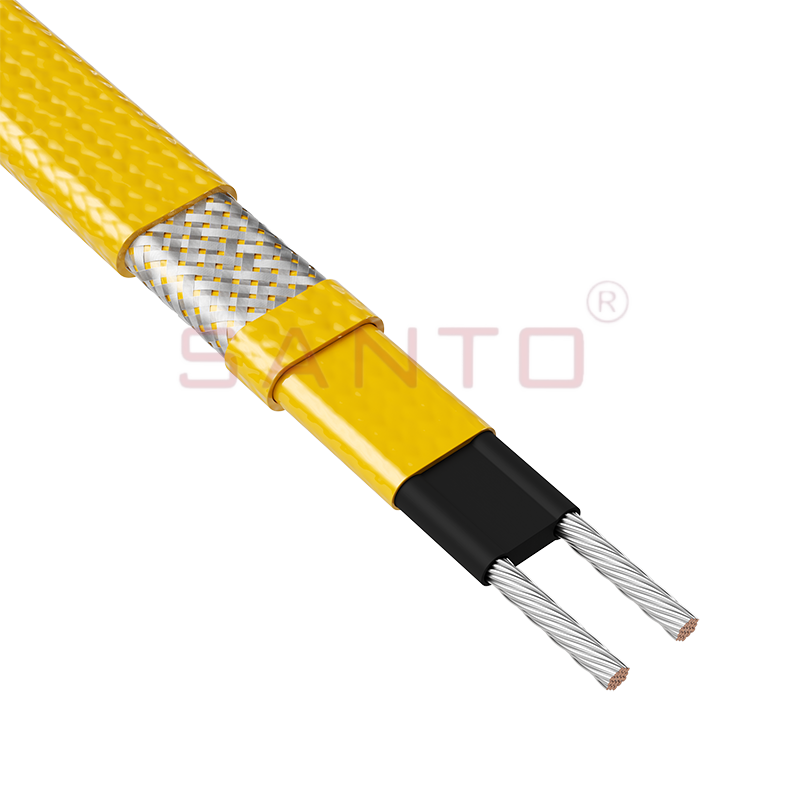
The SANTO UFD series of self-regulating heating cables are mainly used for freeze protection of pipes and vessels, but can also be used to maintain processes up to 200°C. These heating cables are avai...
See Details
SANTO UFY heating wire is suitable for applications that maintain process temperatures up to 260 ℃ and can be steam blown; The self-regulating and parallel circuit heating wires of the UFY series are ...
See Details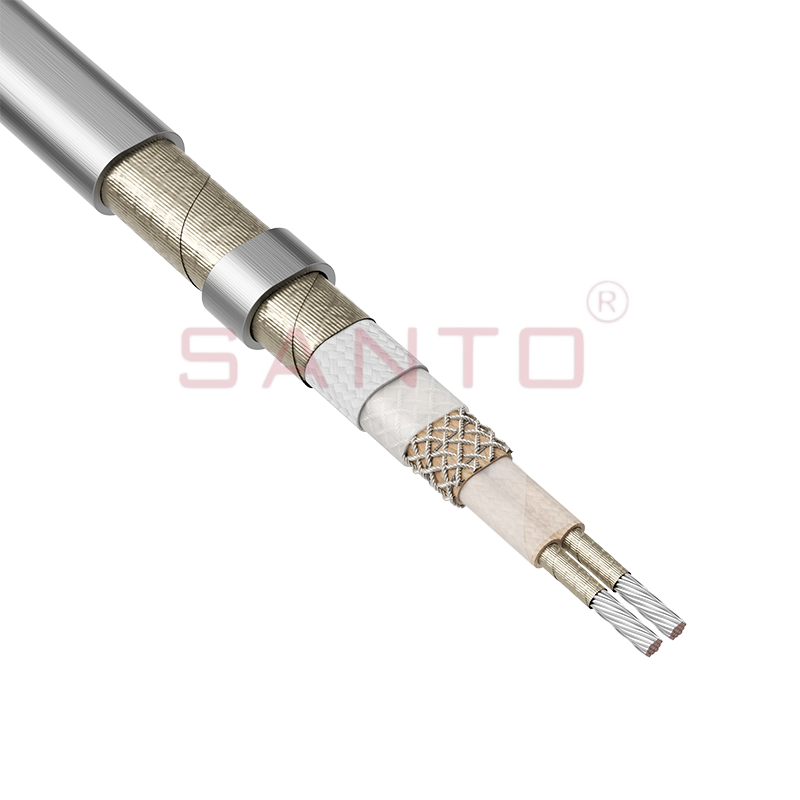
The SANTO UFM series self-regulating heating cables are mainly used for freeze protection of pipes and vessels, but can also be used to maintain processes up to 400°C. These heating cables are availab...
See Details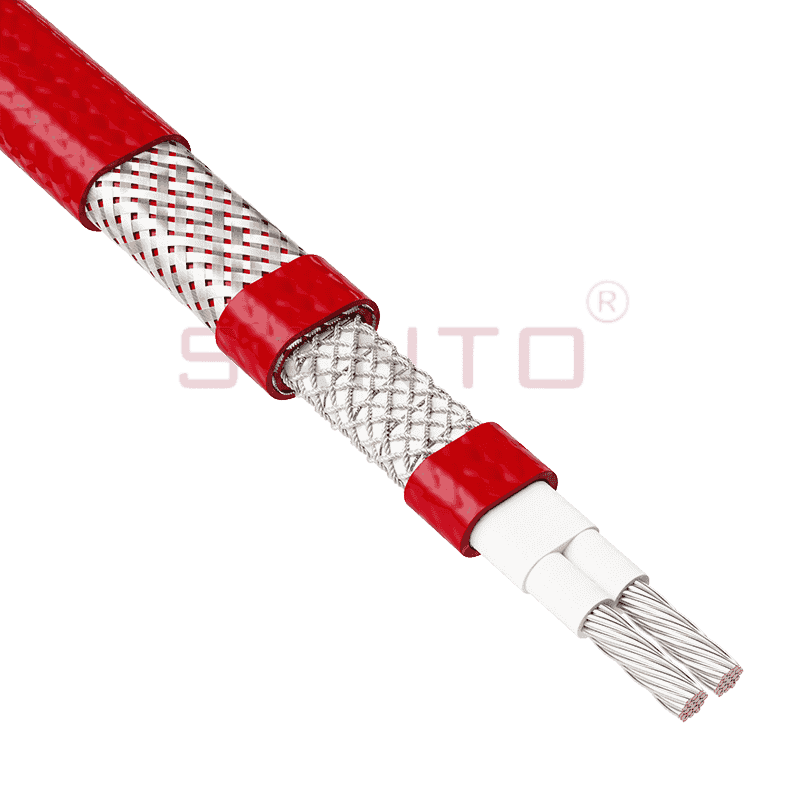
The SANTO ACC range of power-limiting heating cables is mainly used for temperature maintenance of processes and offers the advantage of a high power output at high temperatures which can reduce the n...
See Details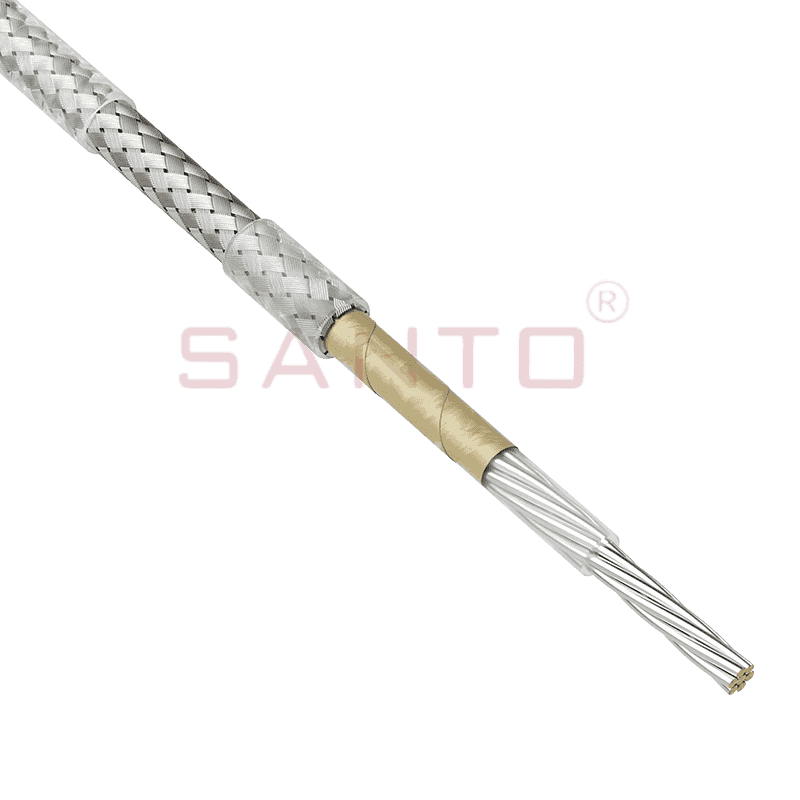
The stranded high temperature conductor is nickel plated to ensure a long life at elevated temperatures in corrosive environments. It is electrically isolated using an innovative sandwich construction...
See Details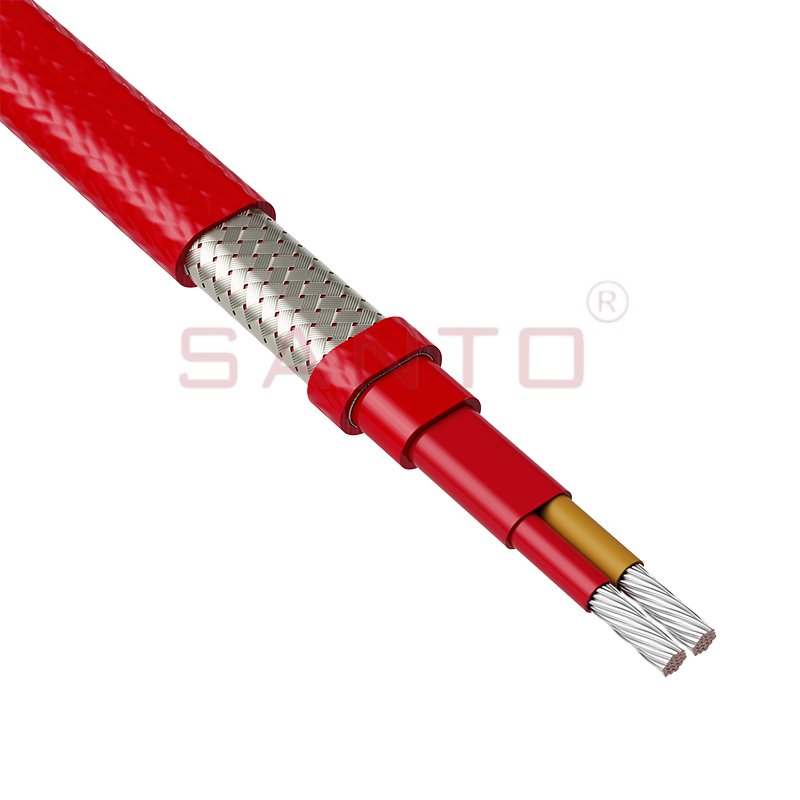
The stranded high temperature conductor is nickel plated to ensure a long life at elevated temperatures in corrosive environments. It is electrically isolated using an innovative sandwich construction...
See Details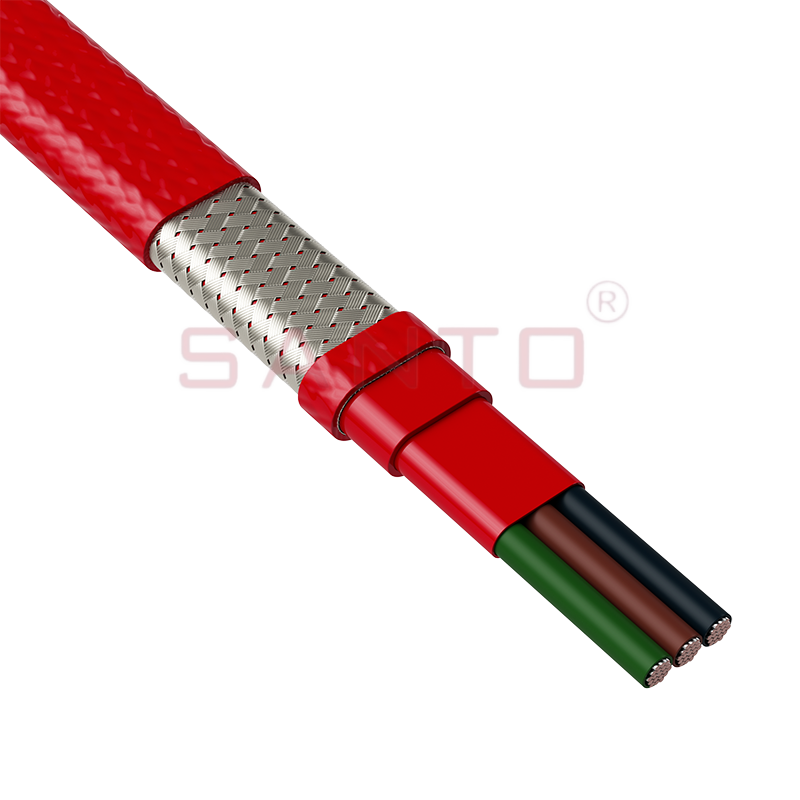
The stranded high temperature conductor is nickel plated to ensure a long life at elevated temperatures in corrosive environments. It is electrically isolated using an innovative sandwich construction...
See Details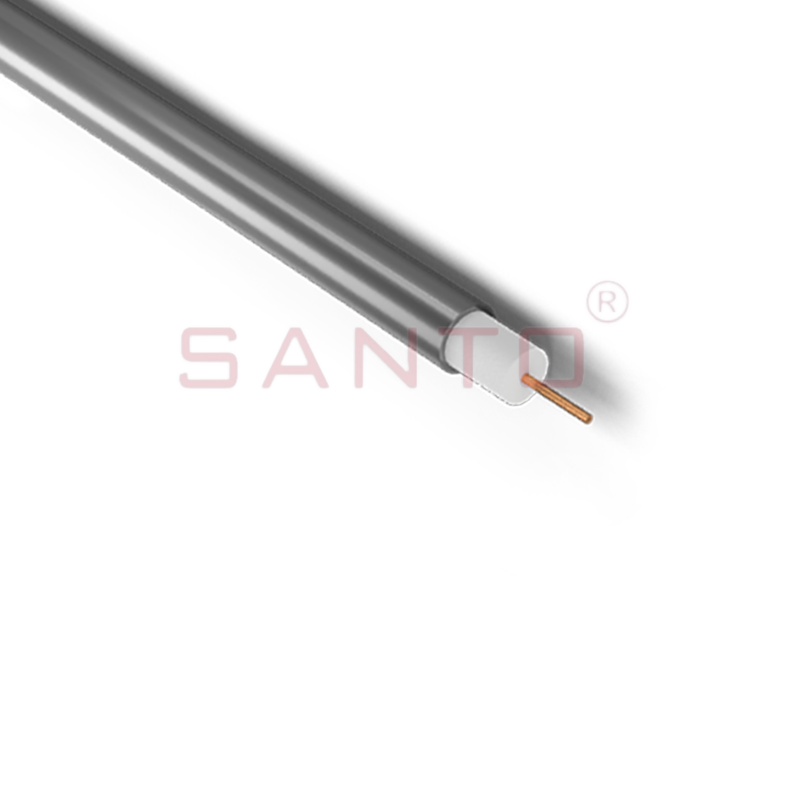
SANTO HAx mineral insulated (MI) Alloy 825 series heating cables are suitable for use in hazardous areas. They have been designed for use in freeze protection and temperature maintenance applications ...
See Details
Santo electric heating strips are widely used in key industries in China.

