 English
  English
 русский
 日本語
日本語 Español
 中文简体
中文简体
The SANTO UFA range of self-regulating heating cables is mainly used for frost protection of pipes and vessels but can also be used to maintain processes up to 65°C. These heating cables are available...
See Details
Industrial heat tracing systems depend on more than the heating cable itself. A reliable power connection is essential for safe operation, stable current delivery, easy inspection, and long-term protection in harsh field environments. The MFS-100-E and MFS-100-EP single-circuit power supply junction box series is designed for this critical connection point. It provides a dedicated power interface for industrial parallel heating wires used in freeze protection, process temperature maintenance, pipeline heating, tank heating, and similar thermal control applications.
The product is especially valuable in facilities where electrical safety, environmental sealing, mechanical durability, and fast installation are all required at the same time. In many industrial sites, the power junction box must perform under low ambient temperatures, moisture exposure, vibration, chemical atmosphere, thick insulation layers, and hazardous-area regulations. The MFS-100 series addresses these demands with a robust engineering polymer housing, stainless steel cover screws, silicone rubber gasket sealing, certified terminal connection technology, and configuration options for different regional electrical practices.
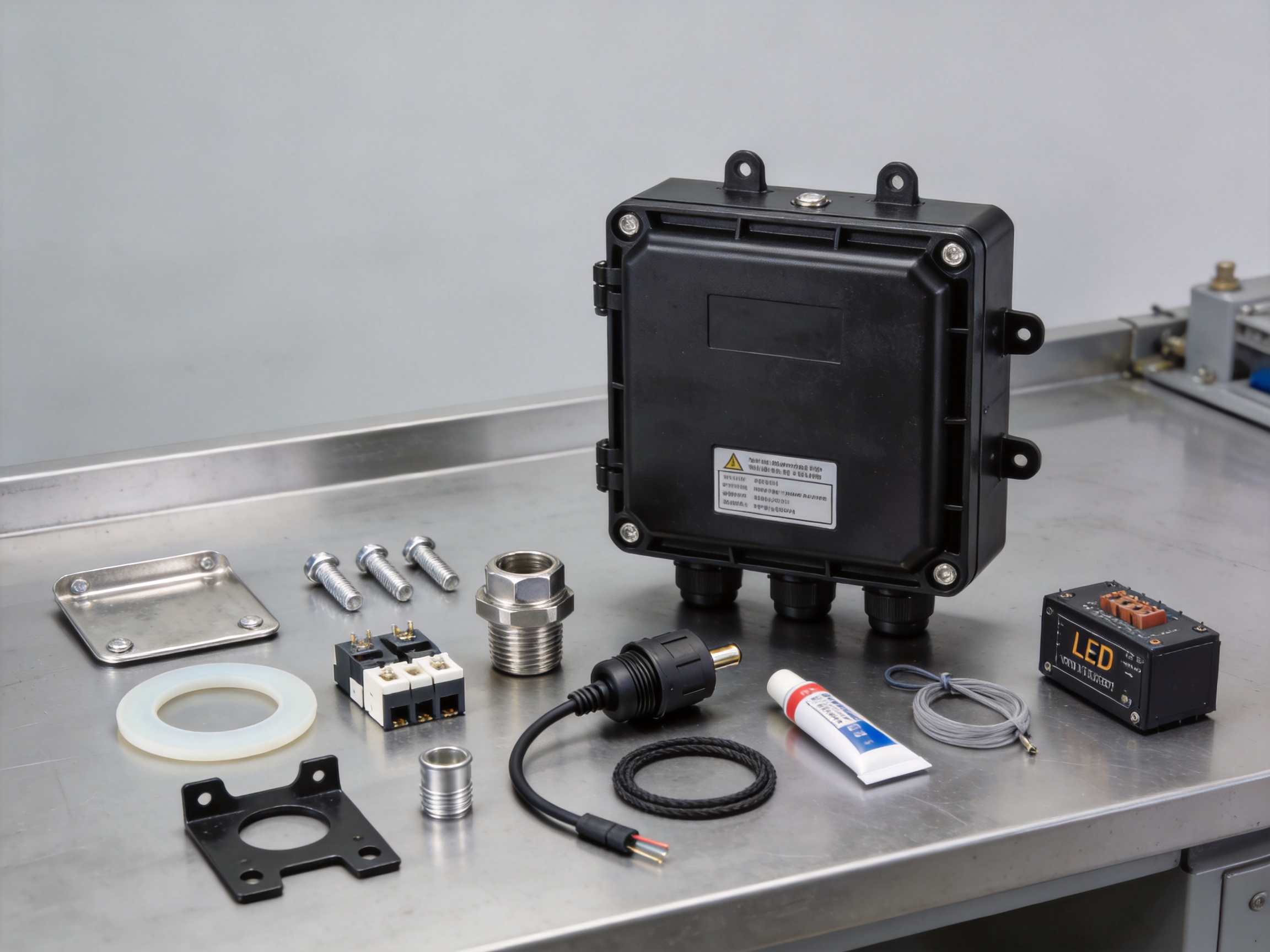
Unlike ordinary junction boxes that merely provide an enclosure for wiring, this product is developed as a complete heat tracing power connection kit. It integrates the enclosure, terminal blocks, mounting bracket, core sealing sleeve, grounding components, power cable entry accessories, lubricant, cable tie, and an optional LED indicator module. This kit-based design helps reduce missing components on site, shortens installation time, improves consistency, and supports safer commissioning.
Content
The MFS-100 kit is designed to connect incoming power to industrial parallel heating wires such as UFA, UFB, UFC, UFO, and compatible ABB series heating cables. It is intended for single-circuit power supply applications, where one heating circuit is connected through one junction box assembly. The product is suitable for hazardous areas and has been developed around international certification expectations, including explosion-proof and industrial safety requirements associated with CNEX, IECEx, ATEX, DNV, Baseefa, and EAC markets.
The MFS-100-E version is intended for Eurasian regional applications and includes two M25 threaded entries, one plug, and one plastic gland for power cables. The MFS-100-EP version is also intended for Eurasian regional use, but it is designed for armored cable installations and includes a grounding plate and external grounding bolt. Both versions provide IP66/IP67 protection, helping the enclosure resist dust ingress and water exposure in demanding outdoor and industrial locations.
The product can also be supplied with an optional luminous indicator module. This module contains an ultra-bright LED installed into the wiring terminal, and a viewing window in the cover allows operators to confirm whether the junction box is energized. In industrial maintenance, this visual confirmation can reduce uncertainty during inspection and improve operational awareness without opening the enclosure.
One of the most practical design details is the core sealing sleeve, which can be installed without a hot air gun or open flame. Many heating cable termination systems require heat-shrink operations or hot work procedures. By reducing or eliminating the need for high-temperature work at the power connection, the MFS-100 series helps simplify permitting requirements and reduce risks in hazardous or highly controlled industrial environments.
Heat tracing is often installed in environments where failure can produce costly downtime or safety hazards. A frozen pipeline can stop production, a process line can fall below its required temperature, and accumulated ice can create operational risks. While heating cables are the visible working element, the electrical connection point is one of the most important reliability factors. If the junction box fails, the entire heating circuit can lose power.
A suitable heat tracing power junction box must perform several functions. It must connect conductors securely, provide strain relief for incoming power and heating cable connections, protect the heating cable core from moisture and contamination, maintain proper grounding, support installation over insulation layers, and remain sealed after many temperature cycles. It must also provide a safe internal arrangement that reduces the chance of accidental short circuits or loose connections.
Generic electrical boxes are often not optimized for heating cable geometry, sealing requirements, or insulation thickness. They may require extra accessories, improvised brackets, field modifications, or complex termination steps. These issues can create inconsistency between installation teams. By contrast, the MFS-100 series is a purpose-built power connection kit for heat tracing. It provides a more repeatable installation method and reduces dependence on improvisation.
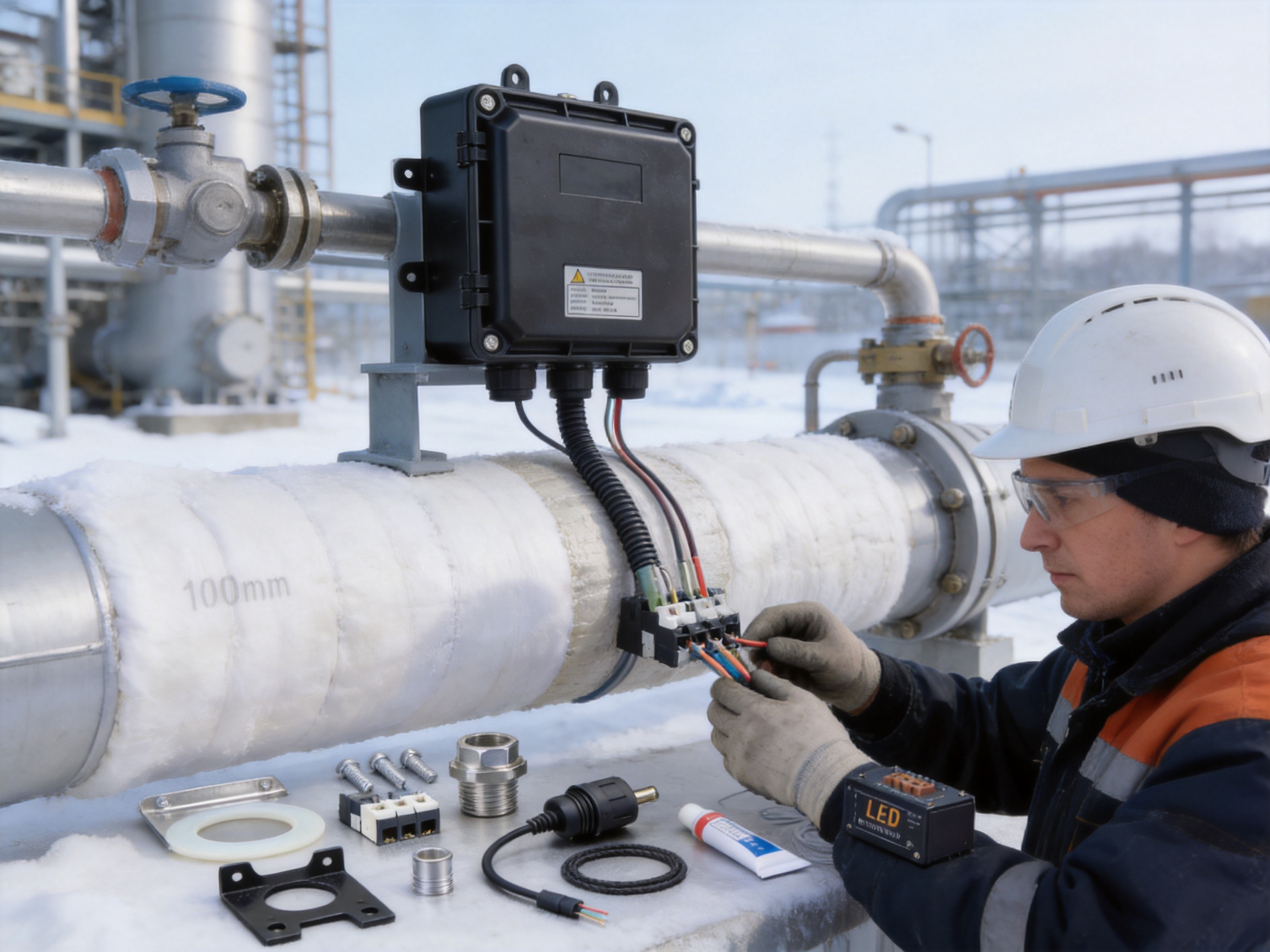
The bracket design is particularly important because many pipelines and vessels are covered with thermal insulation. The MFS-100 bracket is sturdy and durable, supporting installation for insulation layers up to 100 mm. This helps position the junction box outside the insulation while protecting the heating cable route and maintaining accessibility for inspection. When compared with a box that must be mounted directly to a surface or attached using nonstandard hardware, the integrated bracket approach is more convenient and professional.
The MFS-100-E and MFS-100-EP are supplied as complete connection kits rather than simple empty enclosures. Each kit includes a junction box with terminal blocks, a bracket, a core sealing sleeve, a yellow and green grounding wire sleeve, lubricant, and a cable tie. The E version includes an M25 gland for power cables with a diameter range of 8 to 17 mm and an M25 plug. The EP version includes grounding hardware for armored cable use.
This complete kit structure gives the product an advantage over conventional junction box solutions that require separate sourcing of glands, plugs, sealing materials, grounding accessories, and mounting components. In project procurement, every missing accessory can delay installation. A kit-based solution simplifies logistics, improves compatibility between parts, and reduces the likelihood that installers will use inappropriate substitute components.
The core sealing sleeve can be installed without using a hot air gun or spray lamp. This is a significant benefit in hazardous areas and industrial plants where hot work permits are difficult to obtain. In many facilities, open flames and high-temperature tools are restricted because they can ignite vapors, gases, dust, or nearby materials. Even when hot work is allowed, it requires additional safety controls, work permits, fire watch procedures, and time.
By avoiding hot work during the sealing process, the MFS-100 kit supports safer and faster installation. The benefit is especially clear during maintenance, expansion, or retrofit projects where work may be performed near active process equipment. Compared with competitors that rely heavily on heat-shrink termination, this feature can reduce administrative burden and improve installation flexibility.
The MFS-100-E and MFS-100-EP versions provide IP66/IP67 protection. IP66 indicates strong protection against dust and powerful water jets, while IP67 indicates protection against temporary immersion under defined conditions. This sealing performance is important in heat tracing applications where equipment may be exposed to rain, snow, washdown, condensation, or high humidity.
The enclosure uses an engineering polymer shell, lid, and bracket. The cover screws are stainless steel, and the cover gasket is silicone rubber. This material combination supports corrosion resistance, sealing stability, and outdoor durability. For industrial heating cable installations, the enclosure must remain reliable through thermal cycling, vibration, UV exposure, and mechanical handling. A high-protection enclosure reduces moisture-related failures and helps maintain safe electrical insulation.
The optional LED indicator module gives maintenance personnel an immediate visual signal that the junction box is energized. The module consumes less than one watt, so it adds very little load. For the MFS-100-E and MFS-100-EP versions, the LED indicator is rated for 100 to 254 Vac and is typically green. The cover includes a viewing feature so the energized status can be checked without opening the box.
This simple visual function improves site efficiency. During troubleshooting, maintenance personnel can quickly identify whether power is present at the connection point. During routine inspection, operators can verify energized circuits more easily. Compared with junction boxes that require instruments or cover removal to confirm power, the luminous module is more convenient and can reduce unnecessary disturbance to the sealed enclosure.
The product family is available in configurations suitable for different markets and cable installation practices. The North American version uses a 3/4 inch entry concept, while the Eurasian versions use M25 threaded holes. The MFS-100-E is supplied with a power cable gland, plug, and terminal blocks for standard power cable installations. The MFS-100-EP includes grounding hardware and is designed for armored cable applications.
This regional flexibility is a competitive advantage for international projects. Many plants follow strict electrical specifications based on local standards, cable construction, and hazardous-area requirements. A junction box that supports multiple regional practices can simplify engineering approval and reduce redesign work. For manufacturers, contractors, and end users operating across several countries, this adaptability provides practical value.
The product uses WAGO 284 series terminal technology for secure conductor connection. The MFS-100-E and MFS-100-EP versions support one phase, one neutral, and one grounding wire. The maximum wire size is 10 mm² for multi-strand wire and 10 mm² for solid electrical building wire. The maximum working voltage is 254 Vac, and the maximum continuous working current is 40 A for the heating wire circuit.
Reliable terminals are essential because heat tracing circuits may operate continuously for long periods. Loose terminations can generate heat, increase resistance, cause nuisance failures, or create safety hazards. A purpose-selected terminal system improves mechanical retention and electrical continuity. Compared with low-quality screw-only connectors or improvised terminal assemblies, the specified terminal arrangement supports a more consistent and professional installation.
| Item | MFS-100-E / MFS-100-L-E | MFS-100-EP / MFS-100-L-EP |
| Regional application | Eurasian region | Eurasian region, armored cable applications |
| Entry arrangement | Two M25 threaded holes, one plug, one plastic gland | Two M25 threaded holes, one plug, grounding plate, external grounding bolt |
| Protection grade | IP66/IP67 | IP66/IP67 |
| Applicable heating cables | UFA, UFB, UFC, UFO, and compatible ABB ACC, ADD, AFF, XP series | UFA, UFB, UFC, UFO, and compatible ABB ACC, ADD, AFF, XP series |
| Temperature range | -50°C to +40°C for standard version; -40°C to +40°C for luminous version | -50°C to +40°C for standard version; -40°C to +40°C for luminous version |
| Minimum installation temperature | -50°C | -50°C |
| Terminal arrangement | One phase, one neutral, one grounding wire | One phase, one neutral, one grounding wire |
| Maximum wire size | 10 mm² multi-strand or 10 mm² solid conductor | 10 mm² multi-strand or 10 mm² solid conductor |
| Maximum working voltage | 254 Vac | 254 Vac |
| Maximum continuous current | 40 A heating wire circuit | 40 A heating wire circuit |
| Housing, cover, and bracket | Black engineering polymer | Black engineering polymer |
| Cover screws | Stainless steel | Stainless steel |
| Cover gasket | Silicone rubber | Silicone rubber |
| Grounding plate | Not applicable | Galvanized steel with blue chromate plating |
| Optional LED rating | 100 to 254 Vac, less than 1 W | 100 to 254 Vac, less than 1 W |
The enclosure, lid, and bracket are made from black engineering polymer. In heat tracing applications, engineering polymer offers several benefits. It resists corrosion better than many untreated metal housings, provides electrical insulation, reduces weight, and can be molded into optimized shapes that support sealing, cable routing, and bracket strength. The black color also provides a professional industrial appearance and helps maintain consistency across installations.
In coastal plants, chemical facilities, wastewater treatment areas, and outdoor process units, corrosion is a long-term threat. Metal housings can perform well when properly selected and coated, but scratches, galvanic effects, and chemical attack may shorten service life. A high-quality engineering polymer body can reduce these concerns. The polymer design also supports smooth surfaces and controlled gasket compression, helping the enclosure maintain its ingress protection.
The cover gasket is made from silicone rubber, a material known for flexibility and temperature stability. A gasket must maintain compression over repeated opening and closing, temperature cycling, and exposure to moisture. Silicone rubber helps preserve sealing performance in low-temperature environments, which is important because the product can be installed at temperatures as low as -50°C.
In many cold-region industrial applications, ordinary gasket materials may harden and lose elasticity. When a gasket becomes brittle, water ingress and condensation become more likely. The use of silicone rubber is therefore a meaningful product advantage. It supports the IP66/IP67 rating and reduces the risk of internal moisture that could compromise terminals or insulation resistance.
Stainless steel cover screws improve durability and corrosion resistance. Junction box covers may be removed during inspection or maintenance, and screw condition affects both serviceability and sealing. Rusted or damaged screws can prevent proper tightening and may compromise gasket compression. Stainless steel fasteners help maintain long-term usability and professional appearance.
This detail may appear small, but it reflects a design philosophy focused on real field conditions. Heat tracing systems are often installed outdoors and may be exposed for many years. Each material selection influences total lifecycle reliability. Compared with boxes using lower-grade fasteners, stainless steel cover screws provide a stronger long-term maintenance advantage.
The MFS-100-EP version includes a grounding plate and external grounding bolt, making it suitable for armored cable applications. Armored power cables are commonly used in industrial installations for mechanical protection and compliance with site electrical standards. Proper grounding of the armor is essential for electrical safety and fault current management.
The integrated grounding plate is made from galvanized steel with blue chromate plating. This supports mechanical strength and corrosion protection. By integrating the grounding solution into the kit, the product helps ensure that armored cable installations are completed correctly and consistently. This is a clear advantage over generic enclosures that require separate grounding hardware or field-fabricated bonding solutions.
Industrial installation schedules are often tight. Contractors must coordinate insulation work, electrical installation, mechanical access, safety permits, and commissioning deadlines. A power junction box that installs quickly and predictably reduces project risk. The MFS-100 kit supports efficient installation through its preselected components, clear functional layout, and no-hot-work core sealing design.
The bracket can protect the heating wire and accommodate insulation layers up to 100 mm. This means the box can remain accessible above the insulation, which is important for inspection and maintenance. When junction boxes are buried, obstructed, or mounted without proper standoff distance, later maintenance becomes difficult and may require insulation removal. The MFS-100 bracket helps avoid such problems.
The lubricant and cable tie supplied in the kit also contribute to installation quality. Proper lubrication can help position sealing components without damage, while the cable tie assists with cable management. These small accessories reduce the need for installers to search for compatible materials on site. A complete kit improves repeatability and helps different installation teams achieve similar results.
Safety is also improved by the optional LED indicator. Before opening an enclosure, workers should follow appropriate electrical isolation procedures. However, visual indication provides an additional awareness tool. It helps identify energized circuits and can reduce mistakes during inspection. In complex plants with many similar junction boxes, this function can be particularly helpful.
Hazardous-area heat tracing systems require careful product selection. Electrical equipment used near flammable gas, vapor, or dust must be designed and certified according to relevant standards. The MFS-100 kit is identified as suitable for hazardous areas and supported by certifications associated with international and regional markets, including CNEX, IECEx, ATEX, DNV, Baseefa, and EAC.
For end users, certification support reduces engineering uncertainty. It helps electrical designers, safety engineers, and procurement teams confirm that the junction box is appropriate for regulated applications. For contractors, a certified kit reduces the risk of rejection during inspection. For plant operators, it contributes to the overall safety integrity of the heat tracing system.
The no-hot-work sealing method is especially relevant in hazardous areas. Even if the product itself is certified, installation work can introduce temporary hazards. Eliminating the need for a hot air gun or flame-based tool during sealing helps reduce ignition risk and simplifies compliance with site safety procedures. This advantage is practical, not merely theoretical, because many plants require separate permits and supervision for hot work.
Compared with competitive products that may require flame sealing, heat shrinking, or multiple separately certified accessories, the MFS-100 series provides a more integrated approach. It brings enclosure protection, termination support, grounding, and installation accessories into one system. This reduces interface risk between components and improves consistency across large projects.
Petrochemical and chemical plants use heat tracing to maintain flow, prevent freezing, protect instruments, and control process temperatures. The MFS-100-E and MFS-100-EP are suitable for such environments because they support hazardous-area requirements, provide strong sealing, and allow installation in low-temperature conditions. Chemical plants also benefit from the engineering polymer enclosure and stainless steel fasteners, which help resist harsh outdoor and process conditions.
Oil and gas facilities often use long heat tracing circuits on pipelines, manifolds, valves, and tanks. Power connection reliability is essential because one failed junction box can interrupt heating over a significant circuit length. The 40 A heating wire circuit capacity of the MFS-100-E and MFS-100-EP supports many industrial tracing designs, while the bracket helps keep the box accessible above insulation.
Power plants use heat tracing for fuel lines, water lines, instrumentation, chemical dosing systems, and outdoor equipment. These sites often require durable, low-maintenance components. The IP66/IP67 enclosure protection and optional LED indication help maintenance teams identify energized circuits and manage routine inspections more efficiently.
In cold regions, installation and maintenance may occur in extremely low temperatures. The minimum installation temperature of -50°C gives the product a strong advantage for northern facilities, high-altitude industrial sites, and winter construction projects. The silicone gasket and engineering polymer construction support low-temperature handling and sealing performance.
Beyond heavy industry, heat tracing is also used in building systems, solar thermal pipelines, geothermal cultivation, and deicing applications. While the MFS-100 series is industrial in design, its reliability and complete kit structure make it attractive wherever professional power connection is required for heating cables.
The MFS-100-E and MFS-100-EP offer several competitive advantages. First, the product is not simply a box; it is a complete heat tracing power connection kit. Many competitor solutions require separate purchase of glands, plugs, brackets, sealing components, grounding kits, and visual indicators. Separate sourcing increases the risk of mismatch, missing parts, and installation delays. A complete kit lowers that risk.
Second, the product supports no-hot-work installation of the core sealing sleeve. This can be a decisive advantage in hazardous areas. Competitor products that require hot air guns or flame tools may create permit delays, safety concerns, and additional labor costs. By avoiding high-temperature work during sealing, the MFS-100 series provides a safer and more efficient field process.
Third, the product provides strong environmental protection. IP66/IP67 protection, silicone rubber gasket sealing, stainless steel screws, and engineering polymer construction help the box perform in outdoor and wet environments. Some lower-cost alternatives may offer basic splash protection but may not provide the same level of dust and water resistance. Over time, higher sealing reliability can prevent costly circuit failures.
Fourth, the optional LED indicator is an operational advantage. A junction box with a visible energized status helps maintenance teams work faster and with better awareness. Many competitor products do not include a convenient power indication feature, or they require additional field wiring and accessories. The integrated luminous module is simple, low-power, and useful.
Fifth, the product family supports regional cable practices. With versions for M25 cable entries and armored cable grounding, it can be selected according to project standards. Competitors with only one entry configuration may require adapters or modifications. Adapters can introduce sealing concerns and complicate certification review. Purpose-designed variants provide cleaner engineering solutions.
Sixth, the product is supported by a manufacturer with broad heating cable experience, international market exposure, and advanced production capabilities. A junction box performs best when designed by a company that understands the heating cable system as a whole. Knowledge of heating cable behavior, insulation thickness, field installation practice, and hazardous-area requirements improves product design.
The manufacturer behind the MFS-100 series is an experienced thermal control enterprise located in Jiangsu Province, a major center of electric heating belt production. The company is engaged in research, design, production, and manufacturing of automatic temperature-control electric heating belts, self-limiting heating belts, heat tracing belts, constant-power heating belts, glass fiber heating belts, mineral insulated cables, and related electric heating products.
This broad product background is important because accessories such as power junction boxes must match the requirements of heating cables. A manufacturer that produces both heating cables and accessories can evaluate compatibility more effectively. It can design the junction box around real cable dimensions, termination needs, conductor sizes, grounding requirements, and insulation practices. This system-level understanding is a major advantage over suppliers that only produce generic electrical enclosures.
The company has more than 35 years of industry experience, annual output exceeding 10,000 units, a distributor network of more than 2,000 partners, and business coverage in more than 85 areas. These numbers show that the manufacturer has accumulated practical feedback from many applications. Product improvement is not based only on laboratory assumptions; it is also informed by real installations in petroleum, chemical, gas, construction, solar energy, electric heating, geothermal cultivation, and other industries.
The company has passed ISO9001 quality system certification, and its products have obtained national CCC certification. It has also obtained explosion-proof certification and EAC Eurasian Union certification. These quality and certification systems support consistent production, documented procedures, incoming material control, inspection discipline, and corrective action processes. For industrial buyers, this manufacturing maturity reduces procurement risk.
Manufacturing a high-quality power junction box involves more than assembling parts. The enclosure requires controlled polymer processing to maintain dimensional accuracy, wall strength, surface quality, and sealing geometry. The gasket interface must be consistent so that IP66/IP67 protection can be achieved. Threaded entries must be formed or finished with precision so that glands and plugs seal properly. Internal mounting points must align with terminal blocks and accessories.
Engineering polymer molding is a key process. Material selection, drying, injection parameters, mold temperature, cooling control, and post-molding inspection all influence final performance. If polymer parts warp or shrink unpredictably, the cover may not compress the gasket evenly. If threads are not accurate, cable entries may leak. Advanced manufacturing control helps prevent these problems.
Metal components also require careful processing. Stainless steel cover screws must meet dimensional and corrosion-resistance requirements. The grounding plate in the EP version is galvanized and blue chromate plated, which requires controlled surface treatment. Proper plating improves corrosion protection and ensures reliable grounding contact over time. The external grounding bolt must be strong, accessible, and correctly integrated into the enclosure design.
Terminal installation is another critical step. The WAGO 284 series terminals must be positioned securely and protected from mechanical stress. Internal wiring for the optional LED indicator must be arranged so it does not interfere with cover closure or conductor termination. The viewing feature in the cover must align with the luminous module so operators can easily see the energized status.
A professional manufacturing process should include incoming material inspection, dimensional inspection, assembly verification, electrical checks, sealing evaluation, and final visual inspection. For heat tracing junction boxes, key checks may include thread quality, gasket fit, cover screw engagement, terminal security, grounding continuity, LED function, label accuracy, and packaging completeness.
Quality control is especially important because the product is supplied as a kit. Every kit must contain the correct bracket, sealing sleeve, grounding sleeve, gland or plug, lubricant, cable tie, and optional indicator module if specified. Missing or incorrect components can delay installation. A disciplined packaging inspection process ensures that field teams receive everything required.
Traceability also matters for industrial buyers. When products are used in hazardous areas or critical process lines, documentation and batch control support maintenance records, warranty handling, and project acceptance. The company’s ISO9001 system and long manufacturing history provide a framework for repeatable quality management.
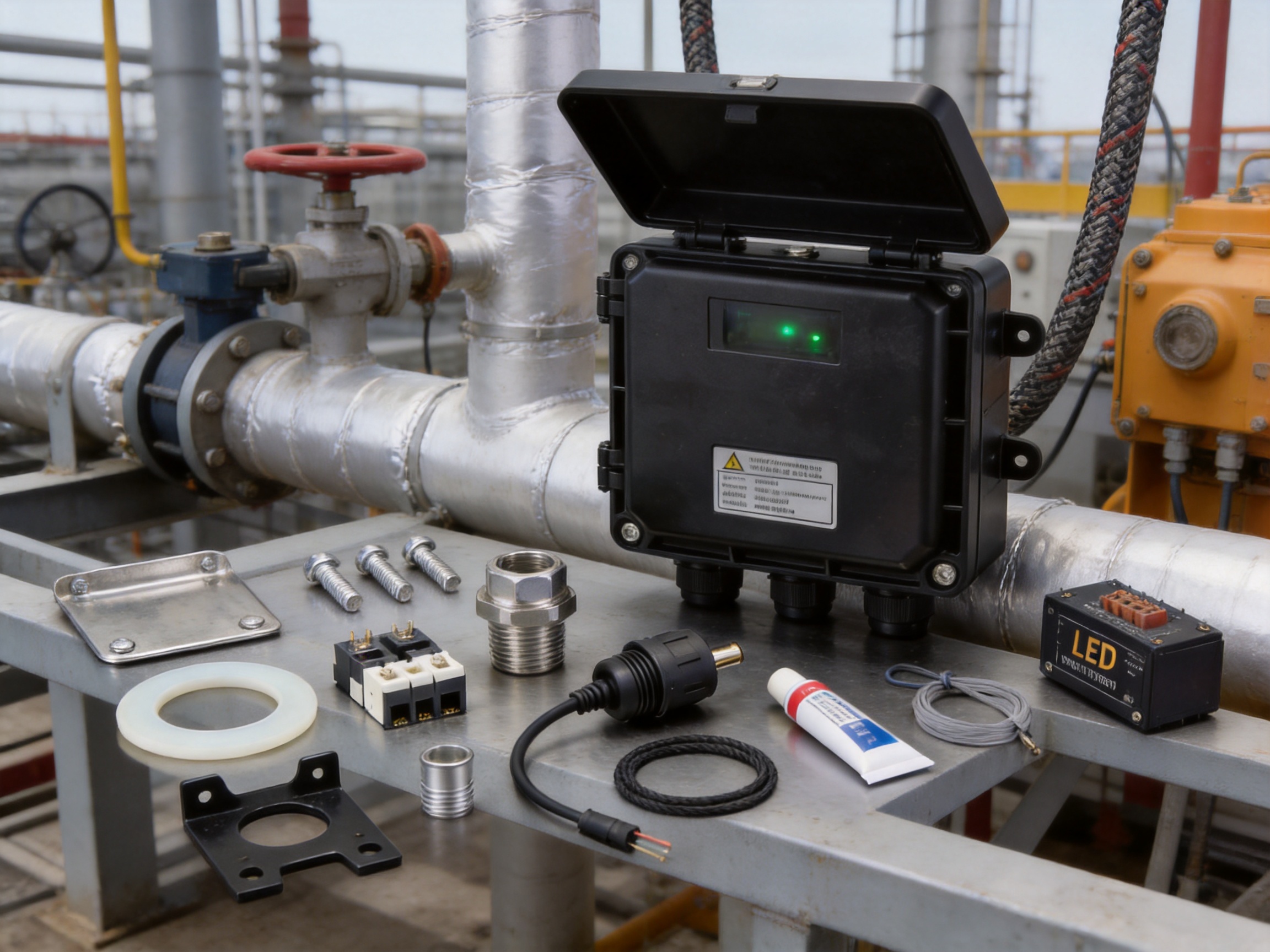
The MFS-100 series is compatible with UFA, UFB, UFC, UFO, and ABB ACC, ADD, AFF, and XP series heating cables. This compatibility makes the junction box useful in both new installations and retrofit projects. Many industrial sites have mixed heating cable brands and generations. A power connection kit that supports multiple cable types can reduce inventory complexity and make maintenance easier.
The maximum pipeline temperature is determined by the specifications of the heating cable used. This is an important engineering point. The junction box is part of the electrical connection and environmental protection system, while the heating cable determines heat output and temperature exposure along the pipe. Proper system design requires matching the heating cable, power supply, circuit breaker, control system, insulation thickness, and junction box according to project conditions.
The maximum continuous current rating for the MFS-100-E and MFS-100-EP is 40 A for the heating wire circuit. This makes the product suitable for many industrial parallel heating wire circuits. Engineers should always verify circuit length, starting current, operating voltage, breaker sizing, cable type, and temperature classification according to the project design.
Maintenance efficiency is a major lifecycle consideration. A junction box that is easy to locate, inspect, and open can save many hours over years of operation. The MFS-100 bracket positions the box above insulation, helping maintenance personnel access terminals without removing large sections of insulation. The optional LED indicator provides a quick visual status check. Stainless steel screws support repeated cover removal without severe corrosion problems.
The sealed enclosure reduces the chance of moisture ingress, which is one of the most common causes of electrical faults. Condensation can lower insulation resistance, corrode terminals, and create nuisance trips. The available drainage plug accessory for certain configurations helps prevent condensation accumulation. While the MFS-100-E and MFS-100-EP rely on IP66/IP67 sealing, proper installation practices and accessory selection remain important for long-term reliability.
Maintenance teams also benefit from standardized components. If a facility uses the same junction box series across many circuits, training becomes easier and spare parts can be managed more efficiently. Installers learn one method, inspectors recognize one layout, and documentation becomes more consistent. This standardization advantage is often underestimated during initial procurement but becomes valuable during long-term operation.
Select the MFS-100-E when the project uses non-armored power cable with M25 entry requirements and needs a standard Eurasian configuration. This version includes the power cable gland for 8 to 17 mm cable diameter and a plug for the unused M25 entry. It is suitable for many industrial power connection applications where armored cable grounding hardware is not required.
Select the MFS-100-EP when armored cable is specified. The grounding plate and external grounding bolt support proper bonding of armored cable systems. This is important in plants where cable armor is part of the protective grounding arrangement or where mechanical protection requirements lead to armored cable selection.
Select the luminous version when visual power indication is valuable. The LED indicator is especially useful in large facilities with many heat tracing circuits, remote outdoor areas, or routine winter inspection programs. The power consumption is less than one watt, so the operational benefit is achieved with minimal energy use.
Engineers should confirm voltage, current, conductor size, hazardous-area requirements, ambient temperature, insulation thickness, cable diameter, and cable armor type before final selection. Proper installation should follow the product manual, heating cable instructions, and applicable electrical codes.
The manufacturer has developed from an electric heating instrument factory into a high-tech thermal control enterprise. Its history includes ISO quality certification, establishment of irradiation capability, invention of advanced self-limiting temperature heating technology, explosion-proof certification, EAC certification, patented carbon fiber parallel heating cable development, brand expansion, and new factory and laboratory investment. This development path shows a long-term commitment to product technology rather than short-term trading.
The company cooperates in product research with advanced academic resources and continues to strengthen new product development, technology guidance, scientific management, product quality, and after-sales service. Its thermal control products are widely used for antifreeze, deicing, heating, heat tracing, and insulation. The broad portfolio includes constant-power heating strips, self-limiting heating strips, silicone rubber heating strips, glass fiber heating strips, electric hot wires, mineral insulated cables, snow melting cables, tracked heaters, and accessories.
For customers, this manufacturing background provides confidence. A supplier that understands the entire heat tracing ecosystem can support product selection, customization, project coordination, and after-sales service more effectively. When a junction box is used with heating cables in demanding environments, technical support matters. The ability to customize and install kits on site also gives projects flexibility when site conditions differ from drawings.
The company’s mission emphasizes creating value and a better life, while its core values include innovation, cooperation, effectiveness, and development. In practical product terms, these values are reflected in features such as the no-hot-work sealing sleeve, optional LED module, multi-region configurations, and robust protection ratings. Innovation is meaningful when it reduces field risk, saves installation time, and improves operational reliability.
A durable junction box contributes to sustainability by reducing replacement frequency, maintenance travel, and waste. Heat tracing systems often operate for many years, and accessory failure can lead to unnecessary repairs and downtime. By using corrosion-resistant materials, reliable gasket sealing, and professional terminal components, the MFS-100 series supports a longer service life.
Efficient installation also reduces environmental impact indirectly. Fewer site visits, fewer missing parts, and less rework mean lower labor waste and less transportation. The optional LED indicator can help technicians identify active circuits quickly, reducing unnecessary opening of enclosures and helping maintain sealing integrity. A system that remains sealed and functional is more reliable and resource-efficient.
The manufacturer’s vision of protecting environmental health aligns with reliable thermal control. Heat tracing prevents frozen pipelines, reduces process disruption, and helps maintain safe operation of industrial systems. Reliable accessories are part of that environmental and safety chain because they help ensure that heating systems operate only as designed and remain protected from electrical faults.
Before installation, confirm that the selected kit matches the heating cable type, power cable construction, entry size, hazardous-area classification, and ambient temperature range. Inspect the kit contents and make sure all required components are present. The installation area should be clean, accessible, and prepared according to site safety rules.
Mount the bracket securely so that the junction box remains accessible above the insulation layer. Route the heating cable carefully to avoid sharp bends, crushing, or mechanical stress. Use the core sealing sleeve according to the manufacturer’s instructions. Since the sleeve does not require hot air or flame, installers should avoid applying unnecessary heat that could damage components.
Terminate conductors in the specified terminals and verify that phase, neutral, and grounding conductors are correctly connected. For the EP version, ensure that armored cable grounding is properly bonded using the grounding plate and external grounding bolt. Tighten cover screws evenly to compress the silicone gasket and maintain enclosure protection. If the optional LED indicator is supplied, verify its function during commissioning.
After installation, record the circuit identification, voltage, current rating, heating cable type, and inspection results. Periodic maintenance should include visual inspection of the enclosure, bracket, cable entries, cover screws, gasket condition, grounding connection, and LED status if present. Any damaged component should be replaced with compatible parts to preserve certification and sealing performance.
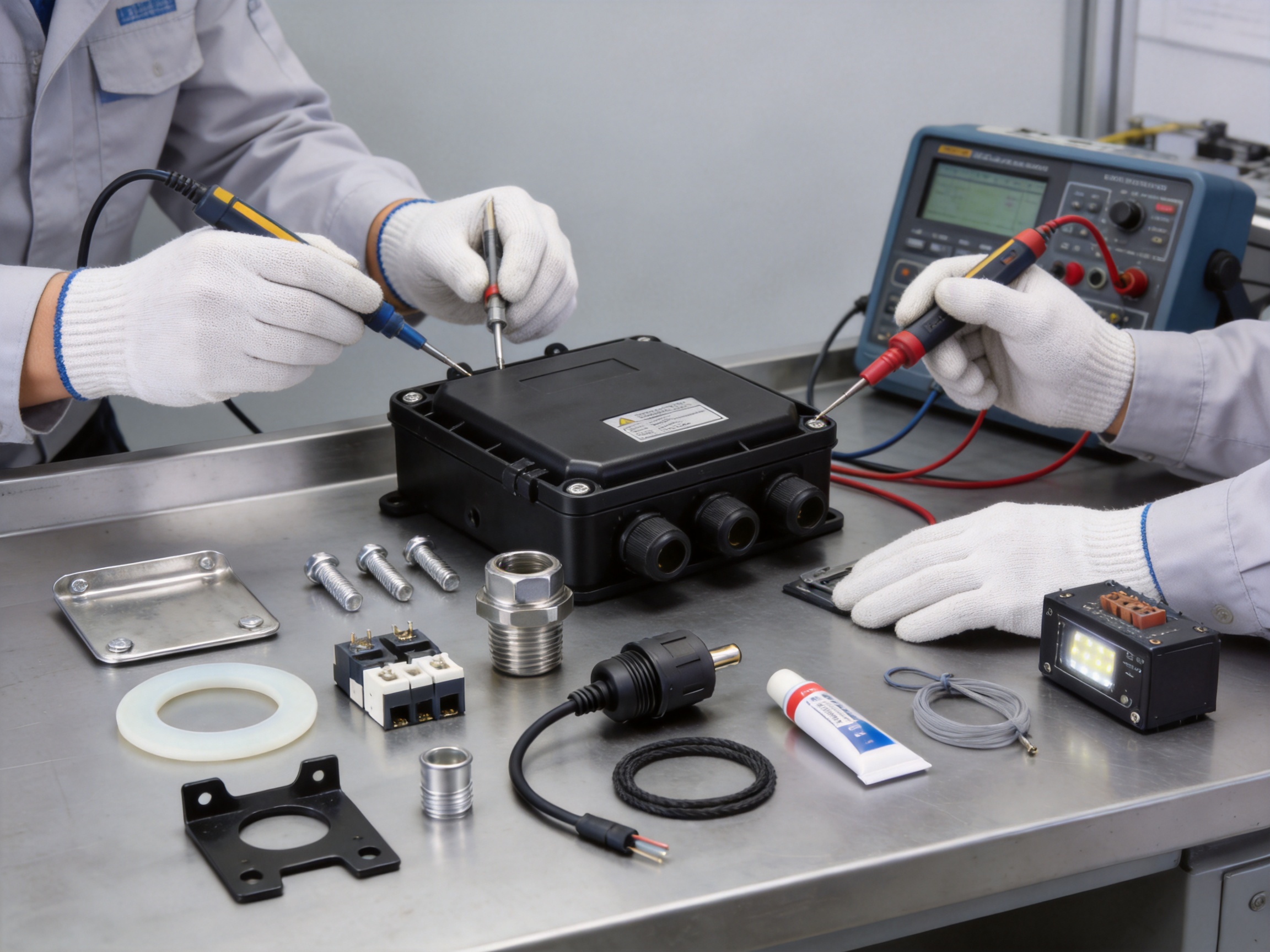
It is used to connect incoming power to a single industrial heat tracing circuit. It provides the junction box, terminal blocks, cable entry system, sealing sleeve, bracket, grounding accessories, and optional power indication needed for a professional heating cable power connection.
The MFS-100-E is designed for standard Eurasian power cable installations with M25 entries, a plug, and a plastic power cable gland. The MFS-100-EP is designed for armored cable applications and includes a grounding plate and external grounding bolt.
Yes. The kit is designed for hazardous-area use and is supported by international and regional certification frameworks such as CNEX, IECEx, ATEX, DNV, Baseefa, and EAC. Final selection should always be checked against the project classification and local code requirements.
No. The core sealing sleeve can be installed without a hot air gun or spray lamp. This reduces hot work requirements and improves installation safety, especially in hazardous or controlled industrial environments.
The product is applicable to UFA, UFB, UFC, UFO, and compatible ABB ACC, ADD, AFF, and XP series heating cables. Engineers should verify detailed compatibility with the heating cable specification before installation.
The MFS-100-E and MFS-100-EP provide IP66/IP67 protection. This supports resistance against dust, water jets, and temporary immersion under defined conditions.
The maximum working voltage for the MFS-100-E and MFS-100-EP versions is 254 Vac.
The maximum continuous working current is 40 A for the heating wire circuit in the MFS-100-E and MFS-100-EP versions.
The LED indicator provides a visible energized status through the cover viewing feature. This helps maintenance personnel identify powered circuits quickly without opening the enclosure.
Yes. The minimum installation temperature is -50°C. This makes the product suitable for cold-region industrial projects and winter construction conditions.
The shell, cover, and bracket are made of black engineering polymer. The cover screws are stainless steel, and the gasket is silicone rubber. The EP grounding plate is galvanized steel with blue chromate plating.
A generic junction box may not include the correct heating cable sealing system, bracket, grounding solution, terminals, cable entries, or indicator option. The MFS-100 series is a complete heat tracing power connection kit, offering better installation consistency, environmental protection, and application-specific safety.
The MFS-100-E and MFS-100-EP single-circuit power supply junction boxes are purpose-built solutions for industrial heat tracing power connection. They combine strong environmental protection, hazardous-area suitability, low-temperature installation capability, professional terminal technology, and practical field features such as no-hot-work core sealing and optional LED indication.
The E version provides a complete M25 power cable gland solution for standard Eurasian installations, while the EP version adds grounding hardware for armored cable applications. Both versions offer IP66/IP67 protection, support 254 Vac operation, and provide 40 A maximum continuous current capacity for heating wire circuits. Their engineering polymer enclosure, silicone rubber gasket, stainless steel screws, and robust bracket design make them suitable for demanding industrial environments.
Compared with conventional or competitor junction boxes, the MFS-100 series delivers advantages in installation speed, safety, accessory completeness, sealing reliability, regional adaptability, and maintenance convenience. Backed by an experienced thermal control manufacturer with advanced production processes, quality certification, broad product expertise, and international market experience, the product offers more than a connection point. It offers a dependable interface between power supply and heat tracing performance.
For industrial projects where safety, reliability, and efficiency matter, the MFS-100-E and MFS-100-EP provide a professional power connection solution that supports long service life and consistent heat tracing operation.
International Electrotechnical Commission. IEC 60079 Series: Explosive Atmospheres Standards.
International Electrotechnical Commission. IEC 60529: Degrees of Protection Provided by Enclosures.
European Committee for Electrotechnical Standardization. EN 60079 Series: Equipment for Explosive Atmospheres.
International Organization for Standardization. ISO 9001: Quality Management Systems Requirements.
National Electrical Manufacturers Association. NEMA Enclosure Type Standards for Electrical Equipment.
Industrial Heat Tracing Engineering Handbook: Design, Installation, and Maintenance Practices.
Electrical Safety Foundation. Industrial Electrical Maintenance and Grounding Practice Guidelines.
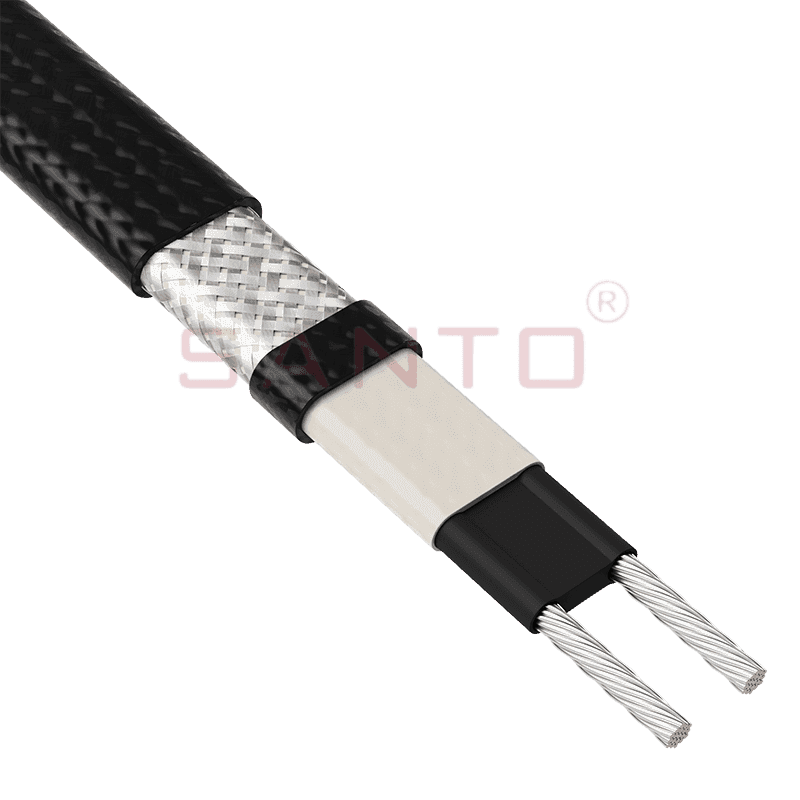
The SANTO UFA range of self-regulating heating cables is mainly used for frost protection of pipes and vessels but can also be used to maintain processes up to 65°C. These heating cables are available...
See Details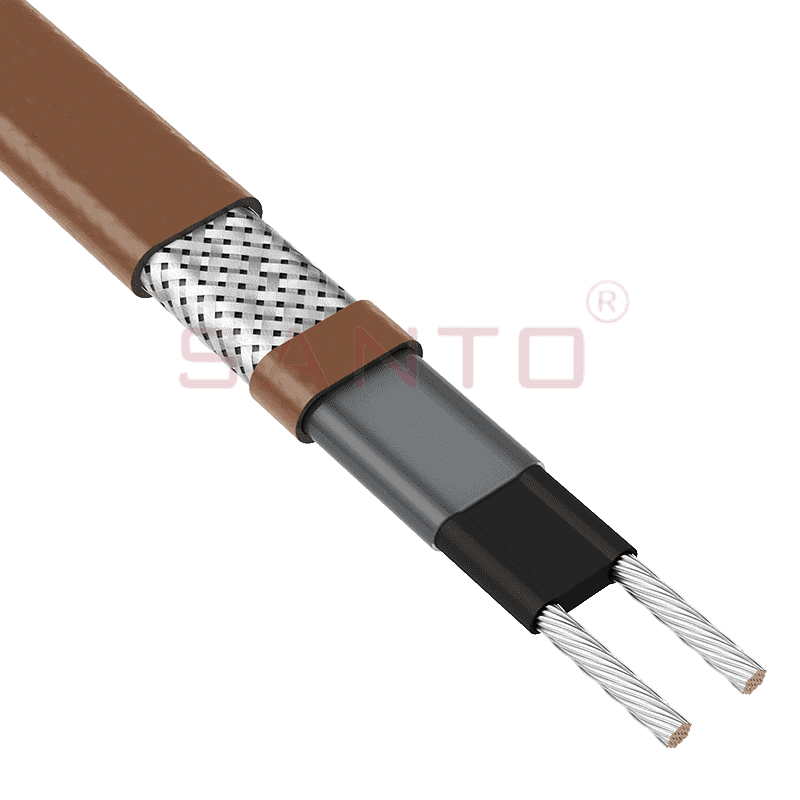
The SANTO UFB range of self-regulating heating cables is mainly used for frost protection of pipes and vessels requiring a higher power output than the UFA heating cables can supply. They can also be ...
See Details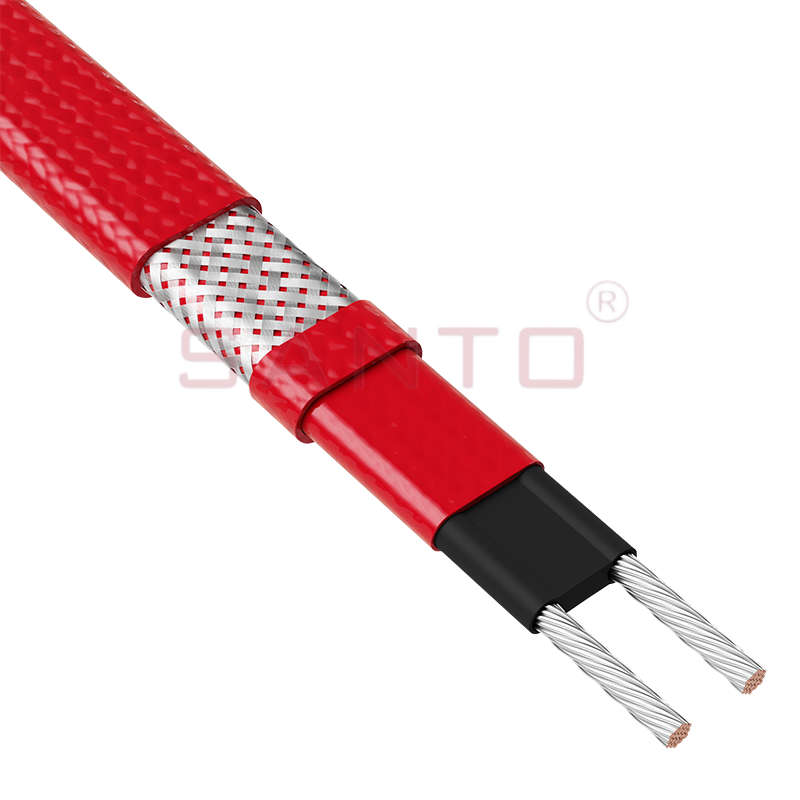
The SANTO UFC range of self-regulating heating cables is used for frost protection of pipes and vessels that require steam cleaning. They can also be used to maintain processes up to 121°C. These heat...
See Details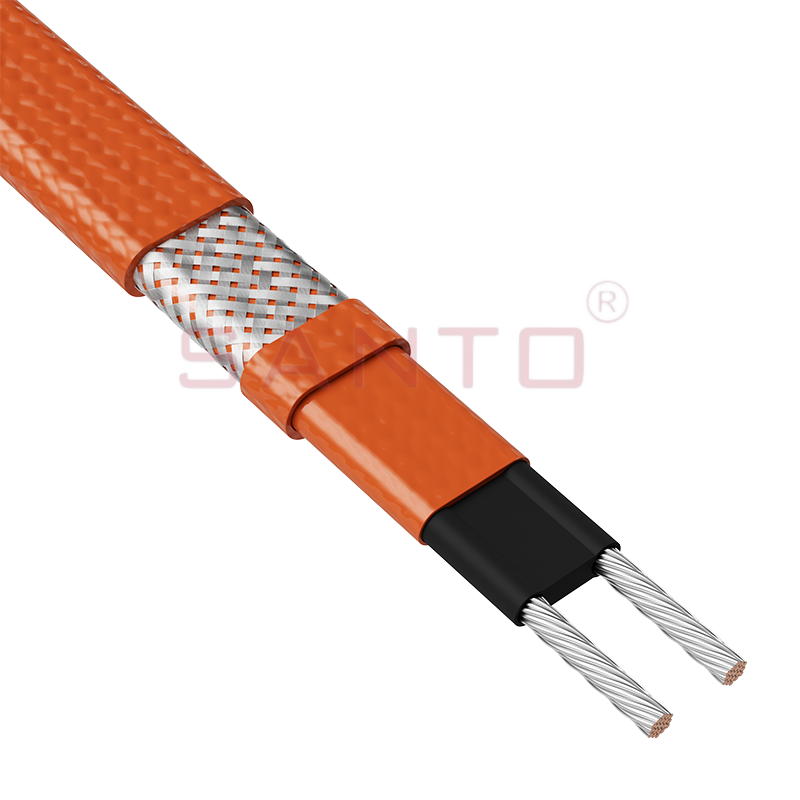
The SANTO UFO range of self-regulating heating cables is mainly used for frost protection of pipes and vessels that require steam cleaning . They can also be used to maintain processes up to 150°C. Th...
See Details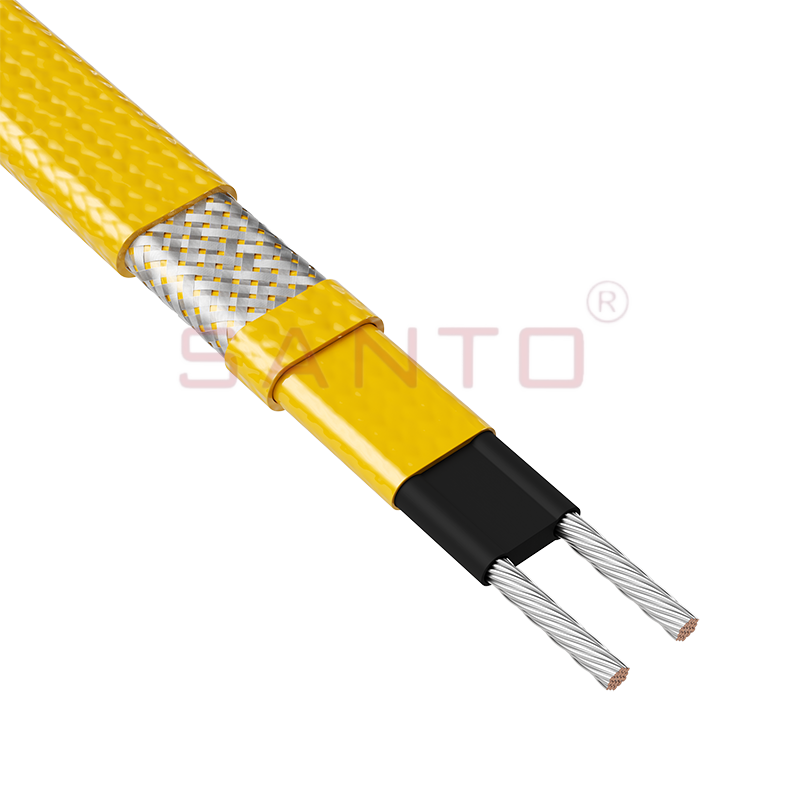
The SANTO UFD series of self-regulating heating cables are mainly used for freeze protection of pipes and vessels, but can also be used to maintain processes up to 200°C. These heating cables are avai...
See Details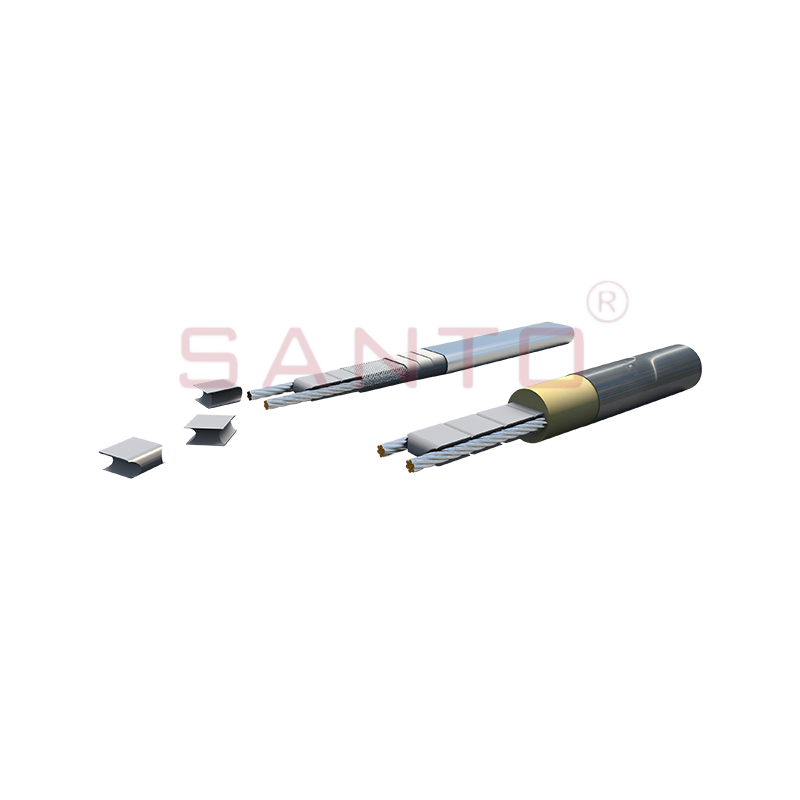
SANTO UFY heating wire is suitable for applications that maintain process temperatures up to 260 ℃ and can be steam blown; The self-regulating and parallel circuit heating wires of the UFY series are ...
See Details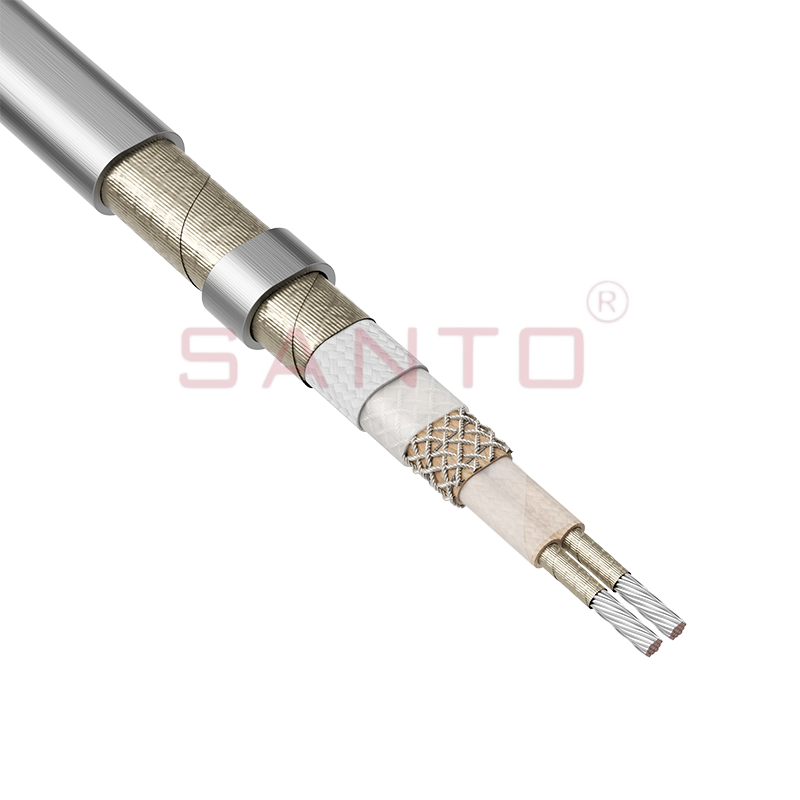
The SANTO UFM series self-regulating heating cables are mainly used for freeze protection of pipes and vessels, but can also be used to maintain processes up to 400°C. These heating cables are availab...
See Details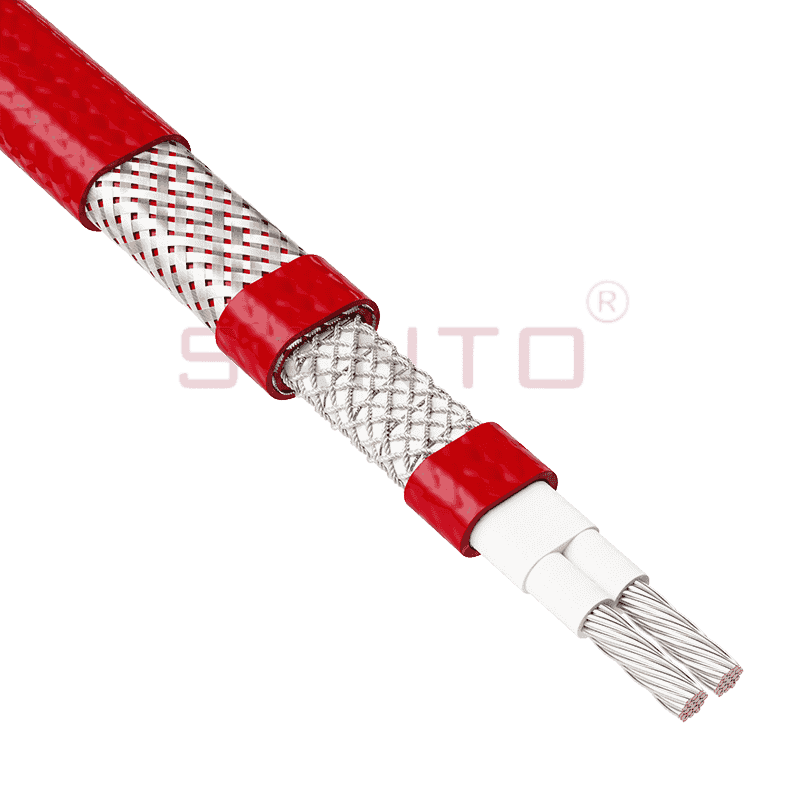
The SANTO ACC range of power-limiting heating cables is mainly used for temperature maintenance of processes and offers the advantage of a high power output at high temperatures which can reduce the n...
See Details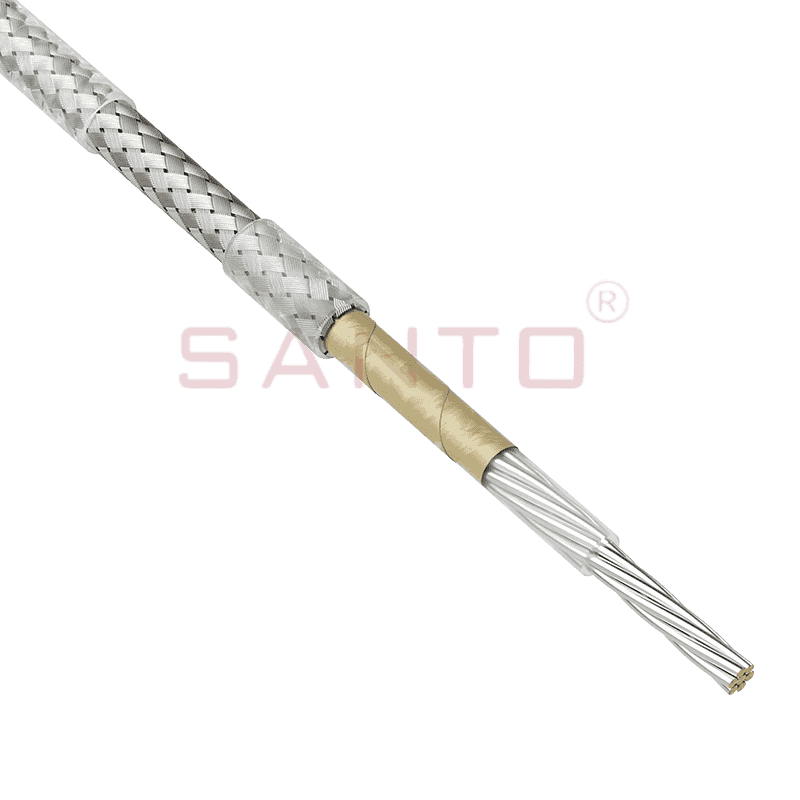
The stranded high temperature conductor is nickel plated to ensure a long life at elevated temperatures in corrosive environments. It is electrically isolated using an innovative sandwich construction...
See Details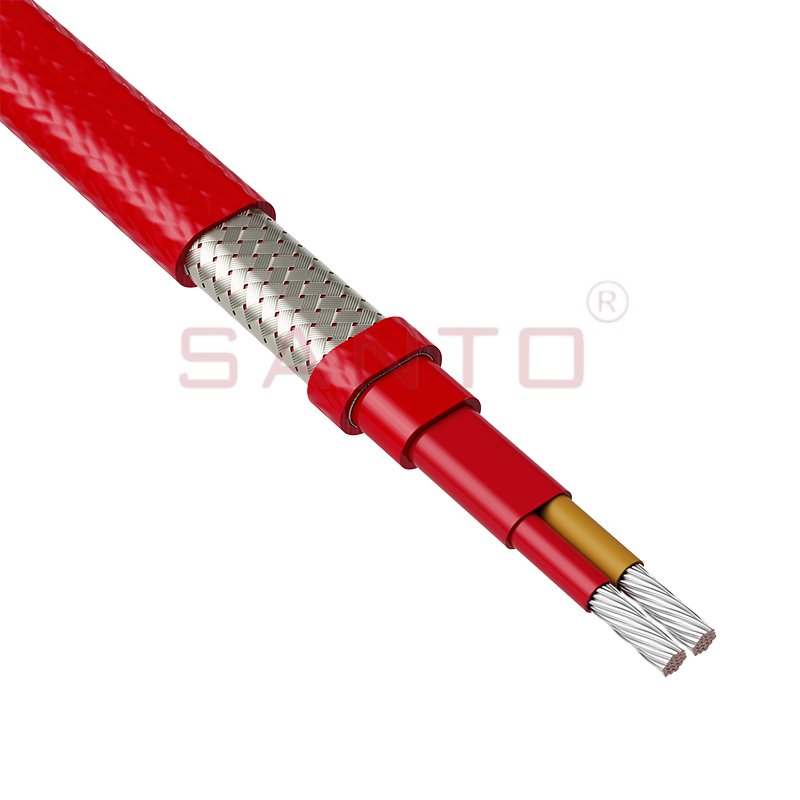
The stranded high temperature conductor is nickel plated to ensure a long life at elevated temperatures in corrosive environments. It is electrically isolated using an innovative sandwich construction...
See Details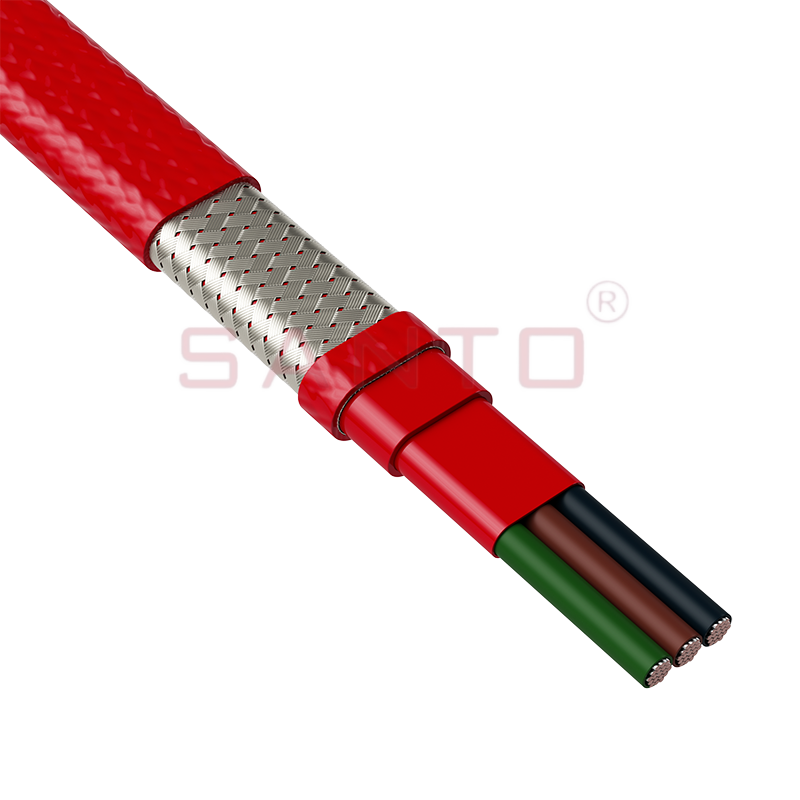
The stranded high temperature conductor is nickel plated to ensure a long life at elevated temperatures in corrosive environments. It is electrically isolated using an innovative sandwich construction...
See Details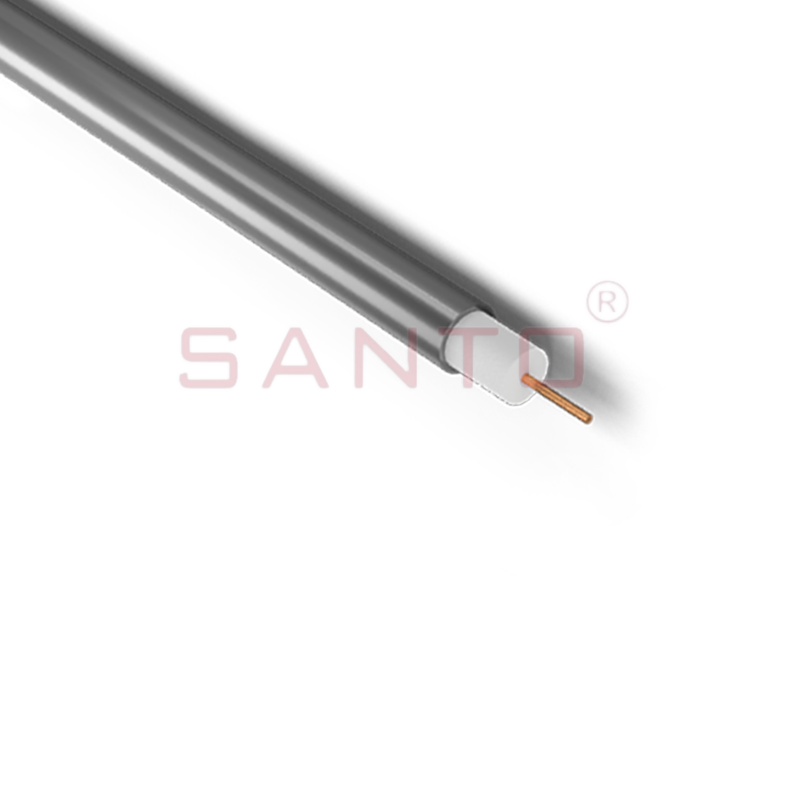
SANTO HAx mineral insulated (MI) Alloy 825 series heating cables are suitable for use in hazardous areas. They have been designed for use in freeze protection and temperature maintenance applications ...
See Details
Santo electric heating strips are widely used in key industries in China.

