 English
  English
 русский
 日本語
日本語 Español
 中文简体
中文简体
The SANTO UFA range of self-regulating heating cables is mainly used for frost protection of pipes and vessels but can also be used to maintain processes up to 65°C. These heating cables are available...
See Details
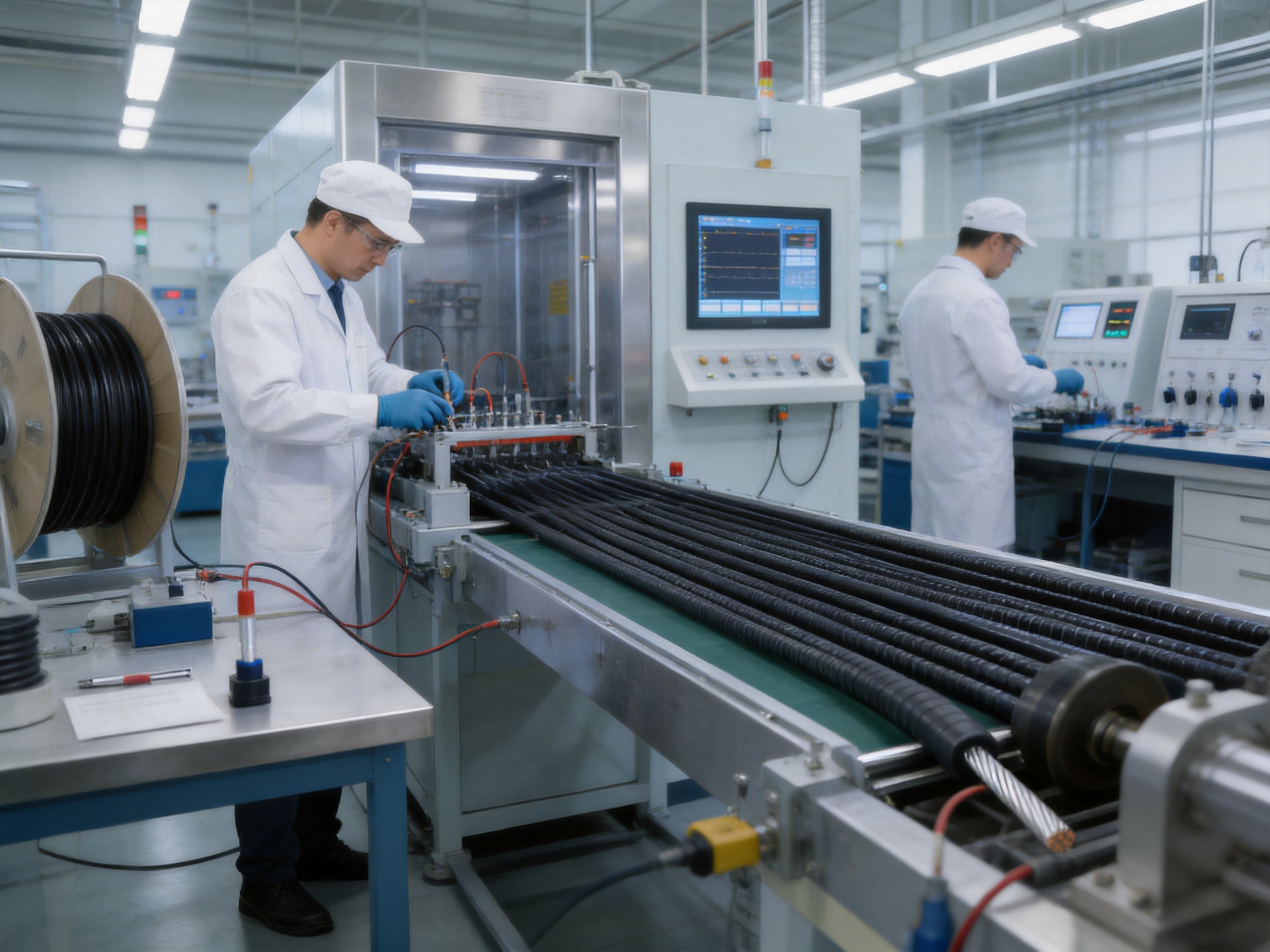
Reliable heat tracing is essential wherever frost, ice, condensation, or excessive heat loss can interrupt equipment operation. Doors, frames, pipes, valves, drains, process lines, and outdoor components may all require carefully controlled supplemental heat. The ABB2-J5 silicone heating tracing cable is designed for these demanding applications, combining flexible silicone construction, constant-power heating performance, and a broad operating-temperature range.
Unlike ordinary low-temperature heating products, this cable is intended for environments that may experience severe cold as well as elevated surface temperatures. It can operate in ambient conditions down to approximately -70°C, while its maximum tolerated surface temperature is approximately 170°C. This makes it suitable for frost protection and heat tracing tasks where standard polymer-insulated cables may have limited performance.
The cable is categorized as a parallel constant-power heating cable. Its heating output is designed to remain substantially consistent along the selected cable length when installed and supplied according to the applicable design requirements. Depending on the installation conditions, the maximum output can reach 40 W/m, with a maximum total current of 13 A. For plastic pipes, plastic mounting rails, and other temperature-sensitive substrates, the heating output should be limited to approximately 10 W/m.
Its silicone construction provides a valuable combination of flexibility, thermal resistance, and low-temperature performance. The cable can be used for protecting freezing-compartment frames and vertical lifting doors from frost, tracing pipes, and maintaining the temperature of many types of piping and equipment. With effective insulation and proper attachment using aluminum tape, the system can deliver heat more evenly and reduce unnecessary energy loss.
This article examines the cable’s construction, operating principles, application advantages, installation requirements, manufacturing strengths, and selection considerations. It also explains how a silicone constant-power heating cable differs from self-regulating cable, conventional resistance wire, and other competing heat-tracing solutions.
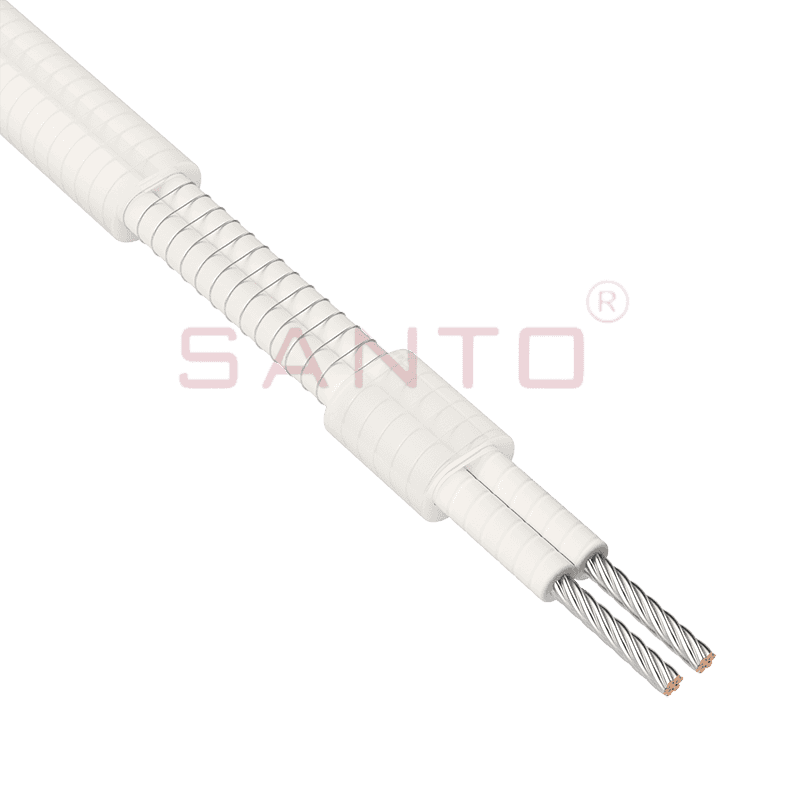
ABB2-J5 Silicone heating tracing cable
Content
The ABB2-J5 silicone heating tracing cable is a flexible electric heating element intended for heat maintenance, frost protection, and temperature compensation. It is especially useful in applications requiring a cable that can tolerate both extremely low ambient temperatures and elevated operating temperatures.
The cable is suited to installations where a component must be kept above freezing, where ice formation must be prevented, or where heat loss from a pipe or enclosure must be compensated. Typical targets include freezer frames, vertical lifting doors, water pipes, process pipes, exposed fittings, and other equipment installed in cold or thermally demanding locations.
As a parallel constant-power cable, the heating circuit is constructed so that the heating conductors operate along the cable length in parallel with the supply. This design allows the cable to provide a defined heating output per unit length. The output is selected according to the cable specification, supply voltage, installation environment, heat loss, and the thermal limits of the equipment being heated.
| Feature | General Specification or Application Guidance |
|---|---|
| Product type | Silicone parallel constant-power heating cable |
| Primary functions | Frost protection, pipe tracing, heat maintenance, deicing, and temperature compensation |
| Minimum ambient temperature | Approximately -70°C |
| Maximum tolerated cable surface temperature | Approximately 170°C |
| Maximum output, depending on conditions | Up to approximately 40 W/m |
| Maximum total current | Up to approximately 13 A |
| Guidance for plastic pipes or plastic rails | Limit output to approximately 10 W/m |
| Recommended installation attachment | Secure the full cable length with aluminum tape |
| Recommended pipe-tracing practice | Use effective thermal insulation to reduce heat loss |
| Suitable environments | Low-temperature, outdoor, industrial, commercial, and high-temperature service areas |
The values above are application guidelines rather than a substitute for a project-specific design. Actual cable selection must consider voltage, circuit length, surface temperature, surrounding materials, thermal insulation, control method, ambient conditions, and applicable electrical regulations.
The main material advantage of this heating cable is its silicone-based insulation and protective construction. Silicone rubber remains flexible at temperatures where many conventional plastics become hard, brittle, or difficult to install. This flexibility is particularly important when the cable must follow curved pipe surfaces, door frames, rails, irregular equipment, or components exposed to repeated thermal cycling.
At the low end of the temperature range, silicone helps preserve cable flexibility and mechanical conformity. A cable that remains workable in severe cold can be installed more easily and is less likely to experience damage from excessive stiffness during maintenance or equipment movement. This is valuable in cold stores, freezer rooms, refrigerated transport facilities, outdoor installations, and winter-service equipment.
At the high end of the range, silicone provides insulation performance suitable for elevated surface temperatures. The stated maximum tolerated surface temperature of approximately 170°C gives the cable a significantly broader thermal operating window than many general-purpose heating products. This does not mean that every installation should operate at this temperature. Rather, it indicates that the cable is designed for applications where high-temperature resistance is an important part of the safety and service-life calculation.
Silicone also supports a compact and flexible product form. This can simplify routing around frames, corners, fittings, and small-diameter pipes. The cable can be positioned close to the surface being protected, helping transfer heat efficiently when it is properly attached with aluminum tape and covered by suitable insulation where required.
Freezing conditions create several problems for heating systems. A cable may need to be installed in an area that is already below freezing, and it may be exposed to further temperature reductions after installation. Rigid materials can become difficult to handle, while poorly selected insulation may crack or lose mechanical integrity.
The silicone cable is intended for low ambient temperatures down to approximately -70°C. This makes it suitable for applications where cold resistance is more important than ordinary indoor flexibility. Examples include freezer-room door frames, cold-storage equipment, outdoor water lines, exposed drain sections, and low-temperature industrial installations.
For vertical lifting doors, frost protection is often required around the frame, sealing area, or contact surface. Ice accumulation can prevent the door from closing correctly, damage seals, increase mechanical resistance, and reduce operational reliability. A flexible silicone tracing cable can be routed along the relevant frame or door structure and fixed to maintain close thermal contact.
Some heat-tracing applications are not limited to frost protection. Certain pipes and process components may need to remain warm, and some equipment may be exposed to high surrounding temperatures. A cable with a higher surface-temperature tolerance provides additional design flexibility.
The approximately 170°C maximum tolerated surface temperature is particularly useful when the cable is installed near warm process equipment, heated enclosures, or piping that must be maintained above ambient temperature. However, engineers must distinguish between cable surface temperature, pipe temperature, insulation temperature, and the temperature rating of nearby materials. Plastic pipes, plastic rails, seals, adhesives, and coatings may have lower temperature limits than the cable itself.
This distinction is one of the reasons output must be reduced in temperature-sensitive installations. On plastic pipes or when the cable is mounted in a plastic rail, the heating output should be limited to approximately 10 W/m. The design should also account for heat distribution, local hot spots, and the effect of insulation.
The constant-power design provides a predictable heating output along the selected cable length. This characteristic is useful when the designer needs to calculate heat input, circuit loading, thermal balance, and energy consumption with reasonable precision.
Depending on the conditions, the maximum output can reach approximately 40 W/m, and the maximum total current can reach approximately 13 A. The correct output is determined by the application rather than by selecting the highest available value. A heavily insulated metal pipe in a cold environment may require a different output from an exposed plastic pipe or a freezer-door frame.
Predictable output is an important advantage in engineered heat tracing. It permits the designer to compare estimated heat loss with cable capacity, select appropriate circuit protection, establish the maximum circuit length, and determine whether a thermostat, controller, or temperature sensor is necessary.
Compared with basic resistance wire, a finished constant-power cable can offer a more controlled and repeatable heating solution. Resistance wire may require more complicated field spacing, careful mechanical protection, and detailed calculations to achieve a consistent watt density. A parallel constant-power cable is manufactured as a dedicated heating product, helping reduce uncertainty during installation.
Self-regulating heating cable changes its power output in response to local temperature. This can be beneficial when the cable crosses areas with significant temperature differences or when localized temperature moderation is a primary requirement. However, self-regulating cable may have a different output profile, a higher initial cost, and different limitations concerning maximum exposure temperature, circuit length, and aging.
A constant-power cable provides a defined power output instead of relying on a temperature-dependent matrix. This makes it attractive when the thermal load is known and relatively stable. It can provide strong heat output in low-temperature conditions and can be selected for applications that need a specific watt density.
The two technologies should not be treated as universally interchangeable. Self-regulating products may be preferable for some complex or variable-temperature lines, while constant-power products can be advantageous where a predictable heat load, high-temperature capability, and flexible silicone construction are more important. The choice should be based on the heat-loss calculation, operating temperature, control strategy, and installation environment.
Mineral-insulated cables are often selected for extreme temperature, high mechanical strength, or specialized industrial environments. They can be highly robust but may be less flexible and more demanding to install, terminate, and maintain. They may also require specialized bending and testing procedures.
A silicone constant-power cable is generally easier to route around moderate bends, frames, doors, pipes, and equipment. Its flexible construction can reduce installation time and simplify replacement. For many frost-protection and general heat-tracing applications, it provides a practical balance between thermal capability, flexibility, and installation convenience.
Underfloor heating mats and surface heating mats are designed for broad-area heating, usually with a predetermined layout. They are not always suitable for narrow pipes, door frames, valves, or irregular industrial components. A cable designed for heat tracing can be routed directly along the component requiring protection.
The ABB2-J5 cable is therefore better suited to linear applications and localized frost protection than a flat-area heating mat. It can follow a pipe run, door perimeter, frame, or equipment edge without requiring a large rectangular installation area.
Freezer doors and refrigerated-compartment frames are vulnerable to frost accumulation. Moisture may condense and freeze around seals, hinges, contact surfaces, and structural joints. Over time, this can interfere with door movement, reduce sealing performance, and increase maintenance requirements.
A silicone tracing cable can be installed along the frame or other designated area to introduce controlled heat. The cable should be positioned so that the heat reaches the frost-sensitive surface without contacting materials that exceed their temperature rating. The complete cable length should be attached with aluminum tape to improve contact and heat distribution.
Where the installation is within a refrigerated environment, the designer should consider the heat balance. Excessive heat may increase refrigeration demand, while insufficient heat may fail to prevent ice formation. Correct output selection and thermostatic control can help maintain the desired temperature without unnecessary energy consumption.
Vertical lifting doors often operate in demanding environments such as warehouses, cold stores, food-processing areas, logistics centers, and industrial buildings. Frost around the door frame or sealing surfaces can cause binding, incomplete closure, or damage to moving components.
The flexibility of silicone makes the cable suitable for routing around door structures, provided the installation avoids moving joints, pinch points, sharp edges, and areas where mechanical movement could stress the cable. The cable should be protected from abrasion and should be installed according to the door manufacturer’s requirements.
When the cable is used near a moving door, the system designer must distinguish between fixed sections and moving sections. A cable intended for fixed heat tracing should not automatically be treated as a flexing cable. Where repeated movement is unavoidable, a specific flexible-cable design and an appropriate strain-relief arrangement are required.
Pipe tracing is one of the most common applications for silicone heating cable. The purpose may be to prevent freezing, maintain viscosity, compensate for heat loss, or keep a process fluid within a defined temperature range.
The cable can generally be used with many types of piping, but output must be matched to the pipe material and operating conditions. Metal pipes commonly tolerate higher temperatures than many plastic pipes. Plastic piping requires particular care because local heating may soften, deform, or shorten the life of the material.
For plastic pipes or plastic mounting rails, the heating output should be limited to approximately 10 W/m. The pipe should also be checked for its maximum continuous operating temperature and allowable surface temperature. If the pipe contains a temperature-sensitive fluid, the fluid temperature must also be included in the design.
Effective thermal insulation is strongly recommended. Insulation reduces heat loss, improves temperature stability, lowers energy consumption, and allows the heating cable to operate more efficiently. Without insulation, a large portion of the heat may be lost to the surrounding air instead of maintaining the pipe temperature.
Outdoor pipes, valves, drains, pumps, tanks, and equipment housings may be exposed to wind, rain, snow, and rapid temperature changes. The cable can provide supplemental heat for frost protection when installed with suitable weatherproofing, electrical protection, and insulation.
Outdoor service requires attention to water ingress, ultraviolet exposure, mechanical impact, cable entry points, and control equipment. The silicone cable addresses the thermal portion of the application, but the complete system must also include appropriate junction boxes, terminations, circuit protection, grounding or protective measures, and environmental sealing.
Many industrial and commercial installations require modest heat maintenance rather than high-temperature process heating. Examples include maintaining fluid flow, preventing crystallization, protecting instruments, and keeping small lines above freezing.
The cable can be designed into systems for petroleum, chemical, gas, construction, solar-energy, geothermal, and general equipment applications. In each case, the cable output must be selected according to the process requirement and the surrounding environment. Hazardous-area installations require additional certification and system-level approval specific to the location and product configuration.
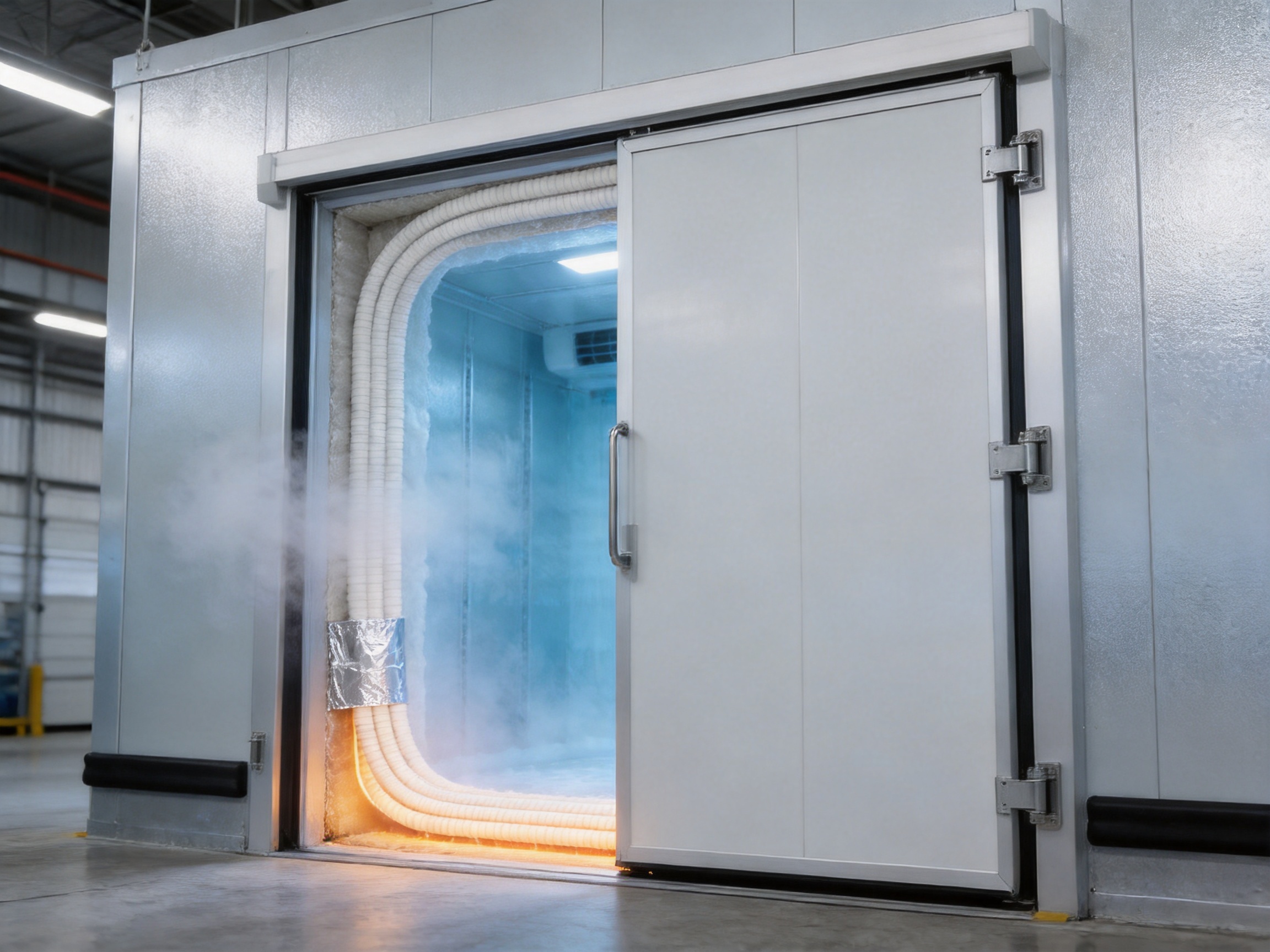
Correct installation is essential for performance and service life. Even a high-quality heating cable may overheat, underperform, or suffer premature damage if it is installed without regard to heat transfer, surface temperature, mechanical stress, or electrical loading.
Before installation, the pipe or equipment surface should be clean, dry, and free from oil, grease, loose rust, sharp projections, and contaminants that may prevent proper bonding. Any surface defects that could cut or abrade the cable should be corrected or covered with suitable protection.
The installer should inspect the cable before use. The cable should not be installed if the insulation is cut, crushed, burned, excessively stretched, or otherwise damaged. The intended route should be measured in advance so that the cable can be installed without unnecessary loops, unplanned overlaps, or excessive tension.
The full length of the cable should be affixed using aluminum tape. This recommendation serves several purposes. It improves contact between the heating cable and the pipe or equipment surface, spreads heat across a wider area, and helps prevent direct contact between the cable and the thermal insulation.
Aluminum tape also supports more uniform heat distribution. A cable that is only attached at isolated points may lift away from the surface, creating air gaps and localized hot spots. Continuous attachment helps maintain a consistent thermal path from the heating element to the surface being protected.
The tape should be applied smoothly and securely without crushing the cable. Sharp folds, excessive tension, and rough handling should be avoided. The tape system should be compatible with the operating temperature and the outer surface of the installation.
After the cable is installed and tested, the pipe or equipment should normally be covered with suitable thermal insulation. Insulation reduces heat loss to the environment and improves the efficiency of the tracing system.
Insulation thickness should be selected according to pipe diameter, ambient temperature, wind exposure, target temperature, and the heat-tracing output. The insulation must be installed without damaging the cable. Where the cable exits the insulation, the transition should be arranged to avoid excessive bending or abrasion.
Weatherproof jacketing may be needed for outdoor installations. The jacket should prevent water penetration while preserving the intended thermal performance. Wet insulation can substantially increase heat loss and may create electrical or corrosion risks, so drainage and sealing details require careful attention.
Constant-power heating cable should not be randomly overlapped or crossed unless the product documentation specifically permits such an arrangement. Overlapping sections can increase local watt density and cause excessive surface temperature.
The layout should be planned before fixing the cable. If additional heat is required in a particular area, the design should use an approved arrangement rather than creating an improvised bundle. Special attention is necessary around valves, flanges, supports, low points, and components with higher heat loss.
A thermostat, temperature controller, or monitoring system may be recommended depending on the application. Control can reduce energy consumption and limit surface temperature, especially where the ambient temperature varies or the cable is installed near temperature-sensitive materials.
Sensor placement is important. A sensor should measure the temperature relevant to the design objective, such as the pipe surface, protected frame, or controlled process point. A sensor located too far from the cable may respond slowly, while a sensor placed directly on a hot spot may produce an unrepresentative reading.
For critical installations, alarm functions can be used to identify loss of power, abnormal temperature, controller failure, or sensor disconnection. Monitoring is particularly valuable where freezing could cause water damage, production interruption, or safety hazards.
The cable must be connected to a supply that matches its rated voltage and electrical characteristics. The designer should calculate total connected load using the cable output per meter and the installed length. The maximum total current is approximately 13 A under the stated product conditions, but the actual circuit current depends on the selected cable length and operating voltage.
Circuit protection should be selected according to the installation regulations, conductor size, starting and operating characteristics, and fault-protection requirements. Residual-current protection may be required or recommended depending on the environment and local electrical code.
All terminations should be made using compatible components and suitable sealing methods. Moisture, condensation, and mechanical stress at the cable ends can cause failure if the termination is not properly designed. Cable ends should not be exposed to water or contamination.
Electrical testing should be performed before installation, after the cable is attached, after insulation is installed, and before commissioning. Tests may include continuity, insulation resistance, protective-conductor verification where applicable, and functional operation of the controller. Test results should be recorded for future maintenance.
For a constant-power cable, the total power is related to the selected output per meter and the installed length. The current is then determined by the supply voltage and total power. A longer cable increases the total load, so circuit length must be limited by the maximum current, available protection, voltage, installation conditions, and manufacturer requirements.
It is not sufficient to determine cable length only from the physical length of the pipe. The designer should account for valves, fittings, bends, flanges, supports, door frames, and areas requiring additional heat. At the same time, excessive cable should not be forced into a smaller area, as this can produce undesirable heat concentration.
The ABB2-J5 silicone heating cable offers several practical advantages when compared with ordinary heating wires or products designed only for mild indoor conditions.
The combination of a minimum ambient temperature of approximately -70°C and a maximum tolerated surface temperature of approximately 170°C gives the product a broad temperature window. Many general-purpose heating solutions are optimized for a narrower range. A broader range can reduce the need to use different cable families for cold-room and elevated-temperature applications.
Silicone construction allows the cable to conform to curved and irregular surfaces. This is helpful for pipes, door frames, rails, equipment edges, and compact components. Compared with rigid or mineral-insulated alternatives, flexible silicone cable can simplify routing and reduce the need for complex support hardware.
Constant-power performance provides a predictable watt-density basis for thermal calculations. This is beneficial when the heat loss of the pipe or component can be estimated and the system must deliver a defined level of heat.
The cable can generally be used for many types of piping when the output is selected correctly. Its flexibility and surface-mounting method support installation on metal and other pipe materials. For plastic piping, the reduced output guideline provides a practical way to address the lower thermal tolerance of the substrate.
The recommended full-length aluminum-tape attachment improves surface contact and heat distribution. This is a simple installation technique, but it can have a substantial effect on system performance. Better contact reduces air gaps, supports more even heating, and helps prevent direct contact between the cable and insulation.
The manufacturer has experience in designing and producing different categories of electric heating products, including self-limiting cables, constant-power cables, silicone rubber heating systems, glass-fiber heating products, mineral-insulated cables, snow-melting cables, and accessories. This product breadth can benefit original equipment manufacturers that require customized lengths, electrical parameters, connection arrangements, or installation accessories.
OEM cooperation is especially valuable when the heating cable must be integrated into a freezer door, industrial machine, equipment enclosure, process skid, solar-energy system, or specialized pipe assembly. A manufacturer with multiple heating technologies can compare alternatives and recommend a product family appropriate to the application instead of forcing every project into one design.
Santo Thermal Control Technology Co., Ltd. is based in Jiangsu, a region recognized for electric heating belt production and related manufacturing. The company combines research, product design, production, manufacturing, and sales for electric heating products and associated accessories.
The company reports more than 35 years of industry experience, annual output exceeding 10,000 units or product items, more than 2,000 distributors, and business coverage in more than 85 areas. These figures indicate experience in serving multiple market segments and handling a range of heating-product requirements.
Its product portfolio includes automatic temperature-control heating belts, self-limiting heating belts, constant-power heating belts, silicone rubber heating belts, glass-fiber heating belts, electric hot wires, mineral-insulated cables, snow-melting cables, LCD tracked heaters, and accessories. This product range supports technical comparison and integrated sourcing.
The company states that it cooperates in product research with Harvard University in the United States and has invested in new-product development and technology guidance. It also reports the development of specialized self-limiting and carbon-fiber parallel heating technologies.
Research capability is important for silicone constant-power cable production because performance depends on more than the heating conductor alone. Insulation formulation, conductor geometry, parallel connection design, extrusion control, end termination, bending performance, and temperature resistance must work together as one system.
Product development can also support customized solutions. Customers may require a certain voltage, output per meter, cable length, lead-wire arrangement, termination style, insulation color, mounting method, or control accessory. A manufacturer with in-house technical development is better positioned to evaluate such requests and move them from specification to production.
The company reports that an irradiation center was established in 2013 and that a product simulation testing laboratory was planned as part of its additional factory development. These capabilities can contribute to process stability, material evaluation, product verification, and application testing.
For a silicone heating cable, manufacturing quality depends on consistent control of conductor resistance, insulation thickness, cable diameter, parallel spacing, surface finish, and termination quality. Production equipment should maintain stable dimensions and prevent defects such as voids, uneven insulation, conductor displacement, or inadequate bonding.
Testing should verify electrical continuity, insulation integrity, dimensional consistency, output performance, and thermal behavior. Application simulations can be used to examine heat distribution on pipes, frames, and other surfaces. Such tests help identify installation conditions that could create local hot spots or excessive heat loss.
Santo reports ISO9001 quality-system certification and national CCC certification for its products. It also states that certain company products have obtained explosion-proof and EAC Eurasian Union certifications. Certification applicability depends on the exact product model, configuration, market, and intended installation, so customers should request the relevant certificates and technical documents for the specific cable being purchased.
A formal quality system supports traceability, process documentation, inspection procedures, corrective action, and continuous improvement. For OEM and industrial customers, these controls are important because the heating cable may become part of a larger machine or safety-critical operating system.
Several manufacturing checkpoints are especially important for this product category.
The conductor resistance determines the heating output and total current. Resistance must remain within the specified tolerance over the production length. Inconsistent resistance can cause output variation, uneven heating, and difficulty in circuit design.
Parallel constant-power cable requires reliable electrical connections along the heating length. Poor connection quality can produce dead sections, localized resistance changes, or premature failure. Production inspection should verify that the parallel structure is continuous and stable.
The insulation must be free from cuts, pinholes, voids, contamination, and dimensional irregularities. It must remain stable across the specified temperature range and provide suitable protection against electrical leakage and environmental exposure.
The finished cable should retain the flexibility necessary for routing while resisting ordinary handling damage. Excessive stiffness may complicate installation, while insufficient mechanical strength may increase the risk of deformation or tearing.
The cable ends are particularly important because they are exposed to electrical connection, moisture, bending, and possible thermal stress. Proper termination design and inspection help protect the heating circuit from ingress and mechanical failure.
Before ordering, the customer should prepare a complete application specification. The following questions help define the correct cable configuration.
What component must be heated or protected? A pipe, freezer frame, vertical door, tank, drain, valve, or equipment enclosure may each have different heat-loss characteristics.
What is the minimum ambient temperature? Cold-room and outdoor applications may experience temperatures far below the normal operating conditions of indoor systems.
What temperature must be maintained? Frost protection may only require a surface temperature slightly above freezing, while process applications may need a higher controlled temperature.
What is the substrate material? Metal, plastic, rubber, composite, painted steel, and insulated equipment may have different temperature limits and attachment requirements.
What is the required heating output? The cable should be sized according to heat loss, not simply selected at the highest available watt density.
What is the total circuit length? Total length determines the electrical load and influences the required protection and control equipment.
Will the cable be installed in a hazardous area? If so, the exact certification, installation method, glands, junction boxes, and control equipment must be reviewed as a complete system.
Will the cable be exposed to movement, vibration, chemicals, water, ultraviolet radiation, or impact? These environmental factors may require additional protection or a different cable construction.
Is temperature control required? A thermostat or controller may be recommended where the cable is installed near plastic, seals, coatings, or other temperature-sensitive materials.
Answering these questions allows the manufacturer to recommend the appropriate output, length, termination, accessory, and control arrangement.
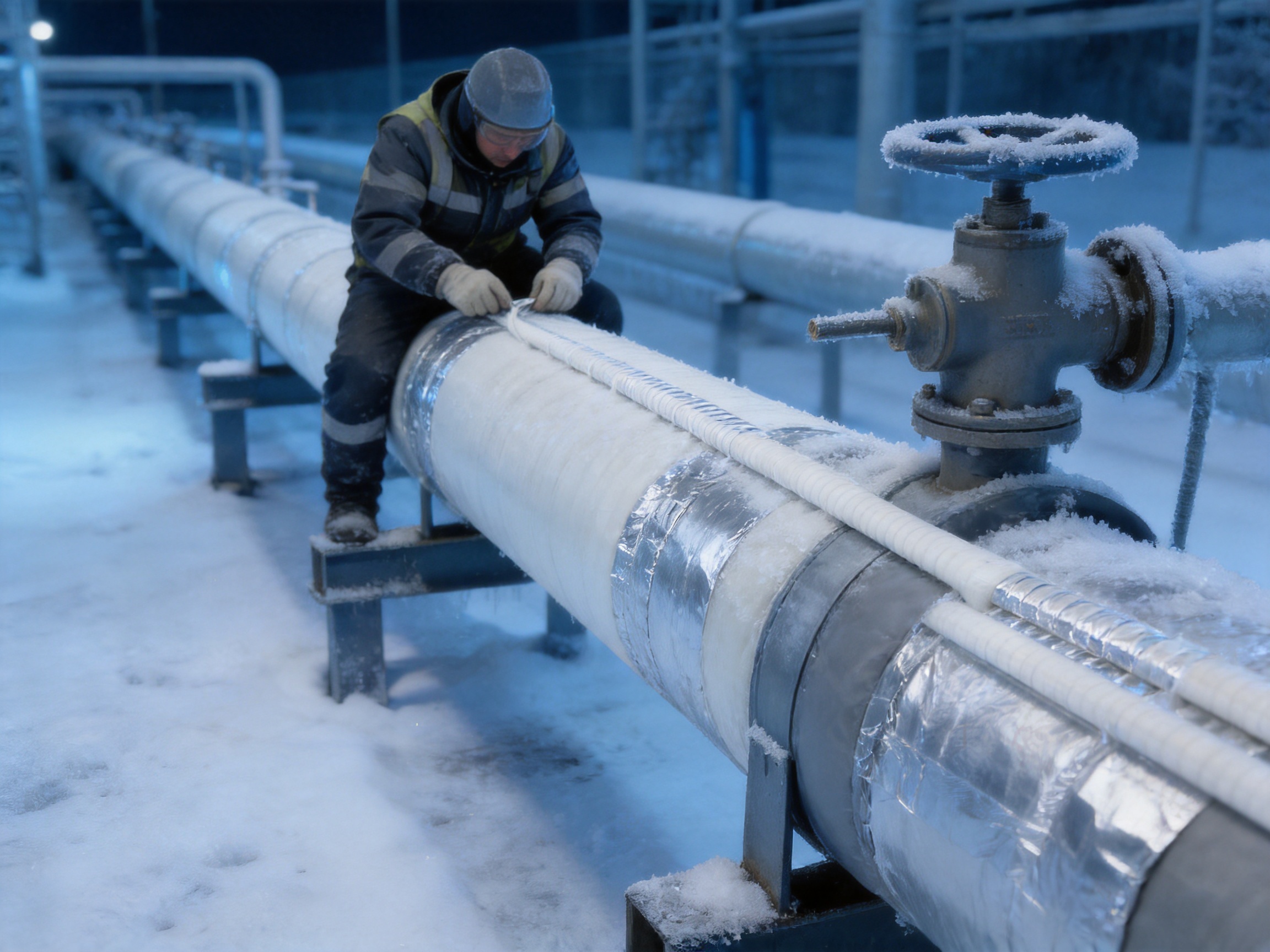
Using the maximum output without calculating the actual thermal requirement can waste energy and may expose the pipe or equipment to excessive temperature. Heat loss depends on ambient temperature, wind, insulation, pipe diameter, material, fluid temperature, and the desired maintenance temperature.
The cable may tolerate a surface temperature of approximately 170°C, but a plastic pipe or rail may not. The lower limit of the weakest component governs the design. For plastic applications, the output should be limited to approximately 10 W/m unless a specific validated design allows otherwise.
Partial attachment can create air gaps and uneven heat transfer. The full cable length should be fixed with aluminum tape as recommended. The cable should remain in close and stable contact with the surface throughout the route.
Once insulation is installed, cable damage may be difficult to locate. Electrical and visual inspections should be completed before the installation is closed. The cable should also be checked again after insulation work if there is any possibility of mechanical damage.
Overlapping constant-power cable can increase local heat concentration. The route should be measured and laid out in advance. If extra heat is needed in a particular area, the solution should be engineered rather than improvised.
Sharp metal edges, clamps, moving doors, tools, foot traffic, and vibration can damage the insulation. Suitable protective methods should be used wherever the cable is exposed to mechanical hazards.
A properly installed silicone heating cable can provide dependable service, but routine inspection remains important. Maintenance personnel should check the cable route, aluminum-tape attachment, insulation condition, cable entries, controller operation, and visible signs of overheating or mechanical damage.
Outdoor systems should be inspected after severe weather. Damaged insulation jackets, water ingress, displaced tape, or impact from ice and equipment may reduce performance. In freezer applications, maintenance should also check whether the cable is still preventing frost in the intended areas.
Electrical testing can be repeated during scheduled maintenance. Changes in insulation resistance, continuity, or current draw may indicate damage, moisture, termination problems, or a control-system fault. Test records provide a useful baseline for identifying gradual deterioration.
When insulation is removed for maintenance, it should be replaced carefully. Gaps, compression, wet materials, or damaged weatherproofing can increase heat loss and change the operating temperature. Replacement insulation should be suitable for the cable and the maximum expected temperature.
Heating cable requirements often vary from one equipment manufacturer to another. A standard product may need to be adapted to a specific machine, pipe assembly, door design, or control cabinet. Customization may involve cable length, power rating, voltage, lead length, connector type, end seal, mounting accessory, packaging, or labeling.
Santo’s experience with several heating technologies allows it to support both standard supply and OEM development. The company can coordinate heating products with accessories and application guidance, which may simplify procurement for distributors and equipment manufacturers.
For a custom project, the buyer should provide drawings, installation photographs, target temperatures, available voltage, required cable length, operating cycle, environmental conditions, and applicable market standards. Prototype testing may be appropriate before full production, especially for plastic components, moving doors, unusual geometries, or high-temperature applications.
Custom development should include clear acceptance criteria. These may cover resistance tolerance, output per meter, insulation resistance, dimensional limits, temperature performance, bend radius, termination strength, and visual quality. Documented requirements help ensure that the production cable matches the equipment design.
Heat-tracing reliability depends on the complete system, not only the cable. The manufacturer’s role includes providing accurate technical data, consistent production, suitable accessories, installation guidance, and responsive after-sales support.
A supplier with broad industry experience can help identify problems before production, such as excessive circuit length, unsuitable output for plastic, insufficient insulation, incorrect temperature-sensor placement, or an inappropriate termination method.
The company’s stated focus on research, quality management, product development, and international distribution provides a foundation for serving industrial and commercial customers. Its experience in antifreeze, deicing, heating, heat tracing, and insulation applications is relevant to the practical challenges encountered in the field.
For international projects, buyers should also verify packaging, documentation, labeling, voltage compatibility, certification requirements, and local installation rules. Product approval in one country does not automatically establish compliance in another.
Energy efficiency in a heat-tracing system is achieved through correct output selection, effective insulation, temperature control, and proper installation. The cable itself provides the heat, but the surrounding system determines how much of that heat is useful.
Insulating the pipe after the cable is installed reduces continuous heat loss. This can allow a lower output cable or shorter operating time to maintain the target temperature. Aluminum-tape attachment improves heat transfer and reduces the risk that heat will remain concentrated near the cable instead of reaching the pipe or frame.
Temperature control can further reduce energy consumption by switching the cable on only when heat is required. In a freezer-door application, for example, the controller may energize the cable during cold or humid conditions and reduce operation when the frame is safely above the frost-protection temperature.
The most economical solution is not necessarily the cable with the lowest purchase price. A cable that is easier to install, more stable in severe temperatures, better matched to the application, and supported by reliable documentation may reduce labor, maintenance, downtime, and replacement costs over the equipment’s service life.
It is a silicone parallel constant-power heating tracing cable. It is designed for frost protection, pipe tracing, heat maintenance, and other applications that require flexible electrical heating.
The stated minimum ambient temperature is approximately -70°C, and the maximum tolerated surface temperature is approximately 170°C. Actual operating conditions must also consider the temperature limits of the pipe, equipment, insulation, seals, adhesives, and nearby materials.
Depending on the application conditions, the maximum output is approximately 40 W/m. The maximum total current is approximately 13 A. The actual selected output should be based on heat-loss calculations and substrate temperature limits.
Yes, it can generally be used on plastic piping when properly designed. For plastic pipes or plastic mounting rails, the heating output should be limited to approximately 10 W/m, and the pipe manufacturer’s temperature limits must be respected.
Aluminum tape helps secure the entire cable length, improve contact with the pipe or equipment, distribute heat more evenly, and prevent direct contact between the heating cable and the insulation.
Effective insulation is strongly recommended for pipe tracing. Insulation reduces heat loss, improves temperature stability, lowers energy consumption, and helps the cable maintain the required temperature more efficiently.
No. It is categorized as a parallel constant-power heating cable. Its output is designed around a defined power-per-length characteristic rather than the temperature-dependent output behavior of a self-regulating cable.
Unplanned overlapping should be avoided because it may increase local watt density and create hot spots. Any special layout should be confirmed through the product documentation or an engineered design.
It may be used for frost protection around a vertical lifting door, particularly on fixed frame sections. The cable should not be placed in moving or pinch-point areas unless the specific product design and installation method are approved for repeated flexing.
A thermostat or temperature controller may be recommended depending on the application. Control is especially useful where ambient temperatures vary, the protected material is temperature-sensitive, or energy consumption must be minimized.
Useful information includes the application, cable length, voltage, required output, minimum and maximum ambient temperatures, target temperature, pipe material and diameter, insulation details, environmental exposure, control requirements, termination style, and certification requirements.
The manufacturer provides OEM and ODM heating-product services and has experience with multiple heating technologies. Custom requirements should be reviewed with technical drawings and application data before production.
Buyers should request the relevant product datasheet, installation instructions, test information, material details, certificates applicable to the exact model, and any market-specific compliance documents required for the project.
The ABB2-J5 silicone heating tracing cable is a practical solution for frost protection, pipe tracing, and heat maintenance in environments that range from severe cold to elevated temperatures. Its silicone construction supports flexibility and broad thermal performance, while its parallel constant-power design provides a predictable basis for electrical and thermal calculations.
The cable’s stated operating capabilities include ambient temperatures down to approximately -70°C, tolerated surface temperatures up to approximately 170°C, output up to approximately 40 W/m depending on conditions, and total current up to approximately 13 A. For plastic pipes and plastic rails, the output should be limited to approximately 10 W/m.
Its advantages are maximized when the cable is correctly selected, attached along its full length with aluminum tape, protected from mechanical damage, covered with effective insulation, and operated with suitable electrical protection and temperature control. These installation practices are as important as the cable’s material and heating design.
Supported by a manufacturer with extensive electric-heating experience, broad product capability, reported quality-management certification, research activity, and OEM development resources, the product can be considered for both standard installations and customized equipment applications. For the best result, every project should be reviewed according to its thermal load, substrate, environment, electrical supply, and applicable safety requirements.
1. Product information supplied for the ABB2-J5 silicone heating tracing cable.
2. General principles of electric heat tracing design, including heat-loss estimation, insulation practice, circuit protection, and temperature control.
3. Manufacturer-provided information concerning silicone heating systems, constant-power heating cables, self-limiting heating cables, mineral-insulated cables, snow-melting cables, and related accessories.
4. Manufacturer-reported quality-management, product-development, certification, and industrial manufacturing information.
5. General engineering guidance for heating cable installation on metal and plastic piping, including surface-temperature evaluation and protection against mechanical damage.
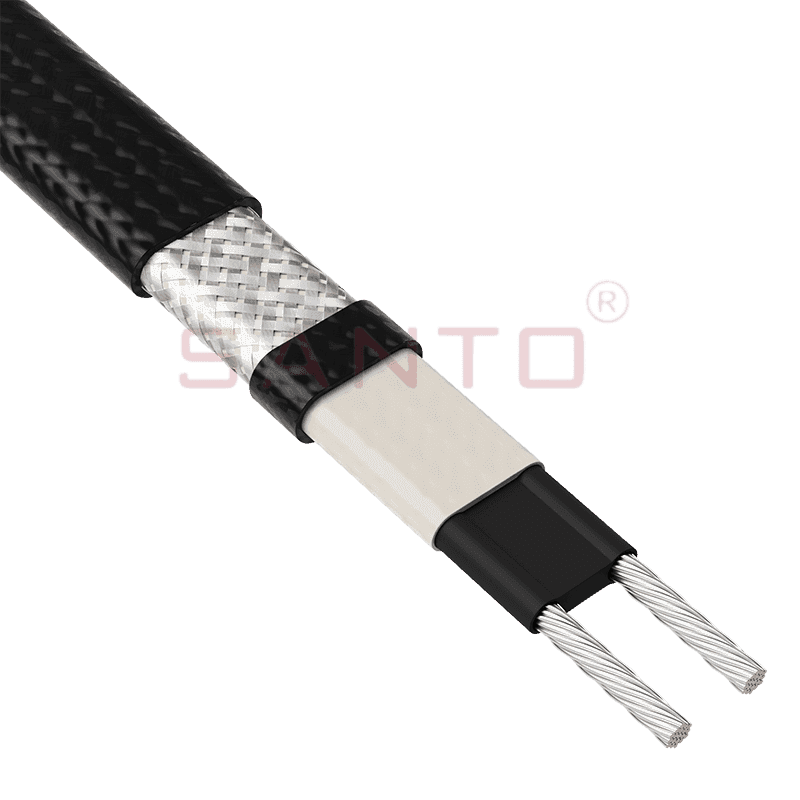
The SANTO UFA range of self-regulating heating cables is mainly used for frost protection of pipes and vessels but can also be used to maintain processes up to 65°C. These heating cables are available...
See Details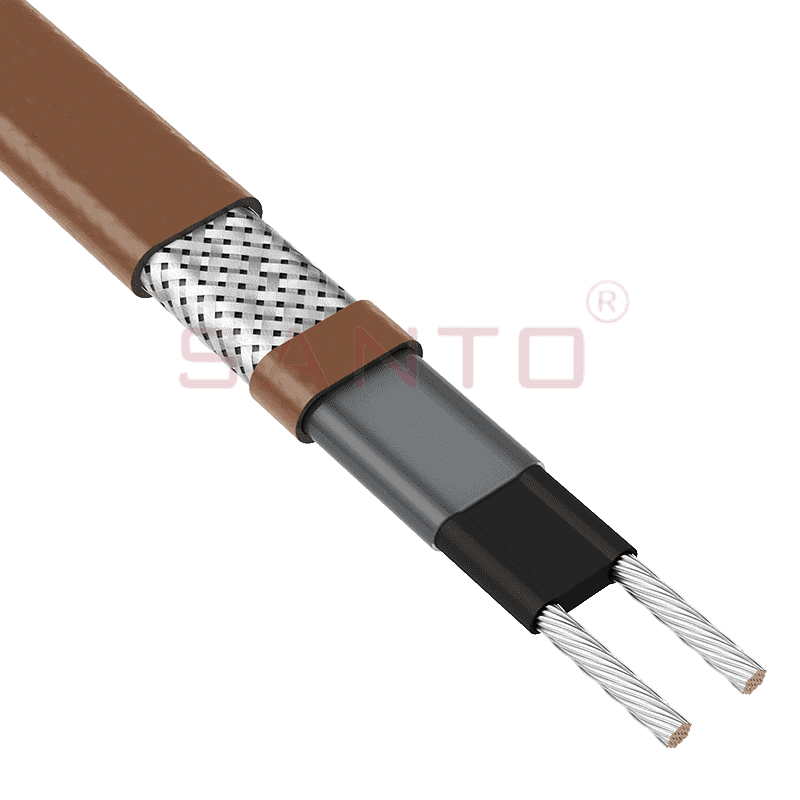
The SANTO UFB range of self-regulating heating cables is mainly used for frost protection of pipes and vessels requiring a higher power output than the UFA heating cables can supply. They can also be ...
See Details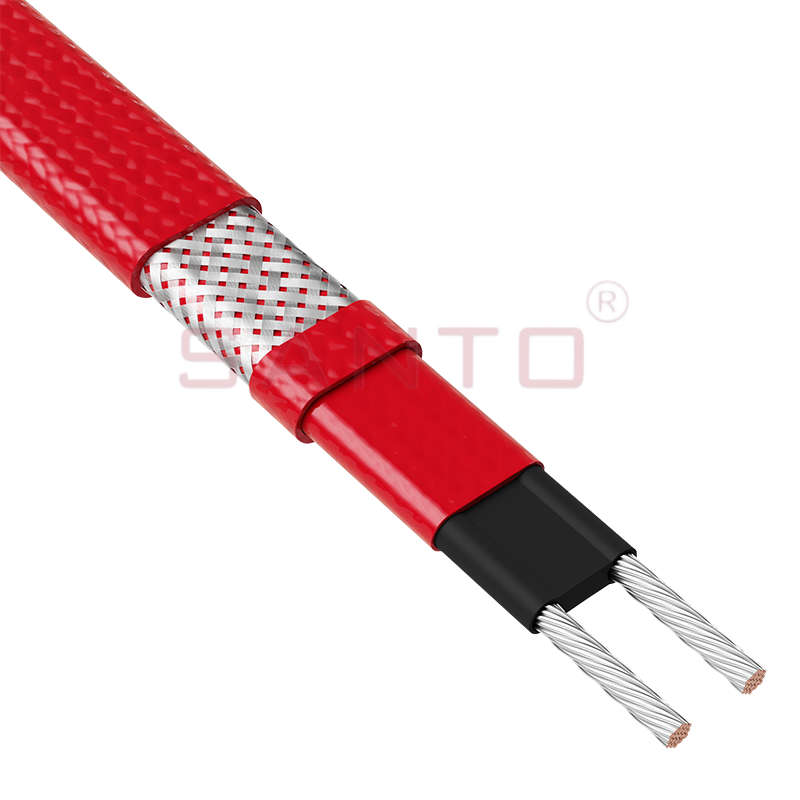
The SANTO UFC range of self-regulating heating cables is used for frost protection of pipes and vessels that require steam cleaning. They can also be used to maintain processes up to 121°C. These heat...
See Details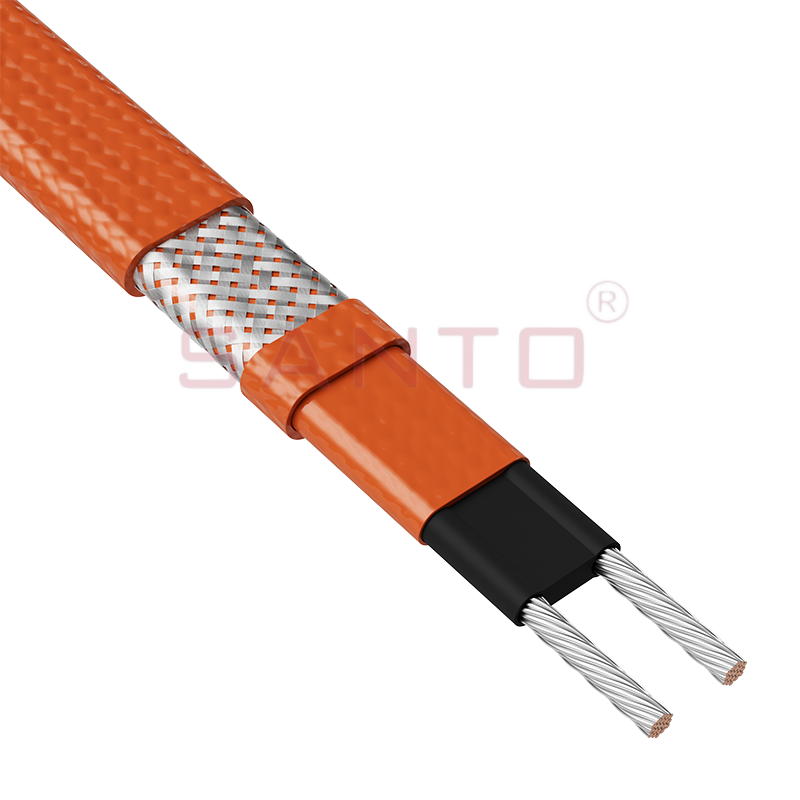
The SANTO UFO range of self-regulating heating cables is mainly used for frost protection of pipes and vessels that require steam cleaning . They can also be used to maintain processes up to 150°C. Th...
See Details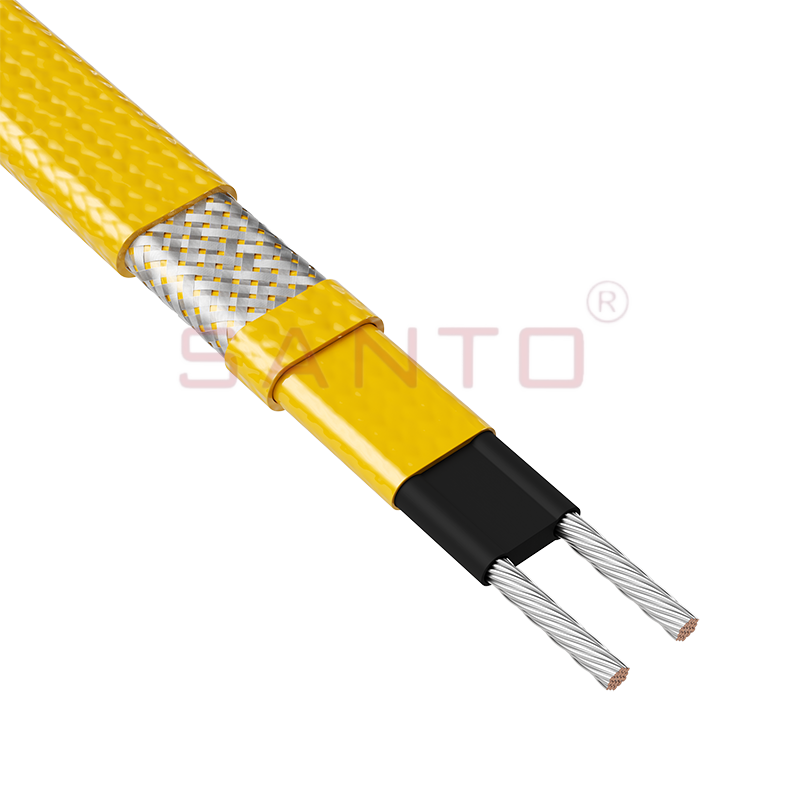
The SANTO UFD series of self-regulating heating cables are mainly used for freeze protection of pipes and vessels, but can also be used to maintain processes up to 200°C. These heating cables are avai...
See Details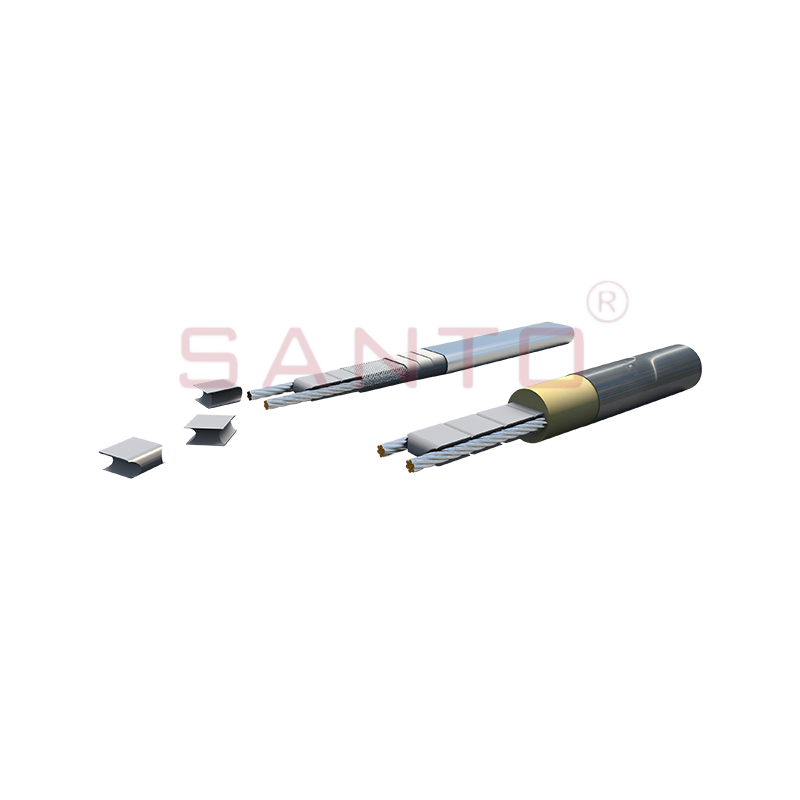
SANTO UFY heating wire is suitable for applications that maintain process temperatures up to 260 ℃ and can be steam blown; The self-regulating and parallel circuit heating wires of the UFY series are ...
See Details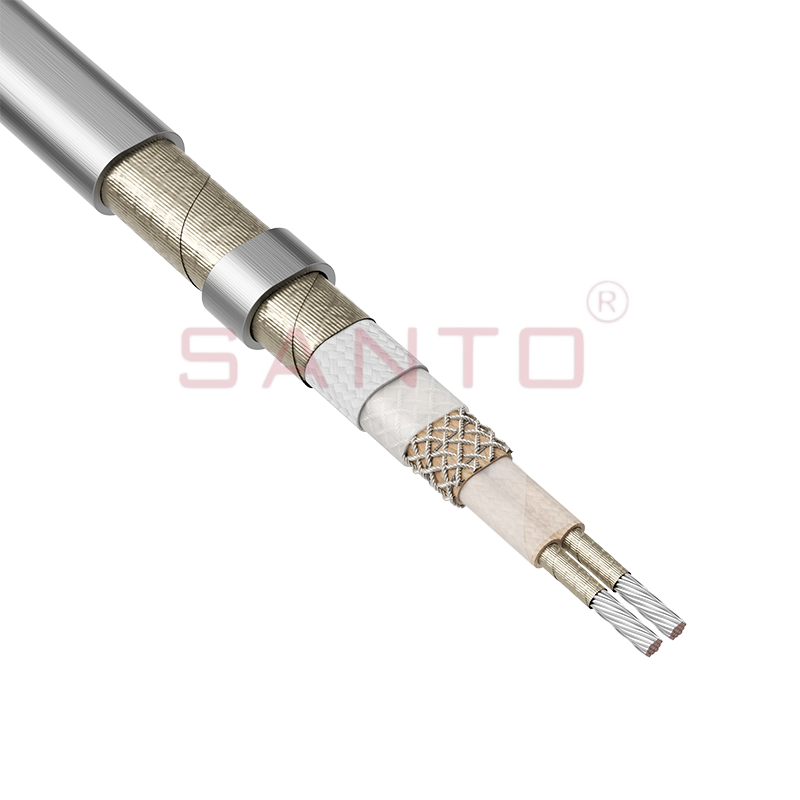
The SANTO UFM series self-regulating heating cables are mainly used for freeze protection of pipes and vessels, but can also be used to maintain processes up to 400°C. These heating cables are availab...
See Details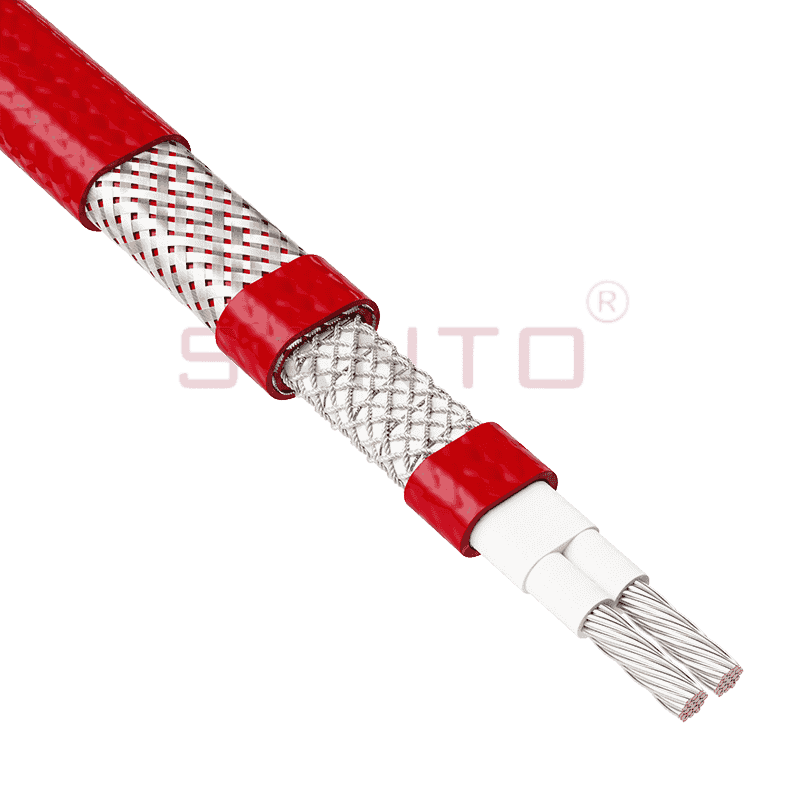
The SANTO ACC range of power-limiting heating cables is mainly used for temperature maintenance of processes and offers the advantage of a high power output at high temperatures which can reduce the n...
See Details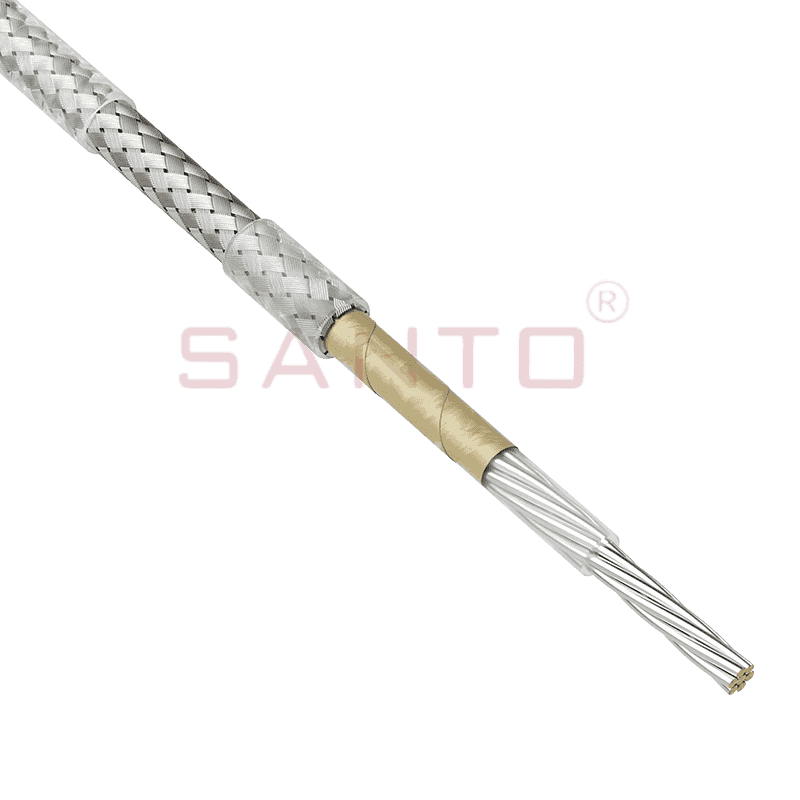
The stranded high temperature conductor is nickel plated to ensure a long life at elevated temperatures in corrosive environments. It is electrically isolated using an innovative sandwich construction...
See Details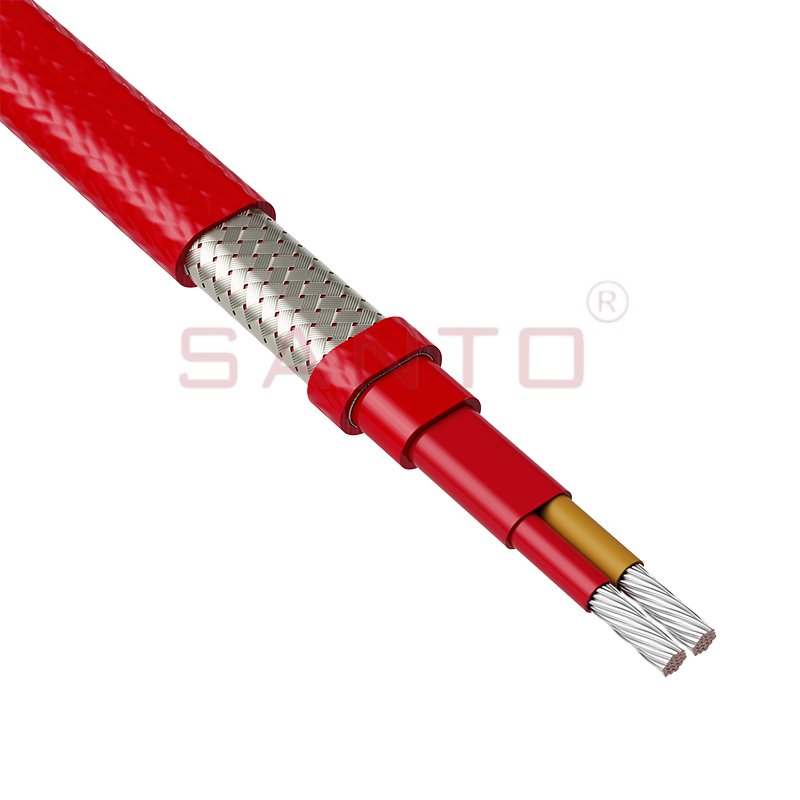
The stranded high temperature conductor is nickel plated to ensure a long life at elevated temperatures in corrosive environments. It is electrically isolated using an innovative sandwich construction...
See Details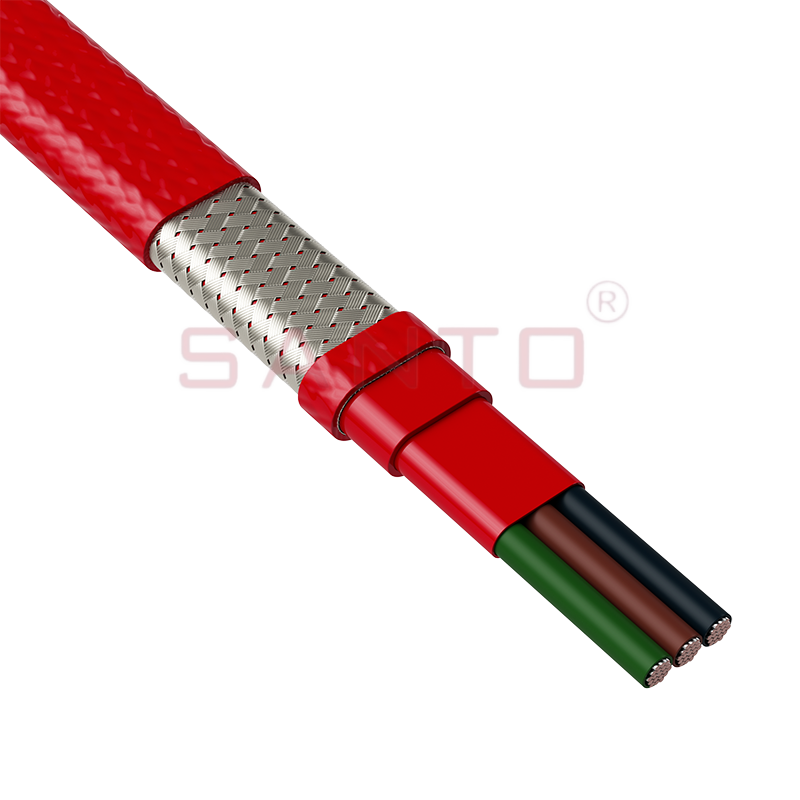
The stranded high temperature conductor is nickel plated to ensure a long life at elevated temperatures in corrosive environments. It is electrically isolated using an innovative sandwich construction...
See Details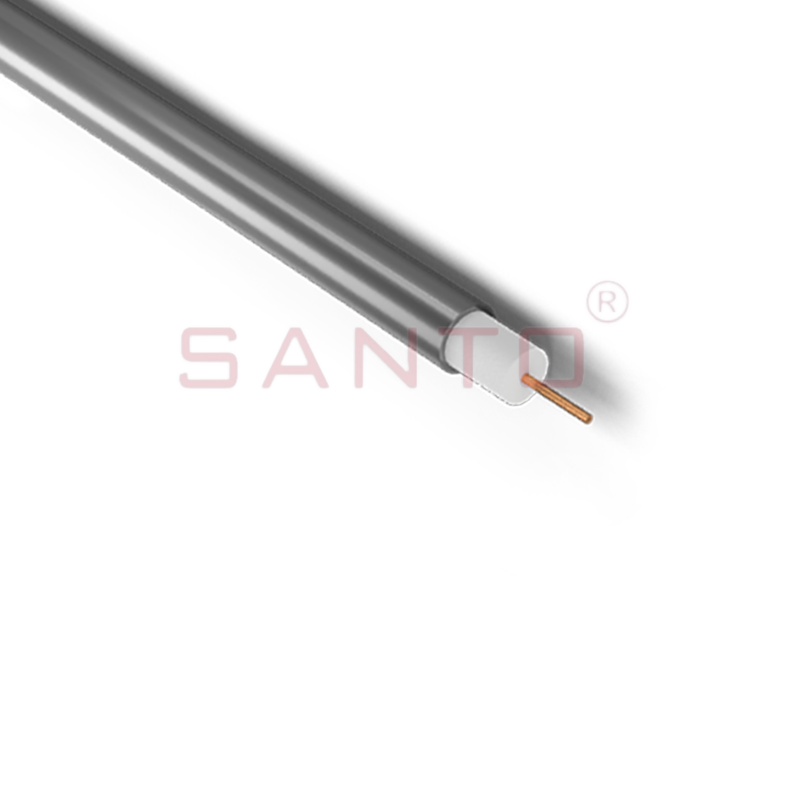
SANTO HAx mineral insulated (MI) Alloy 825 series heating cables are suitable for use in hazardous areas. They have been designed for use in freeze protection and temperature maintenance applications ...
See Details
Santo electric heating strips are widely used in key industries in China.

