 English
 English
 русский
 日本語
 Español
 中文简体

The SANTO UFA range of self-regulating heating cables is mainly used for frost protection of pipes and vessels but can also be used to maintain processes up to 65°C. These heating cables are available...
See Details
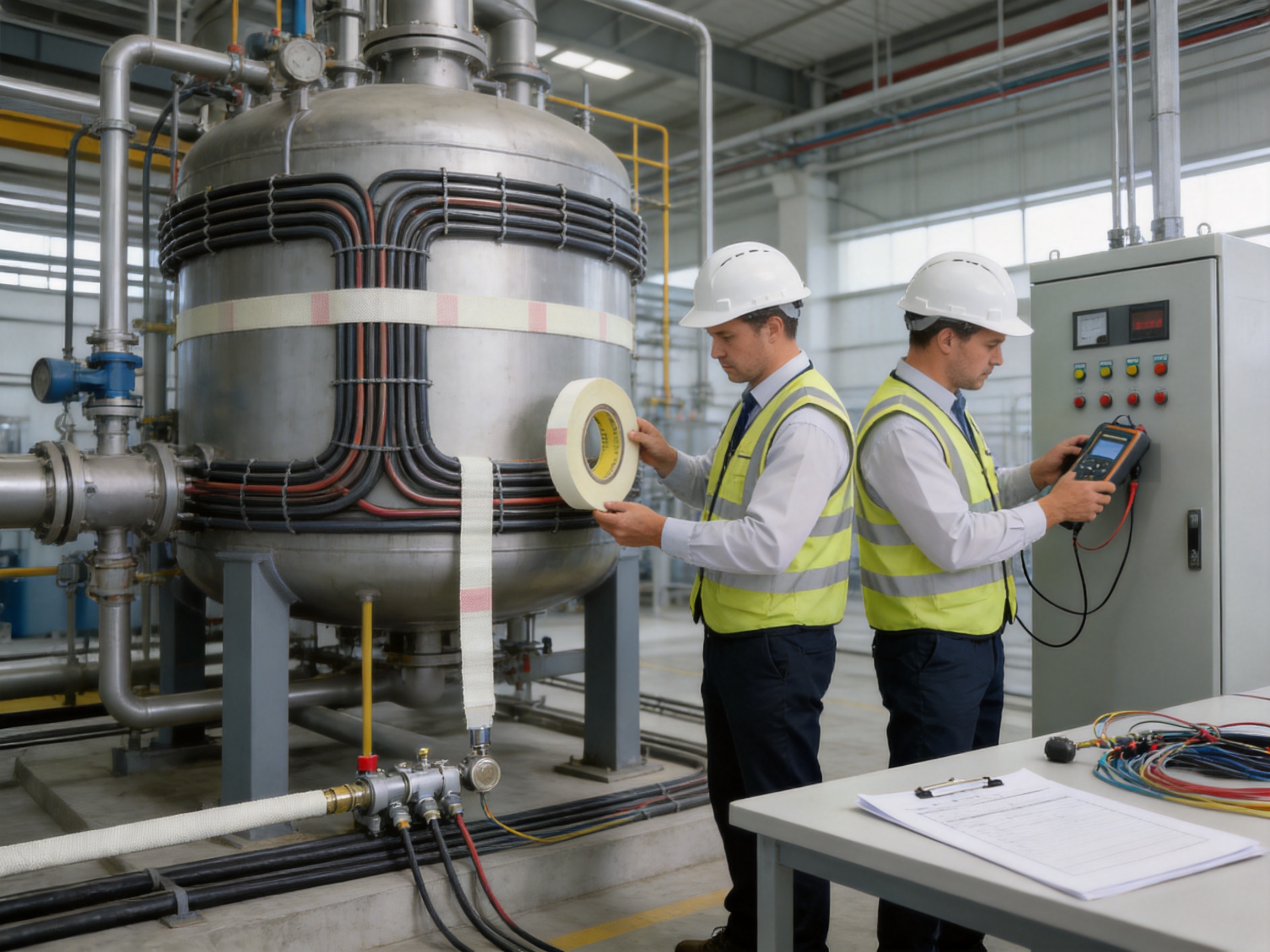
Pressure sensitive tape is a practical and essential accessory for installing electric heating cables on pipes, tanks, containers, vessels, and other heated surfaces. Although tape may appear to be a simple installation component, the quality of the fixing tape directly influences the positioning, heat transfer, mechanical protection, service stability, and overall installation cost of a tracing system. A heating cable that is poorly attached can shift during insulation work, lose contact with the heated surface, become exposed to mechanical damage, or produce uneven heating.
Designed for professional electric heat tracing applications, pressure sensitive tape provides a fast and dependable method for securing polymer-based heating cables and temperature sensors. The product is also commonly described as glass installation tape or fixing tape. Depending on the installation environment, the system may use fiberglass pressure sensitive tape, GS-54 fixing tape, or aluminum tape. Each option is selected according to the surface material, installation temperature, required adhesion, and operating conditions.
Santo Thermal Control Technology Co., Ltd. supplies heating cable accessories for industrial and commercial applications. Its product range includes electrically heated tracing cables, skin-effect heating tracing systems, snow and ice melting systems, underfloor heating mats, tubing bundles, silicone rubber heating systems, and related installation accessories. Within this product family, pressure sensitive tape supports the safe and efficient installation of heating products across a wide range of operating environments.
Content
Electric heating cables must remain in the correct position throughout installation, commissioning, operation, maintenance, and thermal cycling. The cable normally follows a predetermined layout based on pipe diameter, heat loss, operating temperature, insulation condition, and required output. If the cable moves away from the surface, the designed heat distribution can be altered.
Pressure sensitive tape helps maintain consistent contact between the heating cable and the heated surface. It can be applied at regular intervals along a pipe or tank, around bends, near fittings, beside valves, and at locations where the cable requires additional support. The tape is also useful for securing thermostat sensors and temperature sensors in the correct measuring position.
A reliable fixing method delivers several important benefits:
It maintains the planned cable spacing and routing.
It supports close contact between the cable and the surface.
It reduces movement during insulation installation.
It helps prevent accidental lifting, twisting, or displacement of the heating cable.
It can shorten installation time compared with mechanical fastening methods.
It reduces the need for extra clips, ties, or specialized tools.
It contributes to a neat and professional finished installation.
The tape is not a substitute for correct system design. The heating cable must still be selected, laid out, connected, tested, and insulated according to the applicable project requirements. However, the fixing tape is an important part of converting the design into a durable physical installation.
Pressure sensitive tape is a self-adhering installation tape intended for fastening heating cables and sensors to suitable heated surfaces. The adhesive layer is designed to bond when pressure is applied, allowing installers to secure the cable without waiting for a separate adhesive to cure.
The supplied product information identifies the tape as suitable for use with polymer-based heating cables. It is also described as glass installation tape, reflecting the use of fiberglass-based materials in common heat tracing installation applications. The tape is engineered to combine high durability, abrasion resistance, practical handling, and efficient installation.
For stainless steel surfaces, or when the installation temperature falls below 40 °F / 5 °C, GS-54 fixing tape is recommended. Aluminum tape is used to attach heating cables and temperature sensors to pipes and tanks when the application requires an aluminum-based fixing material. Selection should therefore be based on both the cable type and the installation environment.
The principal product advantages include:
High durability for demanding installation work.
High abrasion resistance during handling and insulation placement.
Compatibility with polymer-based heating cables.
Fast-break handling for efficient application.
Reduced labor time compared with slower fastening methods.
Lower total installed cost when correctly selected and applied.
Reliable adhesion across a broad range of practical installation conditions.
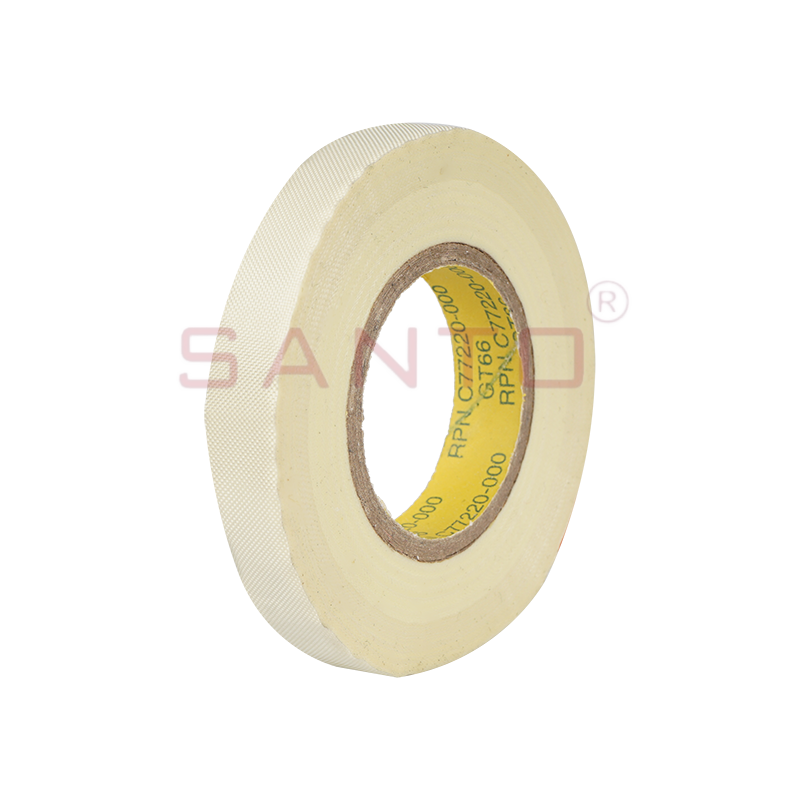
Pressure Sensitive Tape
A pressure sensitive installation tape normally consists of a carrier material and an adhesive layer. The carrier provides tensile strength, dimensional stability, and resistance to handling damage. The adhesive creates contact with the pipe, tank, cable jacket, or sensor surface. The performance of the complete product depends on the interaction between these components.
Fiberglass or glass-fiber reinforcement provides a strong and stable carrier for installation work. Compared with a weak general-purpose tape, reinforced tape is less likely to stretch excessively while being applied. Controlled stretch is important because the installer needs to maintain the intended cable position without pulling the heating cable away from the surface.
A reinforced carrier also helps the tape resist tearing when it is wrapped around a pipe or pulled across a tank surface. During installation, the tape may encounter sharp edges, insulation materials, tools, gloves, or rough metal surfaces. High abrasion resistance helps it retain its functional integrity during these activities.
The adhesive is designed to bond through application pressure rather than through a long curing process. This allows the installer to place the heating cable, press the tape into position, and continue with the next section of work. Immediate handling is particularly useful on large projects where many meters of cable must be installed in a limited time.
Good adhesion is necessary at both low and high temperatures. The supplied technical information emphasizes the need for adhesion to remain effective when the electrical heating system is not operating and the surrounding temperature is low. It also identifies high-temperature service conditions up to approximately 200 °C during steaming situations as an important consideration for the tape used in appropriate applications.
Actual performance depends on surface cleanliness, surface energy, installation temperature, tape selection, pressure, cable jacket condition, and exposure conditions. The installer should always follow the product specification and project requirements rather than assuming that all tapes perform identically on every surface.
The fast-break feature allows the tape to be separated quickly during installation. This reduces the need for scissors or knives at every fixing point and helps installers work efficiently around pipe bends, branches, flanges, supports, and instrumentation. Faster handling can be especially valuable in industrial plants, where access may be limited and installation areas may be elevated or congested.
Fast-break tape also contributes to consistent workmanship. When an installer can quickly tear a suitable length, the cable is less likely to be left temporarily unsecured. This supports a more orderly installation sequence and reduces the risk of cable movement before thermal insulation is applied.
Pressure sensitive tape is intended for use with electric heat tracing systems and related heating products. Typical applications include pipe freeze protection, process temperature maintenance, tank heating, vessel heating, container heating, roof and gutter deicing, snow melting, and selected underfloor heating installations.
On pipelines, the tape is applied at intervals selected according to the cable design and installation instructions. Additional fixing may be required near pipe fittings, elbows, valves, flanges, supports, and changes in direction. The cable should be positioned according to the approved layout before the tape is pressed firmly into place.
For long pipe runs, the installer should avoid excessive tension in the cable. The cable should follow the surface naturally, while the tape holds it in position. Excessive pulling can place unnecessary stress on the cable jacket or terminals and may cause the cable to move when temperatures change.
Large tanks and vessels often require carefully distributed heating to prevent cold spots. Pressure sensitive tape can secure heating cables in parallel runs, spiral arrangements, or other designed patterns. Aluminum tape may be selected when improved surface contact or heat spreading is required on pipes and tanks.
Tank surfaces should be inspected before application. Oil, grease, loose rust, moisture, dust, scale, and other contaminants can reduce adhesion. Weld seams and sharp projections should be evaluated so that the cable and tape are not damaged during installation.
Heating cables may be installed on containers, hoppers, process equipment, and technological equipment where frost protection or temperature maintenance is necessary. In these applications, the fixing tape helps keep the cable aligned with the equipment surface while other installation activities are completed.
Equipment geometry can vary significantly. Curved surfaces, access covers, brackets, nozzles, and structural frames may require different tape lengths and fixing intervals. A professional installation plan should identify areas needing additional support before work begins.
A temperature sensor must measure the intended surface or process condition. If the sensor is not held firmly against the correct location, the controller may receive an inaccurate reading. Pressure sensitive tape or aluminum tape can be used to secure sensors where permitted by the system design.
The sensor should not be placed randomly. Its position must reflect the control strategy and the heating cable layout. The tape should hold the sensor securely without damaging the sensor lead or creating an unnecessary thermal barrier between the sensor and the measured surface.
Snow and ice melting systems use electric heating cables beneath driveways, walkways, ramps, roofs, gutters, and other exposed areas. During installation, the cable must remain in the planned position before it is covered by concrete, mortar, asphalt, roofing materials, or other construction layers.
In these applications, the fixing method must be compatible with the substrate and the installation sequence. Pressure sensitive tape may be used in suitable preparation and temporary securing operations, while the final construction layer provides additional physical retention. The selected product should be confirmed for the specific substrate and project method.
Different surfaces and temperatures require different installation approaches. The supplied product information specifically identifies GS-54 tape for stainless steel surfaces and for installation temperatures below 40 °F / 5 °C. Aluminum tape is identified for attaching heating cables and temperature sensors to pipes and tanks.
| Installation condition | Recommended consideration | Primary reason |
|---|---|---|
| General polymer-based heating cable installation | Pressure sensitive glass installation tape | Fast handling, durability, and practical adhesion |
| Stainless steel surface | GS-54 fixing tape | Suitable adhesion approach for stainless steel |
| Installation below 40 °F / 5 °C | GS-54 fixing tape | Improved suitability for low-temperature installation |
| Pipes and tanks requiring aluminum attachment tape | Aluminum tape | Secure attachment and useful surface contact characteristics |
| Temperature sensor attachment | Specified fixing tape or aluminum tape | Maintains the sensor at the designed measuring position |
This table is a selection guide rather than a replacement for the technical specification. The correct product should be selected according to the cable construction, surface material, ambient temperature, operating temperature, exposure conditions, insulation system, and applicable safety requirements.
General-purpose adhesive tapes are not necessarily designed for electric heat tracing. They may have limited temperature resistance, inadequate tensile strength, poor adhesion to metal, or a carrier that tears during installation. They may also leave adhesive residue, lose adhesion during thermal cycling, or fail when exposed to moisture and insulation materials.
Professional heating cable fixing tape is designed around the actual needs of heat tracing installation. Its advantages over ordinary tapes include stronger mechanical support, more predictable handling, better suitability for cable installation, and improved resistance to abrasion. These characteristics help reduce the likelihood of rework.
A specialized tape helps installers maintain the designed cable layout. Consistent positioning supports more uniform heat distribution and reduces the possibility of localized overheating or underheating caused by an unintended change in spacing.
Heat tracing projects often involve metalwork, scaffolding, insulation, cladding, tools, and repeated movement around the work area. A durable, abrasion-resistant carrier is more dependable than a fragile tape that can tear or detach before the installation is complete.
Fast-break handling and pressure-sensitive bonding simplify the work sequence. The installer can cut or break the required length, position it, apply pressure, and proceed without waiting for curing. On large projects, small time savings at each fixing point can produce a meaningful reduction in total labor hours.
The total cost of an accessory includes material purchase, labor, tools, rework, inspection, and schedule impact. A tape with a slightly higher unit price may reduce the total installed cost if it installs faster, holds more reliably, and reduces corrective work. The product information specifically identifies cost-effectiveness through reduced installation time and lower total installed cost.
Neat cable routing is easier to inspect, insulate, document, and maintain. A tape that can be applied evenly supports a cleaner finished installation. This is particularly useful in industrial facilities where cable routes, sensor locations, and fixing points must be visible during inspection before insulation is closed.
Correct installation begins with preparation. Even a high-quality pressure sensitive tape may perform poorly if applied to a contaminated, wet, excessively cold, or unsuitable surface. The following method provides a general framework; the project specification and product data sheet remain the controlling documents.
Review the approved heating cable layout, power requirements, control points, sensor locations, fixing intervals, and insulation details. Confirm that the selected tape is suitable for the cable type and surface.
Check the pipe, tank, or equipment surface for oil, grease, dust, moisture, loose scale, sharp burrs, excessive rust, peeling coatings, and other contaminants. Surface irregularities may prevent the tape from making continuous contact.
Clean the surface using a method compatible with the substrate and project safety requirements. Allow the surface to dry before applying the tape. Moisture and contamination can significantly reduce adhesive contact.
Place the cable according to the approved design. Avoid twisting, kinking, crushing, or stretching the cable. Ensure that the cable is in full contact with the intended heated surface wherever the system design requires surface contact.
Separate a suitable length of tape and place it across or around the cable as specified. Press the tape firmly onto the surface and cable. The adhesive requires adequate pressure to develop contact. Do not apply the tape loosely or leave air gaps that could allow the cable to move.
Add additional fixing near bends, fittings, junctions, sensors, terminations, and areas subject to movement. The tape should not cover electrical connections in a way that conflicts with inspection or termination requirements.
Before installing thermal insulation or protective cladding, check cable spacing, tape adhesion, sensor location, cable condition, and routing. Photographing or documenting the completed cable layout can assist with quality records and future maintenance.
Perform the required electrical continuity, insulation resistance, grounding, and functional tests before and after insulation when required by the project procedure. Tape installation does not replace electrical testing.
Temperature is a major factor in pressure sensitive adhesive performance. The supplied information recommends GS-54 fixing tape for installation temperatures below 40 °F / 5 °C. At low temperatures, many adhesives become less flexible and may require specialized formulations or application procedures.
Stainless steel can also present a different adhesion challenge from painted carbon steel or other common substrates. Its surface condition, finish, cleanliness, and low surface energy characteristics can influence the bond. The recommended GS-54 option should be considered for stainless steel installations.
High-temperature exposure must also be evaluated. The supplied information notes that good adhesion should be maintained up to approximately 200 °C in steaming conditions for appropriate tape applications. This does not mean that every tape is suitable for every continuous operating temperature. The exact tape specification, exposure duration, steam conditions, and cable design must be reviewed before use.
Thermal insulation should be installed carefully after the cable has been fixed. Dragging insulation materials across the cable can pull it away from the surface. Mechanical cladding should not crush the cable or damage the tape. Where the system is exposed to vibration, impact, chemicals, or outdoor weather, the complete installation must be evaluated rather than considering the tape in isolation.
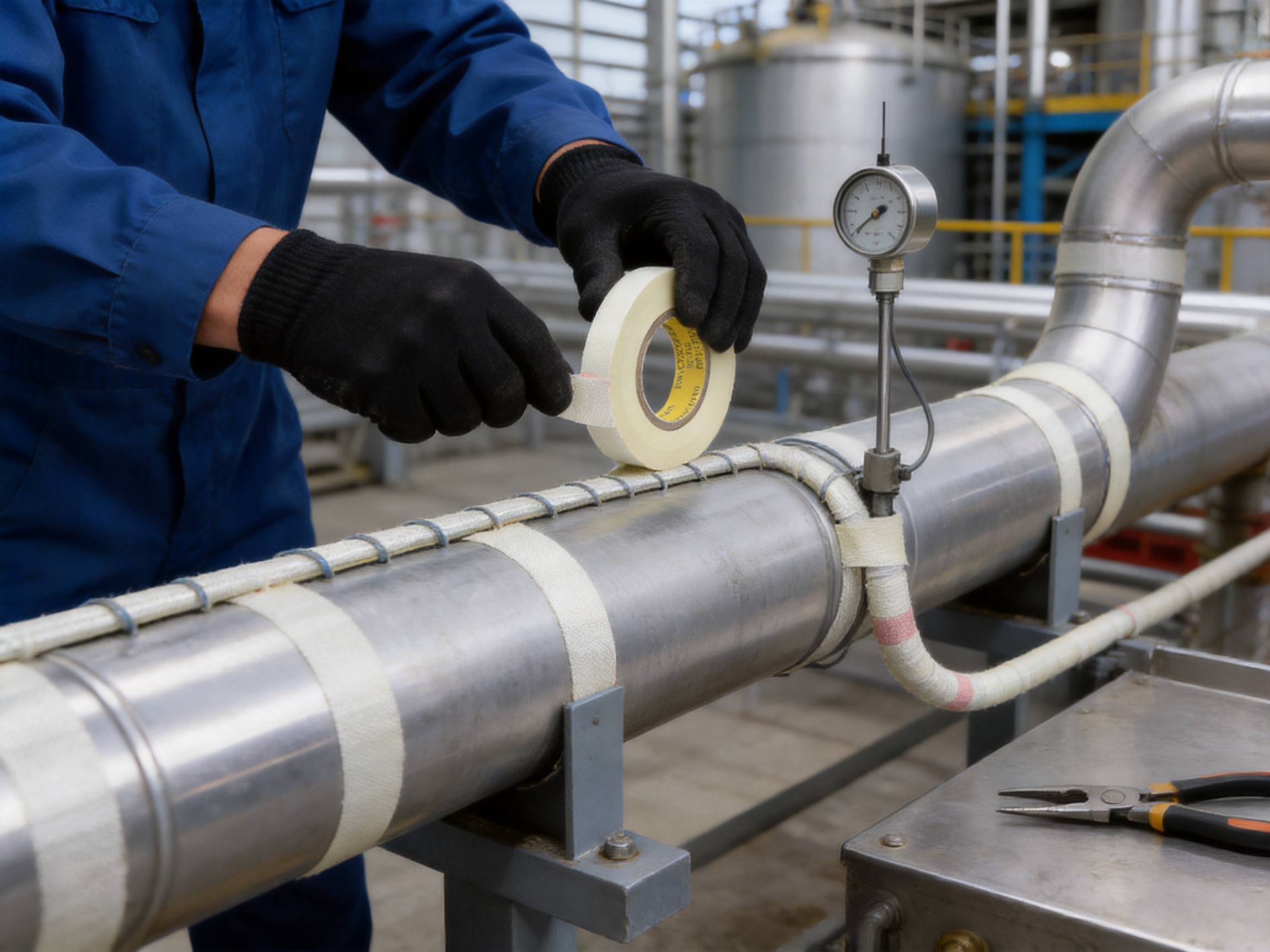
The performance of an installation accessory begins with controlled raw materials and continues through manufacturing, inspection, packaging, and technical support. Santo Thermal Control Technology Co., Ltd. has more than 35 years of experience in electric heating products and related systems. Its operations integrate research, design, production, manufacturing, and sales.
The company operates in the electric heating industry from Jiangsu Province, an area recognized for electric heating belt manufacturing. Its product development activities cover automatic temperature-control heating belts, self-limiting heating belts, constant-power heating belts, glass fiber heating belts, silicone rubber heating products, mineral-insulated cables, snow melting cables, LCD tracked heaters, and accessories.
The company has developed products for petroleum, chemical, gas, construction, solar energy, geothermal cultivation, electric heating, antifreeze, deicing, heat tracing, and insulation applications. This broad product background is relevant to accessory design because installation tape must be considered as part of a complete heating system rather than as an isolated consumable.
Experience with different cable constructions helps support more appropriate recommendations for polymer-based cables, fiberglass heating products, silicone rubber systems, and other electric heating products. The company also reports cooperation in product research with Harvard University in the United States, reflecting an emphasis on technical development and innovation.
The company reports an irradiation center established in 2013 and a product simulation testing laboratory developed as part of its expansion plans. Manufacturing resources of this type support the evaluation of heating products, materials, and system behavior under controlled conditions.
For pressure sensitive tape, quality control should address carrier integrity, adhesive uniformity, tear behavior, roll consistency, surface appearance, and storage condition. Depending on the specification, testing may also consider tensile strength, elongation, abrasion resistance, adhesion, temperature exposure, and compatibility with cable jackets and substrates.
Santo reports ISO9001 quality system certification and national CCC certification for its products. A quality management system helps establish documented processes for procurement, production, inspection, traceability, corrective action, and customer service. These processes are important when accessories are supplied for repeated industrial projects requiring consistent performance.
Quality consistency is especially valuable for tape because installation teams depend on predictable breakability, adhesion, width, thickness, and roll handling. Variations that appear minor during factory production can become significant on a large project if the tape tears inconsistently or fails to adhere under actual site conditions.
The company reports annual output exceeding 10,000 units, more than 2,000 distributors, and business activity in over 85 areas. Its history includes the founding of an electric heating instrument factory in 2000, ISO9001 certification in 2002, establishment of the SANTO brand in 2016, explosion-proof and EAC certifications, and continued expansion of product and manufacturing capacity.
The company also reports the establishment of a Russia factory in 2023. International manufacturing and distribution experience can support customers that require regional supply, export documentation, product coordination, and long-term technical communication.
In competitive industrial projects, the best accessory is not necessarily the least expensive roll of tape. Buyers and engineering contractors usually need dependable performance, practical installation, technical guidance, and consistent supply. A specialist supplier can provide advantages that a general tape distributor may not offer.
First, the product is connected to a broader electric heating portfolio. Customers can coordinate tape, heating cable, sensors, controllers, termination components, and system recommendations through a supplier familiar with the complete application.
Second, the supplier understands the difference between general surface attachment and heat tracing installation. The recommendation of GS-54 tape for stainless steel and low-temperature installation demonstrates the importance of application-specific selection.
Third, the product is designed to reduce installation effort. Fast-break handling and pressure-sensitive bonding can improve productivity without requiring complex installation tools.
Fourth, the company’s experience in industrial heating supports application assistance for pipelines, tanks, containers, process equipment, snow melting systems, and other projects. This can help customers avoid choosing a tape solely by appearance or price.
Finally, documented manufacturing processes, quality management, product testing, and international experience can provide greater confidence for repeat orders and large installations.
Pressure sensitive tape should be stored in a clean, dry location away from excessive heat, direct sunlight, moisture, dust, and chemical contamination. Rolls should remain in their original packaging until required for installation. Heavy objects should not be placed on the rolls because deformation can affect unwinding and application.
Before use, installers should check the product name, specification, roll condition, and storage date where applicable. Damaged, contaminated, excessively dried, or deformed rolls should be separated for evaluation. The tape should be handled with clean hands or suitable gloves when surface contamination could affect adhesion.
During installation, do not drag the adhesive side across dirty surfaces. Avoid repeatedly removing and repositioning a piece of tape because its adhesive performance may be reduced after contamination. If the tape is applied incorrectly, use a new piece rather than relying on a visibly compromised section.
One of the most common mistakes is using the same tape for every substrate. Stainless steel and low-temperature surfaces may require GS-54 fixing tape, while aluminum tape may be appropriate for specific pipe, tank, or sensor applications.
Dust, oil, water, rust particles, and loose coatings prevent the adhesive from making a reliable bond. Surface preparation is one of the simplest and most effective ways to improve installation quality.
Insufficient fixing may allow the cable to move during insulation work. Fixing intervals should follow the approved installation method, with additional support at bends, fittings, sensors, and other critical points.
Tape should secure the cable without creating excessive mechanical tension. Heating cables need to accommodate thermal expansion, contraction, and the geometry of the surface. Always follow the cable manufacturer’s handling requirements.
Adhesive behavior changes at low temperatures. If the installation is below 40 °F / 5 °C, the supplied recommendation is to use GS-54 fixing tape. If the surface is unusually hot, wet, or exposed to steam, confirm suitability before application.
Terminations, splices, junctions, and sensor connections must remain accessible for required inspection and testing. Tape should not conceal a problem or interfere with electrical clearances and approved termination methods.
A practical inspection checklist can help verify the finished installation before insulation or protective covering is applied:
Confirm that the correct tape type has been selected.
Confirm that the surface is clean, dry, and suitable.
Check that the heating cable follows the approved route.
Verify that cable spacing is consistent with the design.
Ensure that the cable is not kinked, crushed, or excessively stretched.
Check that the tape is firmly pressed onto both the cable and substrate.
Inspect bends, fittings, supports, sensors, and terminations for additional fixing where required.
Confirm that sensor placement matches the control design.
Look for loose tape edges, torn sections, contamination, or incomplete contact.
Complete electrical tests and record the results.
Document the installation before insulation is applied.
When purchasing pressure sensitive tape, buyers should provide the supplier with enough information to recommend the correct product. Useful details include heating cable type, cable jacket material, surface material, minimum installation temperature, maximum operating temperature, steam exposure, outdoor exposure, chemical contact, insulation type, project quantity, and required delivery schedule.
For large projects, purchasing teams should also request consistent roll dimensions, packaging information, storage instructions, technical data, and quality documentation. If multiple heating cable types are used on one site, the tape requirement should be matched to each system rather than generalized across the entire project.
It is also beneficial to purchase a small trial quantity for representative testing when the substrate is unusual or the installation environment is severe. A trial can confirm handling, adhesion, breakability, and compatibility before the full project is released.
Cost comparisons should include labor. A tape that installs quickly and reduces rework may produce a lower total installed cost even if its purchase price is not the lowest. Reliability, documentation, technical support, and supply continuity are also important parts of value.
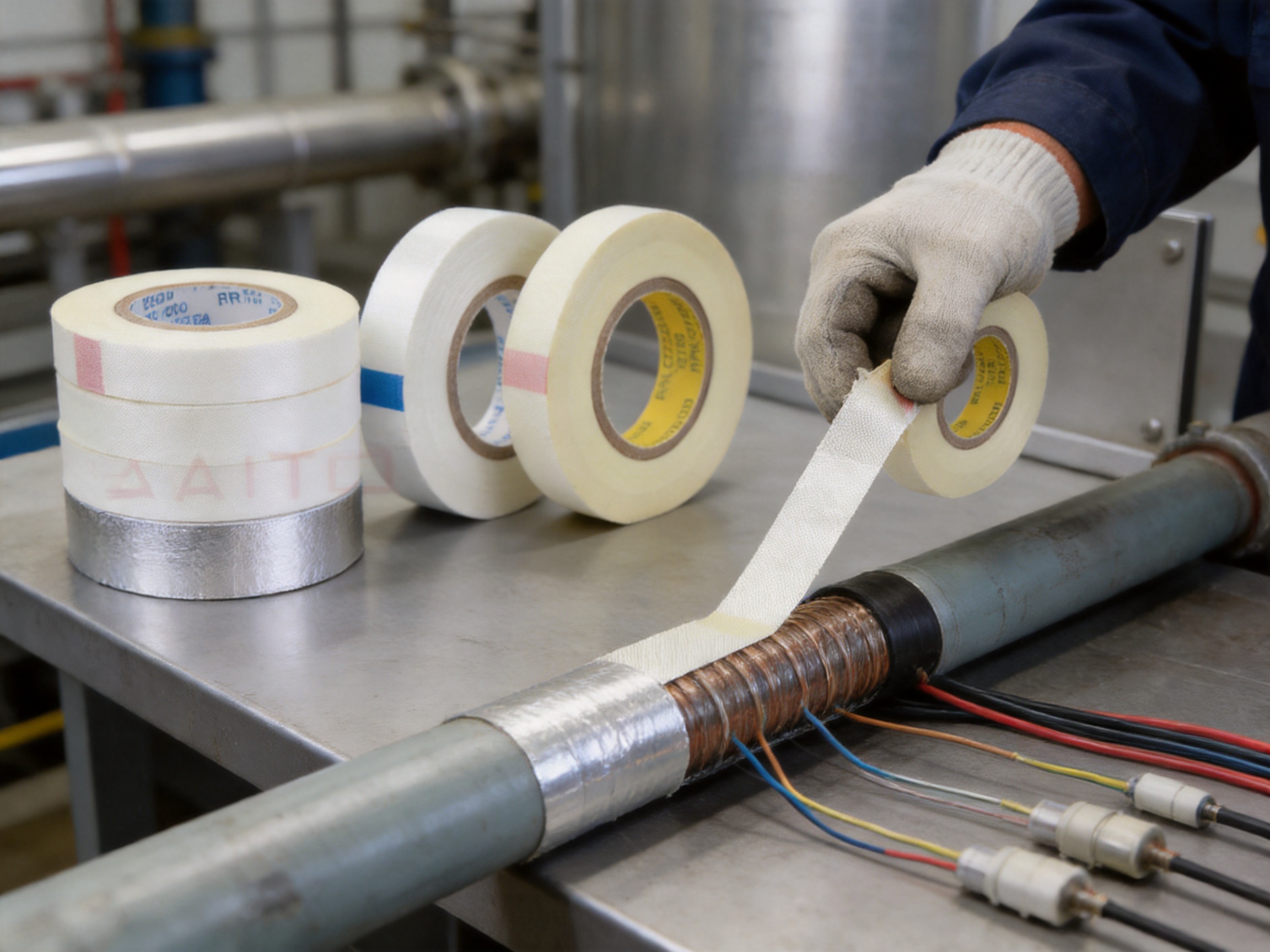
It is used to secure electric heating cables and temperature sensors to pipes, tanks, containers, and other heated surfaces. The adhesive bonds when pressure is applied, allowing fast installation without a separate curing process.
The supplied product information identifies the tape as suitable for use with polymer-based heating cables. The installer should still verify compatibility with the exact cable jacket, substrate, temperature range, and project specification.
GS-54 fixing tape is recommended for stainless steel surfaces. Surface cleanliness and installation temperature remain important, because contamination or cold conditions can reduce adhesion.
GS-54 fixing tape is recommended for installation temperatures below 40 °F / 5 °C. The exact installation procedure should follow the applicable technical documentation.
Aluminum tape is used to attach heating cables and temperature sensors to pipes and tanks. It may also provide useful surface contact characteristics in applications where an aluminum-based fixing material is specified.
Ordinary household tape is not recommended as a substitute unless it has been specifically tested and approved for the heating cable application. General-purpose tape may not provide the required mechanical strength, abrasion resistance, temperature performance, or long-term adhesion.
No. The tape holds the cable in position, but the complete system may also require thermal insulation, protective cladding, guards, conduit, or other measures according to the installation environment. Tape should not be treated as protection against all impact, chemical, or weather exposure.
The surface should be clean, dry, and free from oil, grease, dust, loose rust, scale, moisture, and other contaminants. Sharp projections and damaged coatings should be addressed before applying the tape.
Its fast-break design and pressure-sensitive adhesive can reduce the time required to secure heating cables. Faster installation, fewer tools, and less rework can reduce total labor and project costs.
Reuse is generally not recommended because the adhesive may collect dust or lose bonding performance after removal. Use a new section whenever reliable adhesion is required.
Store it in a clean, dry area away from direct sunlight, excessive heat, moisture, and contamination. Keep the rolls in their original packaging until use and avoid placing heavy objects on them.
Adhesive flexibility and contact behavior can change at low temperatures. For installations below 40 °F / 5 °C, GS-54 fixing tape is recommended. High-temperature or steaming conditions also require confirmation that the selected tape is suitable.
Yes, pressure sensitive tape or aluminum tape may be used where appropriate to hold a temperature sensor in the designed location. The sensor must be positioned according to the heating control strategy and must not be damaged or incorrectly insulated by the fixing method.
No. Santo Thermal Control Technology Co., Ltd. supplies a broader range of electric heating products, including self-limiting heating belts, constant-power heating products, silicone rubber heating systems, glass fiber heating products, mineral-insulated cables, snow melting cables, tracked heaters, and related accessories.
The company reports ISO9001 quality system certification and national CCC certification for its products. It also reports more than 35 years of industry experience, international distribution, product development activities, and manufacturing and testing resources.
Pressure sensitive tape is a small but important component of a reliable electric heat tracing installation. Its purpose is not simply to hold a cable temporarily. A suitable tape helps preserve cable positioning, support consistent heat transfer, secure sensors, simplify insulation work, and reduce installation time.
The product’s high durability, abrasion resistance, compatibility with polymer-based heating cables, and fast-break handling provide practical advantages over general-purpose tapes. Its cost-effectiveness comes from the complete installation process: quicker application, fewer tools, reduced rework, and lower total installed cost.
Correct selection remains essential. General pressure sensitive tape may be suitable for many polymer-based cable installations, while GS-54 fixing tape should be considered for stainless steel or installation temperatures below 40 °F / 5 °C. Aluminum tape is used for designated pipe, tank, and temperature sensor applications. Surface preparation, firm application pressure, suitable fixing intervals, and pre-insulation inspection are equally important.
Supported by extensive electric heating experience, integrated product development, quality management, manufacturing resources, and international supply capability, Santo Thermal Control Technology Co., Ltd. offers installation accessories as part of a broader heating system solution. For contractors, engineers, distributors, and maintenance teams, selecting a purpose-designed tape from an experienced heating manufacturer can improve both installation efficiency and long-term system confidence.
1. Santo Thermal Control Technology Co., Ltd., Pressure Sensitive Tape Product Specification.
2. Santo Thermal Control Technology Co., Ltd., Electric Heating Cable Installation Information.
3. Quality management principles based on ISO9001-certified manufacturing practices.
4. General engineering practice for electric heat tracing installation, cable routing, sensor placement, insulation, and inspection.
5. Manufacturer application guidance for GS-54 fixing tape and aluminum tape on heating cable systems.
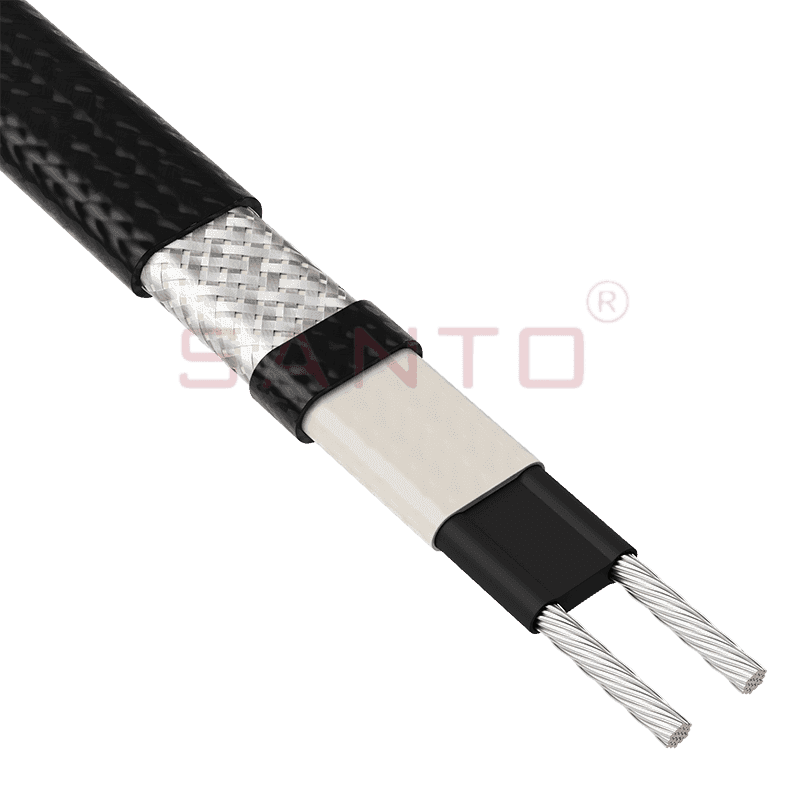
The SANTO UFA range of self-regulating heating cables is mainly used for frost protection of pipes and vessels but can also be used to maintain processes up to 65°C. These heating cables are available...
See Details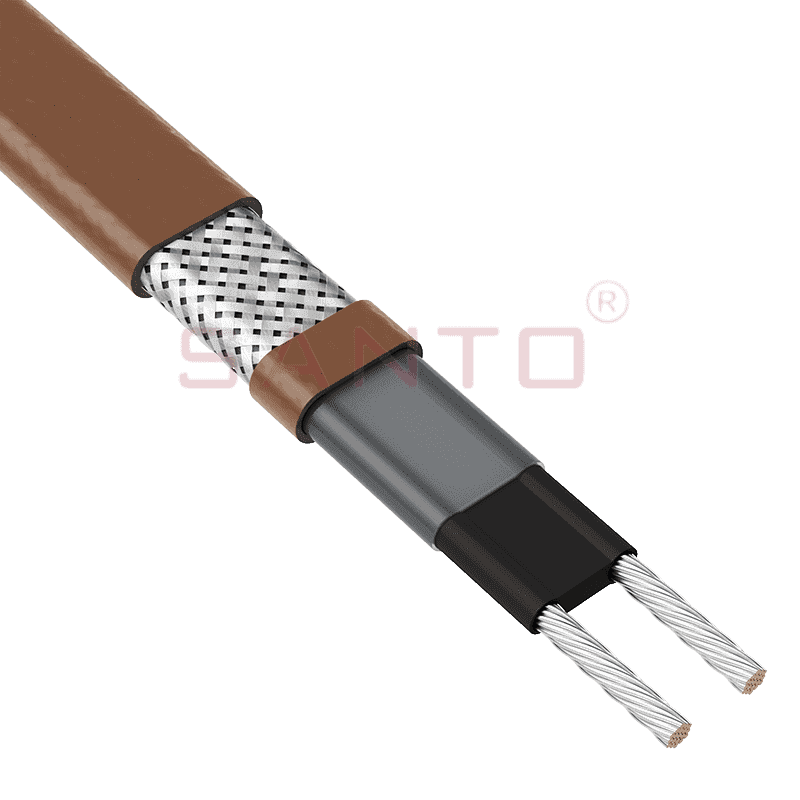
The SANTO UFB range of self-regulating heating cables is mainly used for frost protection of pipes and vessels requiring a higher power output than the UFA heating cables can supply. They can also be ...
See Details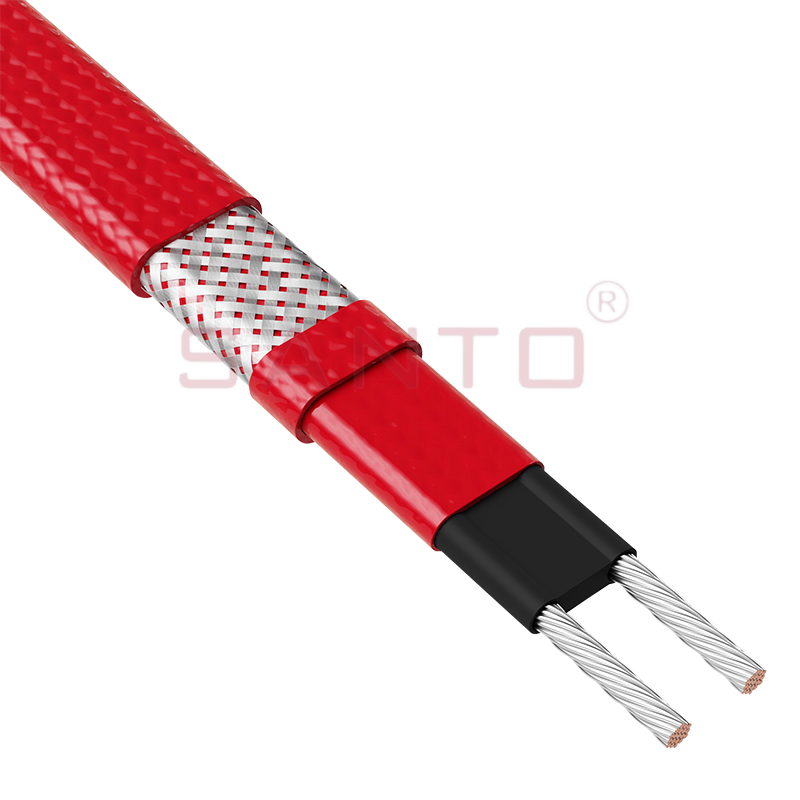
The SANTO UFC range of self-regulating heating cables is used for frost protection of pipes and vessels that require steam cleaning. They can also be used to maintain processes up to 121°C. These heat...
See Details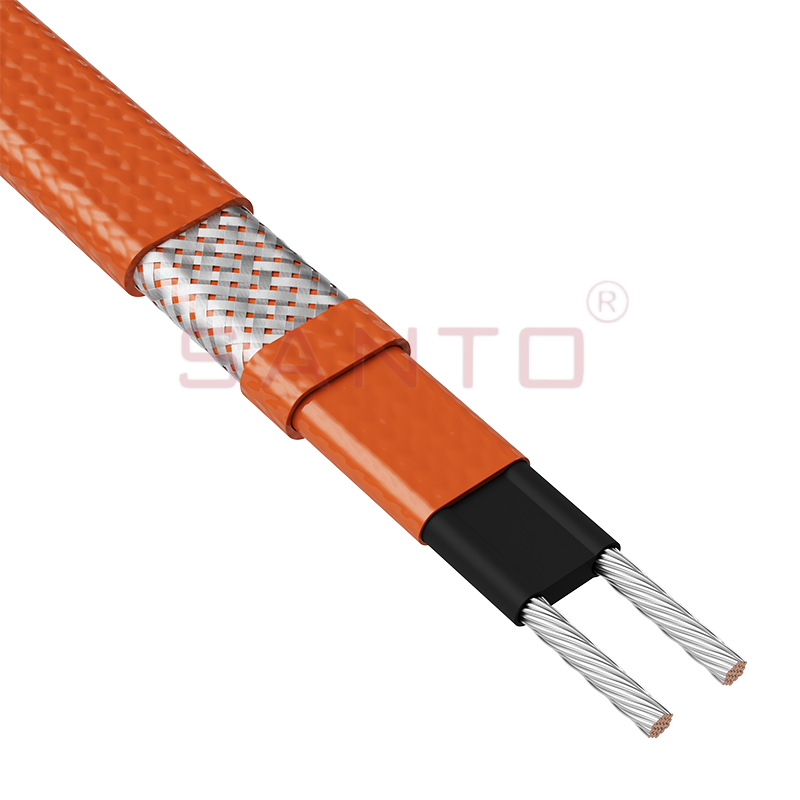
The SANTO UFO range of self-regulating heating cables is mainly used for frost protection of pipes and vessels that require steam cleaning . They can also be used to maintain processes up to 150°C. Th...
See Details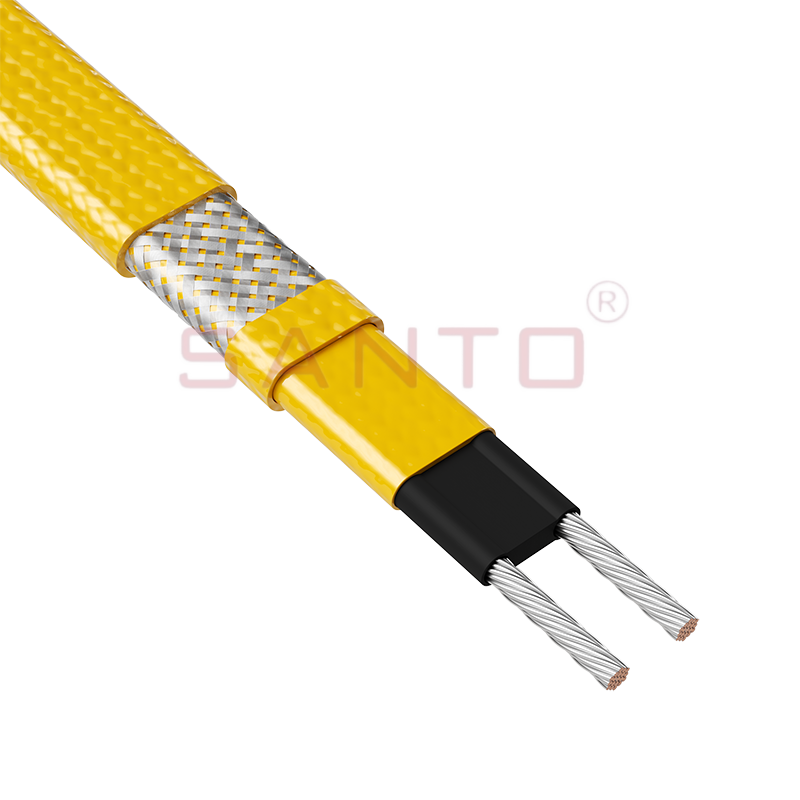
The SANTO UFD series of self-regulating heating cables are mainly used for freeze protection of pipes and vessels, but can also be used to maintain processes up to 200°C. These heating cables are avai...
See Details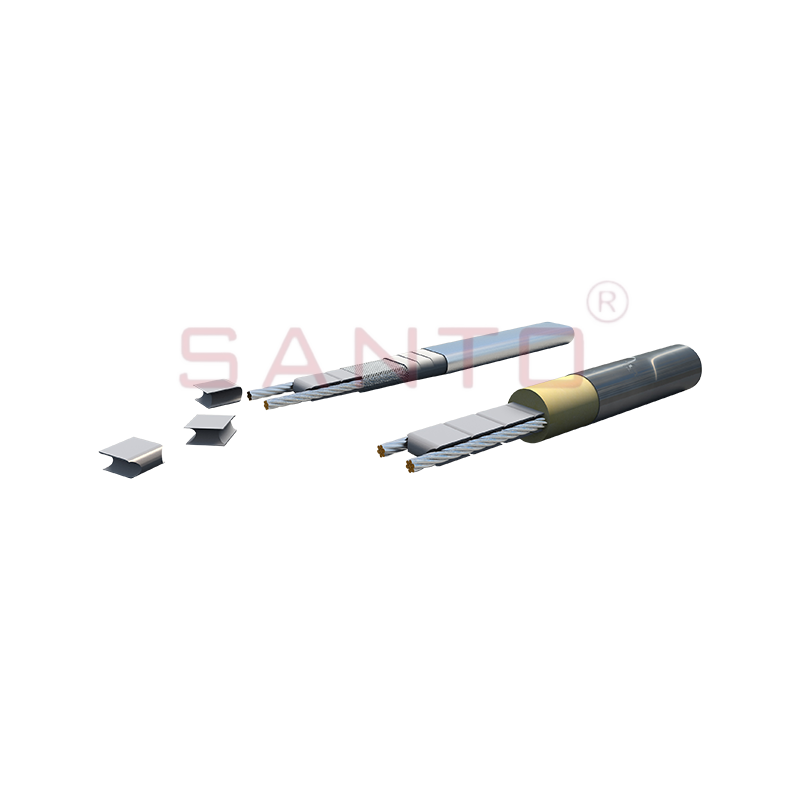
SANTO UFY heating wire is suitable for applications that maintain process temperatures up to 260 ℃ and can be steam blown; The self-regulating and parallel circuit heating wires of the UFY series are ...
See Details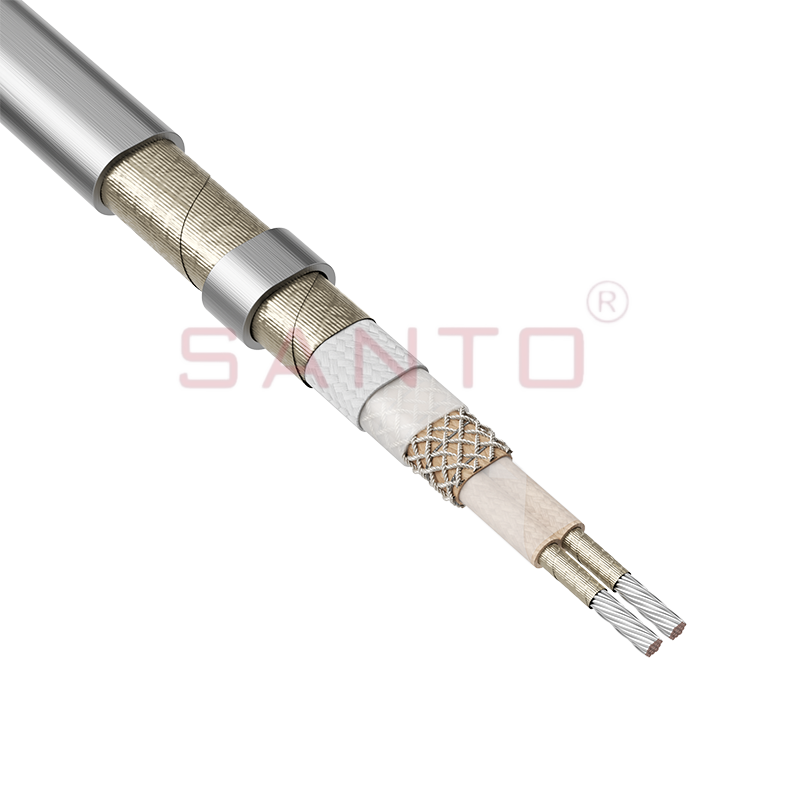
The SANTO UFM series self-regulating heating cables are mainly used for freeze protection of pipes and vessels, but can also be used to maintain processes up to 400°C. These heating cables are availab...
See Details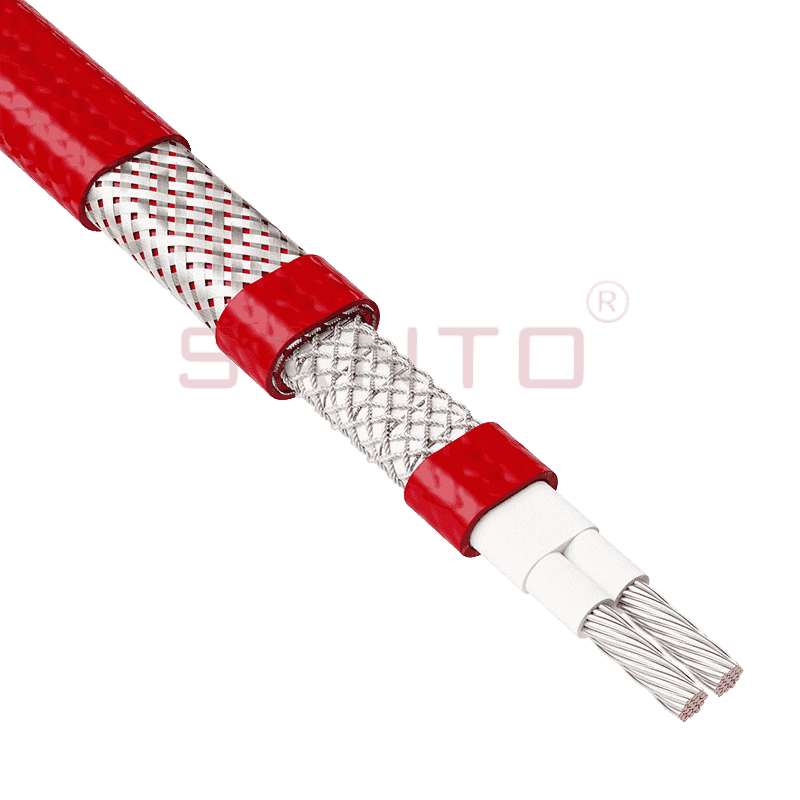
The SANTO ACC range of power-limiting heating cables is mainly used for temperature maintenance of processes and offers the advantage of a high power output at high temperatures which can reduce the n...
See Details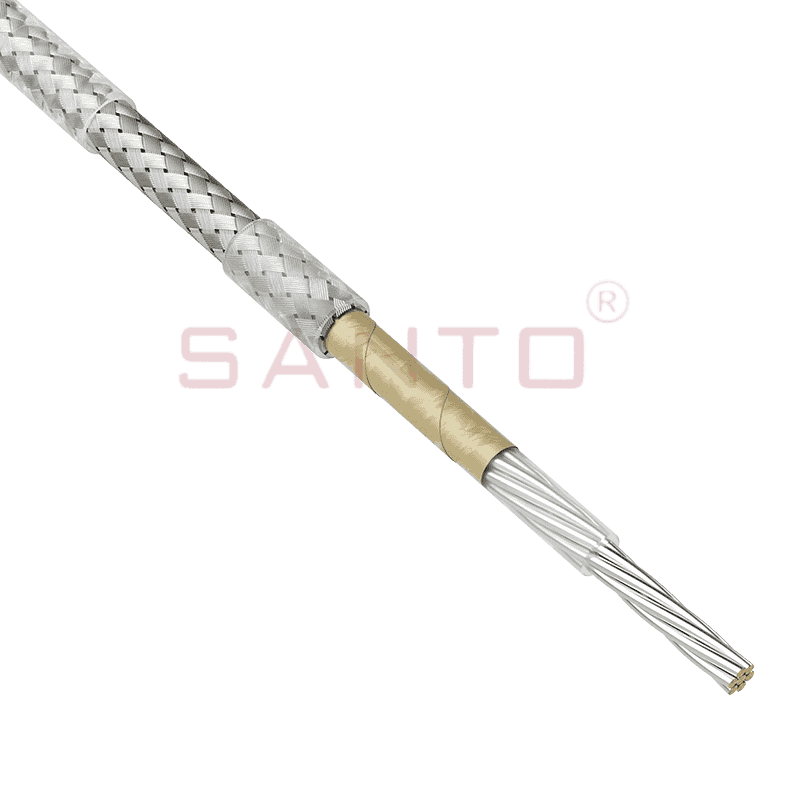
The stranded high temperature conductor is nickel plated to ensure a long life at elevated temperatures in corrosive environments. It is electrically isolated using an innovative sandwich construction...
See Details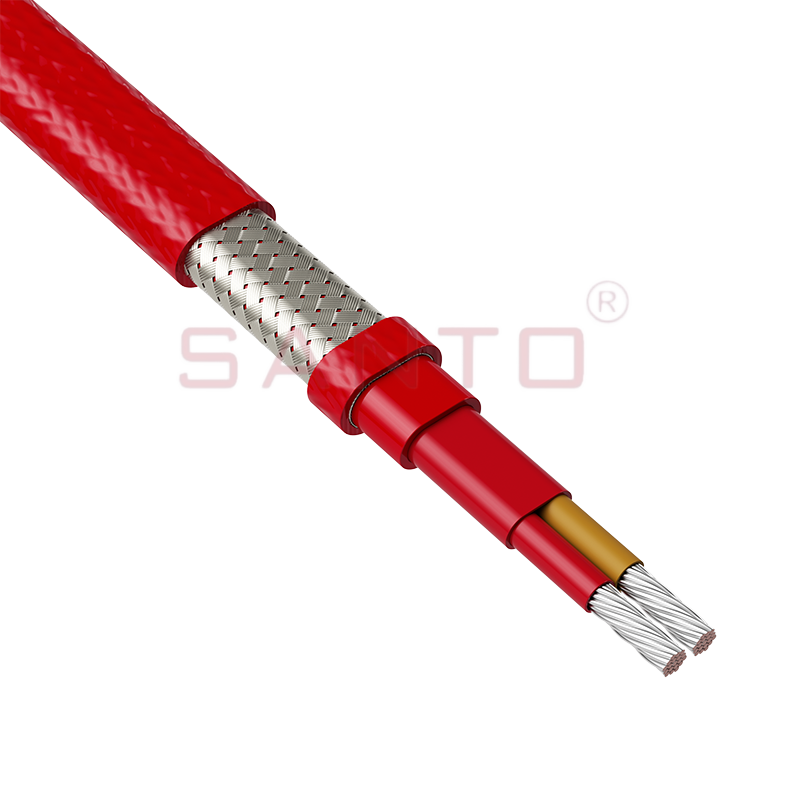
The stranded high temperature conductor is nickel plated to ensure a long life at elevated temperatures in corrosive environments. It is electrically isolated using an innovative sandwich construction...
See Details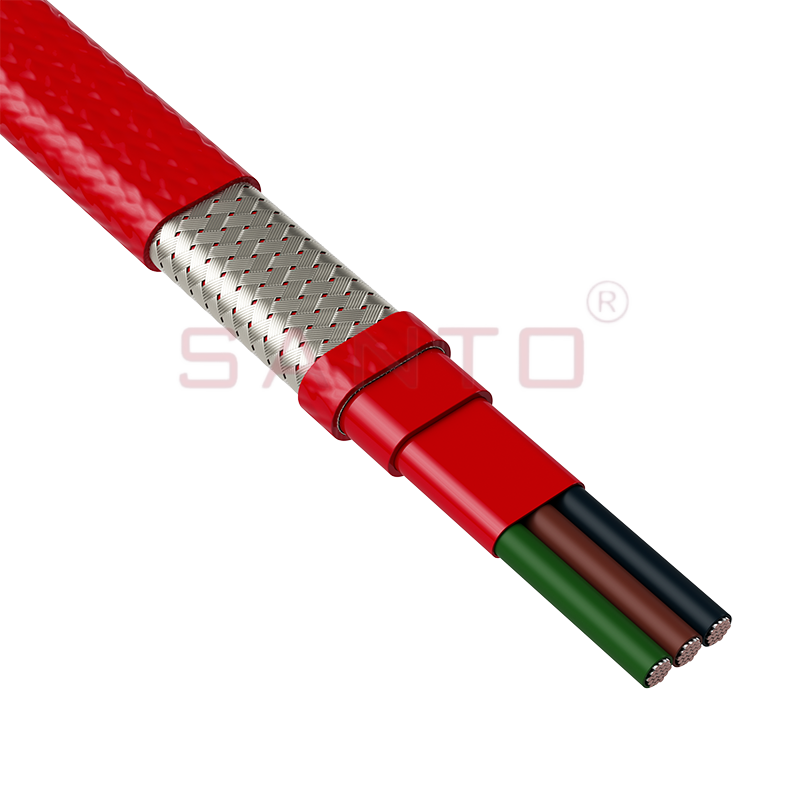
The stranded high temperature conductor is nickel plated to ensure a long life at elevated temperatures in corrosive environments. It is electrically isolated using an innovative sandwich construction...
See Details
SANTO HAx mineral insulated (MI) Alloy 825 series heating cables are suitable for use in hazardous areas. They have been designed for use in freeze protection and temperature maintenance applications ...
See Details
Santo electric heating strips are widely used in key industries in China.

