 English
  English
 русский
 日本語
日本語 Español
 中文简体
中文简体
The SANTO UFA range of self-regulating heating cables is mainly used for frost protection of pipes and vessels but can also be used to maintain processes up to 65°C. These heating cables are available...
See Details
Industrial heat tracing is a critical engineering solution for keeping pipes, tanks, valves, instruments, and process equipment within safe and efficient temperature ranges. In many industries, temperature is not simply a comfort factor; it determines whether a fluid flows, a chemical reaction remains stable, a pipeline avoids freezing, or an entire plant continues to operate during severe weather. The high-temperature constant-power heating cable described in this article is designed for demanding industrial heat-tracing applications where high output, temperature maintenance, installation flexibility, and long-term reliability are required.
This product belongs to the parallel constant-power heating cable category. It is engineered for frost protection and process temperature maintenance on industrial pipes and equipment, especially where high power output and high temperature exposure are essential. The cable can support process temperature maintenance up to 230 degrees Celsius depending on cable type, and it can withstand routine steam purges and temperature exposure up to 260 degrees Celsius when power is off. These performance values make it suitable for many demanding applications in petroleum, chemical processing, gas, construction, solar energy, geothermal cultivation, deicing, insulation, and industrial temperature-control systems.
Unlike many conventional heating solutions that are limited by fixed lengths, low exposure temperatures, or high start-up currents, this parallel constant-power heating cable offers cut-to-length flexibility, stable output characteristics, and practical field termination. It is formed with a coiled resistor alloy or carbon fiber heating element wrapped around two parallel conductors. The distance between conductor contact points forms the heating zone length. Because of its parallel construction, the cable can be cut to required lengths on site and terminated according to the installation layout, helping contractors reduce waste, simplify inventory, and adapt to complex pipework.
ABB High Temperature Constant Power Heating Cable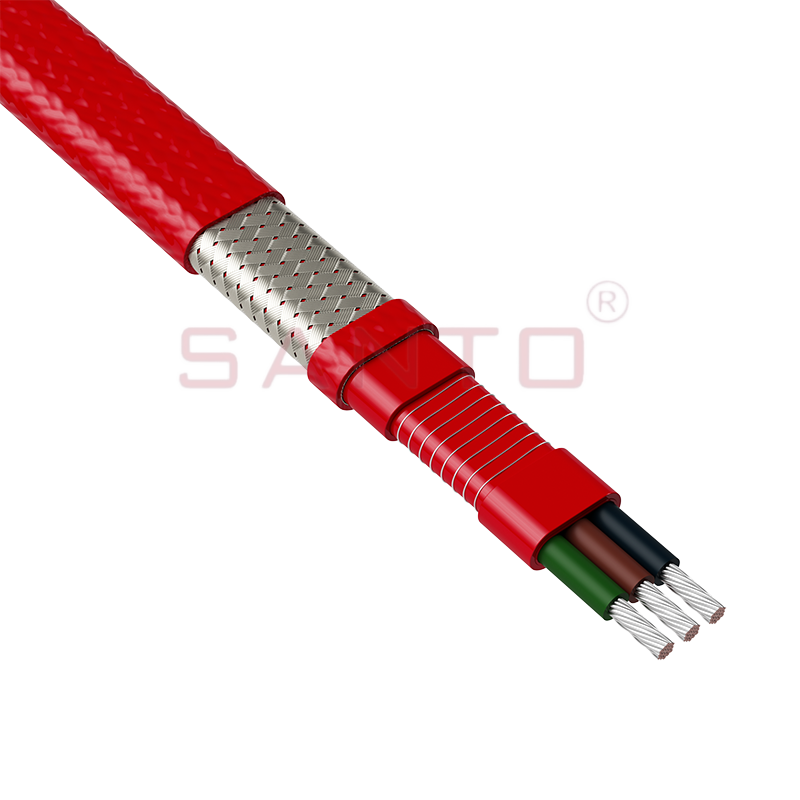
Content
The cable is designed for industrial heat tracing on pipes and equipment that require controlled heating, freeze protection, or process temperature maintenance. Its construction allows the heating element to operate in repeated zones, delivering constant power per unit length according to the selected model. The available output ratings include approximately 15 W/m, 30 W/m, 45 W/m, and 61 W/m at 10 degrees Celsius, corresponding to different product types. These choices help engineers select an output level that matches heat-loss calculations, insulation thickness, process temperature, ambient conditions, pipe size, and installation safety margins.
The heating cable is suitable for carbon steel, stainless steel, plastic-coated metal, and unpainted metal tracing surfaces. It can be used in normal industrial environments as well as hazardous areas, including gas zones and dust zones where certified products and correct system design are required. Its voltage options include 230 Vac and 254 Vac, with additional voltage requirements available through technical consultation. The minimum installation temperature is minus 60 degrees Celsius, making the cable appropriate for cold climates and winter construction projects where installation may be performed under severe ambient conditions.
A key feature of this product is its high-temperature capability. Depending on the model and operating voltage, the cable can be continuously energized at exposure temperatures up to 230 degrees Celsius. When de-energized, it can tolerate exposure up to 260 degrees Celsius, allowing it to withstand routine steam purges. This matters in chemical and petrochemical plants, where steam cleaning, purging, or periodic high-temperature process conditions can quickly damage lower-grade heating cables. The ability to survive high-temperature exposure helps reduce replacement frequency and improves overall system reliability.
Parallel constant-power heating cable differs from series heating cable and self-regulating heating cable in both construction and application behavior. In a parallel cable, two bus wires run along the length of the cable. A resistance heating element is wrapped around or connected at repeated contact intervals. Each heating zone is effectively connected in parallel across the bus wires. This design allows the cable to be cut to length at the job site without changing the power output of the remaining zones, provided installation and termination are completed correctly.
In practical terms, each zone generates heat independently. If the cable is cut at an approved point, the remaining length continues to operate according to its designed power rating. This contrasts with many series resistance cables, where the entire cable length is part of a single electrical circuit and must be manufactured or installed at a precise length. For contractors and maintenance teams, the parallel design is a major advantage because pipe lengths, valve layouts, support structures, and site conditions often differ from original drawings.
The cable’s power output decreases as temperature increases. This characteristic provides a flatter and more stable power-temperature curve compared with products that generate excessive start-up current or lose too much output at elevated temperatures. A low start-up current is beneficial because it reduces stress on electrical protection devices and allows more predictable circuit design. At the same time, the cable maintains useful heat output at elevated temperatures, supporting process temperature maintenance applications that require more than simple freeze protection.
The product can be overlapped once under specified conditions. This feature is valuable in complex installations around valves, flanges, pumps, supports, and irregular equipment surfaces where perfect spacing is difficult. Many heating cables have strict no-overlap limitations because overlapping can create localized overheating. The ability to tolerate a single overlap, when installed according to instructions, provides greater practical flexibility and reduces installation risk.
The following table summarizes major product characteristics based on the provided technical information. Exact design conditions should always be confirmed through project calculations, electrical standards, and local technical consultation.
| Item | Technical Information |
| Product category | Parallel constant-power heating cable |
| Main applications | Pipe heat tracing, equipment heat tracing, frost protection, process temperature maintenance |
| Suitable tracing surfaces | Carbon steel, stainless steel, plastic-coated metal, unpainted metal |
| Hazardous area suitability | Applicable to selected gas and dust hazardous zones when properly designed and installed |
| Voltage options | 230 Vac or 254 Vac; other voltages subject to consultation |
| Rated output at 10 degrees Celsius | 15 W/m, 30 W/m, 45 W/m, or 61 W/m depending on model |
| Maximum energized exposure temperature | Up to 230 degrees Celsius depending on model and voltage |
| Maximum de-energized exposure temperature | 260 degrees Celsius |
| Minimum installation temperature | Minus 60 degrees Celsius |
| Minimum bend radius | 20 mm at minus 60 degrees Celsius |
| Standard dimensions | Approximately 7.5 mm thickness and 10.7 mm width |
| Weight | Approximately 180 g/m |
| Recommended safety protection | 30 mA leakage protection for maximum safety; up to 300 mA may be required for applications with higher leakage current after verification |
The technical data show that the cable is not merely a low-temperature freeze-protection product. It is positioned for industrial systems that may encounter elevated process temperatures, steam purge cycles, hazardous area requirements, and demanding installation environments. Its multiple output ratings allow it to cover both moderate and high heat-loss situations.
The product family includes several power levels. The lower-output version provides approximately 15 W/m at 10 degrees Celsius, while higher-output versions deliver approximately 30 W/m, 45 W/m, and 61 W/m. Selecting the correct output is an engineering decision based on heat-loss calculations. Factors include pipe diameter, insulation type and thickness, minimum ambient temperature, required maintain temperature, wind exposure, fluid properties, and whether the application involves startup heating or only temperature maintenance.
For moderate freeze protection, a lower-output cable may be sufficient, especially on well-insulated pipework. For high-temperature process maintenance, larger pipes, exposed equipment, or systems with significant heat loss, higher output may be required. However, higher power is not always better. Excessive wattage can increase energy consumption, create control challenges, or raise surface temperatures beyond safe limits. A well-designed system balances heat input with heat loss and uses appropriate thermostats, sensors, insulation, and circuit protection.
The maximum energized exposure temperature varies by model and voltage. For example, the lowest-output model can support the highest energized exposure temperature, while higher-output models may have lower maximum energized exposure limits. This is typical because higher watt density creates more thermal stress. Engineers should evaluate both the required output and the maximum possible process exposure temperature. If the pipe may be exposed to steam purging, chemical cleaning, or temporary process spikes, the de-energized exposure rating of 260 degrees Celsius becomes particularly important.
Maximum circuit length also depends on output rating, voltage, start temperature, and circuit breaker size. Higher-output cables draw more current per meter and therefore have shorter maximum circuit lengths. The provided data indicate that circuit lengths can vary widely, from shorter high-output circuits to longer low-output circuits. Circuit design should follow IEC-compliant protection practices, local electrical codes, and verified project calculations.
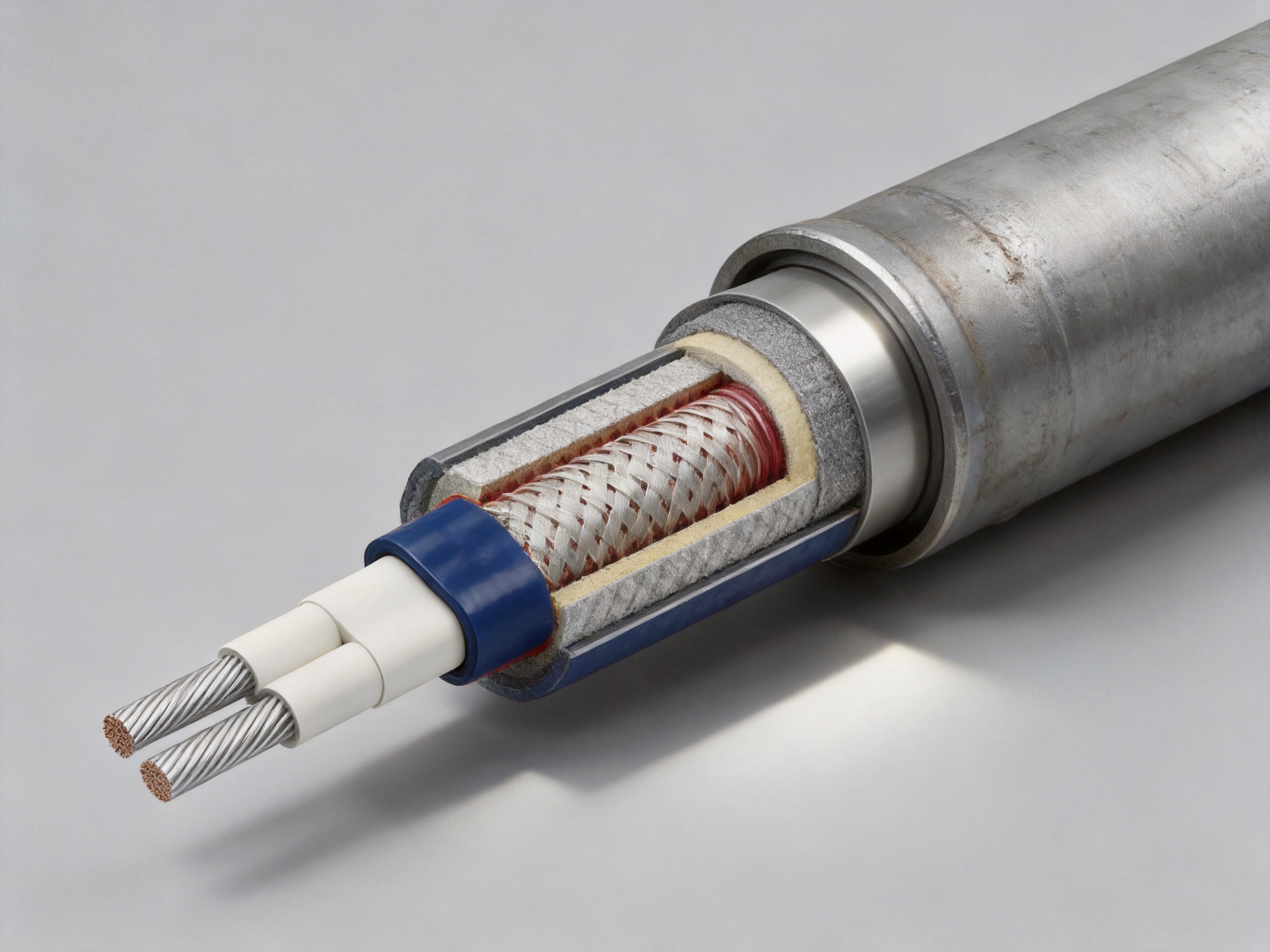
One of the strongest advantages of this cable is its cut-to-length parallel construction. Many competitor series cables must be ordered in exact lengths or installed according to predetermined circuit dimensions. If site measurements change, the cable may be too short or too long. Excess length can cause installation complications, while insufficient length delays construction. The parallel design allows installers to adapt more easily to actual field conditions, reducing waste and improving project efficiency.
Many self-regulating or low-temperature constant-wattage cables are designed primarily for water pipe freeze protection or low-temperature maintenance. They may not tolerate sustained exposure to high process temperatures or steam purge cycles. This product can maintain process temperatures up to 230 degrees Celsius depending on model and withstand 260 degrees Celsius when de-energized. That high-temperature resistance gives it a clear advantage in petrochemical, chemical, refinery, and industrial process environments.
Electrical start-up behavior matters in industrial heat tracing because multiple circuits may energize at low ambient temperature. A high inrush current can force designers to oversize circuit breakers, contactors, panels, and power distribution equipment. The relatively flat power-temperature curve of this cable helps ensure low start-up current while preserving useful output at elevated temperatures. This contributes to more stable electrical design and may reduce unnecessary tripping during cold starts.
Heating cable overlap is often a risk point. Some competing cables must never overlap because the crossed section may overheat. In real installations, however, crowded valves, flanges, support shoes, instruments, and bends can make perfect separation difficult. This cable can be overlapped once under approved conditions, improving practical installation tolerance. This does not remove the need for proper installation, but it gives installers greater flexibility in complex areas.
Mineral-insulated heating cable is well known for high-temperature capability and mechanical robustness, but it can be more difficult to install, less flexible, and less convenient to terminate in the field. The parallel constant-power cable provides a more flexible solution for many heat-tracing projects while still offering substantial high-temperature performance. In applications where the extreme limits of mineral-insulated cable are not required, this product can provide a more installation-friendly and cost-effective alternative.
Self-regulating cables reduce output as temperature rises, which is useful for energy saving and over-temperature protection in many applications. However, some self-regulating cables may deliver insufficient output at elevated temperatures where process maintenance still requires meaningful heat input. This constant-power cable has a relatively flat power-temperature behavior, helping maintain heat output at higher temperatures. This advantage is important for viscous fluids, waxy media, chemical process lines, and industrial materials that must remain within a controlled temperature range.
The cable is suitable for a wide range of industries. In petroleum and gas facilities, it can protect pipelines, valves, pressure instruments, sampling lines, drain lines, and process equipment from freezing or temperature loss. In chemical plants, it can maintain the viscosity and flow properties of process fluids. In construction and infrastructure, it can be used for pipe freeze protection and equipment reliability. In solar energy systems, it can help protect fluid lines from low-temperature damage. In geothermal cultivation and agricultural applications, it can support controlled heating and antifreeze protection.
For pipelines carrying viscous materials, heat tracing helps prevent thickening, crystallization, wax formation, or blockage. In some processes, even a small drop in temperature can cause the fluid to become difficult to pump. The constant-power cable can provide the required heat input along the pipeline and around key components. When paired with suitable insulation, sensors, and control panels, it helps maintain stable process conditions.
For storage tanks and equipment, heating cables may be installed on nozzles, small vessels, pump bodies, filter housings, and instrument enclosures. While large tanks often require additional heating methods, electric trace heating is particularly useful on auxiliary lines and components where heat loss can quickly affect operation. The cable’s high-temperature capability is useful for systems that undergo periodic steam cleaning or high-temperature maintenance procedures.
For hazardous areas, the product’s suitability for selected gas and dust zones is valuable. Industrial environments involving flammable gases, vapors, or dust require careful product certification, electrical design, grounding, bonding, and control. A heat-tracing system for hazardous areas must be treated as a complete engineered system, including cable, power connection kits, end terminations, junction boxes, thermostats, circuit protection, insulation, and installation quality. The cable provides the heating foundation, while proper system design ensures safety.
The cable can be used on carbon steel, stainless steel, plastic-coated metal, and unpainted metal surfaces. This versatility supports many industrial pipe specifications. Carbon steel remains common in process plants because of strength and cost efficiency. Stainless steel is widely used for corrosion resistance, sanitary requirements, and chemical compatibility. Plastic-coated metal surfaces may be present where external corrosion protection is required. The heating cable must be installed in a way that ensures good thermal contact while protecting both the cable and the traced surface.
The product offers resistance to organic and corrosive substances under appropriate application conditions. In aggressive organic or corrosive environments, technical consultation is recommended. This is important because chemical exposure can vary widely. Solvents, acids, alkalis, hydrocarbons, salt spray, cleaning agents, and process vapors may have different effects on polymer jackets, metallic braids, and connection components. Proper selection should consider not only the cable body but also accessories, seals, glands, junction boxes, tapes, labels, and insulation cladding.
In outdoor installations, the system must also resist ultraviolet exposure, moisture, thermal cycling, vibration, mechanical impact, and insulation water ingress. Good installation practice is essential. Even a high-quality heating cable can fail prematurely if installed under damaged insulation, exposed to standing water, cut by sharp metal edges, or terminated incorrectly. For this reason, manufacturing quality and field installation discipline must work together.
The manufacturer’s strength is built on long-term specialization in electric heating and thermal-control technology. The company is located in Jiangsu Province, an important industrial region for electric heating belt production. Its product portfolio includes automatic temperature-control electric heating belts, self-limiting heating belts, heat tracing belts, constant-power heating belts, glass fiber heating belts, mineral-insulated cables, silicone rubber heating systems, snow melting cables, and accessories. This wide manufacturing base supports integrated system knowledge rather than narrow single-product production.
A major advantage is experience. With more than 35 years of industry involvement, the company has accumulated practical understanding of heating cable materials, extrusion processes, resistance element design, quality inspection, field installation problems, and industry-specific requirements. Long experience is especially important in heat tracing because product reliability depends on many small details: conductor consistency, insulation thickness, heating element spacing, jacket adhesion, resistance stability, dielectric strength, and termination compatibility.
The company has passed ISO9001 quality system certification, and its products have obtained national CCC certification. It has also obtained explosion-proof certification and EAC Eurasian Union certification for relevant product lines. These certifications demonstrate attention to quality management, product safety, and international market requirements. For industrial buyers, certification history is not only a marketing point; it reduces procurement risk and supports compliance in regulated projects.
The company has invested in research and development, including product research cooperation, an irradiation center, patents related to heating technologies, and a product simulation testing laboratory. These capabilities help transform manufacturing from simple assembly into controlled engineering. Simulation testing can be used to evaluate heating performance, temperature distribution, material endurance, cold-start behavior, and system response under realistic conditions. Research and development also enable customization for different markets, voltages, climates, and application requirements.
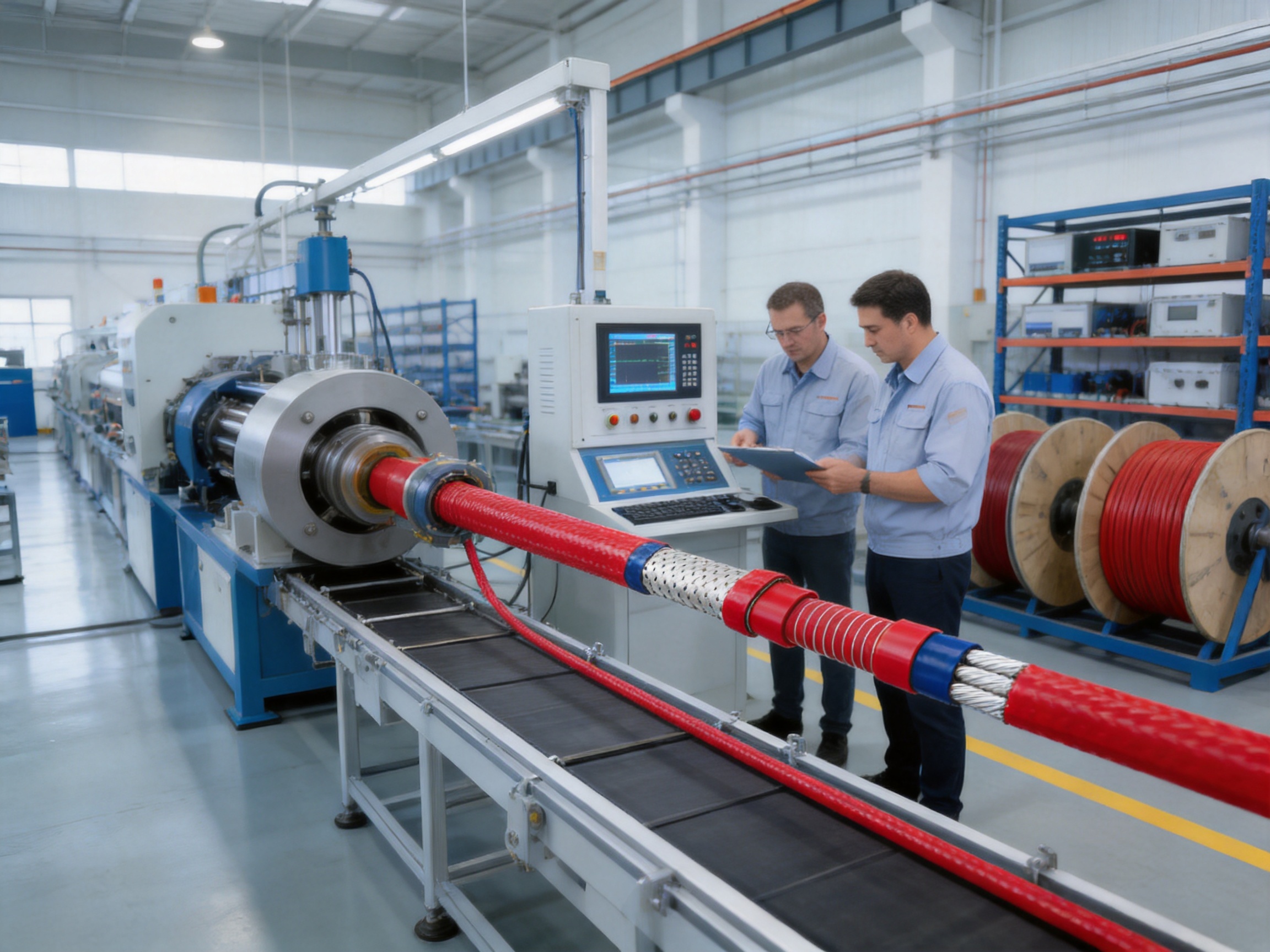
Producing a high-temperature constant-power heating cable requires precise manufacturing steps. The process begins with conductor selection. Parallel bus wires must have stable electrical properties, mechanical strength, and compatibility with insulation materials. The heating element, whether based on resistor alloy or carbon fiber technology, must be applied with consistent spacing and reliable electrical contact. Zone length accuracy is important because it determines the cable’s heat output pattern and cut-to-length behavior.
After the heating element is applied, insulation and jacket layers must be processed under controlled conditions. Extrusion quality affects dielectric strength, moisture resistance, flexibility, and long-term durability. For high-temperature applications, material selection is critical. The insulation system must tolerate elevated exposure temperatures, thermal cycling, and possible chemical contact. Dimensional control is also important: the product’s standard thickness of approximately 7.5 mm and width of approximately 10.7 mm must remain consistent to support predictable installation and heat transfer.
Electrical testing is a core quality-control step. Resistance measurement verifies output consistency. High-voltage dielectric testing checks insulation integrity. Continuity testing confirms conductor and heating-zone reliability. Visual inspection identifies surface defects, jacket irregularities, damage, or contamination. Mechanical tests may evaluate bending performance, especially because the product has a minimum bend radius of 20 mm at minus 60 degrees Celsius. Low-temperature flexibility is essential for installation in cold regions.
Thermal testing is equally important. A high-temperature cable should be evaluated not only at room temperature but also under elevated exposure conditions. Testing can confirm that the cable maintains output characteristics, withstands thermal aging, and survives expected process temperatures. Steam purge tolerance requires special attention because the cable may be exposed to rapid heating and high surface temperatures while de-energized. A product that survives laboratory heat exposure but fails under thermal cycling would not be acceptable for industrial service.
Manufacturing strength also includes accessory compatibility. A heat-tracing circuit is only as reliable as its weakest connection. Power connection kits, end seals, splice kits, junction boxes, thermostats, sensors, warning labels, fixing tapes, and insulation systems must be compatible with the cable and environment. An experienced manufacturer can provide not only cable but also application guidance and accessory solutions, helping customers build complete systems.
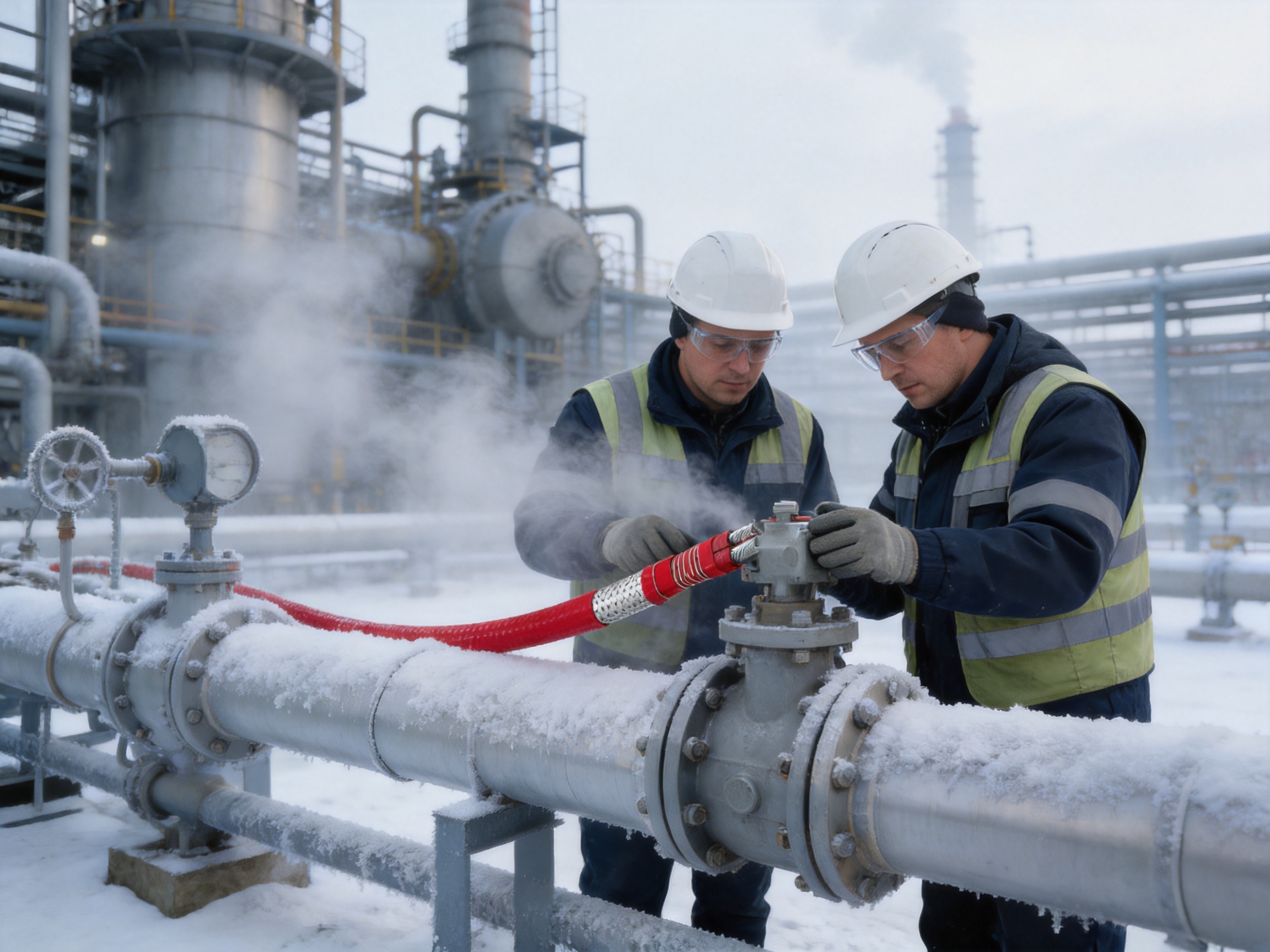
A successful heat-tracing system begins with heat-loss calculation. Engineers must determine how much heat is required to maintain the target temperature under worst-case ambient conditions. The calculation considers pipe size, insulation type, insulation thickness, wind speed, ambient temperature, desired maintain temperature, fluid characteristics, pipe supports, valves, flanges, pumps, and other heat sinks. The heating cable output must meet or exceed calculated heat loss with an appropriate safety margin.
Next, engineers select the cable model. A lower-output cable may provide better temperature uniformity when spiraled or installed in multiple runs, while a higher-output cable may be more efficient for high heat-loss areas. The maximum exposure temperature must be checked against both normal operation and abnormal conditions. If steam purging occurs, the cable should be de-energized and rated for the purge exposure temperature.
Control strategy is also important. Some systems use simple ambient-sensing thermostats for freeze protection. Others require pipe-sensing thermostats or electronic controllers for process temperature maintenance. In high-temperature applications, sensor placement must be carefully planned to avoid false readings. Sensors should be mounted where they represent the pipe temperature, not the cable hotspot or the coldest exposed location unless that is the design objective.
Electrical protection must be selected according to standards and project requirements. The provided data reference maximum circuit lengths based on IEC 60898 compliant type C circuit breakers. Circuit breaker size, start temperature, cable output, supply voltage, and maximum circuit length all interact. The manufacturer recommends using a 30 mA leakage protection device to ensure maximum safety and help prevent fires. In applications that may cause high leakage current, a device up to 300 mA may be necessary after safety verification.
Grounding and bonding are essential, particularly in hazardous areas. Heating cables should be installed with approved metallic braid or grounding components where required. All metallic equipment should be properly bonded. Junction boxes and glands should match environmental and hazardous area ratings. The heat-tracing circuit should be tested before insulation installation, after insulation installation, and during commissioning.
Before installation, the cable should be stored in a clean, dry area and protected from mechanical damage. Installers should verify the product model, voltage rating, output rating, exposure temperature rating, and accessory compatibility. The pipe surface should be reasonably clean and free of sharp burrs, welding slag, or edges that could damage the cable. On plastic-coated or sensitive surfaces, fixing materials should be selected to avoid coating damage.
The cable should be laid straight or spiraled according to the design. Straight tracing is common for many pipes, while spiraling may be used when more heat is needed or when uniform distribution is required. At valves, flanges, pumps, strainers, and supports, extra cable may be required to compensate for greater heat loss. The design should specify allowances for these components. Installers should avoid excessive tension, crushing, twisting, or bending below the minimum radius.
Because the cable can be cut to length, field termination must be performed carefully. Cutting should follow manufacturer instructions, and termination kits must be installed by trained personnel. Poor termination is one of the most common causes of heat-tracing failure. Moisture entry, insufficient insulation clearance, exposed conductors, loose connections, and incorrect sealing can lead to short circuits, ground faults, or premature failure.
Thermal insulation should be installed promptly after cable testing. Without insulation, a heat-tracing cable cannot efficiently maintain pipe temperature. Insulation must be dry, correctly sized, and protected with weatherproof cladding in outdoor or washdown areas. Waterlogged insulation dramatically increases heat loss and may cause cable damage. Warning labels should be installed on insulation cladding to identify electric heat tracing below.
After installation, the circuit should be tested for insulation resistance, continuity, and correct control operation. Commissioning records should include cable model, circuit length, resistance values, insulation resistance readings, breaker size, controller settings, sensor locations, and inspection results. Good documentation helps maintenance teams troubleshoot and manage the system throughout its service life.
Heat tracing consumes energy, so efficiency matters. The cable’s ability to provide appropriate output at elevated temperatures helps avoid oversizing. When paired with accurate controls and proper insulation, it can maintain the required process temperature without unnecessary energy waste. The relatively low start-up current also contributes to efficient electrical design, reducing the need for excessive oversizing of protection and distribution equipment.
Reliability is often more valuable than the initial cable cost. A frozen pipeline, blocked chemical line, or failed instrument can shut down production, damage equipment, and create safety risks. High-temperature tolerance, cut-to-length flexibility, hazardous area suitability, and robust manufacturing quality all contribute to lower life-cycle risk. The product is designed for environments where failure can be expensive, not merely inconvenient.
Preventive maintenance should include regular visual inspection of insulation, junction boxes, cable entries, thermostats, and electrical protection devices. Insulation resistance testing can identify moisture ingress or cable damage before failure occurs. Control settings should be checked before winter or before critical process periods. In high-temperature plants, maintenance teams should verify that cables are de-energized during steam purges if required by the operating procedure.
The manufacturer combines production experience, research capability, quality certification, and broad market reach. Its products are used in many industries for antifreeze, deicing, heating, heat tracing, and insulation. The company’s main products include constant-power heating strips, self-limiting heating strips, silicone rubber heating systems, glass fiber heating strips, electric hot wires, mineral-insulated cables, snow melting cables, tracked heaters, and electric heating accessories. This product diversity allows customers to source multiple heat-tracing solutions from one experienced supplier.
Scale is another strength. The company reports more than 35 years of industry experience, annual output exceeding 10,000 units, more than 2,000 distributors, and business coverage in more than 85 areas. A broad distribution network helps customers obtain product support, replacement components, and technical communication more conveniently. International expansion, including overseas factory development, reflects the company’s intention to serve global markets and improve supply capabilities.
The company has emphasized new product development, technical guidance, scientific management, product quality, and after-sales service. These values matter because heat tracing is not a commodity purchase in critical industrial projects. Buyers need correct product selection, dependable delivery, documentation, installation guidance, and support when special requirements arise. A manufacturer with engineering depth can help customers avoid common mistakes and improve long-term performance.
Its brand culture emphasizes environmental health, value creation, innovation, cooperation, effectiveness, development, perseverance, hard work, realism, and pragmatism. These principles align with industrial heat-tracing needs: practical design, reliable production, and continuous improvement. The company’s history, including certification milestones, research investment, patented heating technologies, and laboratory expansion, shows a long-term commitment to electric heating technology.
This high-temperature constant-power heating cable is particularly strong where three requirements meet: elevated temperature, field flexibility, and industrial reliability. It offers higher temperature exposure capability than many general-purpose heating cables, easier field adjustment than fixed-length series cables, and more stable high-temperature output than many self-regulating alternatives. It is not intended to replace every heating technology, but it fills an important position in demanding heat-tracing applications.
For engineering contractors, the cut-to-length design reduces site measurement risk and simplifies inventory. For plant owners, the high-temperature rating and steam purge tolerance support longer service life. For electrical designers, the low start-up current and documented circuit length data help with protection selection. For maintenance teams, the product’s practical installation tolerance and accessory compatibility make operation more manageable.
In competitive markets, customers often compare heating cables only by wattage and price. That approach can be misleading. A cable with the correct wattage but poor temperature resistance, weak jacket quality, high inrush current, or difficult termination can become costly over time. The value of this product lies in its combination of electrical design, material performance, manufacturing control, hazardous area suitability, and company support.
Its main purpose is to provide industrial heat tracing for pipes and equipment. It is used for frost protection, process temperature maintenance, viscosity control, deicing support, and temperature stabilization in demanding environments.
A self-regulating cable reduces output significantly as temperature rises. This is useful in many freeze-protection applications, but it may not provide enough heat at elevated process temperatures. This constant-power cable has a flatter power-temperature curve, providing useful output at higher temperatures while maintaining relatively low start-up current.
Yes. Its parallel construction allows it to be cut to length and terminated on site according to approved installation procedures. This makes it more flexible than many fixed-length series heating cables.
Depending on model and voltage, the cable can be continuously energized at exposure temperatures up to 230 degrees Celsius. When power is off, it can withstand exposure up to 260 degrees Celsius, which supports routine steam purge conditions.
Yes, the product is suitable for selected hazardous gas and dust areas when the complete system is properly designed, certified, installed, grounded, protected, and maintained according to applicable standards.
It can be installed on carbon steel, stainless steel, plastic-coated metal, and unpainted metal surfaces. Proper surface preparation and suitable fixing methods are required.
Low start-up current reduces electrical stress during cold energization. It helps prevent nuisance tripping and allows more predictable selection of circuit breakers, contactors, and power distribution components.
The cable can be overlapped once under specified conditions. Installers should still follow the manufacturer’s installation instructions and avoid uncontrolled overlapping or bundling.
A 30 mA leakage protection device is recommended for maximum safety and fire prevention. In applications with higher leakage current, a device up to 300 mA may be required after safety verification.
Selection should be based on heat-loss calculation, required maintain temperature, pipe size, insulation thickness, minimum ambient temperature, exposure temperature, voltage, maximum circuit length, and hazardous area requirements.
The high-temperature constant-power heating cable provides a reliable, flexible, and industrial-grade solution for pipe and equipment heat tracing. Its parallel construction enables cut-to-length installation, while its high-temperature capability supports demanding process maintenance and steam purge exposure. With multiple output ratings, hazardous area suitability, low start-up current, and practical overlap tolerance, it offers clear advantages over many conventional heating cables.
The product is backed by a manufacturer with extensive experience in electric heating technology, certified quality systems, broad product capabilities, research investment, and global market development. For industrial users seeking dependable heat tracing in petroleum, chemical, gas, construction, solar energy, geothermal, and related applications, this cable represents a strong balance of performance, installation convenience, and long-term value.
1. Electric Heat Tracing Design Guide for Industrial Piping Systems.
2. IEC 60898, Electrical Accessories: Circuit Breakers for Overcurrent Protection for Household and Similar Installations.
3. IEC 60079 Series, Explosive Atmospheres and Electrical Equipment Requirements.
4. ISO 9001 Quality Management Systems: Requirements and Application Guidance.
5. Industrial Thermal Insulation and Heat-Loss Calculation Handbook.
6. Process Plant Winterization and Freeze Protection Engineering Manual.
7. Electrical Heating Cable Installation and Maintenance Practices for Hazardous Locations.
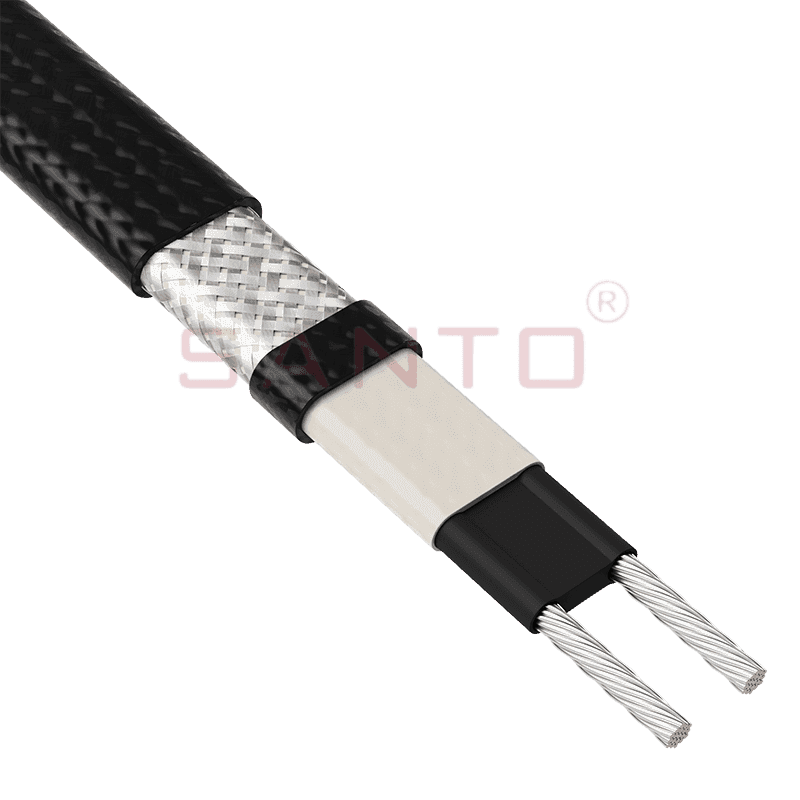
The SANTO UFA range of self-regulating heating cables is mainly used for frost protection of pipes and vessels but can also be used to maintain processes up to 65°C. These heating cables are available...
See Details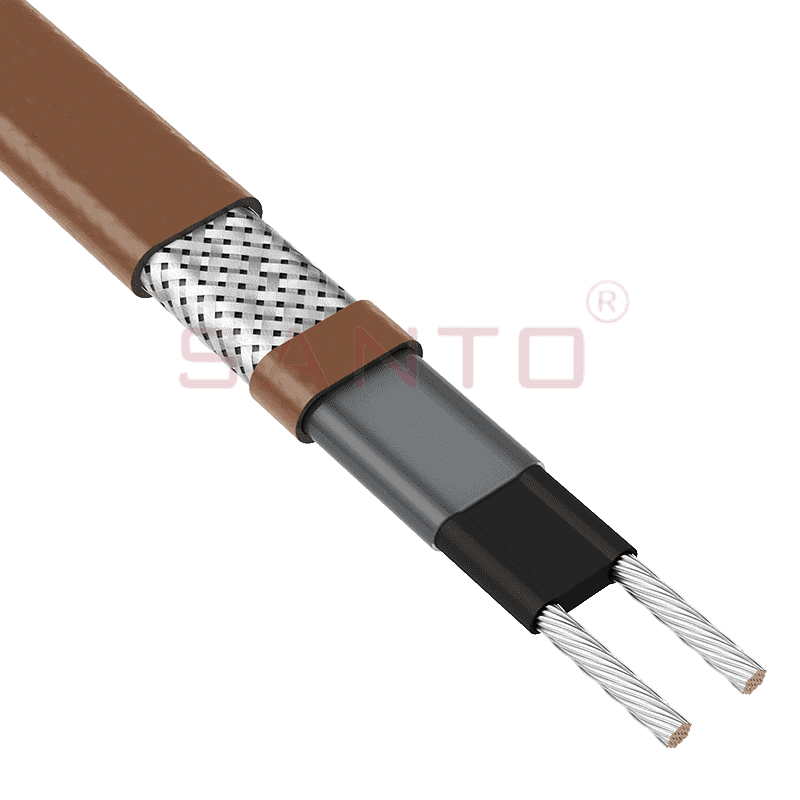
The SANTO UFB range of self-regulating heating cables is mainly used for frost protection of pipes and vessels requiring a higher power output than the UFA heating cables can supply. They can also be ...
See Details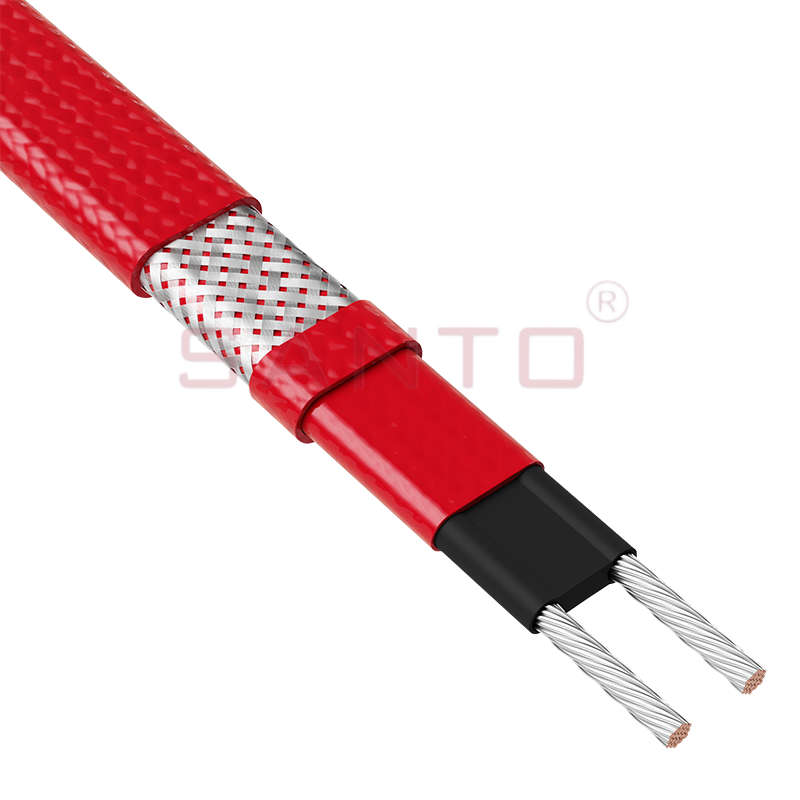
The SANTO UFC range of self-regulating heating cables is used for frost protection of pipes and vessels that require steam cleaning. They can also be used to maintain processes up to 121°C. These heat...
See Details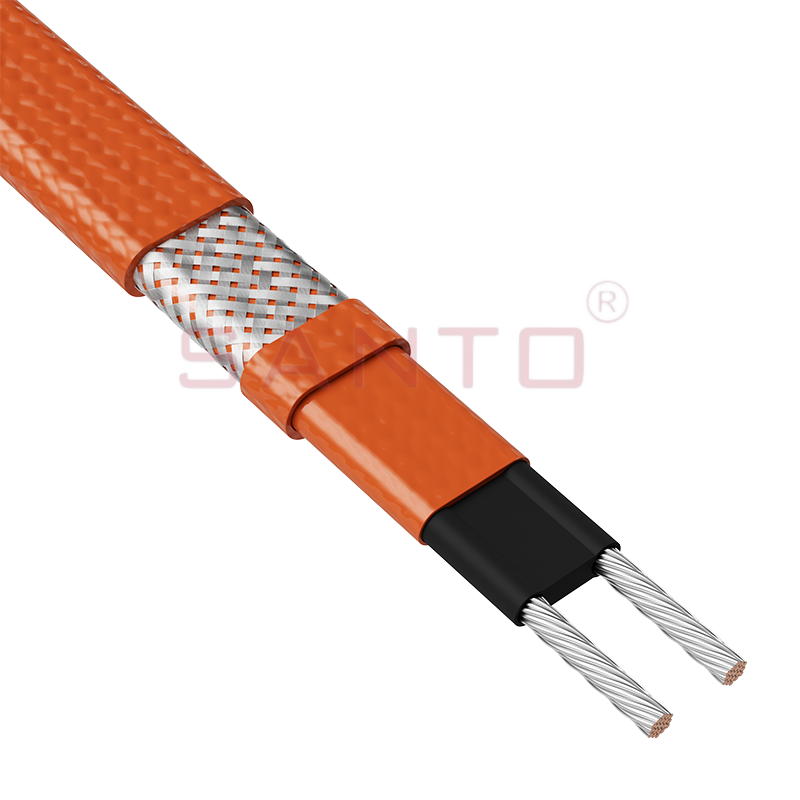
The SANTO UFO range of self-regulating heating cables is mainly used for frost protection of pipes and vessels that require steam cleaning . They can also be used to maintain processes up to 150°C. Th...
See Details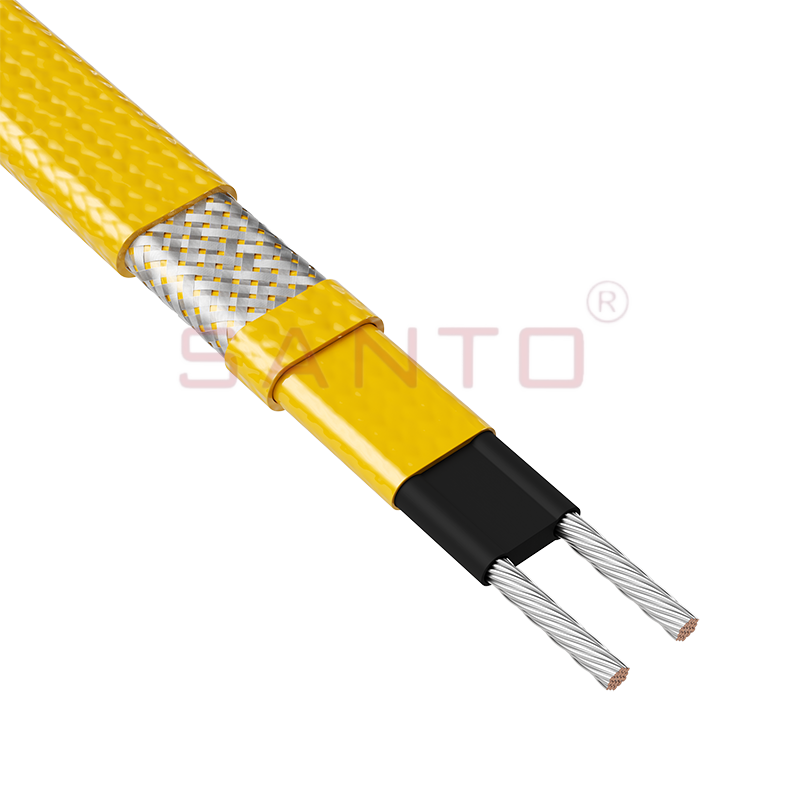
The SANTO UFD series of self-regulating heating cables are mainly used for freeze protection of pipes and vessels, but can also be used to maintain processes up to 200°C. These heating cables are avai...
See Details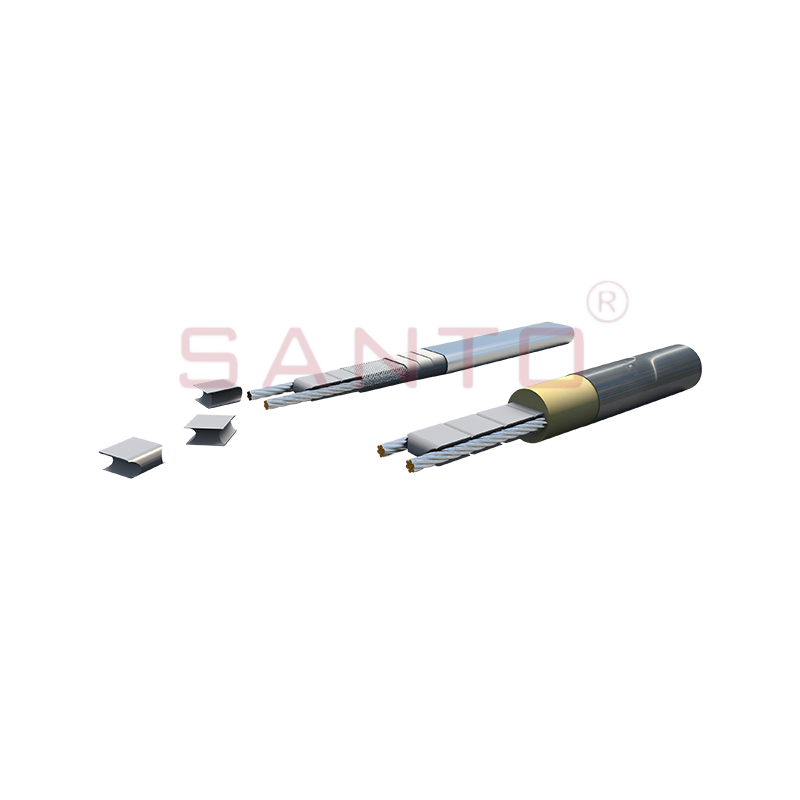
SANTO UFY heating wire is suitable for applications that maintain process temperatures up to 260 ℃ and can be steam blown; The self-regulating and parallel circuit heating wires of the UFY series are ...
See Details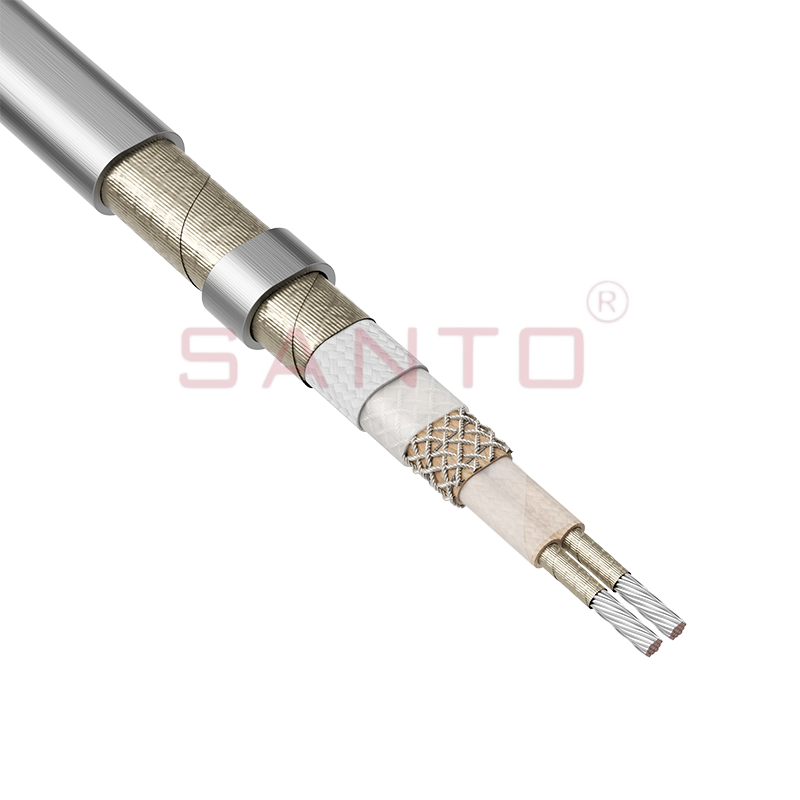
The SANTO UFM series self-regulating heating cables are mainly used for freeze protection of pipes and vessels, but can also be used to maintain processes up to 400°C. These heating cables are availab...
See Details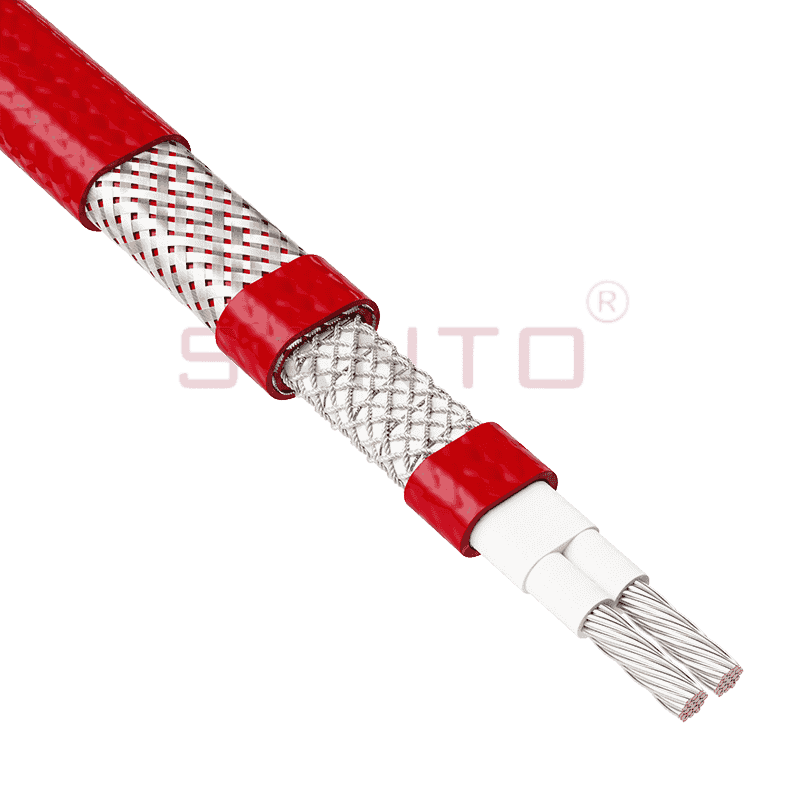
The SANTO ACC range of power-limiting heating cables is mainly used for temperature maintenance of processes and offers the advantage of a high power output at high temperatures which can reduce the n...
See Details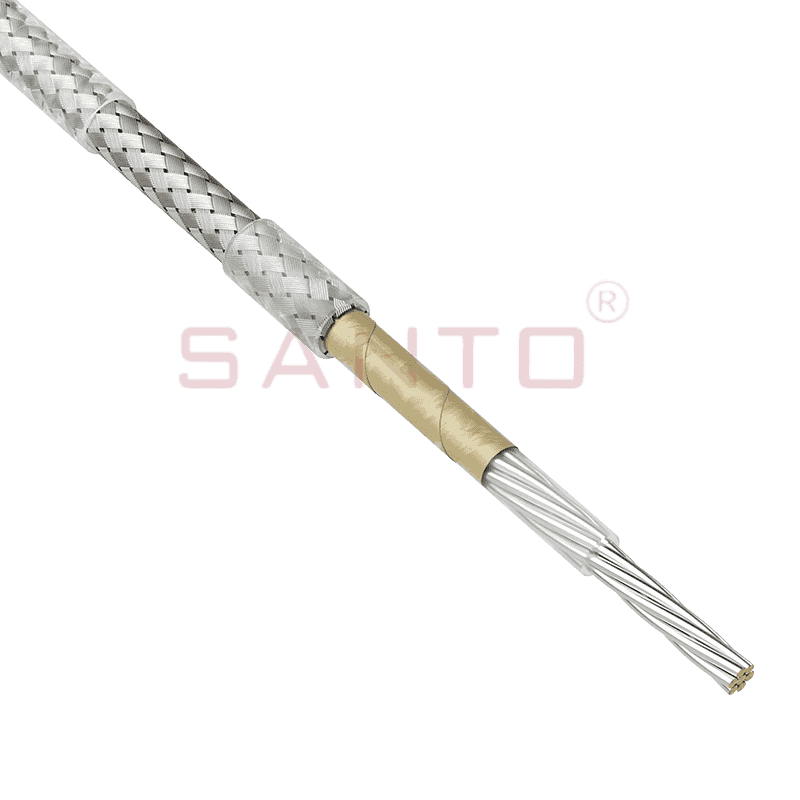
The stranded high temperature conductor is nickel plated to ensure a long life at elevated temperatures in corrosive environments. It is electrically isolated using an innovative sandwich construction...
See Details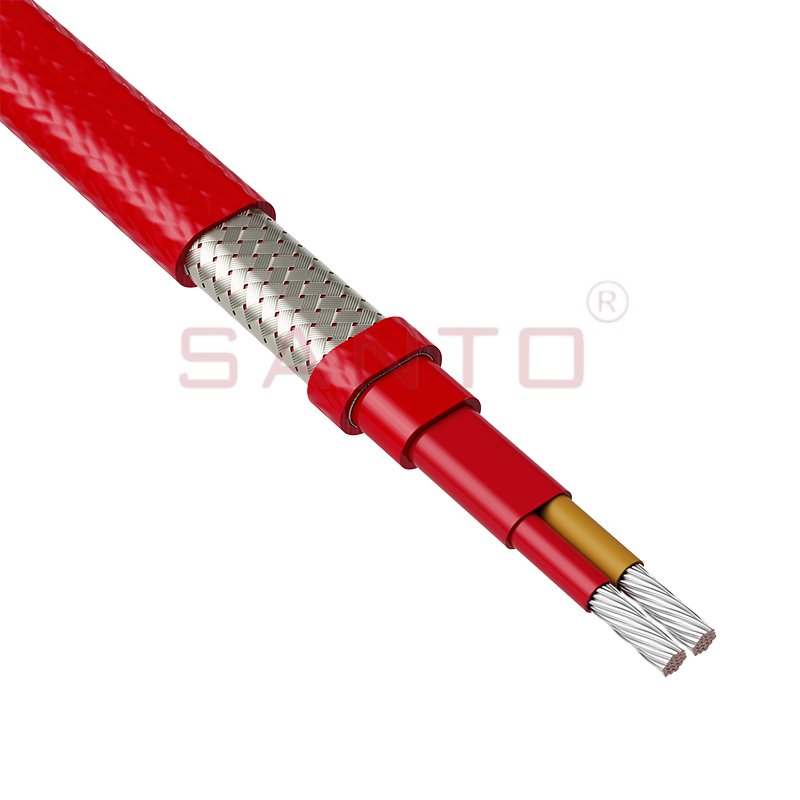
The stranded high temperature conductor is nickel plated to ensure a long life at elevated temperatures in corrosive environments. It is electrically isolated using an innovative sandwich construction...
See Details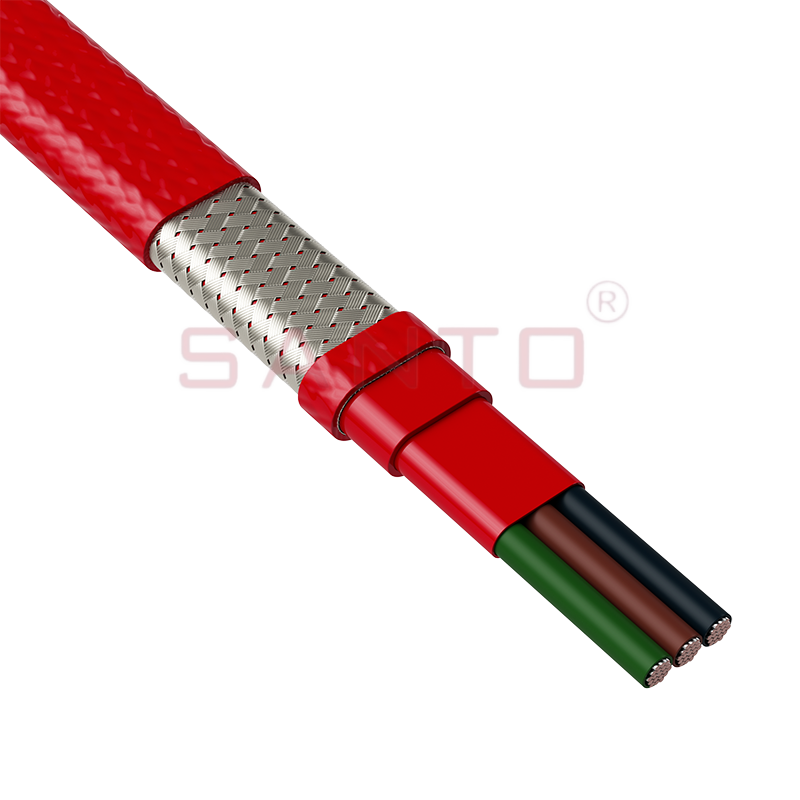
The stranded high temperature conductor is nickel plated to ensure a long life at elevated temperatures in corrosive environments. It is electrically isolated using an innovative sandwich construction...
See Details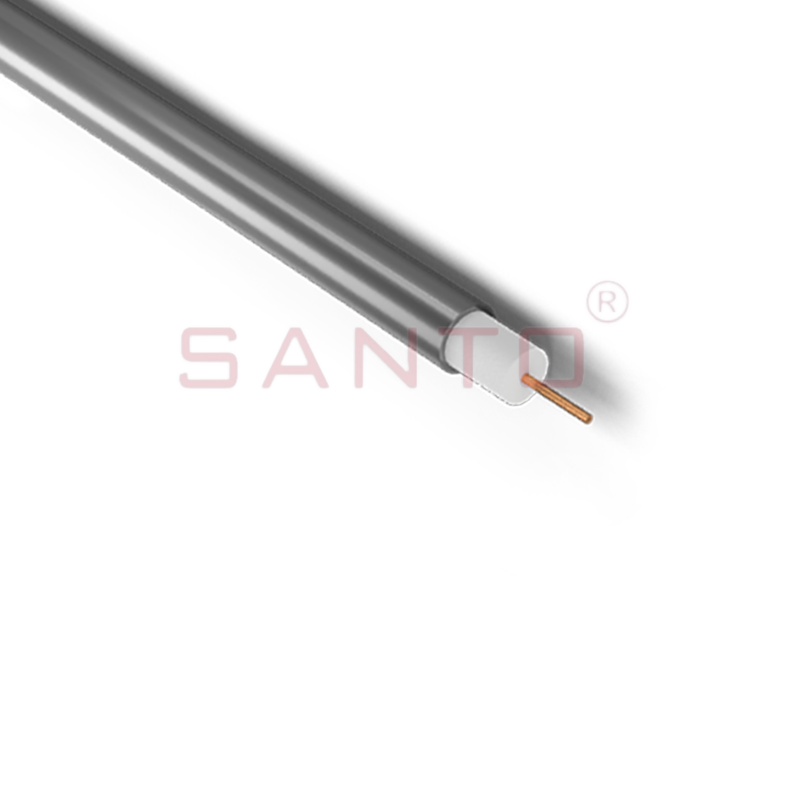
SANTO HAx mineral insulated (MI) Alloy 825 series heating cables are suitable for use in hazardous areas. They have been designed for use in freeze protection and temperature maintenance applications ...
See Details
Santo electric heating strips are widely used in key industries in China.

