 English
 English
 русский
 日本語
 Español
 中文简体

The SANTO UFA range of self-regulating heating cables is mainly used for frost protection of pipes and vessels but can also be used to maintain processes up to 65°C. These heating cables are available...
See Details

Content
Underfloor heating has become an increasingly important solution for creating comfortable indoor environments in homes, hotels, dormitories, offices, and other occupied spaces. Unlike conventional radiators or visible heating units, an electric floor heating system distributes warmth across a broad floor surface. This produces a more even temperature profile, reduces cold spots, preserves wall space, and allows architects and interior designers greater freedom when planning a room.
The 2ATTXV Double Conductor Ground Mat is an ultra-thin electric underfloor heating mat designed for indoor insulation and floor warming. It belongs to the SANTO ATTX series, a product family developed through repeated product updates and technical refinement. The mat is engineered for a nominal output of 150 watts per square meter and operates at 230 VAC. Its dual-conductor construction, finished mat format, flexible installation possibilities, and wide range of available sizes make it suitable for many residential and commercial floor applications.
One of the most important advantages of this product is its practical balance between heating performance and installation convenience. The mat is supplied as a finished heating system rather than as loose heating wire that must be measured and arranged entirely on site. This can simplify layout work, improve installation consistency, and help contractors plan material requirements more accurately. The available heating areas range from 0.5 square meters to 12 square meters, while the standard mat width is 0.5 meters.
The system can be used with several types of floor construction and finish, including concrete floors, wooden floors, existing ceramic tile floors, and terrazzo floors, subject to appropriate installation methods and local electrical and building regulations. Its ultra-thin profile is intended to minimize the increase in finished floor height, which is particularly valuable in renovation projects where door clearances, stair transitions, and room dimensions must be preserved.
This article examines the product’s structure, operating characteristics, technical specifications, installation value, quality considerations, and the manufacturing capabilities of Santo Thermal Control Technology Co., Ltd. It also explains how the product compares with common alternative heating approaches and answers practical questions from buyers, designers, installers, and distributors.
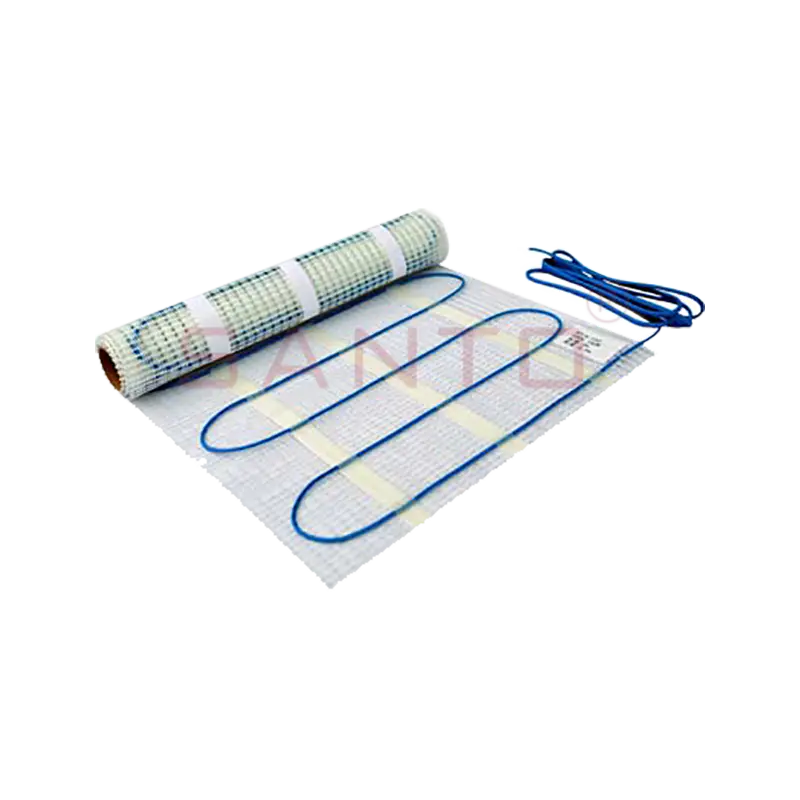
2ATTXV Double Conductor Ground Mat
The 2ATTXV Double Conductor Ground Mat is a series heating mat rated at 150 W/m². It is designed to convert electrical energy into evenly distributed radiant and conductive heat beneath a finished floor surface. The mat consists of heating conductors arranged over a defined area and supplied in a standardized width and length format.
The product is identified in the technical information as a “150 W/m² Dual Conductive Series Heating Mat.” The available models are generally designated 2ATTXV-150, with dedicated product numbers indicating the nominal output and mat length. Each listed model is designed for a 0.5-meter width. The length changes according to the required heating area, allowing buyers to select a configuration that corresponds closely to the usable floor zone.
A floor heating mat should not normally be installed beneath fixed furniture, built-in cabinets, sanitary fixtures, or other areas where heat cannot dissipate properly. The heating area should be calculated according to the uncovered and usable floor surface. This makes the product’s range of standardized sizes especially useful: the designer can select a mat or combination of mats that covers the intended active zone without unnecessarily heating areas that do not require it.
The dual-conductor arrangement is a significant design feature. In a double-conductor mat, the electrical circuit is arranged so that the cable path can return within the mat layout. This can reduce the need to route a separate return cable across the floor and can simplify the final connection arrangement compared with certain single-conductor systems. For installers and end users, the result is a more orderly product format and a cleaner installation process.
The system is intended for indoor insulation and heating applications. It can be used as a primary heating source in suitably designed rooms or as a supplementary comfort-heating system. The correct application depends on room heat loss, insulation quality, local climate, floor construction, available electrical capacity, thermostat control, and the requirements of the building design.
The rated output is 150 watts per square meter. This output is commonly suited to comfort heating and indoor floor warming when the building envelope and floor structure are properly designed. The actual room temperature depends on many factors beyond mat output, including insulation beneath the floor, windows, ceiling height, air exchange, outdoor temperature, floor covering, and thermostat settings.
A 1-square-meter mat produces a nominal output of 150 watts. A 4-square-meter mat produces approximately 600 watts, while a 10-square-meter mat produces approximately 1,500 watts. These values allow electrical designers to estimate circuit loading and help building owners understand the approximate heating capacity of each selected model.
The listed operating voltage is 230 VAC. This voltage is widely used in many international residential and commercial electrical systems. All electrical connections should be completed by a qualified professional in accordance with applicable national standards, protective-device requirements, grounding rules, and manufacturer instructions.
Each listed model has a width of 0.5 meters. A consistent width simplifies planning because installers can calculate the required strips or mats against the room’s usable dimensions. The 0.5-meter format can also be convenient in bathrooms, bedrooms, corridors, kitchens, and other areas where floor zones are often narrow or irregular.
The listed lengths range from 1 meter to 24 meters. Because the width is 0.5 meters, the corresponding heating areas range from 0.5 square meters to 12 square meters. This provides a broad selection for small individual rooms and medium-sized indoor areas.
For larger rooms, multiple mats may be used where permitted by the system design. Multiple mats must be connected according to the electrical design and must remain within the capacity of the thermostat, switching device, branch circuit, and protective equipment. A qualified installer should confirm the total connected load before commissioning.
The resistance values are matched to the rated power and 230 VAC operating voltage. For example, the 75-watt model has a listed resistance of 705.3 ohms, while the 900-watt model has a listed resistance of 58.8 ohms. As power increases, the resistance decreases so that the mat can deliver the intended nominal output at the specified voltage.
Resistance testing is an important part of installation quality control. The installer should test the mat before installation, during the installation process where appropriate, and after the floor covering has been placed. Test results should be recorded and compared with the manufacturer’s specified values and the permitted tolerance. The heating mat should also be tested for insulation resistance to confirm that the electrical insulation remains intact.
| Dedicated Product Number | Mat Model | Voltage | Power | Resistance | Width | Length | Heating Area |
|---|---|---|---|---|---|---|---|
| 2ATTXV1500075C | 2ATTXV-150 | 230 VAC | 75 W | 705.3 ohms | 0.5 m | 1 m | 0.5 m² |
| 2ATTXV1500150C | 2ATTXV-150 | 230 VAC | 150 W | 352.7 ohms | 0.5 m | 2 m | 1 m² |
| 2ATTXV1500225C | 2ATTXV-150 | 230 VAC | 225 W | 235.1 ohms | 0.5 m | 3 m | 1.5 m² |
| 2ATTXV1500300C | 2ATTXV-150 | 230 VAC | 300 W | 176.3 ohms | 0.5 m | 4 m | 2 m² |
| 2ATTXV1500375C | 2ATTXV-150 | 230 VAC | 375 W | 141.1 ohms | 0.5 m | 5 m | 2.5 m² |
| 2ATTXV1500450C | 2ATTXV-150 | 230 VAC | 450 W | 117.6 ohms | 0.5 m | 6 m | 3 m² |
| 2ATTXV1500600C | 2ATTXV-150 | 2ATTXV-150 | 600 W | 88.2 ohms | 0.5 m | 8 m | 4 m² |
| 2ATTXV1500750C | 2ATTXV-150 | 230 VAC | 750 W | 70.5 ohms | 0.5 m | 10 m | 5 m² |
| 2ATTXV1500900C | 2ATTXV-150 | 230 VAC | 900 W | 58.8 ohms | 0.5 m | 12 m | 6 m² |
| 2ATTXV1501050C | 2ATTXV-150 | 230 VAC | 1,050 W | 50.4 ohms | 0.5 m | 14 m | 7 m² |
| 2ATTXV1501200C | 2ATTXV-150 | 230 VAC | 1,200 W | 44.1 ohms | 0.5 m | 16 m | 8 m² |
| 2ATTXV1501350C | 2ATTXV-150 | 230 VAC | 1,350 W | 39.2 ohms | 0.5 m | 18 m | 9 m² |
| 2ATTXV1501500C | 2ATTXV-150 | 230 VAC | 1,500 W | 35.3 ohms | 0.5 m | 20 m | 10 m² |
| 2ATTXV1501575C | 2ATTXV-150 | 230 VAC | Approximately 1,570 W as listed | 33.6 ohms | 0.5 m | 21 m | 10.5 m² |
| 2ATTXV1501650C | 2ATTXV-150 | 230 VAC | 1,650 W | 32.1 ohms | 0.5 m | 22 m | 11 m² |
| 2ATTXV1501800C | 2ATTXV-150 | 230 VAC | 1,800 W | 29.4 ohms | 0.5 m | 24 m | 12 m² |
The source information lists the 21-meter model as 1,570 watts, although the product-number sequence and the 150 W/m² rating may lead some readers to expect a value closer to 1,575 watts. Buyers and installers should confirm the final rated power, resistance tolerance, and product marking with the manufacturer before ordering or commissioning that specific model.
A finished mat gives the installer a predetermined heating path. Compared with loose cable, the mat does not require the same degree of manual spacing calculation across the entire floor. This can reduce layout time and help maintain consistent conductor spacing. Consistent spacing is important because it supports more uniform surface temperatures.
The double-conductor configuration incorporates the outgoing and returning electrical paths into the same overall mat arrangement. In practical terms, this can simplify the finished layout and avoid the need to bring a separate single-conductor cable back across the installation area. It can also make the system more convenient for projects where a neat floor plan and predictable cable path are important.
The product is described as an ultra-thin geothermal or floor heating mat. A low-profile mat is advantageous in renovation work because it can limit the effect on finished floor height. This may reduce the need to modify doors, thresholds, skirting, stairs, and adjacent floor transitions. It is also useful in rooms where the available build-up depth is limited.
The product information states that the system is suitable for concrete floors, wooden floors, old ceramic tile floors, and terrazzo floors. The exact installation method will vary according to the substrate, moisture conditions, adhesive or screed system, insulation layer, and final floor covering. Nevertheless, the stated compatibility gives architects and contractors more options than a system intended for only one type of floor construction.
With models from 0.5 square meters to 12 square meters, the series can cover many common room sizes. A small 0.5-square-meter product may be appropriate for a compact zone, while larger products can serve bedrooms, living areas, offices, or hospitality rooms. The regular 0.5-meter width makes it easier to combine the product selection with a room plan.
Every model has a stated voltage, power, resistance, width, length, and heating area. This makes it easier to prepare an electrical schedule and estimate the total load before installation. Predictable ratings also help distributors maintain an organized product range and allow installers to select a model based on a specific area rather than relying on an approximate cable length.
Wall-mounted radiators heat a room primarily through convection and require visible wall space. They may create warmer air near the heating unit and cooler zones farther away, depending on the room layout and air movement. An electric floor mat distributes heat over the floor area and can provide a more uniform feeling of warmth at occupant level.
Floor heating also gives designers greater freedom because there are no large radiators occupying walls. However, radiators may be easier to access for maintenance, and their operating economics depend on the energy source. A floor mat is most attractive where comfort, hidden installation, low construction height, and independent room control are important priorities.
Loose heating cable can be useful for irregular areas, but it generally requires more installation planning. The installer must determine cable spacing, maintain the correct distance between cable runs, avoid crossing the cable, and secure the cable carefully during embedding. A finished double-conductor mat provides a more standardized layout and may reduce the possibility of spacing mistakes.
Loose cable may offer greater flexibility around complex shapes. The double-conductor mat, by contrast, can offer speed, repeatability, and a more accessible installation process for rectangular or regularly shaped heating areas. The best choice depends on room geometry and the installer’s preferred method.
Hydronic systems circulate heated water through pipes beneath the floor. They can be highly effective in larger buildings and may work well with heat pumps or boilers. However, they normally require pipes, manifolds, pumps, controls, and a heat source. Installation can also involve a thicker floor build-up and more extensive construction work.
An electric mat is comparatively compact and can be installed in individual rooms without a central water circuit. It may be especially appropriate for renovations, bathrooms, bedrooms, small offices, and spaces where a complete hydronic system would be disproportionate. The project designer must compare electricity prices, usage patterns, insulation, and local energy conditions before selecting the most economical long-term solution.
The mat can be considered for bedrooms, living rooms, kitchens, home offices, corridors, and other indoor areas. It may provide warm floors during cold seasons and can function as either supplementary comfort heating or part of a broader room-heating design.
Hotels require quiet, unobtrusive, and individually controllable heating solutions. A hidden floor mat does not interfere with room furniture and can help create a comfortable experience for guests. The range of available sizes also supports room-by-room installation planning.
Dormitories and similar facilities may benefit from zoned heating. Individual room controls can allow occupants or facility managers to adjust heating according to use. The system’s finished mat format can also support consistent installation across repeated room layouts.
Renovation projects often have strict limits on floor height and may include existing ceramic tile or terrazzo surfaces. An ultra-thin mat can be useful where a traditional thick heating floor would create difficult transitions. The existing substrate must be assessed for strength, flatness, dryness, adhesion, and compatibility with the selected installation materials.
Some rooms do not require full building-wide heating but still benefit from warm floor surfaces. Examples include bathrooms, entrance areas, enclosed balconies, and small recreational spaces. The compact 0.5-square-meter and 1-square-meter models can help address these localized requirements.
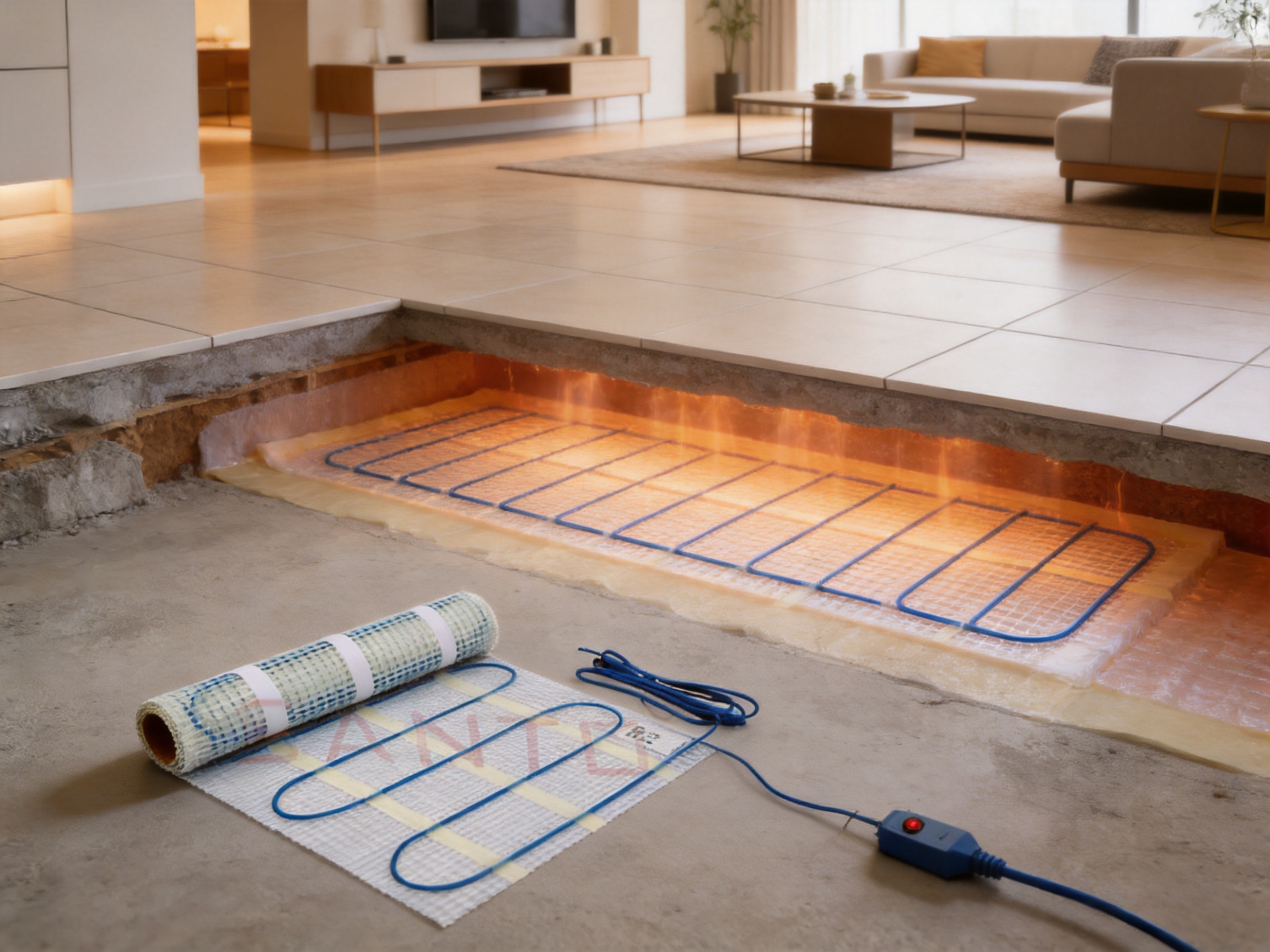
The first step is to calculate the floor area that can safely receive heat. Remove the areas occupied by permanent cabinets, fixed sanitary fixtures, built-in wardrobes, kitchen units, and other objects that restrict heat dissipation. The selected mat should be based on the usable heating area rather than the total room area.
It is generally preferable to leave an appropriate margin around walls and fixed objects rather than forcing the mat into every available centimeter. The exact clearances must follow the manufacturer’s installation instructions and local regulations.
The substrate should be clean, stable, dry, and sufficiently flat. Cracks, loose sections, sharp projections, oil contamination, and moisture problems may compromise the installation. Old ceramic tile and terrazzo surfaces should be checked for adhesion and structural integrity before any overlay system is applied.
Insulation beneath the heating mat can reduce downward heat loss and improve the system’s response. The correct insulation product must be compatible with the floor construction and final covering. Inadequate insulation may increase operating costs and slow the delivery of heat to the room.
A floor temperature sensor and a compatible thermostat are important parts of a controlled electric floor heating system. The thermostat should be selected for the total connected load and installed in accordance with electrical regulations. Temperature limits may be necessary to protect certain floor coverings, particularly wood, laminate, vinyl, or other materials with manufacturer-defined maximum temperatures.
The mat should be handled carefully during installation. It should not be cut through the heating conductors, sharply folded, overlapped, or placed beneath unsuitable fixed objects. If the layout requires changes, only the approved non-heating carrier or mesh areas should be adjusted, and the heating cable itself must remain intact.
Electrical resistance and insulation resistance should be tested before the mat is covered. The test values should be documented. A second test should be carried out after installation and before the system is connected to permanent power. Recording these values provides evidence that the product remained undamaged during construction.
The adhesive, leveling compound, screed, tile system, wood flooring, or other covering must be approved for use with electric floor heating. Installation should follow the requirements of both the heating-mat manufacturer and the floor-finish manufacturer. Incompatible materials can lead to cracking, discoloration, poor heat transfer, or premature failure.
Santo Thermal Control Technology Co., Ltd. presents itself as a specialist manufacturer of electric heating and heat-tracing products. Its product range includes automatic temperature-control heating belts, self-limiting heating belts, constant-power heating belts, glass-fiber heating belts, silicone rubber heating products, mineral-insulated cables, snow-melting cables, electric hot wires, and related accessories. This product breadth is relevant to the underfloor heating mat because it indicates experience across several heating technologies and application environments.
The company states that it integrates scientific research, product development, manufacturing, and sales. This type of integrated structure can support closer coordination between engineering, production, inspection, and customer service. For OEM and ODM customers, integrated capabilities may also make it easier to discuss customized specifications, packaging, product identification, and application requirements.
The company reports more than 35 years of industry experience, annual output exceeding 10,000 units or products, more than 2,000 distributors, and business activity in more than 85 areas. These figures are company-provided profile information and should be evaluated by customers as part of their normal supplier qualification process.
The supplier states that it cooperates in product research with Harvard University in the United States and has participated in the development of electric heating technologies. Its reported development history includes work on self-limiting temperature nano far-infrared heating products, carbon-fiber parallel heating cables, and other electric heating solutions.
Research experience can benefit floor heating products in several ways. It can support improvements in conductor design, insulation systems, temperature control, mechanical durability, manufacturing repeatability, and compatibility with different installation environments. For customers purchasing at scale, a supplier with an established development function may also be better positioned to respond to product adaptation requests.
The company states that it has passed ISO9001 quality system certification and that its products have obtained national CCC certification. Certification claims should be confirmed using current certificates, applicable product scopes, and official documentation before a purchasing decision is made. Nevertheless, the stated quality-system approach indicates an emphasis on controlled processes rather than informal production alone.
For an underfloor heating mat, a robust quality process should include incoming-material inspection, conductor resistance control, insulation and sheath checks, dimensional inspection, continuity testing, dielectric or insulation-resistance testing, labeling verification, and final product inspection. Production records should allow the finished product to be traced to its materials and manufacturing batch.
SANTO heating products are described as being used in petroleum, chemical, gas, construction, solar energy, electric heating, geothermal cultivation, antifreeze, deicing, heat tracing, and insulation applications. Some of these industries impose demanding requirements for environmental resistance, electrical reliability, temperature control, and long-term operation.
Experience in industrial heat tracing does not automatically replace product-specific verification for floor heating. However, it can contribute valuable manufacturing discipline. A company that produces products for multiple sectors must manage different insulation materials, temperature ranges, construction methods, and customer specifications. That background can strengthen its ability to manufacture specialized heating assemblies consistently.
The company identifies itself as a China-based OEM and ODM heating cable manufacturer. This is relevant to importers, distributors, project contractors, and private-label brands seeking more than an off-the-shelf product. Possible cooperation areas may include product naming, packaging, technical documentation, voltage variants, cable structures, connector arrangements, and project-specific sizing.
The 2ATTXV series already provides a standardized product platform with a defined output density, voltage, width, length range, and resistance schedule. A platform approach can simplify inventory planning because distributors can stock common sizes while discussing larger project quantities with the manufacturer. It can also make training easier for installers who work with a consistent product family.
Before placing an OEM or ODM order, customers should clarify minimum order quantities, sample procedures, production lead times, packaging standards, labeling languages, export documentation, warranty terms, inspection arrangements, and the exact standards required in the destination market. Technical drawings and product certificates should be reviewed before mass production.
Electric floor heating converts electrical energy directly into heat at the point of use. The nominal input power is easy to calculate from the selected mat size. For example, a 6-square-meter mat at 150 W/m² has a nominal output of 900 watts. If it operates continuously for one hour at full rated output, its theoretical energy consumption is approximately 0.9 kilowatt-hours before thermostat cycling and other control effects are considered.
In real use, a thermostat normally switches the heating system on and off or modulates operation according to room and floor temperature. Actual energy consumption therefore depends on the heating schedule, insulation, desired temperature, outdoor conditions, floor construction, and heat loss. Good insulation and accurate control are essential to achieving efficient operation.
Users should avoid covering active heating areas with thick, poorly ventilated materials that could restrict heat release. Large rugs, mattresses placed directly on the floor, tightly enclosed storage units, or other heat-blocking objects may affect performance and create undesirable local temperature conditions.
The 150 W/m² rating should not be interpreted as a guarantee that every room can be heated to any desired temperature under all conditions. A heat-loss calculation is recommended for projects where the floor mat is expected to serve as the primary heating source. In cold climates or poorly insulated rooms, supplementary heating may be required.
Electrical floor heating must be designed and installed as a permanently connected electrical system by qualified personnel. The installation should include appropriate overcurrent protection, residual-current protection where required, grounding or protective-conductor arrangements, and suitable isolation means.
The mat must not be damaged by nails, screws, staples, drilling, aggressive chemicals, excessive bending, or improper cutting. Before drilling into a finished heated floor, the heating layout should be documented and retained by the building owner or facility manager.
Product certificates, test reports, installation instructions, and local approvals should be checked for the country where the system will be installed. The product information identifies CE for the listed heating-mat series. Customers should confirm the current conformity documentation and ensure that the exact product configuration is covered.
Fire safety, moisture protection, floor-covering compatibility, and thermostat limits must be addressed as part of the complete installation. Product selection should never be based on power rating alone. The complete assembly, including the substrate, insulation, control system, electrical protection, adhesive, screed, and floor finish, must be considered.
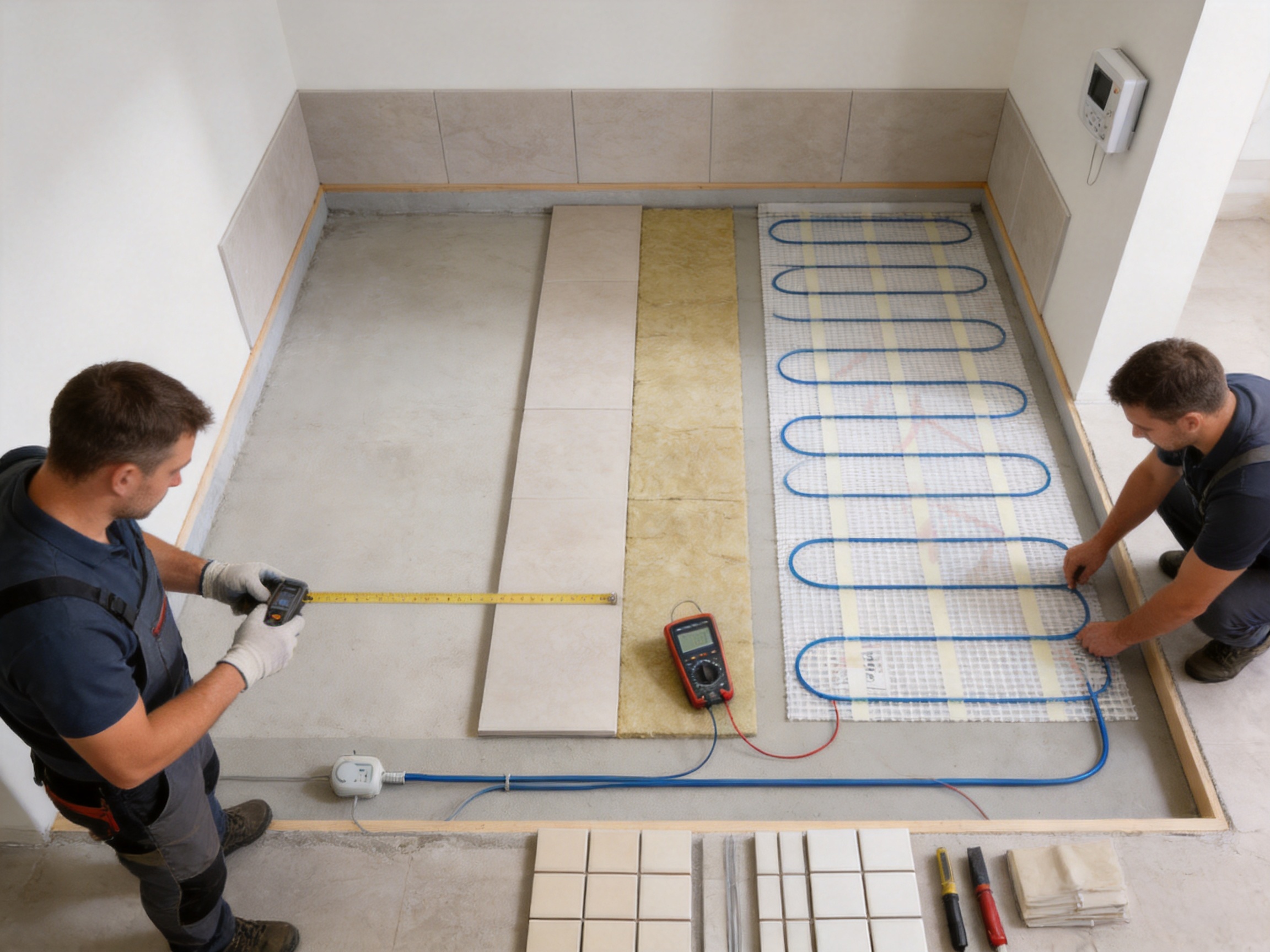
Electric heating mats generally have few user-serviceable components once they are correctly embedded beneath the floor. Routine maintenance normally focuses on thermostat operation, sensor performance, circuit protection, and visual inspection of accessible electrical connections.
If the system does not heat, the thermostat and power supply should be checked first by a qualified electrician. The circuit breaker, residual-current device, programmed schedule, and temperature settings may explain many apparent problems. If a fault is suspected in the embedded mat, resistance and insulation testing should be performed using suitable equipment.
Keeping installation test records is valuable for future maintenance. The record should include the product number, heating area, installed location, initial resistance, insulation-resistance results, thermostat model, circuit identification, and floor covering. These records can reduce diagnostic time if the property is renovated or repaired later.
For a 0.5-square-meter active zone, the 75-watt, 1-meter model may be appropriate. For a 1-square-meter zone, the 150-watt, 2-meter model is available. These smaller sizes may be useful in compact rooms or for localized comfort heating.
Models covering 2 to 6 square meters provide options for bathrooms, bedrooms, kitchens, hallways, and small offices. The 300-watt, 450-watt, 600-watt, 750-watt, and 900-watt configurations cover this range.
The 7-square-meter through 12-square-meter models provide outputs from approximately 1,050 watts to 1,800 watts. These products may be used in larger rooms or combined in a carefully designed system. The total load and control equipment must be confirmed before multiple mats are connected.
Rooms with many projections, curves, or permanent obstacles require careful planning. A combination of smaller mats may produce better coverage than one large mat, although the final arrangement must comply with connection limits and installation instructions. When the layout is highly irregular, a loose cable system may sometimes provide greater flexibility.
Buyers should request a current technical datasheet showing the exact product number, rated voltage, power, resistance, dimensions, heating area, cable construction, and tolerance values. The product label and shipping documents should correspond to the selected model.
For commercial or export projects, buyers should request current conformity documents, quality certificates, test reports, installation instructions, packaging specifications, and warranty information. It is also advisable to confirm whether the quoted product is manufactured for the intended floor finish and installation method.
Sample inspection can include visual checks, dimensional measurement, conductor continuity, resistance testing, insulation resistance, label verification, and review of the supplied accessories. Larger orders may benefit from a mutually agreed inspection plan or third-party quality inspection before shipment.
Customers should also confirm communication channels for technical support. Santo Thermal Control Technology Co., Ltd. lists contact information including +86-15189951250, +86-18852623985, +86-18552689245, and the email addresses [email protected], [email protected], and [email protected]. Buyers should verify current contact details through official company documentation before sending technical files, purchase orders, or confidential information.
The listed power density is 150 watts per square meter. The total nominal power depends on the selected heating area. A 4-square-meter mat is rated at approximately 600 watts, while a 12-square-meter mat is rated at 1,800 watts.
The technical information lists 230 VAC. Connection must be performed by a qualified electrician using the protective devices and wiring required by local electrical regulations.
The listed models have a standard width of 0.5 meters. The length varies from 1 meter to 24 meters, producing heating areas from 0.5 square meters to 12 square meters.
Double conductor refers to the arrangement in which the outgoing and returning heating paths are incorporated into the mat system. This can simplify the layout compared with certain single-conductor designs because the installer does not need to route a separate return path across the floor in the same way.
The product information states that it is suitable for ceramic tile floors, including old ceramic tile floors when the substrate is properly prepared. The adhesive, leveling layer, moisture condition, and installation procedure must be compatible with electric floor heating.
The supplied information identifies wooden floors as a possible application. The exact method depends on the wood product, subfloor, insulation, temperature limit, and local requirements. The wood-floor manufacturer’s instructions must be followed, particularly regarding maximum surface temperature.
The heating conductor itself must not be cut. Some mat systems allow the carrier or mesh to be carefully modified for layout purposes, but this must follow the manufacturer’s instructions. If the room shape is complex, the installer should confirm the permitted adjustment method before beginning work.
Heating mats should generally not be installed below fixed furniture, built-in cabinets, or objects that prevent heat from dissipating. The usable heating area should be calculated after these areas have been excluded.
A compatible thermostat is strongly recommended and may be required by local regulations or the floor-covering manufacturer. A floor sensor can help limit the floor temperature and maintain comfortable, controlled operation.
Several mats may be used when the system is designed for the combined load. The thermostat, switching device, wiring, protective equipment, and branch circuit must all be sized for the total connected power. A qualified electrician should verify the arrangement.
The mat should be tested for conductor resistance and insulation resistance before installation, after placement, and before final connection. The readings should be recorded and compared with the product specifications and permitted tolerances.
The finished mat provides a predetermined conductor layout, consistent spacing, standardized dimensions, and a potentially faster installation process. Loose cable may still be preferable for highly irregular spaces, so the best choice depends on the floor plan and project requirements.
It may serve as a primary heating source in a properly insulated and calculated room. However, the decision should be based on a heat-loss assessment. In poorly insulated buildings or severe climates, supplementary heating may be necessary.
The source information lists the 21-meter model as 1,570 watts and 33.6 ohms. Because the series is described as 150 W/m² and the product number includes 1575, customers should confirm the exact rated power and documentation with the manufacturer before ordering.
The company address is listed as Wuxing Industrial Zone, Dainan Town, Xinghua City, Jiangsu Province, China. The company profile also describes operations in Jiangsu and a broader production and distribution network.
The 2ATTXV Double Conductor Ground Mat is a practical underfloor heating solution built around a 150 W/m² output, 230 VAC operation, 0.5-meter width, and a broad selection of lengths and heating areas. Its finished dual-conductor mat format can simplify installation, support consistent conductor spacing, reduce layout complexity, and provide a low-profile option for new construction and renovation projects.
The product is positioned for use beneath several floor types, including concrete, wood, ceramic tile, and terrazzo, provided that the substrate and floor-finish system are properly prepared. Its size range supports compact comfort-heating zones as well as larger residential, hospitality, and dormitory applications.
Its competitiveness is supported not only by its product design but also by the supplier’s wider experience in electric heating belts, heat-tracing systems, snow-melting products, silicone rubber heaters, mineral-insulated cables, and related technologies. The company reports more than 35 years of industry experience, ISO9001 quality-system certification, CCC-related product credentials, research activity, OEM and ODM capabilities, and an international distribution presence.
Successful application depends on correct floor-area calculation, compatible construction materials, appropriate electrical protection, thermostat control, careful testing, and professional installation. When these factors are addressed, the double-conductor floor mat can provide discreet, comfortable, and controllable indoor heating while preserving valuable interior space.
1. Product technical information for the 2ATTXV Double Conductor Ground Mat, including voltage, power, resistance, dimensions, and heating-area data.
2. SANTO ATTX Series product description and application information for indoor floor heating mats.
3. Santo Thermal Control Technology Co., Ltd. company profile and manufacturing capability information.
4. ISO 9001 quality management system principles for controlled manufacturing and quality assurance.
5. General electrical safety and installation practices for electric underfloor heating systems.
6. General floor-covering manufacturer guidance concerning temperature limits, substrate preparation, and compatibility with electric heating.
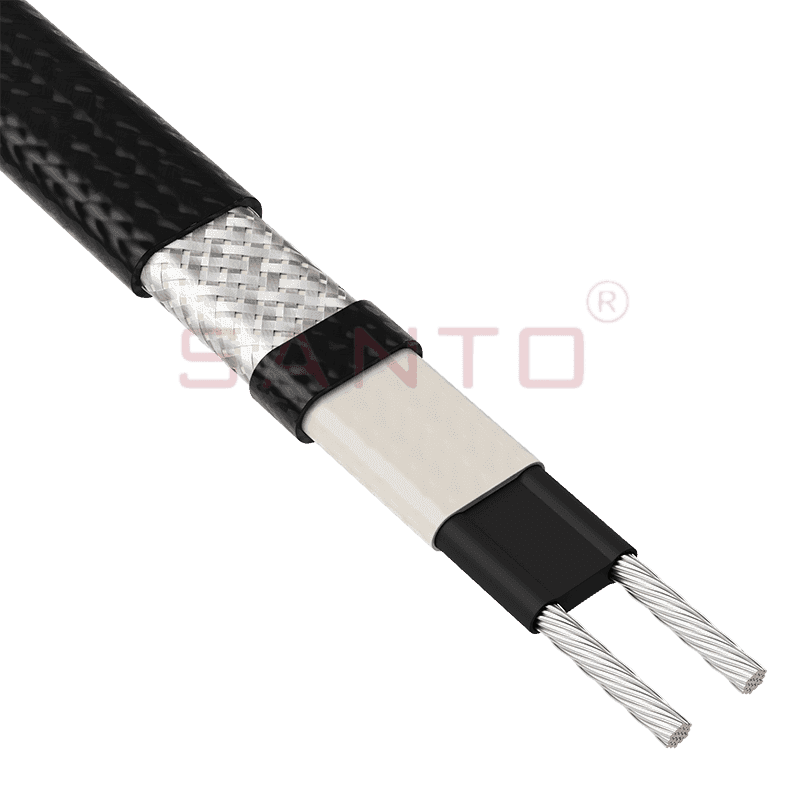
The SANTO UFA range of self-regulating heating cables is mainly used for frost protection of pipes and vessels but can also be used to maintain processes up to 65°C. These heating cables are available...
See Details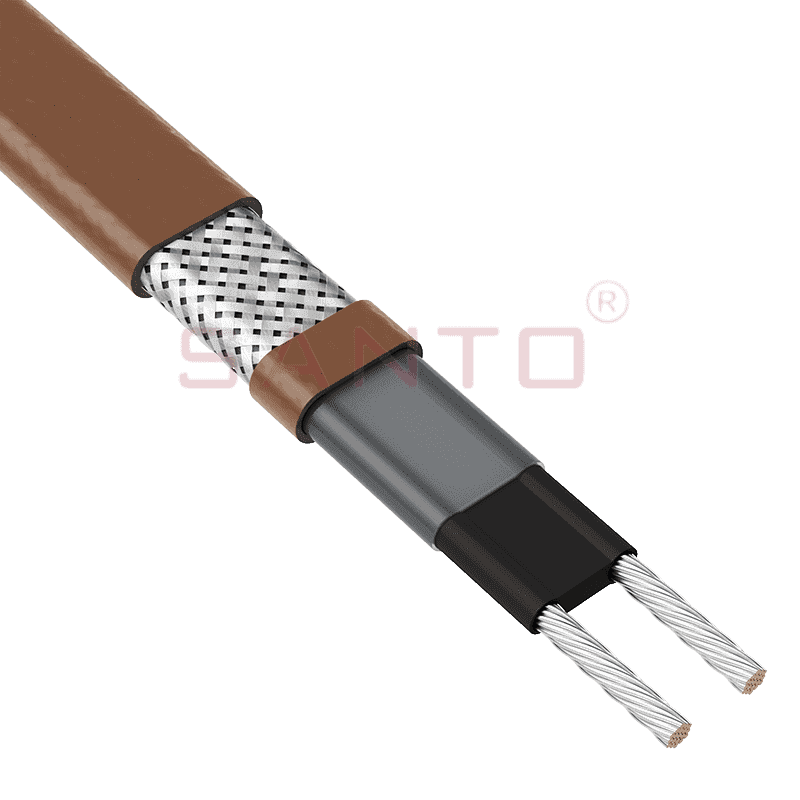
The SANTO UFB range of self-regulating heating cables is mainly used for frost protection of pipes and vessels requiring a higher power output than the UFA heating cables can supply. They can also be ...
See Details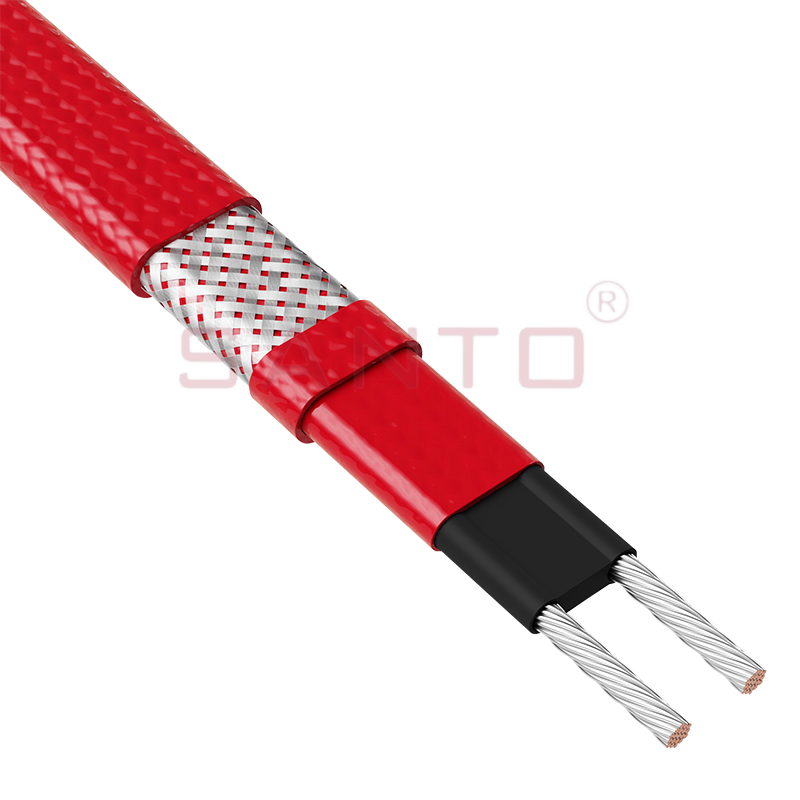
The SANTO UFC range of self-regulating heating cables is used for frost protection of pipes and vessels that require steam cleaning. They can also be used to maintain processes up to 121°C. These heat...
See Details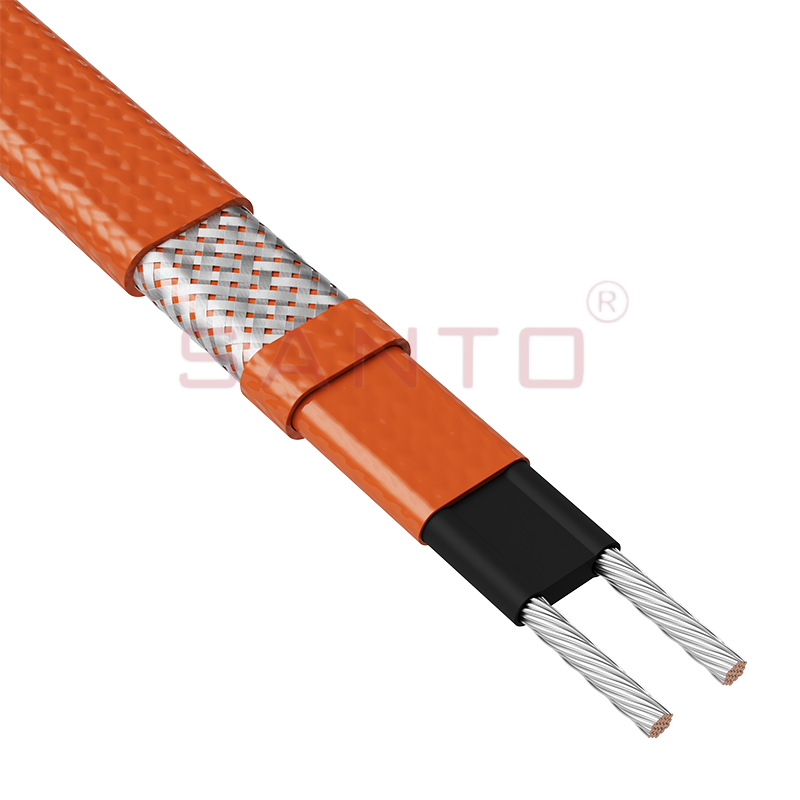
The SANTO UFO range of self-regulating heating cables is mainly used for frost protection of pipes and vessels that require steam cleaning . They can also be used to maintain processes up to 150°C. Th...
See Details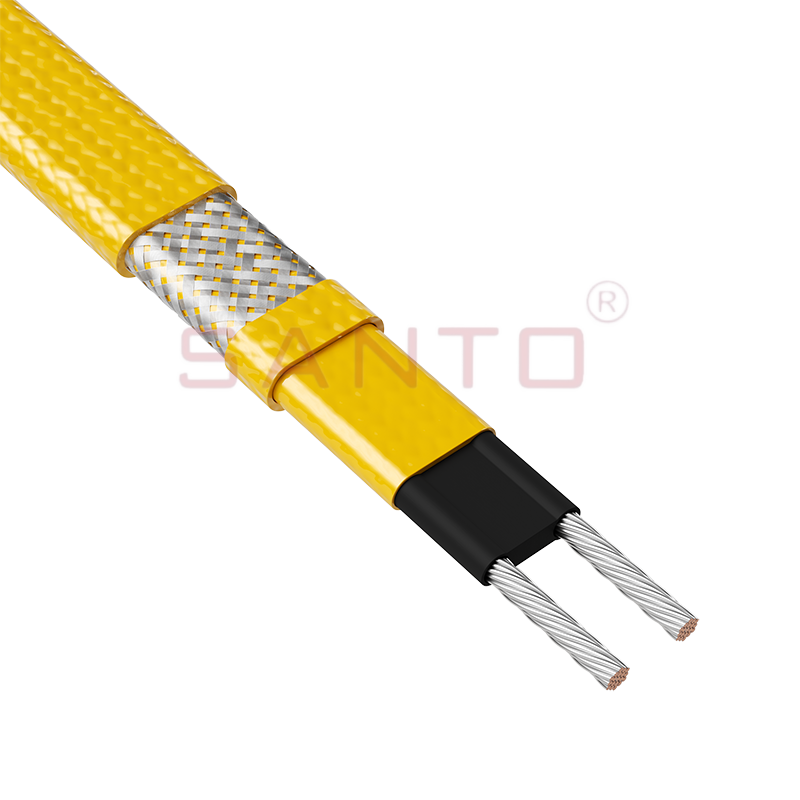
The SANTO UFD series of self-regulating heating cables are mainly used for freeze protection of pipes and vessels, but can also be used to maintain processes up to 200°C. These heating cables are avai...
See Details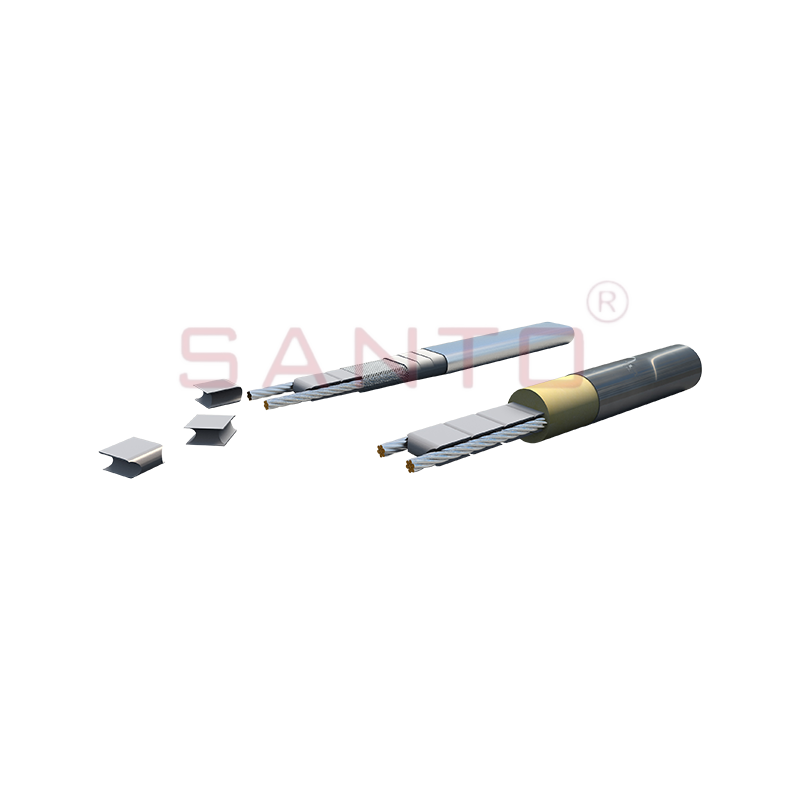
SANTO UFY heating wire is suitable for applications that maintain process temperatures up to 260 ℃ and can be steam blown; The self-regulating and parallel circuit heating wires of the UFY series are ...
See Details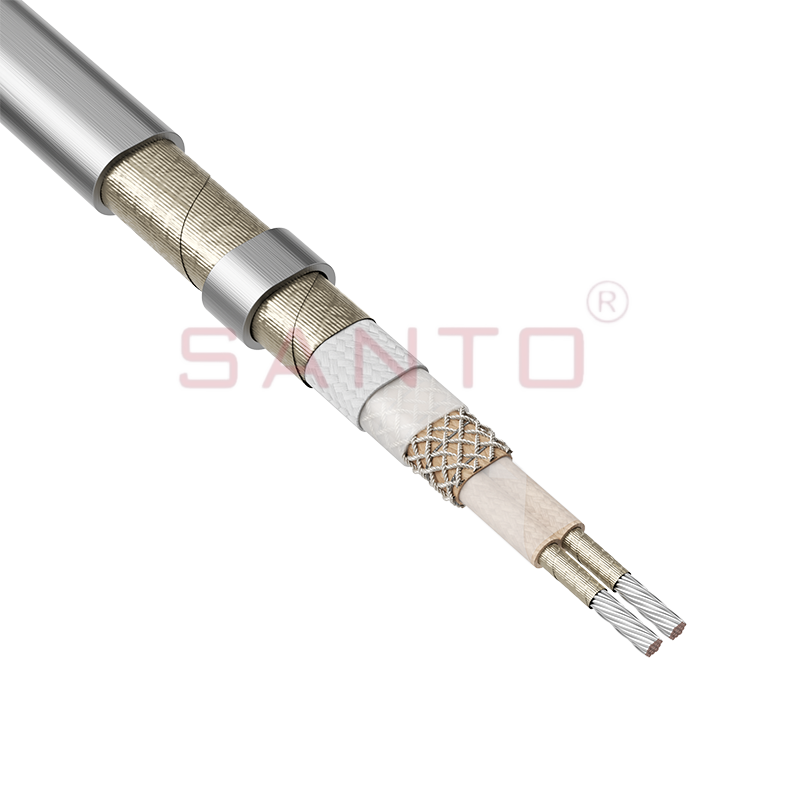
The SANTO UFM series self-regulating heating cables are mainly used for freeze protection of pipes and vessels, but can also be used to maintain processes up to 400°C. These heating cables are availab...
See Details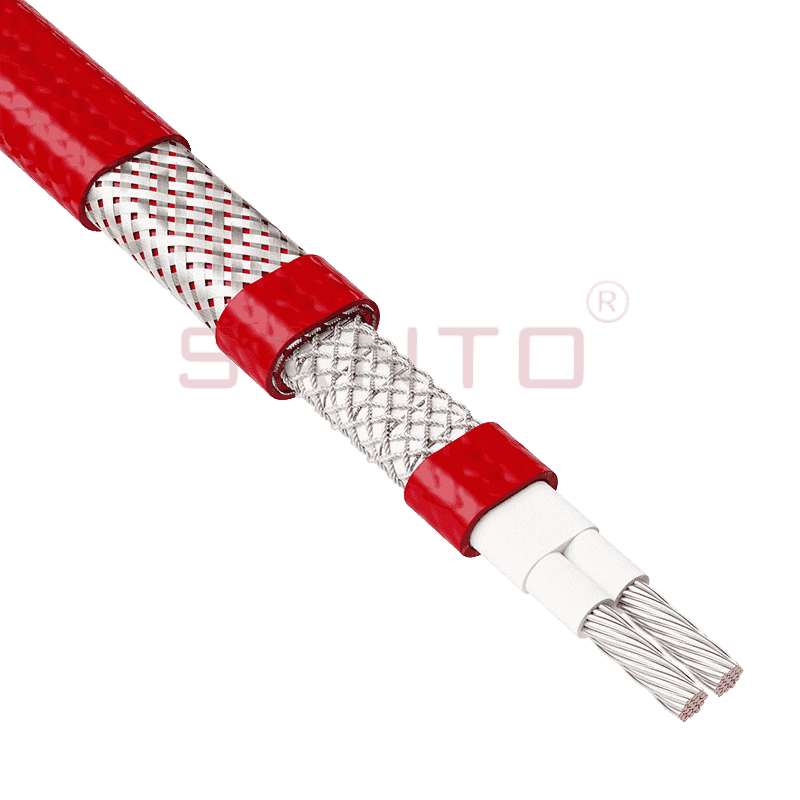
The SANTO ACC range of power-limiting heating cables is mainly used for temperature maintenance of processes and offers the advantage of a high power output at high temperatures which can reduce the n...
See Details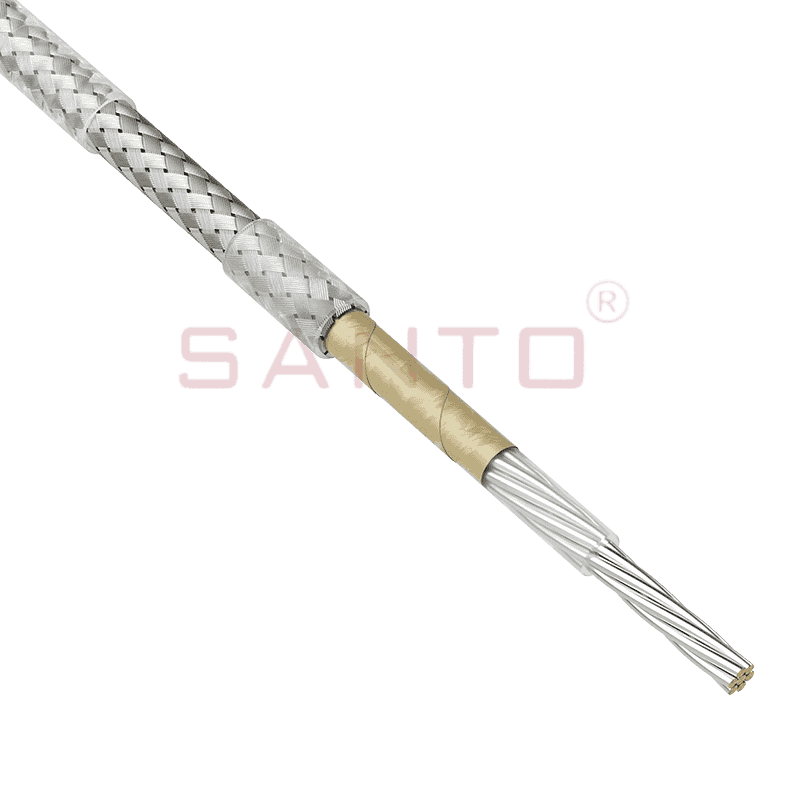
The stranded high temperature conductor is nickel plated to ensure a long life at elevated temperatures in corrosive environments. It is electrically isolated using an innovative sandwich construction...
See Details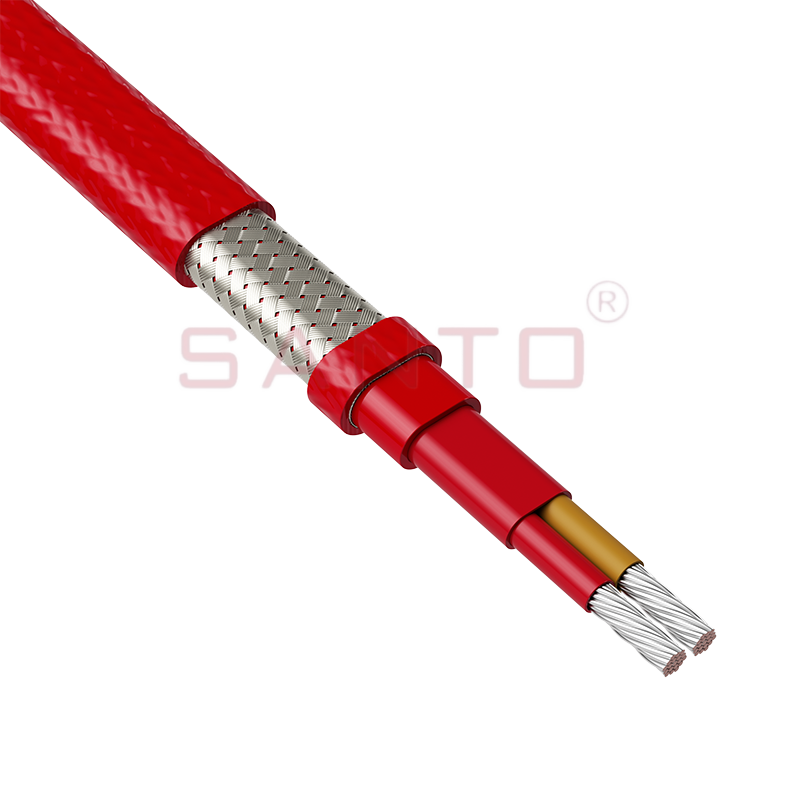
The stranded high temperature conductor is nickel plated to ensure a long life at elevated temperatures in corrosive environments. It is electrically isolated using an innovative sandwich construction...
See Details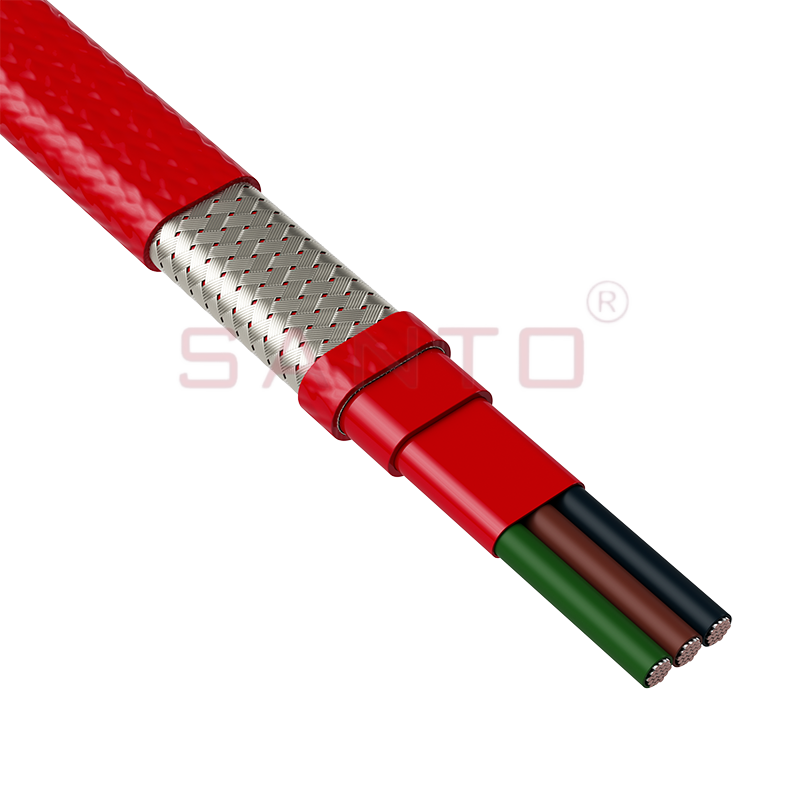
The stranded high temperature conductor is nickel plated to ensure a long life at elevated temperatures in corrosive environments. It is electrically isolated using an innovative sandwich construction...
See Details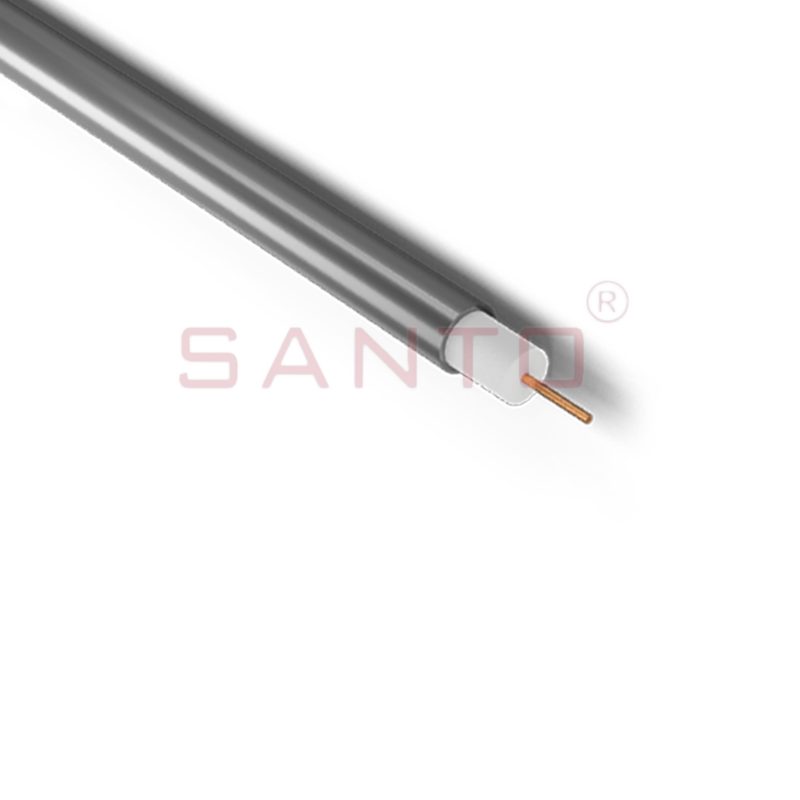
SANTO HAx mineral insulated (MI) Alloy 825 series heating cables are suitable for use in hazardous areas. They have been designed for use in freeze protection and temperature maintenance applications ...
See Details
Santo electric heating strips are widely used in key industries in China.

