 English
  English
 русский
 日本語
日本語 Español
 中文简体
中文简体
The SANTO UFA range of self-regulating heating cables is mainly used for frost protection of pipes and vessels but can also be used to maintain processes up to 65°C. These heating cables are available...
See Details
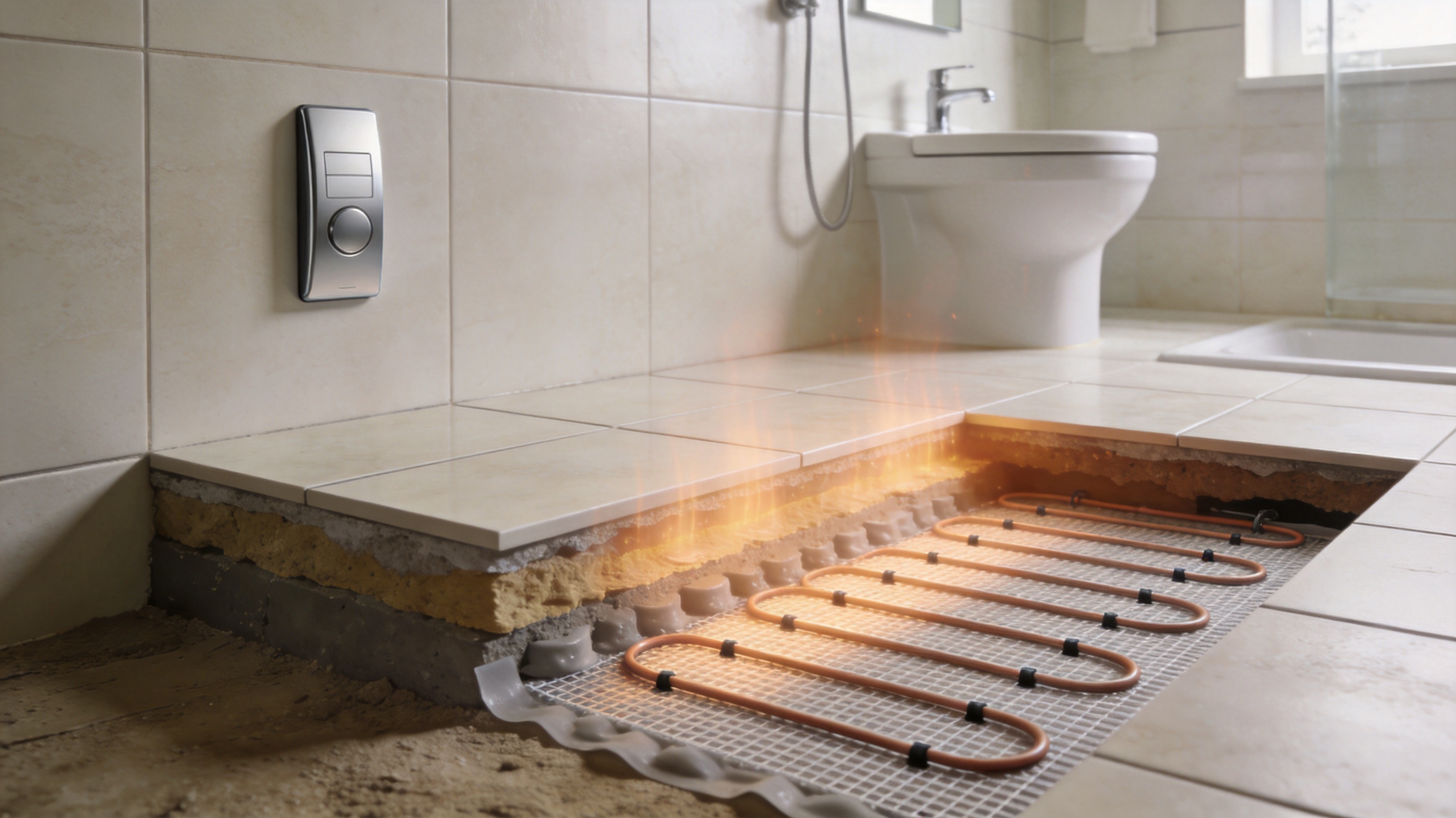
Electric underfloor heating has become one of the most practical ways to improve indoor comfort without sacrificing usable space, interior design flexibility, or energy control. The 2ATTX Double Conductor Ground Mat is designed for modern residential, hospitality, dormitory, renovation, and light commercial interiors where reliable floor warming, fast response, and simplified installation are essential. As an ultra-thin electric heating mat, it is intended to be installed beneath floor finishes such as ceramic tile, stone, concrete-based finishes, wood-compatible assemblies, renovated tile surfaces, and terrazzo-type floors, depending on the final floor system and local installation requirements.
This product belongs to the underfloor heating mat category and is built around a double conductor heating structure. Its design supports convenient layout, dependable electrical performance, and comfortable heat distribution across occupied areas. Unlike bulky hydronic systems or thick heating layers that may raise floor height significantly, the ultra-thin mat is especially suitable for projects with strict floor elevation requirements, secondary decoration, bathroom upgrades, hotel room improvements, family room comfort heating, and indoor insulation applications.
For users and contractors, the main value of the 2ATTX Double Conductor Ground Mat is its balance of heating efficiency, installation convenience, product range, and certification-oriented configuration. Available in multiple power densities and voltage options, including UL/CUL-oriented 120 V and 240 V specifications and CE-oriented 230 V specifications, the product can be selected according to regional electrical standards, heating area, desired watt density, and project type.
Content
The 2ATTX Double Conductor Ground Mat is a pre-arranged electric heating mat used beneath floor finishes to deliver radiant warmth from the ground upward. It is commonly selected for areas where occupants expect rapid comfort, such as bathrooms, bedrooms, hotel guest rooms, dormitories, dressing areas, kitchens, and renovated indoor living spaces. By placing the heat source close to the floor surface, the system improves perceived comfort while avoiding visible radiators, wall-mounted heaters, or duct outlets.
The mat is described as an ultra-thin heating system. This matters because many renovation projects cannot tolerate a thick heating structure. In older buildings, every millimeter of floor height may affect door clearance, thresholds, waterproofing transitions, baseboards, cabinetry, and finished interior alignment. The low-profile structure of this mat helps reduce those conflicts. It can be installed in tile adhesive and can also be laid over an existing suitable substrate when conditions permit, helping contractors shorten project time and reduce additional leveling or structural treatment.
The product is suitable for overall heating, comfort heating, wall heating applications where compatible, secondary decoration, and spaces that require strict floor height control. Its fast preheating behavior can help the floor approach the desired comfortable temperature in approximately 20 to 30 minutes after startup, depending on substrate, floor finish, insulation, ambient conditions, and thermostat settings. This rapid response makes it especially attractive for bathrooms and similar home spaces where users often want heat during specific periods rather than continuous all-day operation.
A double conductor heating mat provides practical installation advantages compared with many single conductor arrangements. In a single conductor system, both ends of the heating cable may need to return to the power connection point, which can complicate layout and increase installation time. A double conductor configuration generally simplifies termination and reduces routing complexity because the electrical return path is incorporated into the cable structure. This makes the mat easier for trained installers to position accurately, especially in small rooms or irregular layouts.
The 2ATTX system’s double conductor design supports neat installation and helps reduce mistakes during layout. A cleaner layout can also improve long-term reliability because installers are less likely to stretch, overlap, sharply bend, or force the cable into difficult positions. When a heating mat is installed below a floor finish, avoiding mechanical stress is essential. A pre-arranged mat structure helps maintain proper spacing and consistent heat distribution, which is important for comfort and surface temperature uniformity.
Compared with loose cable systems that require extensive spacing measurement on site, a heating mat can reduce installation uncertainty. The installer can cut and turn the mesh or carrier backing where permitted by the installation manual, while keeping the heating cable intact. This allows the mat to adapt to rectangular rooms, narrow zones, and selected heating areas while still preserving the designed watt density.
One of the strongest advantages of the 2ATTX Double Conductor Ground Mat is its ultra-thin construction. Hydronic underfloor heating, thick screed-embedded cable systems, and some panel-based radiant heating products may require significant floor build-up. That can be acceptable in new construction but is often inconvenient in renovation. The 2ATTX mat is intended for low-profile installation, including placement in tile adhesive. This helps preserve existing floor elevation and reduces disruption to the surrounding interior.
Because the system is installed close to the floor surface, it can respond faster than heating systems buried deeply in heavy screed. A thin preheating layer allows users to experience warmer floors in a relatively short time. In many typical indoor spaces, the desired surface comfort may be reached within 20 to 30 minutes after startup, subject to installation conditions. Competitors that rely on thick thermal mass may be slower to respond and less convenient for intermittent use.
The mat format reduces layout labor compared with loose heating wire. The heating element is pre-positioned on a carrier, helping installers maintain spacing and coverage. This is especially useful in hotels, dormitories, and residential renovations where time on site directly affects project cost. A product that installs quickly can reduce labor hours, shorten room downtime, and improve consistency across multiple rooms.
The product family includes 130 W/m² and 150 W/m² classes, with UL/CUL-oriented watt densities expressed as 12 W/ft² and 14 W/ft², and CE-oriented 150 W/m² models for 230 V markets. This broad specification range gives designers and contractors more selection flexibility. Instead of forcing one watt density into every project, users can choose according to climate, insulation, floor finish, room function, and electrical supply.
Compared with fan heaters, baseboard heaters, radiators, or portable heating devices, the underfloor mat remains hidden below the finished floor. This improves interior aesthetics and frees wall space. It also creates a more comfortable radiant heating sensation, warming the surface where occupants stand and walk. In bathrooms and bedrooms, this invisible comfort can significantly improve perceived quality.
Many heating upgrades are not part of new construction. Homeowners, hotel operators, and property managers often need to improve comfort in existing rooms. The 2ATTX mat is suitable for secondary decoration because it minimizes additional thickness and can be installed over suitable existing floors. This can reduce demolition, dust, noise, and project duration compared with more invasive heating alternatives.
The 2ATTX Double Conductor Ground Mat is offered in several electrical and dimensional configurations. The following table summarizes the major product families rather than listing every individual model. Specific selection should be based on the required heated area, local voltage, design watt density, thermostat capacity, and applicable electrical codes.
Product Family |
Certification Orientation |
Typical Voltage |
Power Density |
Mat Width |
Available Heating Area Range |
Typical Application |
2ATTX-130 |
UL/CUL |
120 V and 240 V |
130 W/m², approximately 12 W/ft² |
1.6 ft |
Approximately 10 to 150 sq.ft, depending on voltage and model |
Comfort floor warming and moderate heating demand areas |
2ATTX-150 |
UL/CUL |
120 V and 240 V |
150 W/m², approximately 14 W/ft² |
1.6 ft |
Approximately 10 to 120 sq.ft, depending on voltage and model |
Bathrooms, bedrooms, hotels, and faster comfort heating zones |
2ATTX-150 |
CE |
230 V |
150 W/m² |
0.5 m |
Approximately 1.0 to 12.0 m² |
European-style indoor floor heating and renovation projects |
The UL/CUL-oriented 130 W/m² series includes 120 V models for heating areas from approximately 10 sq.ft to 80 sq.ft and 240 V models extending from approximately 20 sq.ft up to 150 sq.ft. Power values range from smaller outputs such as 120 W to larger models around 1800 W. Resistance values vary by model and voltage, providing the electrical characteristics necessary for correct circuit design and verification testing.
The UL/CUL-oriented 150 W/m² series includes 120 V models from approximately 10 sq.ft to 70 sq.ft and 240 V models from approximately 20 sq.ft to 120 sq.ft. Power values correspond to the 14 W/ft² class, such as 140 W for 10 sq.ft, 700 W for 50 sq.ft, and 1680 W for 120 sq.ft in the 240 V range. This family is well suited where a slightly higher watt density is preferred for quicker comfort response or colder floor assemblies.
The CE-oriented 150 W/m² series is designed around 230 V supply and metric dimensions. It uses a typical mat width of 0.5 m and includes heating areas from 1.0 m² to 12.0 m². Power ranges from 150 W to 1800 W. This makes it useful for international projects where metric room sizing, 230 V supply, and CE-oriented product documentation are required.
Bathrooms are among the most common locations for electric underfloor heating mats. Cold tile can make a bathroom feel uncomfortable even when the air temperature is acceptable. A thin heating mat beneath tile adhesive can provide warm surface comfort without occupying wall space. The fast response of the 2ATTX mat is particularly useful in bathrooms because users often want comfort during morning and evening routines rather than continuous heating all day.
Hotels compete heavily on guest comfort. Warm floors in bathrooms and selected room areas can create a premium impression without visible equipment. The mat format also supports repetitive installation across multiple rooms. When each room has a similar layout, contractors can standardize model selection, thermostat placement, and testing procedures, improving installation consistency and reducing maintenance complexity.
In family rooms and bedrooms, radiant floor warming can improve comfort during cold seasons. It reduces the discomfort of cold surfaces and can work alongside other heating systems. In well-insulated rooms, the mat may contribute significantly to overall comfort heating. Because it is hidden under the floor, furniture placement remains more flexible than with wall radiators or baseboard heaters.
Dormitories and rental interiors need durable, low-maintenance heating solutions. The 2ATTX mat can be installed as part of floor renovation to improve comfort without adding portable heaters that may create safety concerns. When connected through appropriate thermostats and protective devices, the system can be controlled efficiently and safely.
The product information notes suitability for wall heating where proper system design allows. Wall heating can be used in certain indoor applications to create radiant comfort without using conventional radiators. However, any wall heating installation must follow product documentation, local codes, fixture clearance requirements, and finish material limitations.
The contractor’s perspective is important because even a technically strong heating product must be practical on site. The 2ATTX Double Conductor Ground Mat is designed to reduce installation barriers. Its mat-based format helps installers cover defined heating areas quickly and maintain correct cable spacing. This can reduce the risk of uneven floor temperature and helps maintain the designed power density.
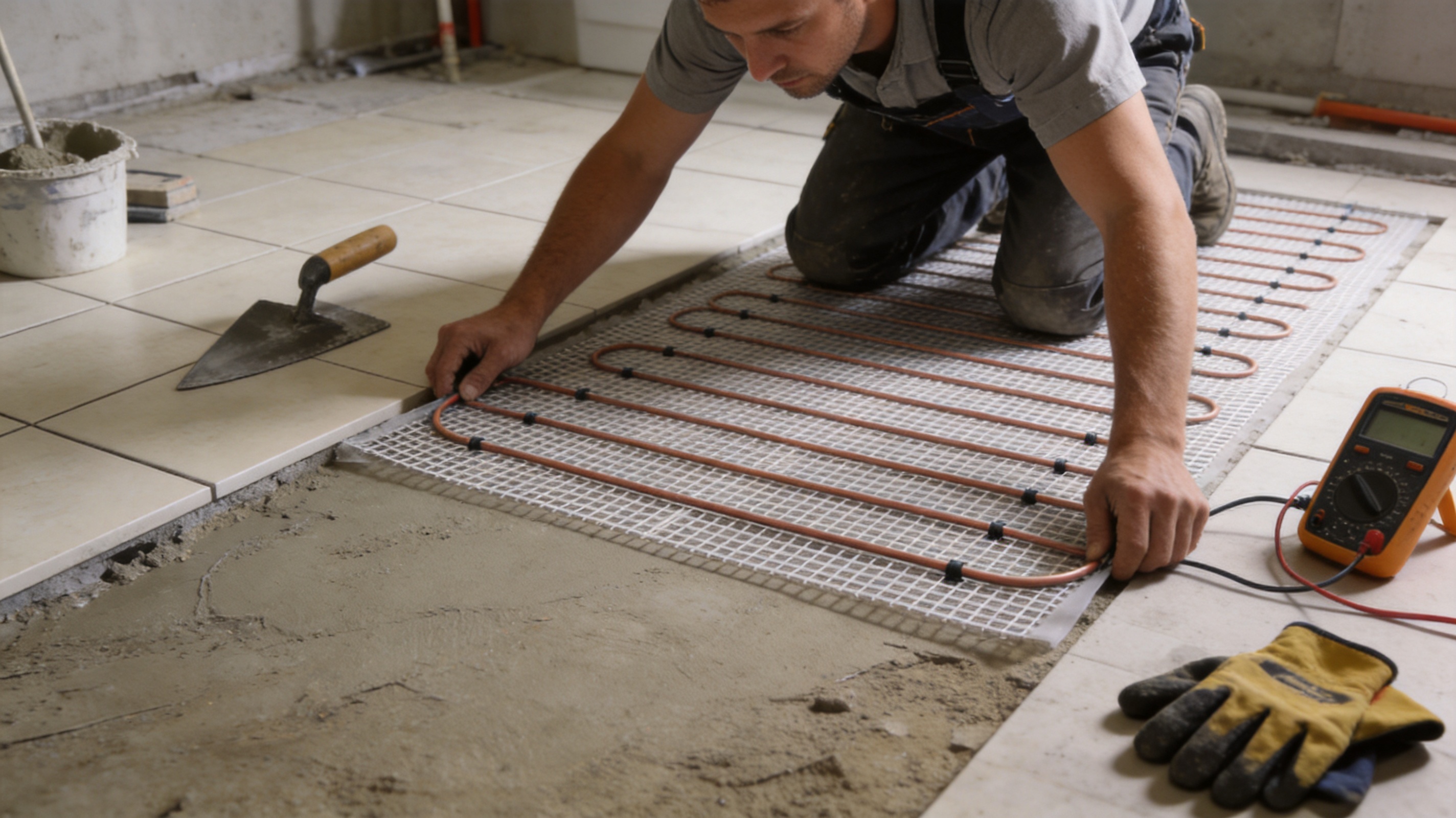
The system can be installed in tile adhesive, allowing integration with common tile-setting workflows. In renovation projects, it may be directly laid on the original suitable ground when the substrate is clean, stable, flat, and compatible with the floor assembly. This can save time compared with systems requiring major surface preparation or thick embedding layers. The result is a cleaner construction sequence and fewer conflicts with doors, thresholds, and finished trim.
Installers should still follow professional procedures. Before installation, the floor plan should be confirmed, fixed objects should be excluded from heated zones, and the selected mat size should match the free floor area. Heating cables should never be cut, overlapped, crushed, or placed where heat cannot dissipate. Electrical resistance and insulation resistance should be tested before, during, and after installation. Thermostat sensor placement should be planned carefully to ensure accurate temperature control.
Radiant floor heating improves comfort by warming the surface closest to occupants. Heat rises gently from the floor and reduces the sensation of cold feet. In bathrooms, tile areas, and bedrooms, this can allow users to feel comfortable without overheating the entire air volume. When paired with a programmable thermostat, the mat can operate only when needed, such as before waking, during evening use, or during occupancy periods.
Compared with systems that rely on air movement, underfloor radiant heat is quiet and does not blow dust around the room. This contributes to a calm indoor environment. The absence of fan noise is valuable in bedrooms, hotels, and study areas. The hidden installation also protects the heating element from casual contact, tampering, and visual wear.
Energy performance depends on insulation, floor construction, thermostat settings, room heat loss, and user behavior. The 2ATTX mat’s fast response gives users more control because they can heat selected areas when comfort is desired. In a well-designed installation, this targeted approach can be more efficient than heating large unused spaces continuously.
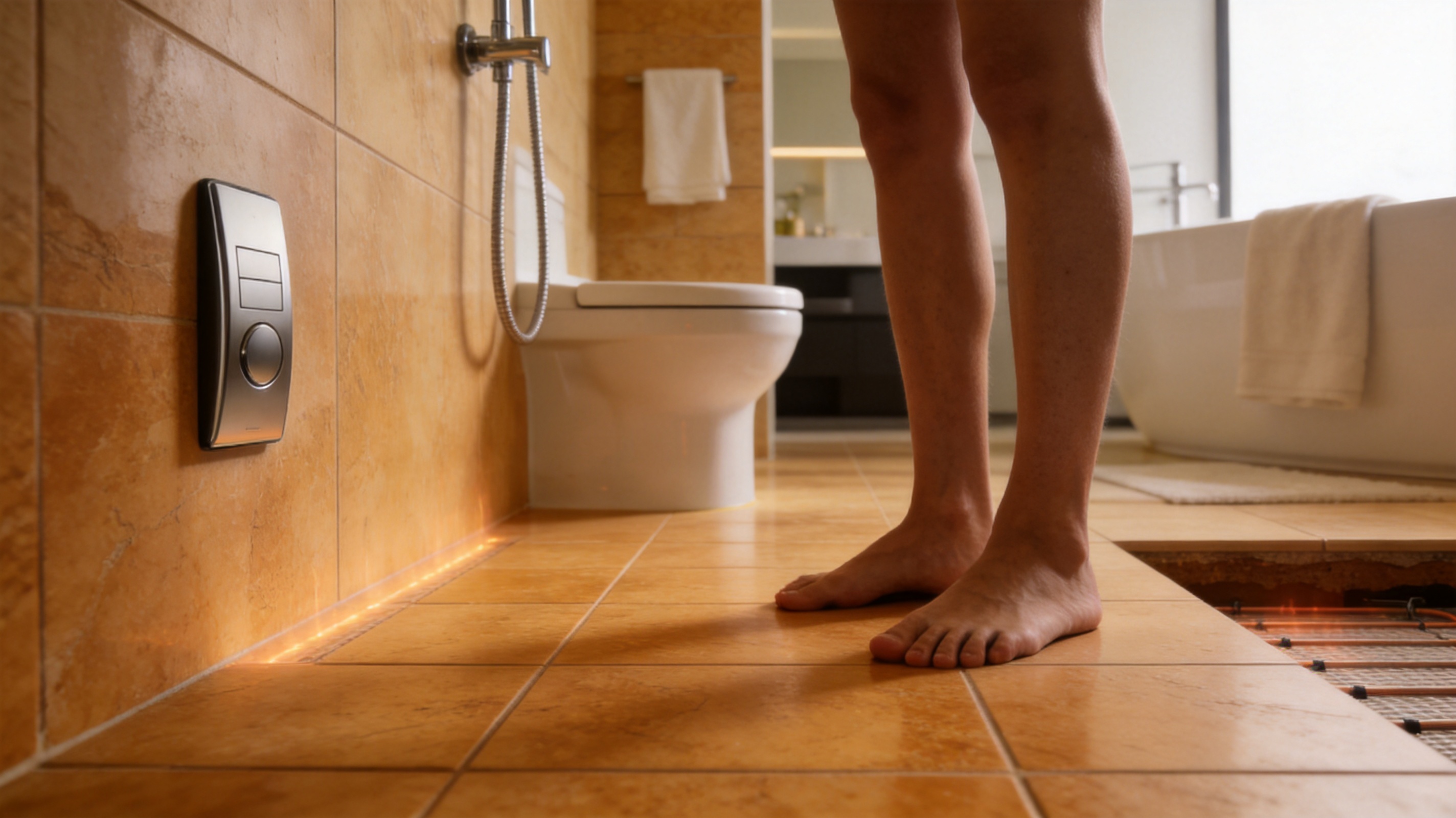
Santo Thermal Control Technology Co., Ltd. has a long background in electric heating technology. The company focuses on research, design, production, and manufacturing of electric heating products, including self-limiting heating cables, constant-power heating cables, glass fiber electric heating products, mineral insulated cables, snow melting cables, silicone rubber heating systems, and electric heating accessories. This broader technical foundation supports the development of underfloor heating mats because the same core disciplines are involved: conductor design, insulation materials, heating stability, electrical safety, mechanical durability, and quality control.
The company’s manufacturing strength is supported by decades of industry experience, product research cooperation, certification experience, and a wide industrial application base. Its products are used in petroleum, chemical, gas, construction, solar energy, electric heating, geothermal cultivation, antifreeze, deicing, tracing, insulation, and heating applications. This range is significant because industrial heat tracing requires strict control of electrical performance, material reliability, and environmental resistance. Knowledge gained from demanding industrial heating products can be applied to indoor comfort heating mats, where safety and consistency are equally important.
Advanced manufacturing for electric heating mats involves several key processes. First, conductor materials must be selected and processed to deliver stable resistance and predictable heat output. Second, insulation layers must be applied uniformly to protect users and maintain electrical integrity. Third, the heating cable must be arranged on a mat backing with consistent spacing. Fourth, cold lead connections, end terminations, and joints must be manufactured with care because these are critical areas for long-term reliability. Fifth, electrical testing must verify resistance, insulation performance, and product continuity before shipment.
SANTO’s product background indicates an emphasis on scientific management, new product development, technology guidance, product quality, and after-sales service. The company has passed ISO9001 quality system certification, and its products have obtained national CCC certification, with additional certification experience including explosion-proof certification and EAC Eurasian Union certification for relevant product categories. For buyers, this quality culture is important because underfloor heating is embedded in the building. Once installed beneath a finished floor, reliability is essential.
Reliable heating mats begin with stable raw materials. The conductor must produce the correct wattage under rated voltage. Insulation must withstand installation stress, operating temperature, moisture exposure conditions associated with floor assemblies, and aging over time. The mat carrier must hold the heating cable securely while allowing installation materials such as adhesive or leveling compound to bond properly. By controlling material selection, the manufacturer helps ensure that the finished mat performs consistently from one model to another.
Uniform cable spacing is essential for even heat distribution. Too much spacing can create cool zones, while too little spacing can create excessive surface temperature or localized stress. A mat-based product solves this by arranging the cable according to designed geometry before it reaches the jobsite. This creates an advantage over fully manual cable spacing methods, especially when multiple installers are working under time pressure.
Each heating mat should be verified against its rated electrical values. Resistance testing confirms that the product matches its specification. Insulation resistance testing helps verify electrical safety. Continuity checks confirm that the circuit is intact. Traceability through model numbers, dedicated numbers, power ratings, resistance values, and dimensions helps contractors and distributors manage inventory and match products to design requirements.
Different markets require different electrical standards. The availability of UL/CUL-oriented models for 120 V and 240 V and CE-oriented models for 230 V shows that the product family is designed with international use in mind. This is a competitive advantage for distributors, contractors, and project buyers who need consistent product architecture across regions.
Selecting the right 2ATTX Double Conductor Ground Mat begins with measuring the free heating area. The heating mat should be installed only in open floor zones where heat can dissipate properly. Areas beneath fixed cabinets, permanent furniture, sanitary fixtures, bathtubs, shower bases, or other objects that trap heat should generally be excluded unless the installation manual and floor system specifically allow it.
After the free area is calculated, the designer chooses the appropriate power density. The 130 W/m² class is suitable for many comfort heating applications and moderate heating demand. The 150 W/m² class provides higher output and may be chosen for bathrooms, colder floors, faster response expectations, or areas where greater heat contribution is required. The local supply voltage then determines whether a 120 V, 240 V, or 230 V model is appropriate.
Thermostat capacity must also be considered. Larger mats draw more current, and multiple mats may need to be connected through proper control equipment or relays according to electrical codes. Floor temperature sensors are often used to protect the floor finish and maintain comfort. In wood-compatible installations, temperature limits are especially important to protect the flooring material.
The product information notes suitability for various floor decoration materials, including concrete floors, wooden floors, old ceramic tile floors, and terrazzo floors. In practice, compatibility depends on the complete floor assembly, adhesive, leveling compound, underlayment, insulation, waterproofing layer, and finish manufacturer’s requirements. Ceramic and stone tiles are common because they conduct heat well and tolerate floor warming systems when installed correctly.
Wood and laminate-type floors require more careful design because these materials can be affected by temperature and moisture changes. The heating output, thermostat limit, underlayment choice, and floor manufacturer approval should all be checked. Existing tile or terrazzo substrates may be suitable when clean, bonded, flat, and structurally stable. Concrete substrates should be dry, sound, and properly prepared.
For best performance, insulation below the heated layer can reduce downward heat loss and improve response time. This is especially important over unheated spaces, concrete slabs, or ground floors. A well-insulated floor assembly helps the mat deliver more warmth upward to the occupied zone.
Electric underfloor heating must be installed by qualified personnel according to local electrical regulations and product instructions. Ground fault protection, appropriate circuit breakers, correct cable routing, and proper thermostat installation are essential. The heating cable must not be cut or shortened. The mat should not overlap itself, cross other heating cables, or be installed in areas where fasteners may penetrate it.
Resistance values should be recorded before installation, after mat placement, after covering with adhesive or leveling compound, and after final floor installation. Any unexpected change may indicate damage and should be investigated before the floor is completed. This testing discipline protects both the installer and the building owner.
Users should avoid driving nails, screws, or floor anchors into heated areas after installation. A floor plan or photo record of mat placement should be kept for future renovation. Heavy insulating rugs or furniture without clearance may reduce heat dissipation, so user guidance should be provided after installation.
The 2ATTX Double Conductor Ground Mat is not only a product for individual rooms; it is also suitable for distribution and project-based supply. Its clear model structure, multiple watt densities, international voltage options, and standardized dimensions make it easier for wholesalers and contractors to build product lines. A distributor can stock common sizes for bathrooms and small rooms while ordering larger sizes for special projects.
SANTO’s OEM and ODM capability is another advantage. With long industry experience and a wide product portfolio, the company can support custom heating cable and heating mat requirements for different markets. Buyers often need private labeling, packaging adaptation, certification documentation, installation manual localization, dimensional customization, or product selection support. A manufacturer with electric heating specialization is better positioned to provide these services than a general trading company.
The company reports more than 35 years of industry experience, annual output exceeding 10,000 units, a distributor network of more than 2,000 partners, and business presence in more than 85 areas. These figures indicate supply capability and market experience. For overseas buyers, the ability to maintain consistent quality, respond to technical questions, and support repeat orders is as important as the initial product specification.
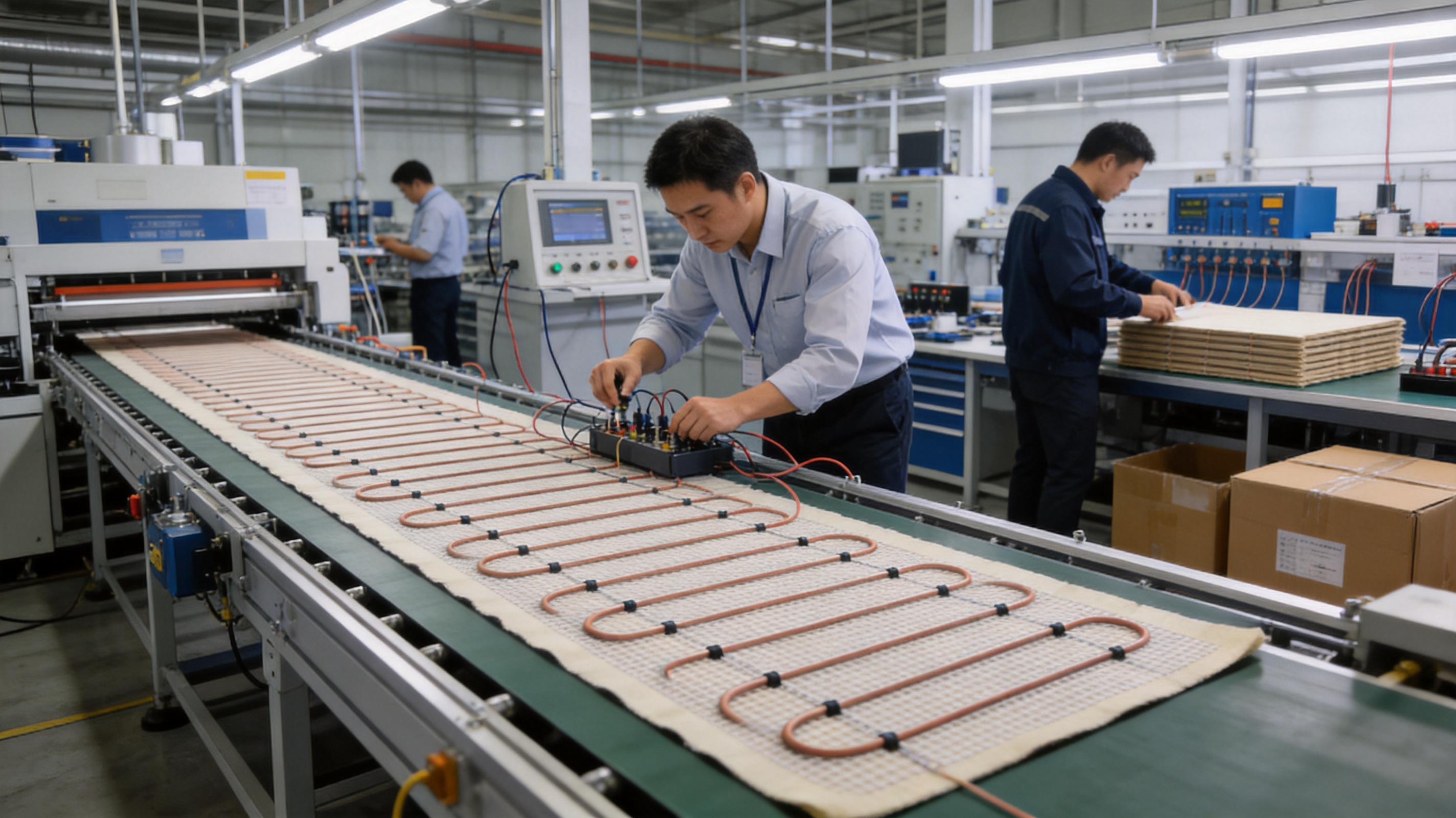
In a bathroom renovation, the 2ATTX mat can be installed with limited floor height increase, making it more convenient than hydronic radiant heating. The installer can prepare the substrate, position the mat, test resistance, embed it in adhesive or suitable compound, install the floor finish, and connect the thermostat according to code. The result is a warm floor without adding visible heating equipment.
In hotel renovation, repeated room layouts make mat selection predictable. A hotel operator may choose 150 W/m² models for guest bathrooms to create a premium comfort experience. Because the mats are hidden, they do not affect room design or cleaning routines. Maintenance teams can control operation through thermostats, improving guest satisfaction while avoiding portable heaters.
In family homes, users may prefer 130 W/m² models for moderate comfort warming in bedrooms or living spaces and 150 W/m² models in bathrooms. The broad range of sizes allows different rooms to be matched accurately. This avoids oversizing and helps improve control.
Compared with low-cost unverified heating products, the 2ATTX system’s detailed model ratings, resistance values, voltage options, and certification-oriented series give buyers more confidence. A heating mat embedded below a finished floor should not be selected only by price. Product consistency, manufacturer experience, testing, documentation, and after-sales support have long-term value.
Once properly installed, electric underfloor heating mats require very little routine maintenance because there are no moving parts, filters, pumps, valves, or fans. The main user interface is the thermostat. Periodic checking of thermostat settings, floor sensor function, and protective devices is recommended as part of normal building maintenance.
If a fault is suspected, users should not remove floor finishes without professional diagnosis. Qualified technicians can measure resistance and insulation values to determine circuit condition. Keeping original product documents, installation photos, resistance test records, and mat layout drawings greatly simplifies troubleshooting.
Good long-term performance depends on correct installation from the beginning. The mat should be fully embedded according to instructions, protected from mechanical damage, and operated within rated conditions. Floor covering changes should be reviewed carefully to ensure the new finish remains compatible with underfloor heating.
It is designed to provide electric radiant floor warming and comfort heating beneath suitable floor finishes. It is especially useful in bathrooms, family rooms, hotel rooms, dormitories, renovation projects, and areas with strict floor height requirements.
The mat is designed with a low-profile structure that can be installed in tile adhesive or similar approved floor assemblies. This helps reduce floor build-up and makes it suitable for renovation and secondary decoration.
The product information indicates that a thin preheating layer can help users reach the desired ground temperature within approximately 20 to 30 minutes after startup. Actual time depends on insulation, floor finish, substrate, room temperature, and thermostat settings.
The 130 W/m² version provides moderate output suitable for many comfort heating applications. The 150 W/m² version offers higher output for faster response or higher heating demand areas such as bathrooms or colder floors.
The product family includes UL/CUL-oriented 120 V and 240 V models, as well as CE-oriented 230 V models. The correct version should be selected according to local electrical supply and standards.
It may be installed over an existing suitable floor surface if the substrate is stable, clean, bonded, flat, and compatible with the new floor assembly. The installer should follow the product manual and the adhesive or floor finish manufacturer’s requirements.
No. The heating cable itself must not be cut or shortened. Installers may be able to cut and turn the mat backing where permitted, but the heating element must remain intact.
The product information lists wooden floors among suitable decoration materials, but wood-compatible installations require careful temperature control and approval from the flooring manufacturer. A floor sensor and temperature limit are usually important.
A double conductor configuration simplifies electrical routing compared with many single conductor systems because it generally does not require both heating cable ends to be returned separately to the same starting point. This can reduce layout complexity.
The manufacturer has long experience in electric heating products, ISO9001 quality system certification, broad heating cable production capability, research and development experience, and a product portfolio covering industrial heat tracing, underfloor heating, snow melting, silicone rubber heating, and related accessories.
The 2ATTX Double Conductor Ground Mat is a strong underfloor heating solution for projects that require fast comfort, low floor height impact, flexible model selection, and professional-grade electrical performance. Its ultra-thin structure makes it suitable for renovation and secondary decoration, while its double conductor design helps simplify installation. With 130 W/m² and 150 W/m² options, multiple voltages, UL/CUL-oriented and CE-oriented configurations, and a wide heating area range, it can serve many indoor applications.
Its advantages over competing solutions are clear: lower build-up than many traditional radiant systems, faster response than deeply embedded heating, cleaner aesthetics than visible heaters, easier installation than loose cable layouts, and broader specification flexibility than one-size products. For homeowners, it delivers warm-floor comfort. For contractors, it supports efficient installation. For hotels and property managers, it improves room quality without visible equipment. For distributors and OEM/ODM buyers, it provides a scalable product family backed by a manufacturer with deep electric heating expertise.
Supported by Santo Thermal Control Technology Co., Ltd.’s manufacturing background, quality management, electric heating research, and broad market experience, the product represents a practical balance of comfort, engineering, and commercial value. In modern indoor heating design, where space, speed, efficiency, and reliability all matter, the 2ATTX Double Conductor Ground Mat offers a dependable and competitive solution.
ASHRAE Handbook: HVAC Applications, Radiant Heating and Cooling Design Guidance.
International Electrotechnical Commission, Electrical Heating Cable and Floor Heating Safety Principles.
National Electrical Code, Fixed Electric Space-Heating Equipment Installation Requirements.
Underfloor Heating Manufacturers Association, Best Practices for Electric Floor Warming Systems.
ISO 9001 Quality Management Systems, Requirements and Process-Based Quality Control Principles.
Tile Council Technical Guidance, Floor Assembly Preparation and Heated Floor Installation Considerations.
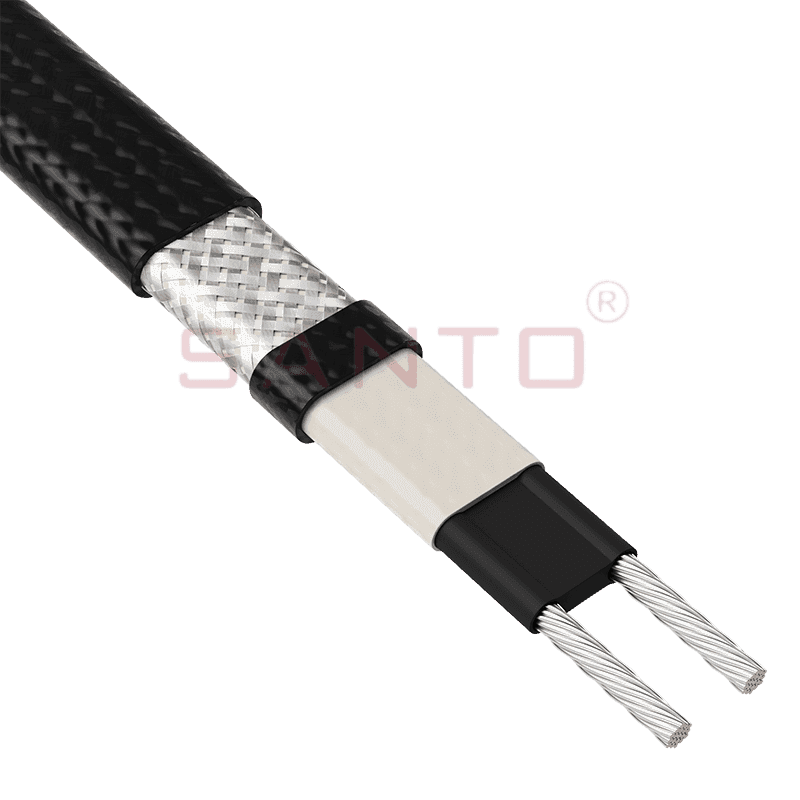
The SANTO UFA range of self-regulating heating cables is mainly used for frost protection of pipes and vessels but can also be used to maintain processes up to 65°C. These heating cables are available...
See Details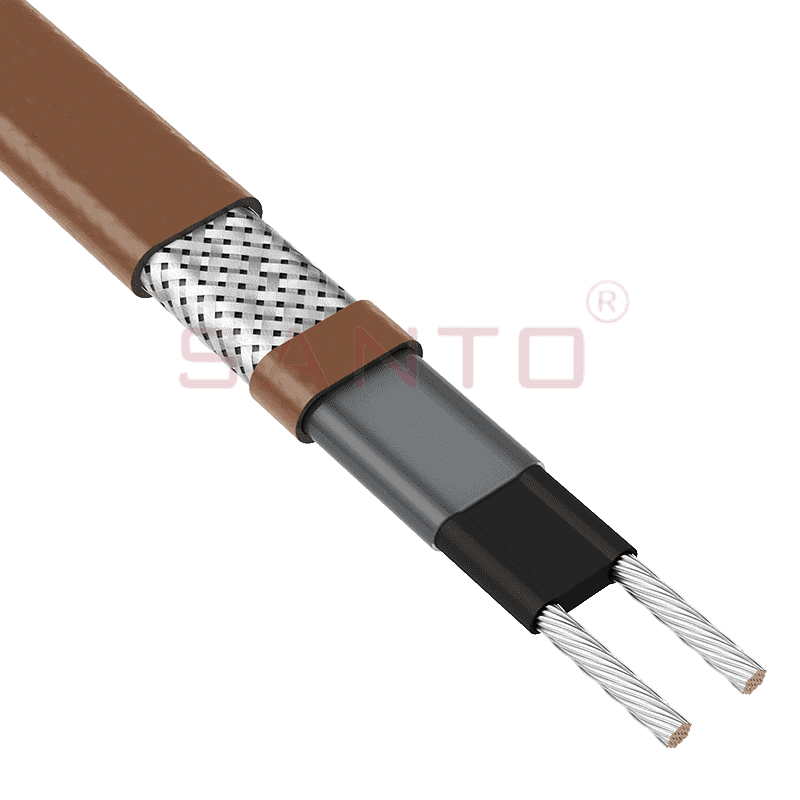
The SANTO UFB range of self-regulating heating cables is mainly used for frost protection of pipes and vessels requiring a higher power output than the UFA heating cables can supply. They can also be ...
See Details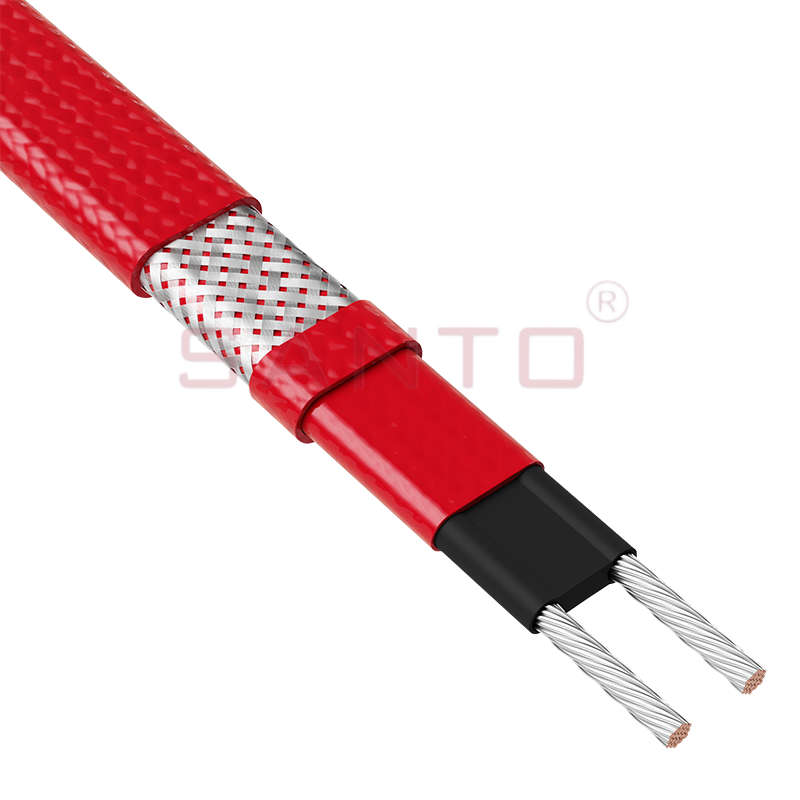
The SANTO UFC range of self-regulating heating cables is used for frost protection of pipes and vessels that require steam cleaning. They can also be used to maintain processes up to 121°C. These heat...
See Details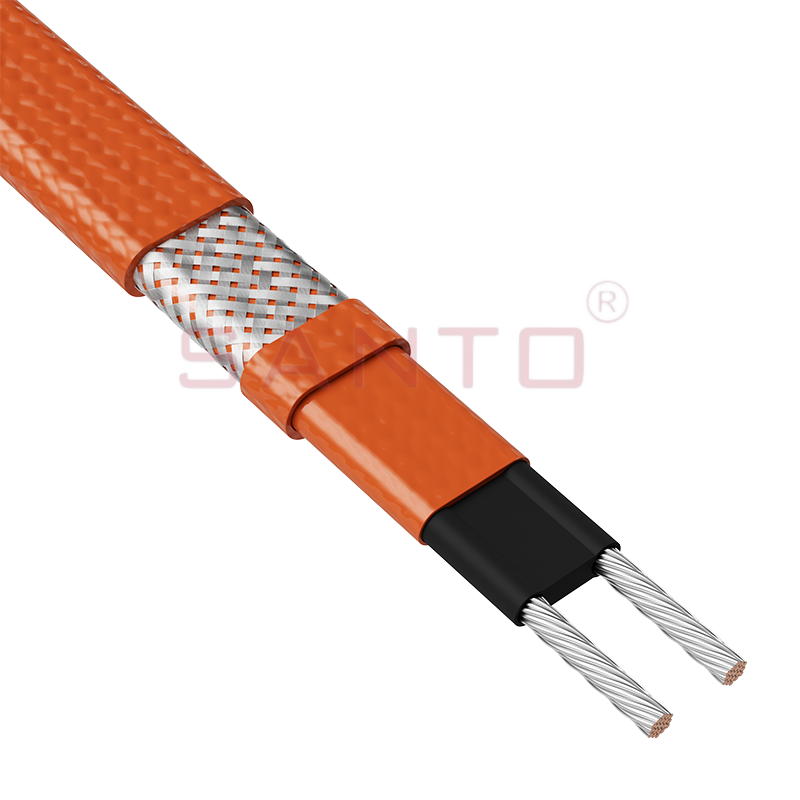
The SANTO UFO range of self-regulating heating cables is mainly used for frost protection of pipes and vessels that require steam cleaning . They can also be used to maintain processes up to 150°C. Th...
See Details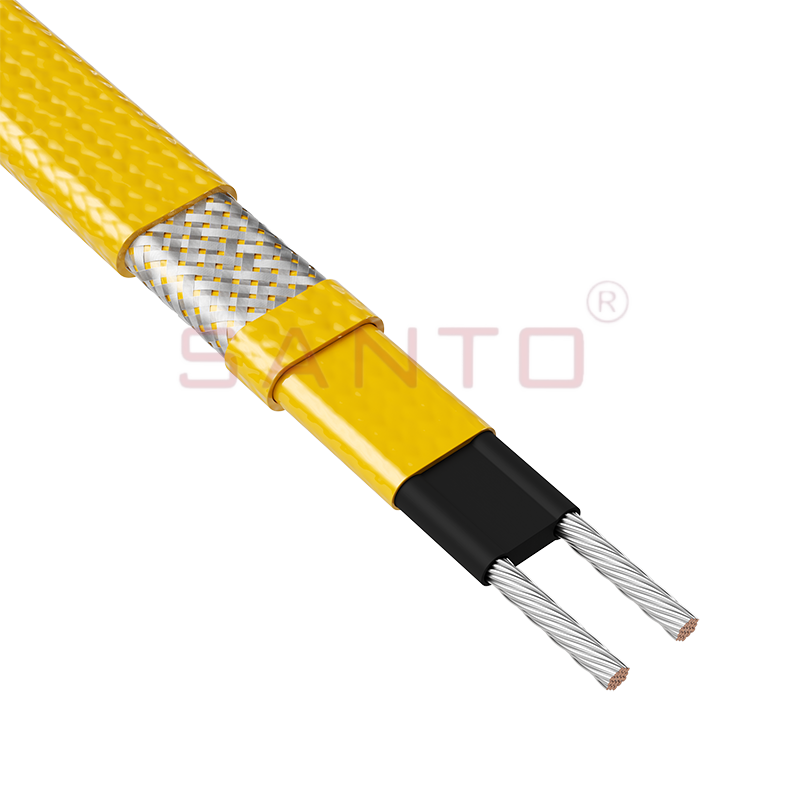
The SANTO UFD series of self-regulating heating cables are mainly used for freeze protection of pipes and vessels, but can also be used to maintain processes up to 200°C. These heating cables are avai...
See Details
SANTO UFY heating wire is suitable for applications that maintain process temperatures up to 260 ℃ and can be steam blown; The self-regulating and parallel circuit heating wires of the UFY series are ...
See Details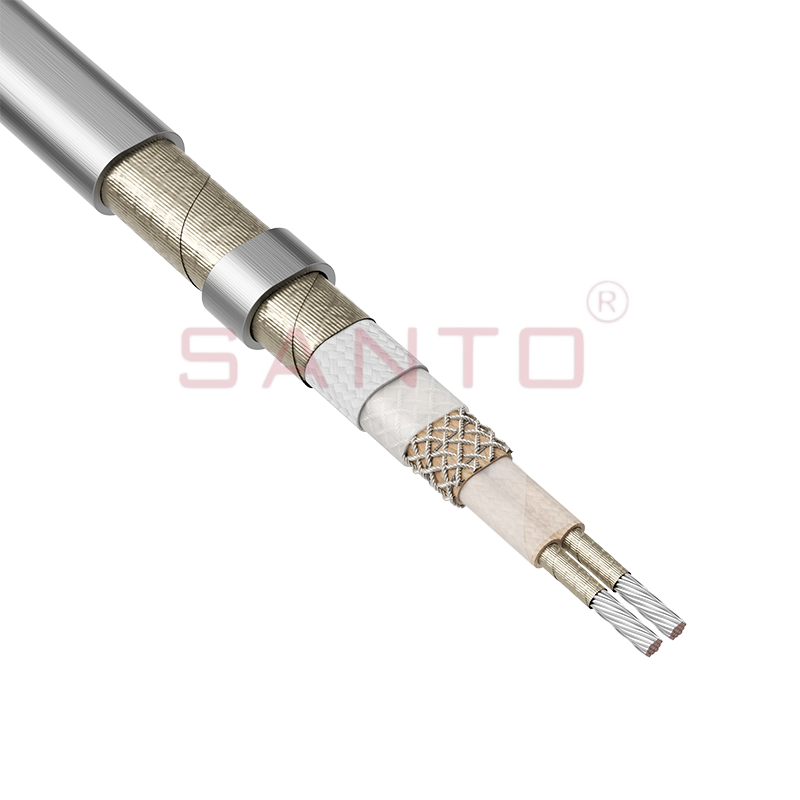
The SANTO UFM series self-regulating heating cables are mainly used for freeze protection of pipes and vessels, but can also be used to maintain processes up to 400°C. These heating cables are availab...
See Details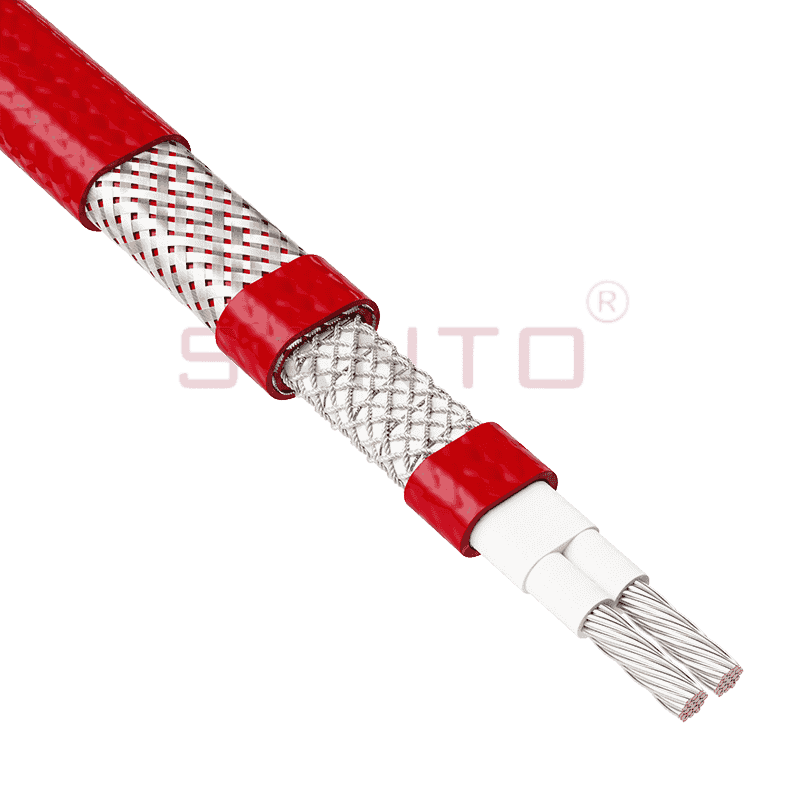
The SANTO ACC range of power-limiting heating cables is mainly used for temperature maintenance of processes and offers the advantage of a high power output at high temperatures which can reduce the n...
See Details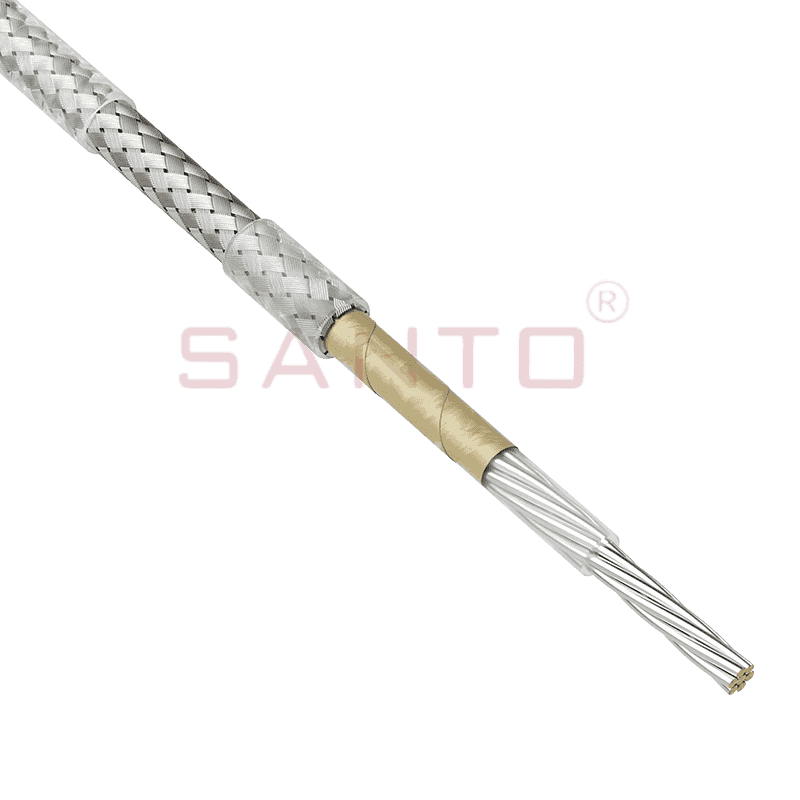
The stranded high temperature conductor is nickel plated to ensure a long life at elevated temperatures in corrosive environments. It is electrically isolated using an innovative sandwich construction...
See Details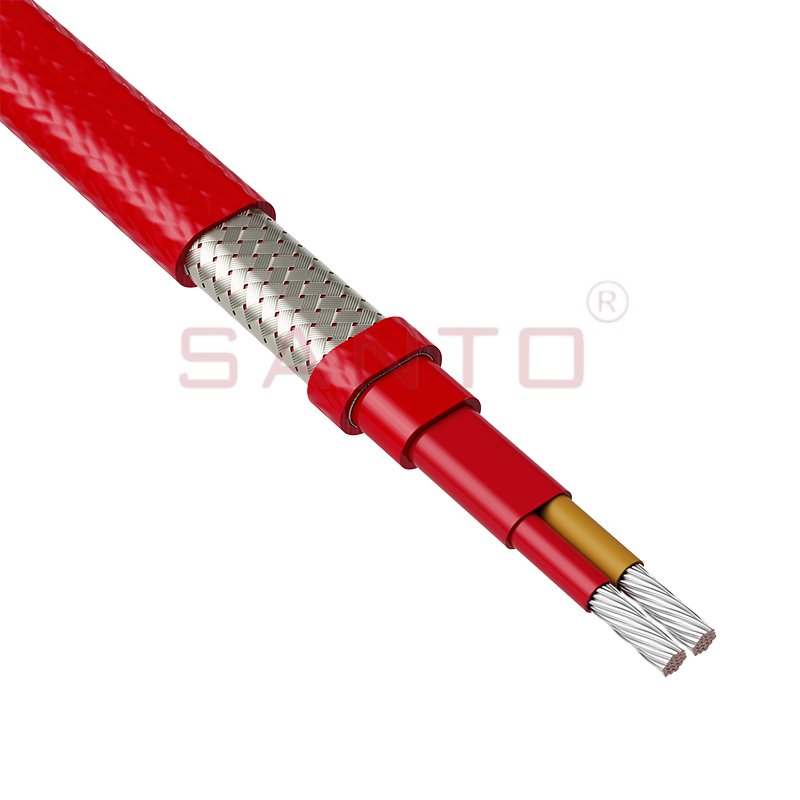
The stranded high temperature conductor is nickel plated to ensure a long life at elevated temperatures in corrosive environments. It is electrically isolated using an innovative sandwich construction...
See Details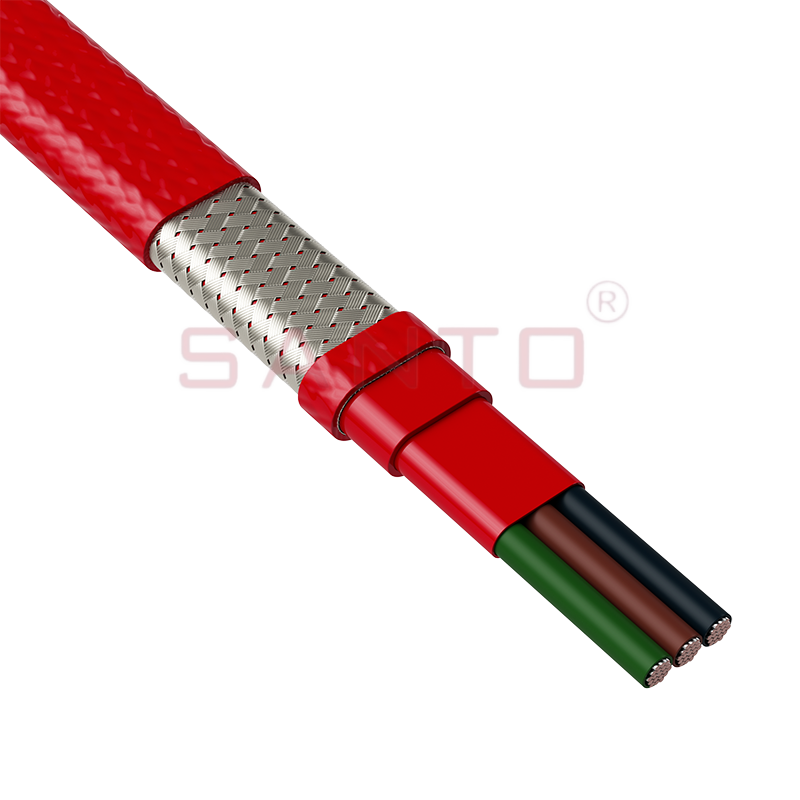
The stranded high temperature conductor is nickel plated to ensure a long life at elevated temperatures in corrosive environments. It is electrically isolated using an innovative sandwich construction...
See Details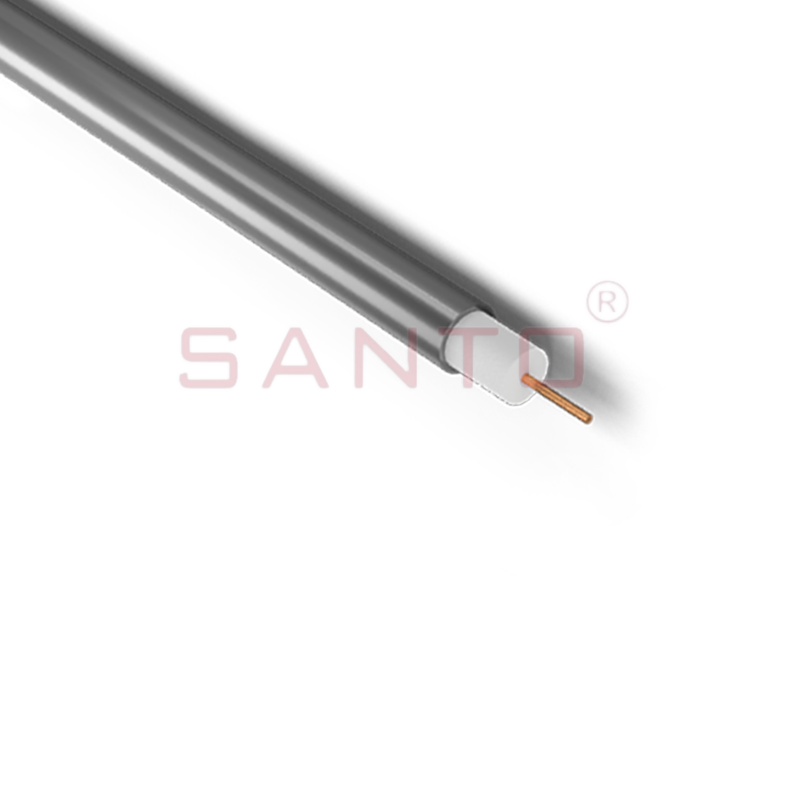
SANTO HAx mineral insulated (MI) Alloy 825 series heating cables are suitable for use in hazardous areas. They have been designed for use in freeze protection and temperature maintenance applications ...
See Details
Santo electric heating strips are widely used in key industries in China.

